
We spent the night last night in a hostel in Biduedo, which is near the top of a mountain, and started walking this morning in the fog.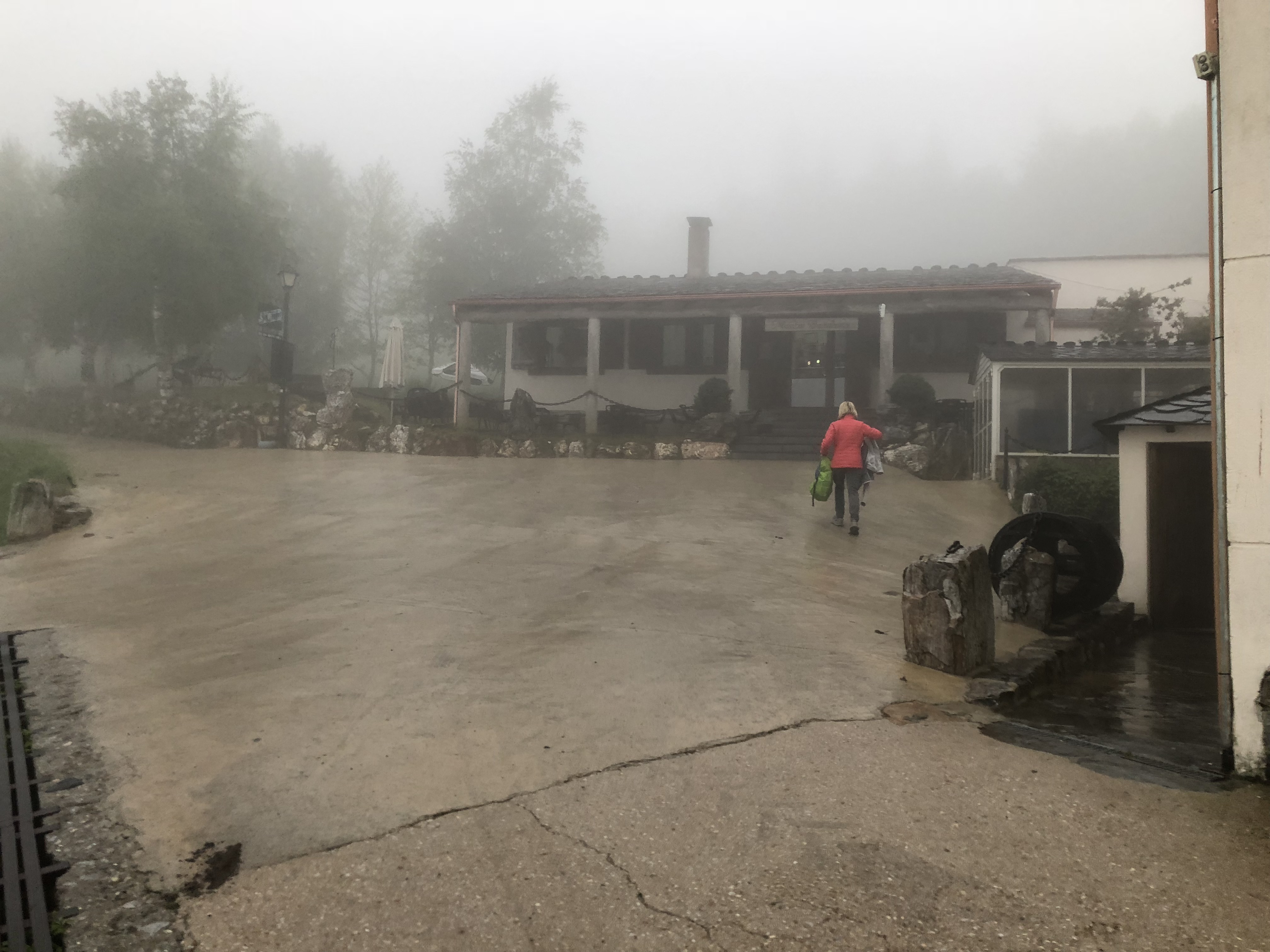
The villages here all have cattle sheds.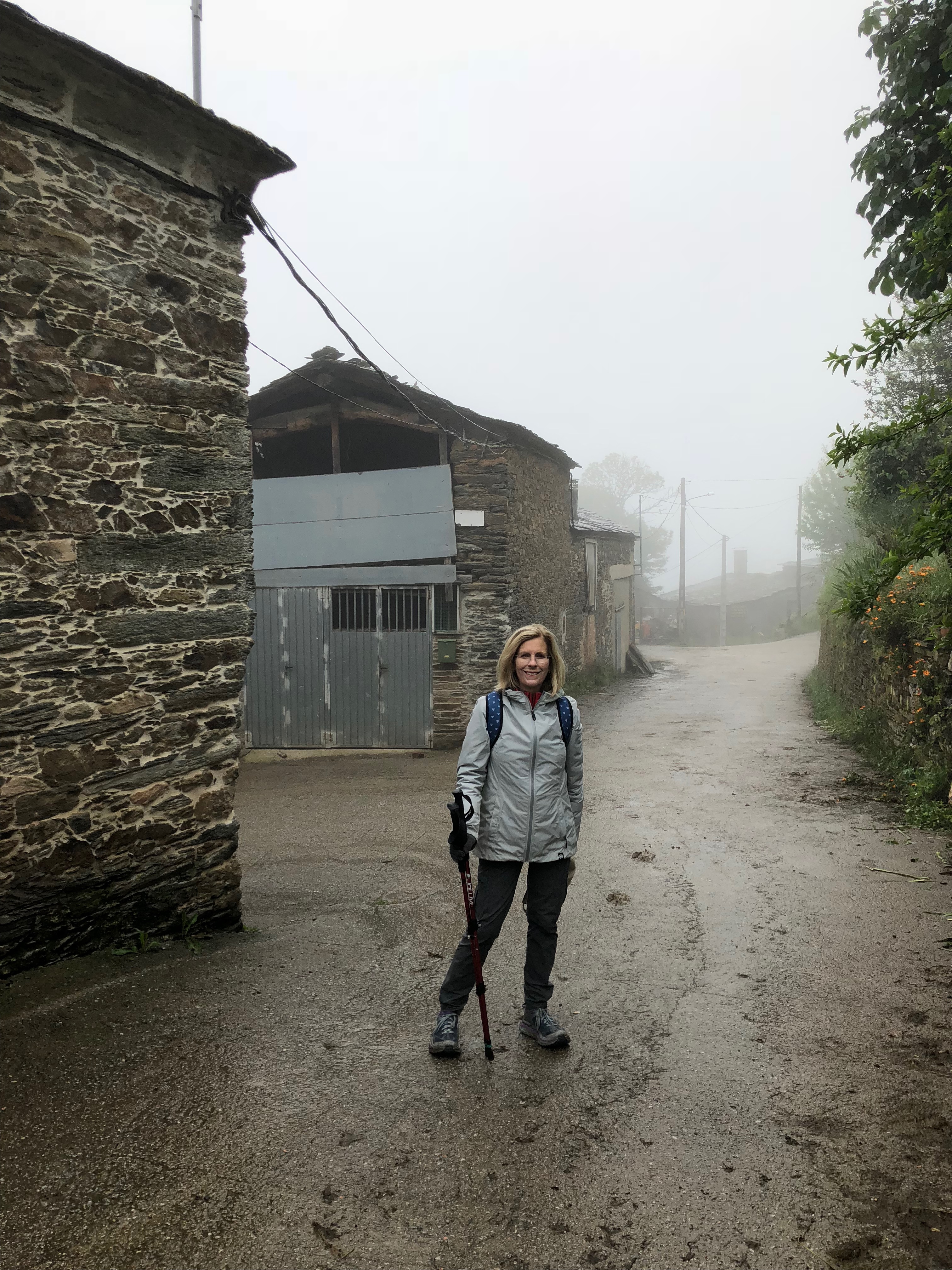 Pilgrims need to watch their step because the Va-ca-mino is littered with cow poop.
The village churches here are small.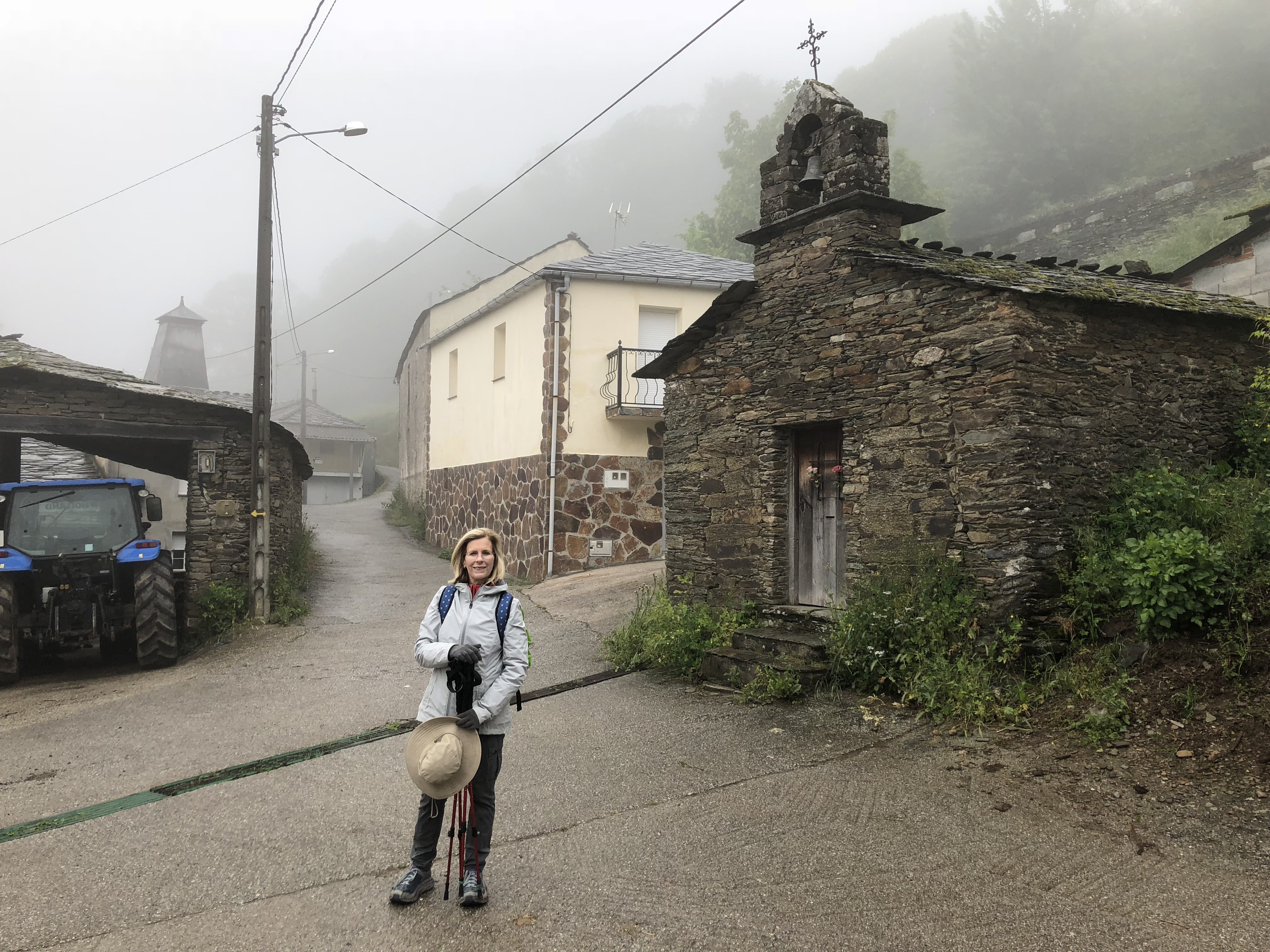
It took us about two hours to walk to the village of Tricastela at the bottom of the mountain.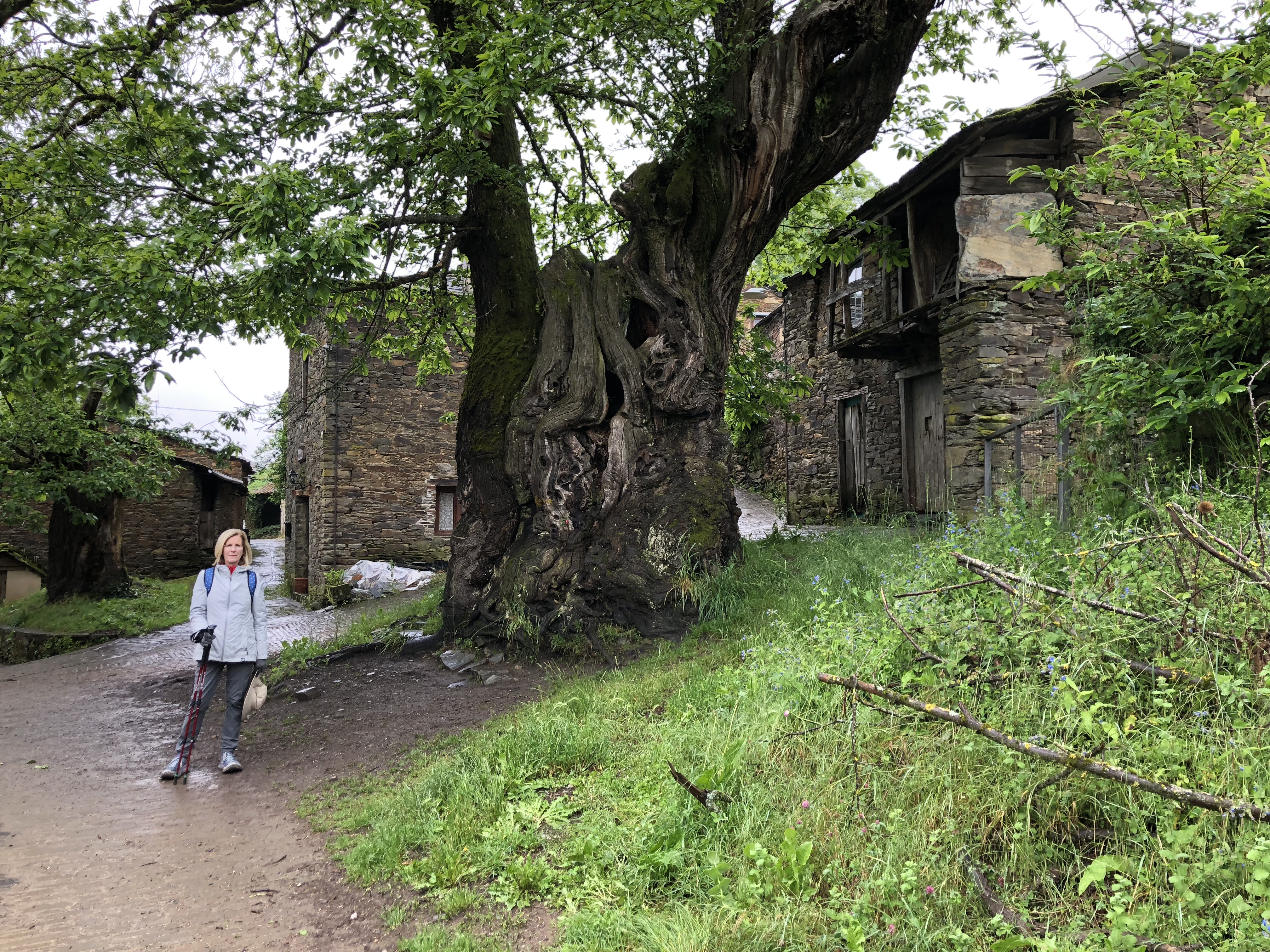
From Tricastela we walked across the floor of a narrow valley and crossed a stream.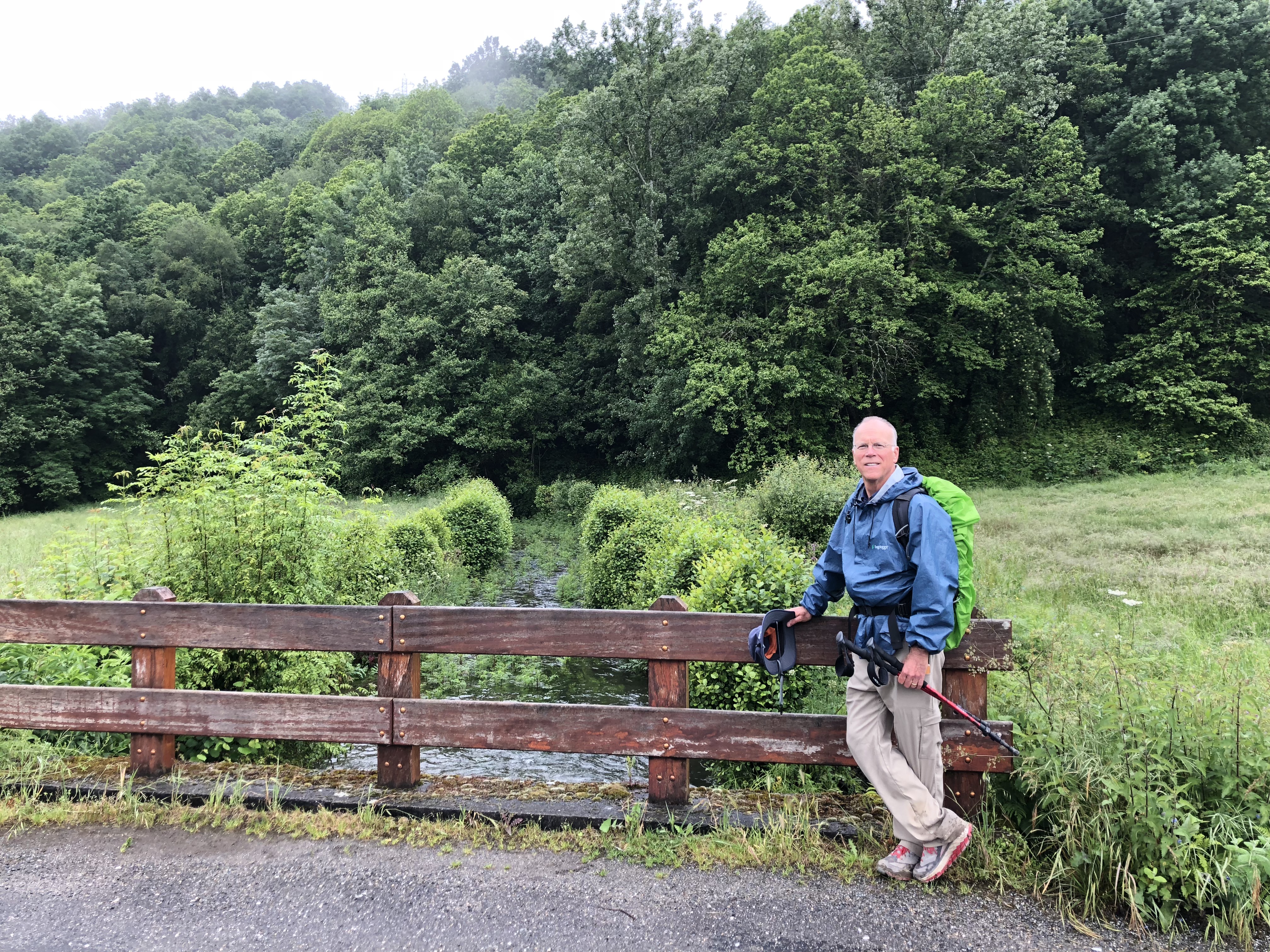 We followed the stream up the valley.
In a meadow in the valley, we came upon a cottage belonging to an English artist who painted watercolors of local scenery.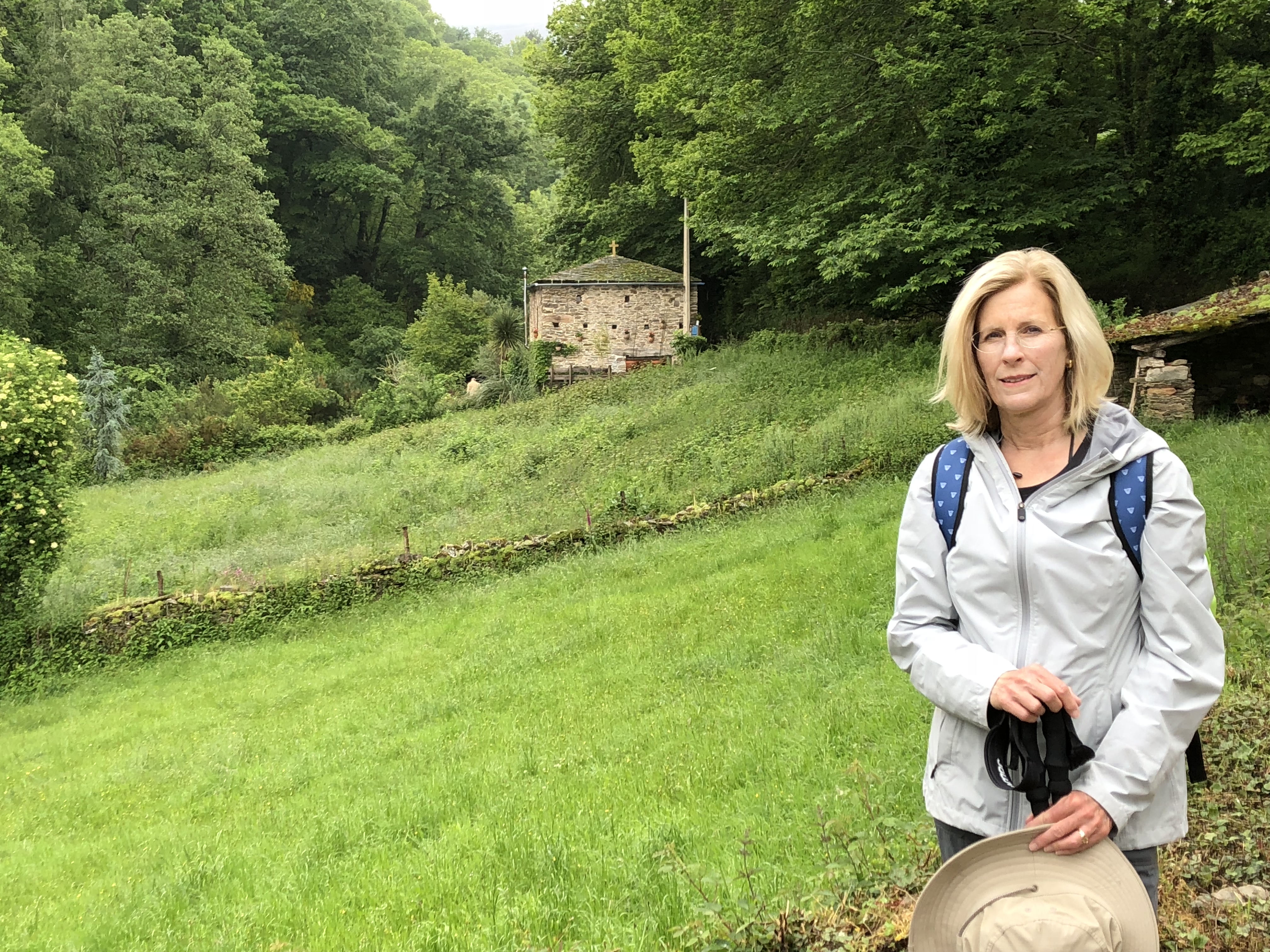
We continued to climb up the side of the mountain.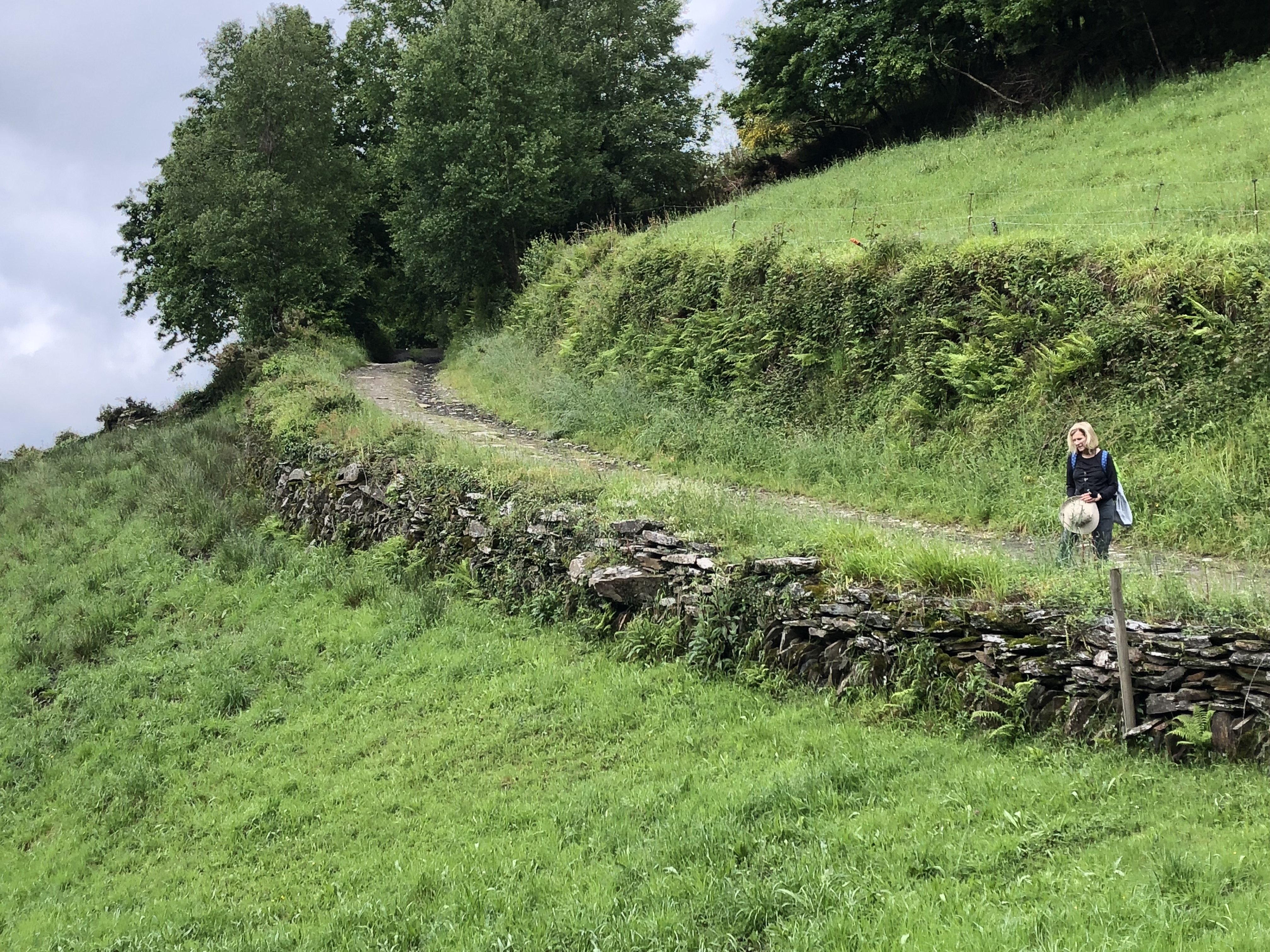 We were on an remote branch of the Camino that is an offshoot of the main path. Our branch had couple of poorly marked forks.
An arrow made of rocks about three feet in front of Anne’s left foot points the way.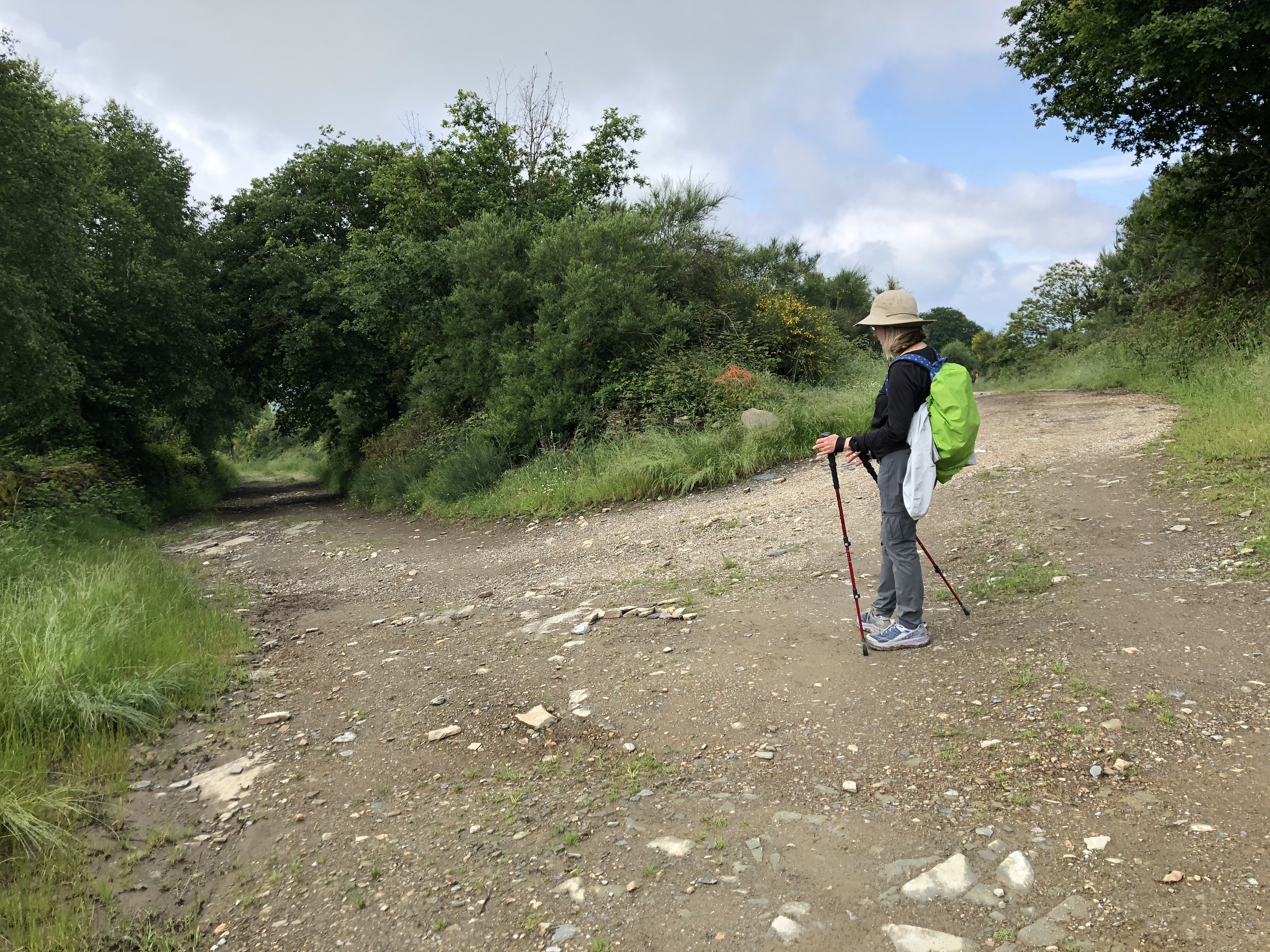
Here is another split in the path where we had to look hard for the marker.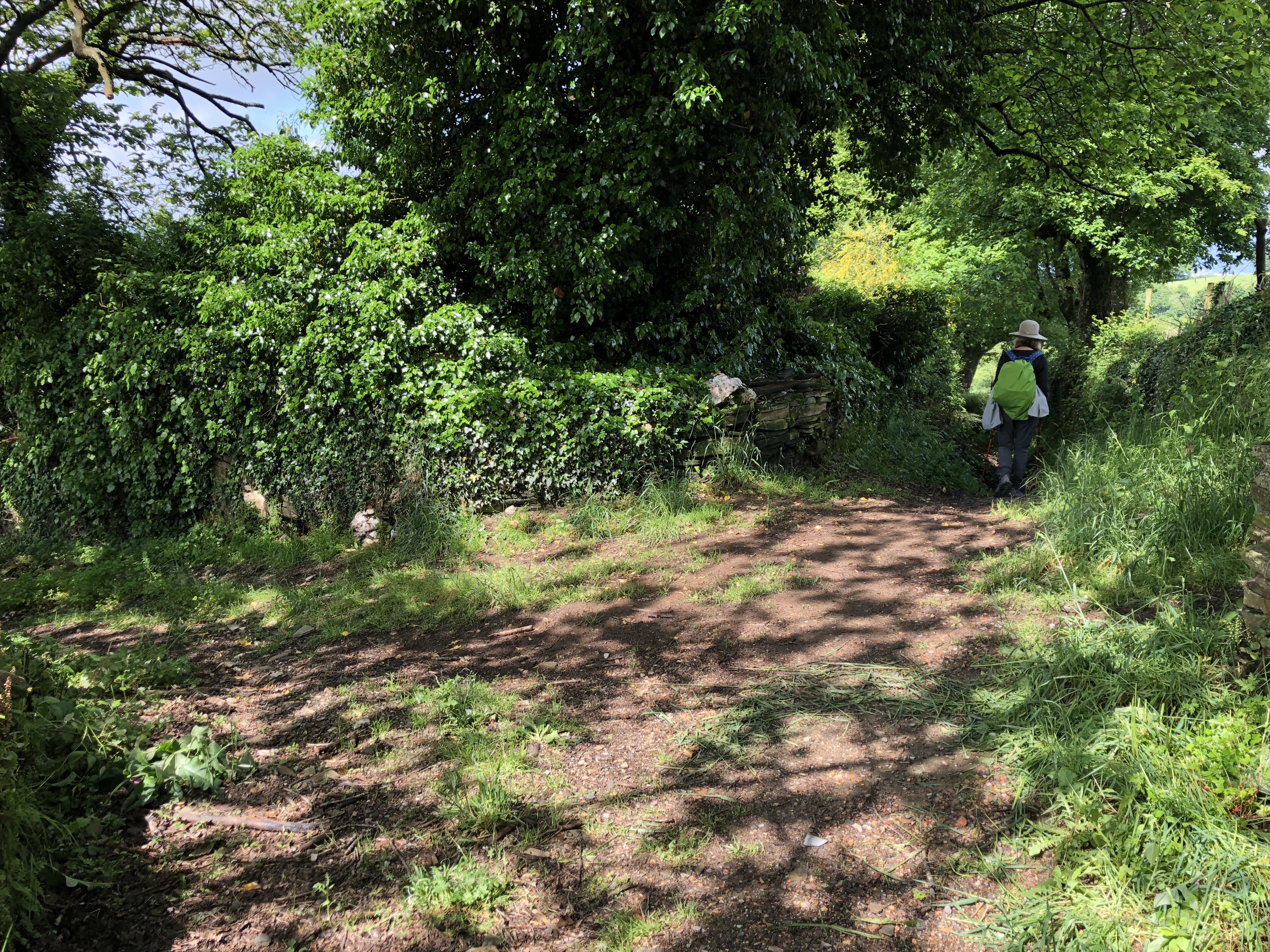
Near the bottom of the hill was a small village, Montan.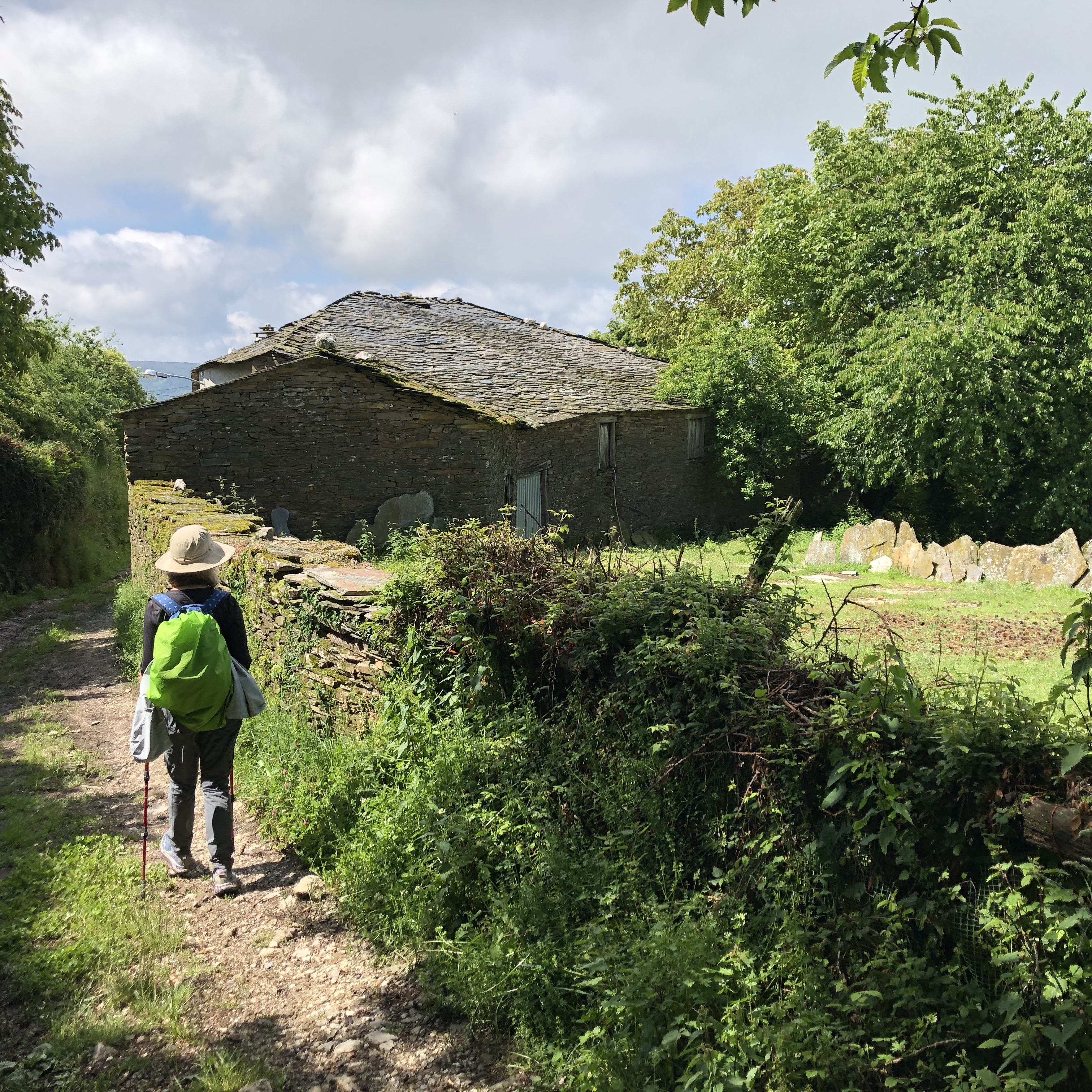
The ’60’s are alive and well at an albergue in Montan.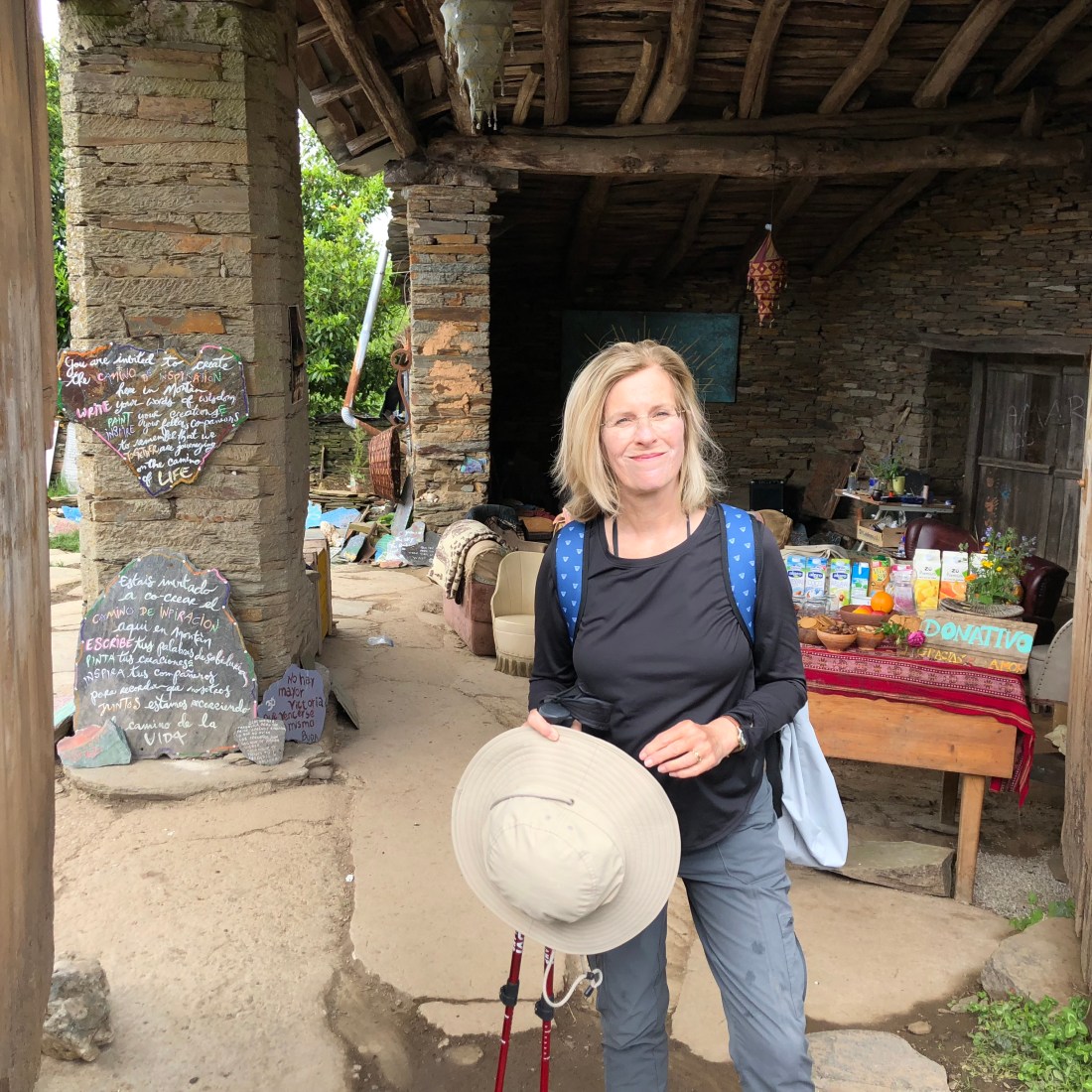
There are spots along the Camino where the spirit of the 1960’s is in full bloom. This is one of those spots. The food and drink behind Anne are free for the taking, a donation suggested. The signs to her right invite pilgrims to sit in the courtyard and share their thoughts and feelings by painting them on rocks and shells. There are buildings like this on the Camino where people are invited to sit and chant and meditate. This spirit undoubtedly is tied to the Camino’s history as a pilgrimage route, and it has the same root in kindness and love. But it is a different spirit. The people writing on shells and rocks at the albergue in Montan don’t usually attend the Pilgrim’s Masses. And Anne and I have little interest in traveling to Finnistere, Latin for land’s end, at the coast beyond Santiago, where the Celts built their Alter Soli to worship the setting sun, and which is the final destination for many of our compatriots walking the Camino.
We continued down the hill by pastures with rock fences.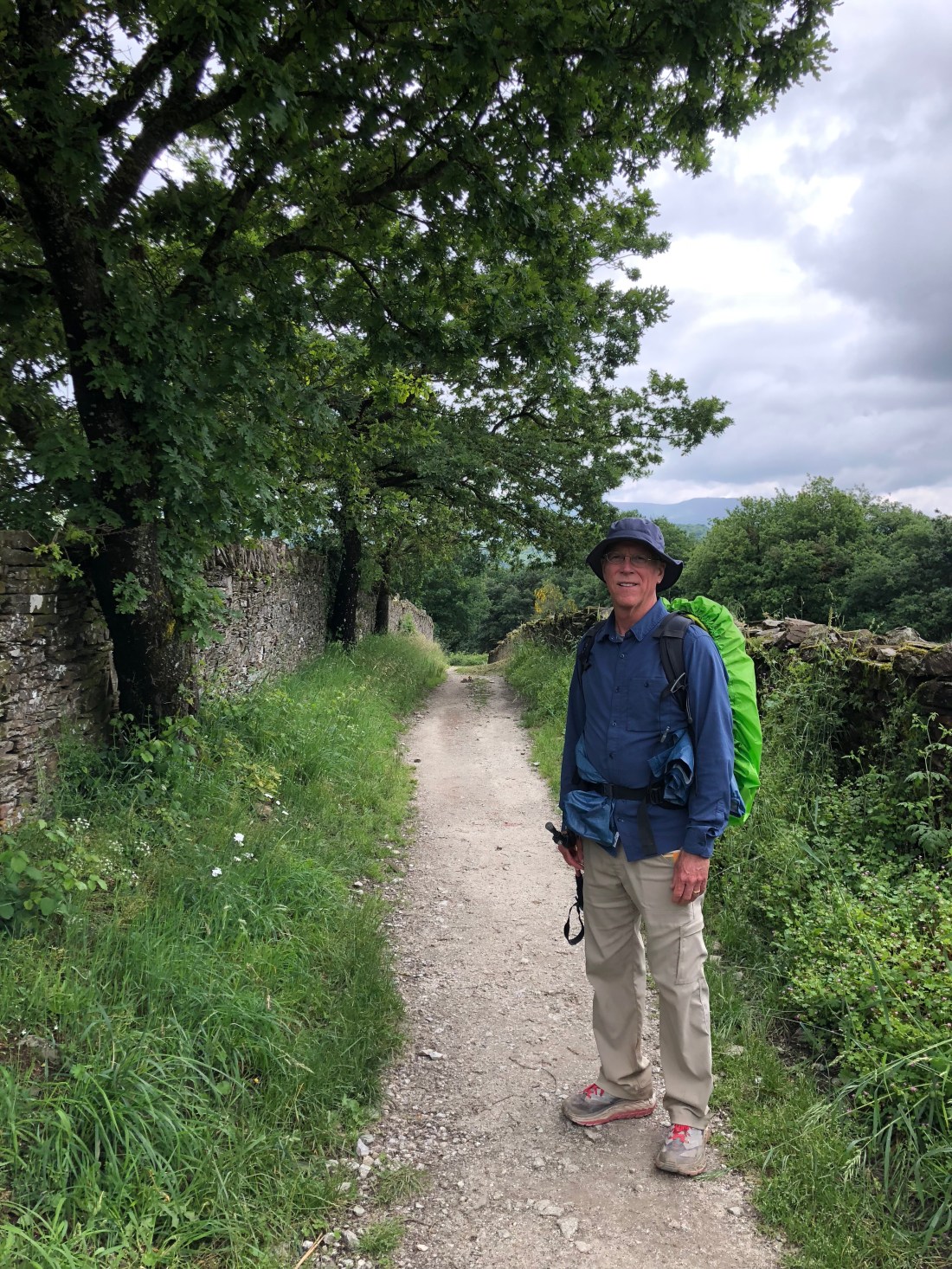
And over streams.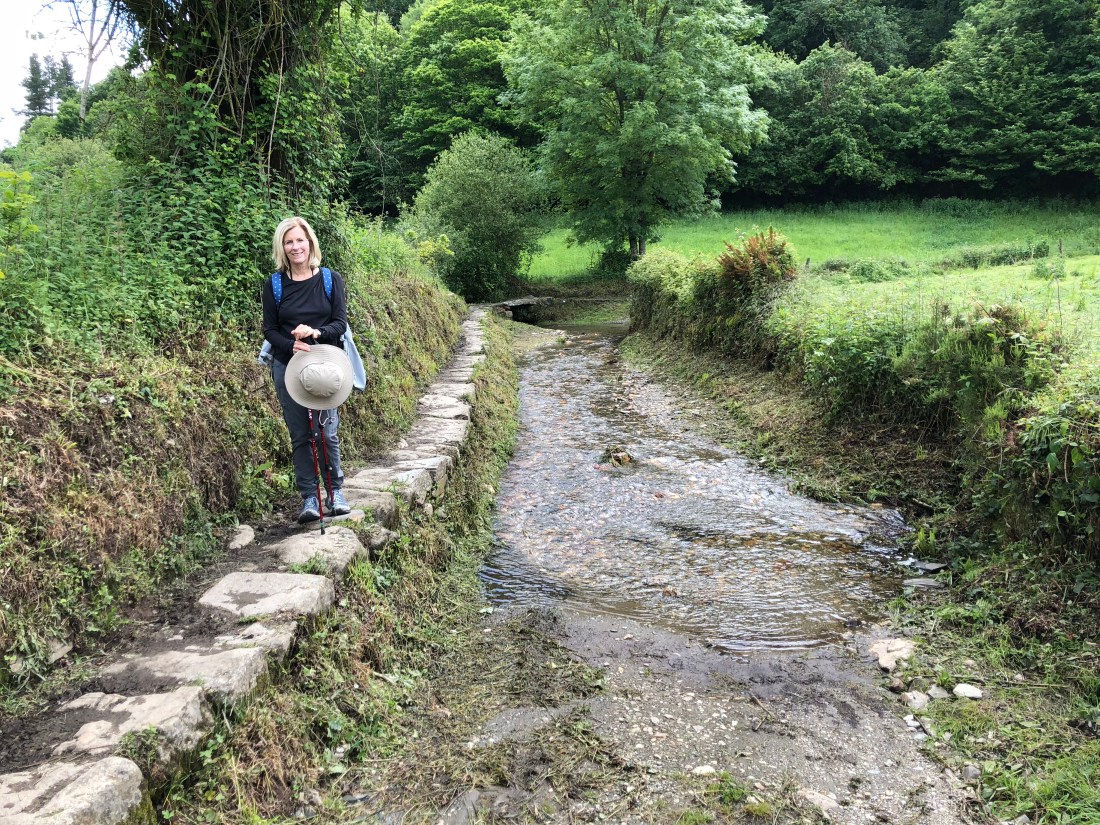 About an hour outside of Sarria, it started to rain. We are spending an extra day in Sarria to rest. People have talked about Sarria since the beginning of the Camino. They say it is where everything changes because of the increased traffic on the Camino. There are two reasons for this. Sarria is where the Camino Frances, which we have been following, joins the Northern Camino, which travels along the northern coast of Spain. It is also 100 km from Santiago, and so is the nearest point where pilgrims can begin their walk and still obtain a compostela or pilgrim’s passport at the cathedral in Santiago. So far we haven’t seen the crowds. Most of the day today, we were walking alone. Company would be welcome.
 Kurt's Blog
Absolutely beautiful! Love the tiny church. Has Anne been painting?
LikeLike
We had some long days, which left no time for painting. We have a few easy days now, and she has pulled her sketch book out. But she insists on pre-approving posted art work.
LikeLike