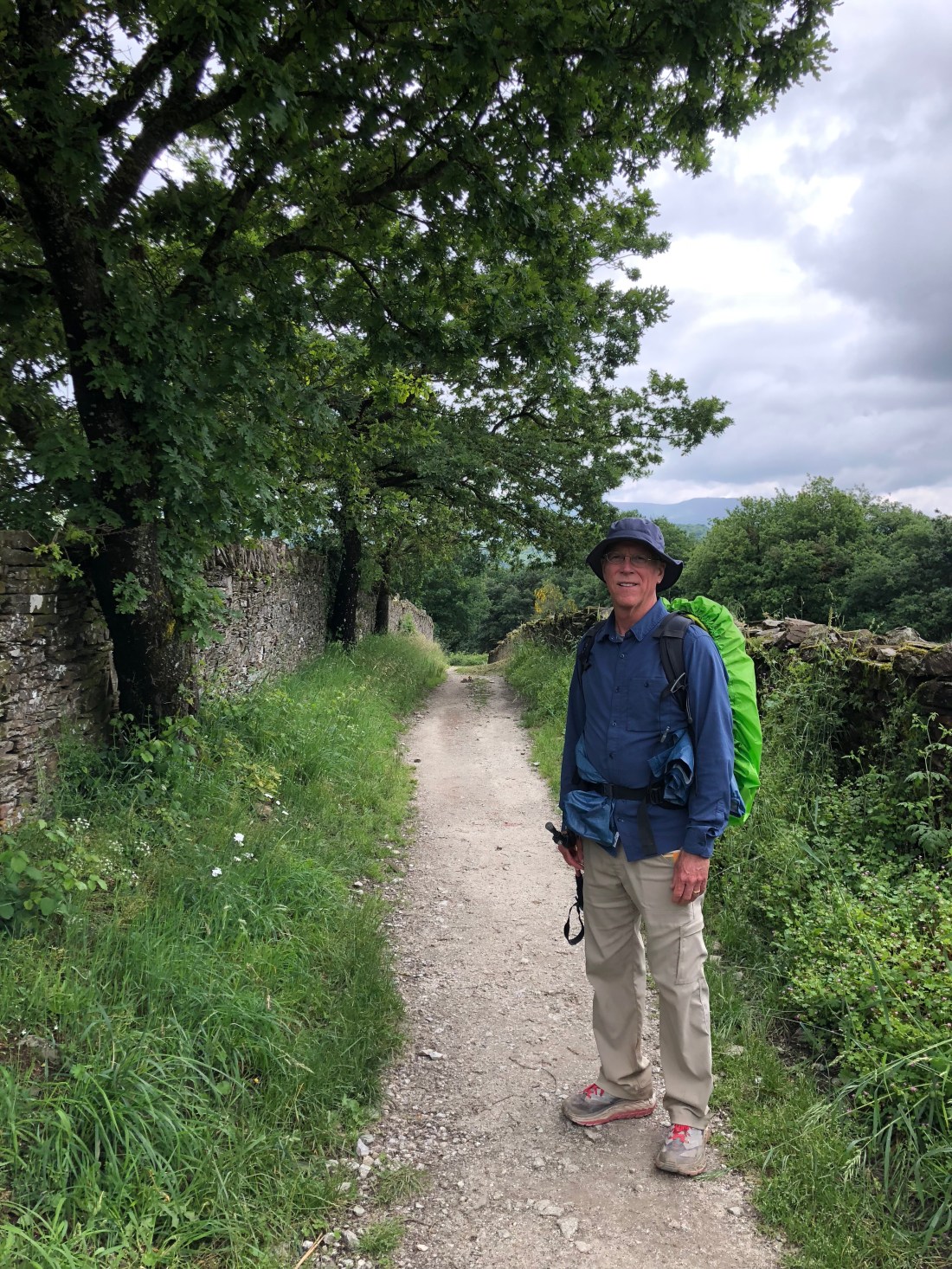
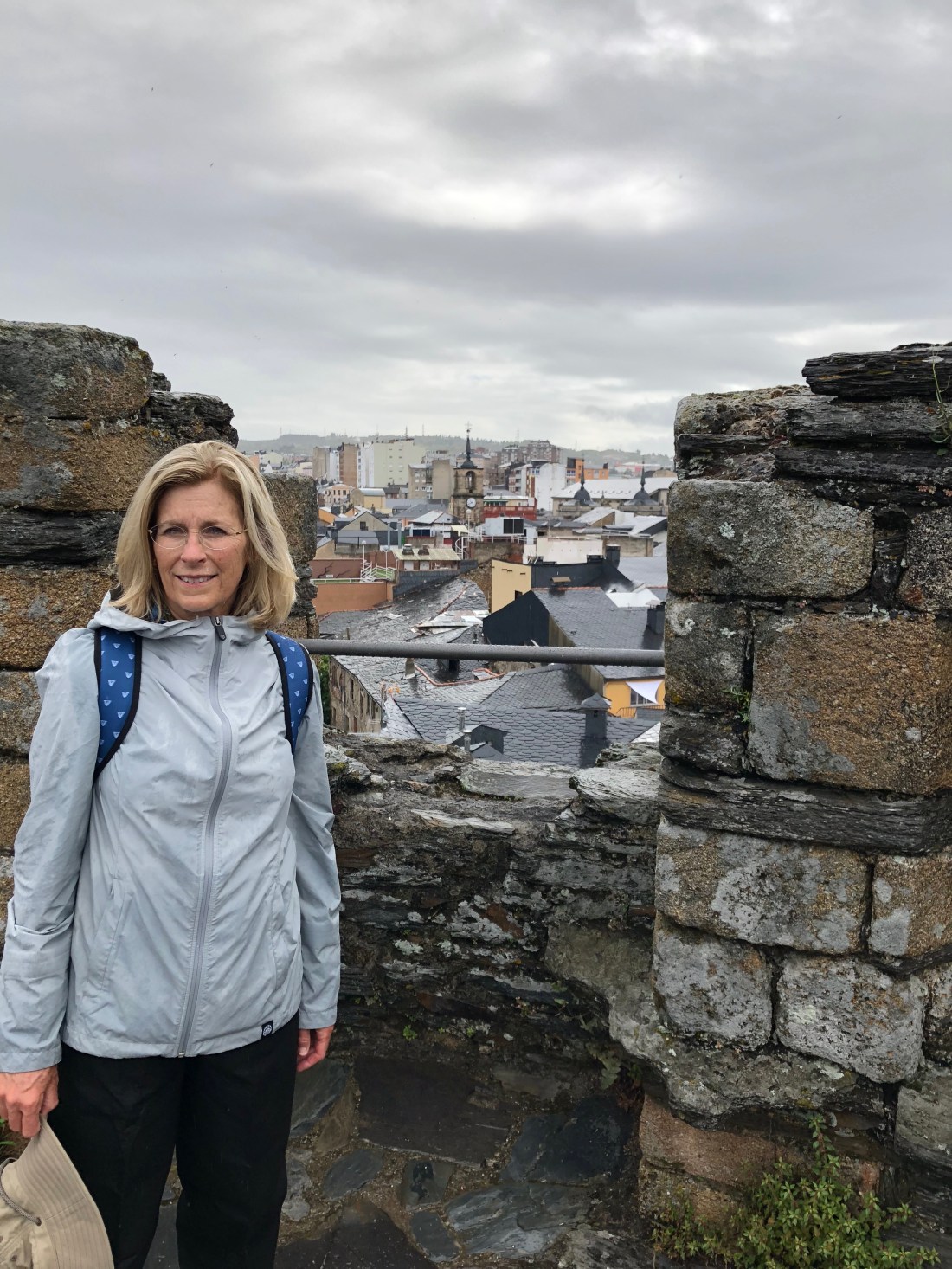
Pedrouzo to Santiago

Our last day on the Camino.  It’s a short one, just under 20 km, or about 12 miles.

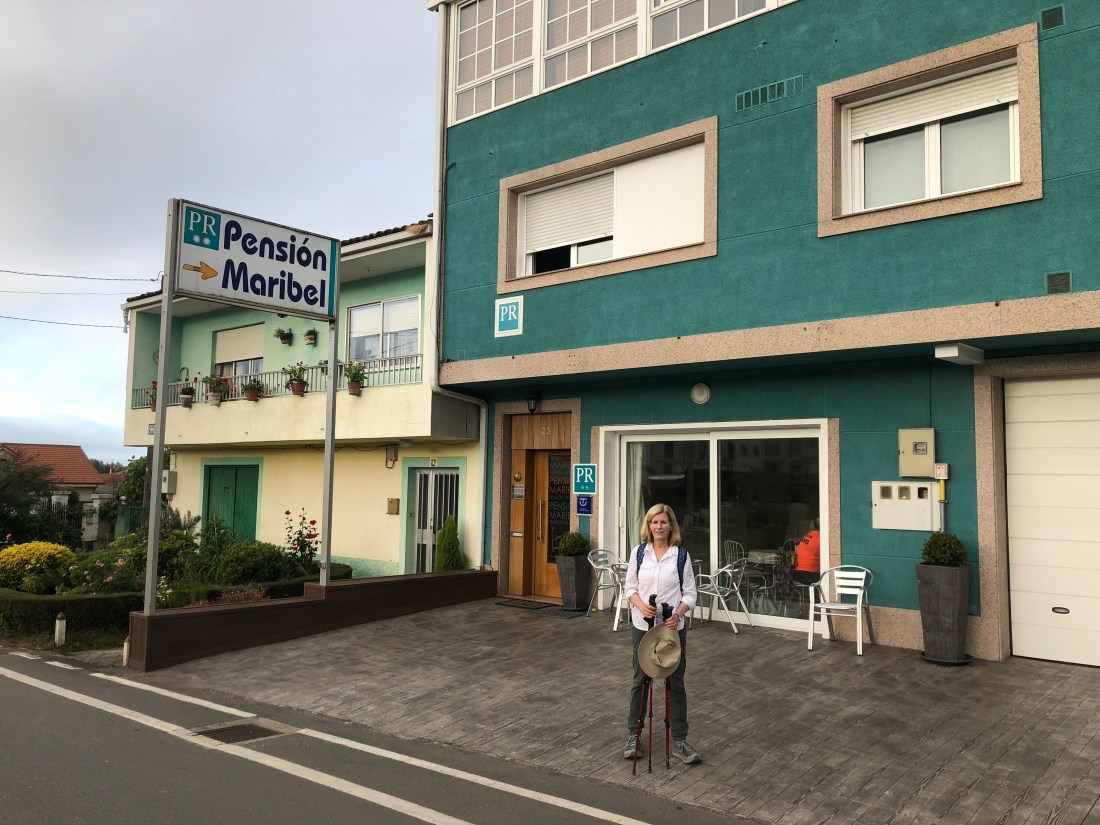
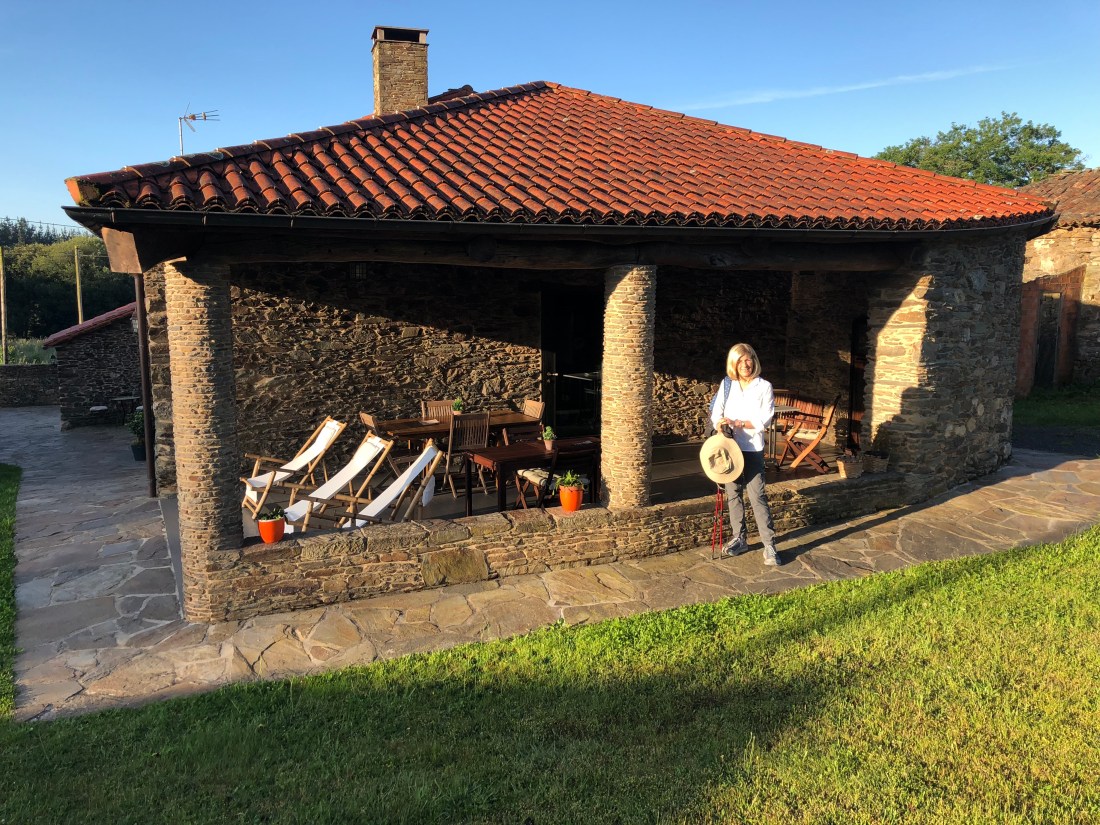
Here is the pensione where we spent our final night.IMG_3744
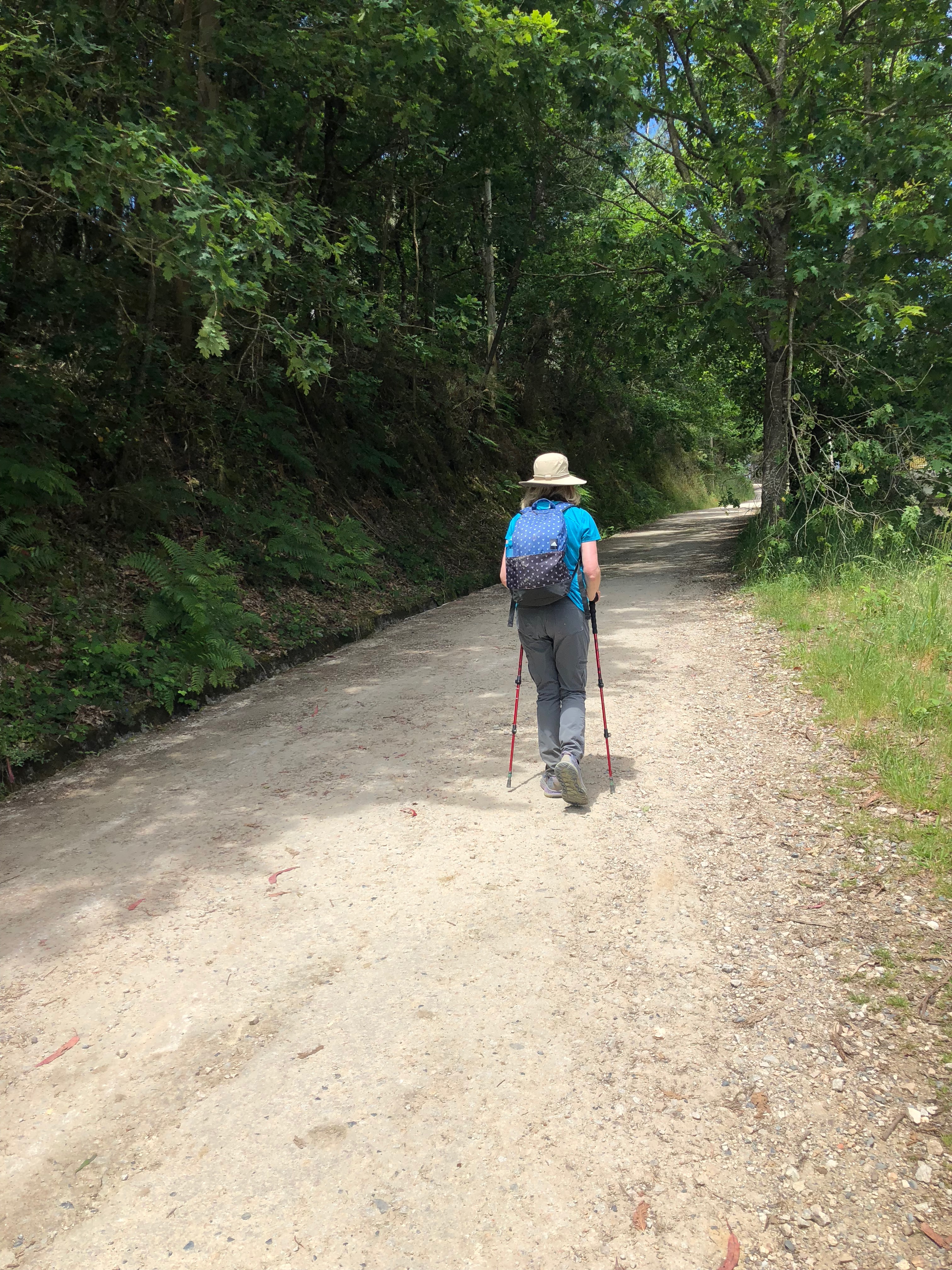
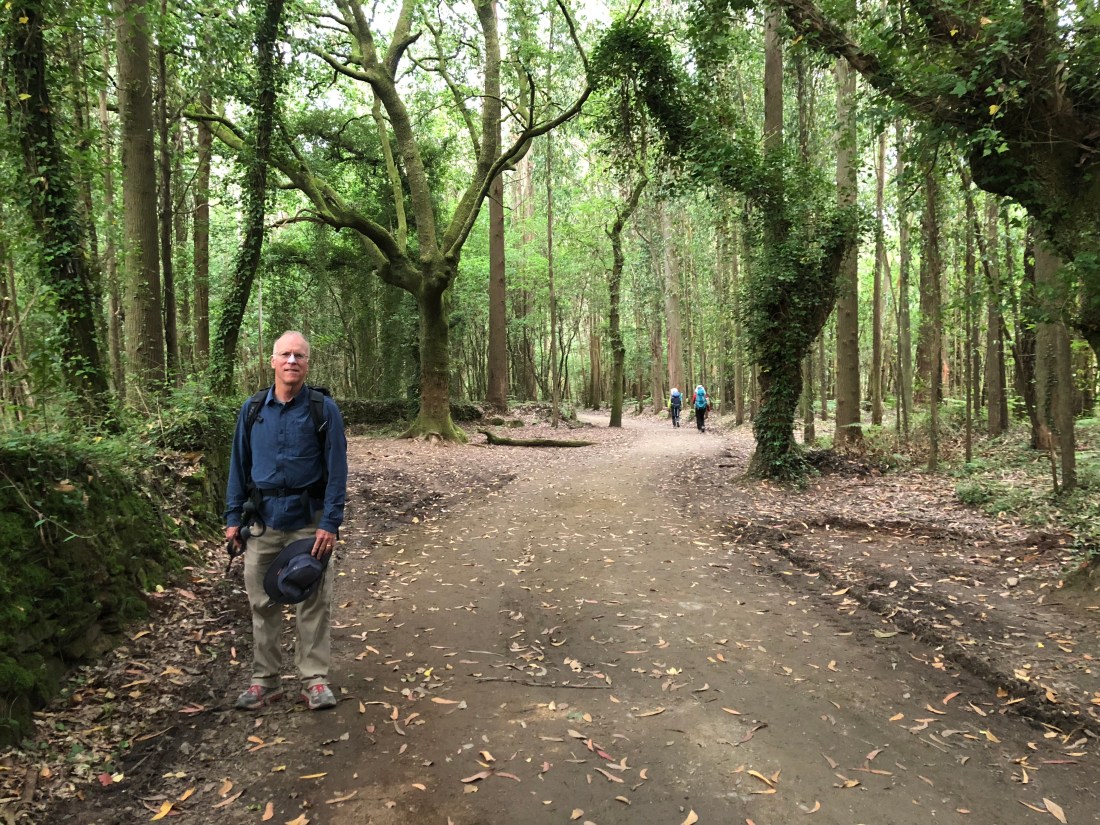
After walking a short distance from the pensione, we were in a eucalyptus grove.IMG_3745
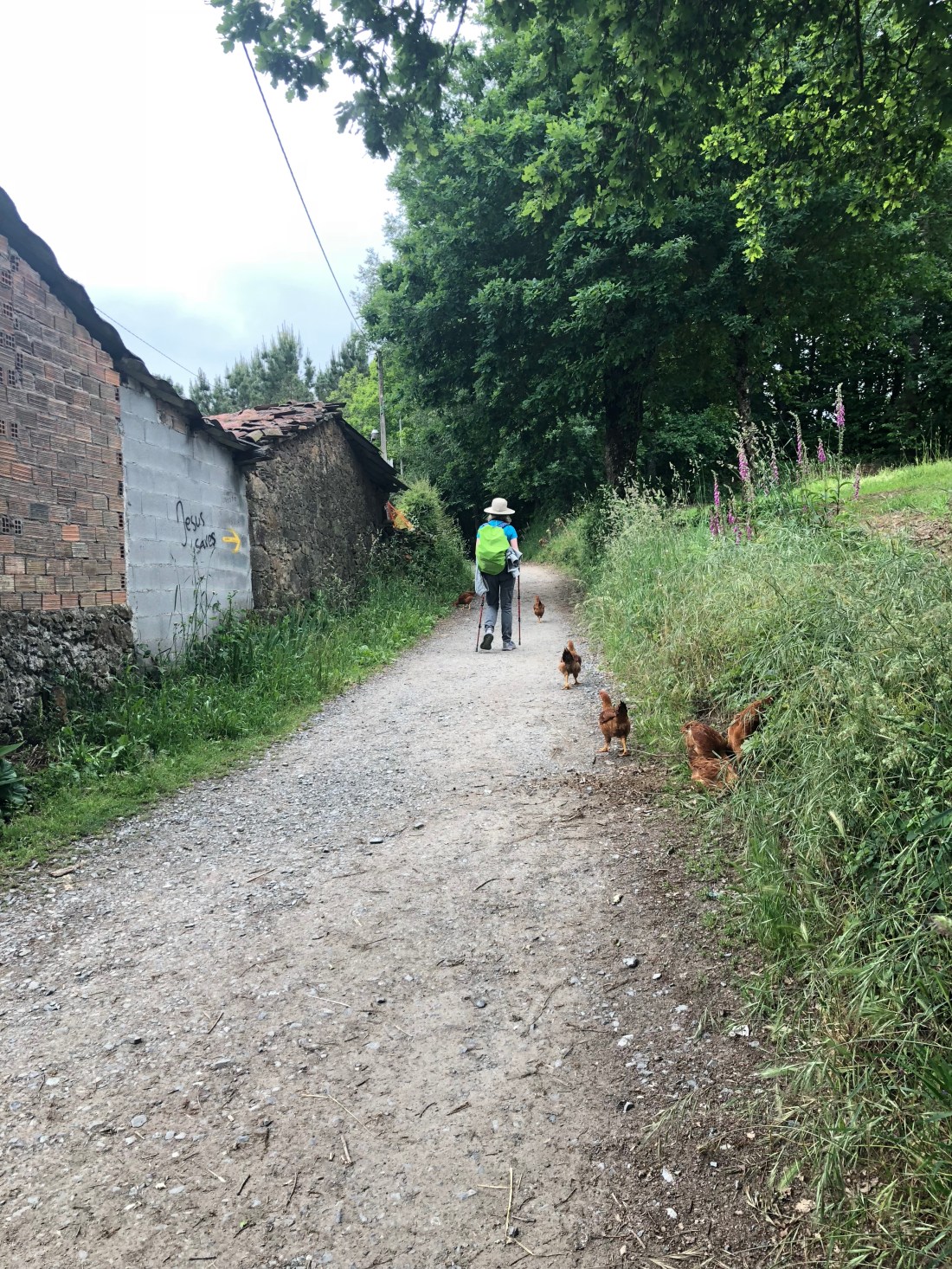
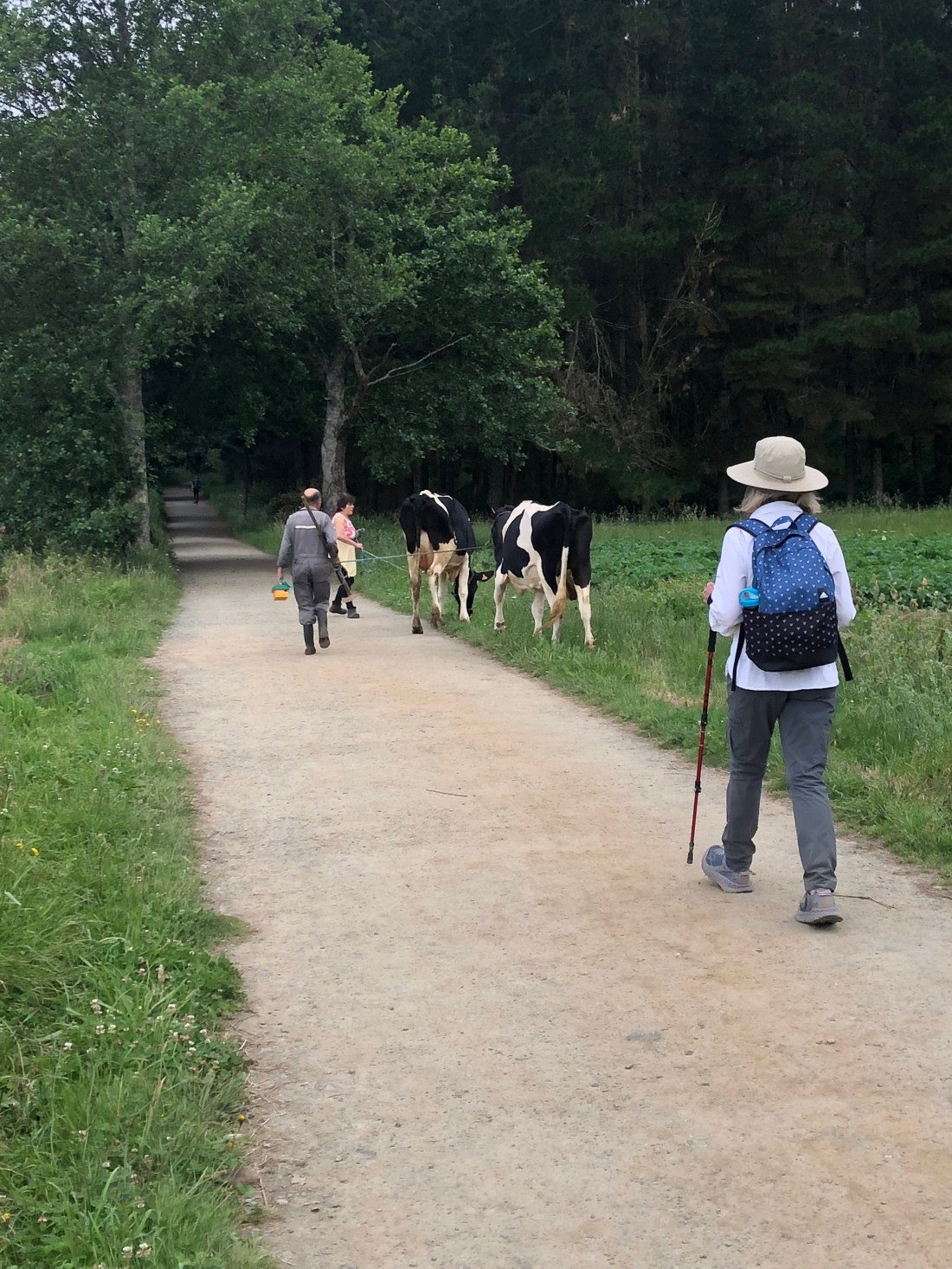
Some old friends joined us for part of the walk today.IMG_3748
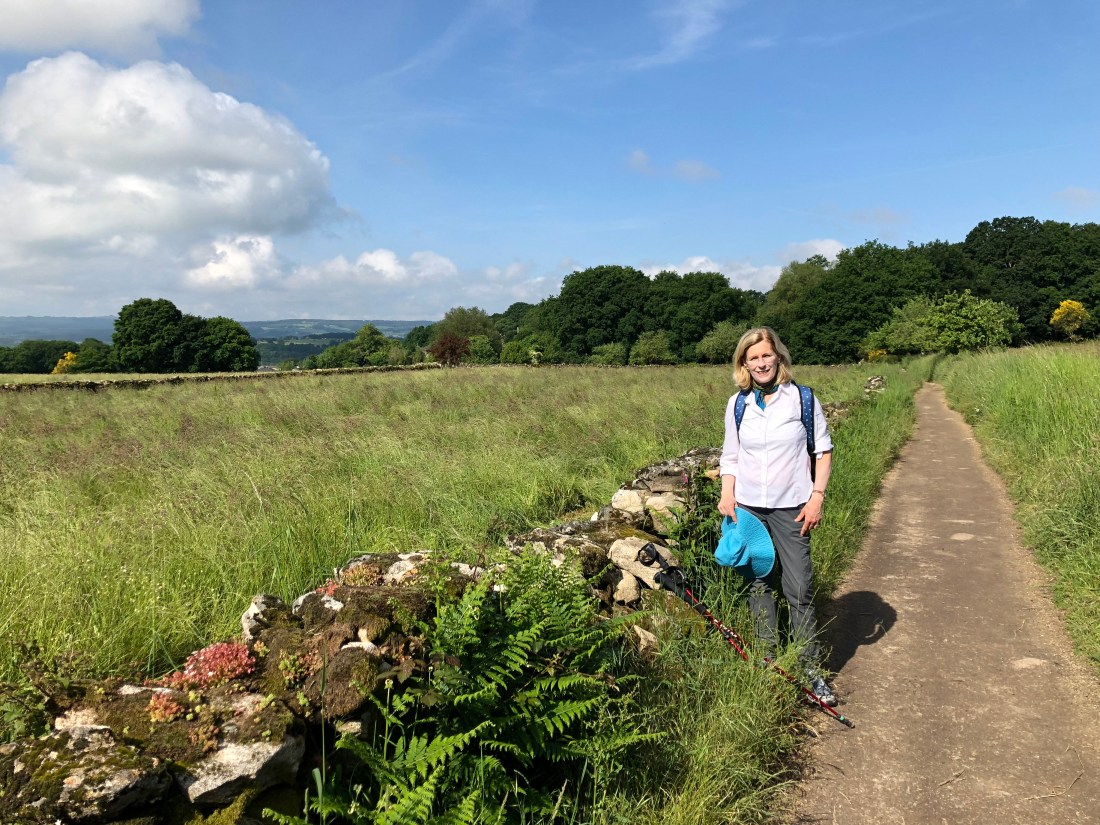
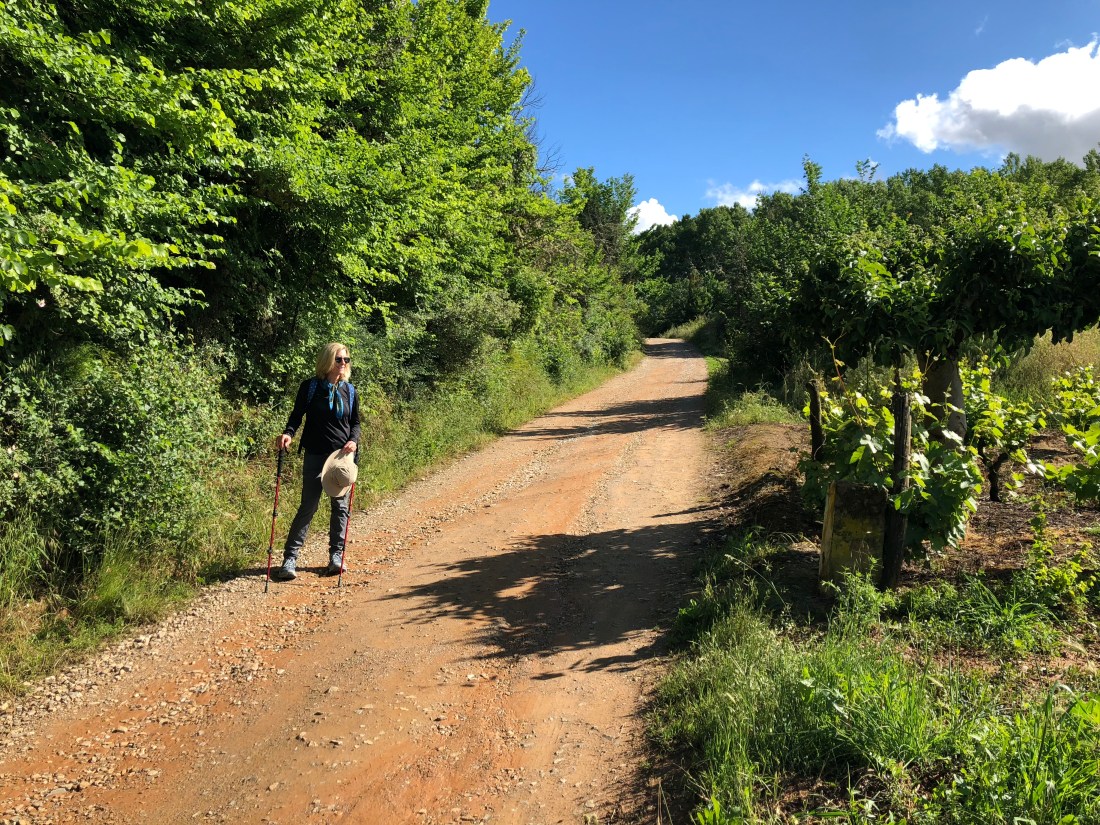
Although the walk was pretty flat, there were several steep climbs, including this one just outside Pedrouzo.IMG_3750When we left the pensione in Pedrouzo, the woman running it told us that we could look forward to an easy walk with no more hills.  We have heard some version of this description of the Camino since Sarria, and it’s always wrong.  
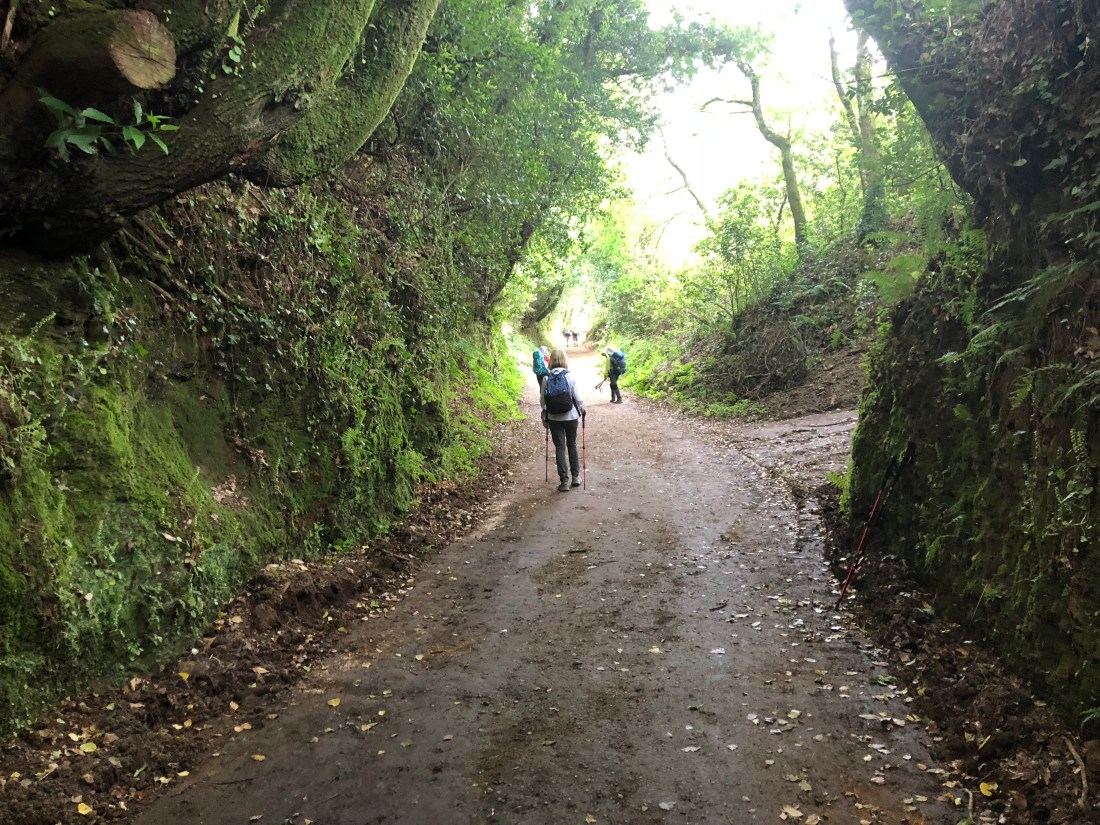
After a few hours of walking, we reached the outskirts of Santiago.IMG_3756
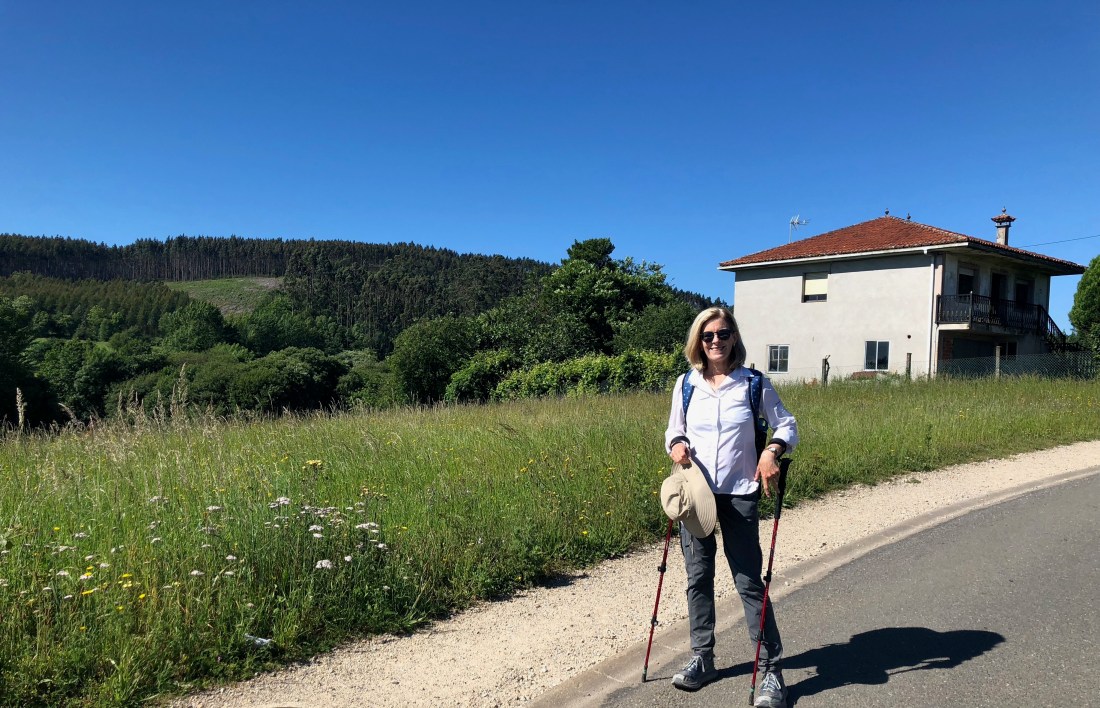
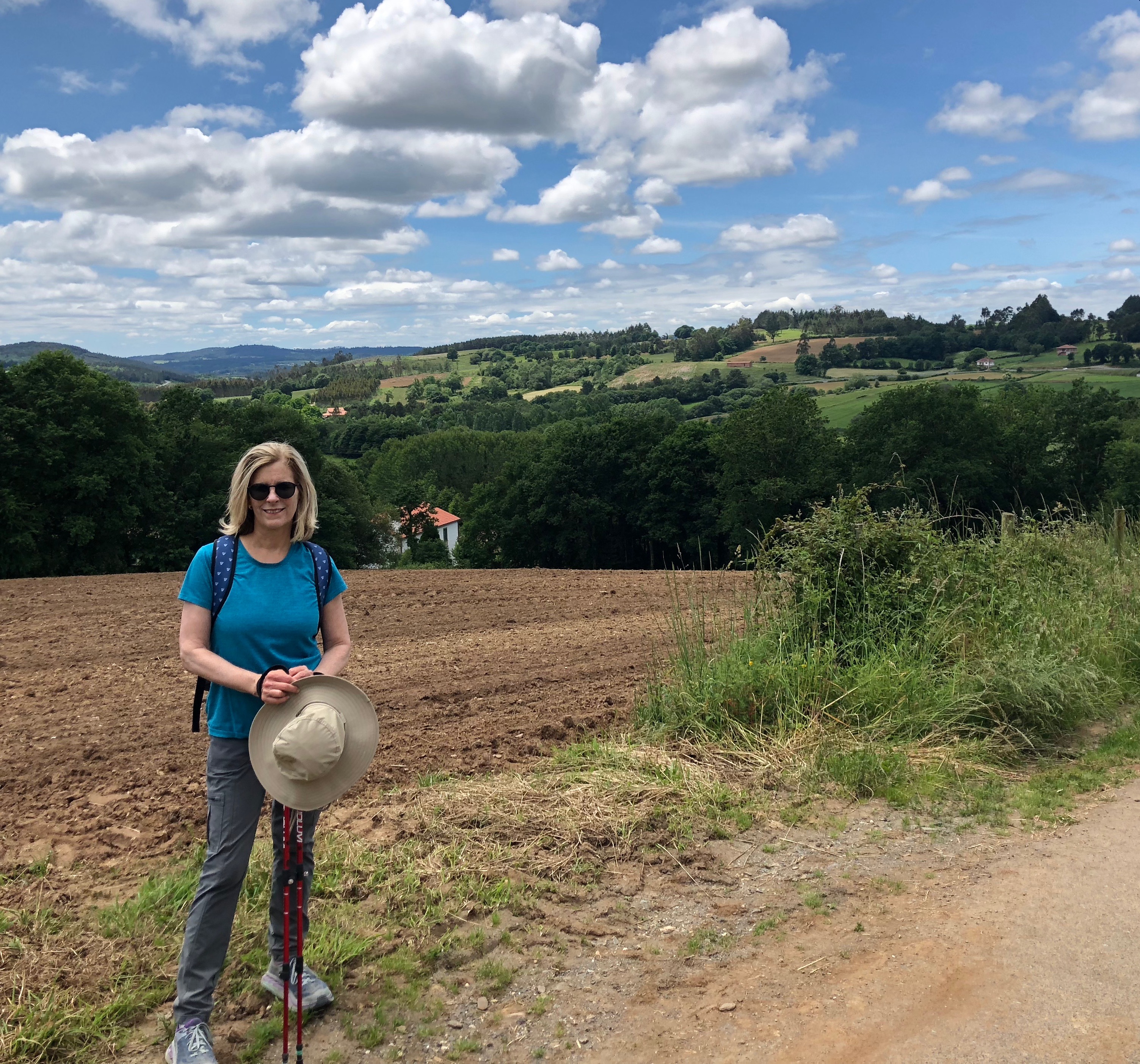
Below is our first view of Santiago.  We are standing on Monte del Gozo, which is several miles outside the center of the city.IMG_3758
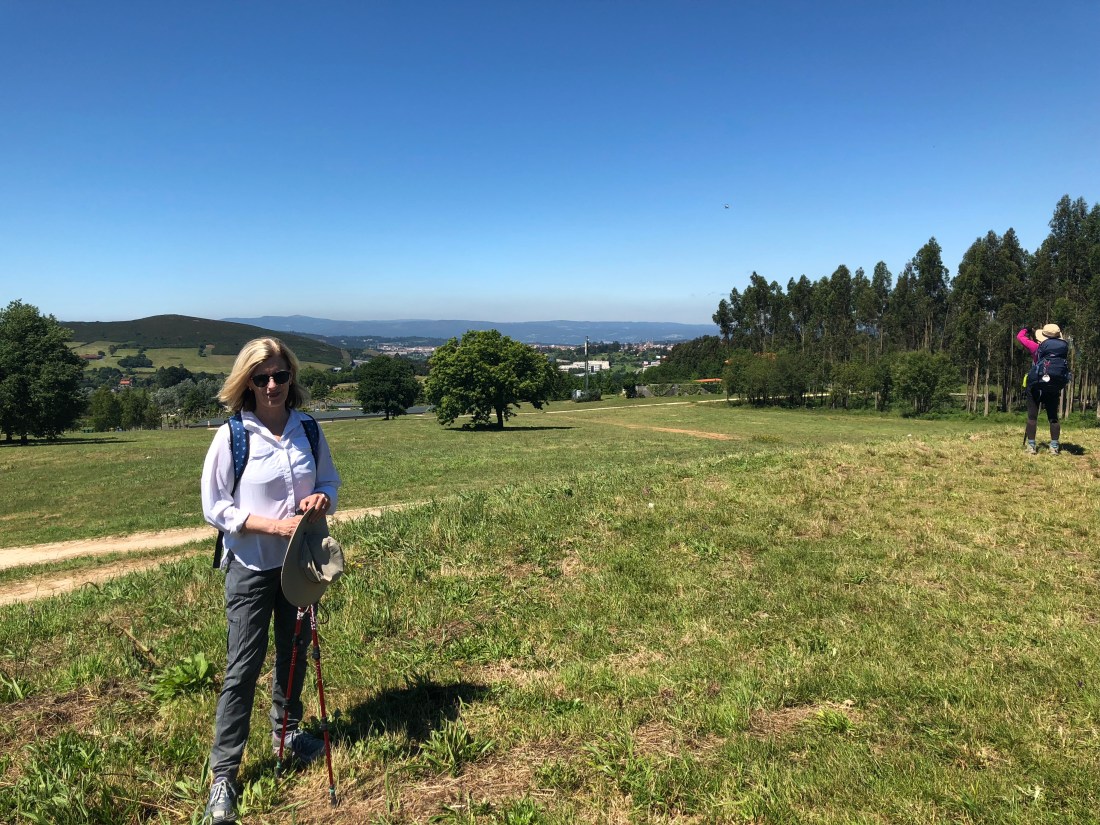
We then walked down the hill into Santiago.  Here is our first view of the cathedral from the old quarter of the city.IMG_3760
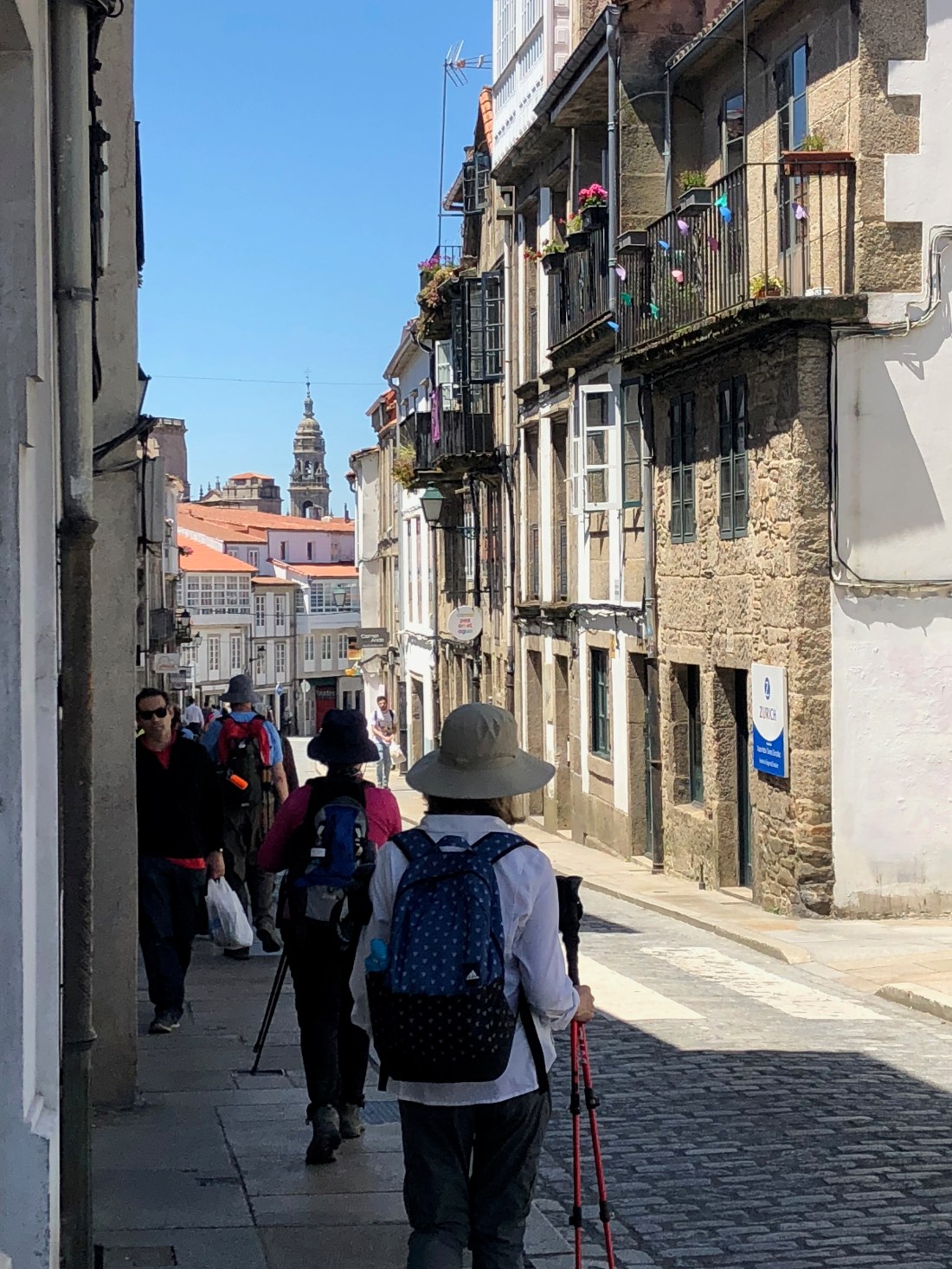
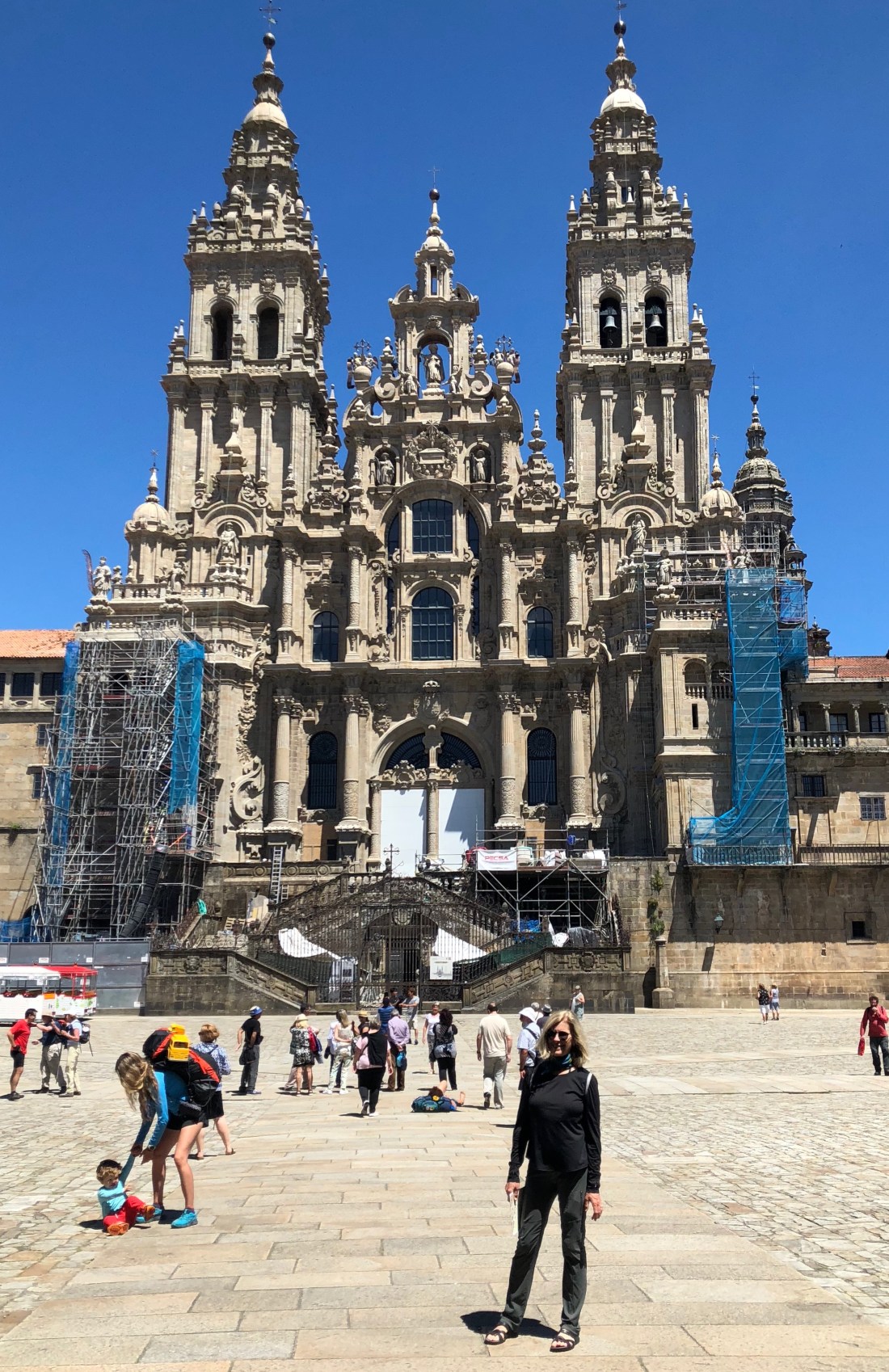
And here is Anne in the square in front of the cathedral.IMG_3772We arrived in Santiago at around 2 in the afternoon, well after the Pilgrim’s Mass, which is held at noon.  
Since we missed the Pilgrim’s Mass when we arrived, we went this morning (Tuesday) to a English Mass at 10 in one of the side chapels at the cathedral and then to the Pilgrim’s Mass at noon.  Both were packed.  And where two or more pilgrims are gathered, it smells like someone needs a shower.

Although the Pilgrim’s Mass was in Spanish, I caught a little of the homily.  The priest pointed that we had come all parts of the world to walk the Camino.  He said that what we had found on the Camino, we must take back home with us. 

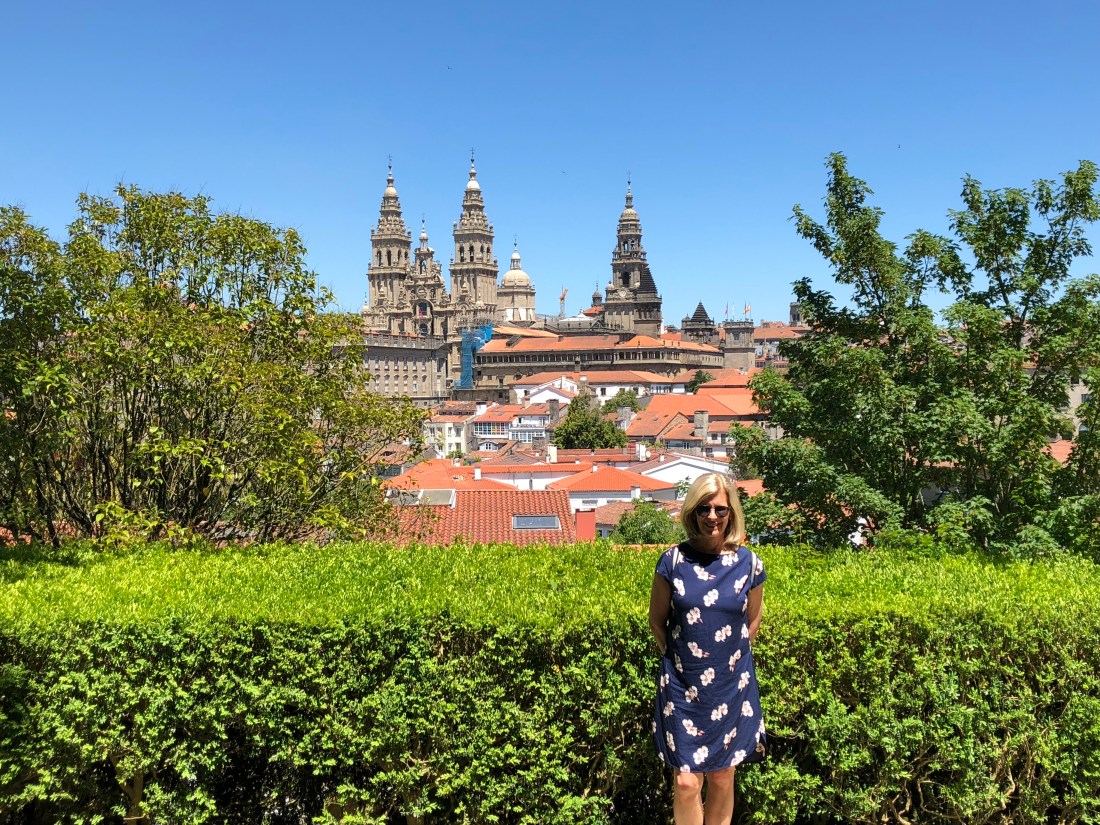
After Mass, Anne and I walked to a park on a hill just outside the old quarter.  Here is the cathedral from the park:IMG_3789Later, we went to the Pilgrim’s Office where we had picked our Compestellas shortly after arriving in Santiago.  The Compestellas are a document certifying completion of the Camino.  We went back to the office today to add our poles to a large pile the pilgrims had deposited there, having no further need for them.  When we got to the office, we bumped into an Australian woman who we had met our first night in Orisson. She was picking up her Compestella.  We have seen her off and on for the past several weeks, traveling alone, and keeping to herself.  This time we talked, hugged one another, and said goodbye.
Arzua to Pedrouzo

We got an early start from our pensione outside Arzua.IMG_3732We are about 25 miles from Santiago, and we have two more days of walking.
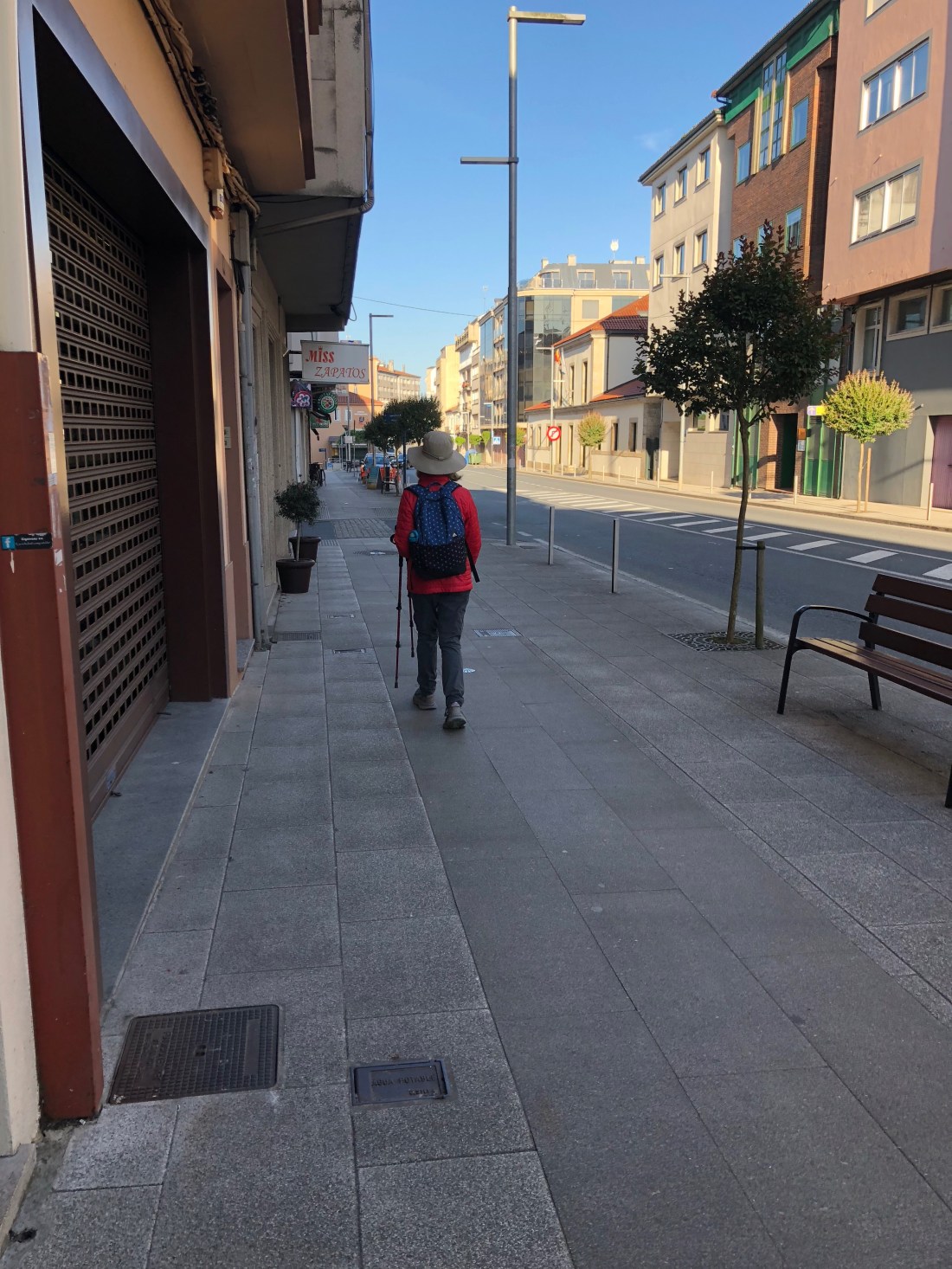
We started out today by walking about half a mile from our pensione into the center of Arzua.IMG_3736

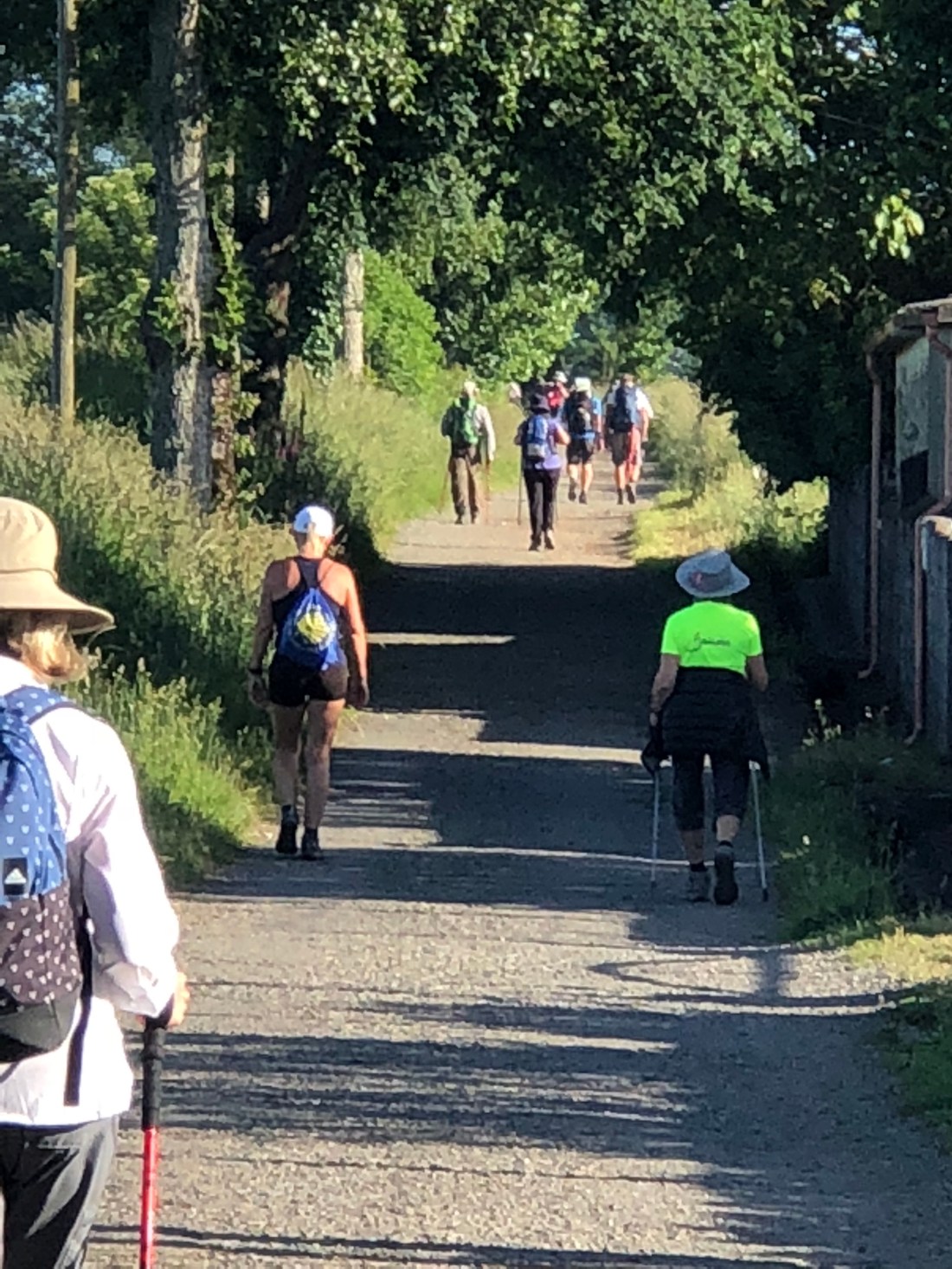
Once we got though Azura, we were back in the countryside on a crowded Camino.IMG_3737We fell in with a couple of Australians, a man and a woman who first met when they signed up with a tour company to walk the Camino.  They have been walking together from Leon.  Talking with them, the time and the miles passed quickly, maybe too quickly.  After a few hours of walking that went by almost unnoticed, we found ourselves near our hostel in Pedrouzo.
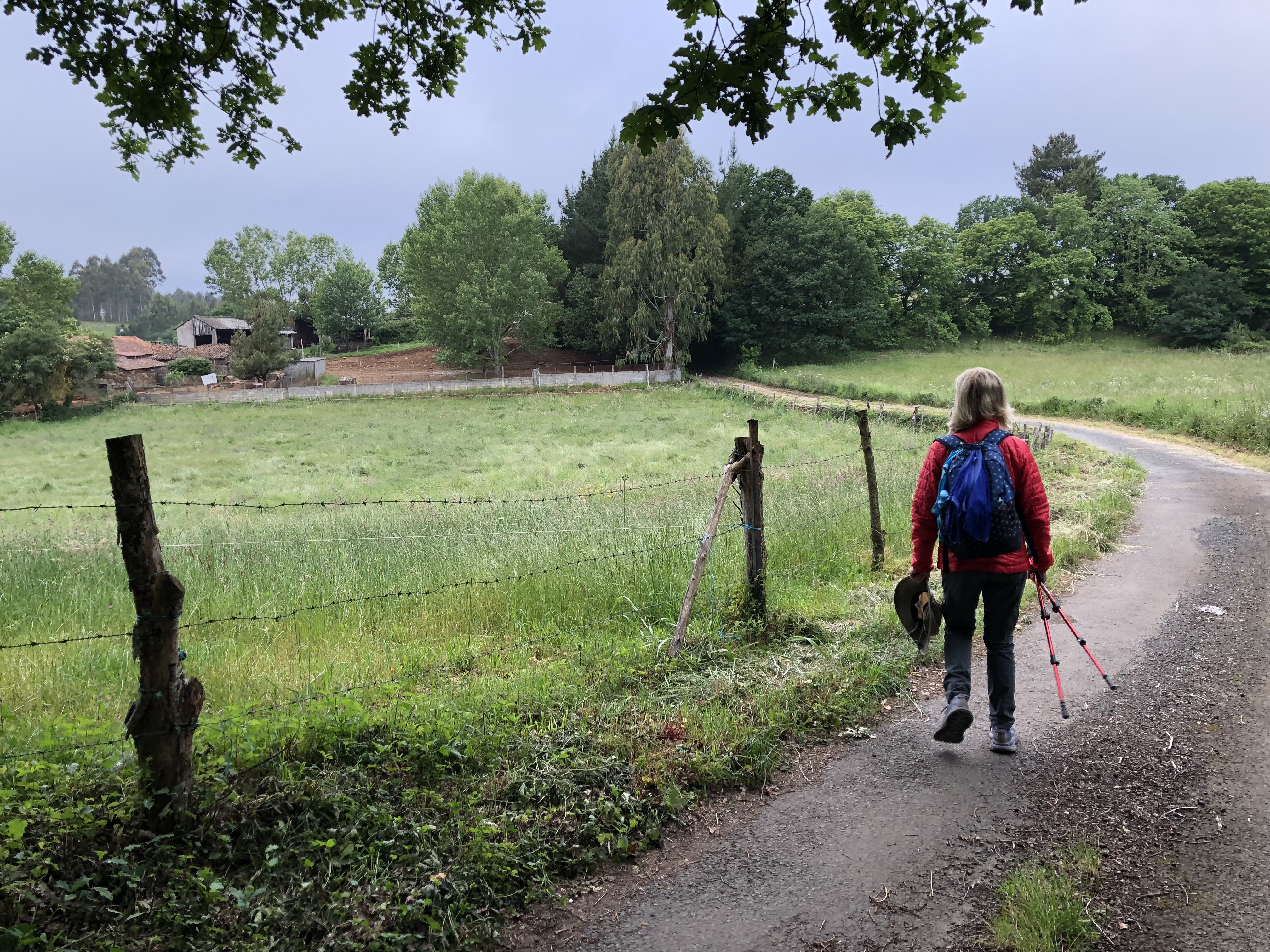
At one point in the conversation, the Australian asked whether I would be happy to finally finish the walk.  I told him no, that I was sad that the walk was ending.  I told him that I had enjoyed every second that I have been here.  I wake up early every morning because I am too excited to sleep.  I can’t wait to see what the day will bring, what we will see, who we will meet. I have to lie in bed quietly until it is time to get up so that I won’t disturb Anne. 

I dreamed several nights ago that I was at the end of the walk.  In my dream I was sobbing. 

Last night we went to Mass in Pedrouza. 

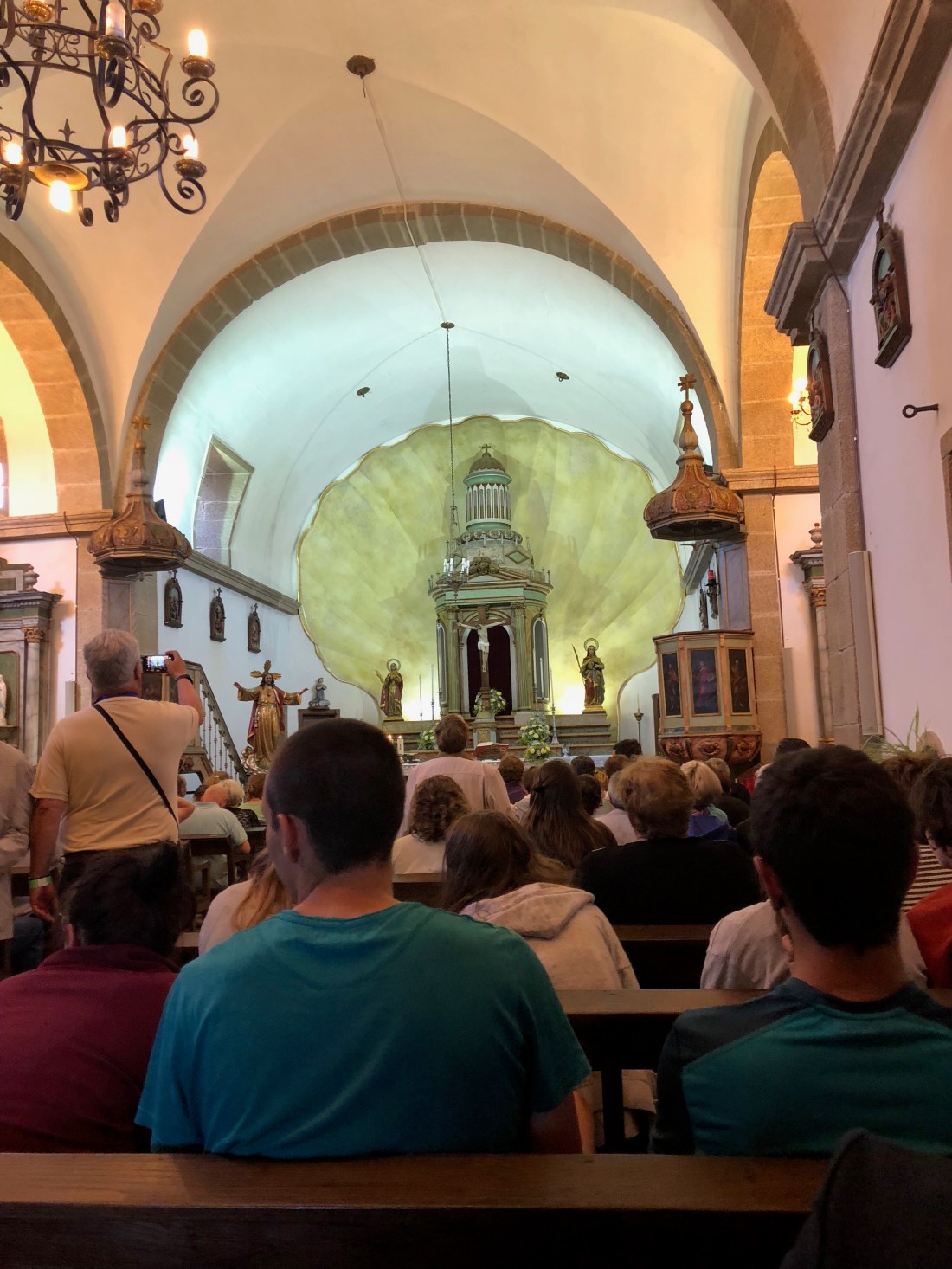
Here is the inside of the church.IMG_3743Just inside the entrance of the church was a picture of Pope John Paul II.  We have seen his picture in a lot of churches.  We have never seen, however, a picture of Pope Francis. Maybe is is due to the troubles between the Spanish and the Jesuits.  Or maybe it is because the first Spanish speaking Pope in 600 years is from Latin America.  Or maybe it’s just because the people running the churches here haven’t gotten around to swapping out the pictures of the old Pope.
At Mass last night the pilgrims vastly outnumbered the parishioners.  Although most of the Mass was in Spanish, the priest celebrating the Mass had a few words in English for the pilgrims. He thanked the pilgrims for coming to the Camino.  He said that the faith of the pilgrims strengthened that of the parishioners.  He asked the pilgrims to pray for the parishioners as they prayed for the pilgrims.

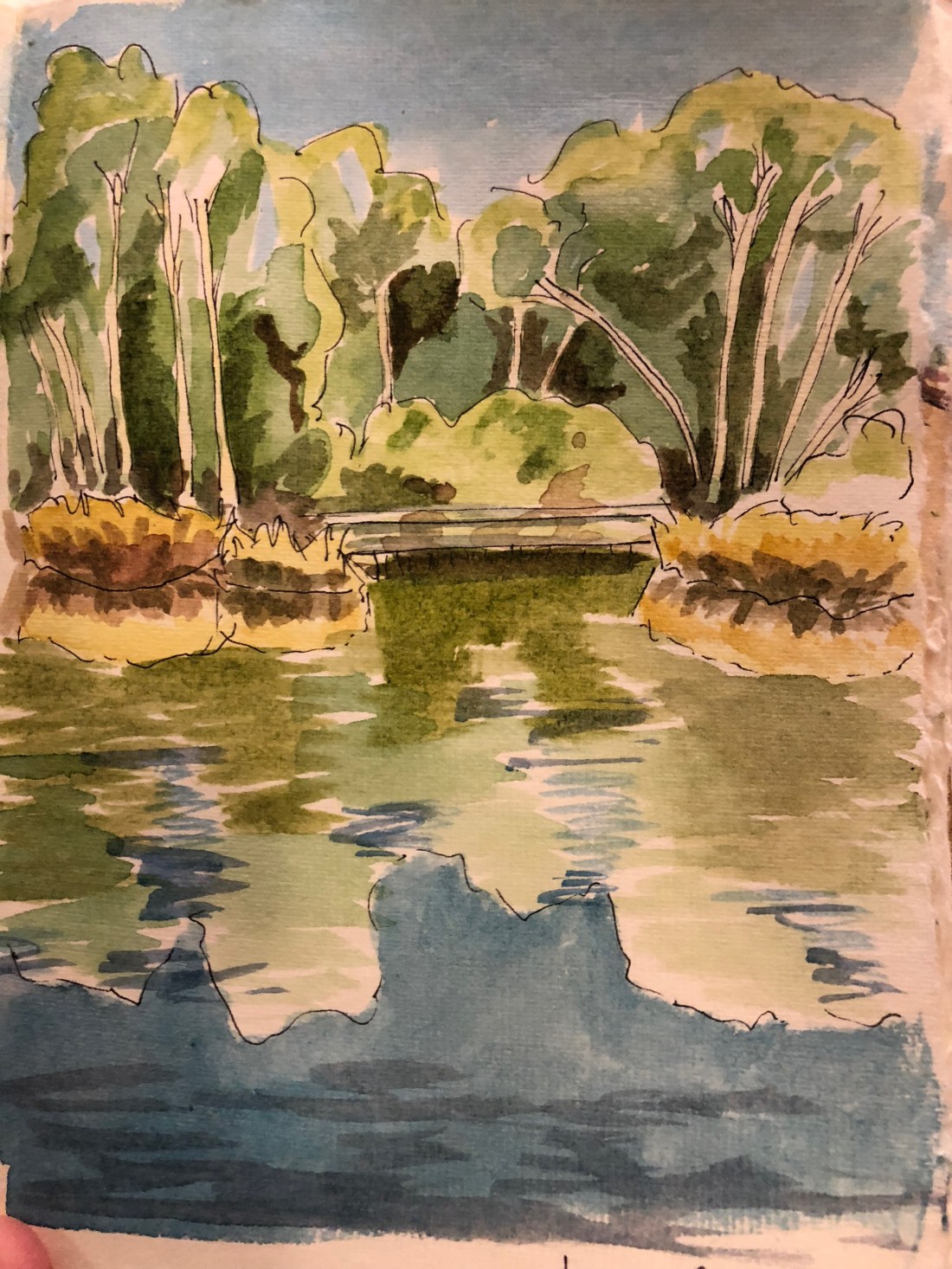
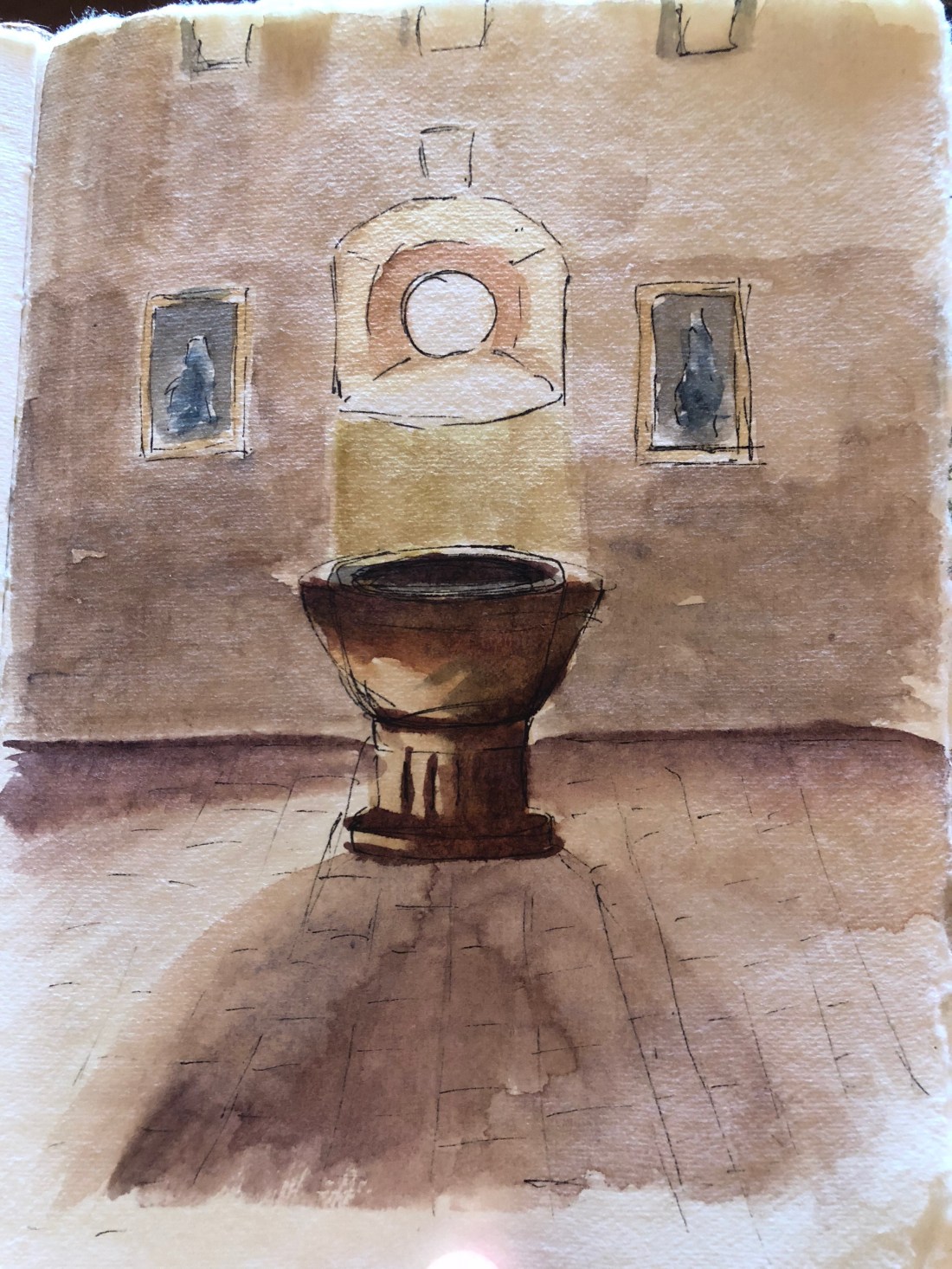
Here is a watercolor of a baptismal font that Anne painted.IMG_3560

Casanova to Arzua

Anne and I have really enjoyed the small number of group dinners we have had at aulberges, including the one we had last night near Casanova.  We had dinner last night with a Dutch man and his daughter who had biked from Logrono and a couple a little younger than Anne and me from Santa Barbara who had walked from Sarria.  The couple from Santa Barbara had talked to a lot of people in their short time on the Camino and were surprised by everyone’s interest in sharing experiences.  It’s true. And it’s one of the best parts of being here.

Last night’s aulberge was about a kilometer off the Camino.  We walked through the country-side this morning to get back on track. IMG_3564.jpgWe walked through several villages today, including Lobreiro. 
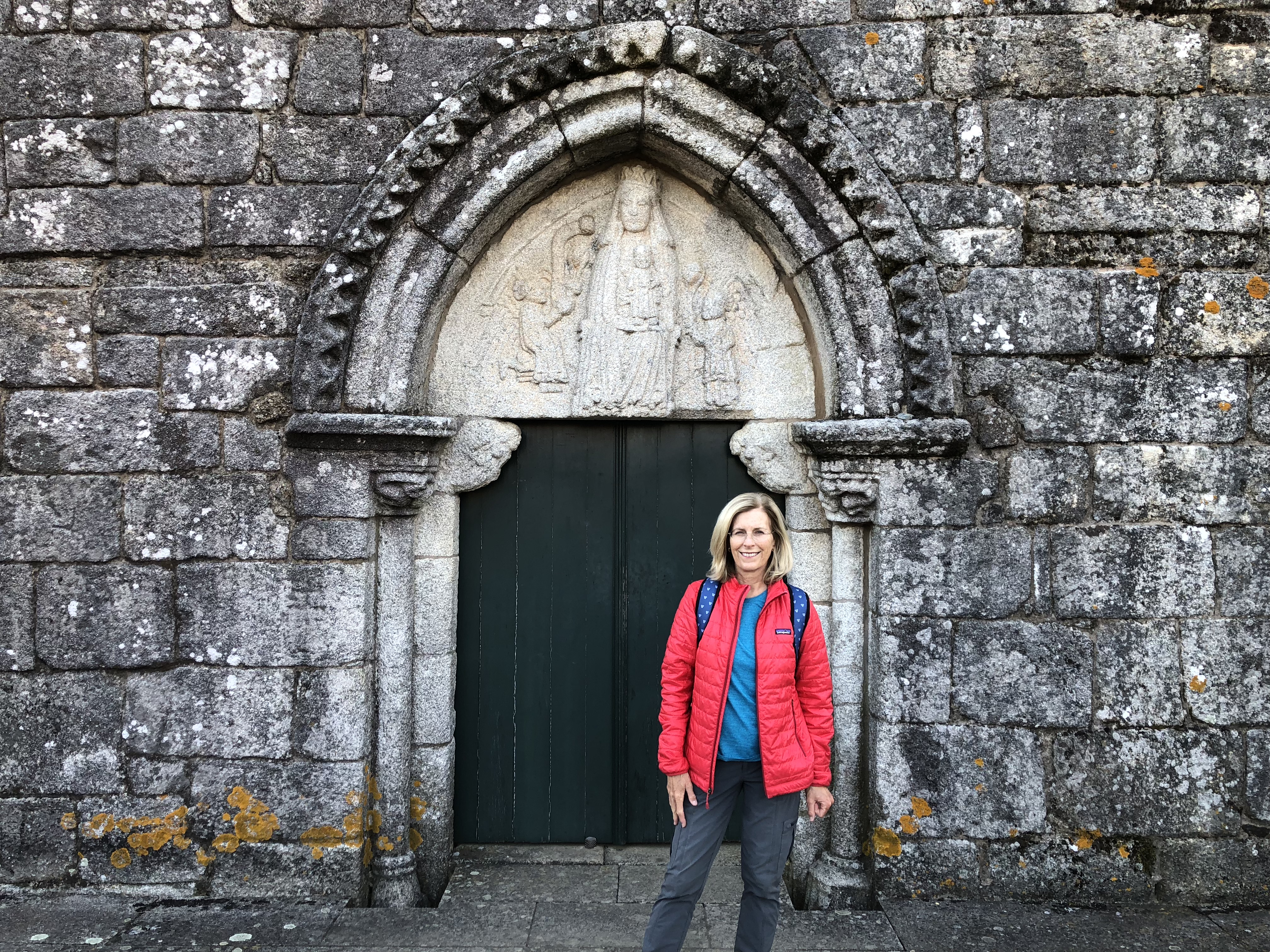
Here is the doorway to the iglesia Santa Maria in Lobreiro.IMG_3570The biggest town that we walked through today was Melide. 
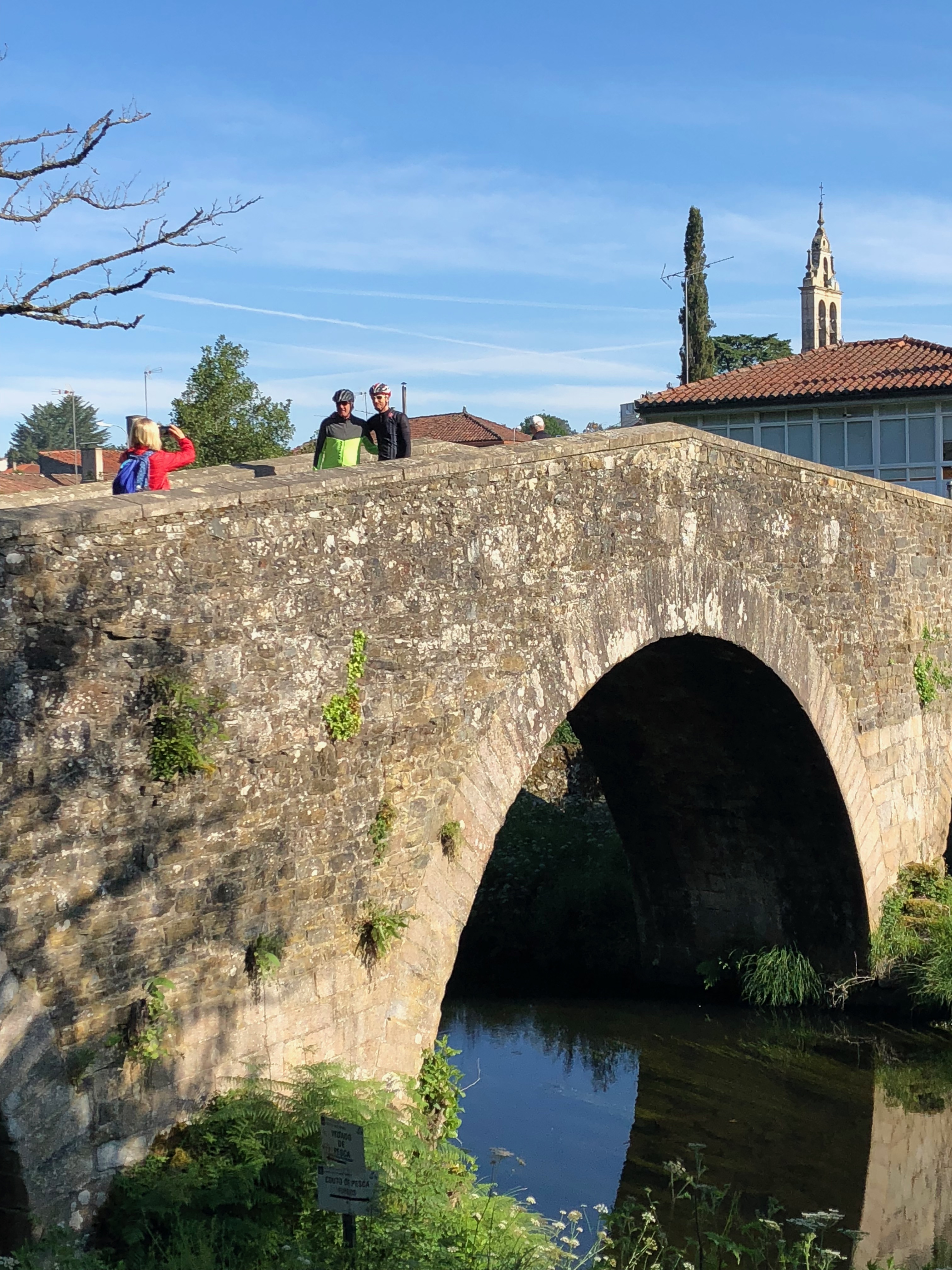
Here is Anne and a couple of new friends on the bridge leading into the old part of town.IMG_3696

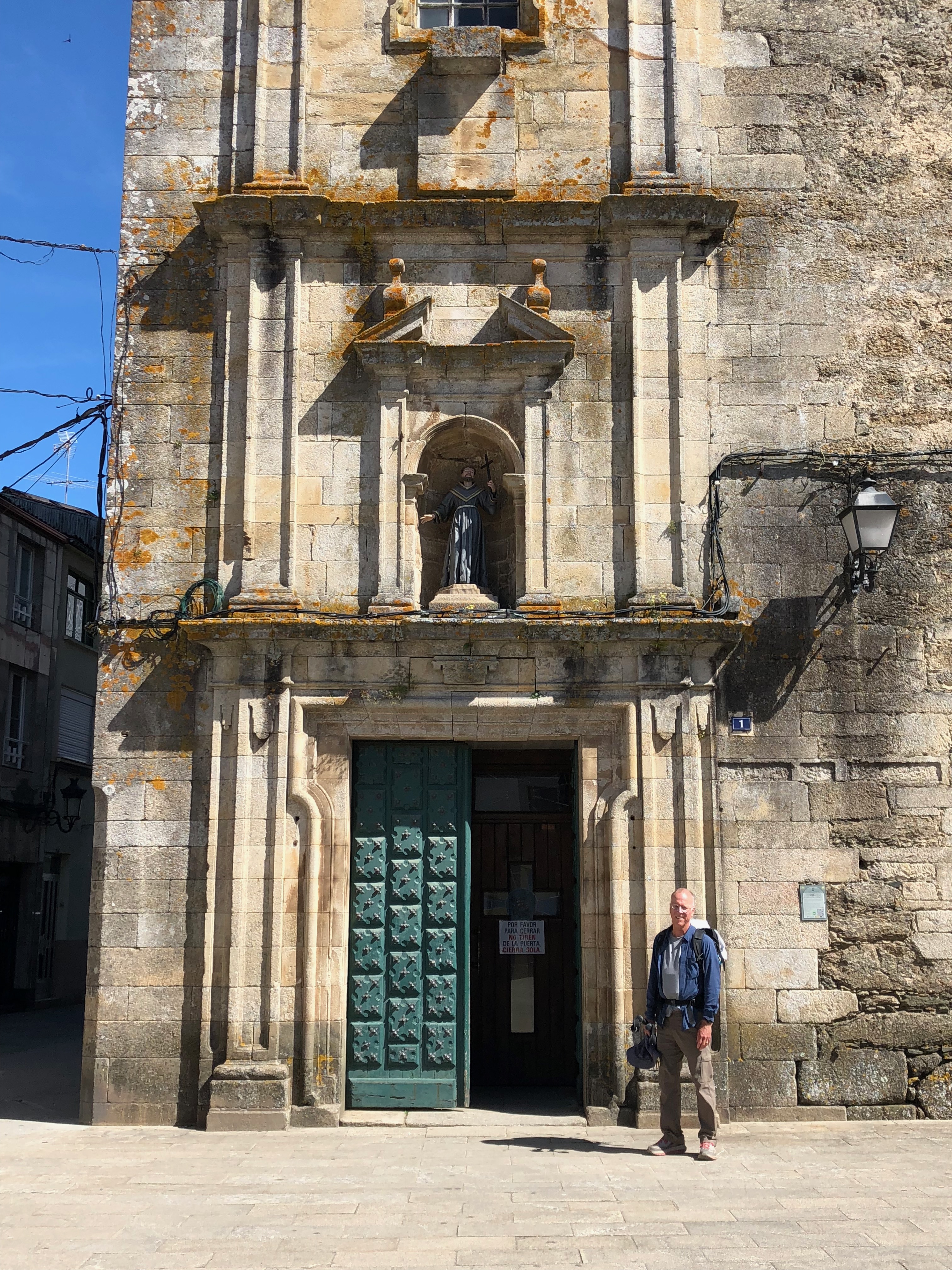
Here is the church in the center of Melide.IMG_3704We stopped at a pulperia in Melide at around 10:30.  We have found it difficult to eat on the Camino.  Breakfast is usually toast and coffee, and after a couple of hours of walking, we’re hungry.  On a good day, we’re near a cafe or have snacks in our backpacks.  On a bad day, we’re out in the countryside and and our backpacks are empty.  And on a really bad day, it’s siesta time when we finally get to a village and all the cafes and supermercados are closed.  When hunger hit this morning in Melide, we were lucky to find ourselves in front of a cafe.  After making short work of the pulpo and pimiento, we got pastries from a panaderia.  We sat in a park and ate the pastries and watched while people put up booths and the finish line for a foot race down the Camino from Sarria.
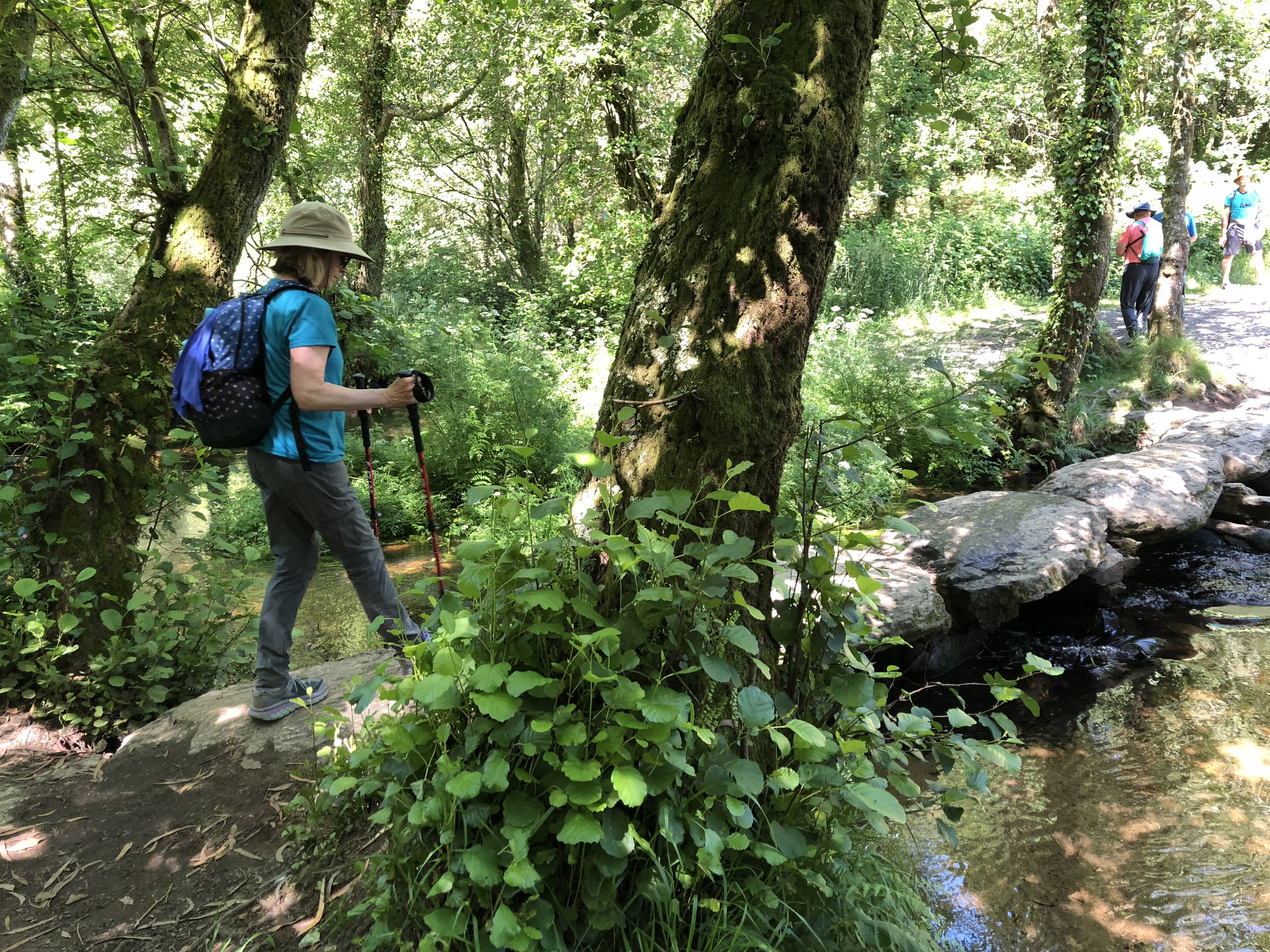
After leaving Melide, we were back in the woods.IMG_3705After walking for about an hour, we arrived in the village of Boente and the iglesia de Santiago. 
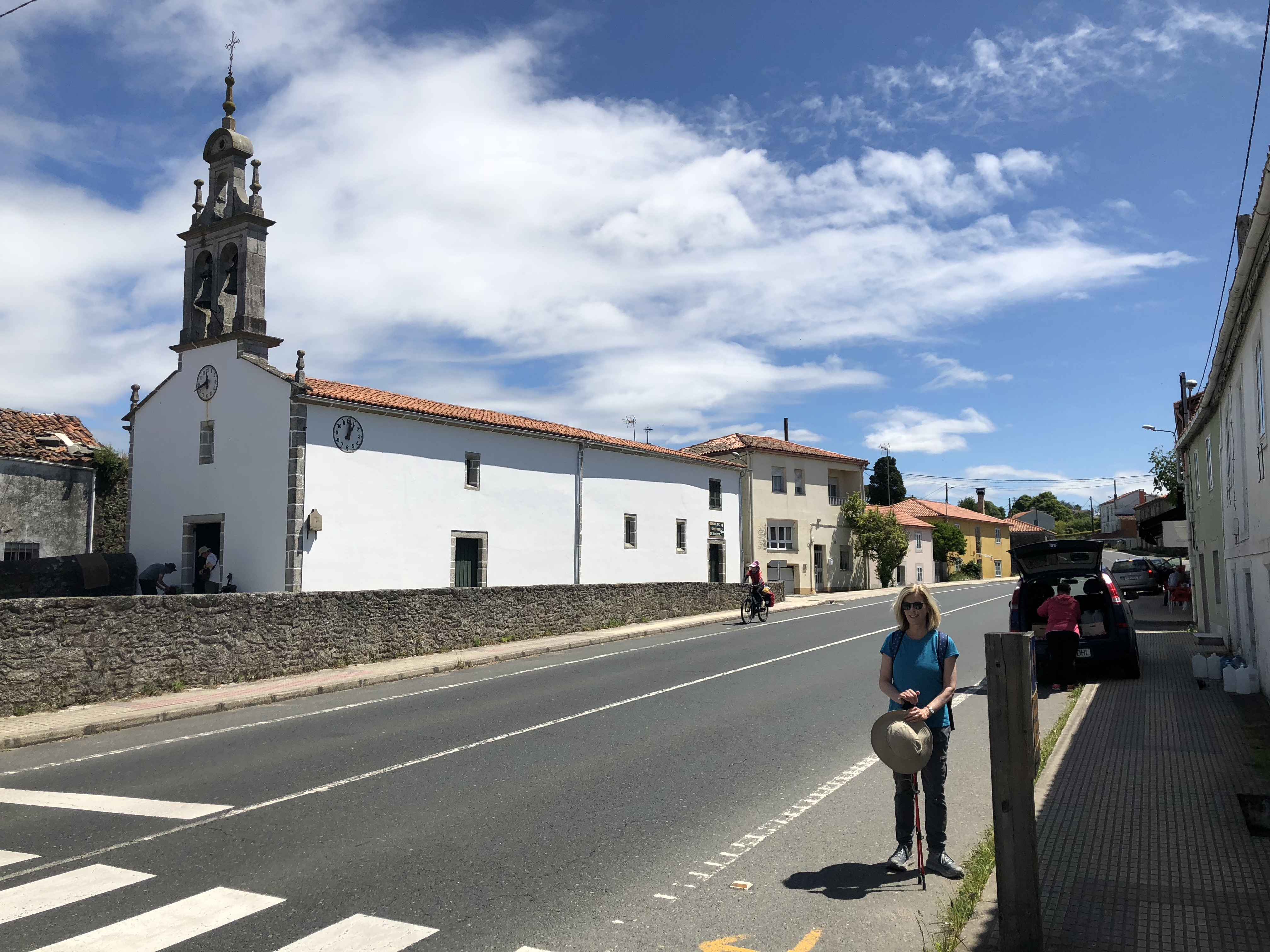
The church has a newer building built around an old bell tower.IMG_3713

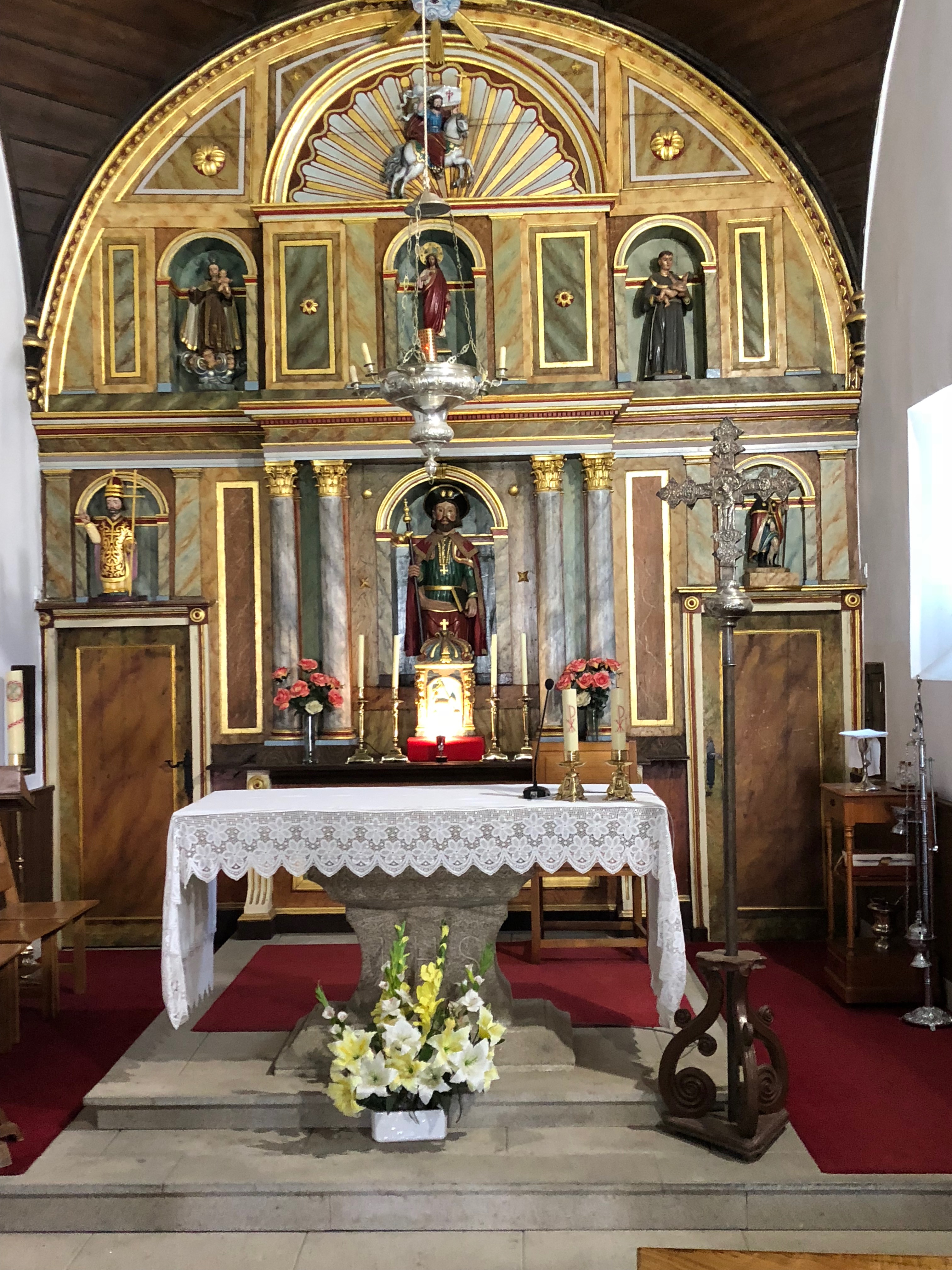
The alter has several depictions of Santiago.IMG_3714

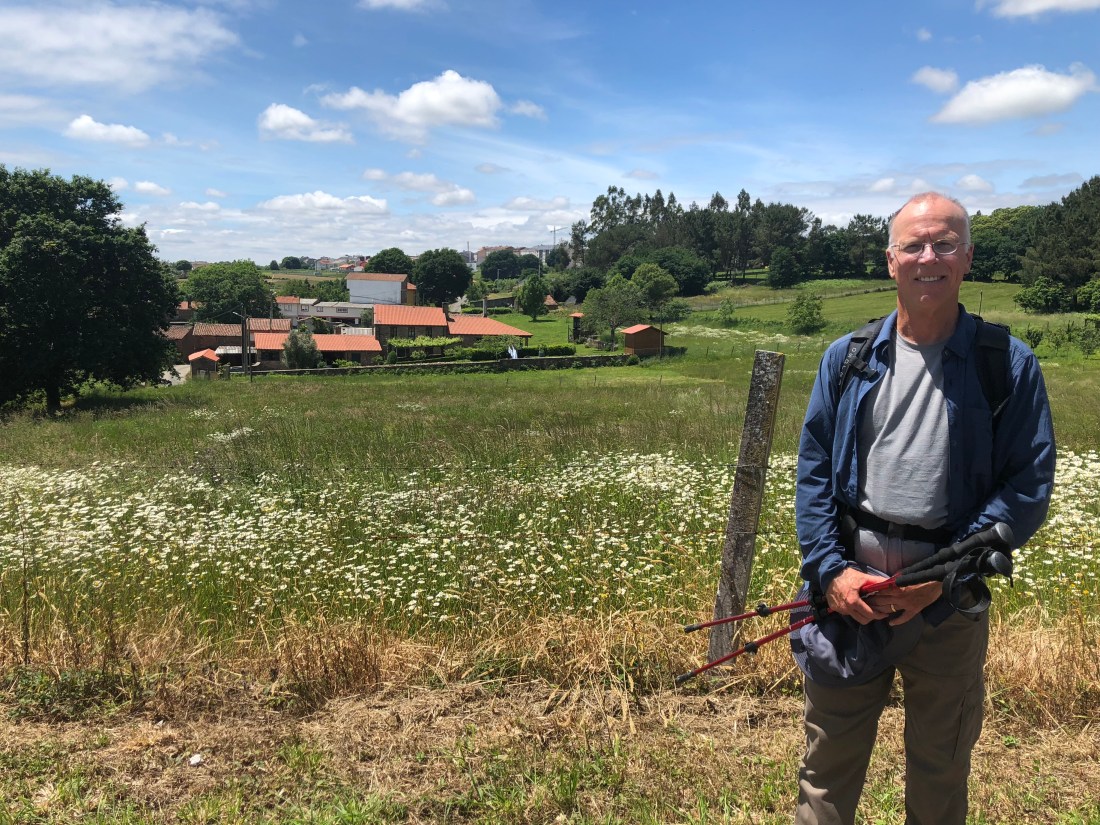
This part of the Camino is among the most scenic.IMG_3725

It is also demanding.IMG_3718We saw posters in Sarria mapping the elevations between Sarria and Santiago.  The posters showed a gentle downward path between two cities.  They probably were made by the Spanish equivalent of the Chamber of Commerce in Sarria.  This part of the Camino is actually physically demanding, with a lot of climbs and descents.  
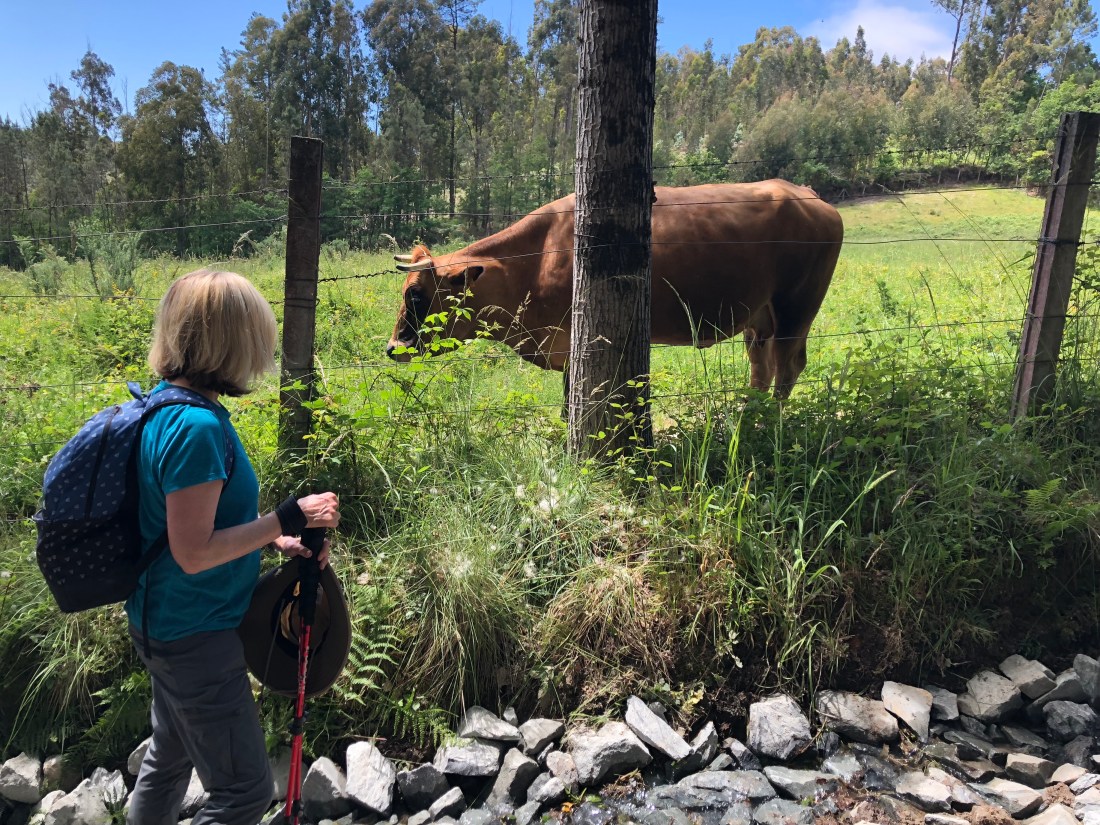
Along the way, Anne made a new friend.IMG_3717

It was late afternoon when we arrived at our pensione just outside of Arzua.IMG_3729We walked about 24 km or right around 15 miles.  Despite what I thought yesterday, we are not staying at the end-of-the-day village recommended by our guidebook. Our pensione is just beyond it.  It’s probably just as well.  When we walked through the village this afternoon, there were a lot of young pilgrims in front of the aulberges drinking and smoking. If there has been a change, it probably doesn’t have anything to do with where we stop at the end of the day. 
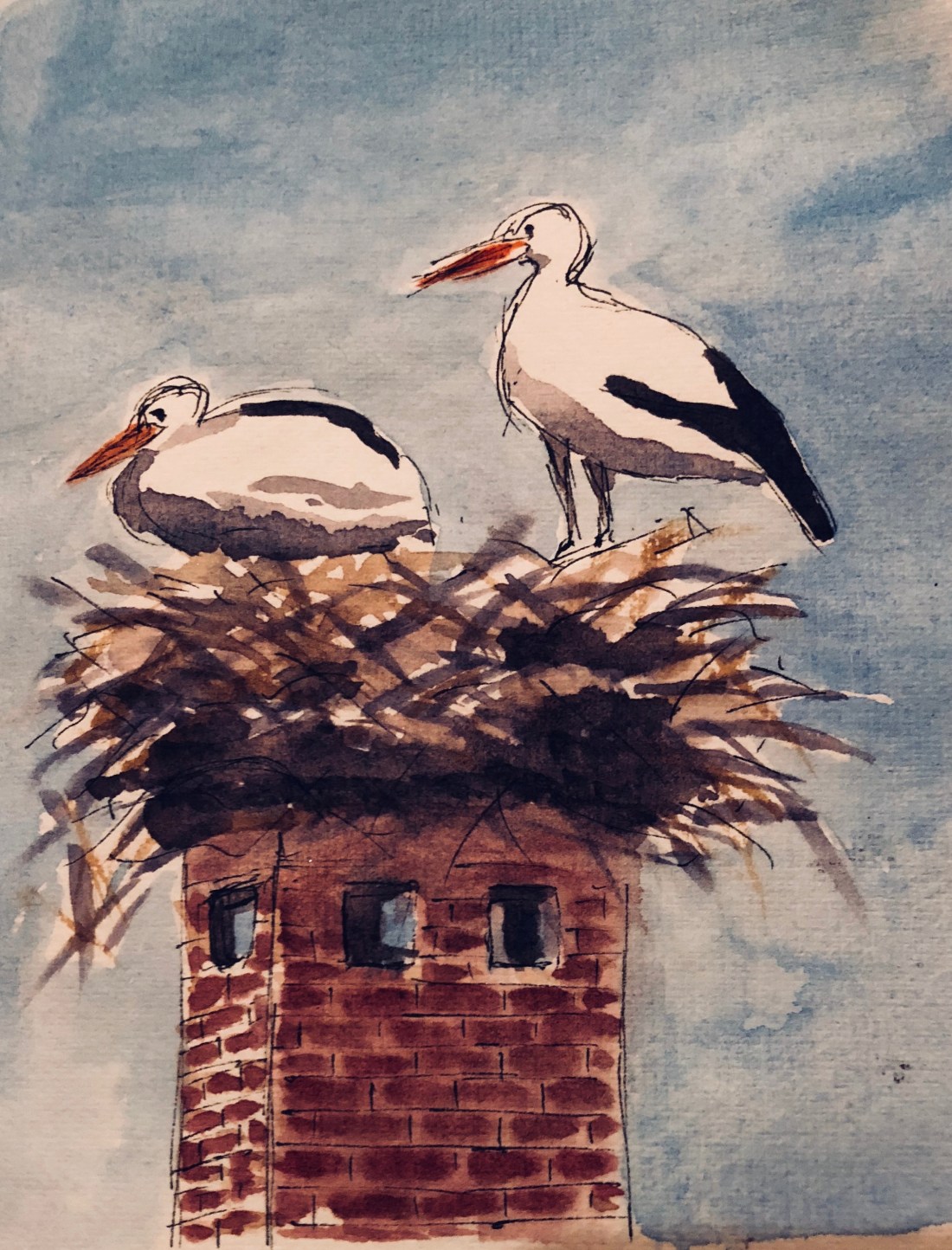
Here is another of Anne’s Camino watercolors:IMG_3562We first saw storks and their nests outside of Burgos.  They had nests on almost every church steeple between Burgos and Astorga. It has been awhile since we have seen a stork or a stork nest.
Hospital de la Cruz to Casanova

Here is the pensione that we stayed in last night in Hospital de la Cruz.IMG_3520.jpg

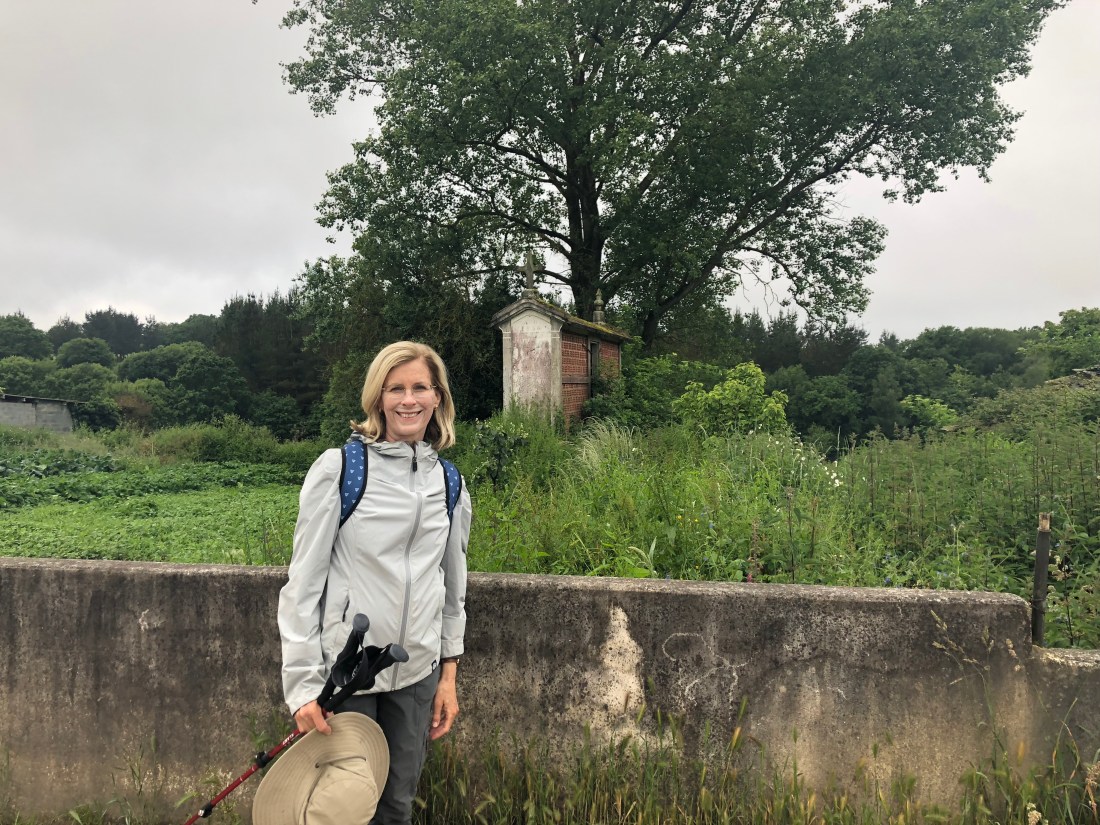
Behind Anne is a type of small building that have seen in almost every farmyard in Galicia.IMG_3523We finally got close enough to look inside one today.  They are corn cribs.  This one is a little unusual because it is decorated with a cross.
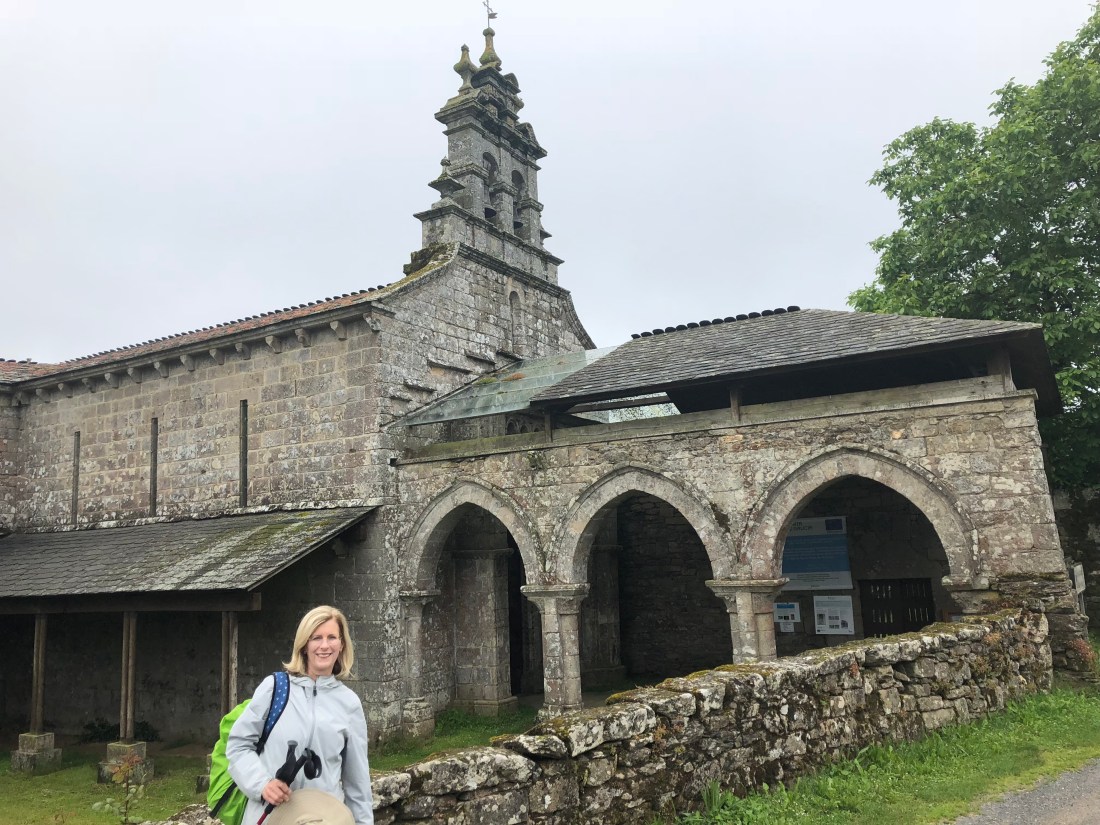
We took an excursion off the Camino today to see the Vilar de Donas, which was the seat of the knights of Santiago.  We walked off the Camino for about a mile on a wooded lane to get there.IMG_3536

Most of the buildings at the Vilar de Donas are ruins, except for the iglesia El Salvador.IMG_3535

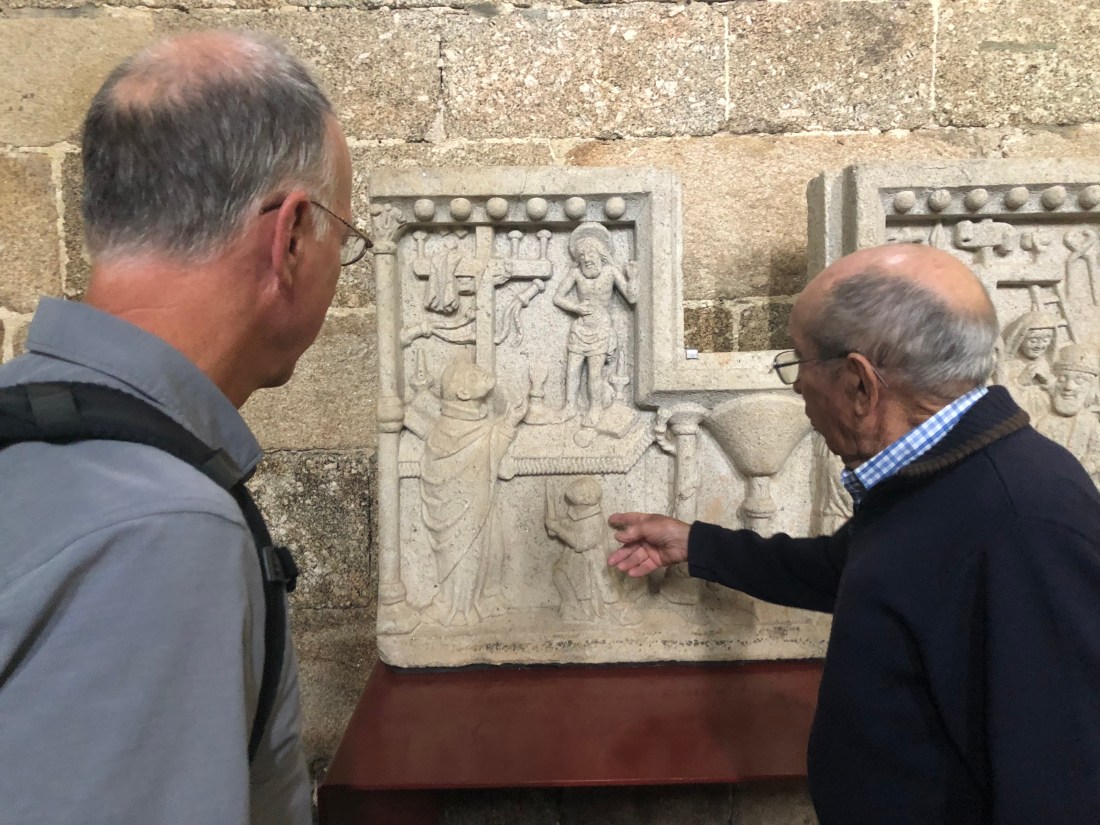
The church was locked when we tried the door.  We could hear noise coming from inside, and while we stood by the door, an elderly man came up and let us in.  He then began describing the church and its history, in Spanish.  He was very animated, and I am sure that it was a superb explanation. We just couldn’t understand very much of it:

IMG_3525

At the end, I did understand him to say that he was 94 years old, and I was able to speak well enough to protest to his satisfaction.  He beamed, wished that God would keep us in his shadow–I think he said that– and off we went.

We walked back to the Camino and then to the village of Palais de Rei.  The best feature of that village is its name.

On the Camino outside Palais de Rei, Anne attracted some followers.IMG_3546

And she reconnected with some old friends.IMG_3550

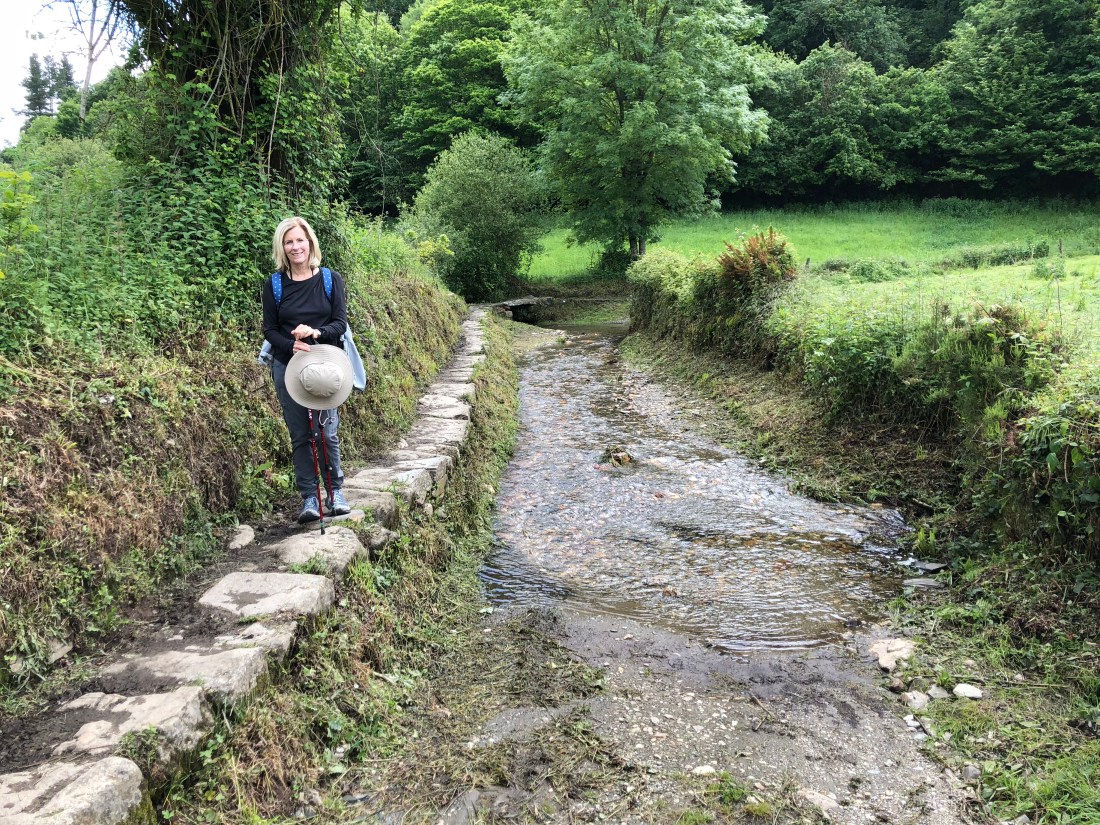
Our aulbergue tonight is off the Camino.  To reach it, we left Palais de Rei and walked down into a valley.IMG_3552.jpg

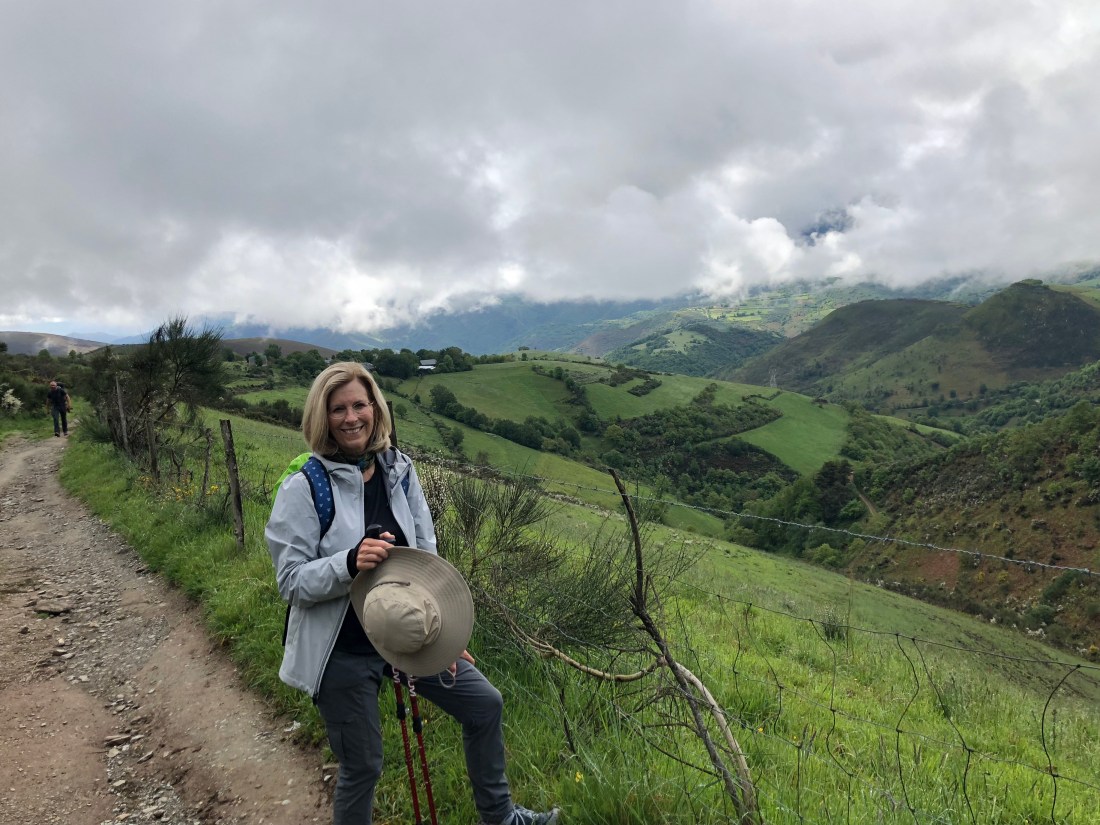
And up along a hill.IMG_3555Our guidebook said that that albergue was 1.5 km off the Camino; but it was easily twice that.  We walked over 25 km today, or 15 miles, including the excursion to Vilar de Donas. 
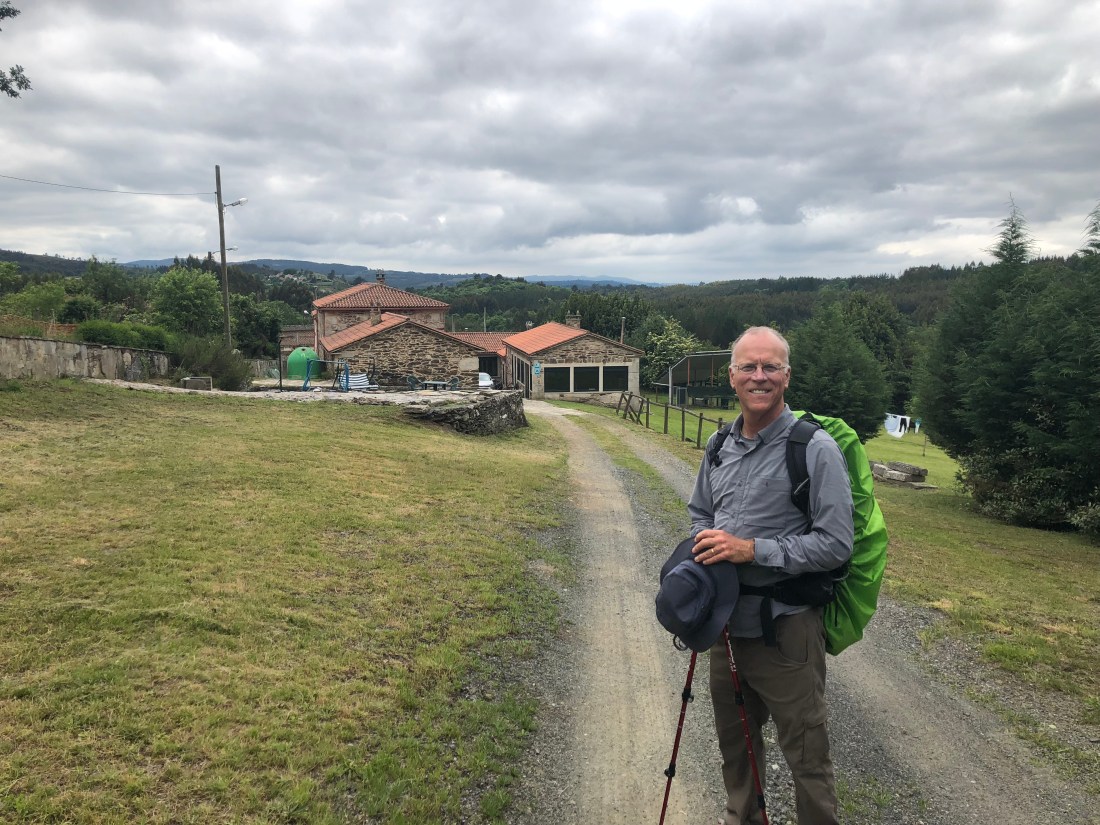
We were happy when we finally reached the aulberge.IMG_3556For several weeks, we have been staying in smaller villages that are midway between the larger ones that are the recommended stopovers in our guidebook.  We have stayed in these in-between villages because we have cut down on number of miles we are walking each day.  Also, we did not pre-book our lodgings, and it is easier to find rooms in smaller villages.  Although the smaller villages are quiet and relaxing, something of the Camino experience has been lost.  Perhaps this loss has nothing to do with the places we have stayed. But we will be in larger villages for the next two nights, and I’m really looking forward to the change
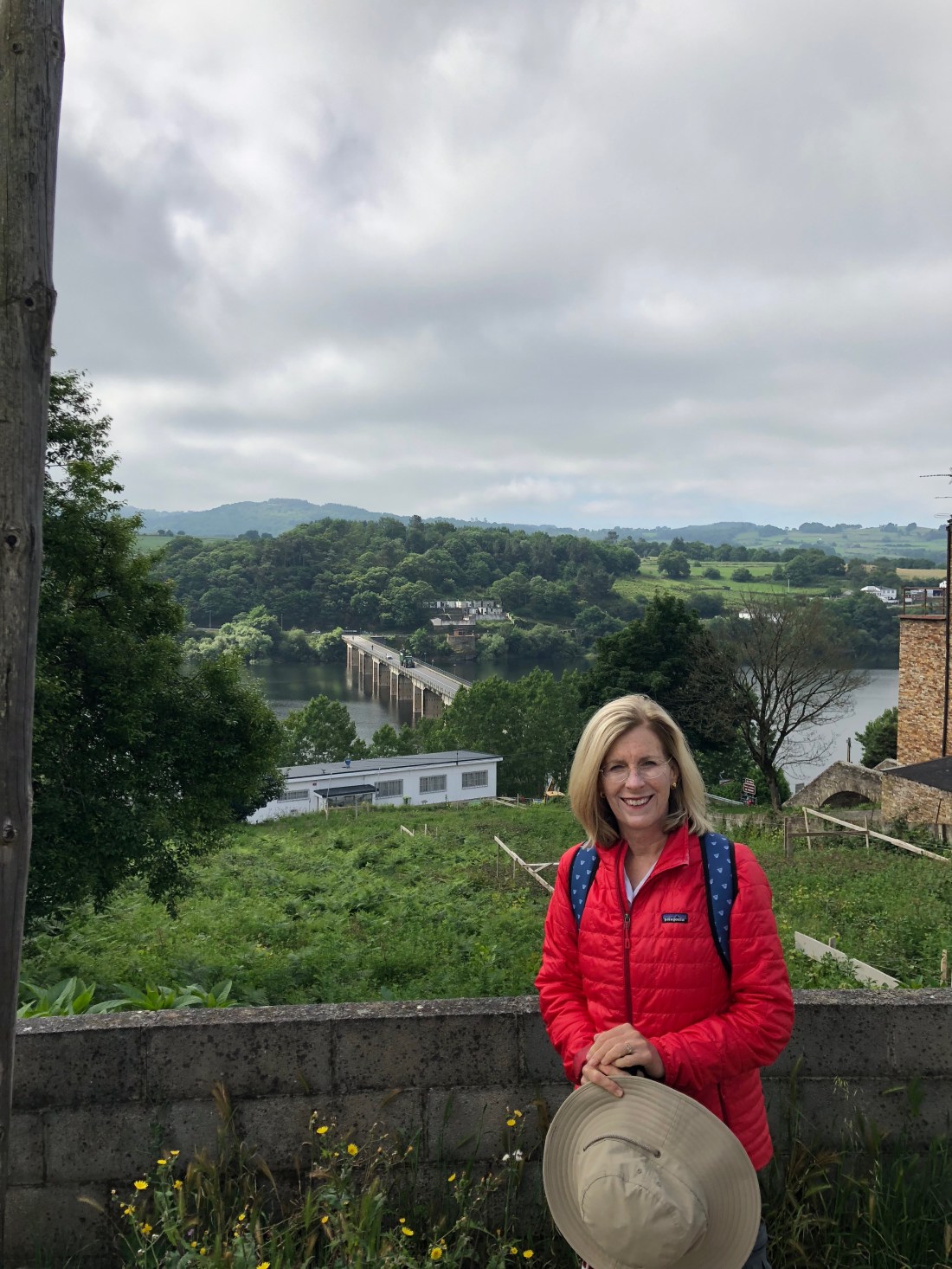
Mercadoiro to Hospital de la Cruz

This is Portomarin, the first village we came to this morning.IMG_3059.jpg

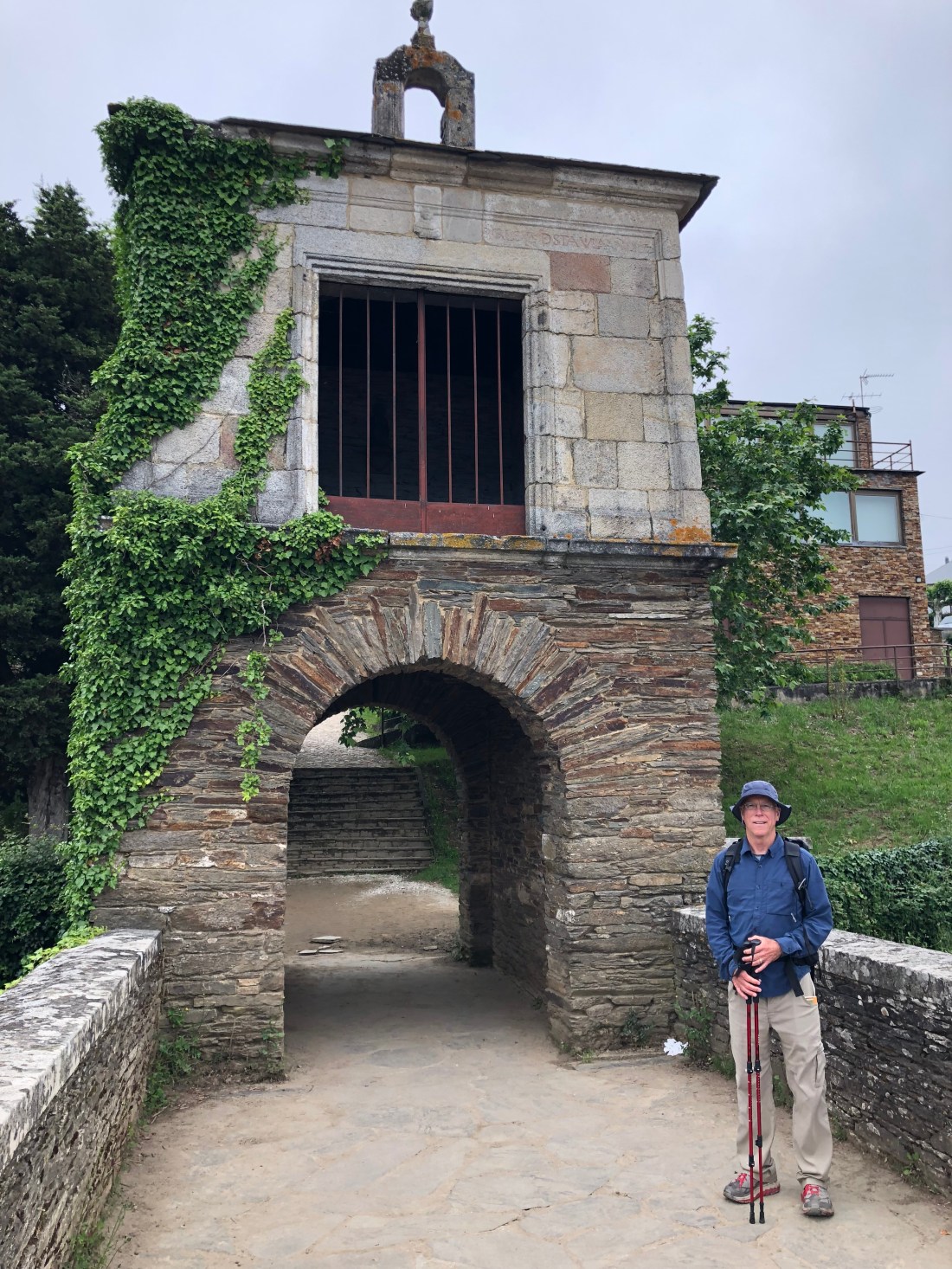
Here is the gate to the village.

IMG_3058

The gate is about a half mile from its original location, which is now under 50 feet of water.  The most historically significant buildings in the village were moved up on a hillside in the 1960’s to make way for a reservoir.  

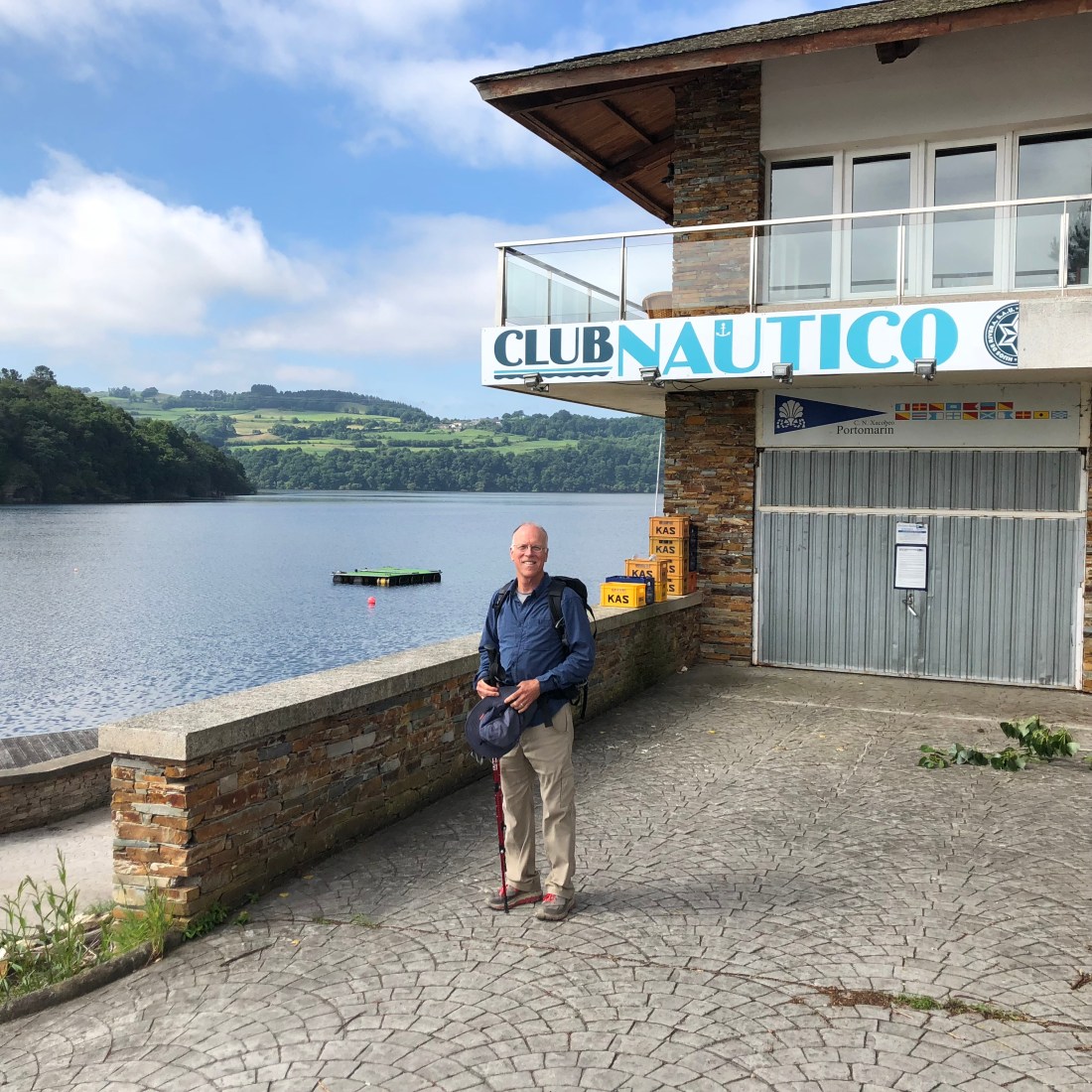
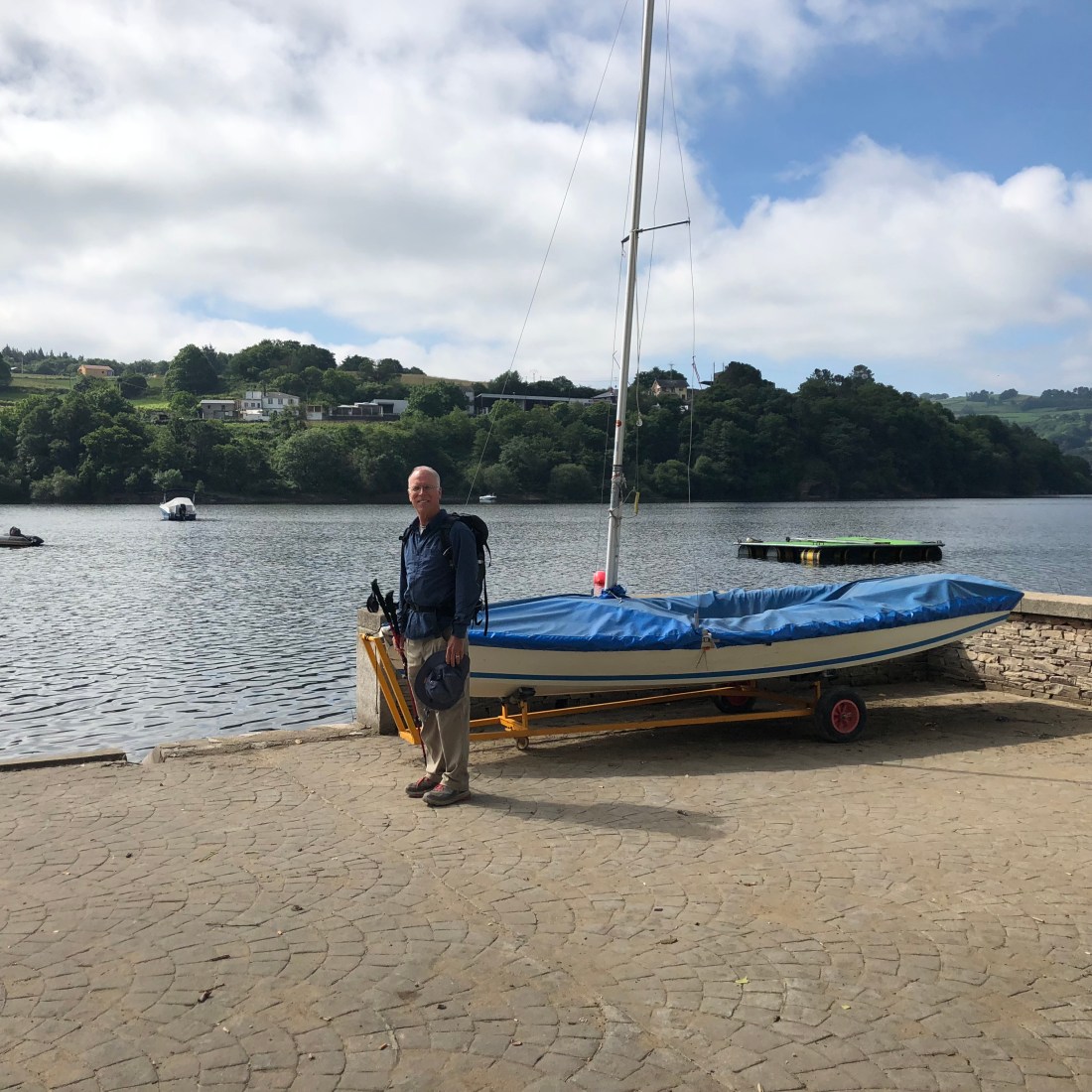
As we walked towards Portomarin this morning, I told Anne that the reservoir looked like a good place to go sailing.  It was only 9 in the morning, and already the breeze was up.  

It must be a good place to sail—here is the Club Nautico.IMG_3061

Here is one of the club’s four Snipes.IMG_3060

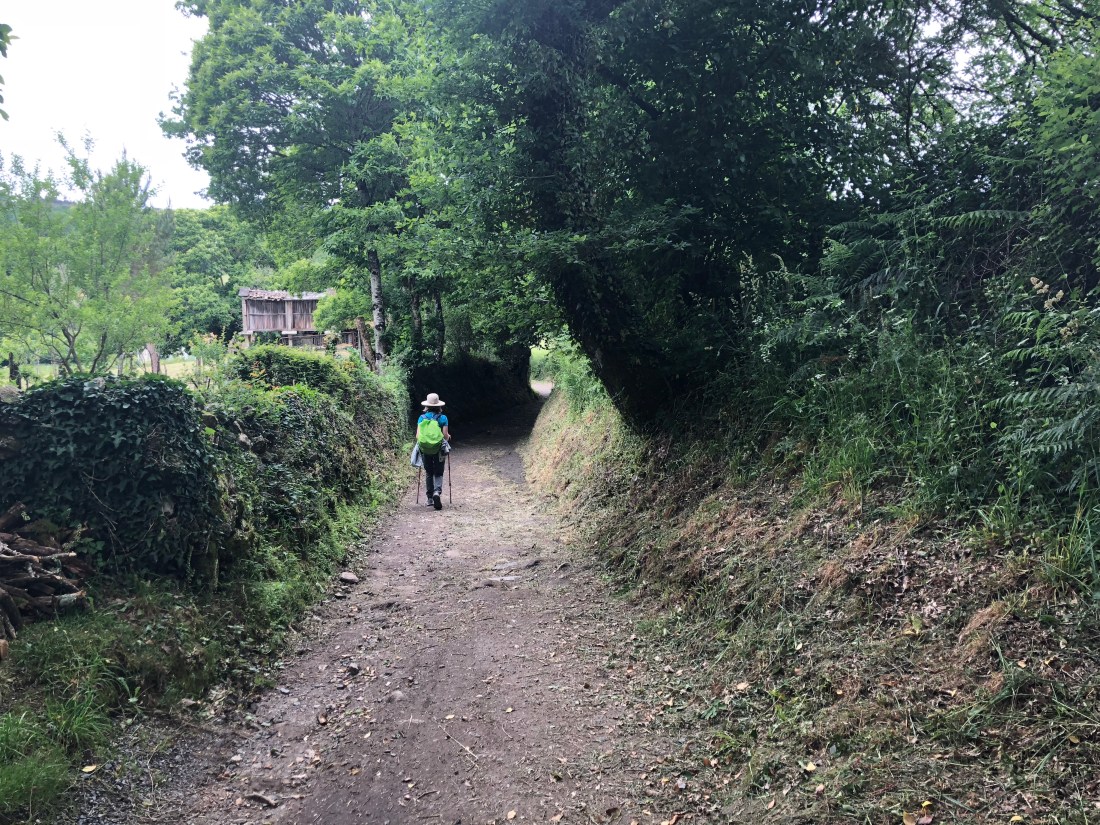
From Portomarin, we walked up a hill into a wooded area.IMG_3066

Then down the hill and past the village of Toxibo.  Here is the toxicologist in Toxibo.IMG_3516

And then back into the woods.IMG_3517A short time later, we were at our hostel.  It was a short day, around 21 km, or just over 12 miles.
Sarria to Mercadoiro

We have a short walk today, from Sarria to Mercadoiro, around 18 km, or just under 11 miles.  

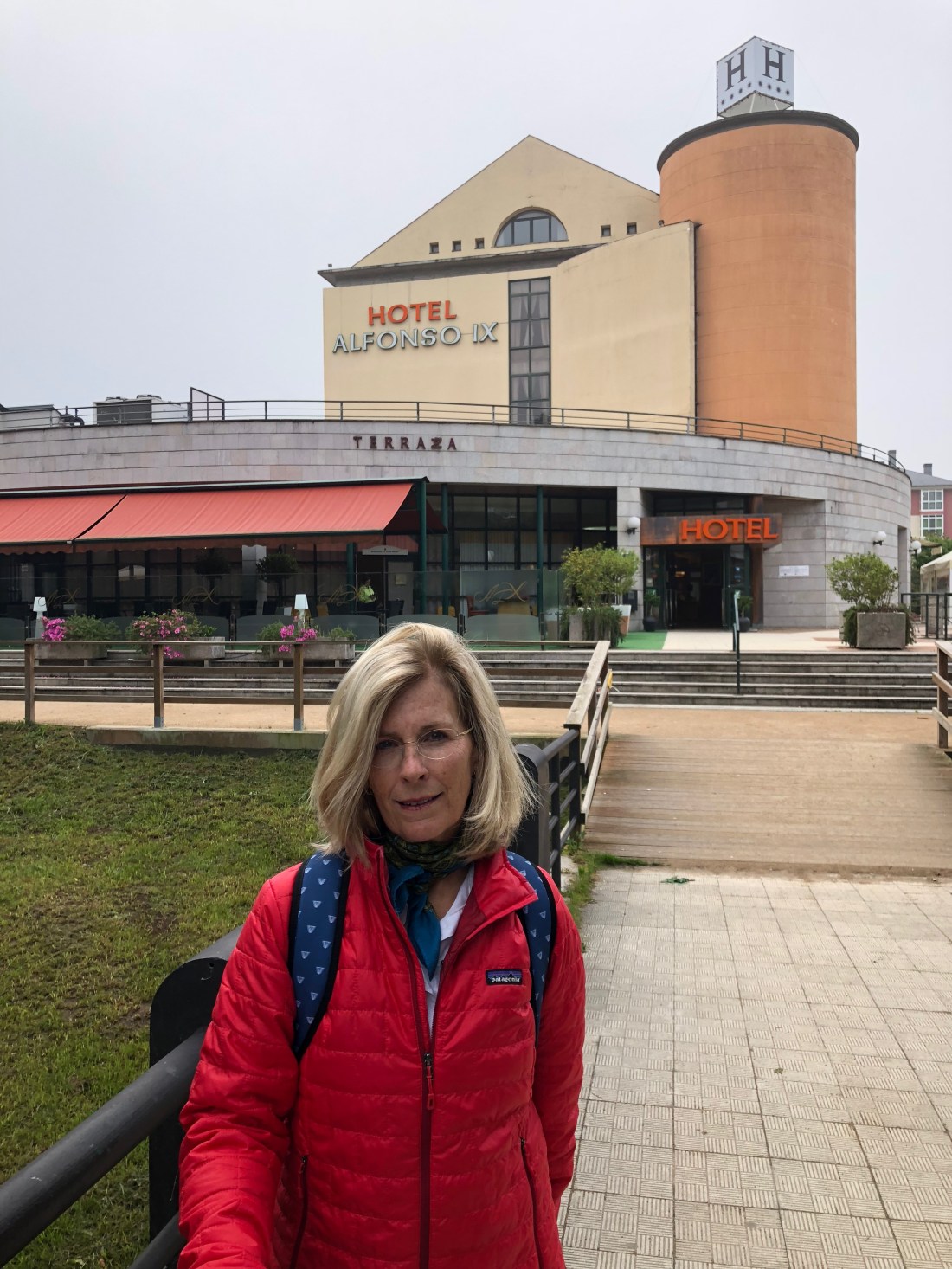
It was overcast this morning when we left our hotel in Sarria.IMG_3002.jpg

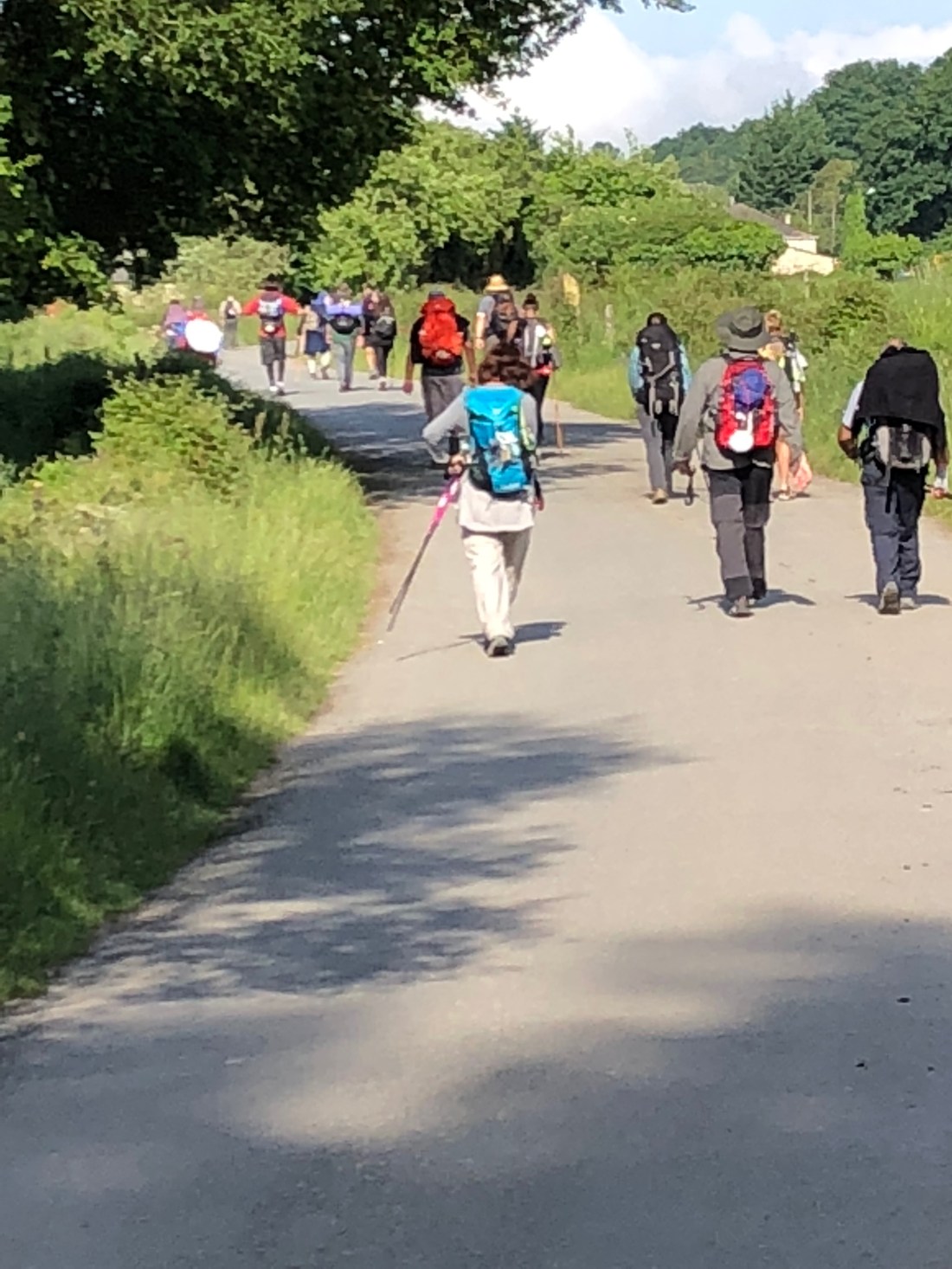
There are a lot more people on the Camino.IMG_3005

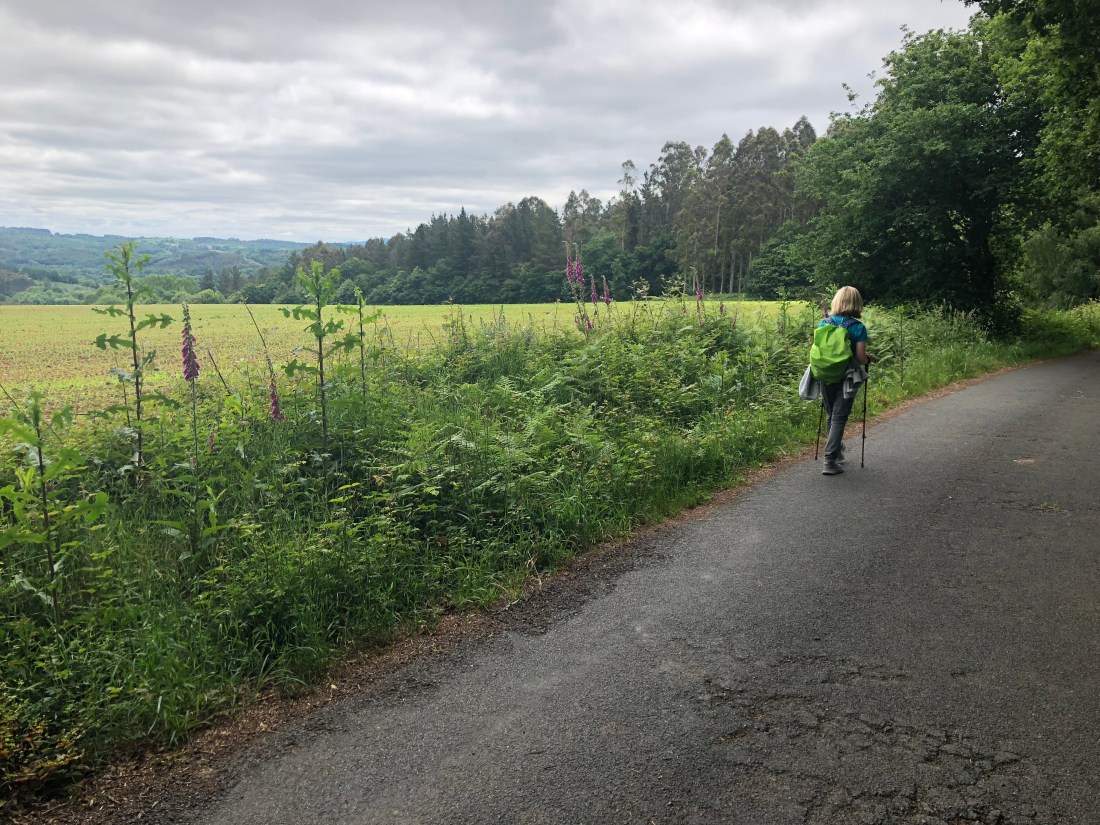
Still, there are times when we are walking alone.IMG_3013

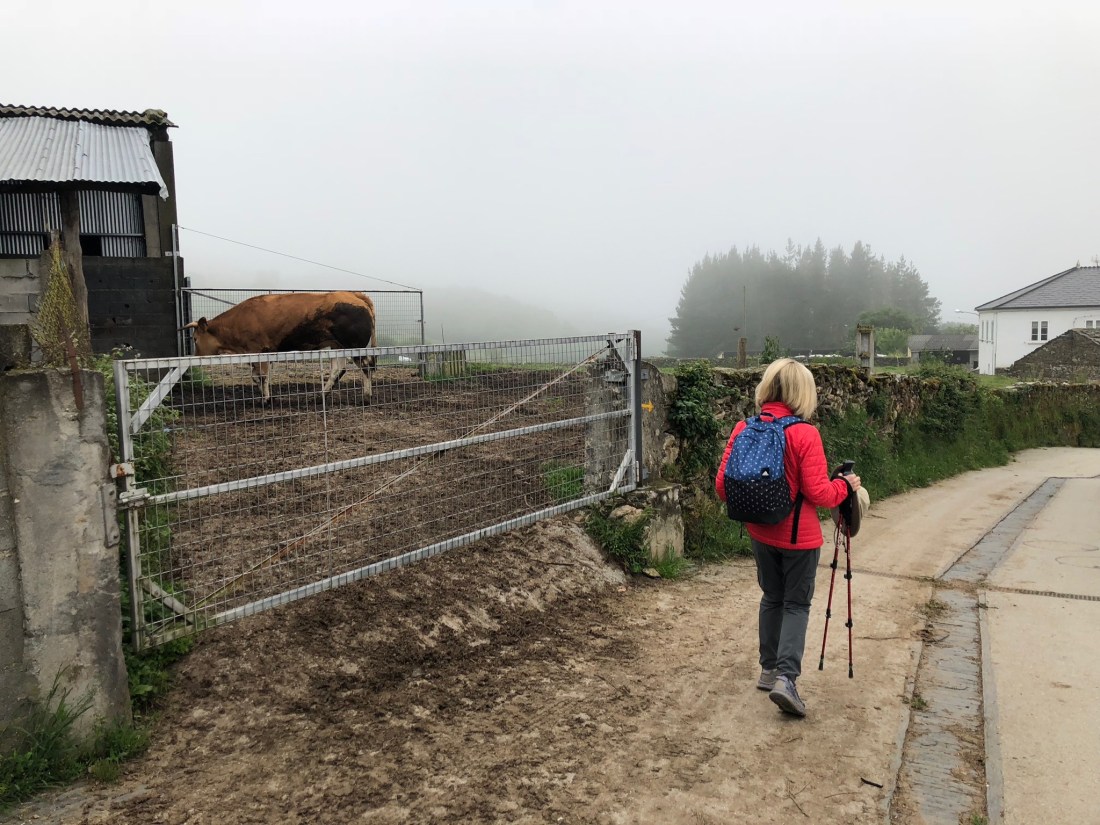
The Camino goes by small farms, not through villages, as it had done earlier.  The farms all have sheds with cows in them.  We can hear—and smell—the cows, if we can’t always see them.IMG_0005Thanks to the many cows, we continue to step around the splatter art on the Camoono.
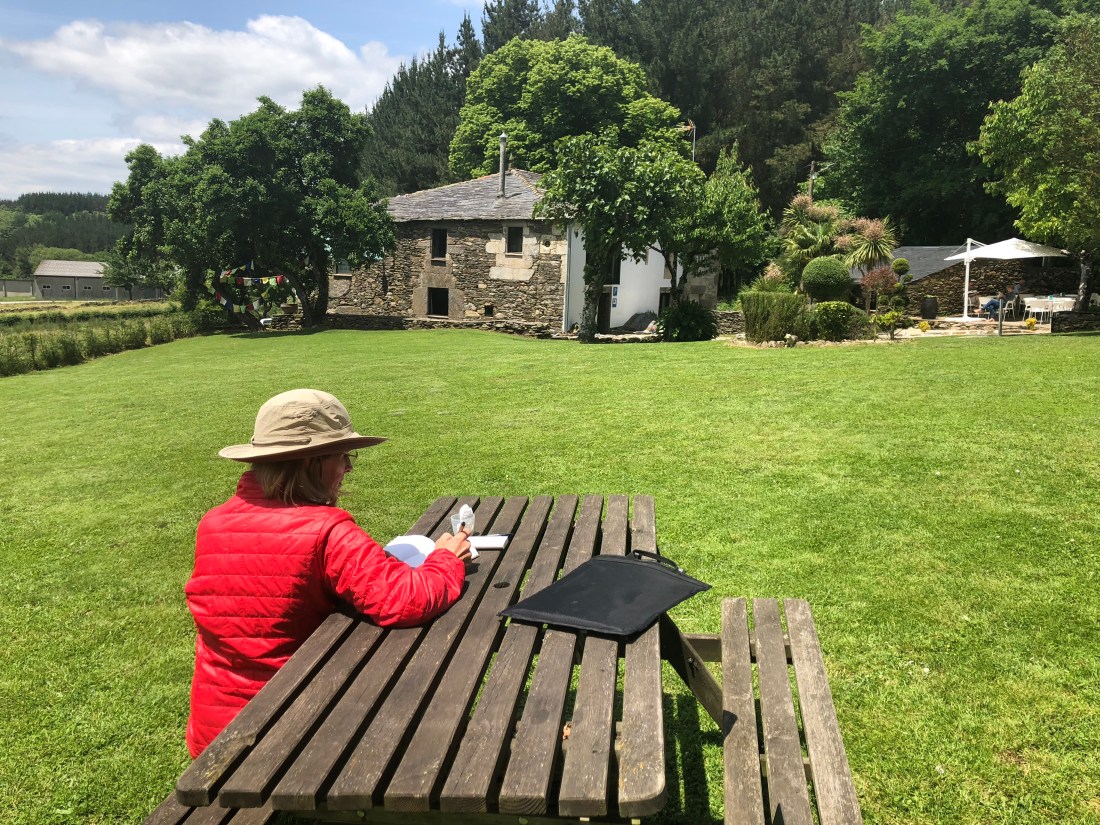
It is a short day, which gives the artist an opportunity to practice her craft from the lawn in front of our pensione.IMG_3045.jpg

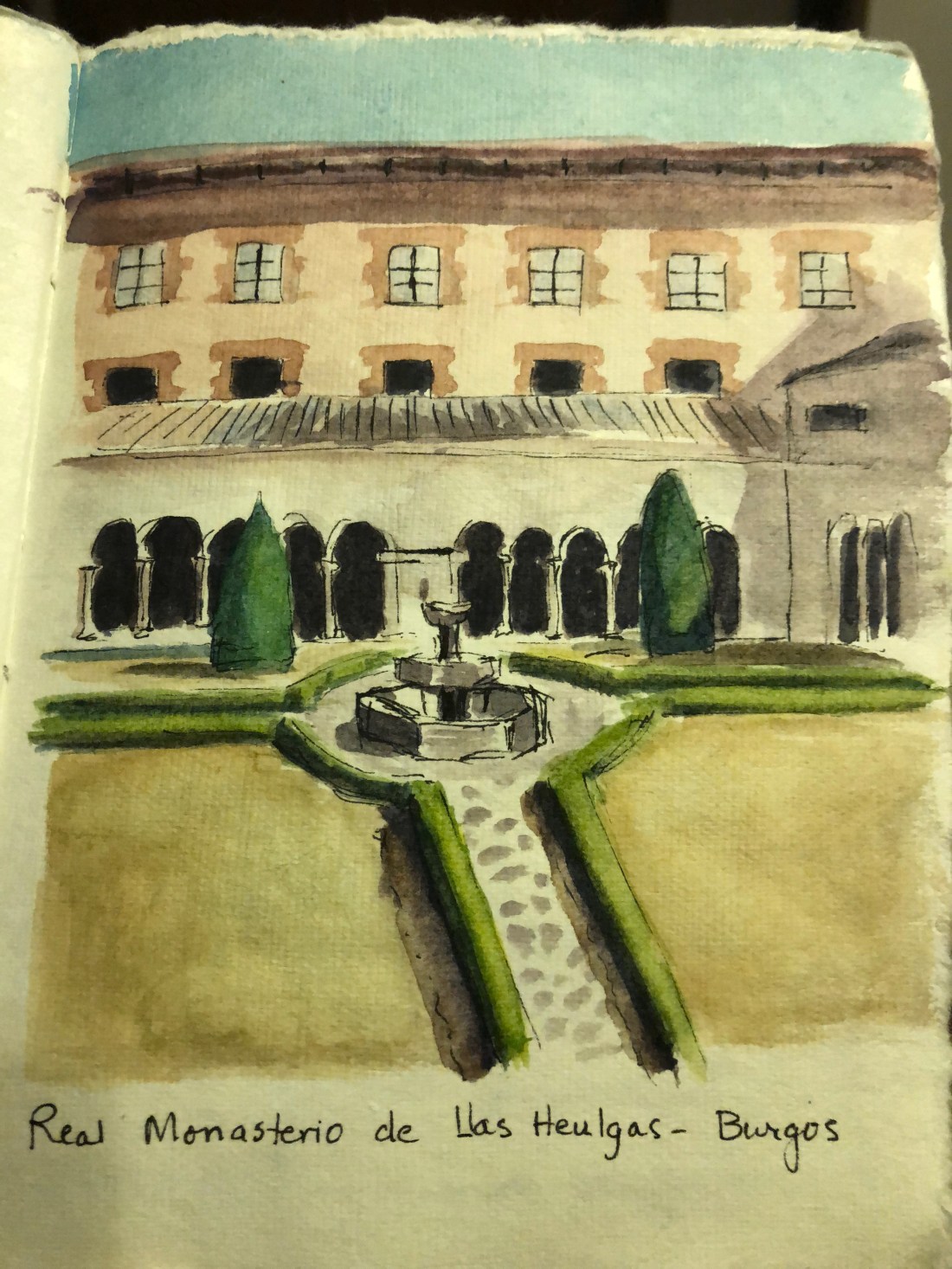
I have been remiss for not posting two of Anne’s earlier works.  Here is her rendering of the Convento in Burgos.IMG_2703.jpg

And of a lake outside Logrono.IMG_2989.jpgThe next several days are short, so more art should be in the offing.
Biduedo to Sarria

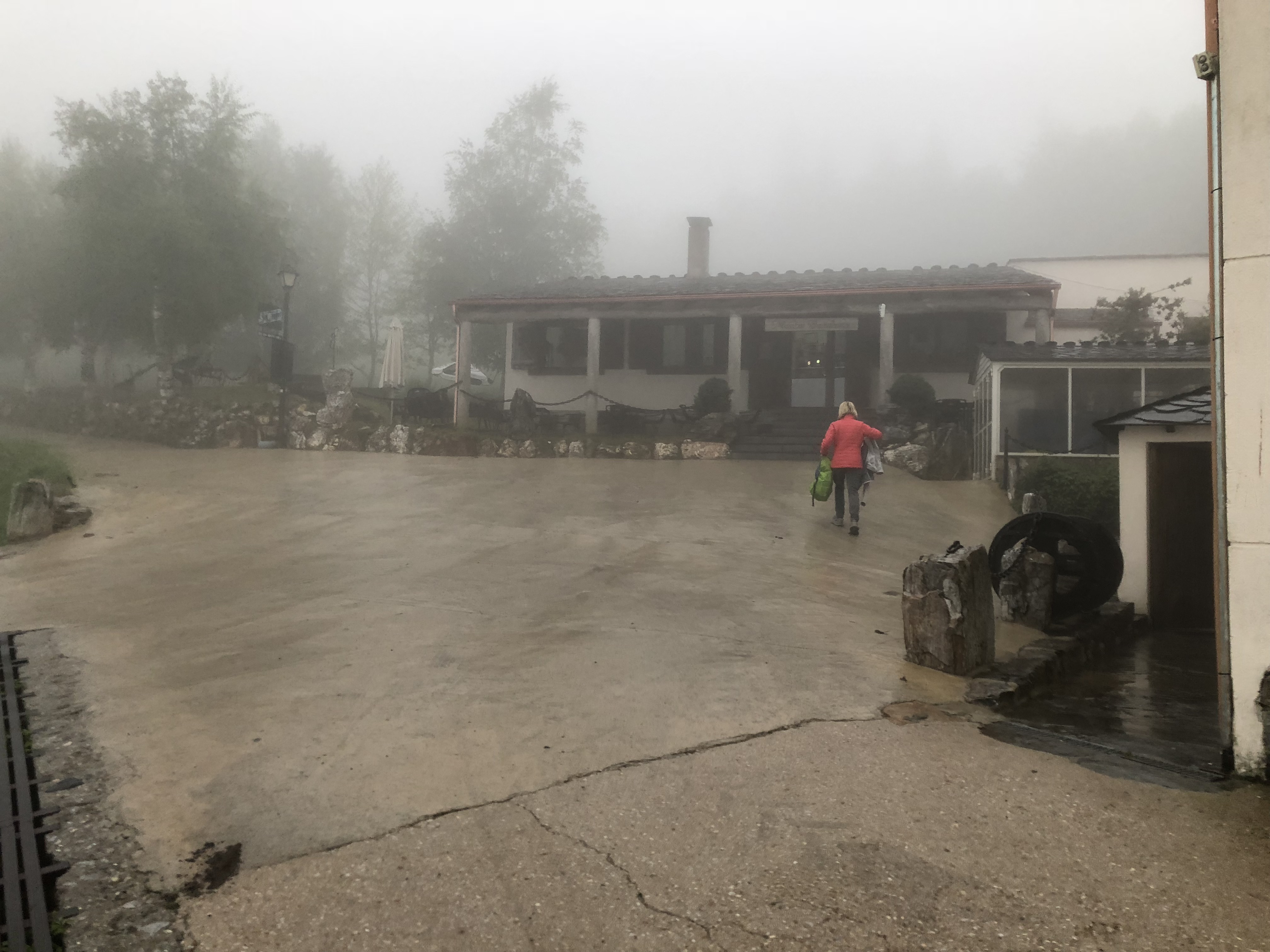
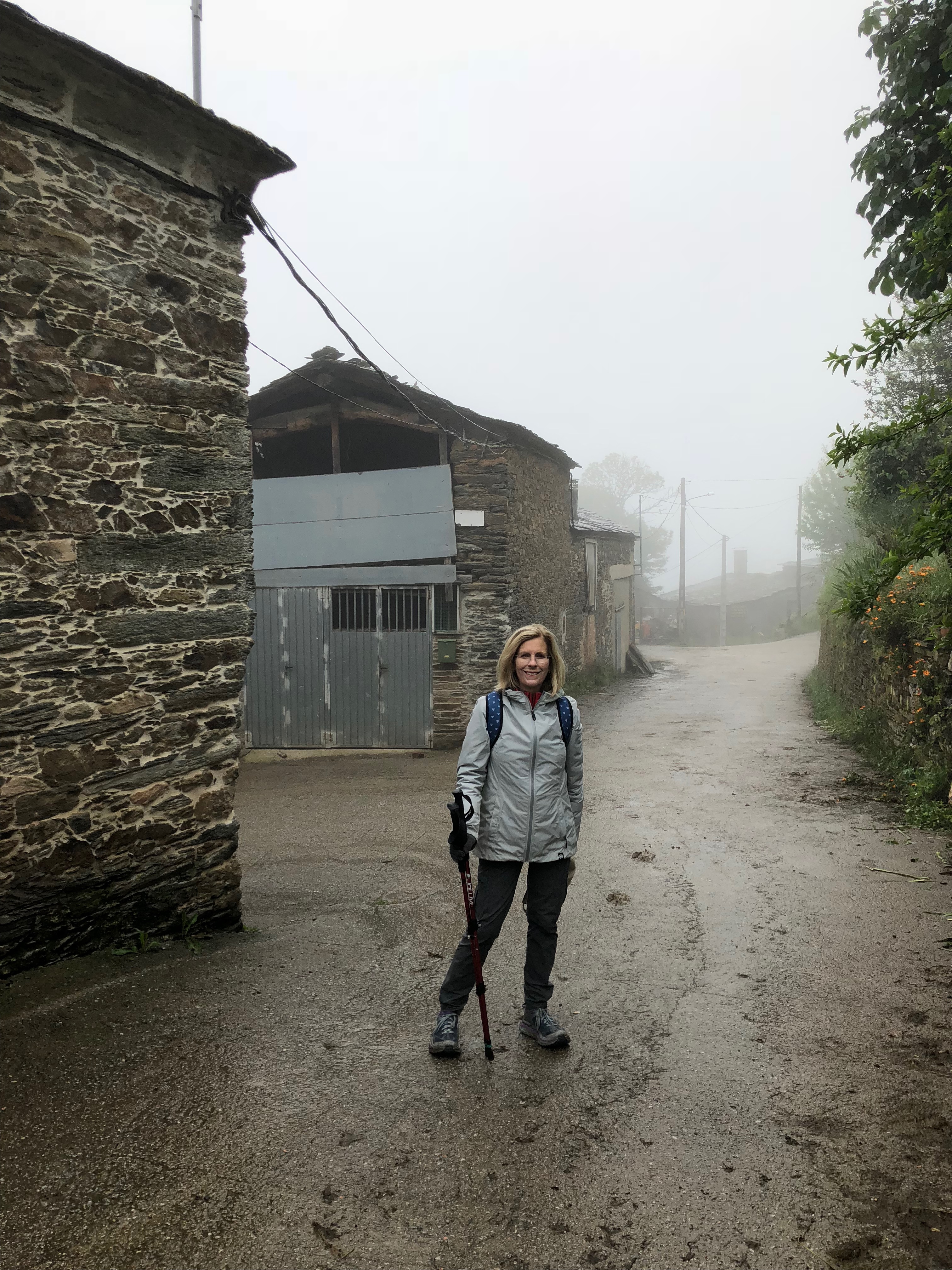
We spent the night last night in a hostel in Biduedo, which is near the top of a mountain, and started walking this morning in the fog.IMG_2921.jpg

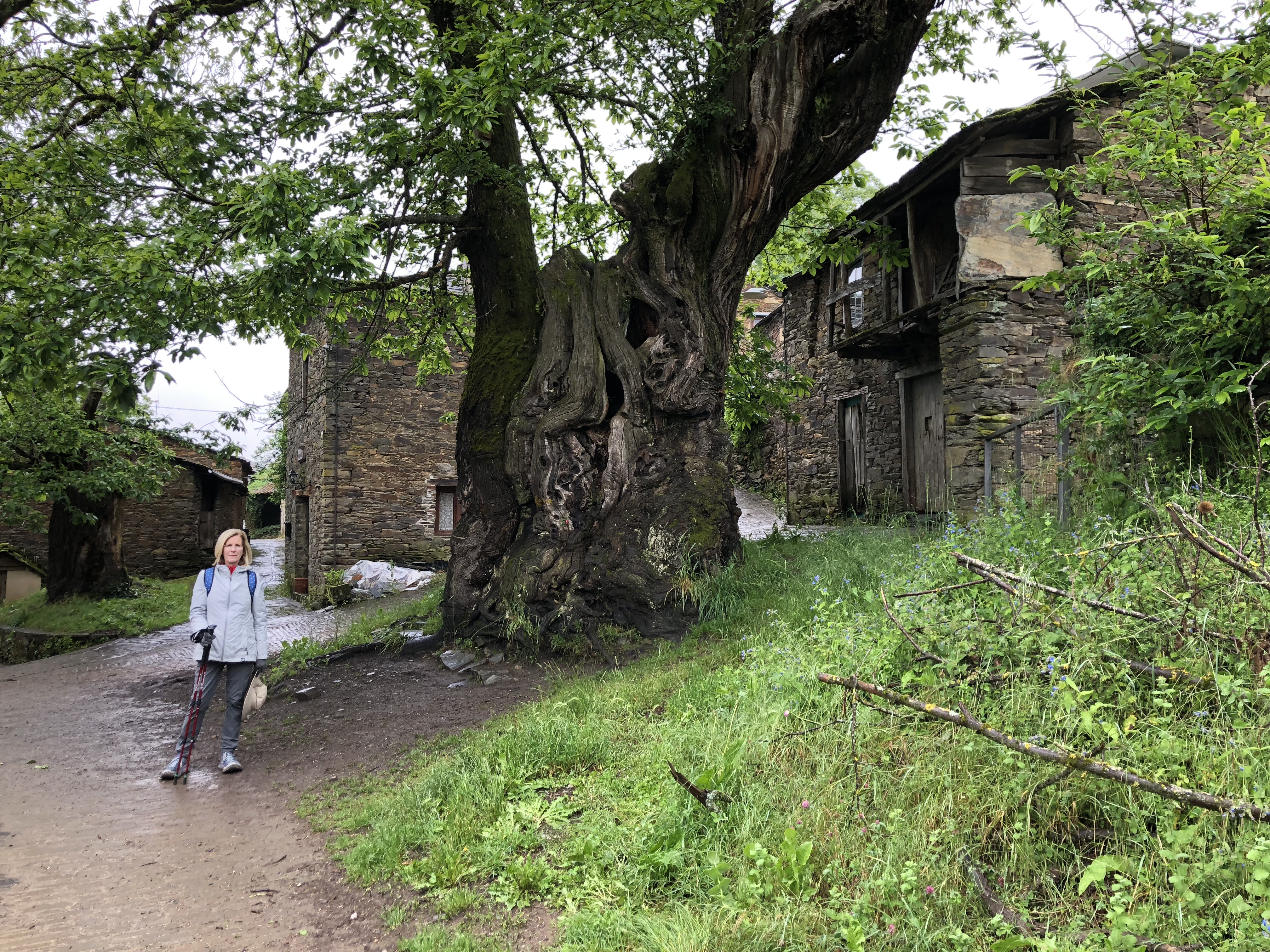
The villages here all have cattle sheds.IMG_2926.jpgPilgrims need to watch their step because the Va-ca-mino is littered with cow poop.
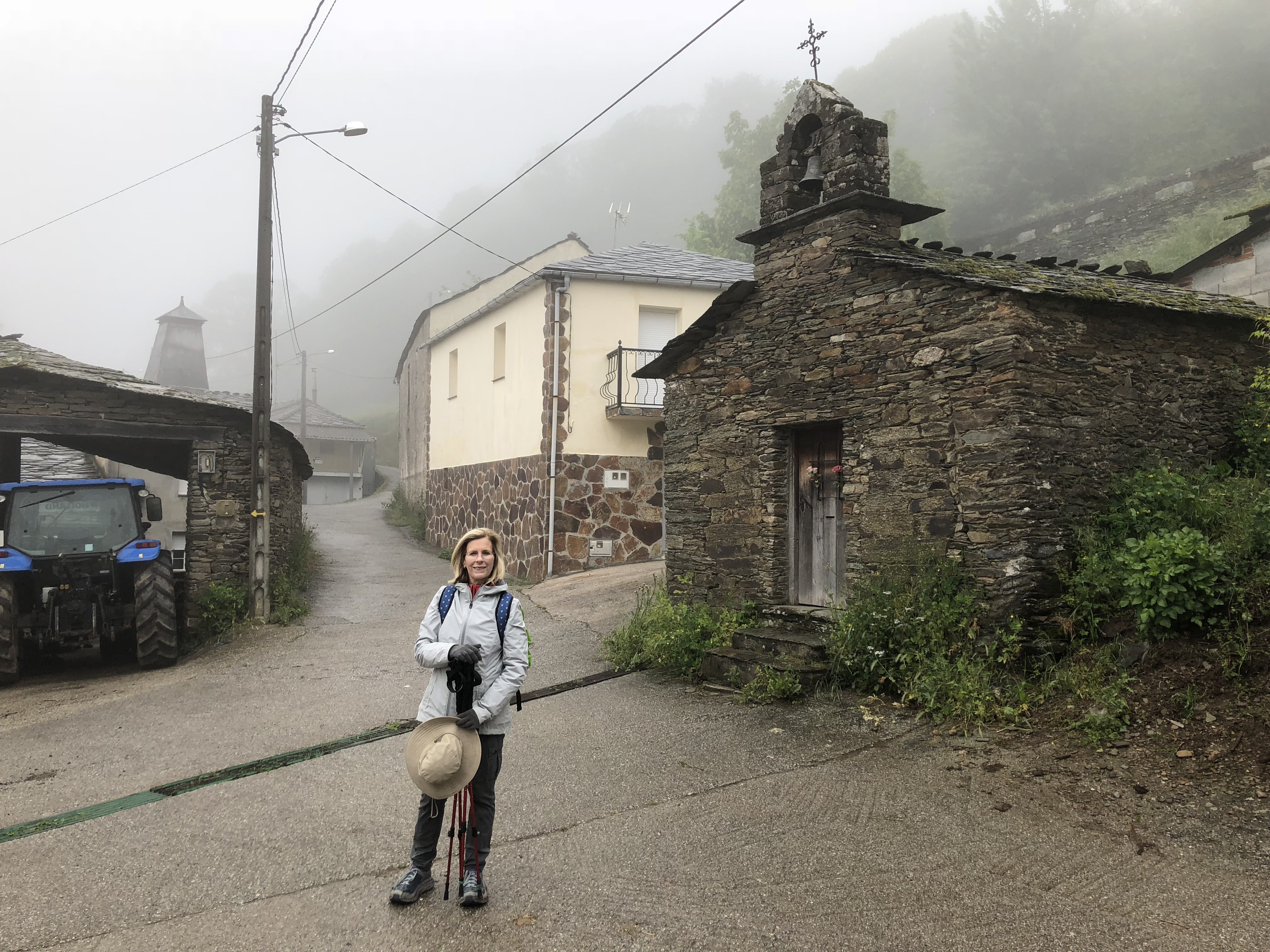
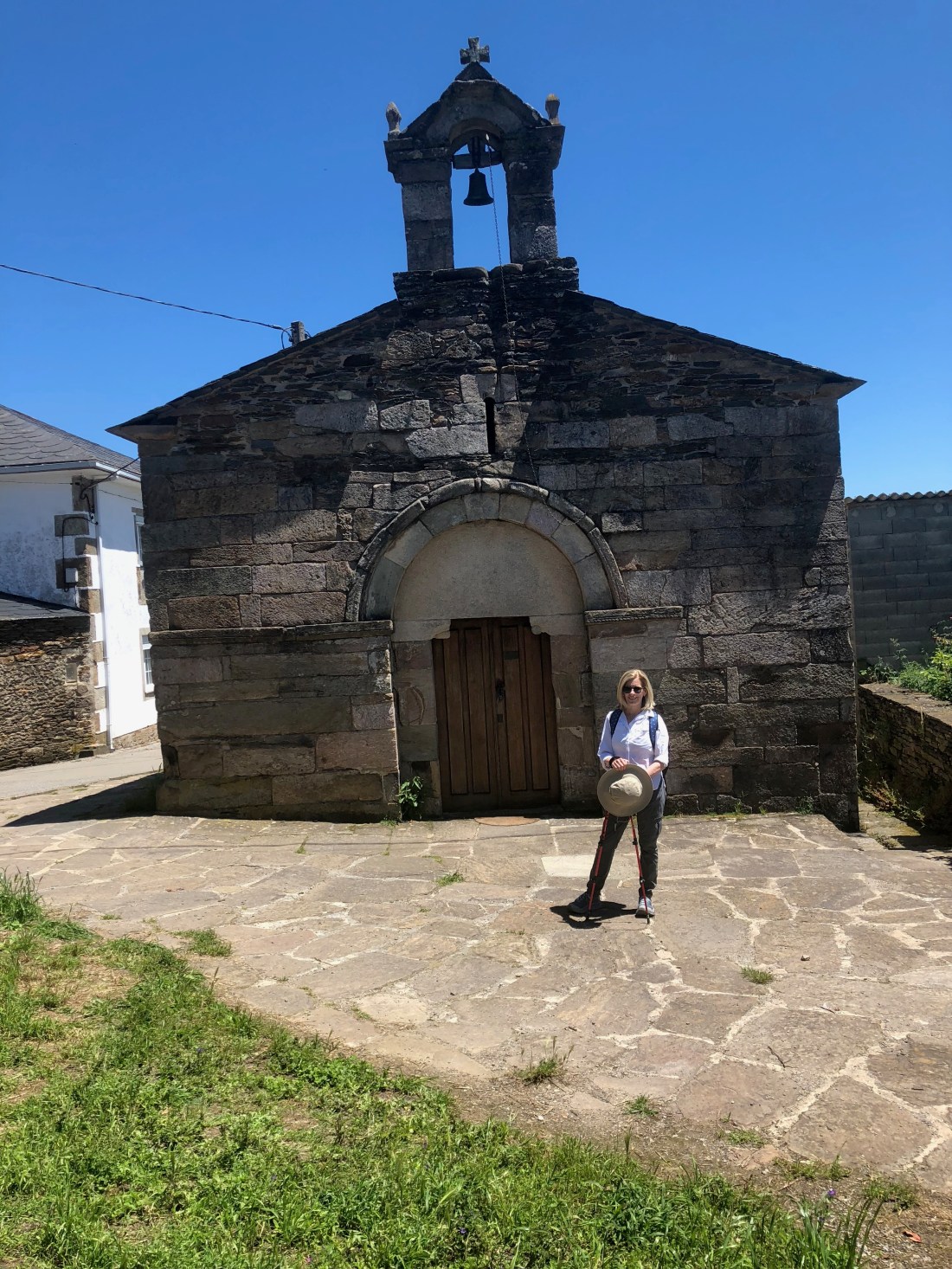
The village churches here are small.IMG_2929.jpg

It took us about two hours to walk to the village of Tricastela at the bottom of the mountain.IMG_2945.jpg

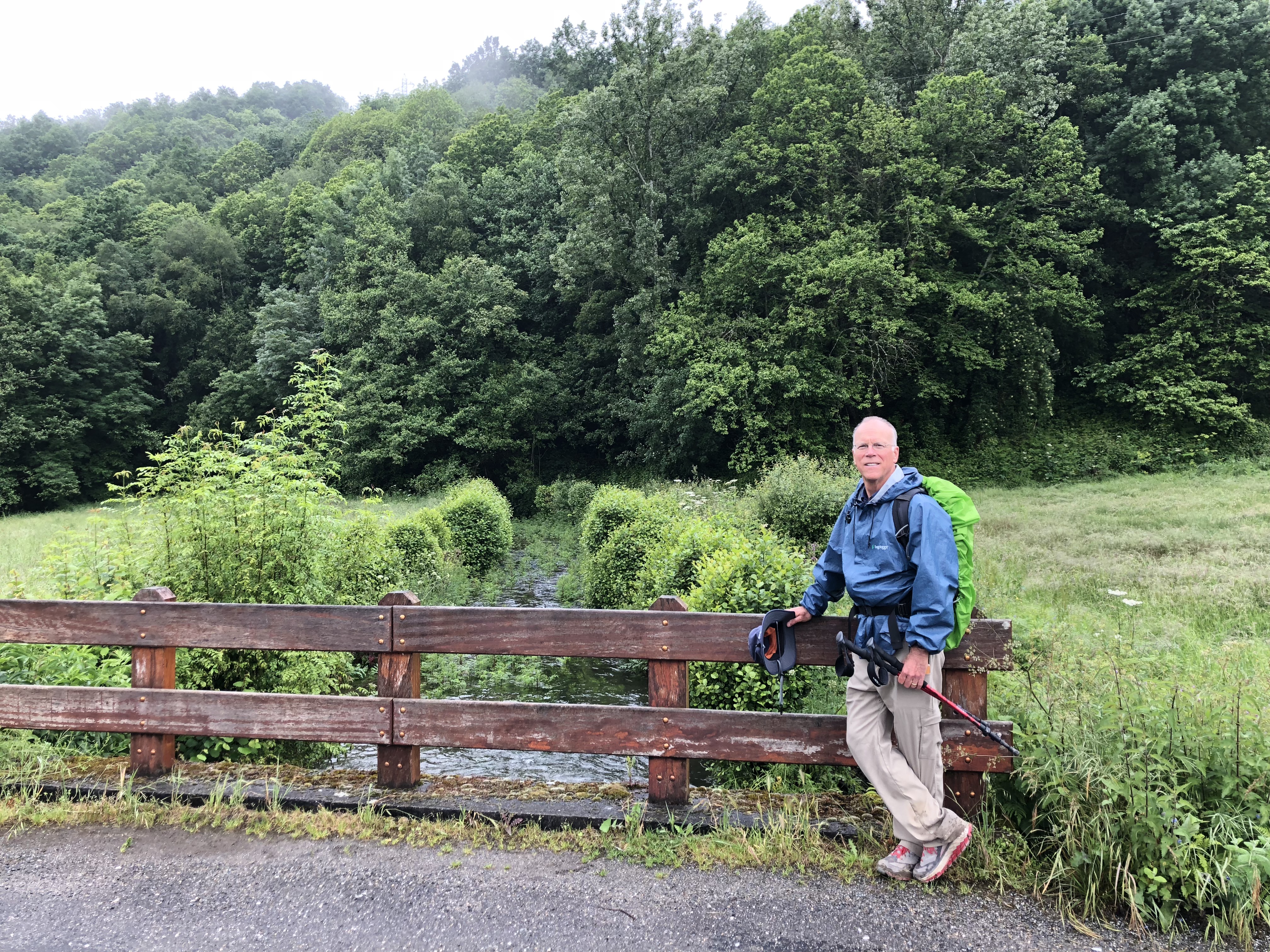
From Tricastela we walked across the floor of a narrow valley and crossed a stream.IMG_2948.jpgWe  followed the stream up the valley. 

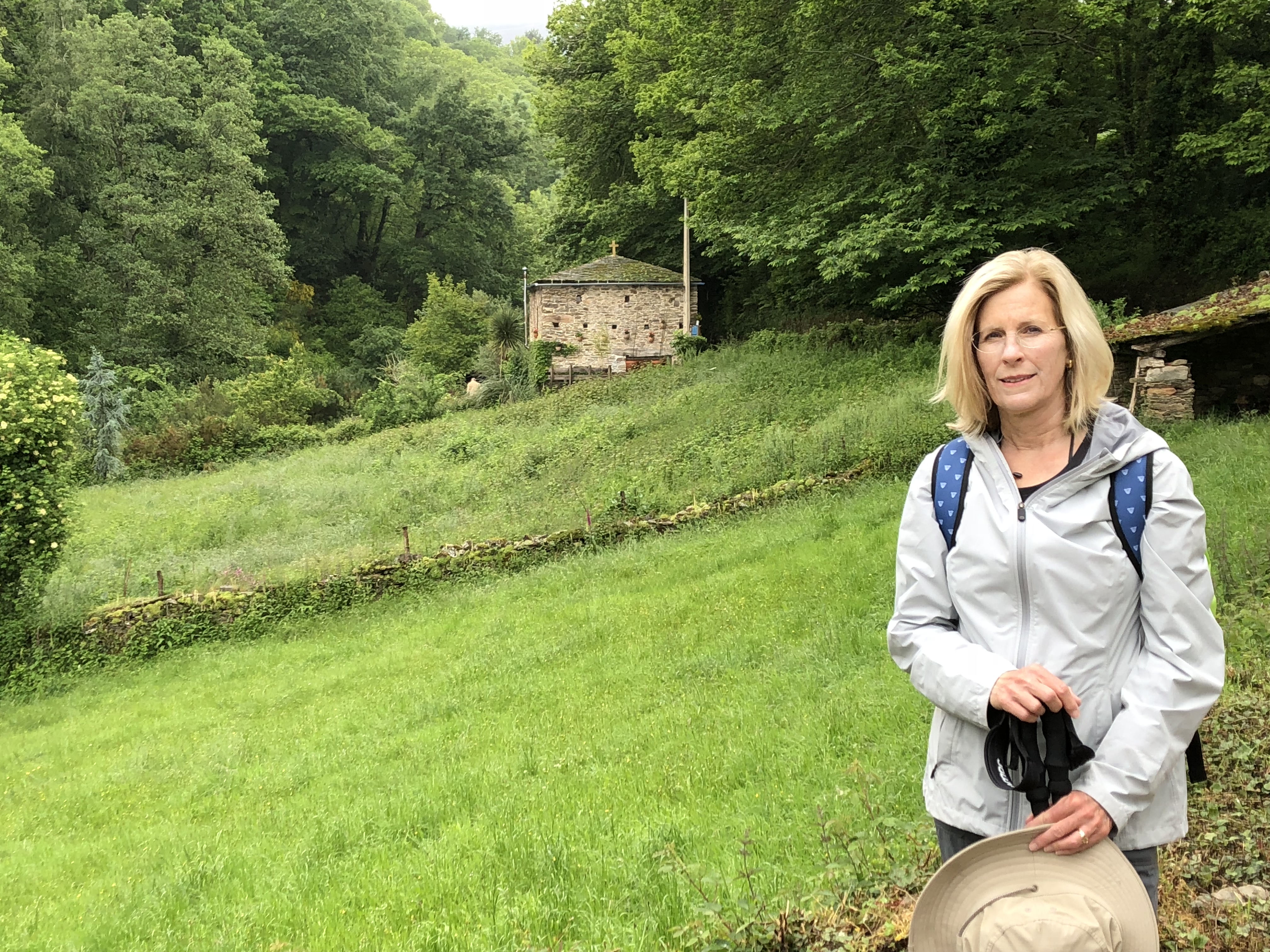
In a meadow in the valley, we came upon a cottage belonging to an English artist who painted watercolors of  local scenery.IMG_2951.jpg

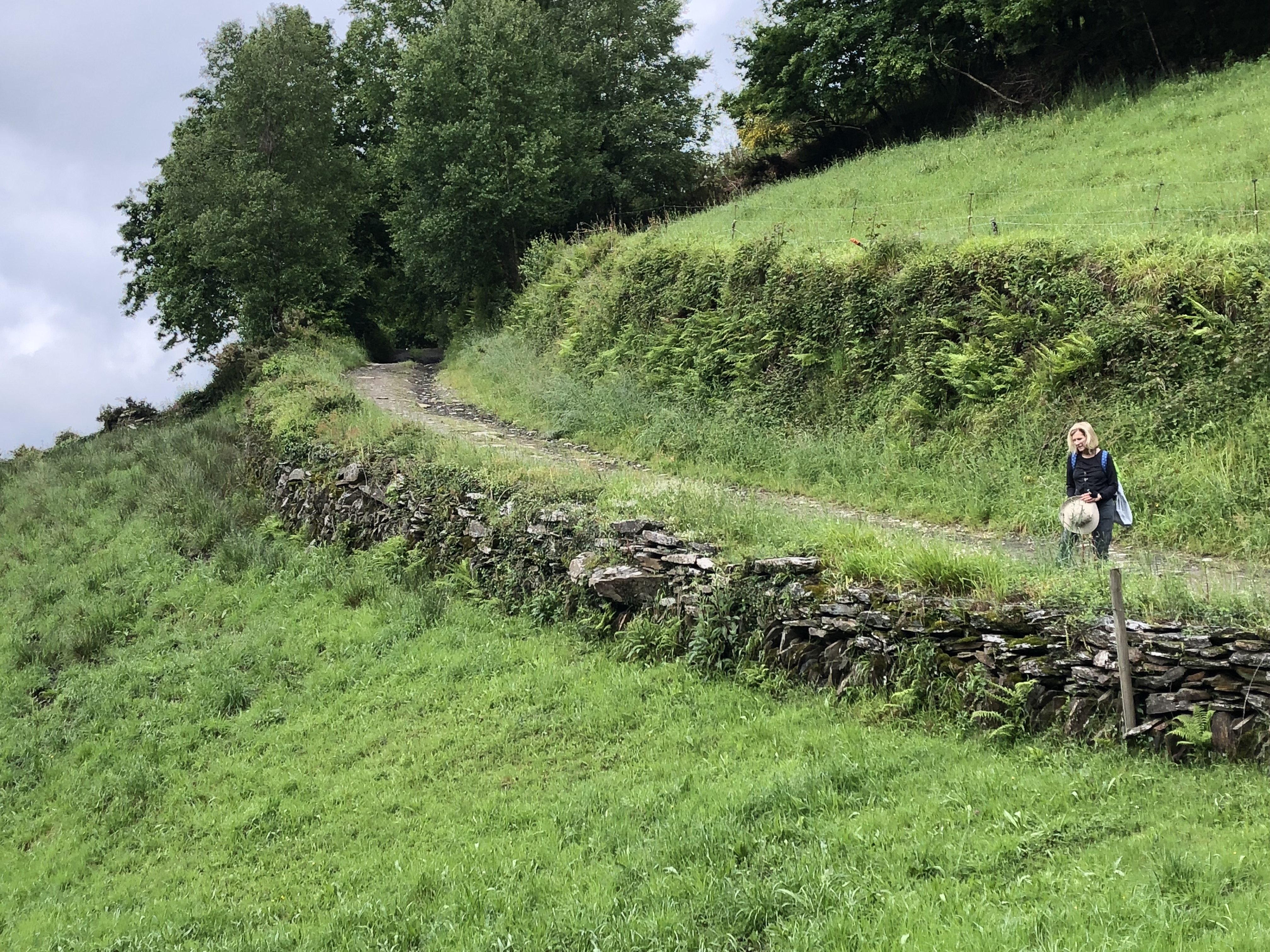
We continued to climb up the side of the mountain.IMG_2955.jpgWe were on an remote branch of the Camino that is an offshoot of the main path. Our branch had couple of poorly marked forks.
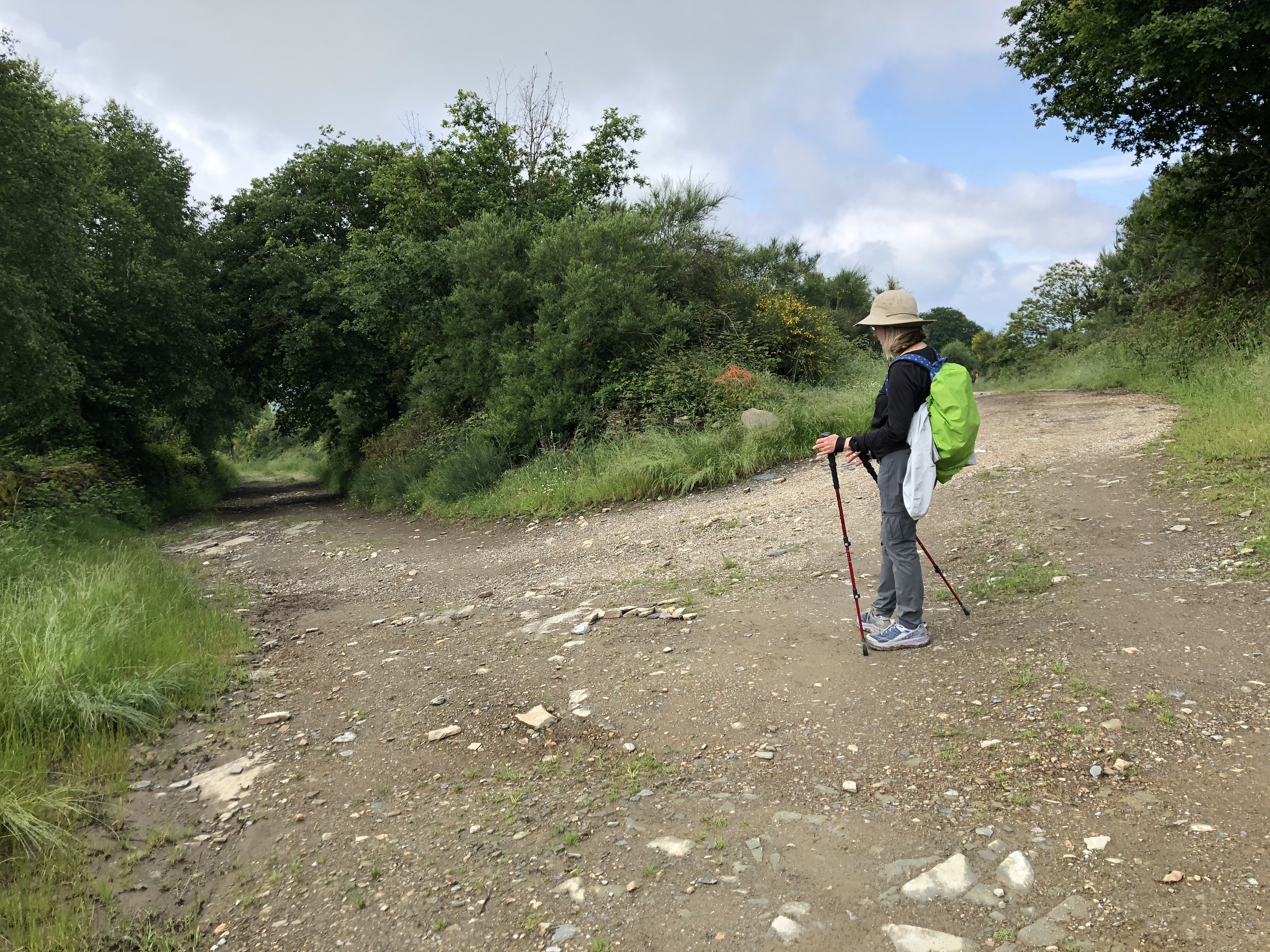
An arrow made of rocks about three feet in front of Anne’s left foot points the way.IMG_2957.jpg

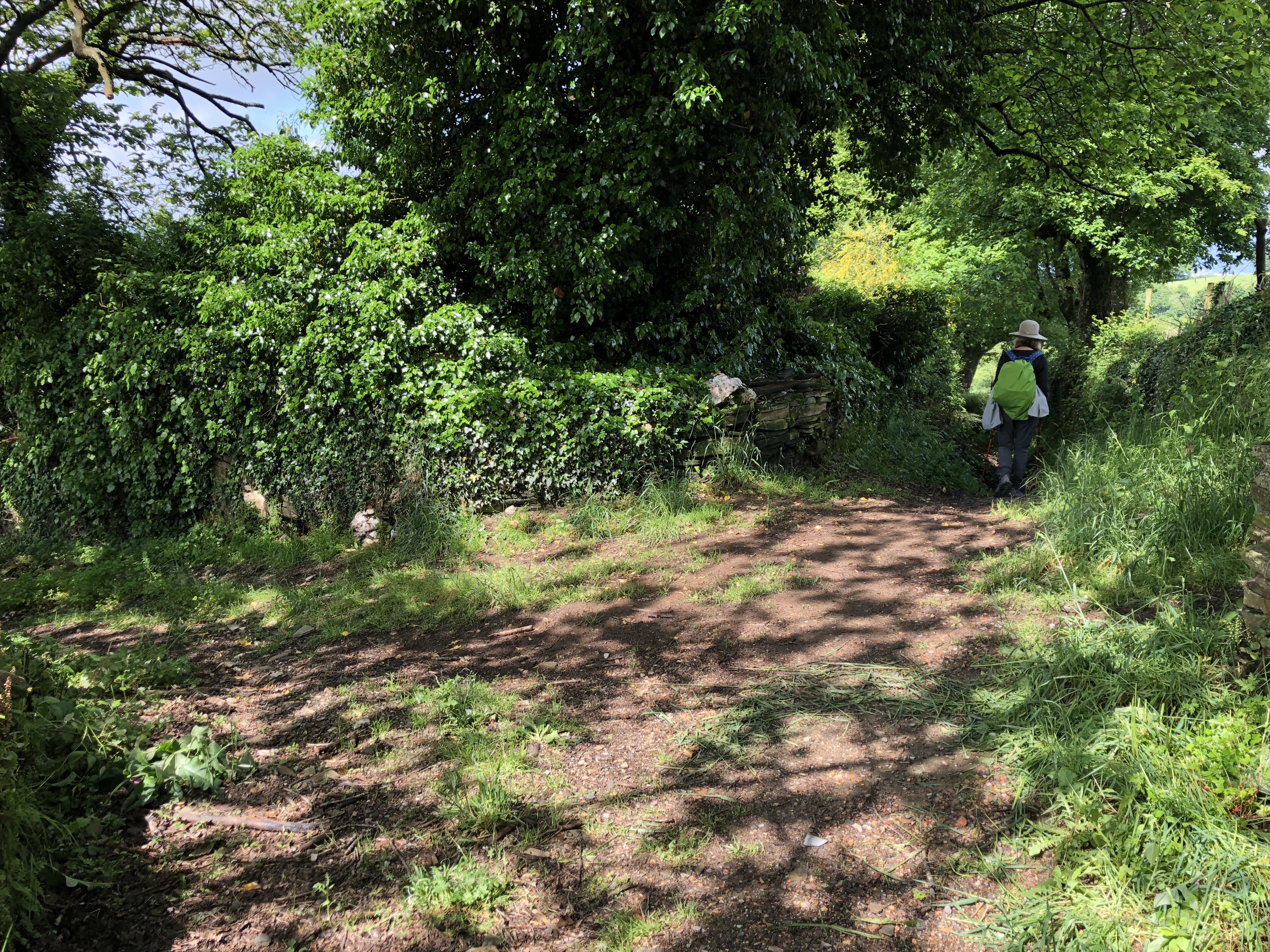
Here is another split in the path where we had to look hard for the marker.IMG_2962.jpg

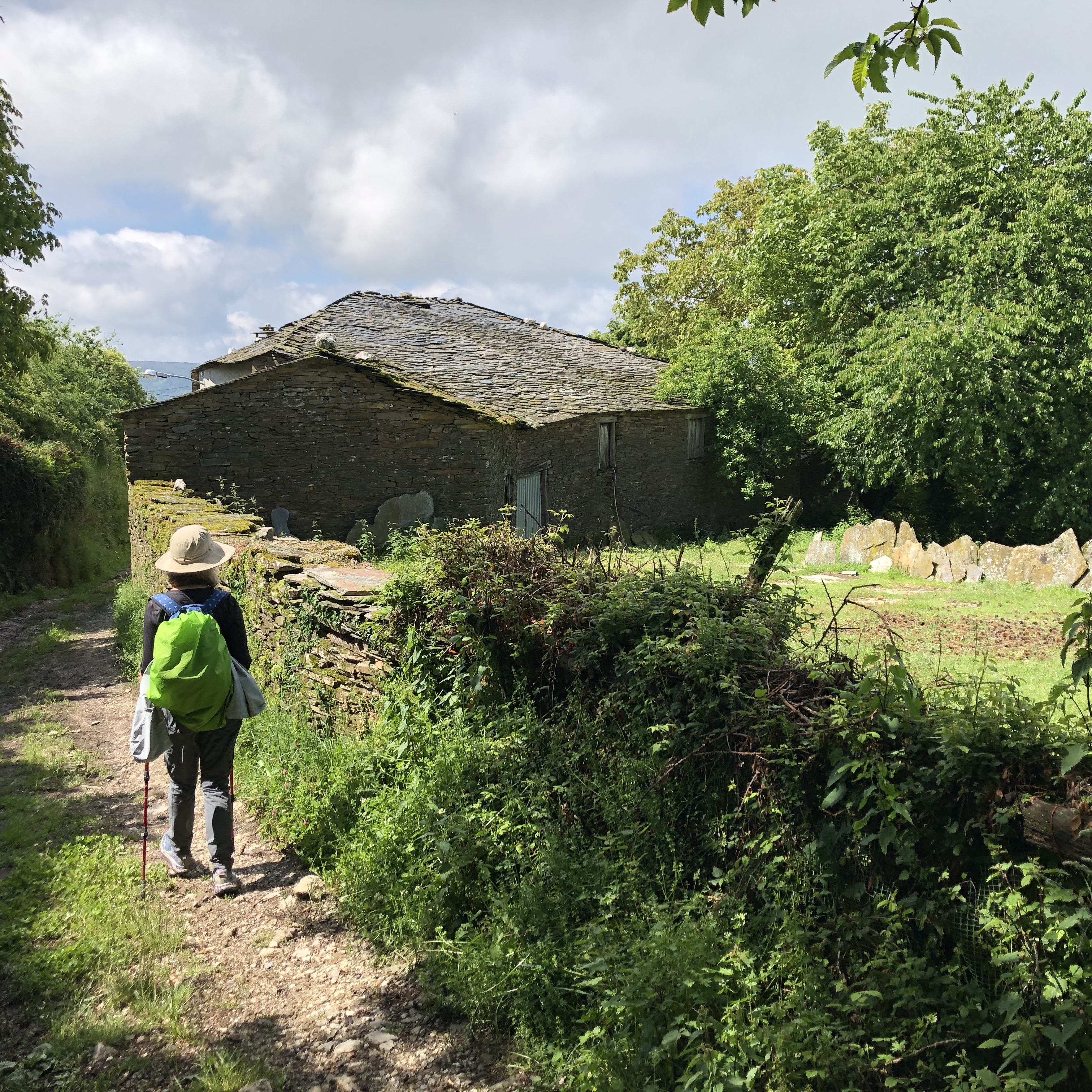
Near the bottom of the hill was a small village, Montan.IMG_2964.jpg

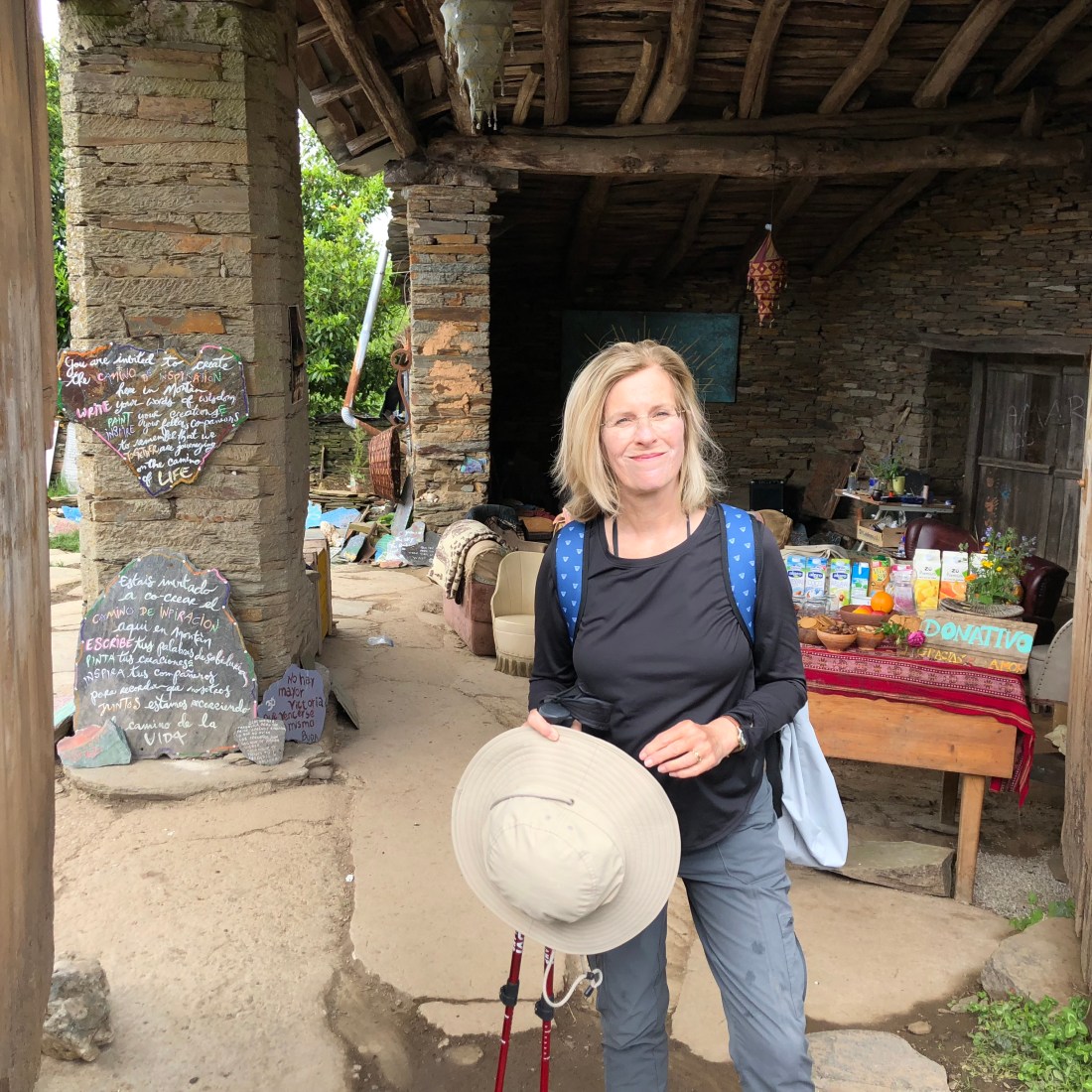
The  ’60’s are alive and well at an albergue in Montan.IMG_2966.jpg

There are spots along the Camino where the spirit of the 1960’s is in full bloom. This is one of those spots.  The food and drink behind Anne are free for the taking, a donation suggested. The signs to her right invite pilgrims to sit in the courtyard and share their thoughts and feelings by painting them on rocks and shells.  There are buildings like this on the Camino where people are invited to sit and chant and meditate.  This spirit undoubtedly is tied to the Camino’s history as a pilgrimage route, and it has the same root in kindness and love.  But it is a different spirit.  The people writing on shells and rocks at the albergue in Montan don’t usually attend the Pilgrim’s Masses.  And Anne and I have little interest in traveling to Finnistere, Latin for land’s end, at the coast beyond Santiago, where the Celts built their Alter Soli to worship the setting sun, and which is the final destination for many of our compatriots walking the Camino.

We continued down the hill by pastures with rock fences.IMG_2971.jpg

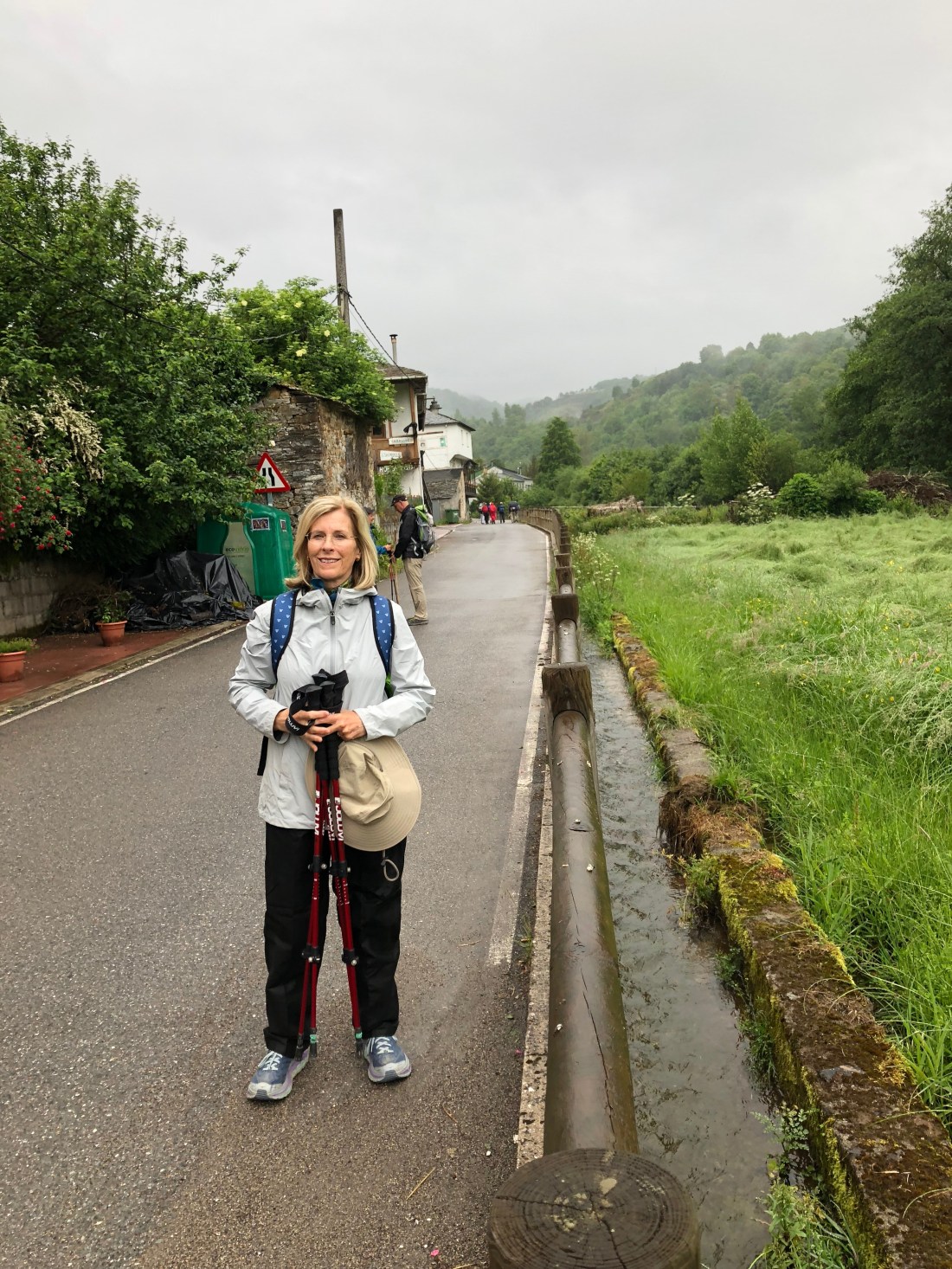
And over streams.IMG_2970.jpgAbout an hour outside of Sarria, it started to rain.  We are spending an extra day in Sarria to rest.  People have talked about Sarria since the beginning of the Camino.  They say it is where everything changes because of the increased traffic on the Camino.  There are two reasons for this.  Sarria is where the Camino Frances, which we have been following, joins the Northern Camino, which travels along the northern coast of Spain.  It is also 100 km from Santiago, and so is the nearest point where pilgrims can begin their walk and still obtain a compostela or pilgrim’s passport at the cathedral in Santiago.  So far we haven’t seen the crowds.  Most of the day today, we were walking alone.  Company would be welcome.
Herrerias to Biduedo

It was raining lightly in Herrerias when we left around eight this morning.IMG_2848.jpgHerrerias is at the end of a long valley.  A lot of the walk today was up a mountain beyond the valley.
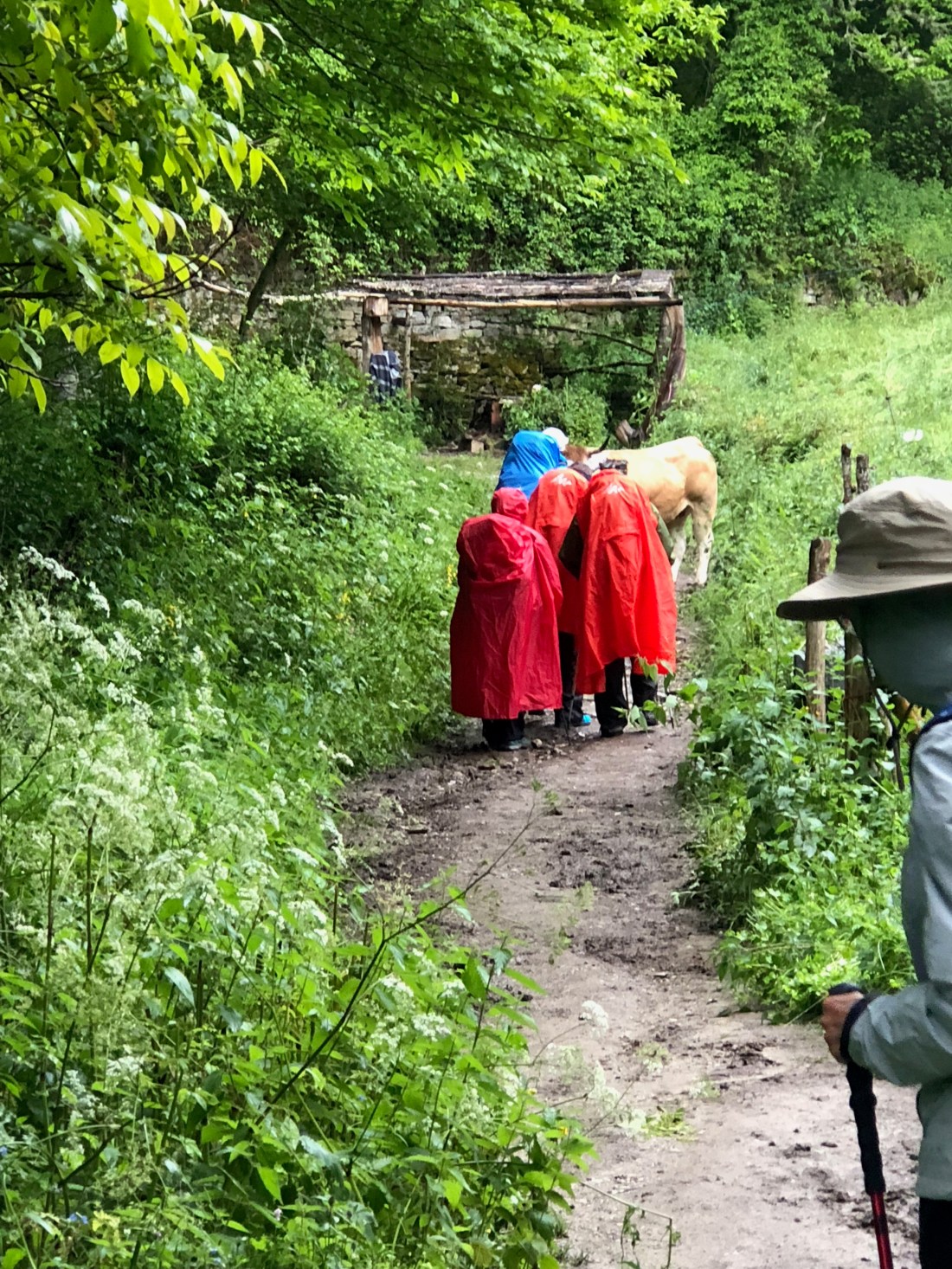
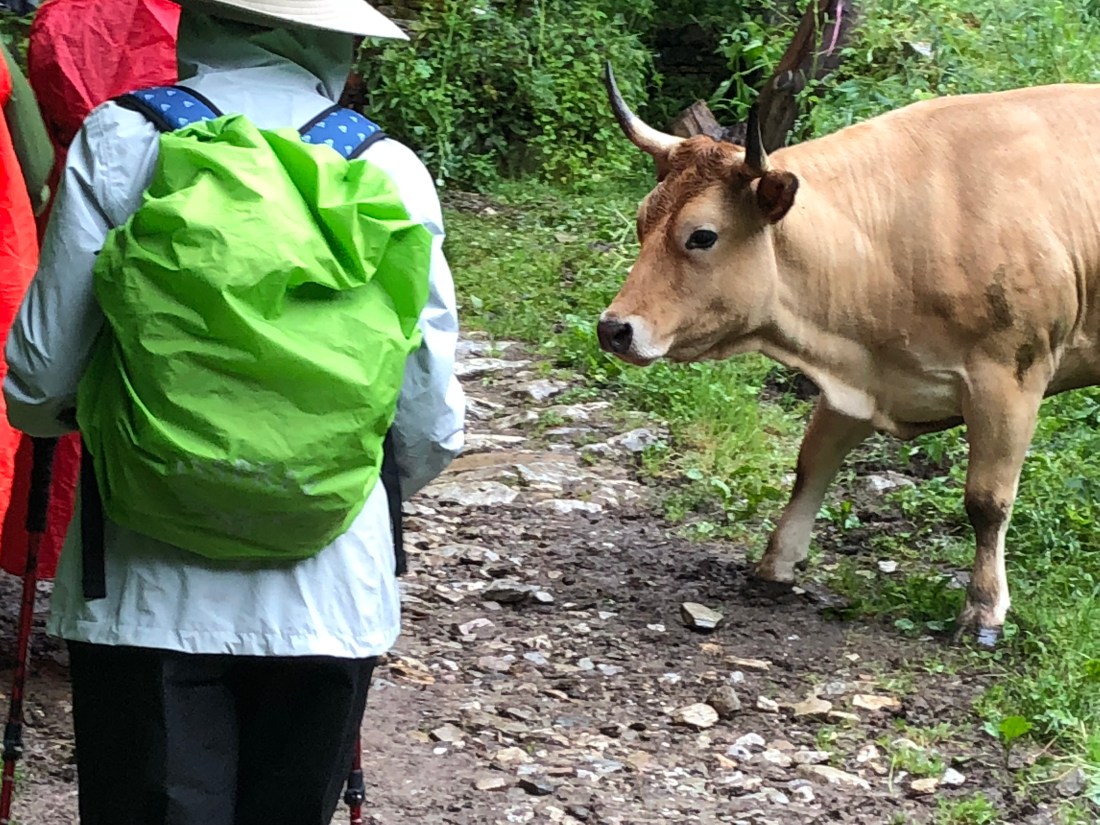
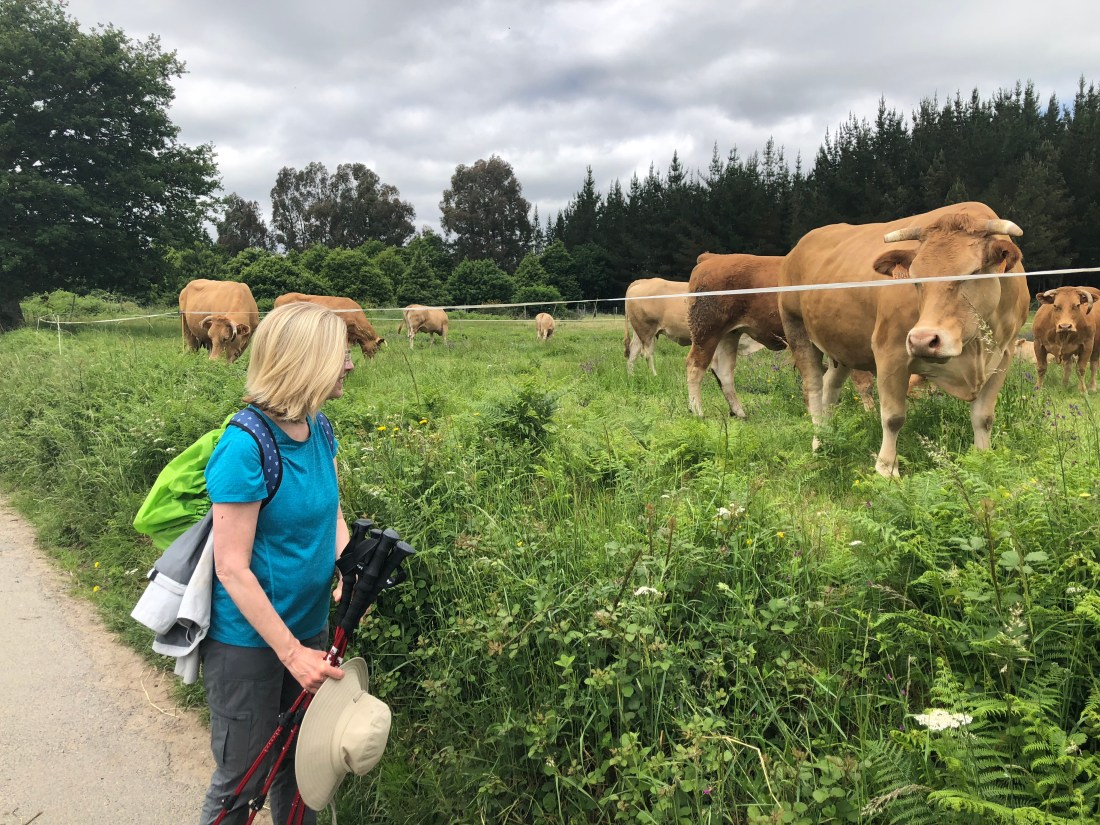
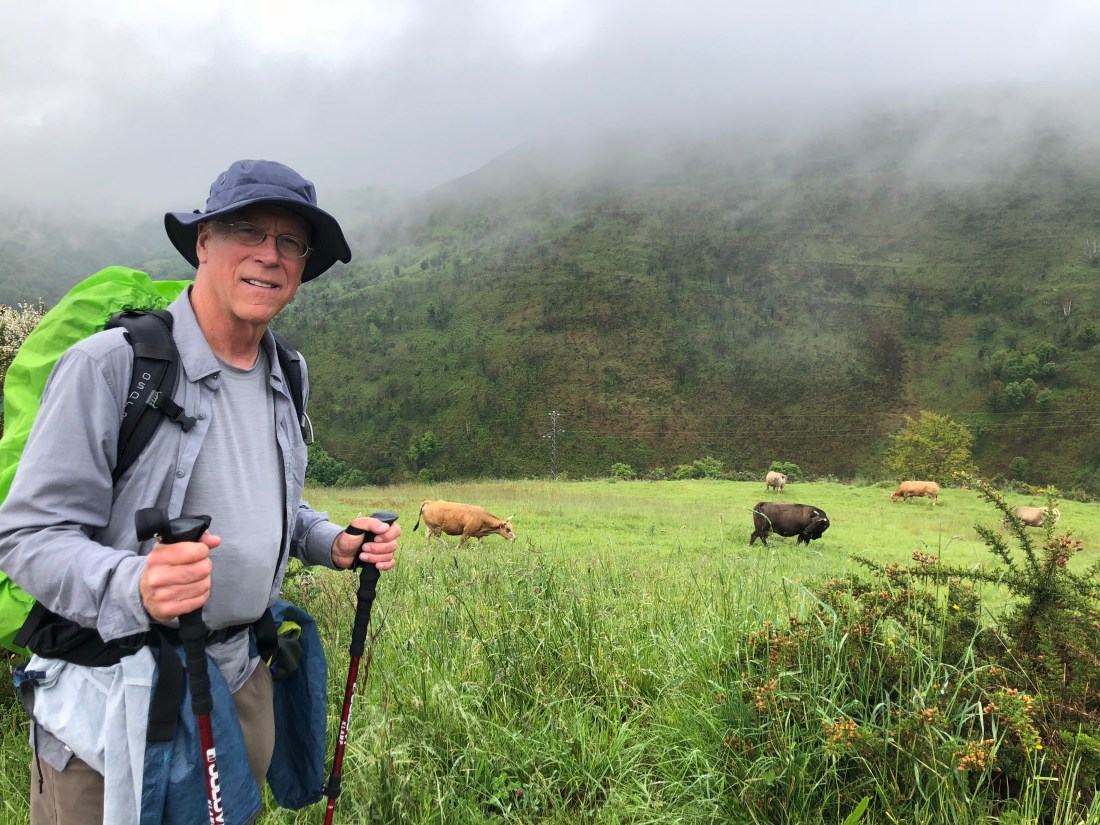
We had just started up the valley when we came upon a group of German pilgrims flummoxed by a bull blocking the Camino.IMG_2853.jpg

Anne stared the bull down, and it backed off.IMG_2856.jpgThe first village we reached on the side of the mountain was La Faba, where we had breakfast. 
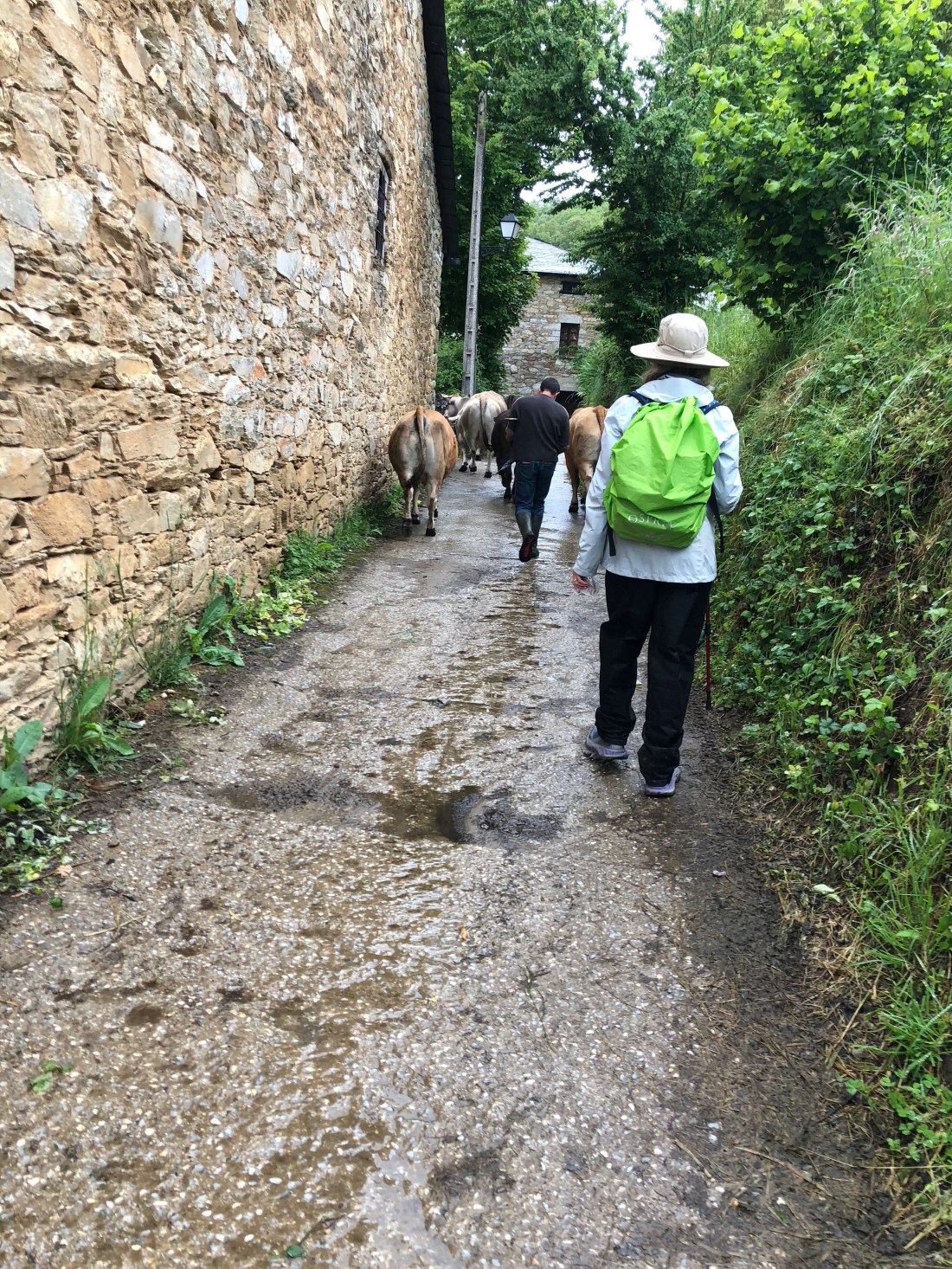
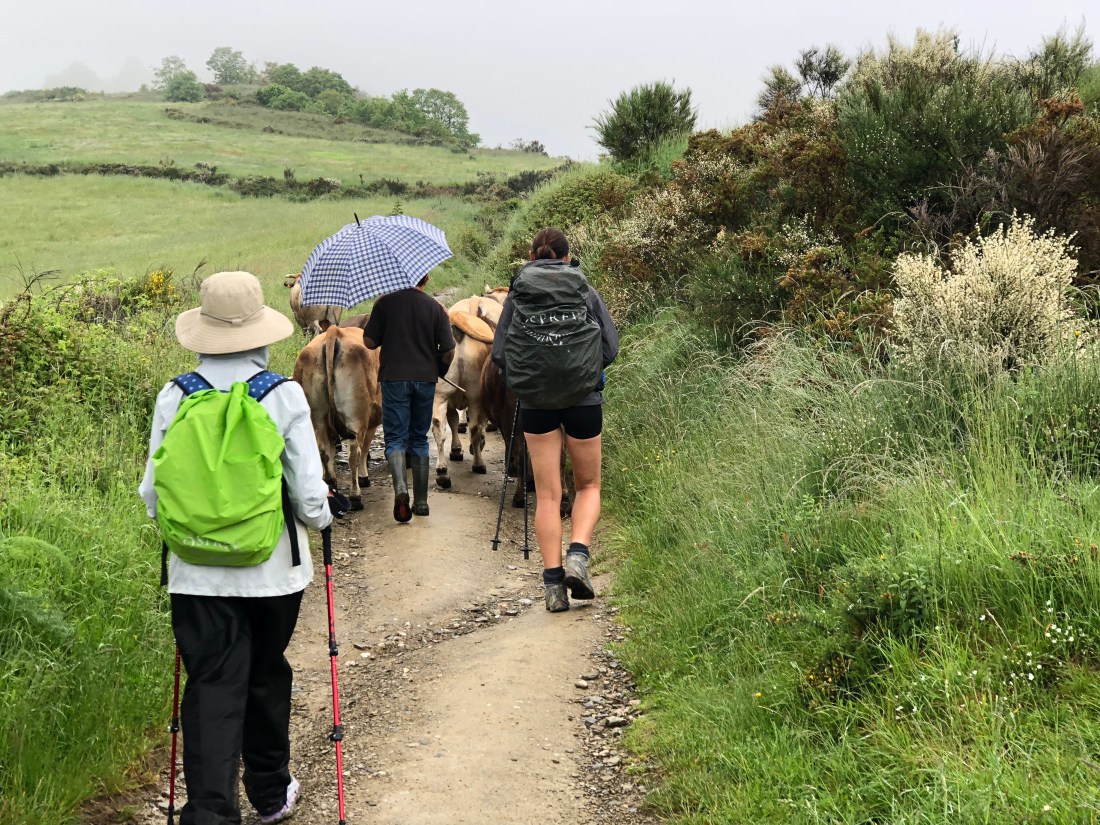
When we left the cafe, the friends we had met earlier down the mountain were also walking through the village on the Cowmino.IMG_2860.jpg

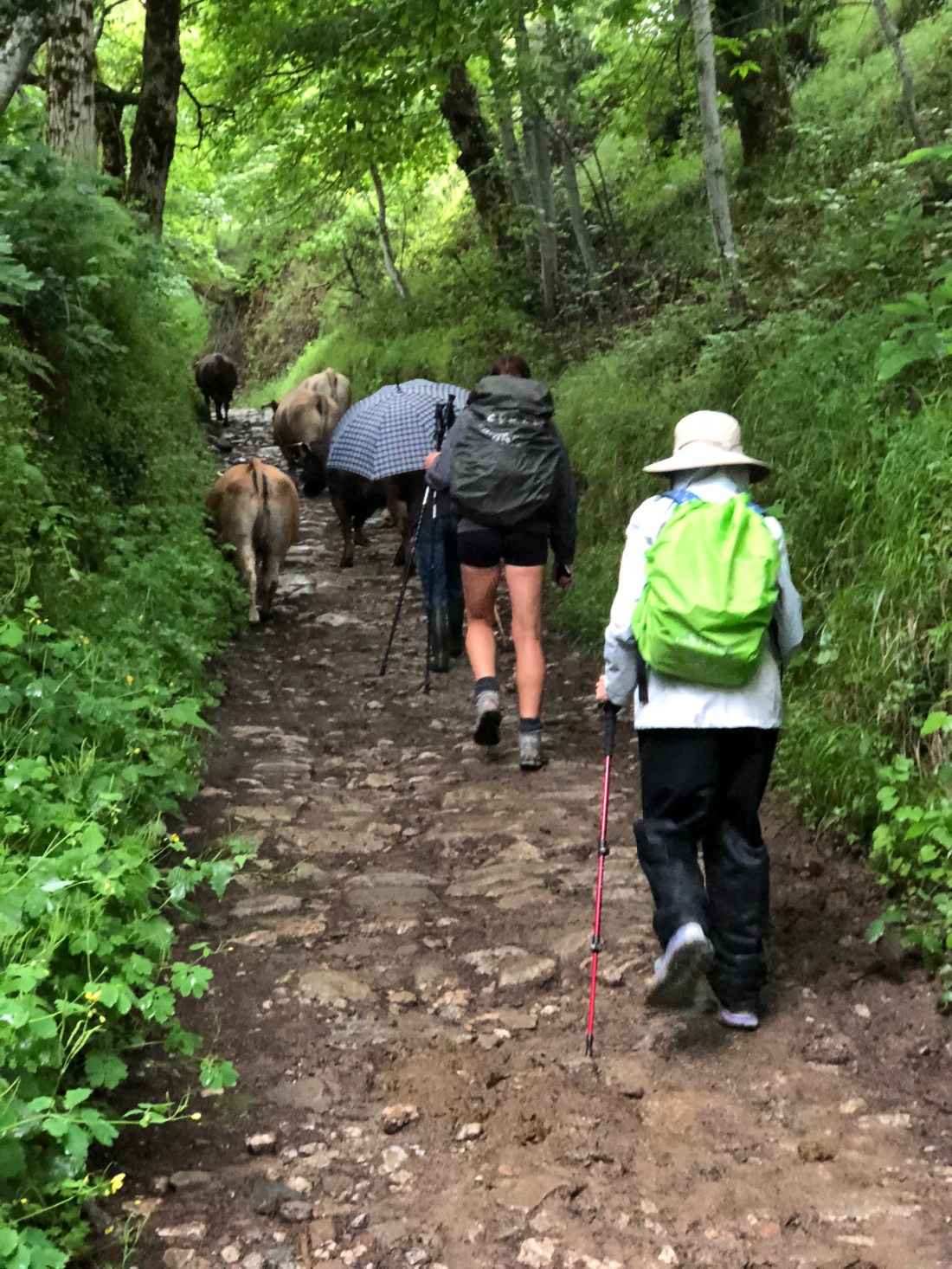
The herder, carrying an umbrella, led them through the village and up the side of the mountain.IMG_2861.jpg

Following a herd of cows uphill, even a small herd, requires one to watch one’s step.IMG_2862.jpg

Fortunately, the cows didn’t have far to go before reaching their destination.IMG_2870.jpg

After several hours of walking, the clouds started to lift.IMG_2872.jpg

Close to the top of the mountain, the sun peeked through the clouds.IMG_2874.jpgAt the top of the mountain is the village of O’Cebreiro, which is in the autonomous region of Galicia, the western-most region in Spain.  The sun was out when we arrived. 
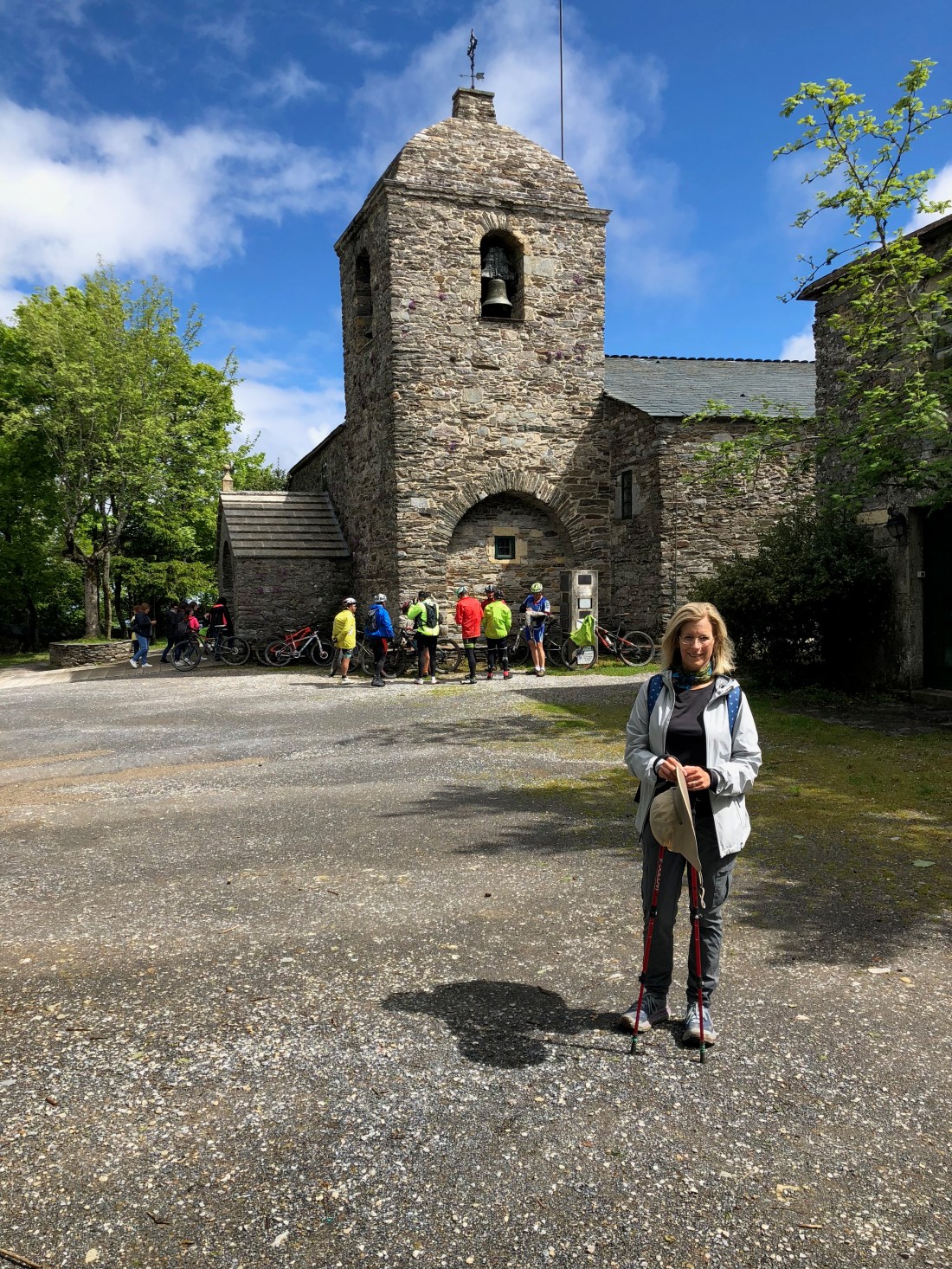
Here is the Iglesia de Santa Maria Real in O’Cebreiro.IMG_2886.jpgWe arrived minutes before the noon Mass.  The inside of the church was true to its straight-forward design and free of the baroque altar pieces and icons we have seen in other Spanish churches.
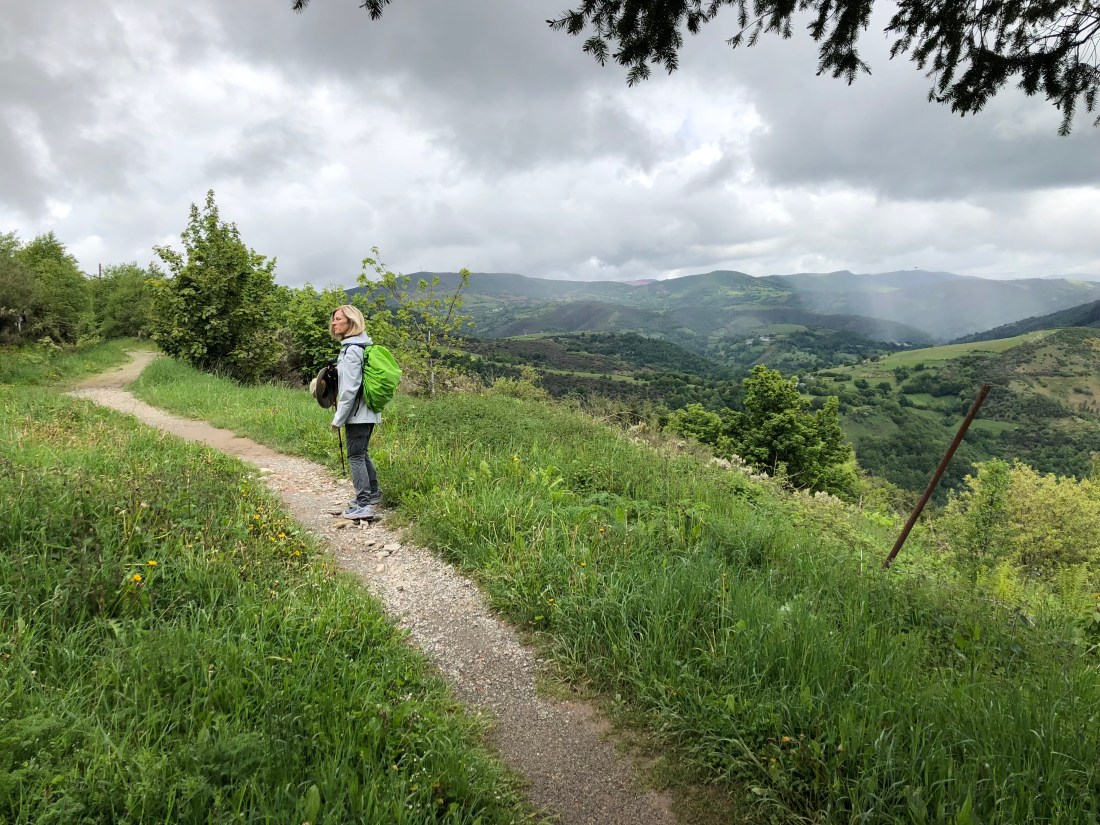
When we got out of Mass, we found that rain clouds had started to gather.IMG_2892.jpg

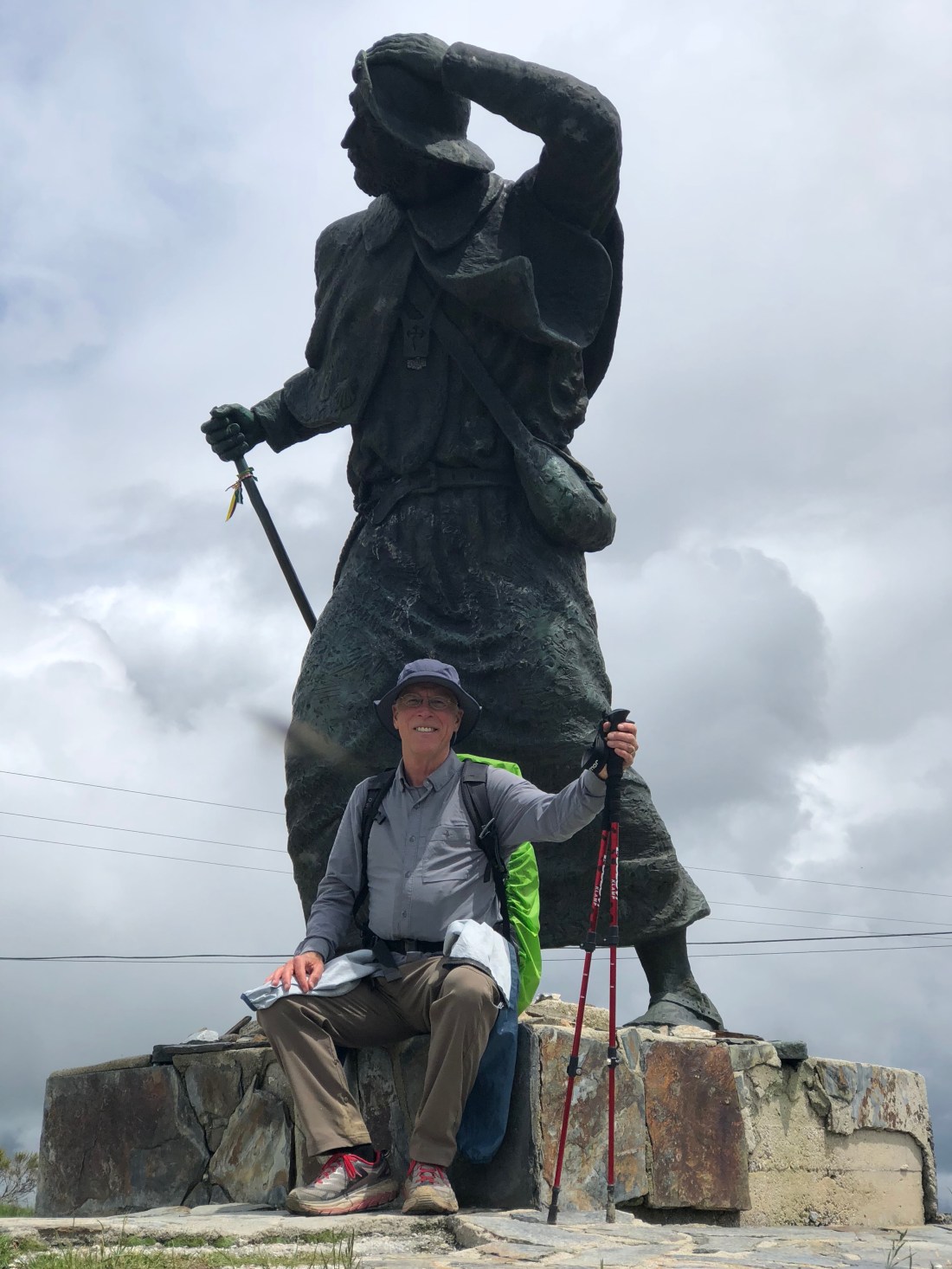
We came across a statue commemorating the peregrinos at the Alto San Roque, a pass between two mountain peaks.IMG_2897.jpg

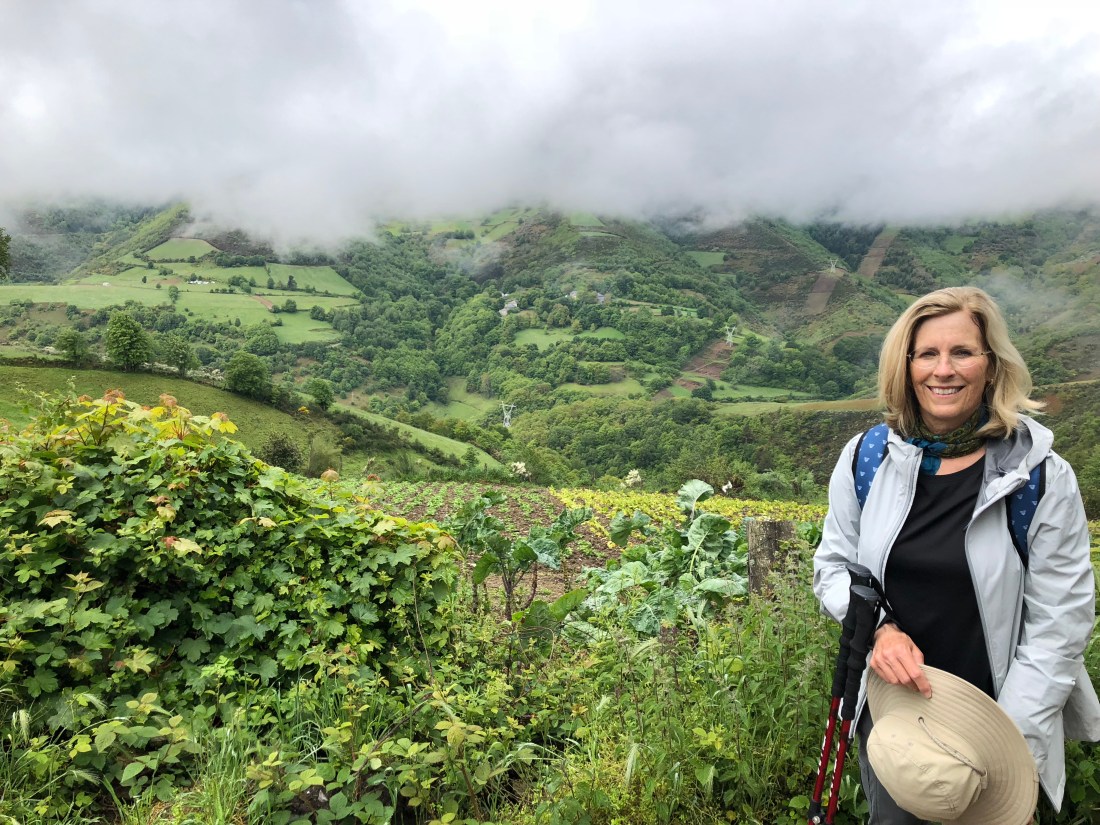
Here the view looking back over the valley from the pass.IMG_2900.jpg

A little further down the Camino the rain started to close in on us.IMG_2904.jpg

It was another long day, not so much the distance, which was about 25 km, or 16 miles, but today we  climbed over 600 meters, or almost 2000 feet.  This is the second hard day in a row.  We have now been on the Camino for over a month–slogging through mud, getting rained on, ordering from the Pilgrim’s Menu at Camino-side tabernas, sleeping in hostels and Casa Rurals–and I’m afraid it’s starting to have an effect.IMG_2920.jpgWe walk to Sarria tomorrow, where we have a rest day, which I hope will put us back on track.
Cacabelos to Herrerias

It was sunny this morning when we left our hotel in Cacabelos.IMG_0004.jpgWe had a long day ahead.  We walked from Cacabelos to Herrerias, about 28 km or 17 miles. 

We crossed over the rio Cua leaving Cacabelos.IMG_2794

We then alongside a highway up into the foothills.IMG_2797.jpg

After about an hour of walking along the road, the Camino turned off onto a dirt path through vineyards.IMG_2801.jpg

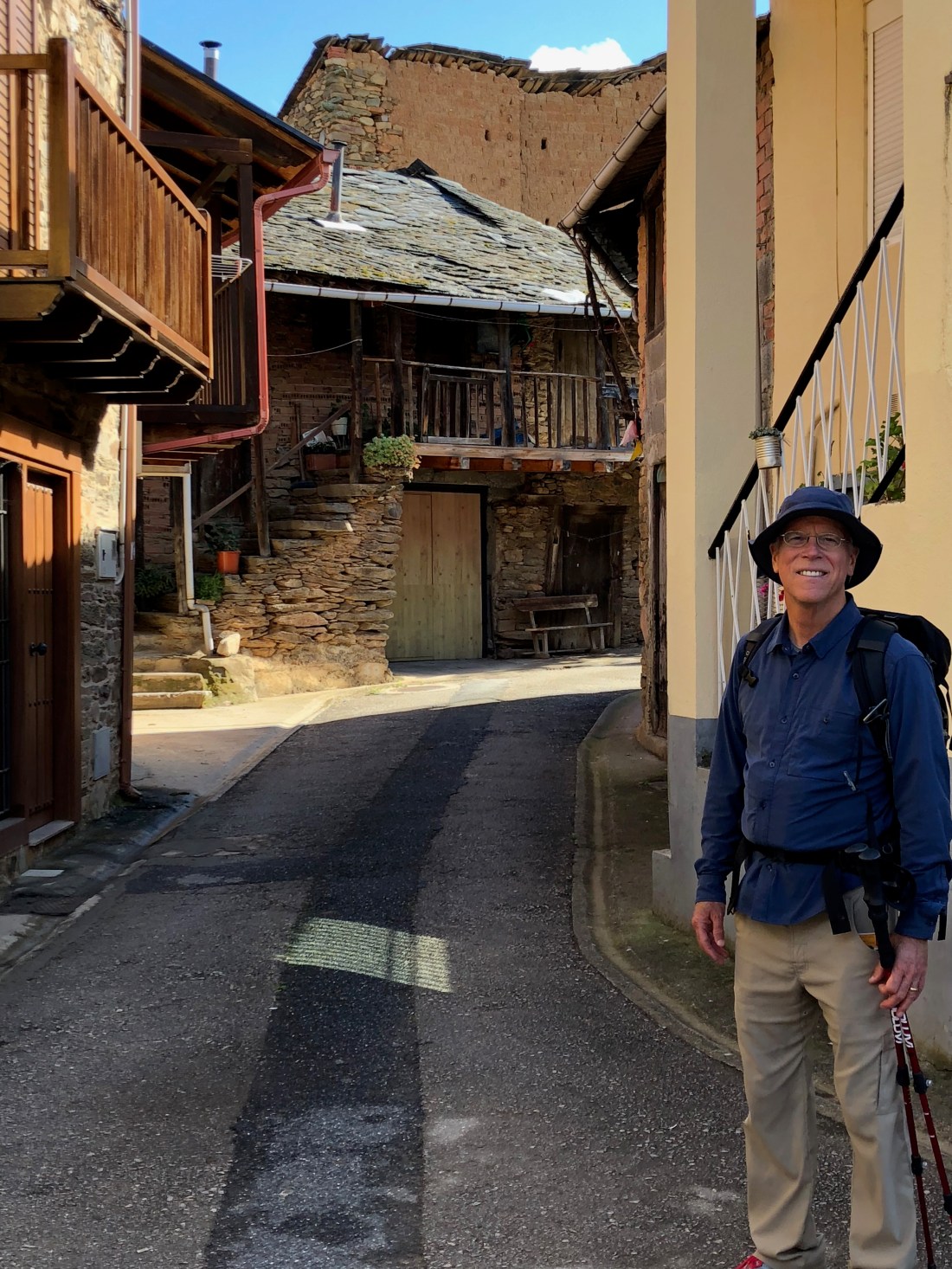
We walked over a hill to the village of Valtuille de Arriba, well off the main highway.IMG_2804.jpg

After leaving the village, we walked through a woods.IMG_2806.jpg

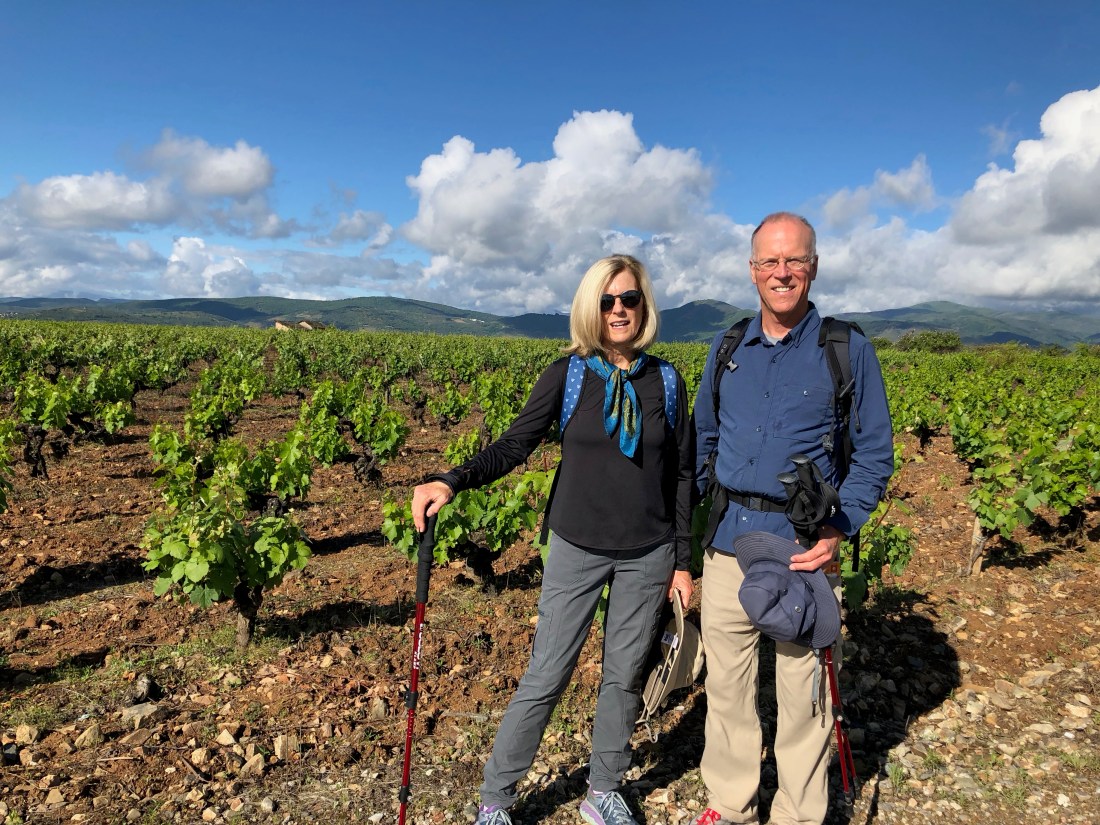
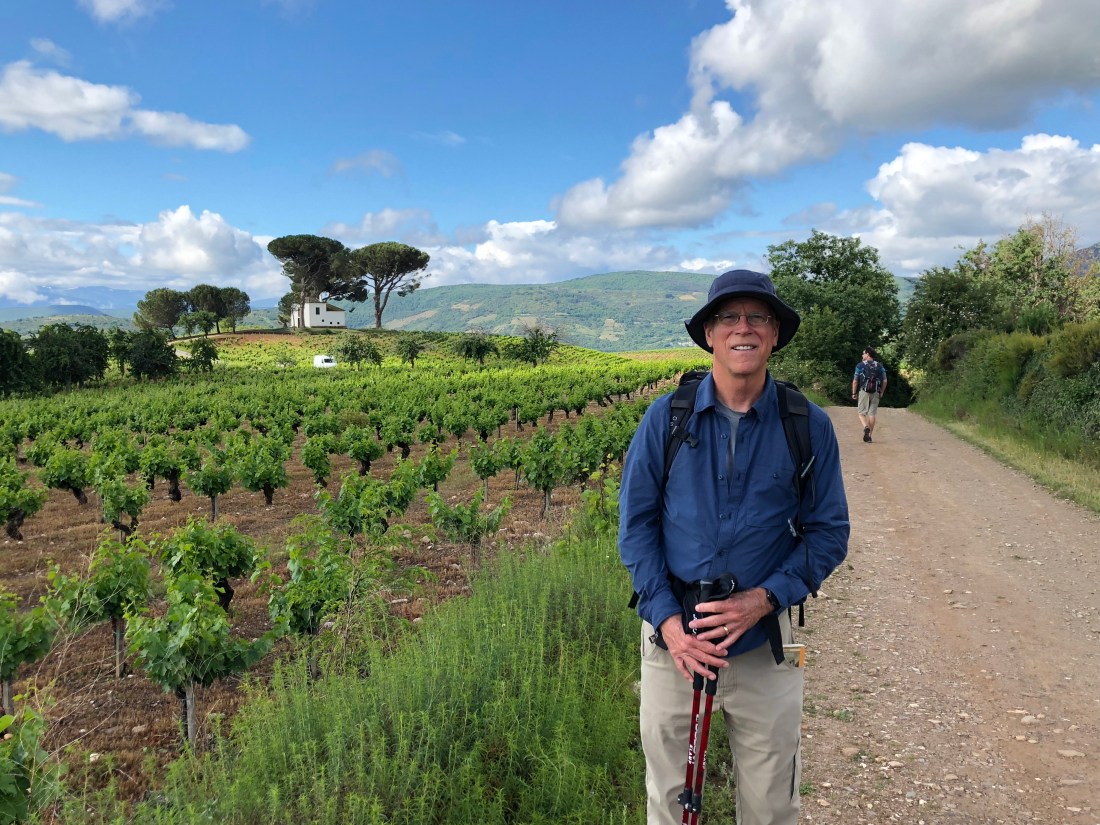
And then through more vineyards.IMG_2816.jpgThere are cherry trees alongside the Camino here, and the cherries are just ripening.    Outside of Villafranca del Bierzo, we came upon two men, they could have been father and son, picking ripe cherries from a small lot with about a half dozen cherry trees on it.  When we came alongside, they motioned us over and gave us cherries.  They insisted that we stay until our hands were full, and then wished us Buen Camino.  They were delicious, so sweet, and so warm.
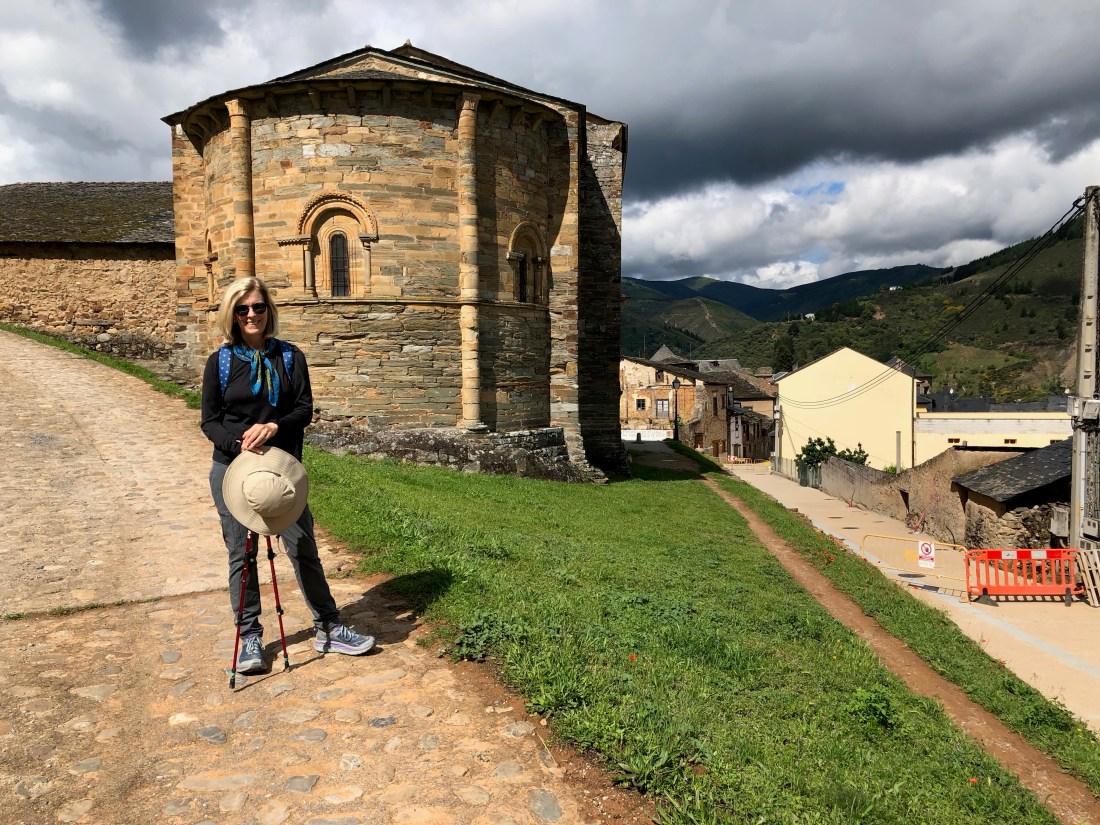
Near Villafranca, we passed the Iglesia de Santiago.IMG_2826.jpgThe church has La Puerta del Perdon that allows sick or injured pilgrims to be forgiven for cutting their pilgrimages short, if they pass through the puerta.  The church was not open.  I told Anne that now we had to keep going, no matter what happens.
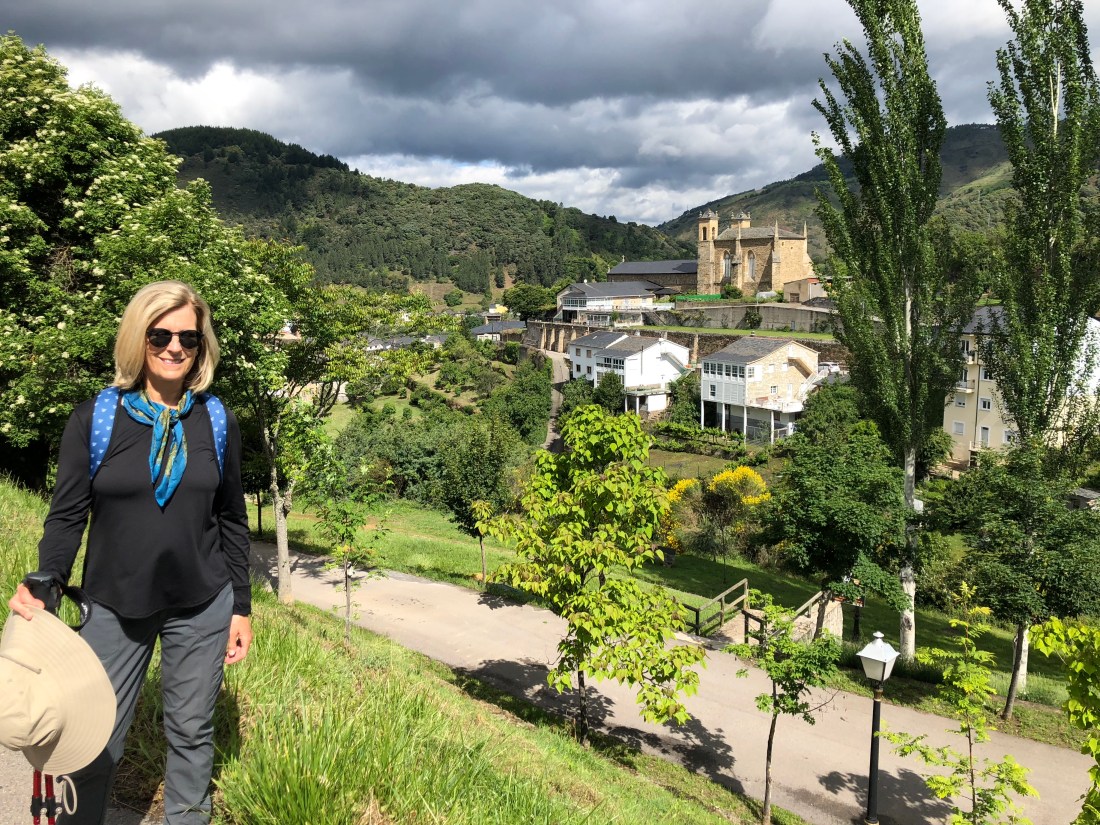
Here is the castle in Villafranca from the bluff opposite the village.IMG_2827.jpg

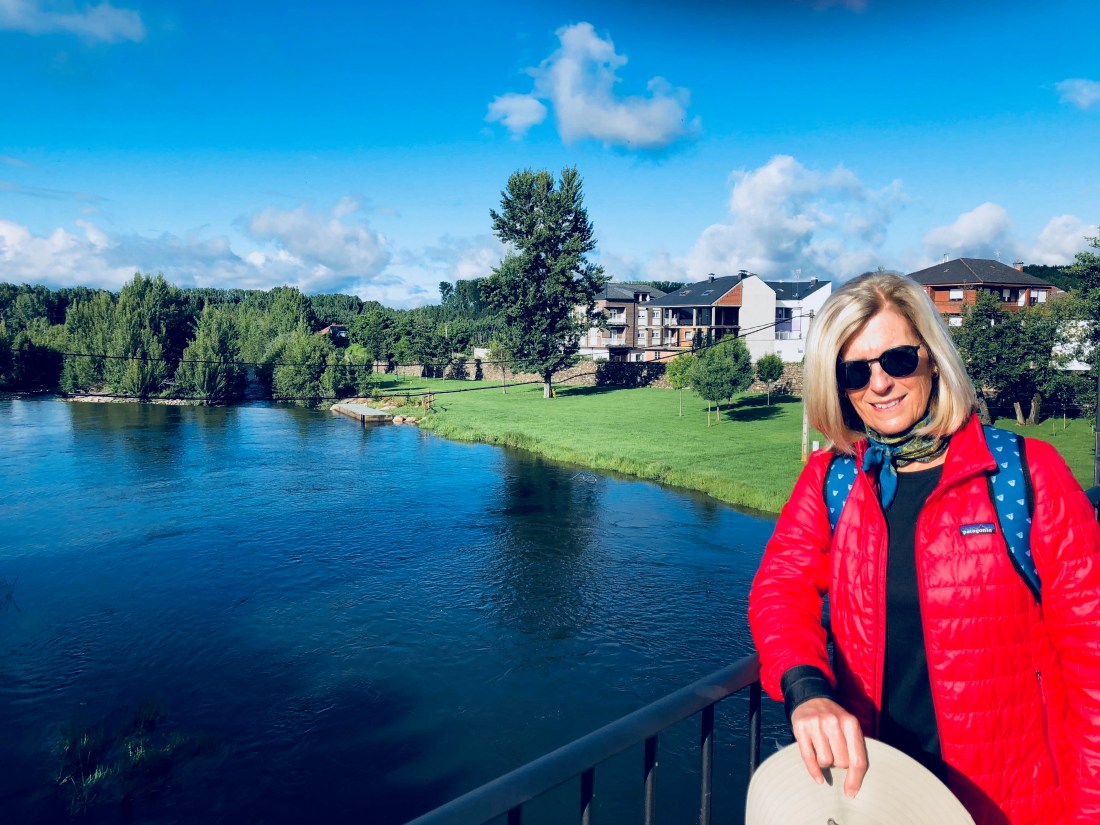
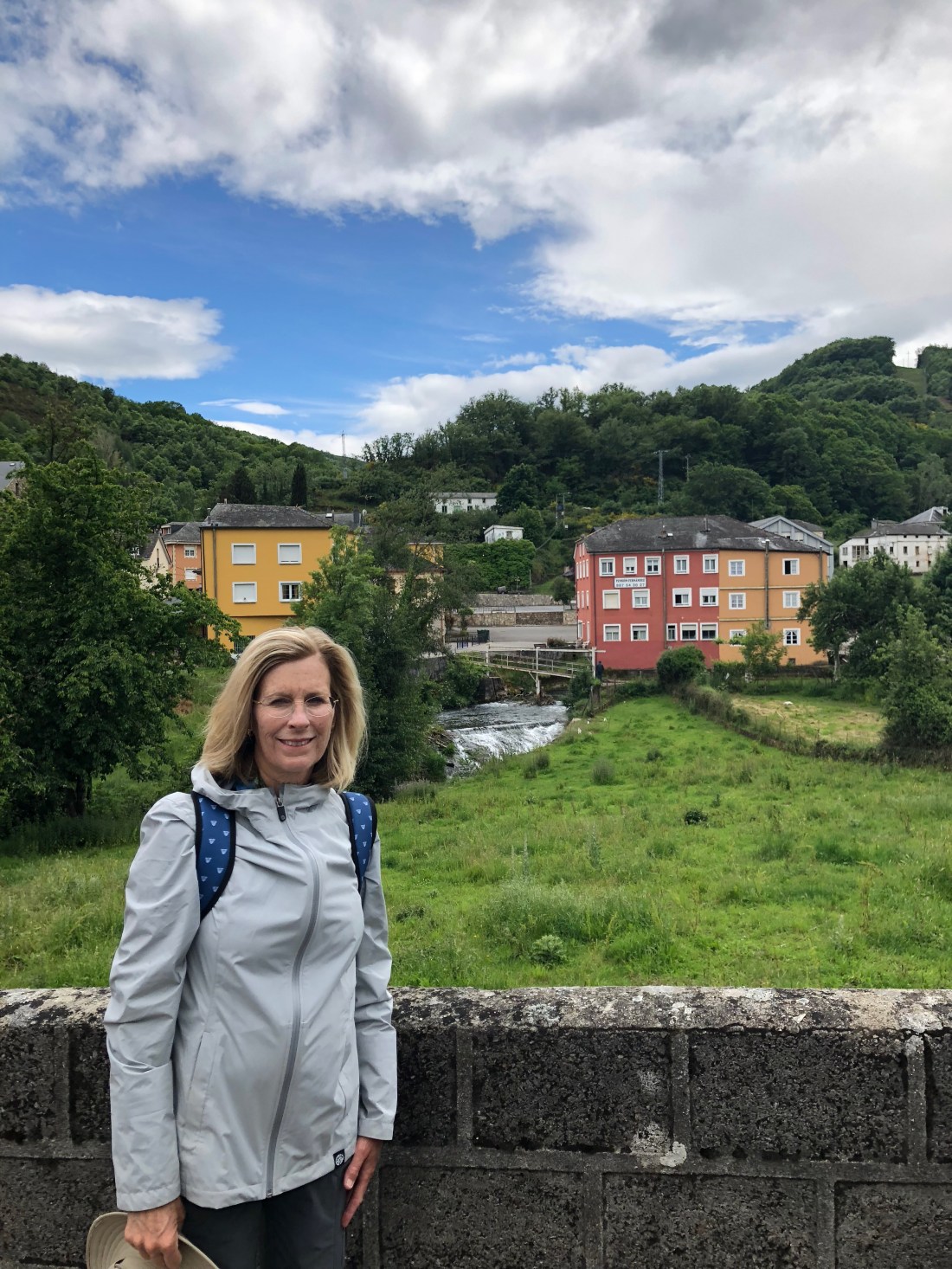
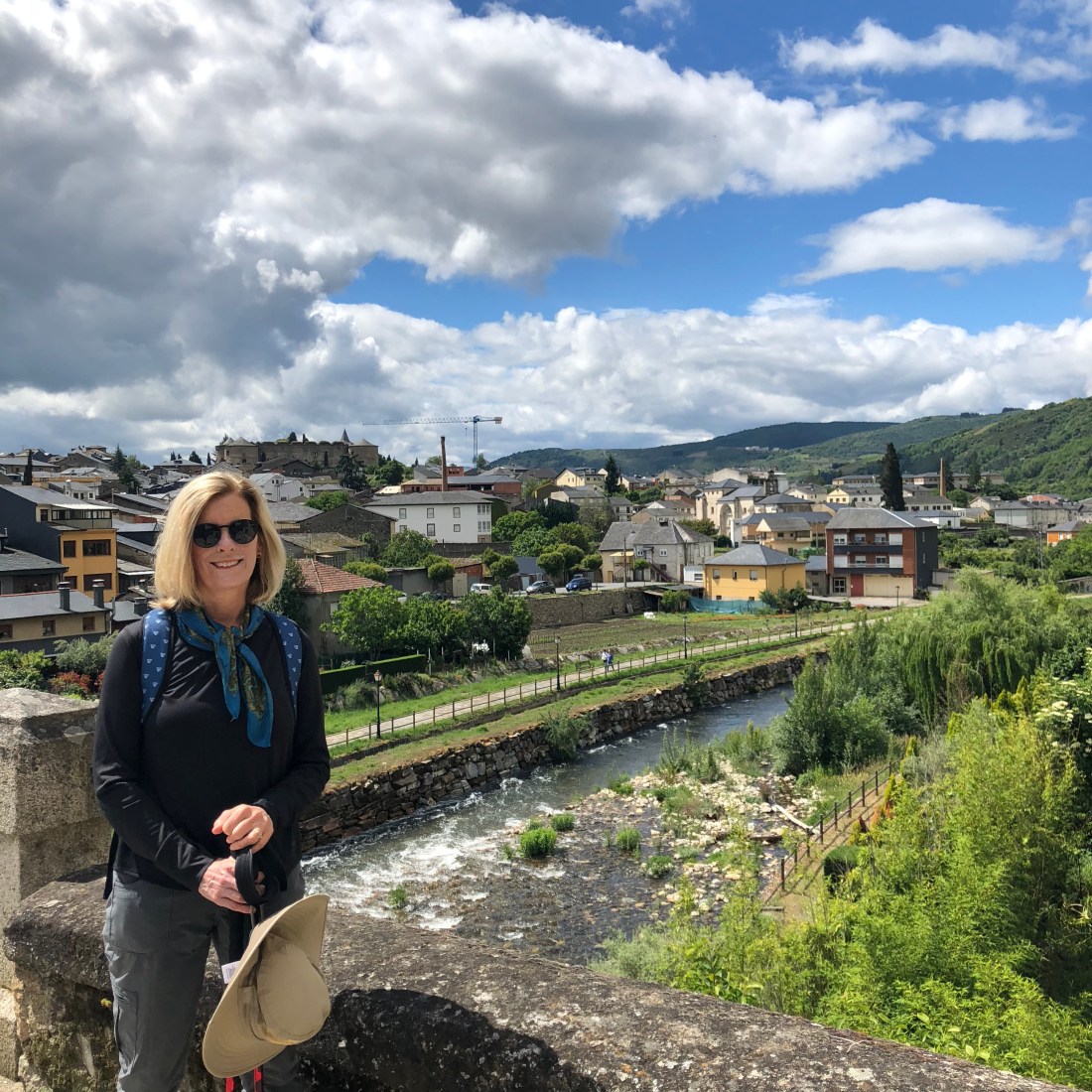
And here is view from the bridge over the rio Burbia, on the way out of town.IMG_2831.jpgIn front of Anne and behind where I am standing taking the picture is a large house with windows overlooking the river.  After I took the picture, I turned to cross the bridge, and started talking–in my best broken Spanish–with an elderly woman leaning out an open window in the house overlooking the river.  She asked where I was from.  I told her Estados Unidos, and she put her fist over her heart and said that she loved the US.  She has a daughter in Toledo, Ohio. She also has relatives in Cuba.  She said something about Fidel.  I shook my head and drew my finger across my throat.  She asked if I wanted some water, and then said something about wine and disappeared back in the house.  I thought the conversation was over and walked across the bridge.  As I walked by her building, she came running out, and gave me a bottle of wine.  Vino tinto, how did she know?  I thanked her, she wished me Buen Camino, and off we went. Her kindness and that of the two men who gave us cherries has fully restored whatever it was that seemed lost a couple of days ago.
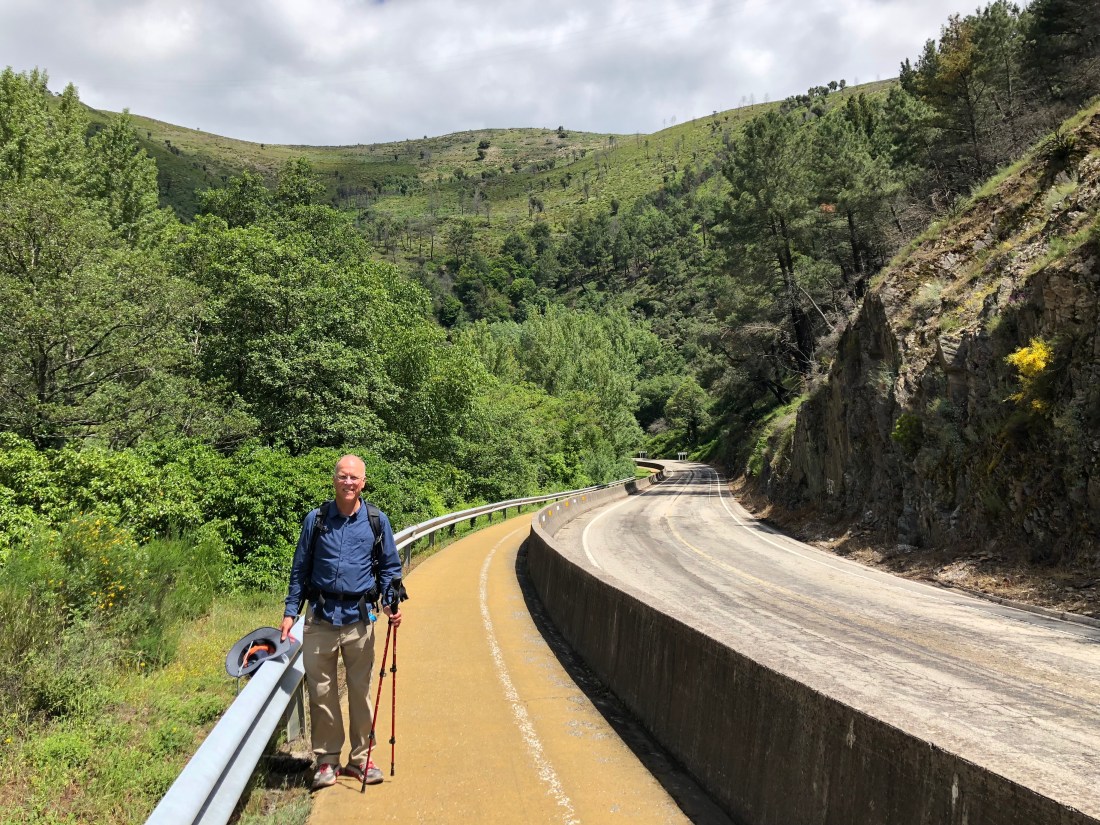
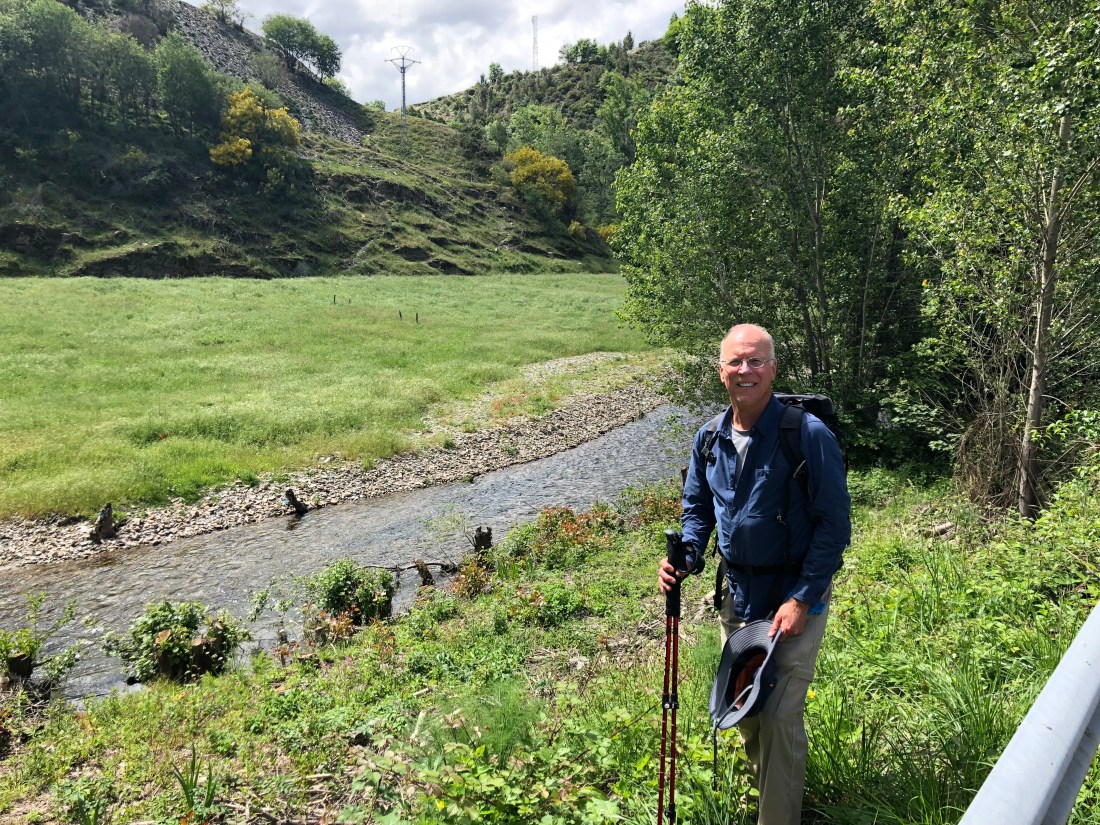
For the rest of the day we hiked up a long valley with a roadway on one side.IMG_2833.jpg

And a river on the other.IMG_2842.jpg

We passed through several villages.  This is Vega de Valcarce, not far from the village where we are staying tonight.IMG_2843It was a long day, and we were glad when we reached our hotel.
Molinaseca to Cacabelos

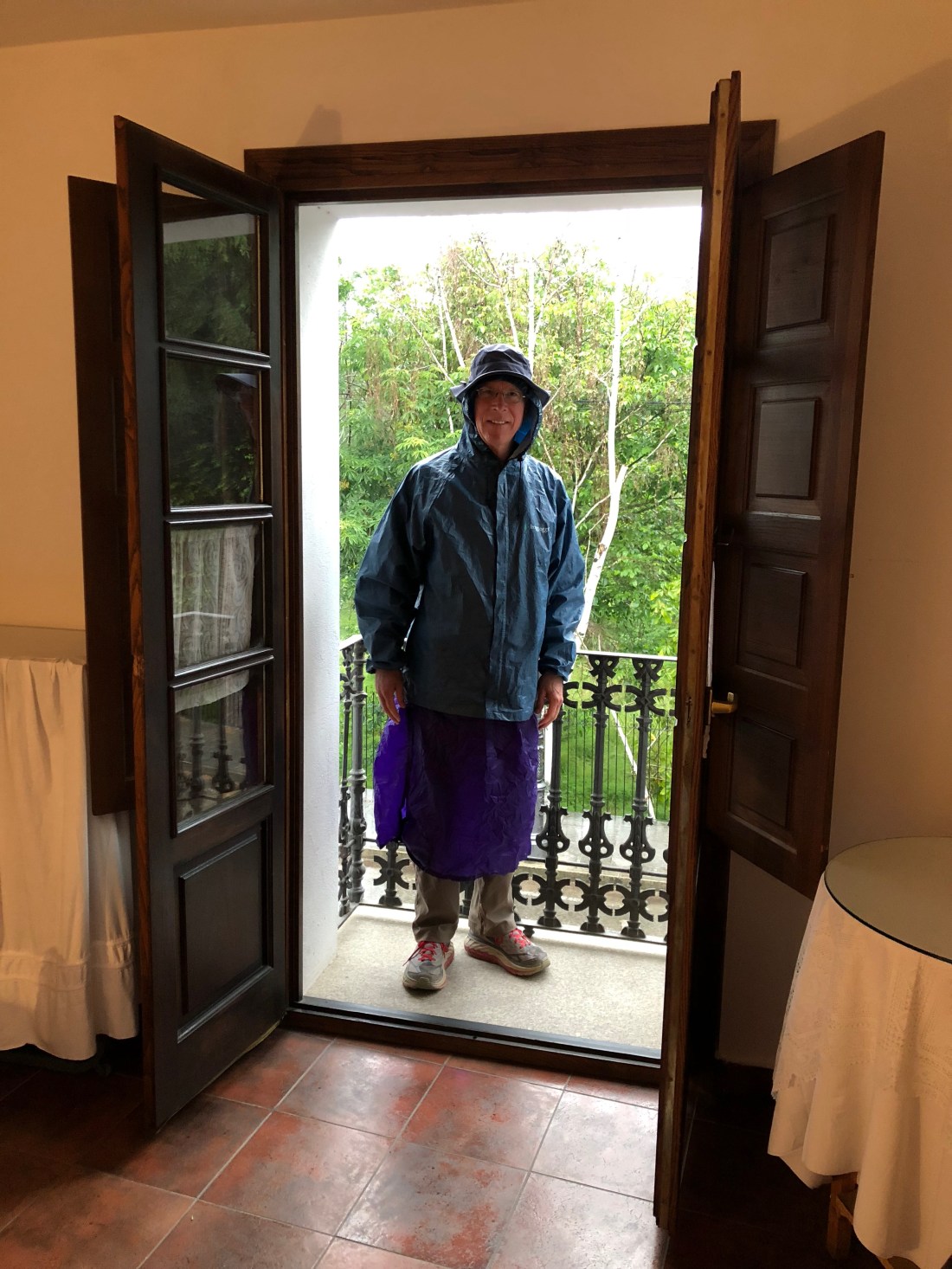
Today for the first time, we started out walking in the rain.  Anne says that I look good in my rain outfit and that people are laughing with me.IMG_2767.jpgIt rained steadily for the first hour of our walk from Molinaseca to Campo, which was entirely on sidewalks.  We only saw two other pilgrims walking in the rain. 
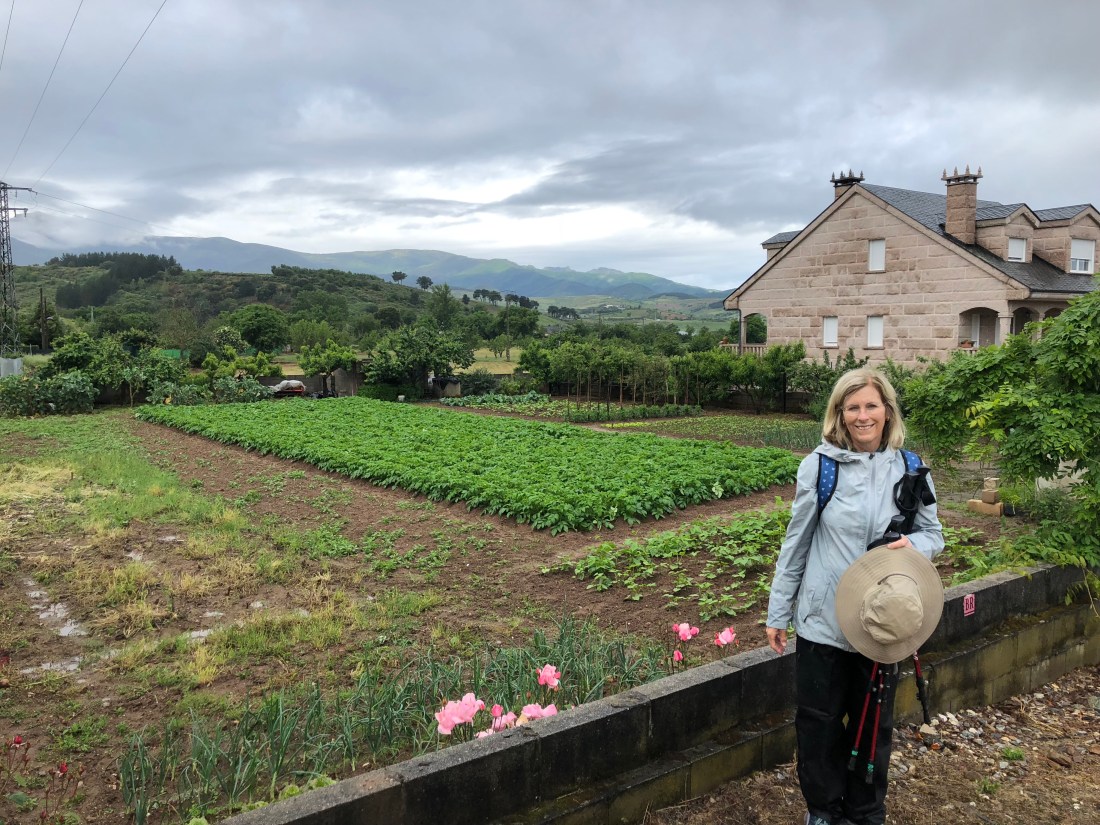
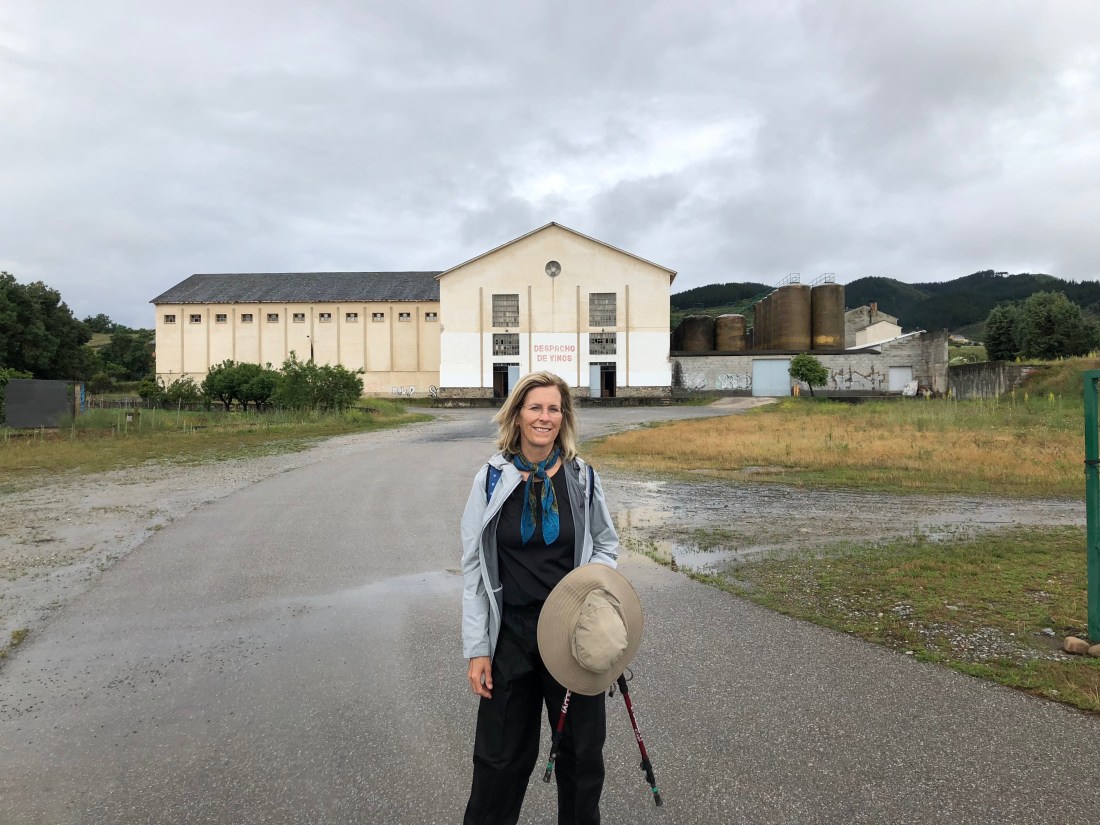
The rain let up when we got to Campo.IMG_2768.jpg

We walked on sidewalks from Campo to Ponferrada, passing through an industrial area.IMG_2771.jpg

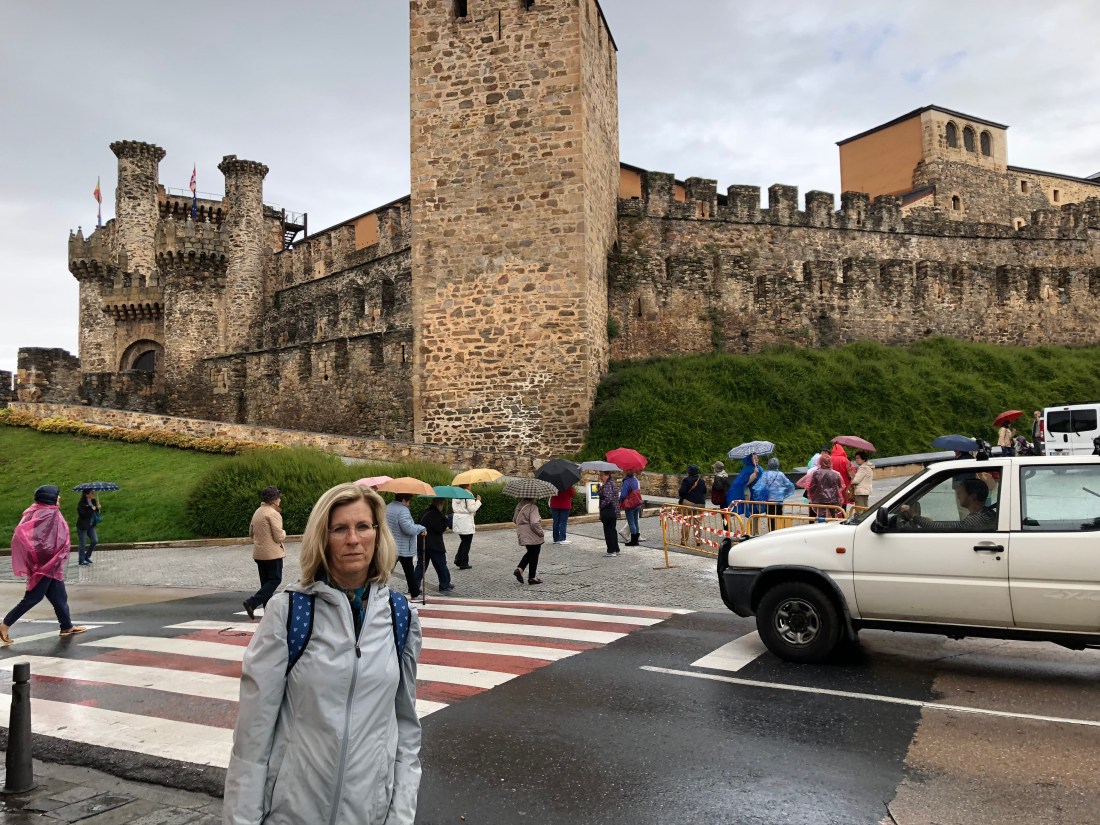
When we got to Ponferrada, the rain started up again while we were in front of the town’s castle:IMG_2772

We toured the castle in a light rain.  This is the view of Ponferrada looking southeast from the castle wall.IMG_2775.jpgAfter leaving the castle, we walked up a hill to the church on Ponferrada’s main plaza.  We overtook an old nun also walking up the hill, who greeted us.  She asked in Spanish where we were from, how long we had been married, and then stuck out her hand with a few coins in it.  I found some coins in my pocket and dropped them in her hand.  She pointed to a building where we could get our pilgrim credentials stamped, and continued up the hill.  I thought Anne would be impressed my generosity.  I was wrong.  She told me, “I’ve never seen that before.  You just got shaken down by a nun.”  Anne has insisted on carrying the money for the trip and the credit card.  I hadn’t really thought much about it until now.
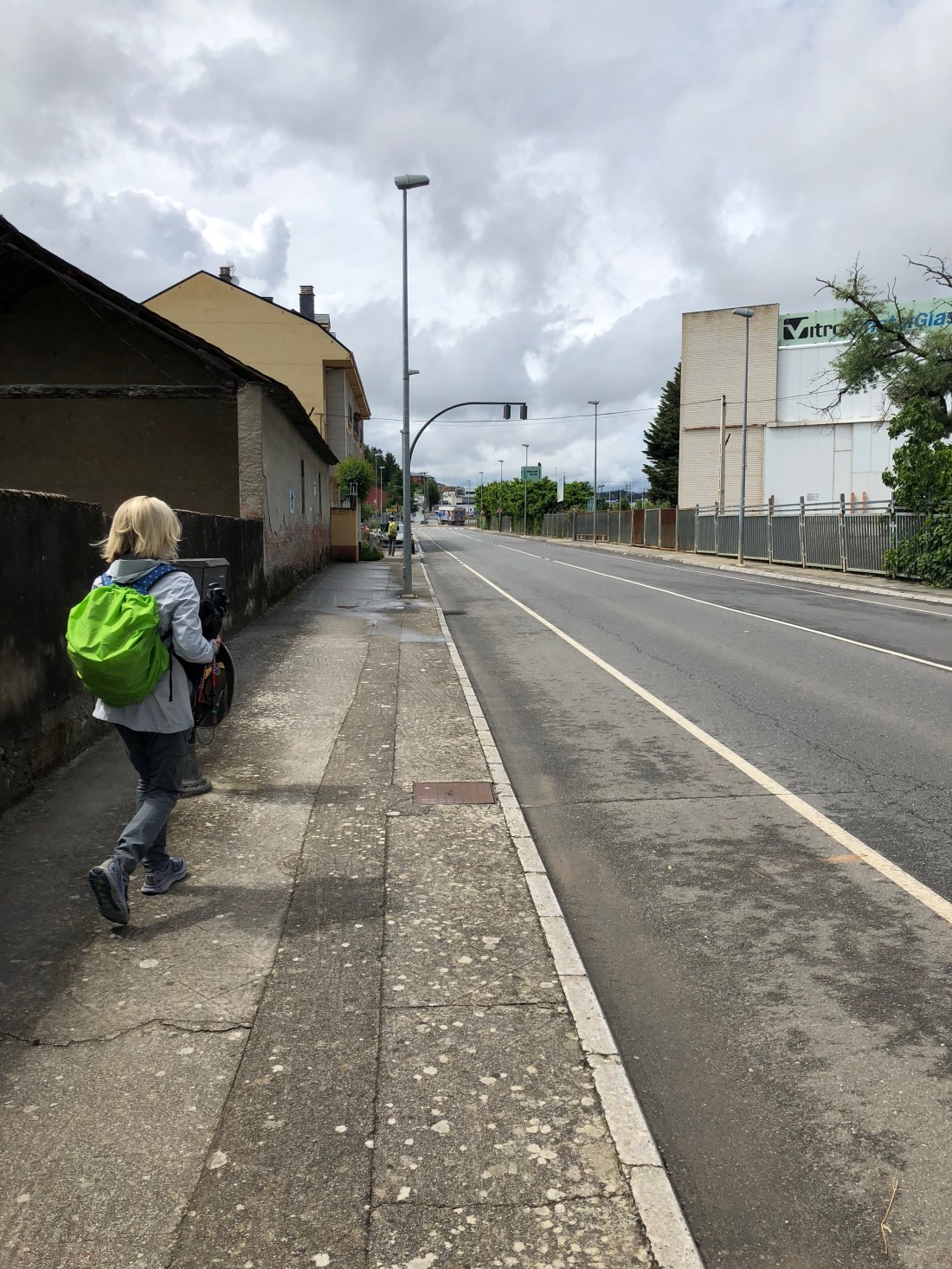
It started to rain harder before we left Ponferrada.  We walked for several hours on the streets outside Ponferrada before the rain stopped.IMG_2777.jpgMost of the walking today was on sidewalks but some was directly on the street.  Most drivers will either slow or pull over to the other side of the road when they pass us.  Some do not.  The worst drivers were the shepherds in the Pyrenees who Anne and I agreed tried to drive as close to us as possible when they passed.
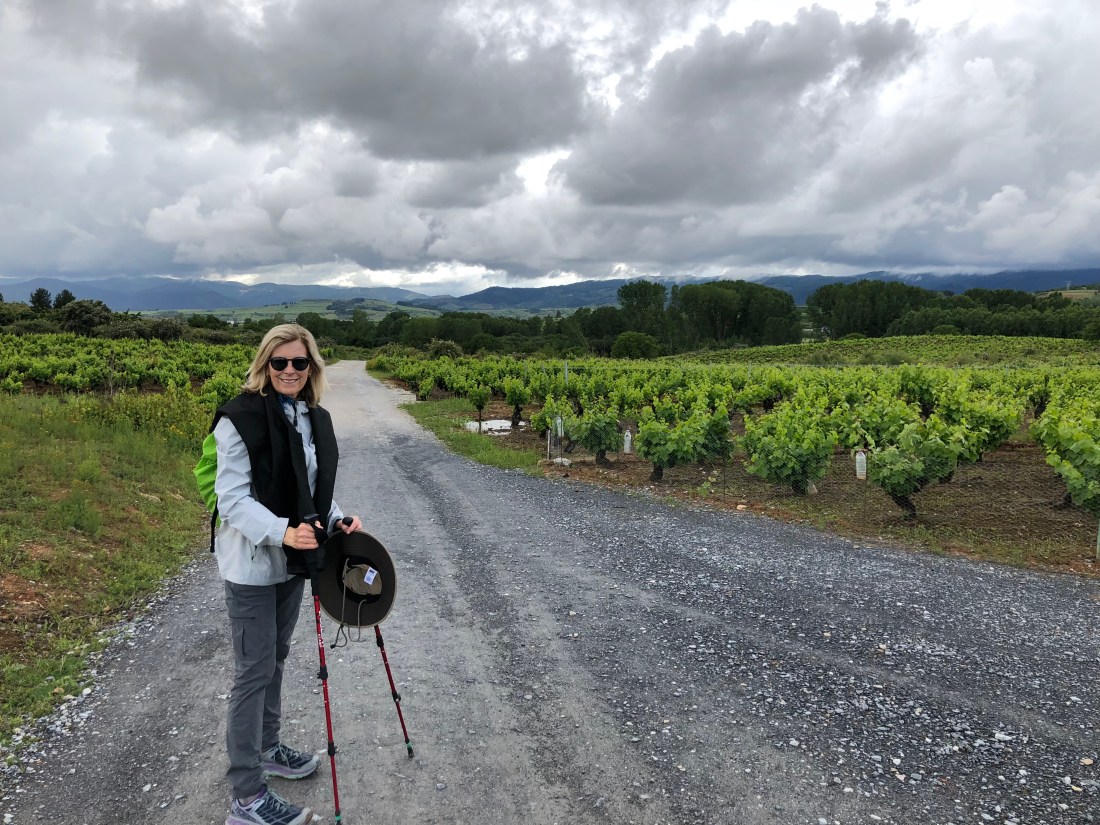
About an hour from Cacabelos, which is our destination, the rain stopped, and we turned onto a dirt track that went through vineyards.IMG_2783.jpg

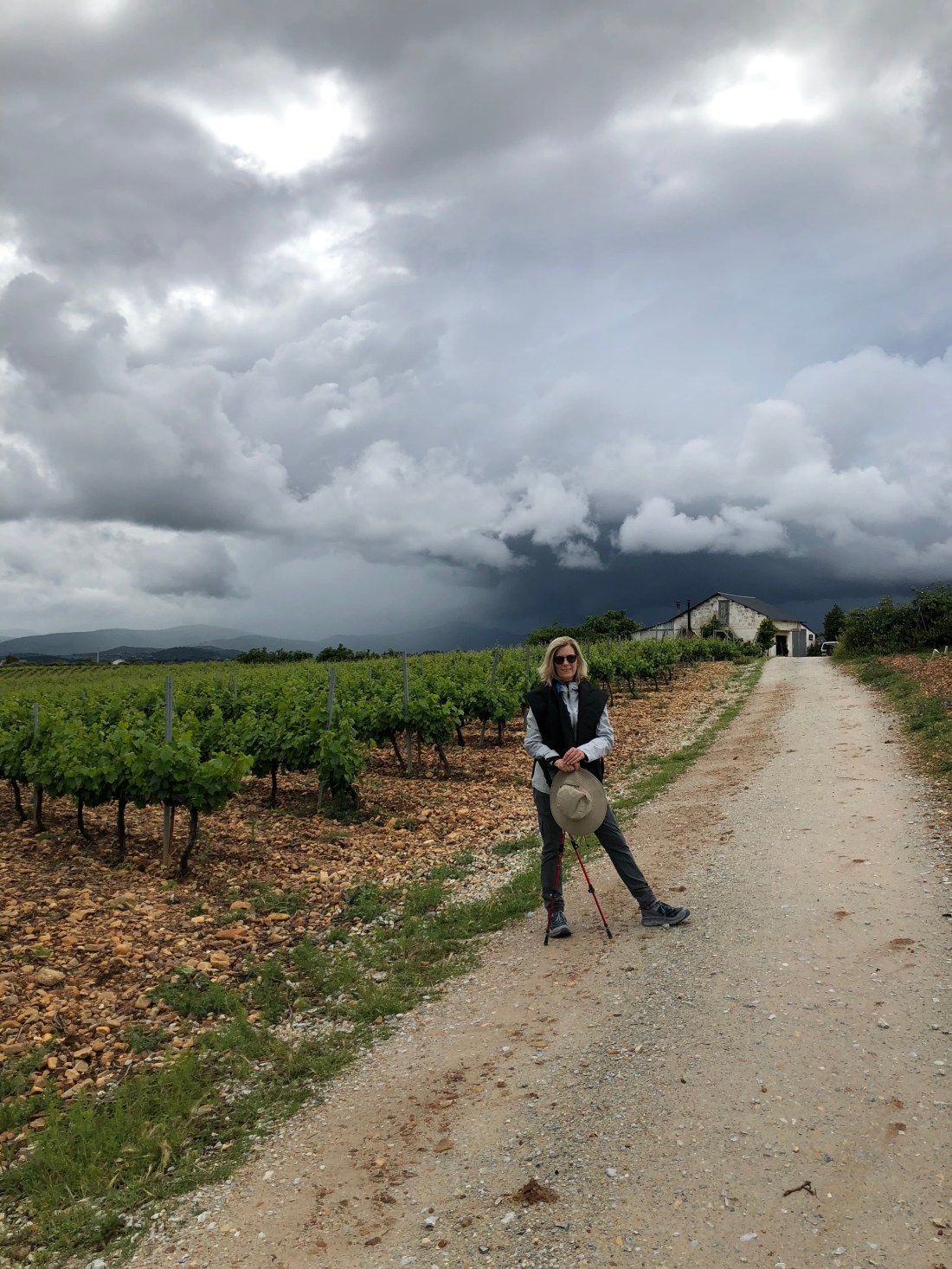
Just before reaching the village, the rain clouds closed in again.IMG_2787.jpgIt is raining hard now, and rain is forecast for the next several days.  We spent today crossing from one side of a long valley to the other side.  From here, the Camino goes up out of the valley and into the mountains.  We need to keep an eye on the weather.  Today was unusual because the rain started in the morning.  The typical pattern has been for good weather early and for the rain to start in the early afternoon.  That has generally allowed us to reach our destination without getting too wet, provided we get an early start.  If it rains all day though, all bets are off.