
We left our hotel in Villalcazar under cloudy skies.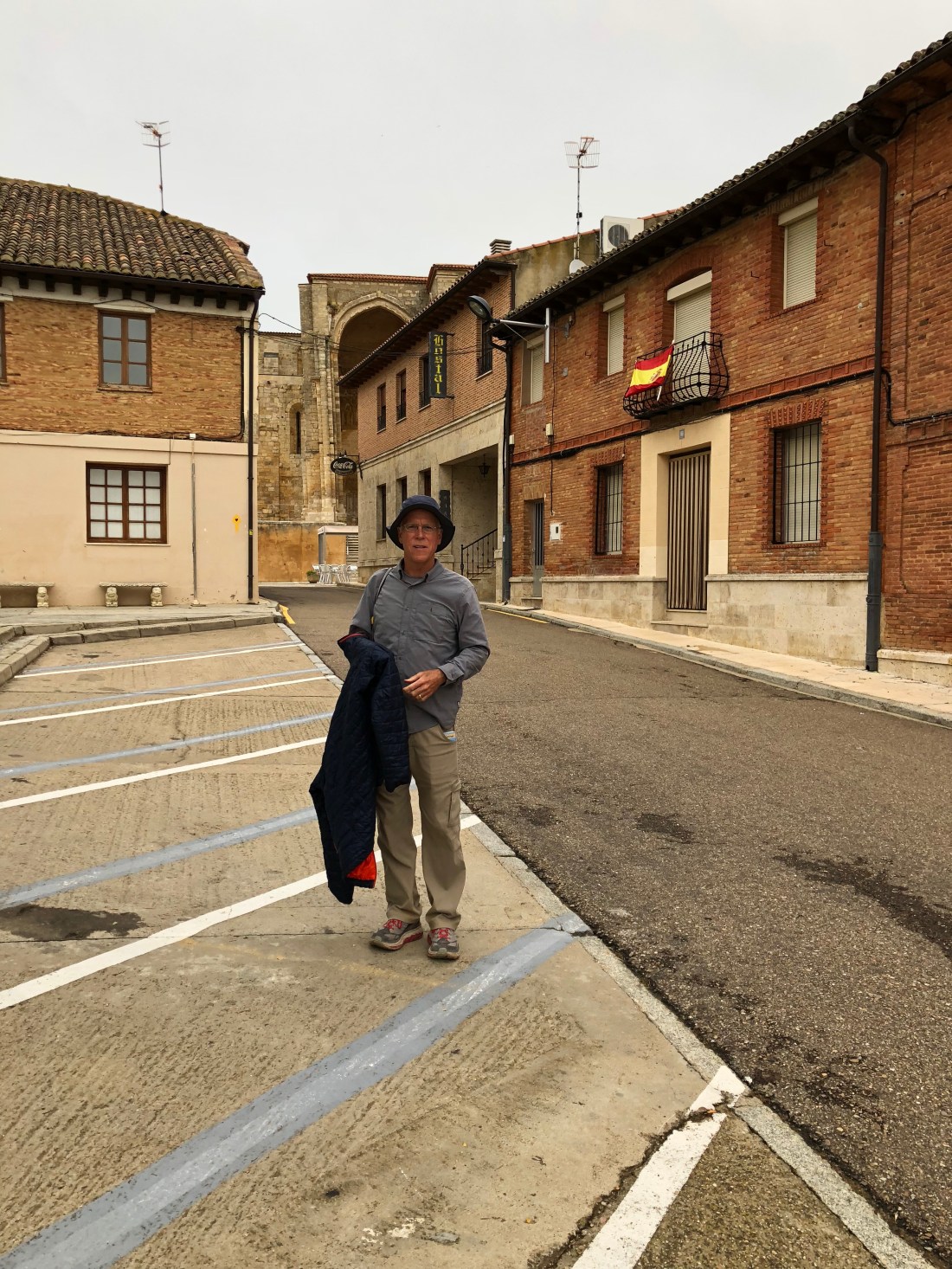
We spent much of the day walking beside highways. We started out walking beside this one leading from Villalcazar to Carrion de los Condes.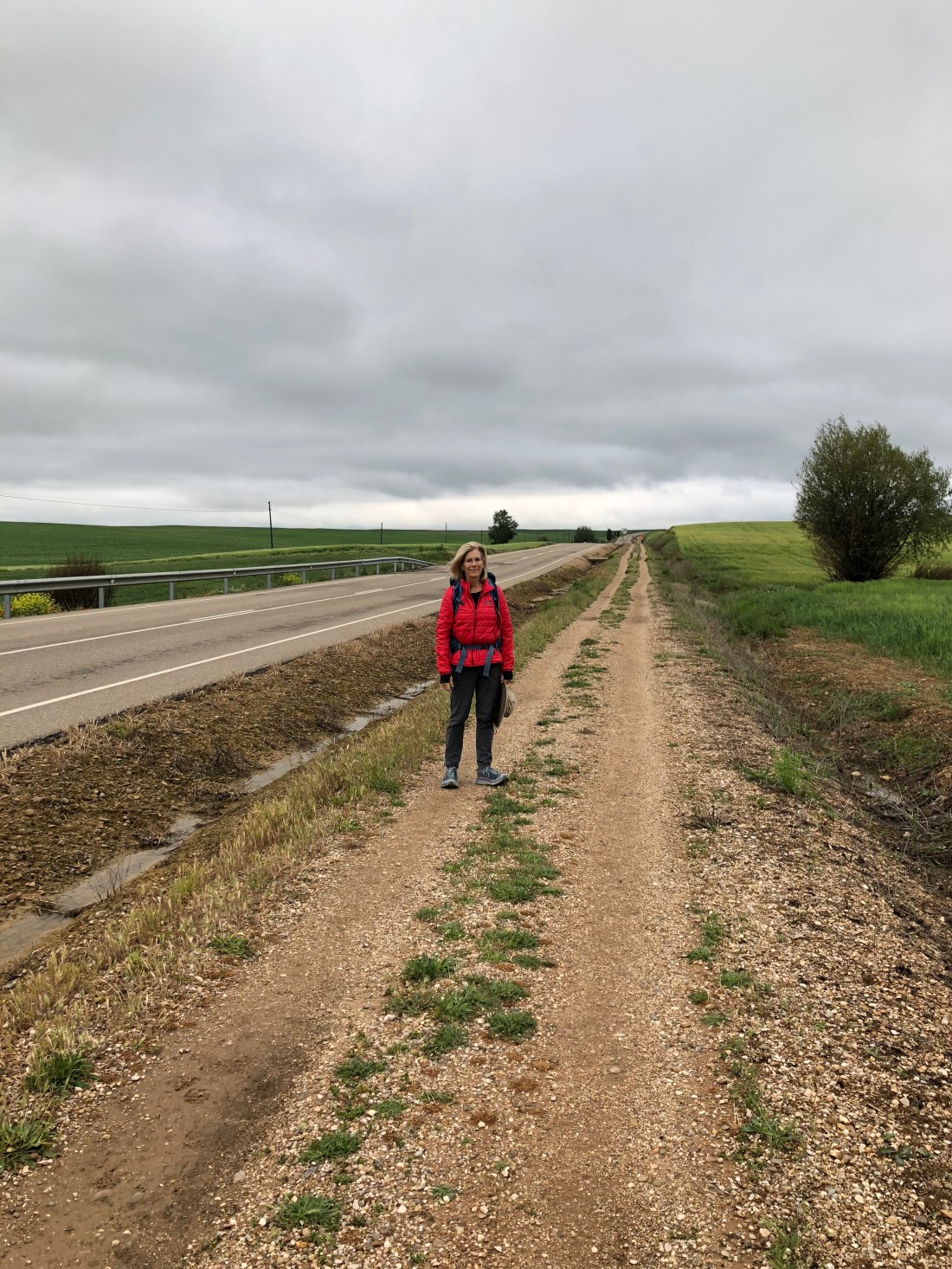
Here is the Iglesia de Santa Maria del Camino in the center of Carrion.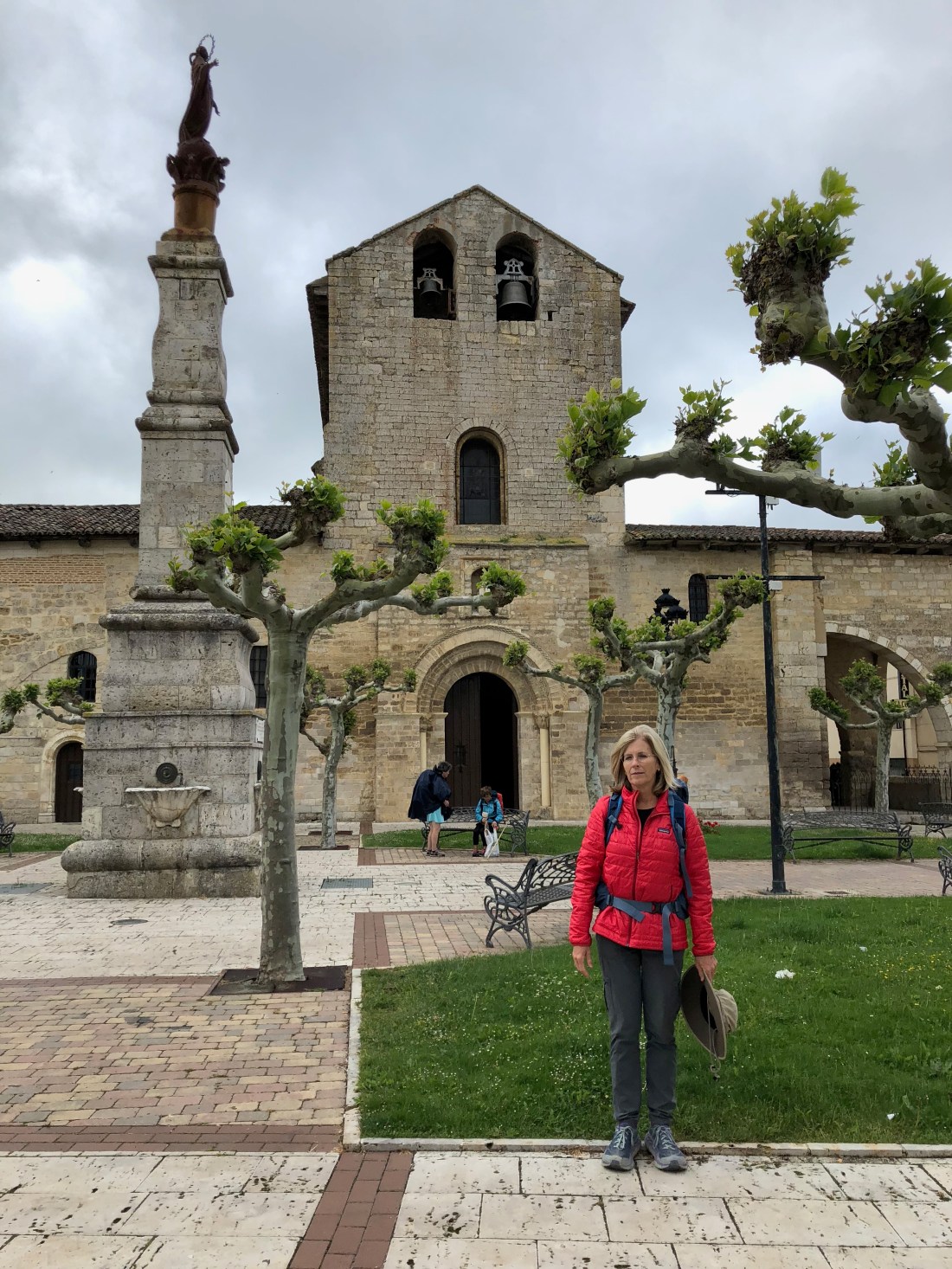
And here is the Iglesia de Santiago seen from the bridge over the rio Carrion.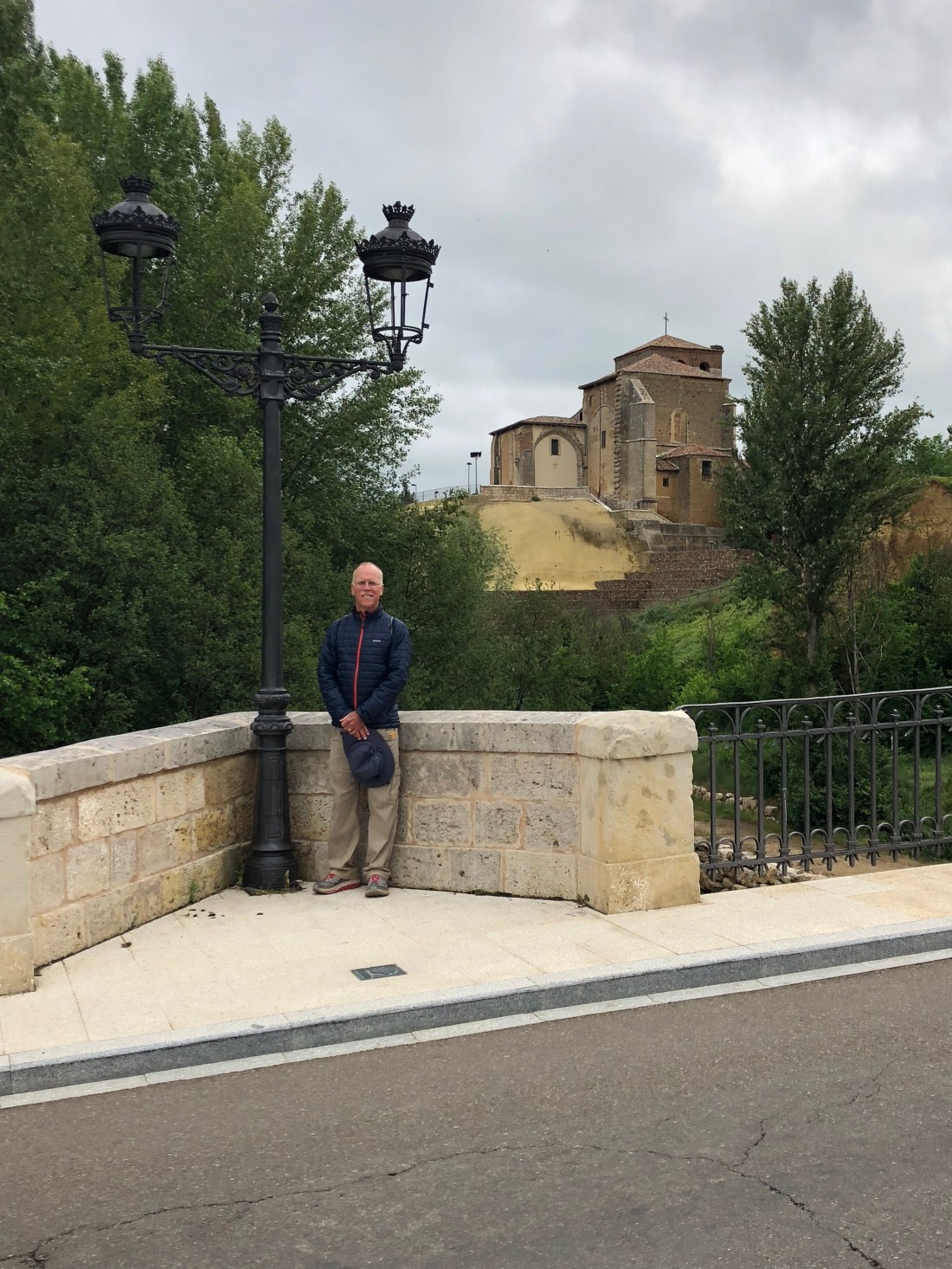
Just a little further was the former monastery San Zoilo, which has been converted into a hotel.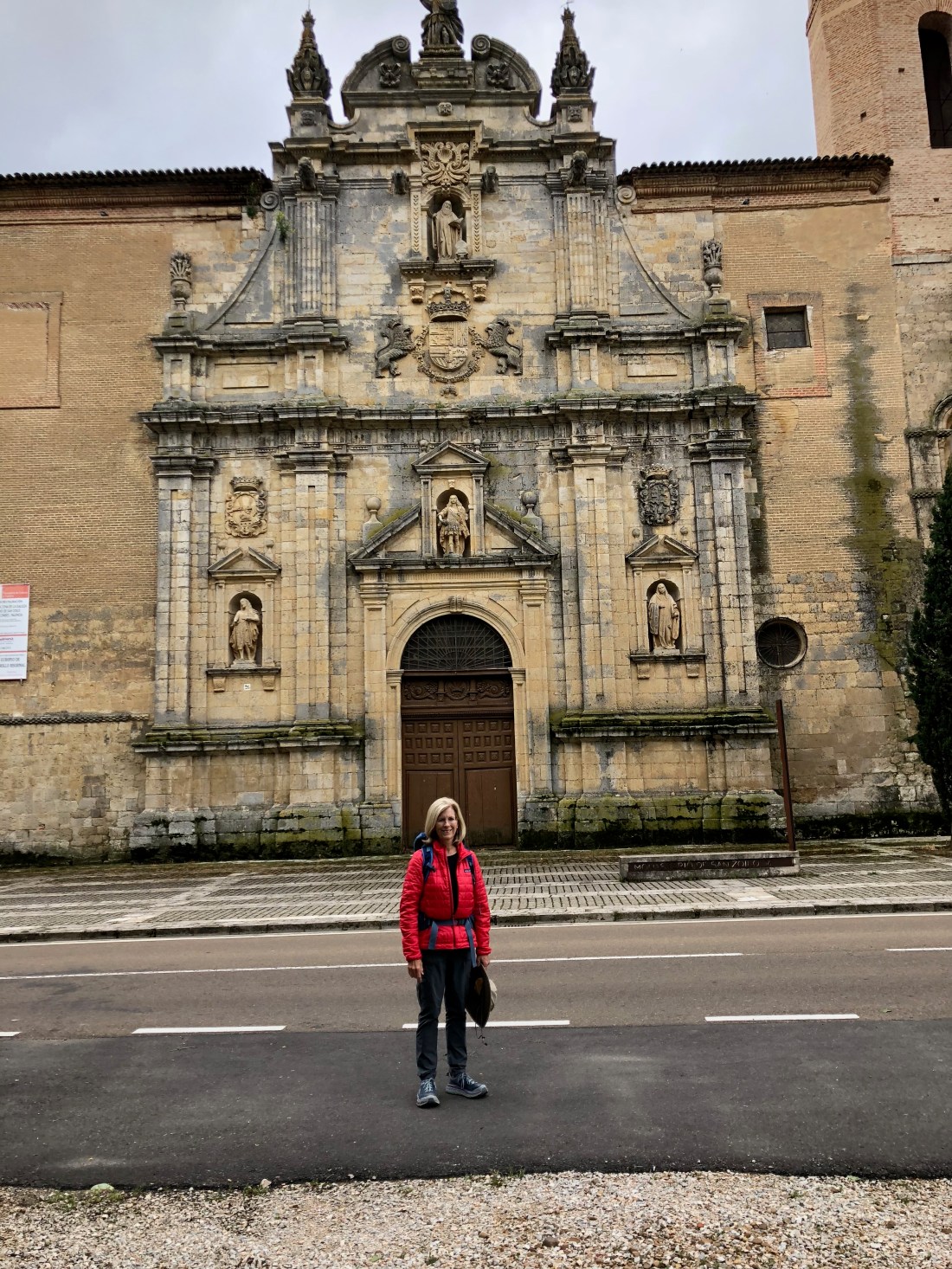
After leaving the convent/hotel, we walked directly on the shoulder of a narrow and busy highway out of Carrion.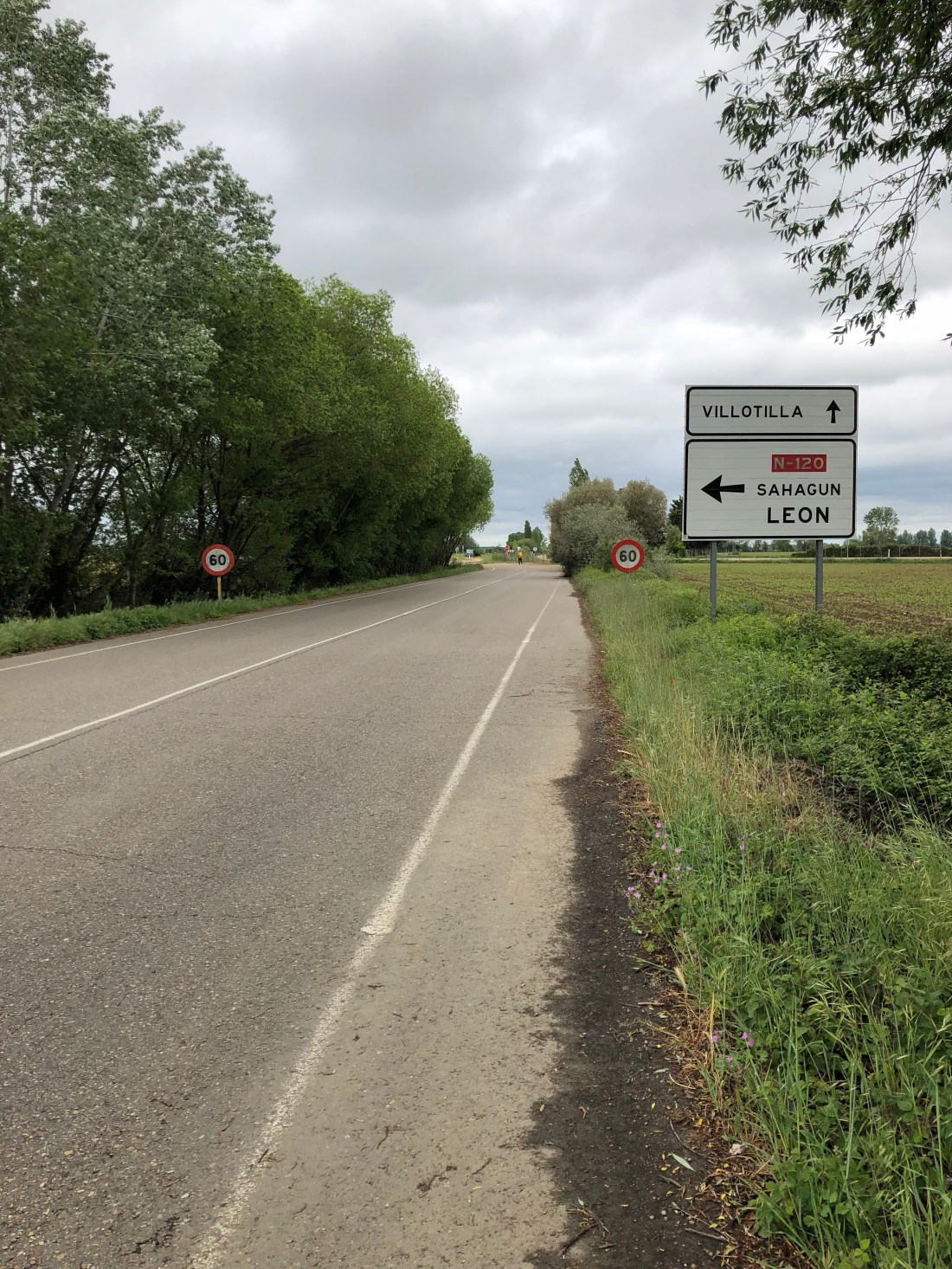 The highway had fast moving big rigs whizzing by. I didn’t take pictures of the trucks because I didn’t want to get hit. We had to step out on the highway several times to get around bushes that were growing out into the shoulder.
This part of the Camino is unsafe. No one should be walking it. And there is no reason to walk on it. It is totally devoid of any interest or charm.
The next part of the Camino wasn’t much better. After leaving the highway, we turned onto a narrow one-lane blacktop. We walked on the edge of the blacktop for several miles. There weren’t a lot of cars, but the ones that passed us were going fast. This part of the Camino also is unsafe and should not be traveled on foot.
Finally, the Camino turned off onto a dirt track leading through farmland.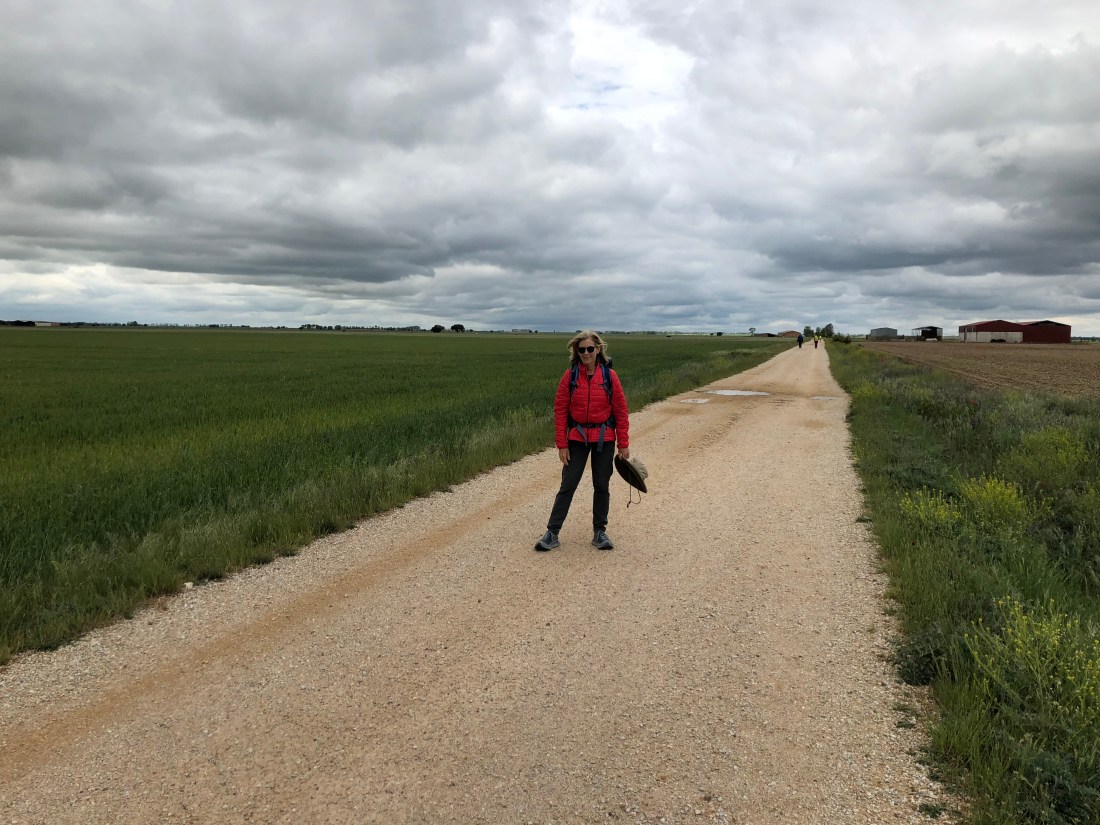
We followed the path to our destination for the day, Calzadilla del Cueza, which was a Camino village devoted to servicing pilgrims. Without the Camino, Calzadilla would have disappeared long ago.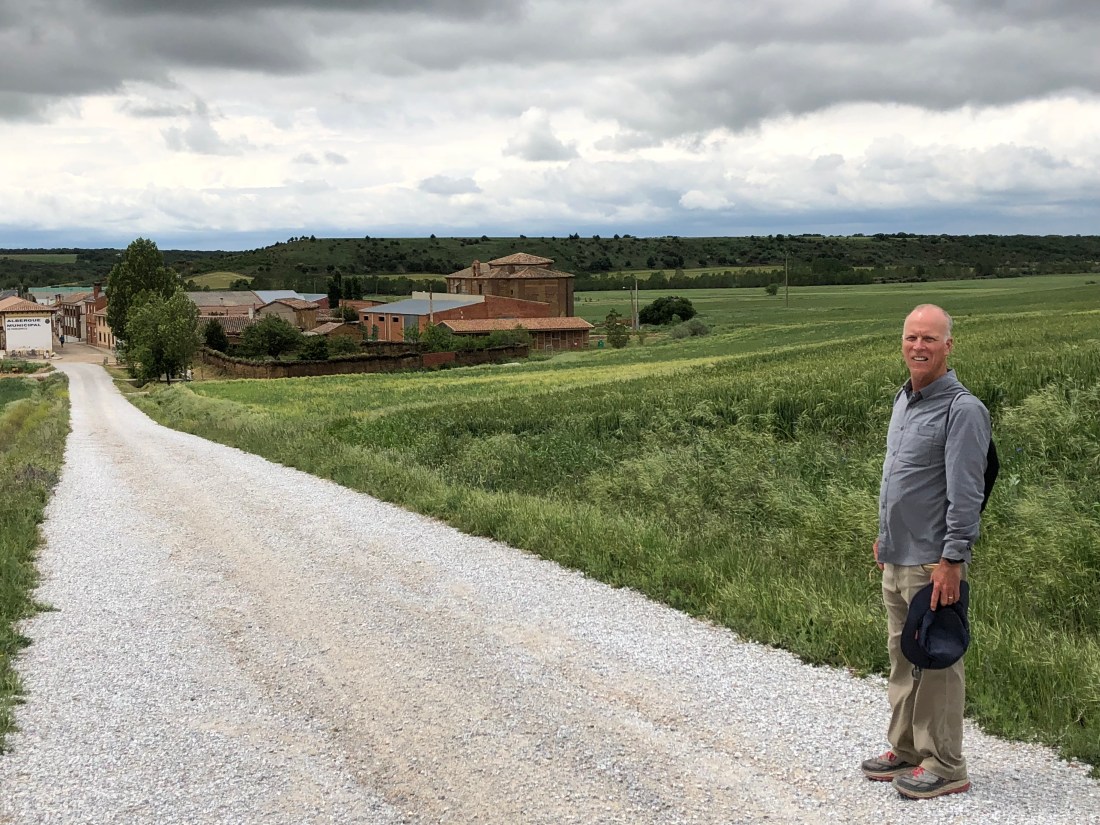 Excepting Carrion, none of this was worth walking. The unsafe roadways should be avoided. And the dirt track beyond the blacktop was dull and within sight of a busy highway for a long stretch in the beginning. Finally, Calzadilla was just another row of pilgrim businesses operating out of derelict buildings. The hostel we stayed in–the best in town–was overpriced and not very good. Today, we would have been better off in a taxi or a bus.
 Kurt's Blog
Totally permissible to take a taxi ❤️
LikeLike
We’re now trying to use the guidebook and maps to identify places where the walk is unsafe/unpleasant, but it’s hard to do. There are few spots that the book describes as unsafe, and we will definitely taxi or bus around those. But we have come across areas that the book never mentions as unsafe that we would have taxied around had we known what they were like. The first step is to get over the we-need-to-walk-every-step-of-the-way mindset, which is more my problem than Anne’s.–Maybe entirely my problem? So Anne thanks you very much for the suggestion.
LikeLike
Be careful please!
LikeLike
Always! And, from the standpoint of Spanish drivers, it must be really bad luck to hit a pilgrim.
LikeLike