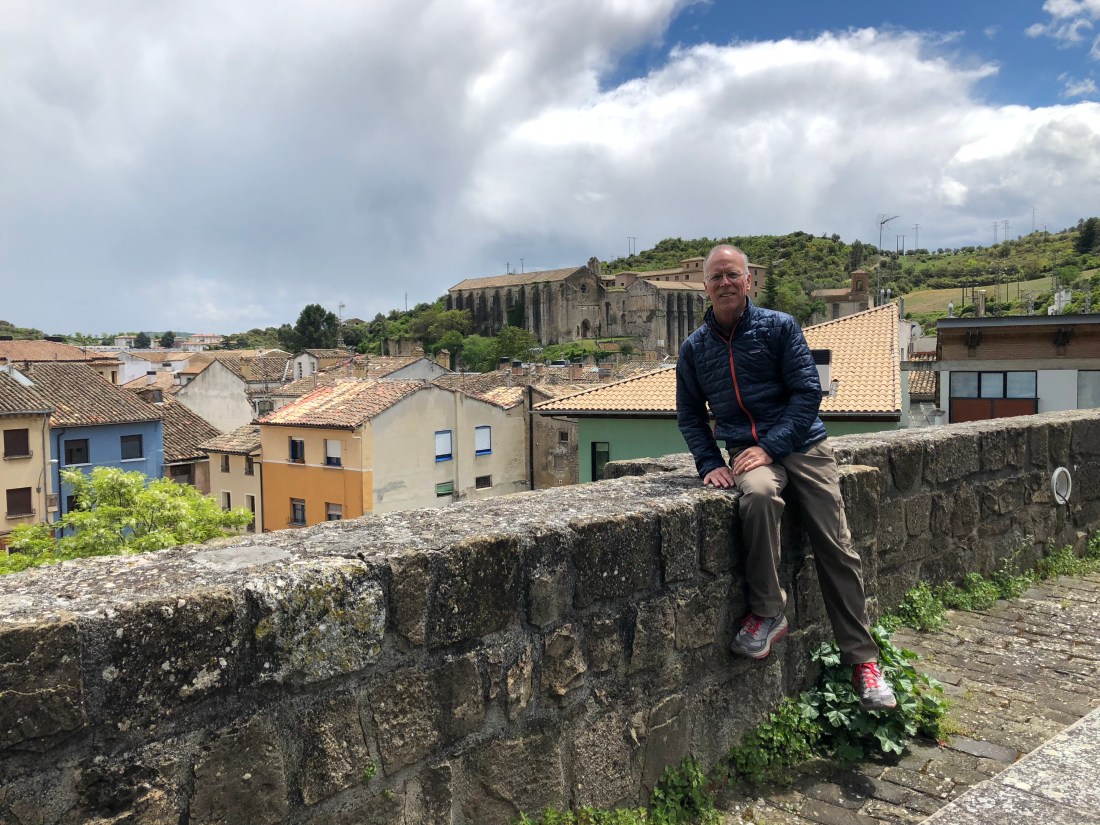
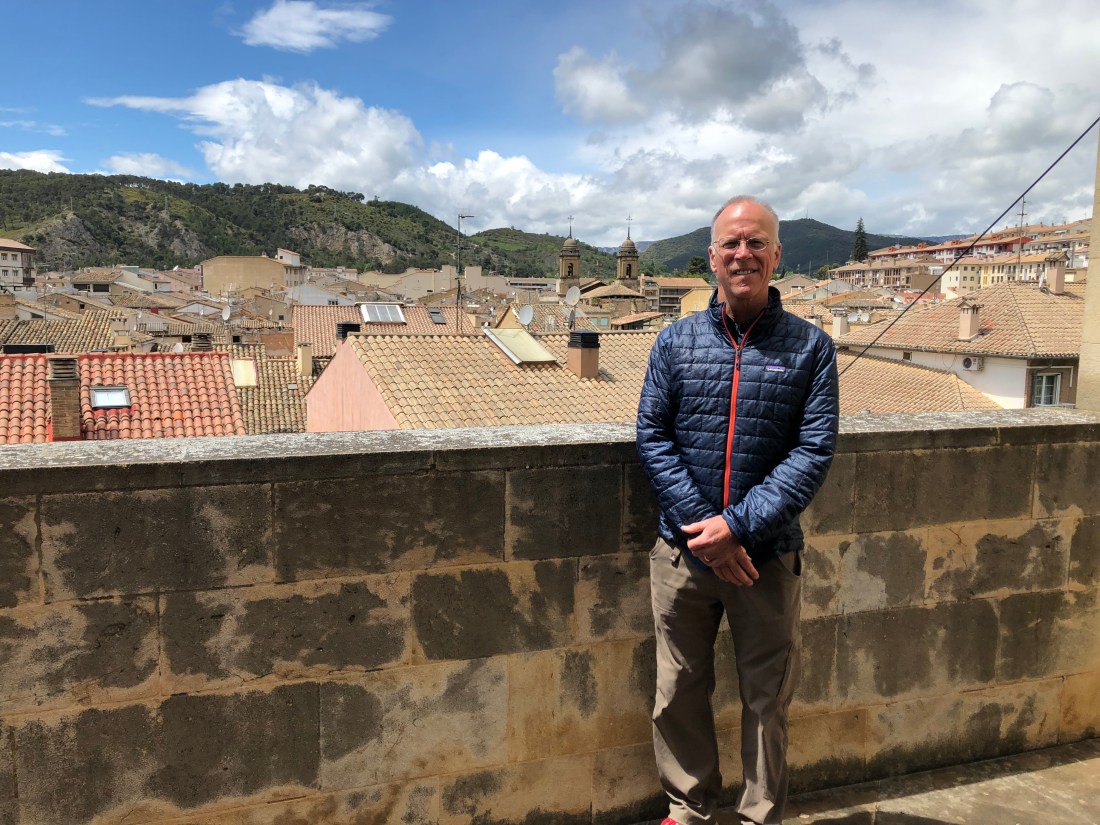
Los Arcos to Lograno

Yesterday, when we arrived in Los Arcos, it was around three o’clock in the afternoon, and we were tired and hungry.  There are cafes right on the Camino, or within a block or two, but they are usually unappetizing, and we try to avoid them.  We look for places off the beaten track, which can have its pitfalls. 

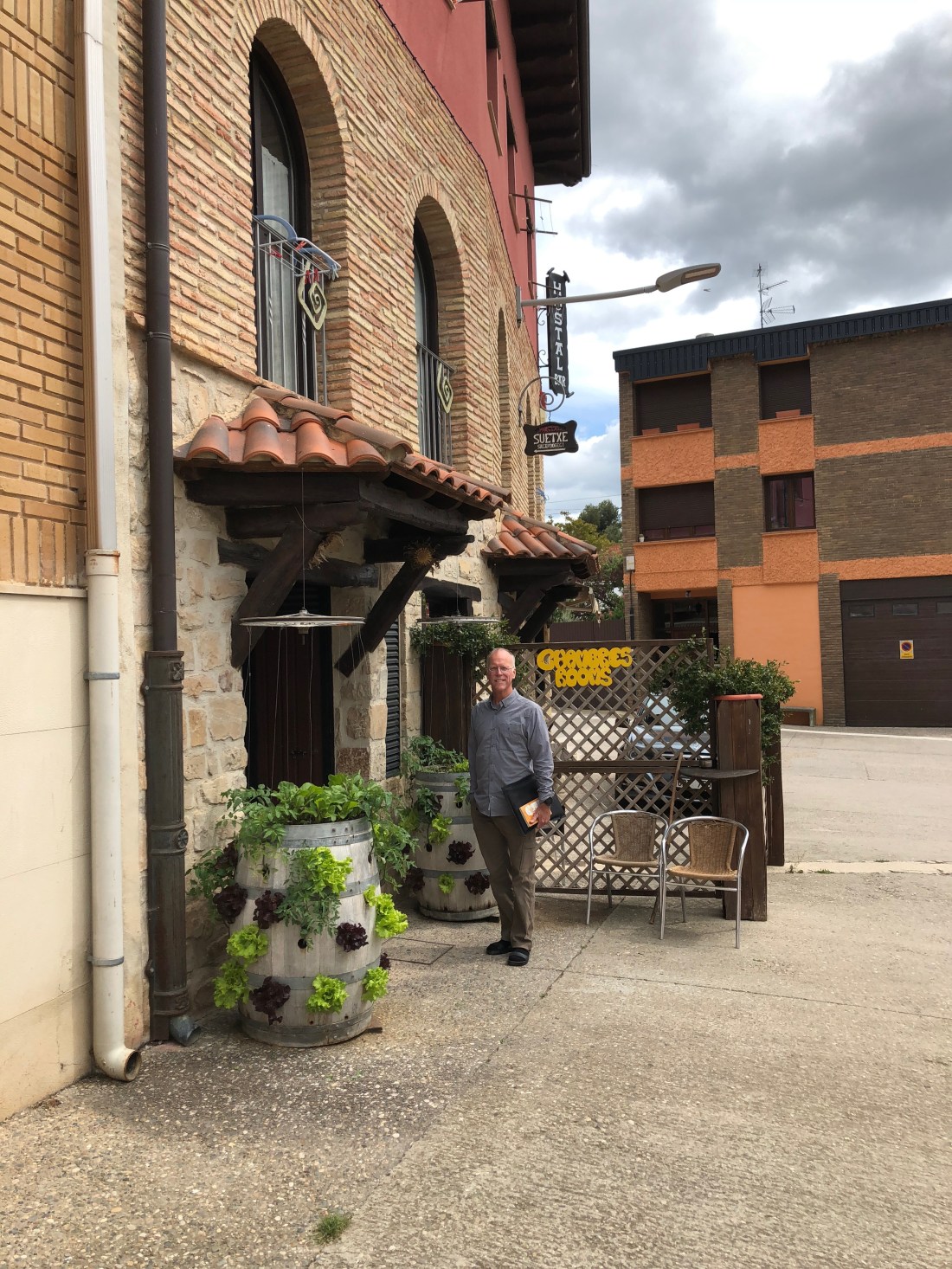
The Cafe Mavi was a few blocks off the Camino and looked good, so I started to open the door.IMG_1604Anne told me that it was the wrong door—how did she know?—but I ignored her and walked into the restaurant’s dining room.  It looked like the entire town was there, including a table of nuns.  They all stopped eating and and turned and looked at us.  A waitress at the far side of the restaurant rushed over making hand motions for us to back out the door, which we did.
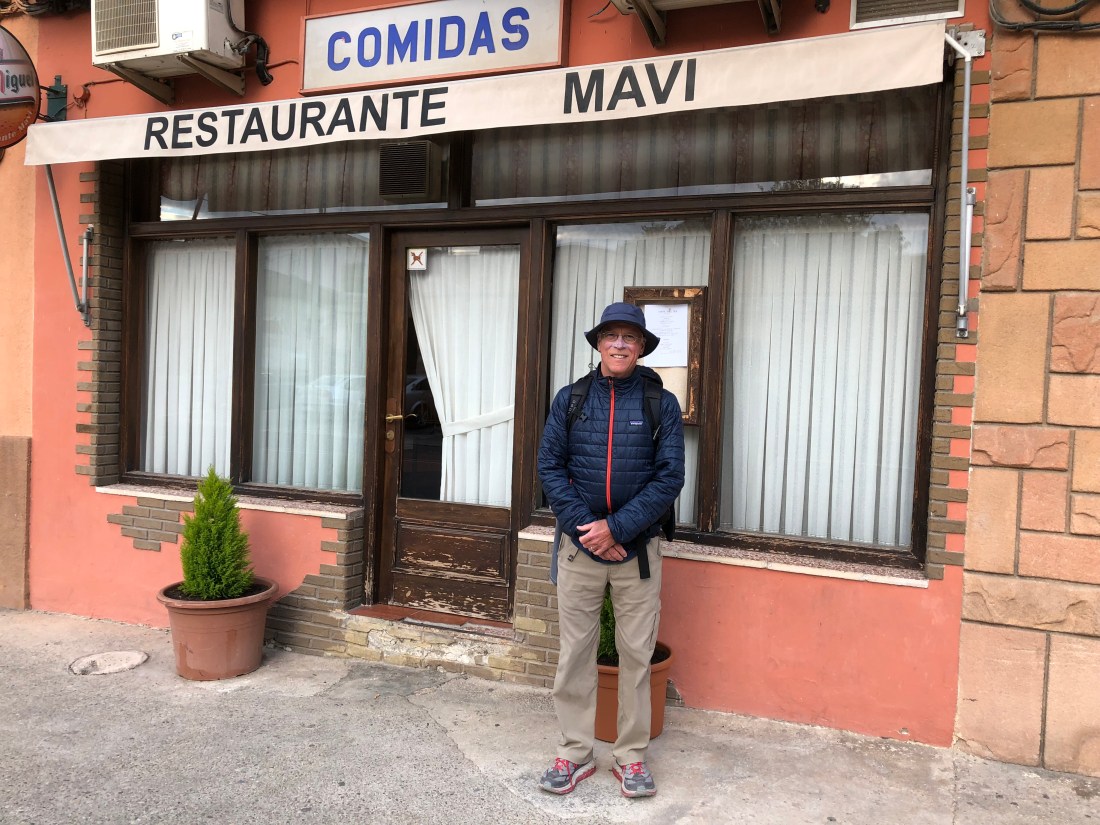
We walked around to a side door and sat at a table in a small room off the bar with construction workers and truck drivers. Cafe Mavi is at the intersection of two highways that long-haul trucks continually passed through. We had a good meal with good wine. Anne and I both had the trout.

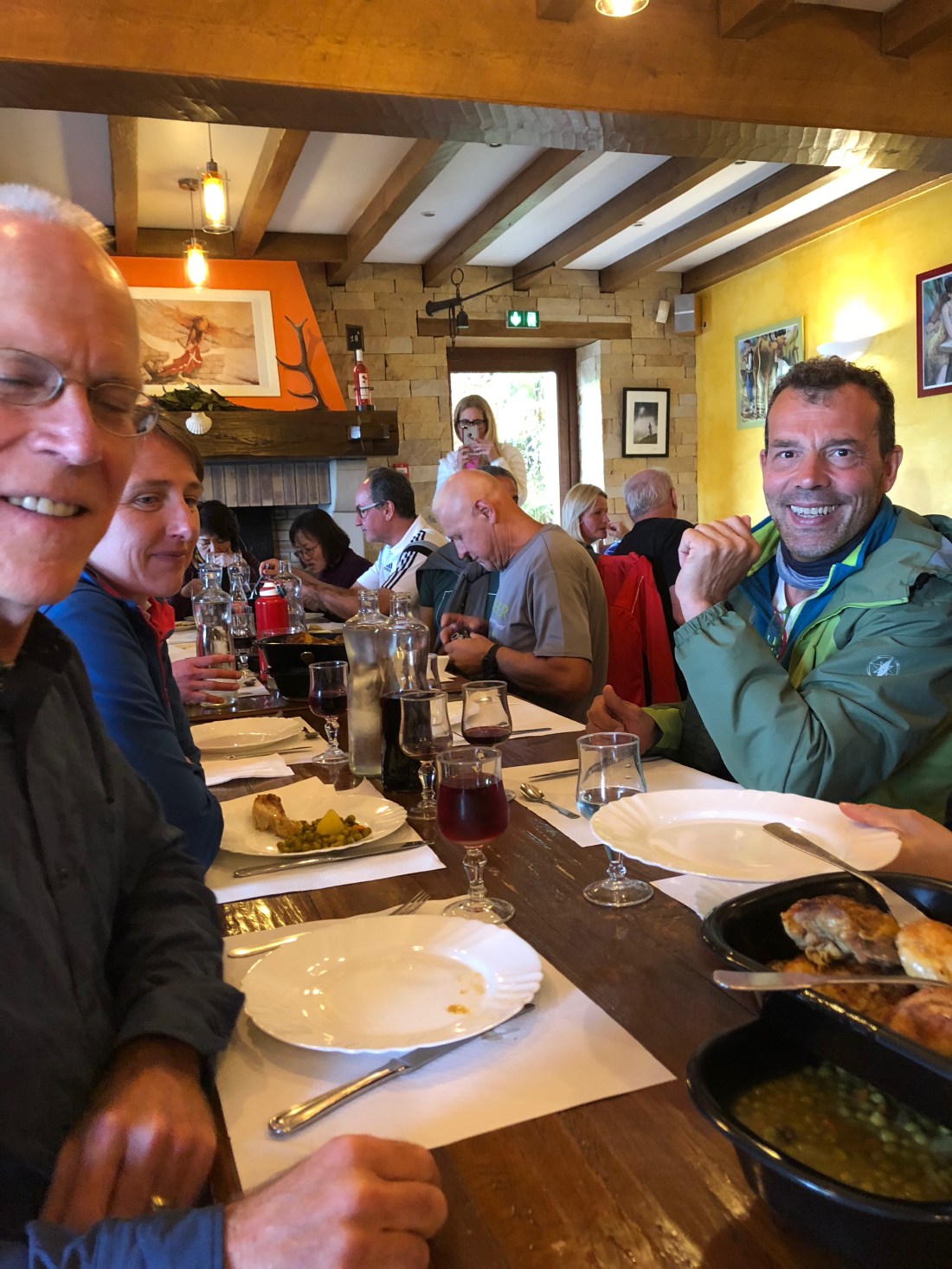
There are other instances where we have ruffled feathers by exploring off the Camino.  We were ushered out of a cathedral and an art exhibit in Pamplona.  We had an uncomfortable breakfast at a restaurant about a quarter mile from the Camino in St. Jean that was filled with elderly Basque men eating roasted chicken and drinking red wine for their breakfast.  Although many of the locals welcome the pilgrims, many do not, especially off the Camino.

It is understandable.  The Camino is certainly an economic boon to the towns and villages that it passes through, but there are costs.  In the morning, as the pilgrims leave their albergues and hotels and walk out of town, it looks like the zombie apocalypse, especially now that many of the pilgrims are limping.  There are lots of houses right on the Camino, and the people who live in them must occasionally have the same attitude towards the pilgrims that some residents of Mandeville Canyon have towards bicyclists.  http://articles.latimes.com/2009/nov/03/local/me-cyclist3.

All considered though, people are very friendly.  Many walking by on the street will greet us with “Buen Camino.”  Twice now, someone has wished me “vaya con Dios.”  Pretty remarkable considering  the vast numbers of pilgrims descending on the Camino’s small towns and villages.

After lunch at Cafe Mavi, we went to the church in Los Arcos to check on Mass times. 

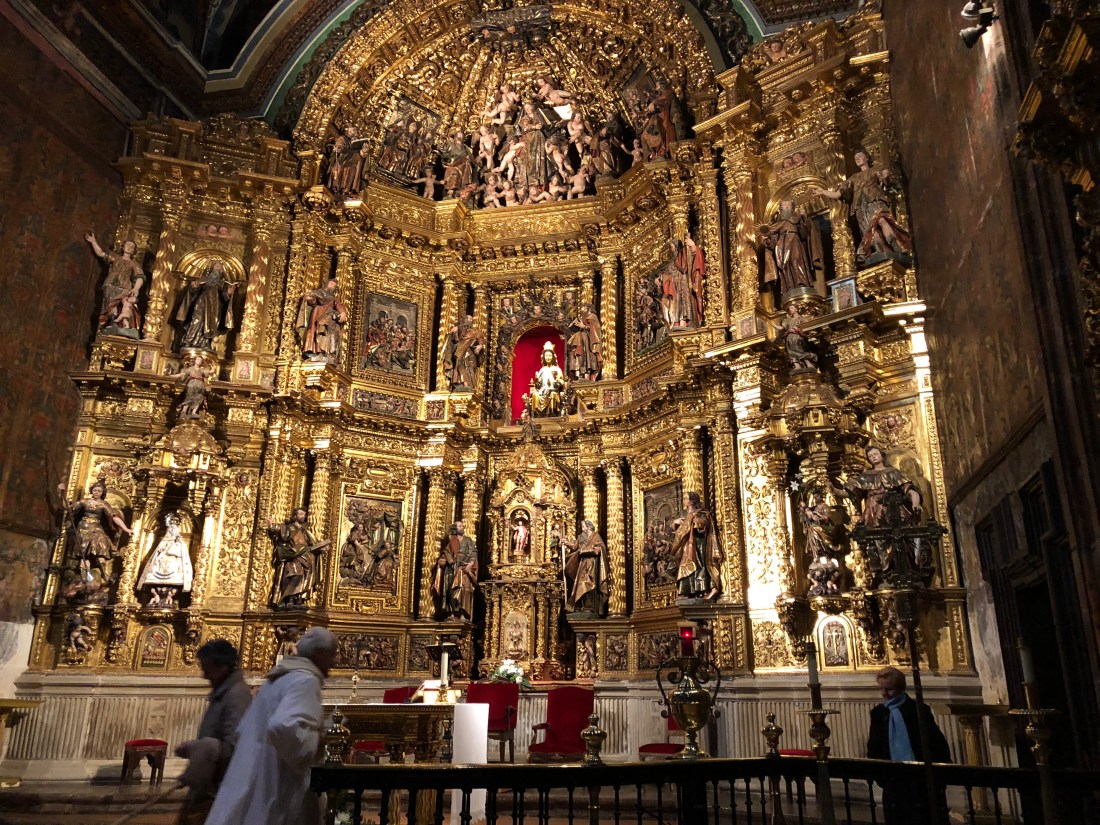
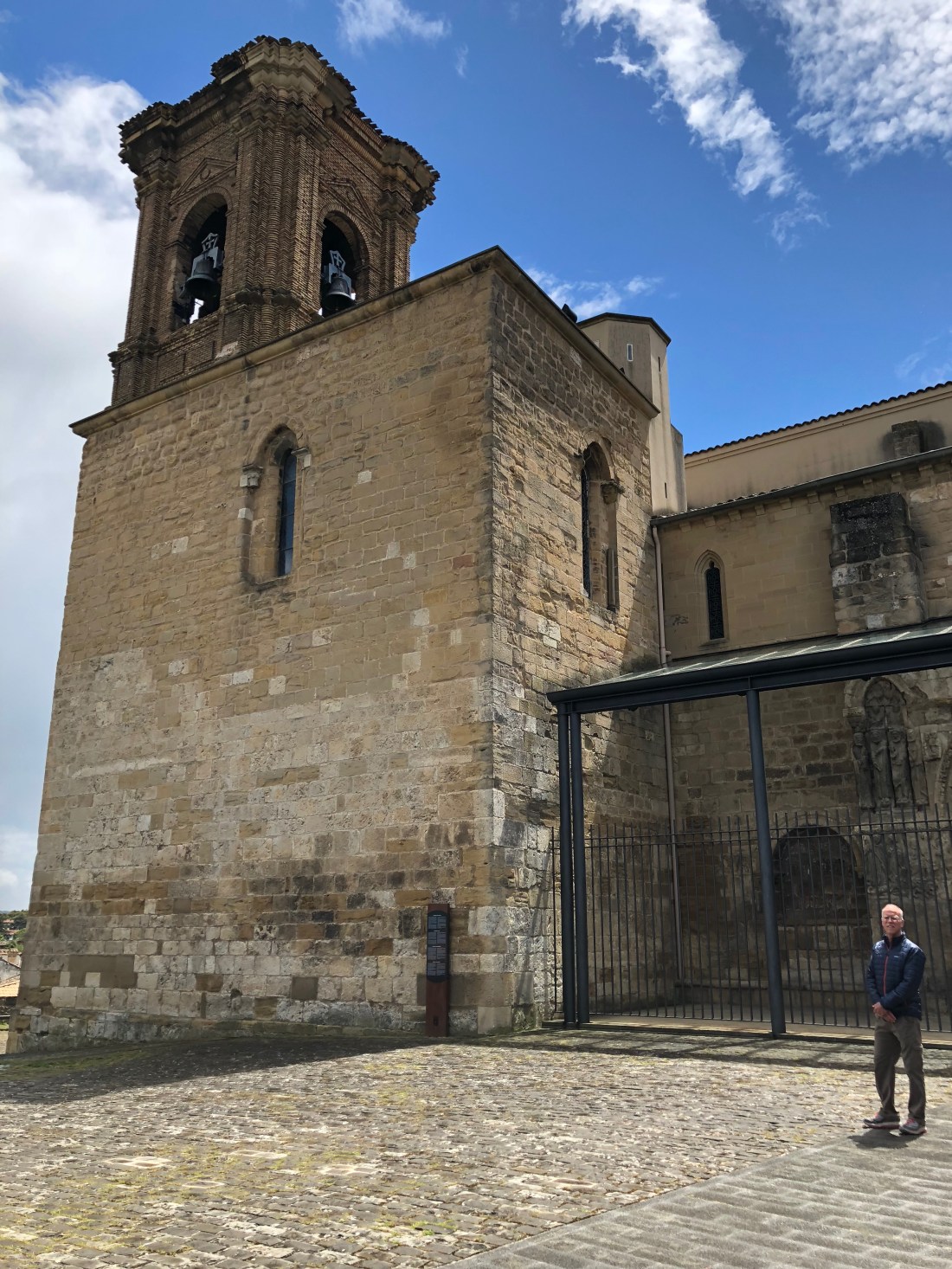
Here is the cathedral:IMG_1583A man was unlocking the door and invited us into the church. 
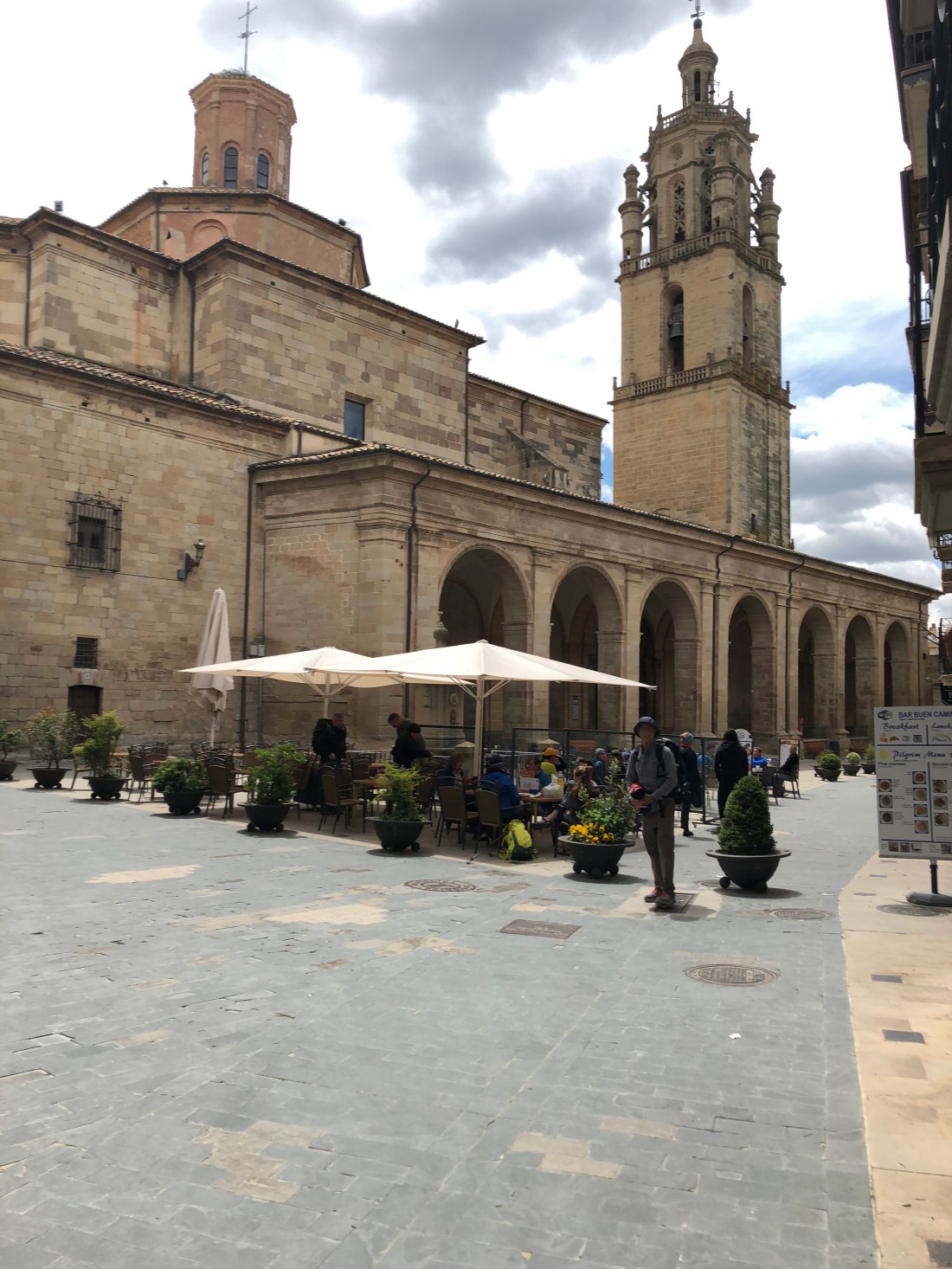
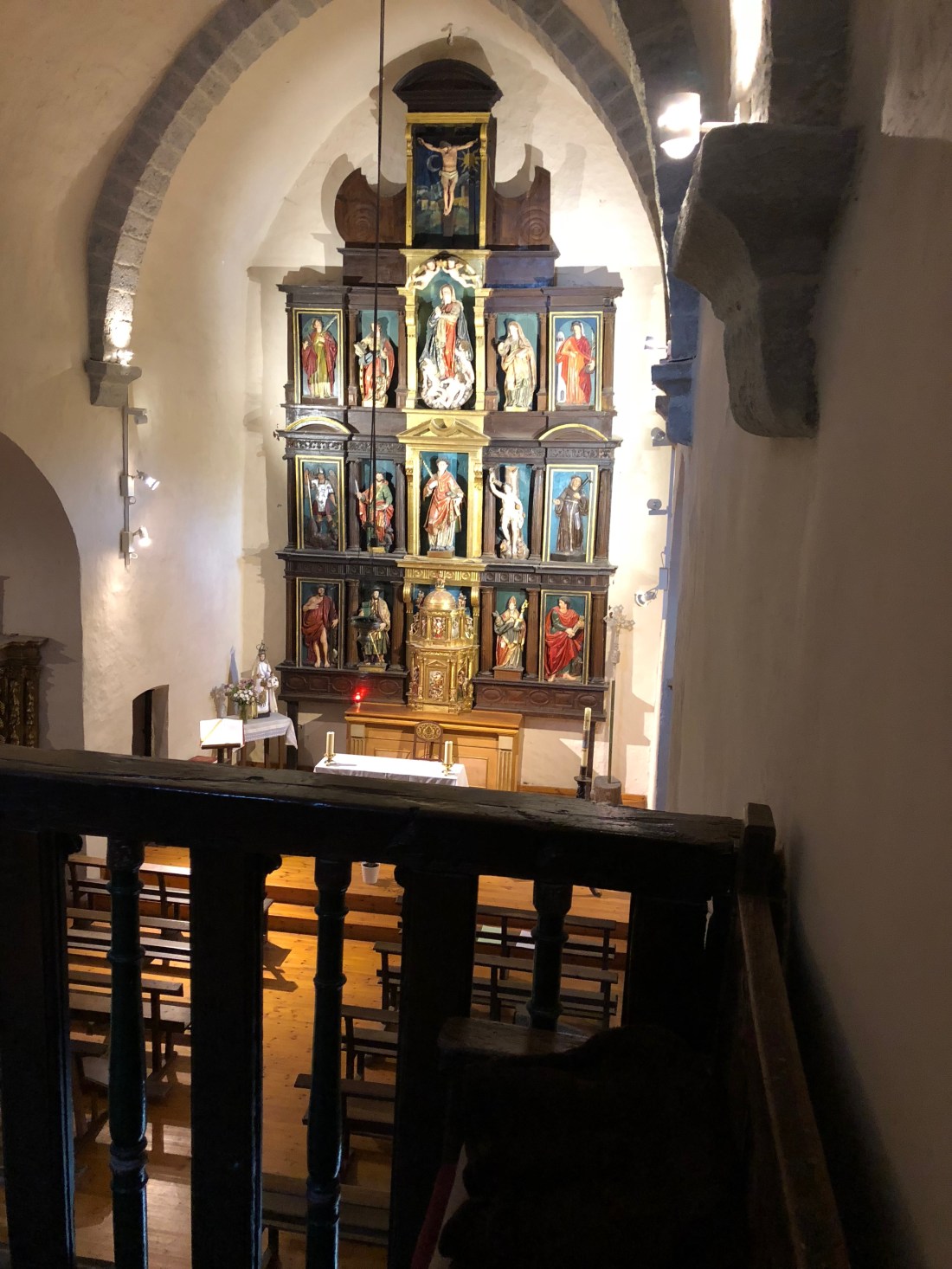
The ornate woodwork in the church was added hundreds of years after the church was built and clashes with the church’s simpler design:IMG_1585
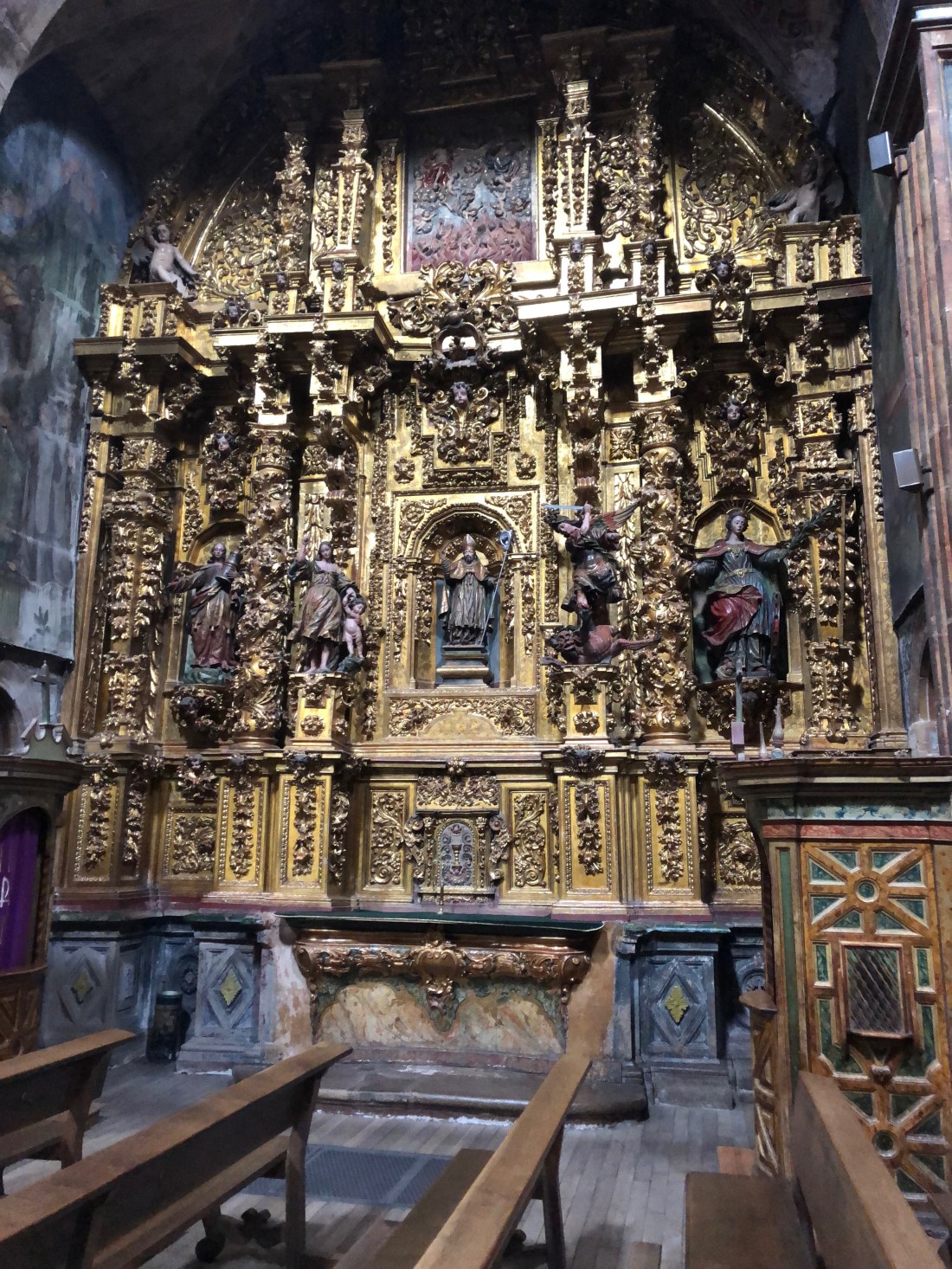
IMG_1598

That night, we went to Mass at the church.  Following the Mass, there was a blessing of the pilgrims:IMG_1599
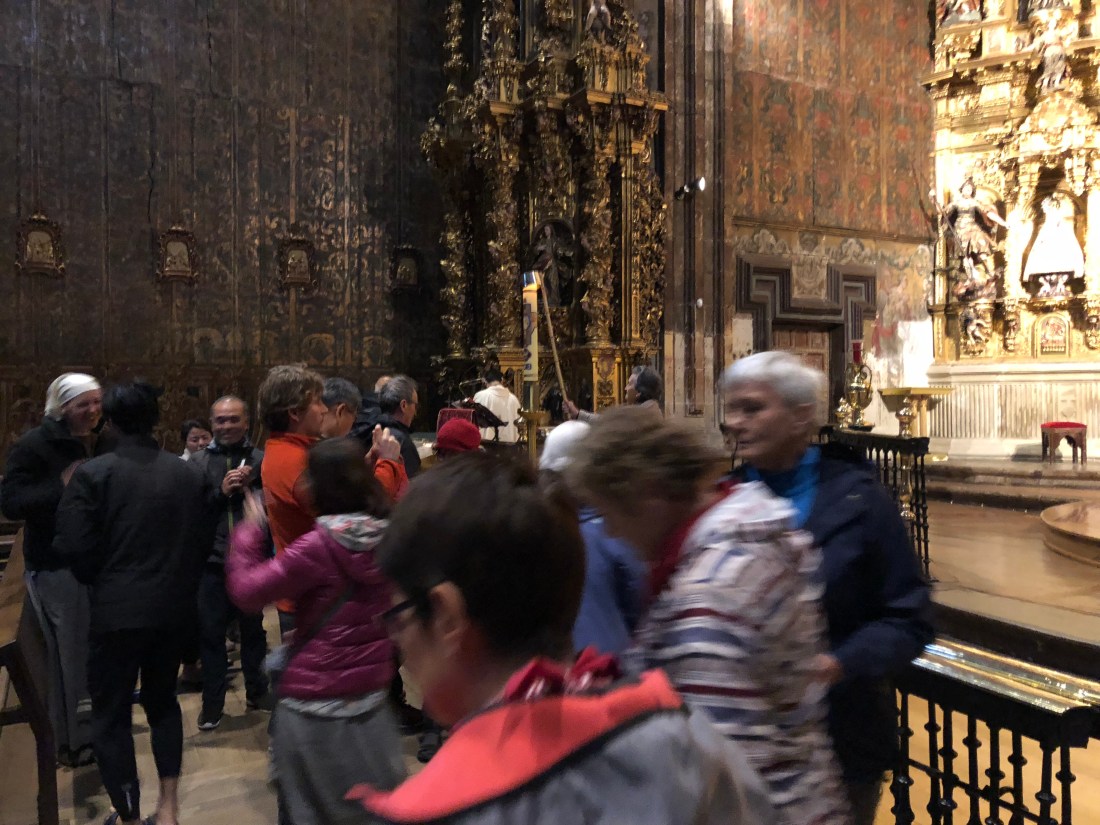
Before the blessing, the priest passed out cards to the pilgrims with prayers in each pilgrim’s language.  At the blessing we attended, the priest passed out cards in about a dozen different languages.

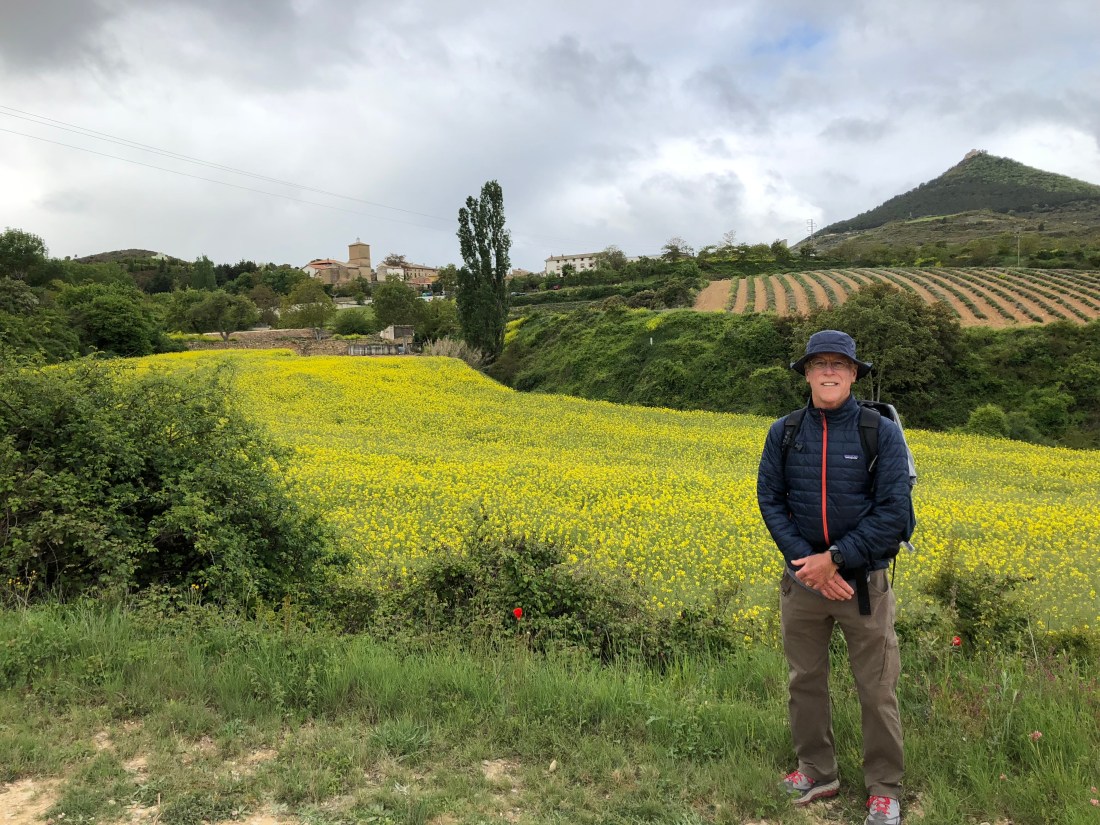
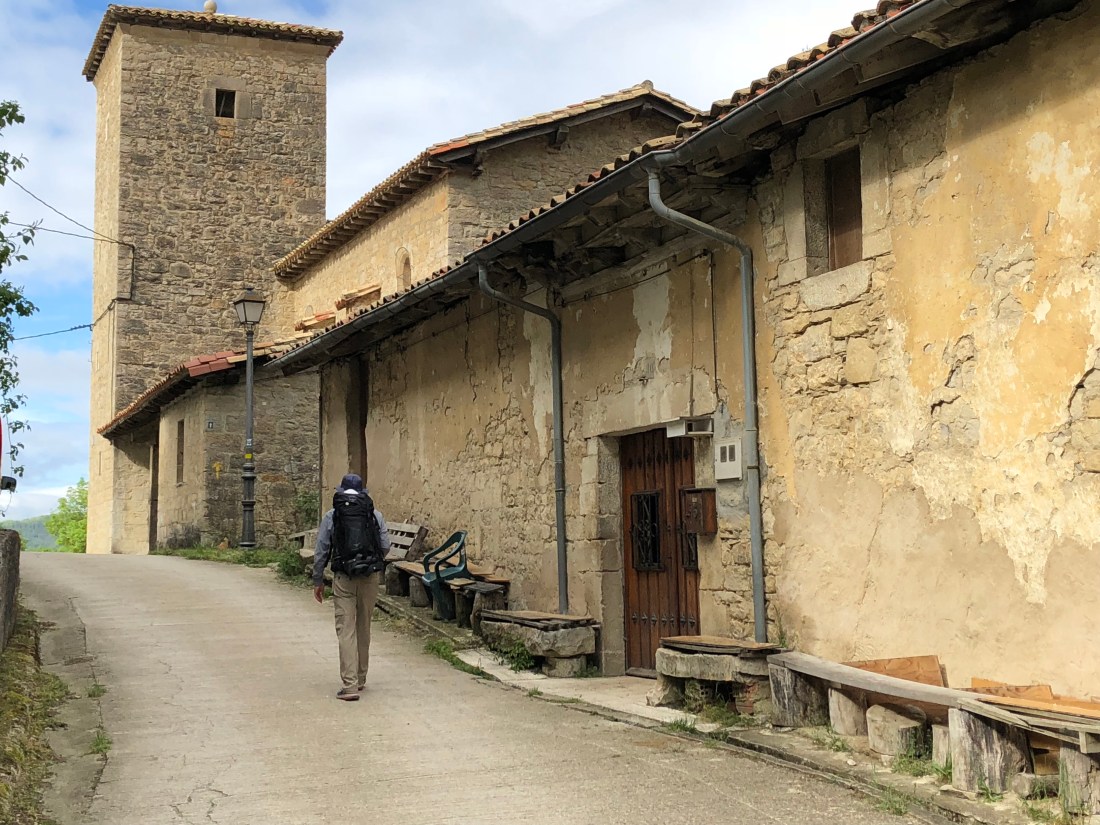
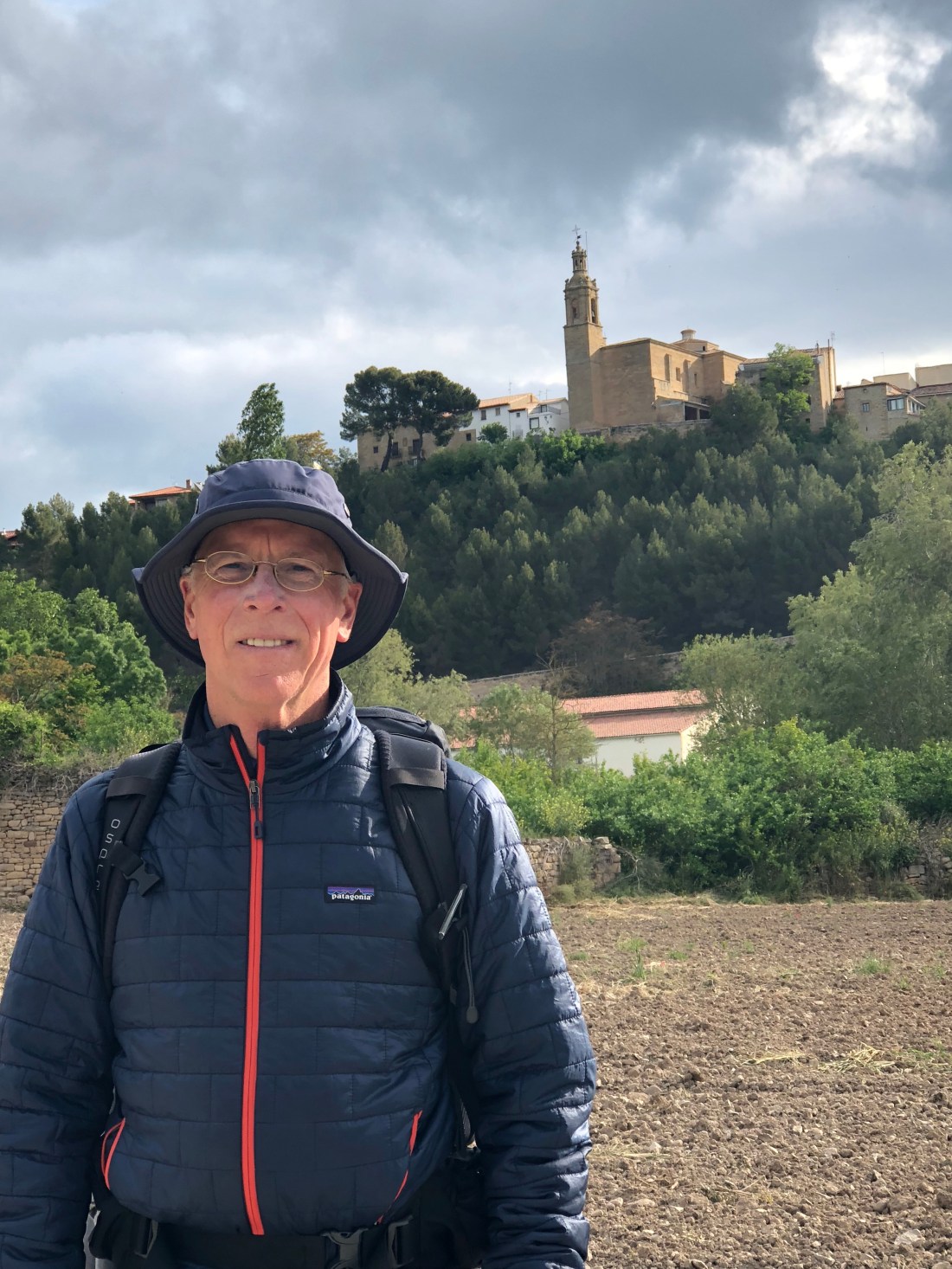
The next morning we left Los Arcos and walked to several villages, including the village of Toros del Rio.IMG_1606
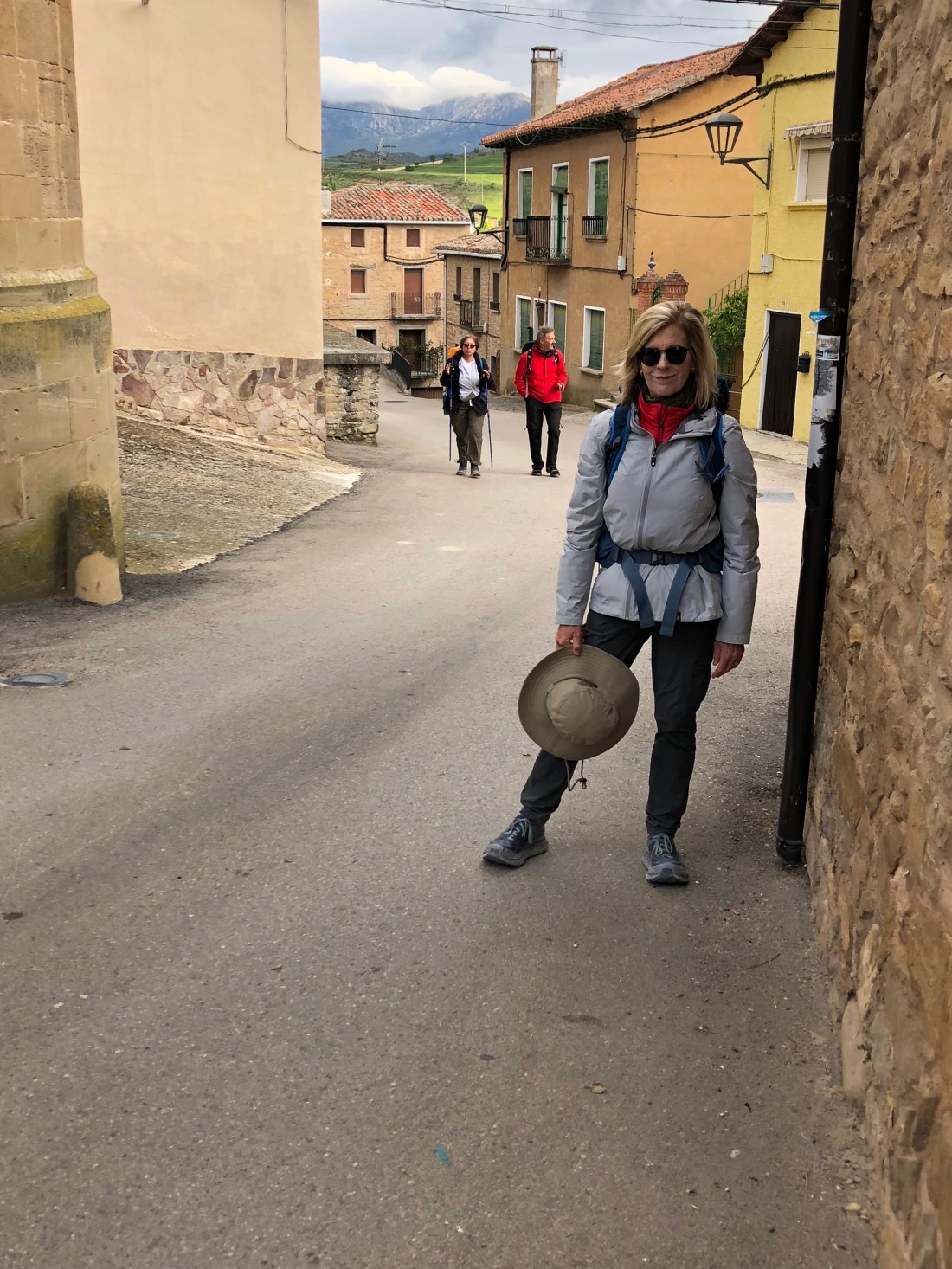
From the village, we could see distant mountains.IMG_1610 2
We came across this building sitting on a high ridge dedicated to Nuestra Señora de Poyo.IMG_1621
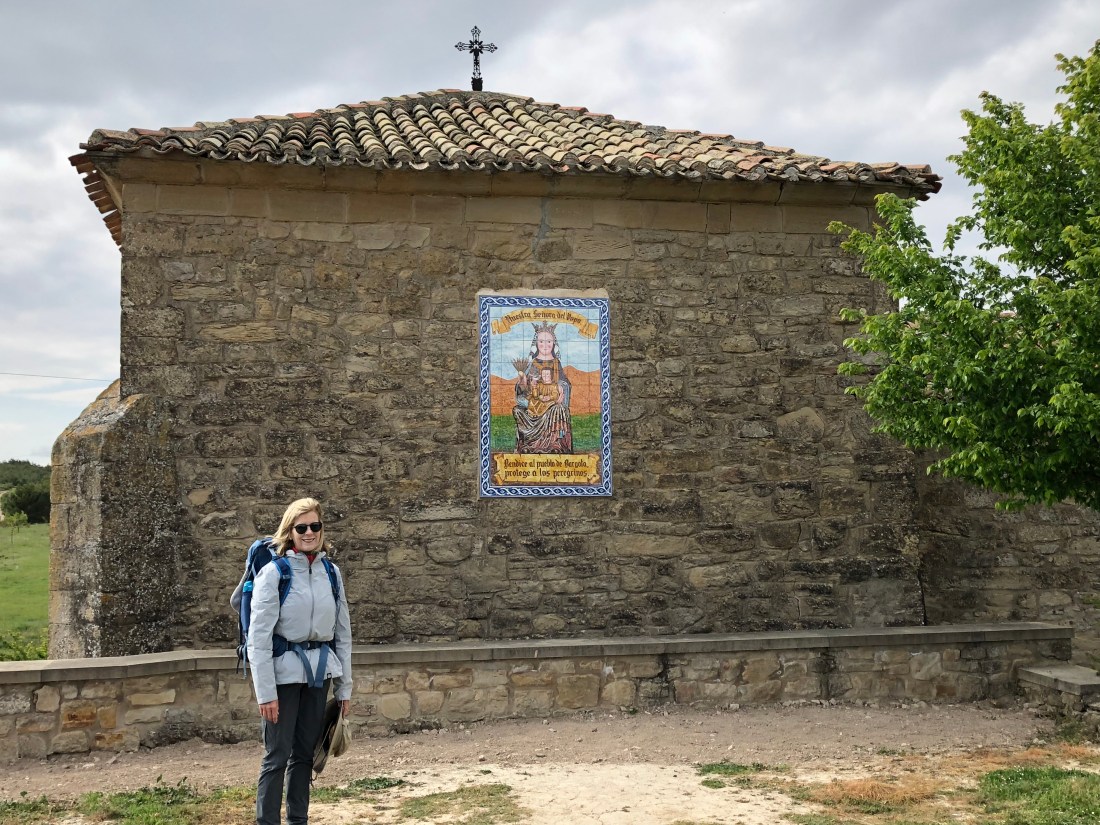
IMG_1622

Coming down the ridge, we saw our first switchbacks on the Camino:IMG_1626
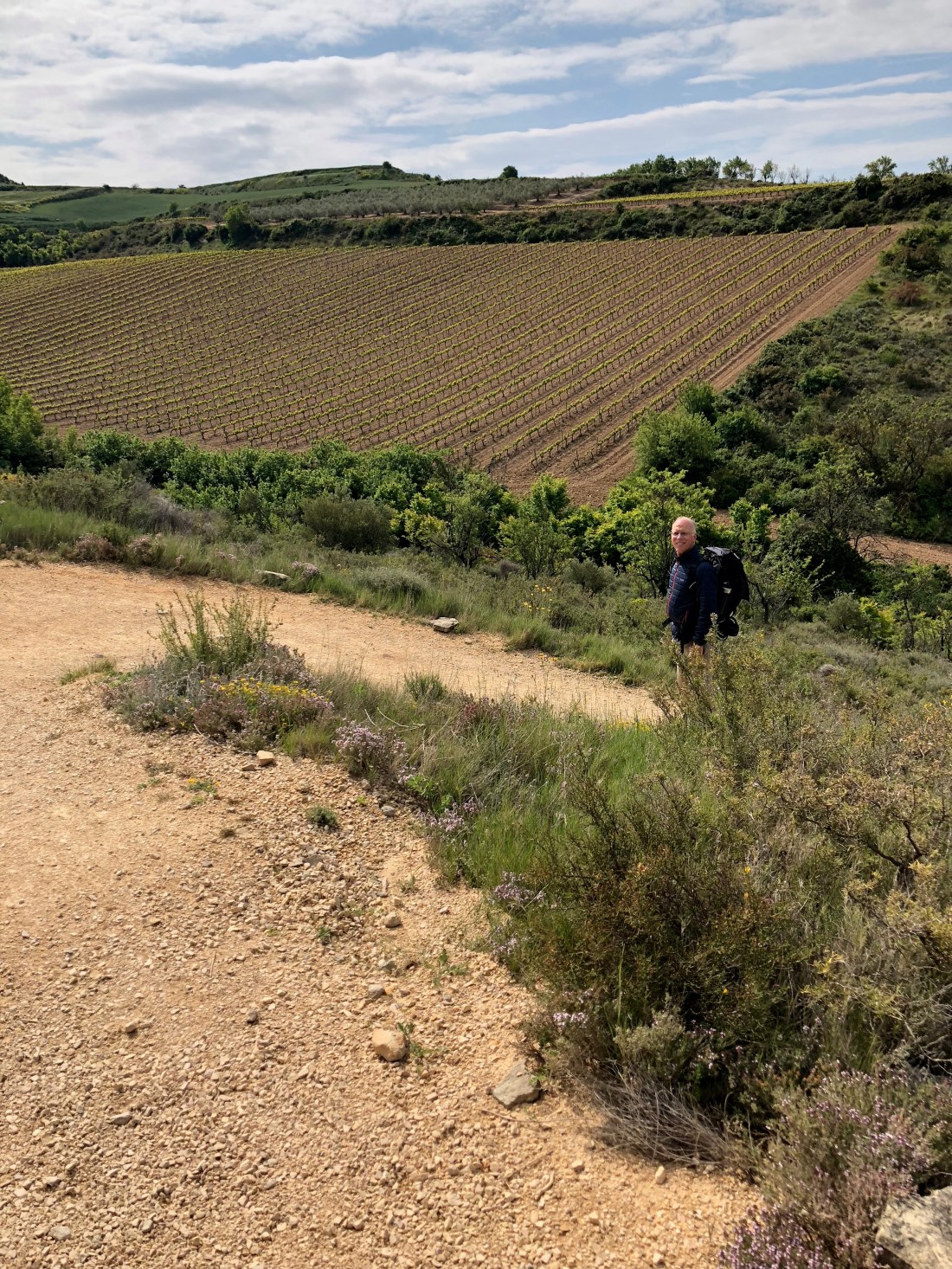
We also may have discovered why there aren’t more switchbacks. Most of the pilgrims cut the switchbacks and walked straight down the hill:IMG_1629

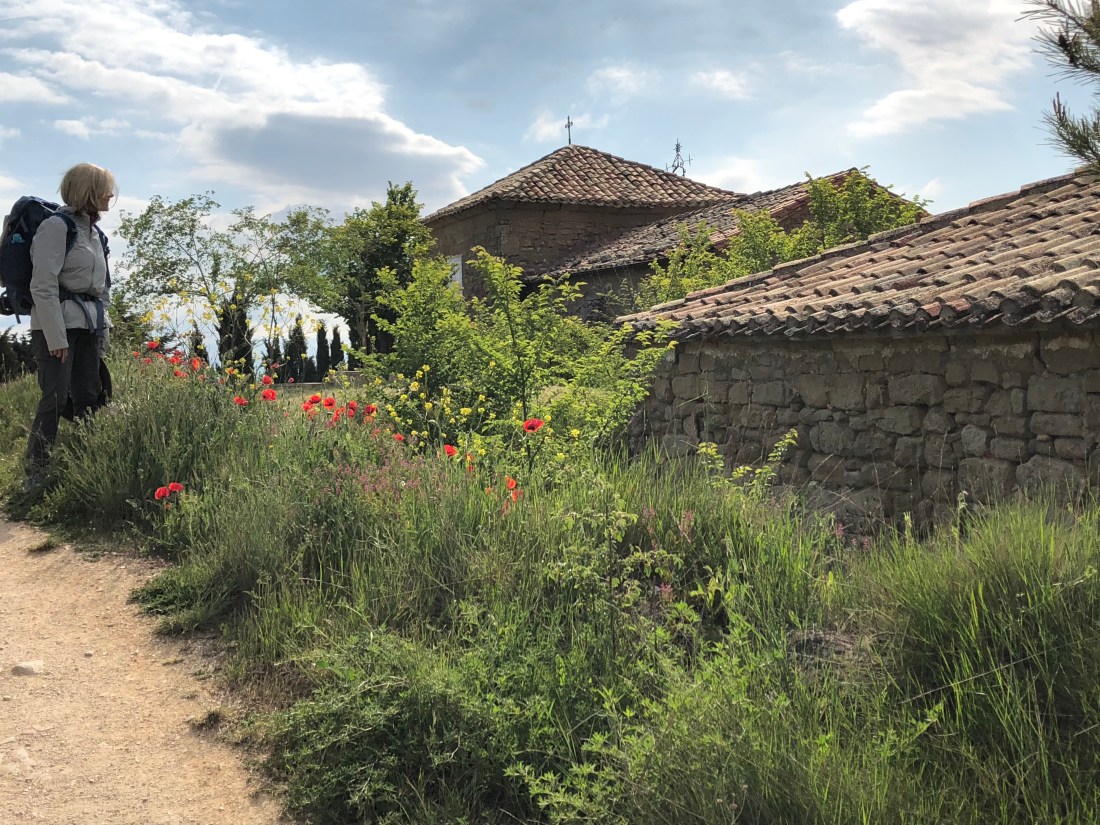
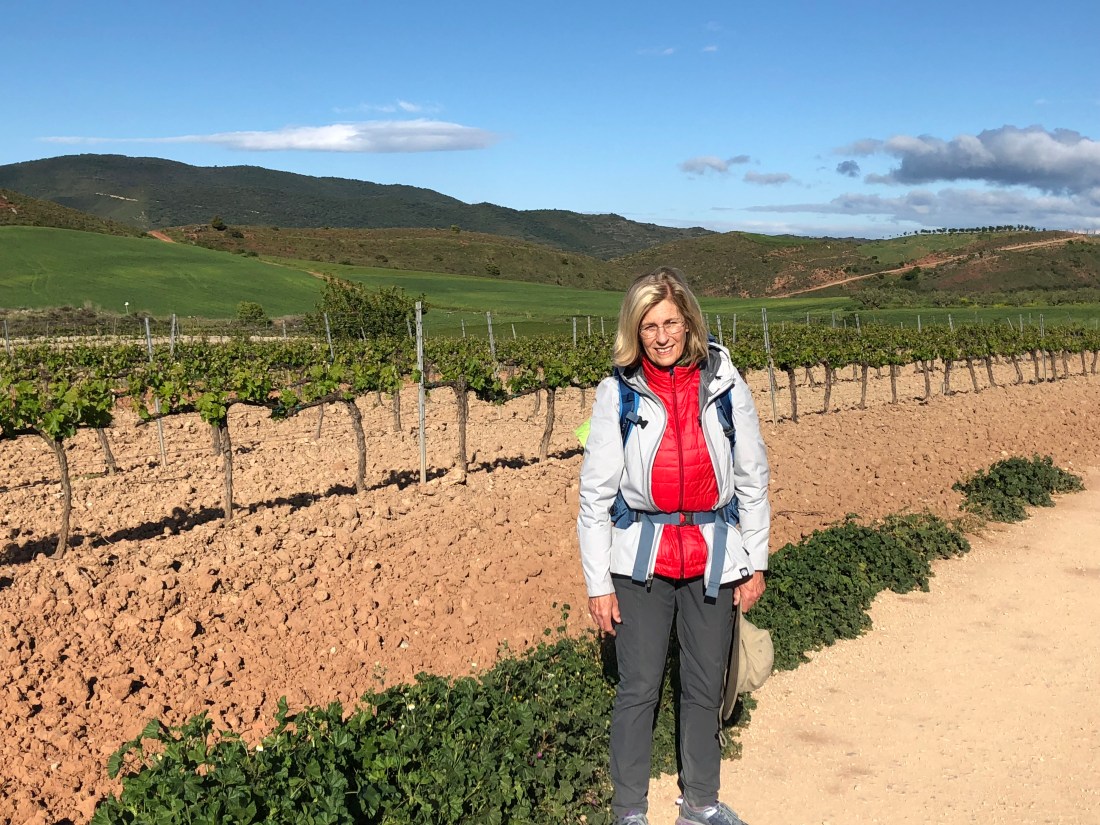
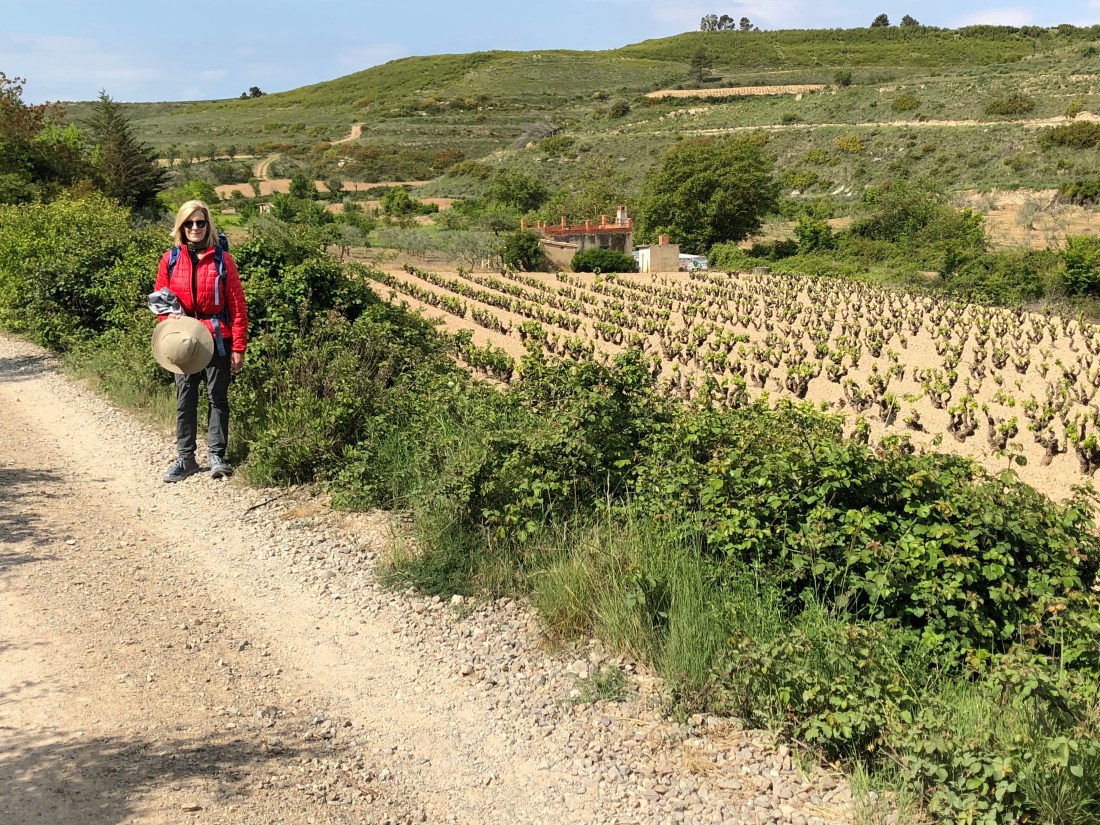
At the bottom of the hill we walked down a long valley with vineyards that had small structures with chimneys and patios, like the one in this picture.IMG_1632
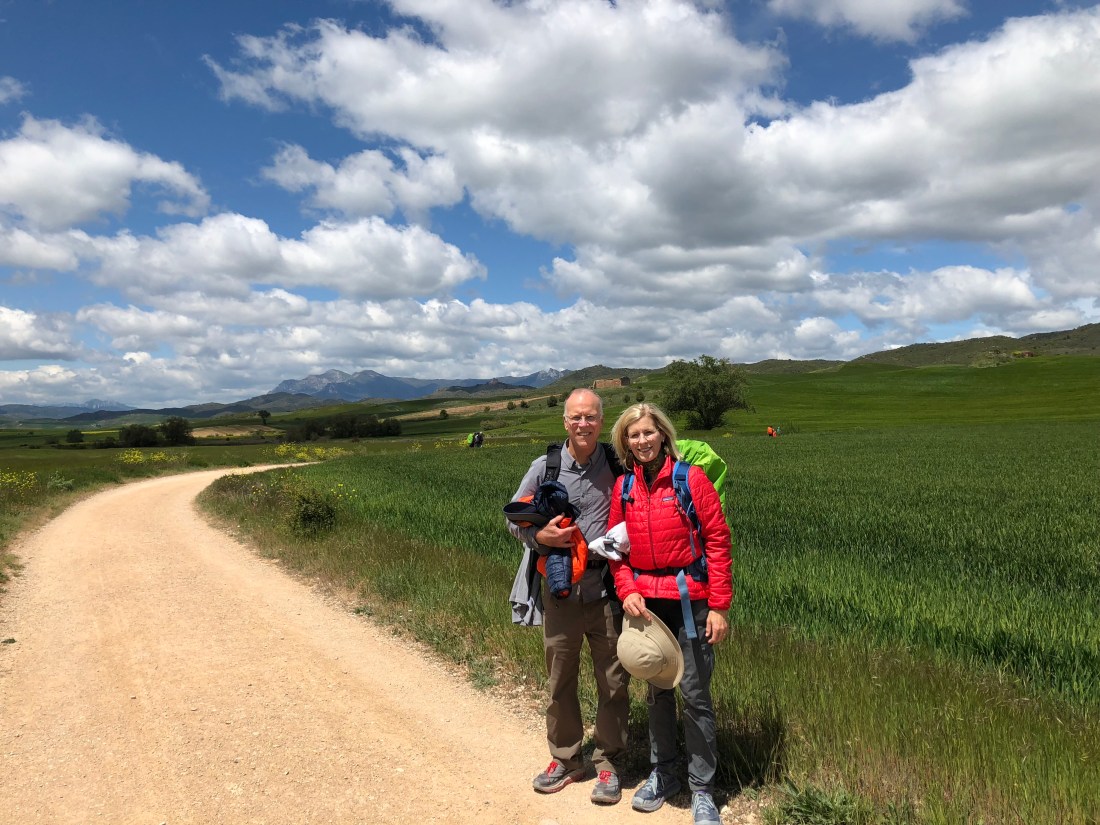
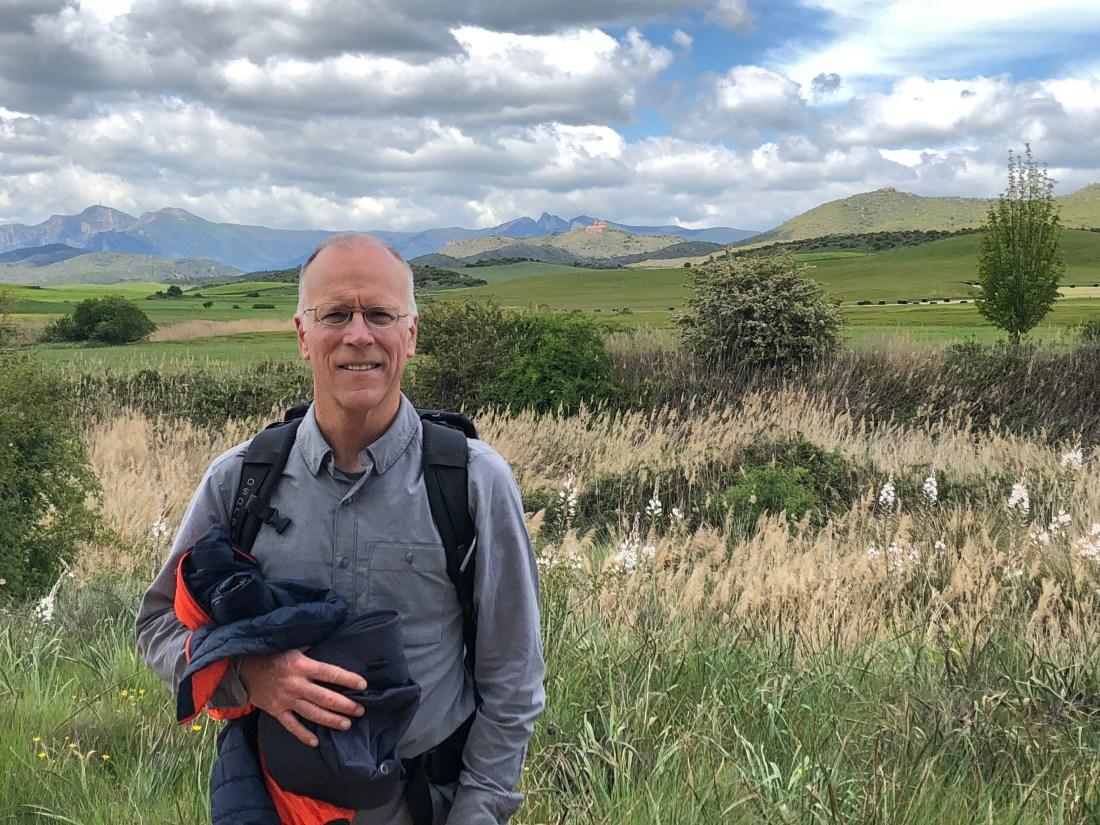
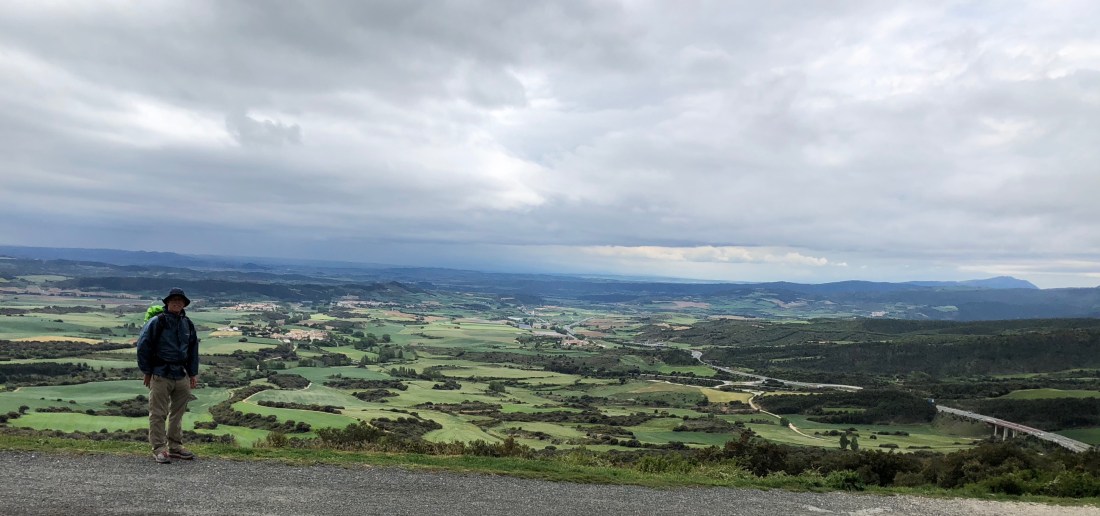
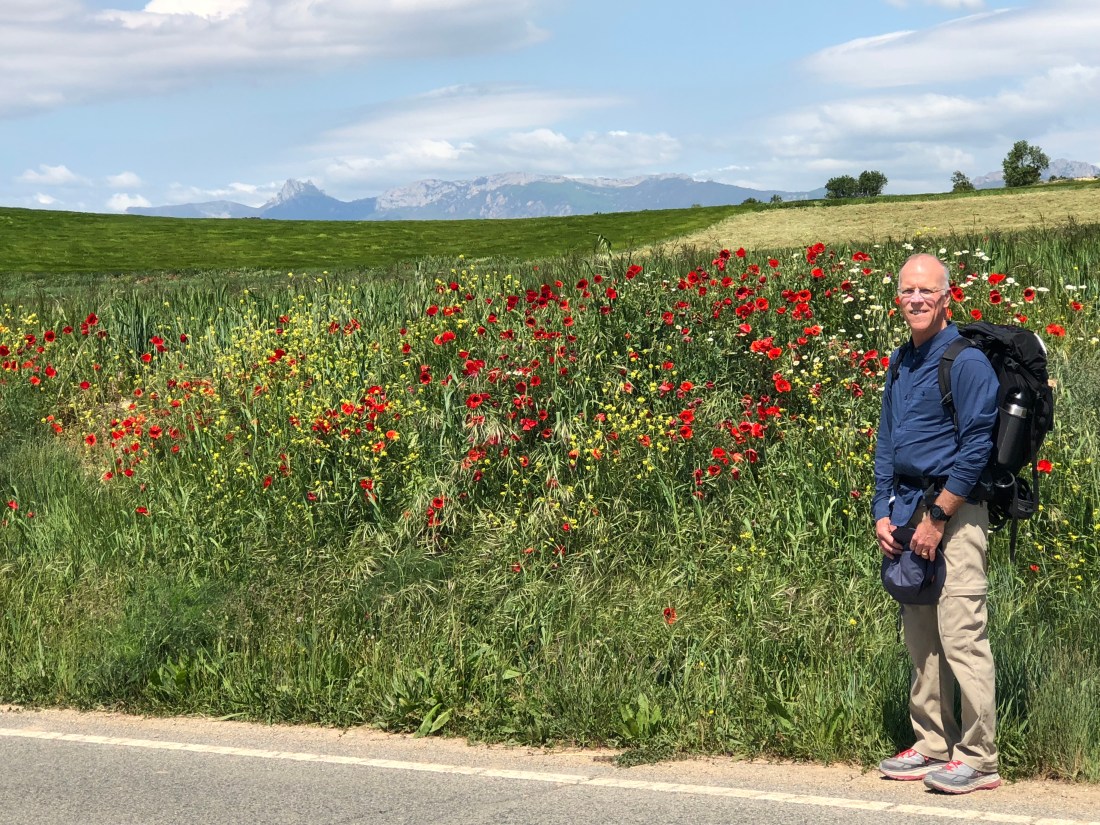
We walked out of the valley and up on a ridge where we could occasionally see mountains in the distance that looked like the Sierra Crest.IMG_1642
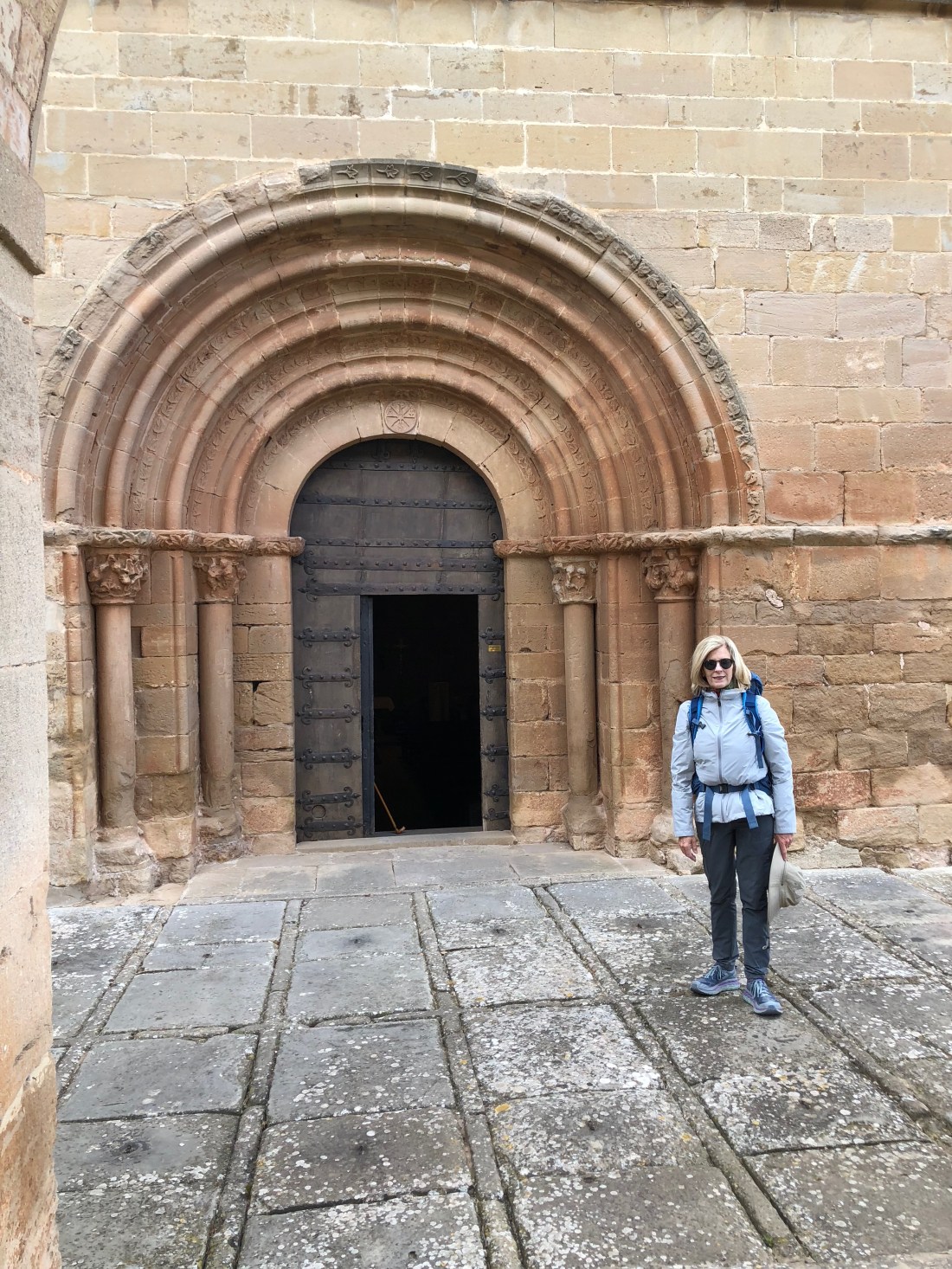
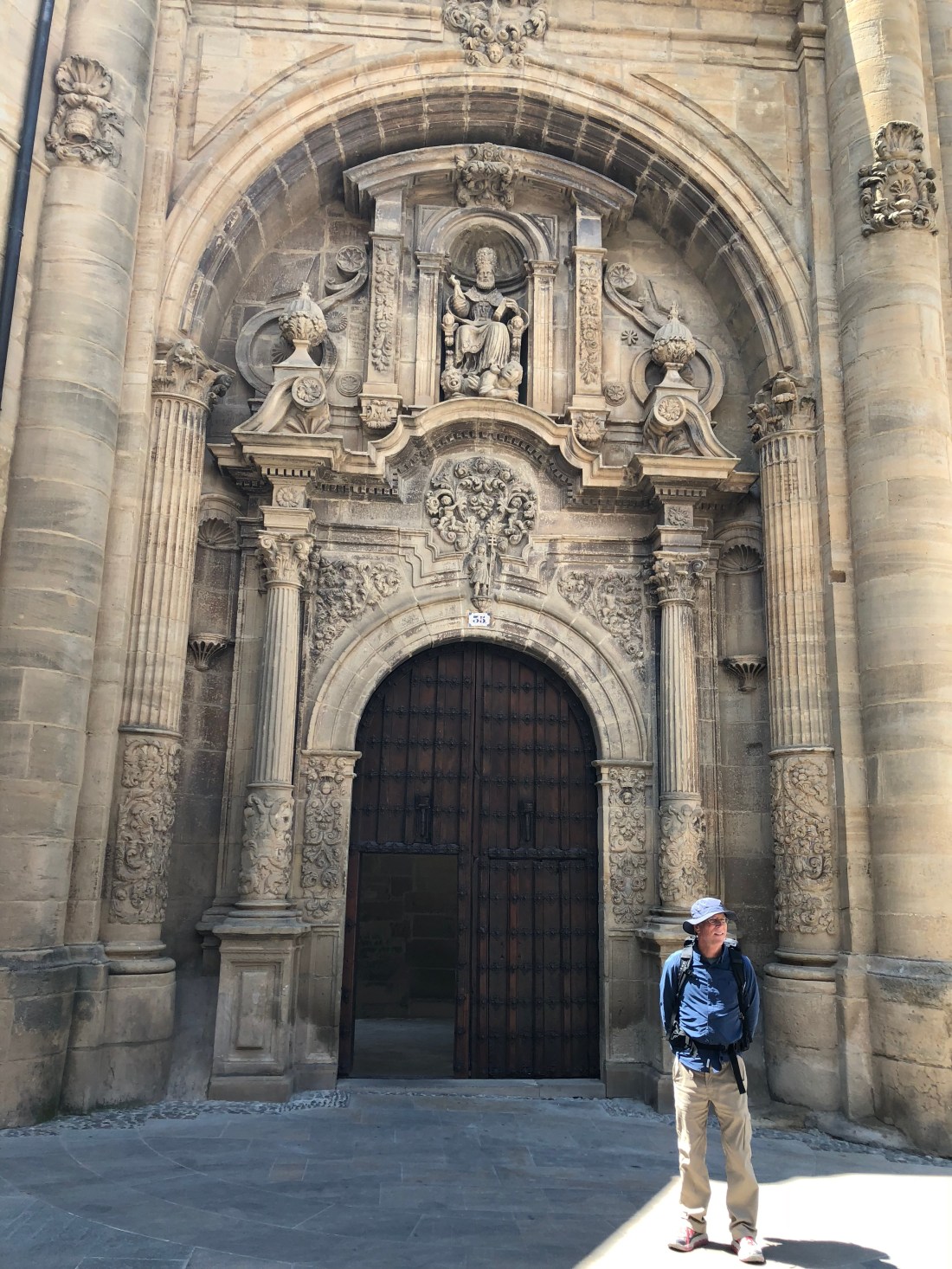
We next came to the village of Viana.  Here is the doorway to the church in Viana.IMG_1648
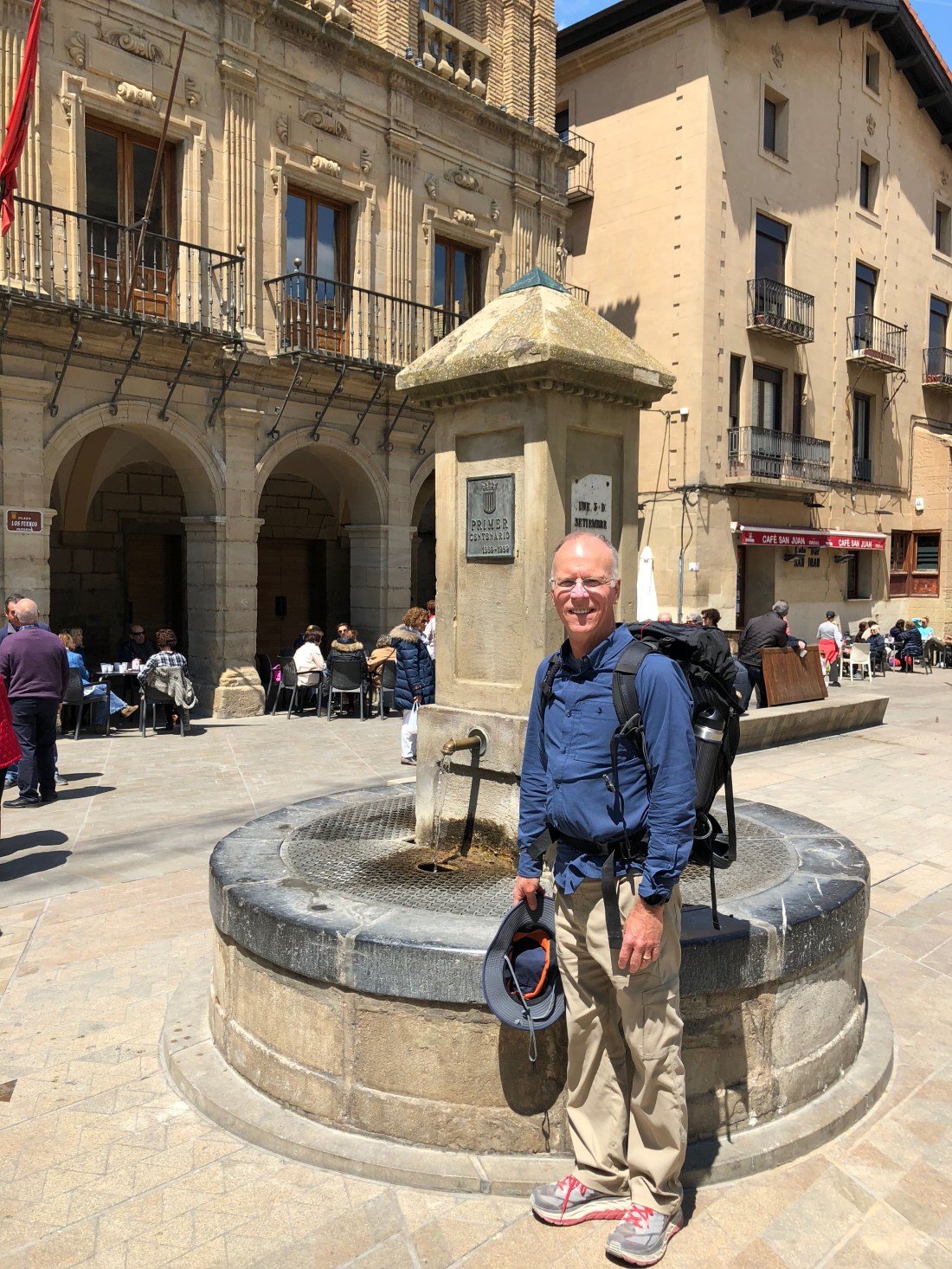
And here is the fountain in Viana’s main square.IMG_1647We met up with a group of old friends in Viana sitting at tables in front of a cafe on the Camino.  We had met many of them the first day of the trip and had spent the past week walking and talking with them.  There are disadvantages to placing so many people on the same path.  But it makes possible the connections of different ages, nationalities, and backgrounds that is the best part of the Camino.
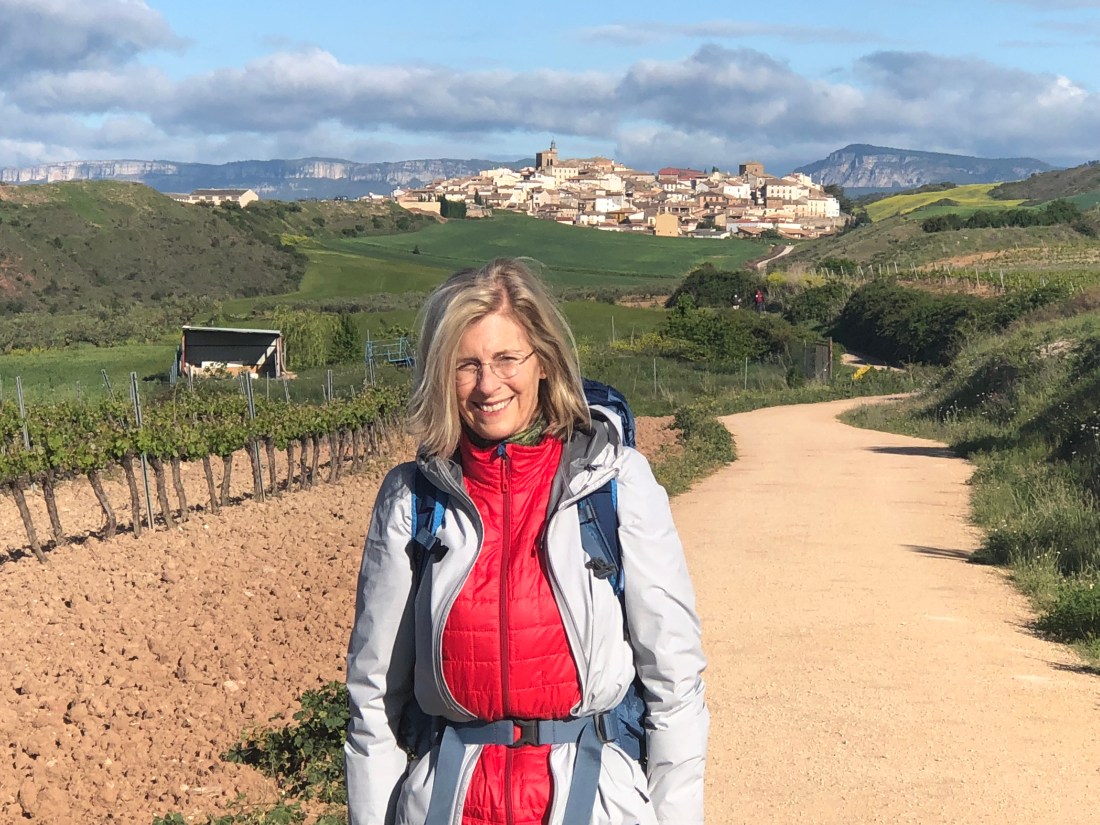
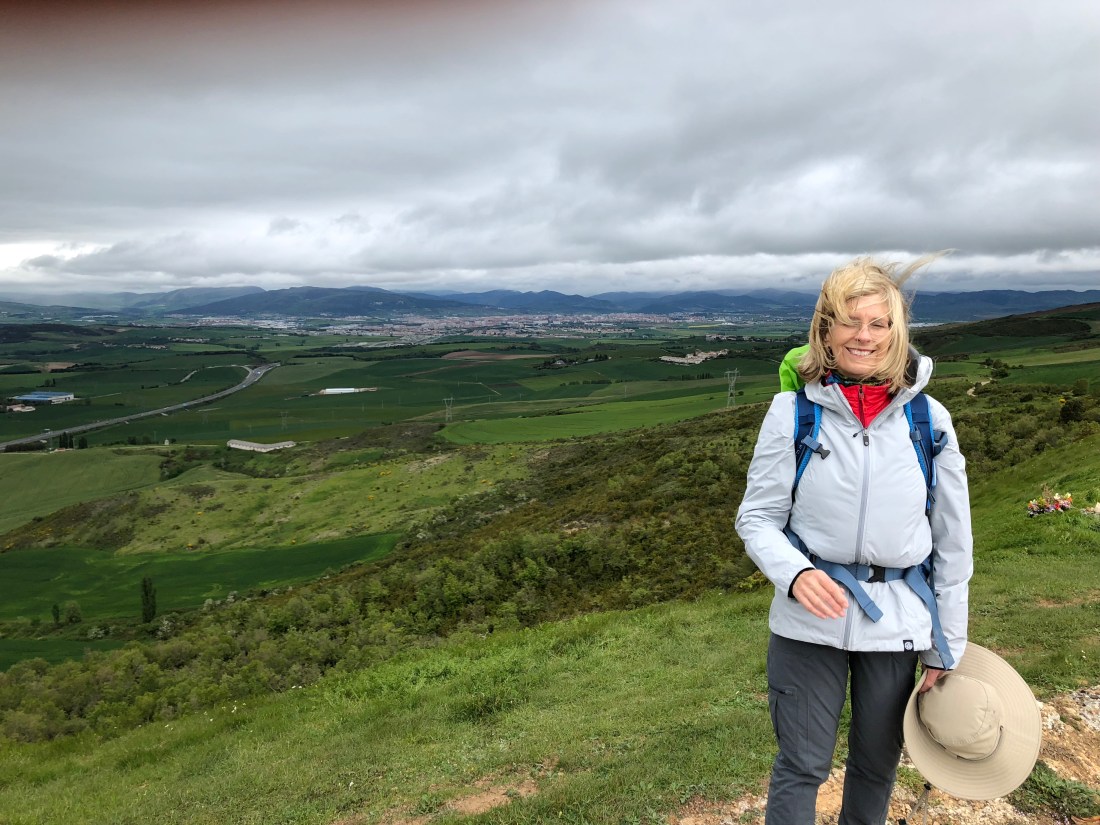
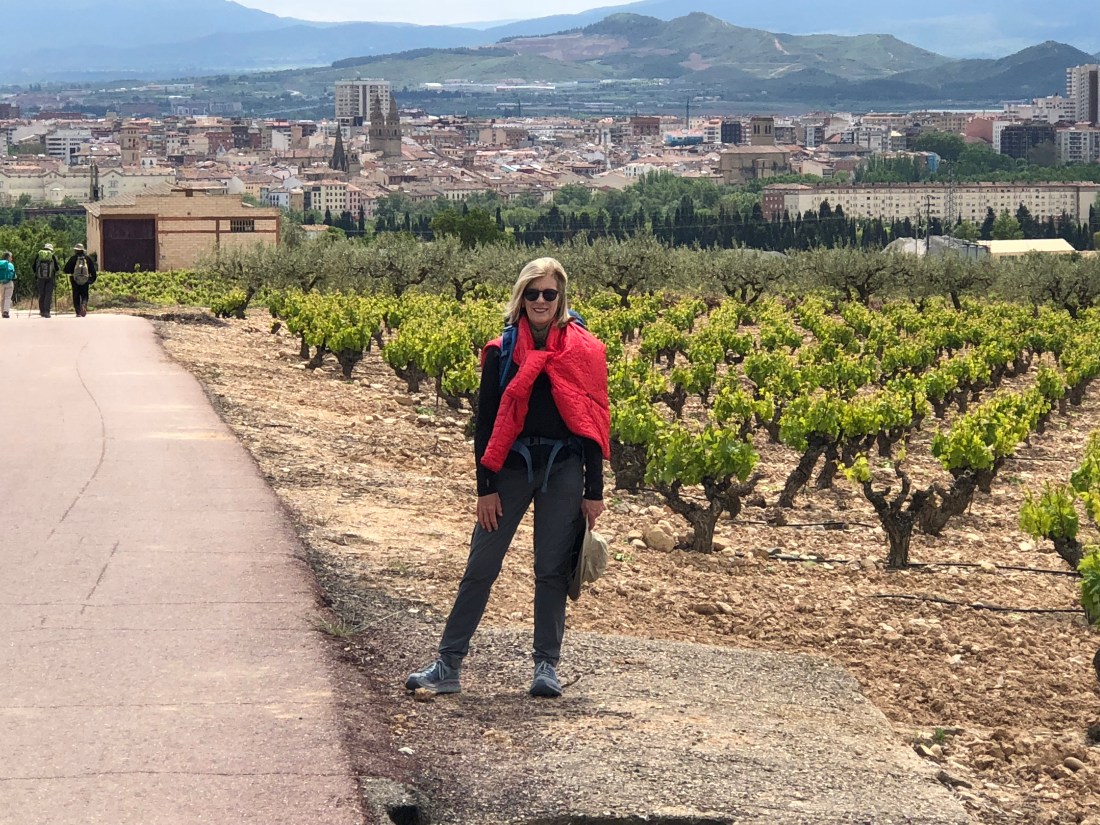
Here is Logrono, our destination for the day.IMG_1658
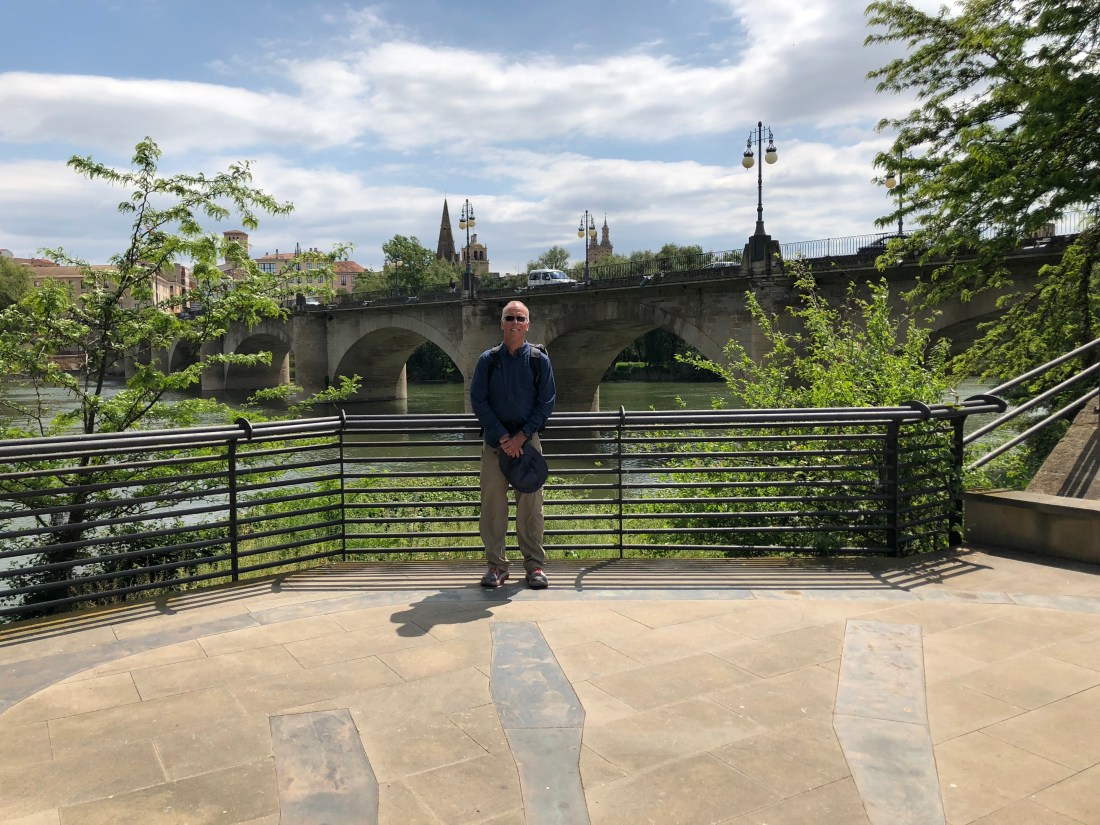
Here is the bridge over the rio Ebro, which separates the province of Navarre from La Rioja, which we are now entering.  Logrono is the provincial capitol of La Rioja.  

The rio Ebro is also the historic boundary for the Basque region, which we have just now left behind. IMG_1660
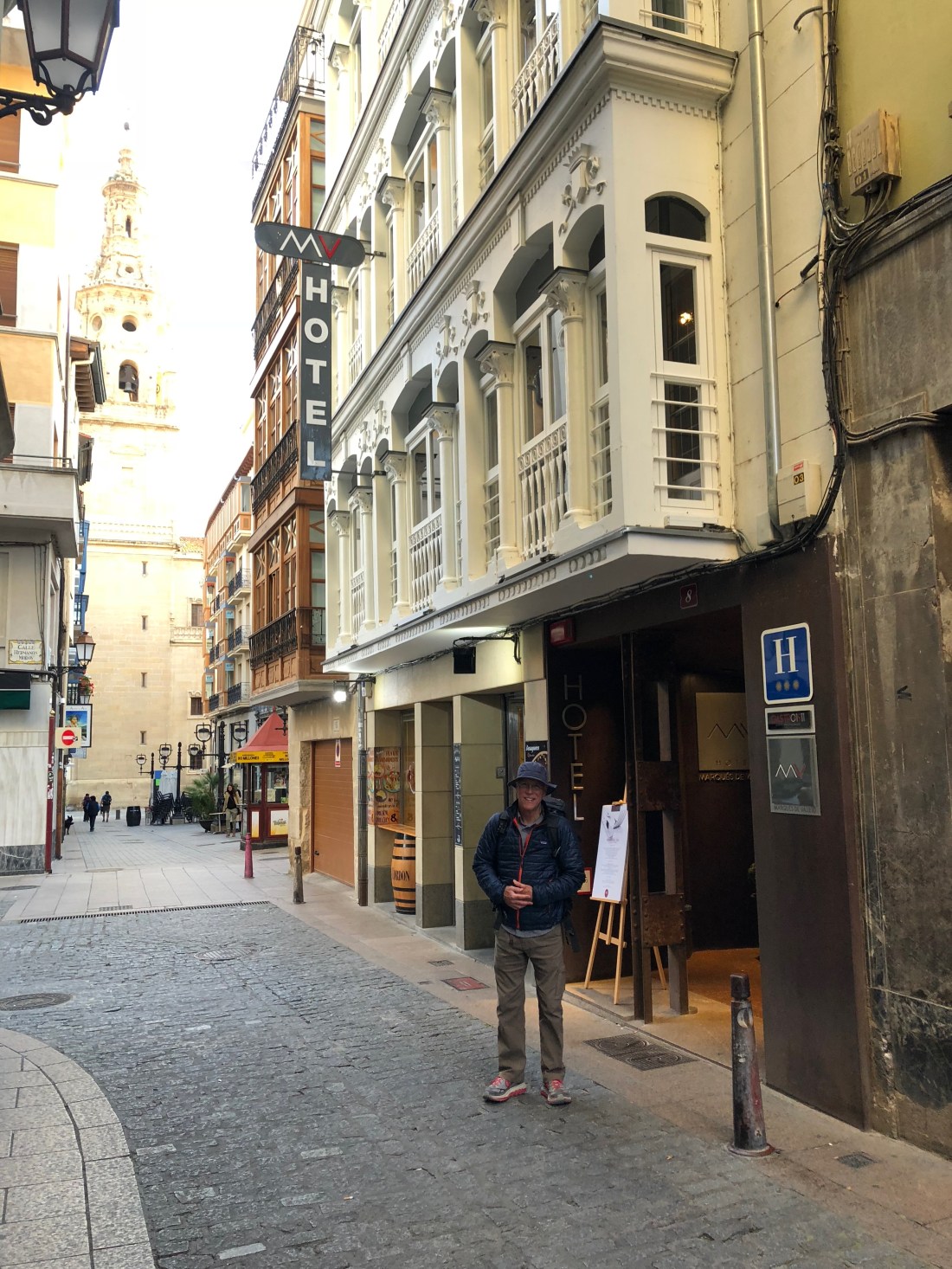
And here is the hotel where we spent the night, with the tower of Logrono’s cathedral in the background.IMG_1672
Estella to Los Arcos

Walking to Mass last night in Estella, we bumped into several old friends.  

We saw the two Spanish brothers and their wives.  There was a lot of hugging and and back slapping.  We agreed to meet in Logrono in two days. 

We also saw Jessica, a young German woman we met on our first day of walking. We have seen her several times on the path, always moving at twice our pace.   She is traveling with a much slower friend, also a young German woman, whom she meets up with at the end of the day.  When we asked how she was holding up, she showed us the backs of her legs, which were bright red from from her heels up to middle of her calves.  She said they were very sore. 

Lots of injuries are starting to show up on the path.  Yesterday in Puente la Reina, we saw a young woman who had tied a stick to her lower leg. 

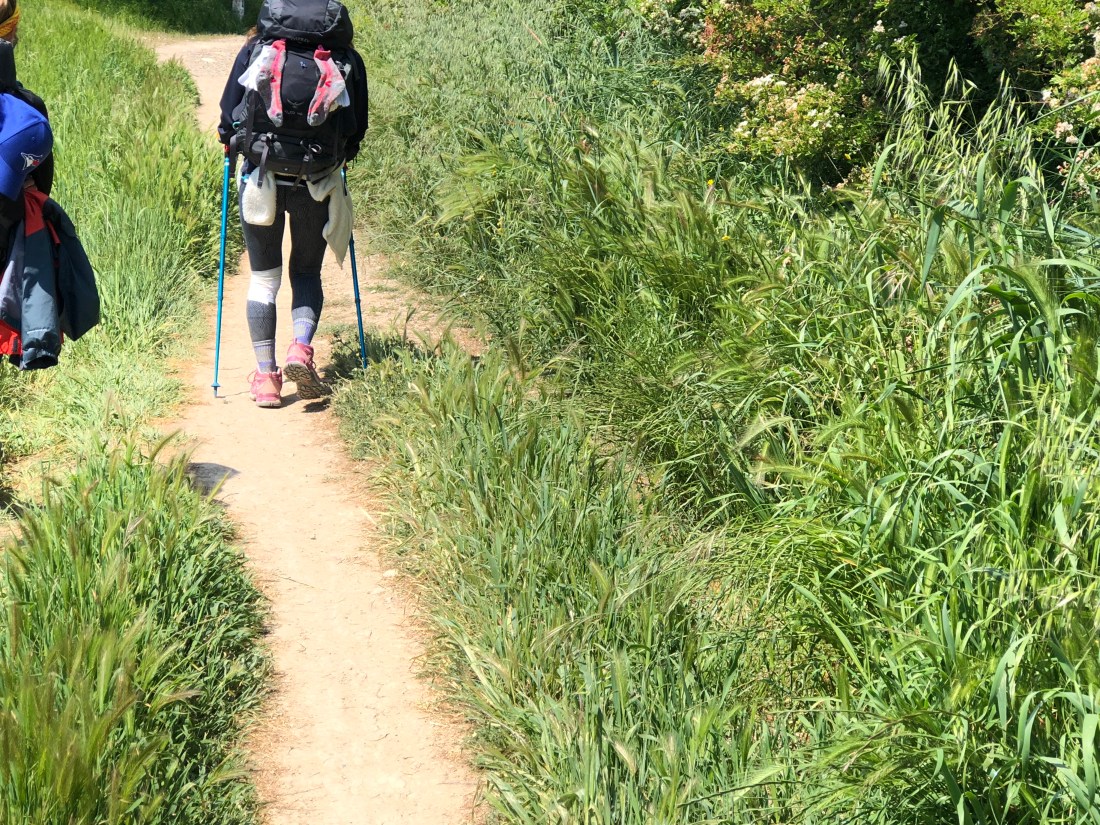
People on the path are limping:IMG_1644

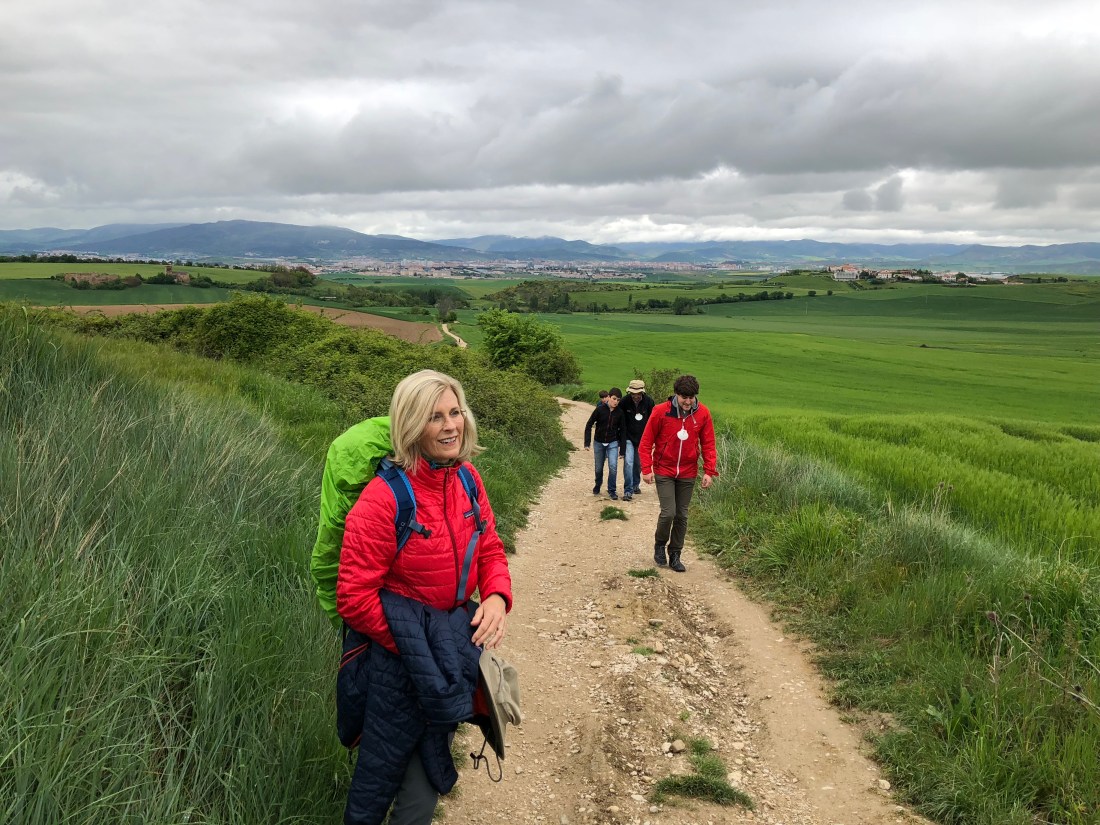
The physical demands of the journey are a big surprise.  We are walking 12 to 18 miles a day, and a lot of the walking is on very steep climbs and descents.  In the past, when people on the Camino would ask how far we were walking, I would tell them to Santiago.  Now when someone asks, I tell them that our plan is to walk to Santiago.  We are starting to understand why people walk the Camino in sections over several years.

It was cold and overcast when we left Estella. 

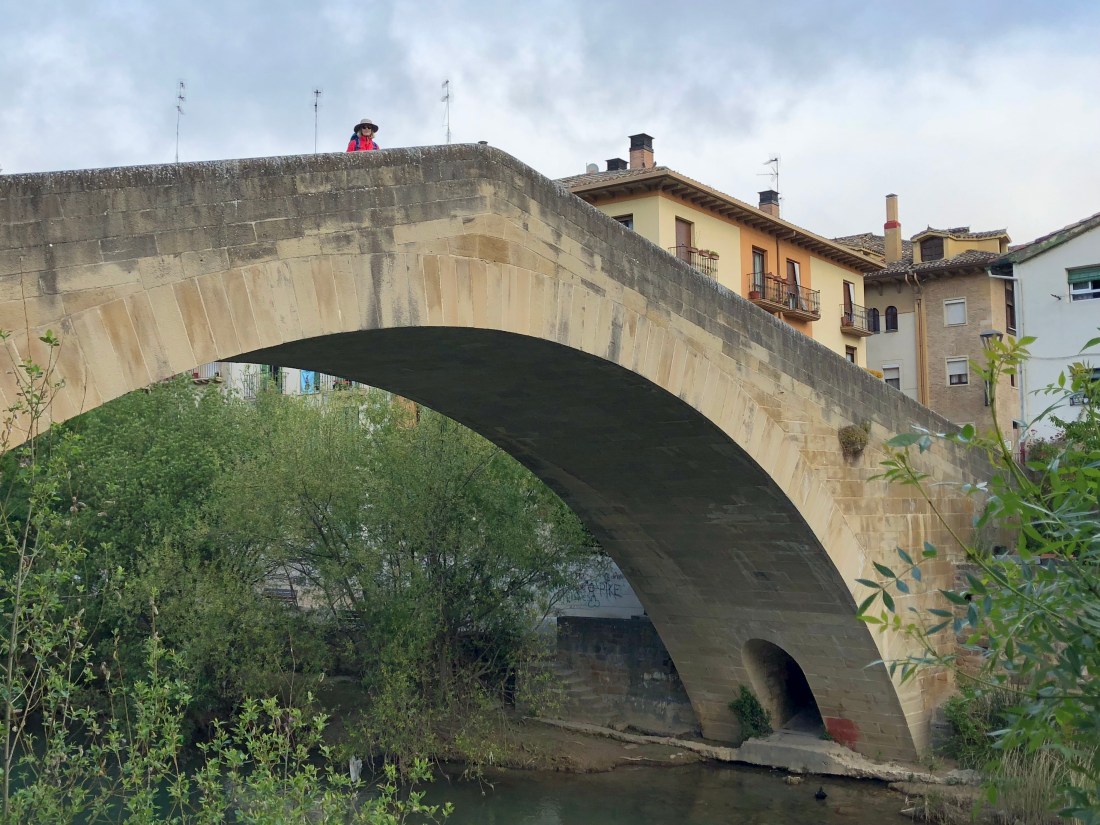
Here is the bridge out of town:IMG_1459

We walked out of the old quarter:IMG_1462

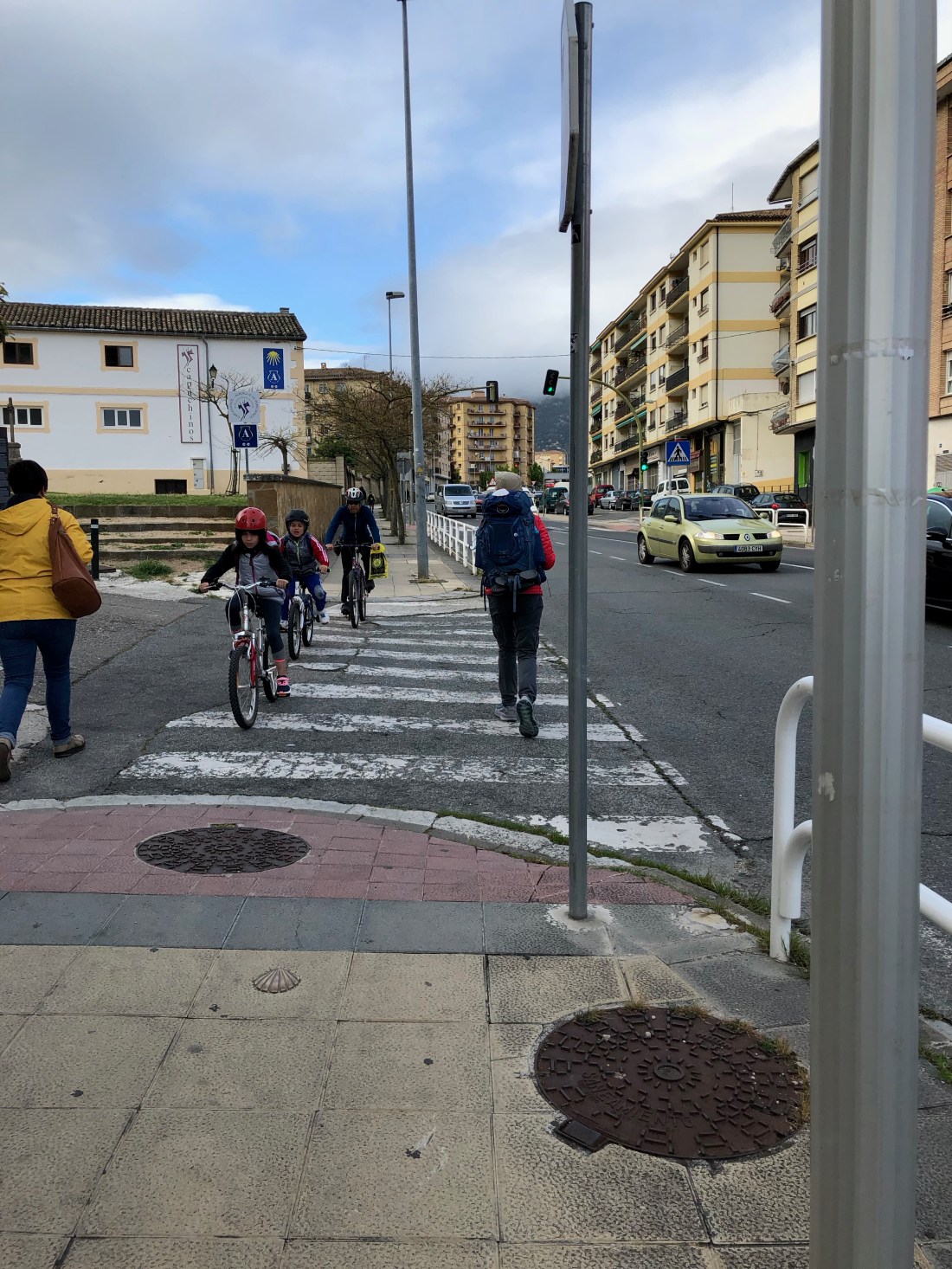
And into a suburban area:IMG_1480

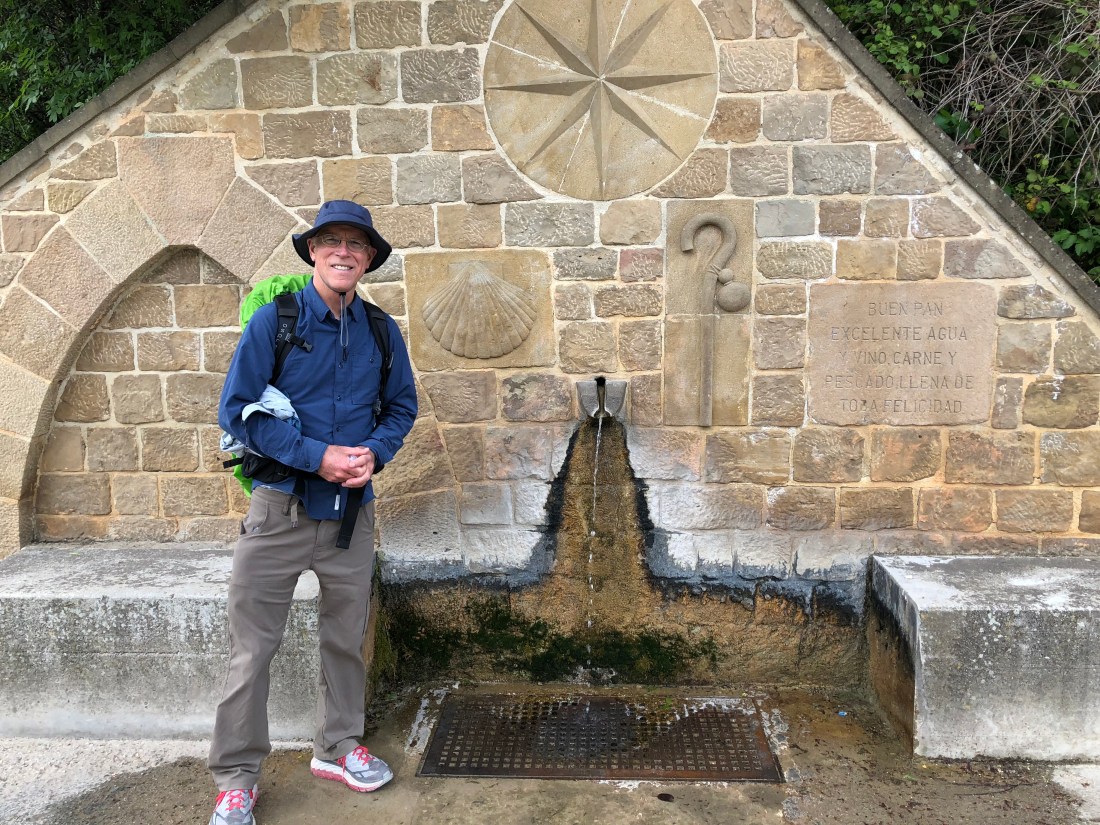
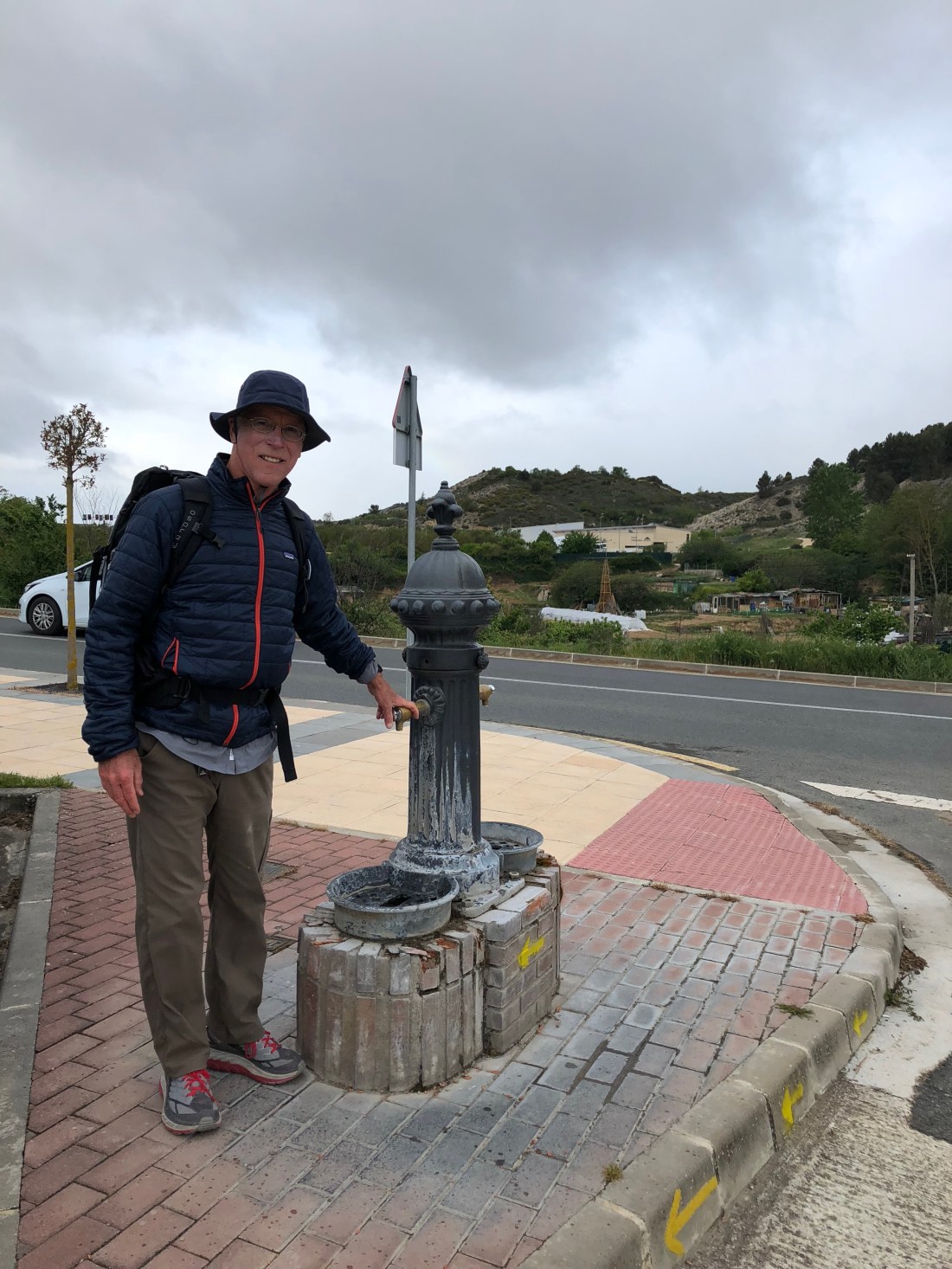
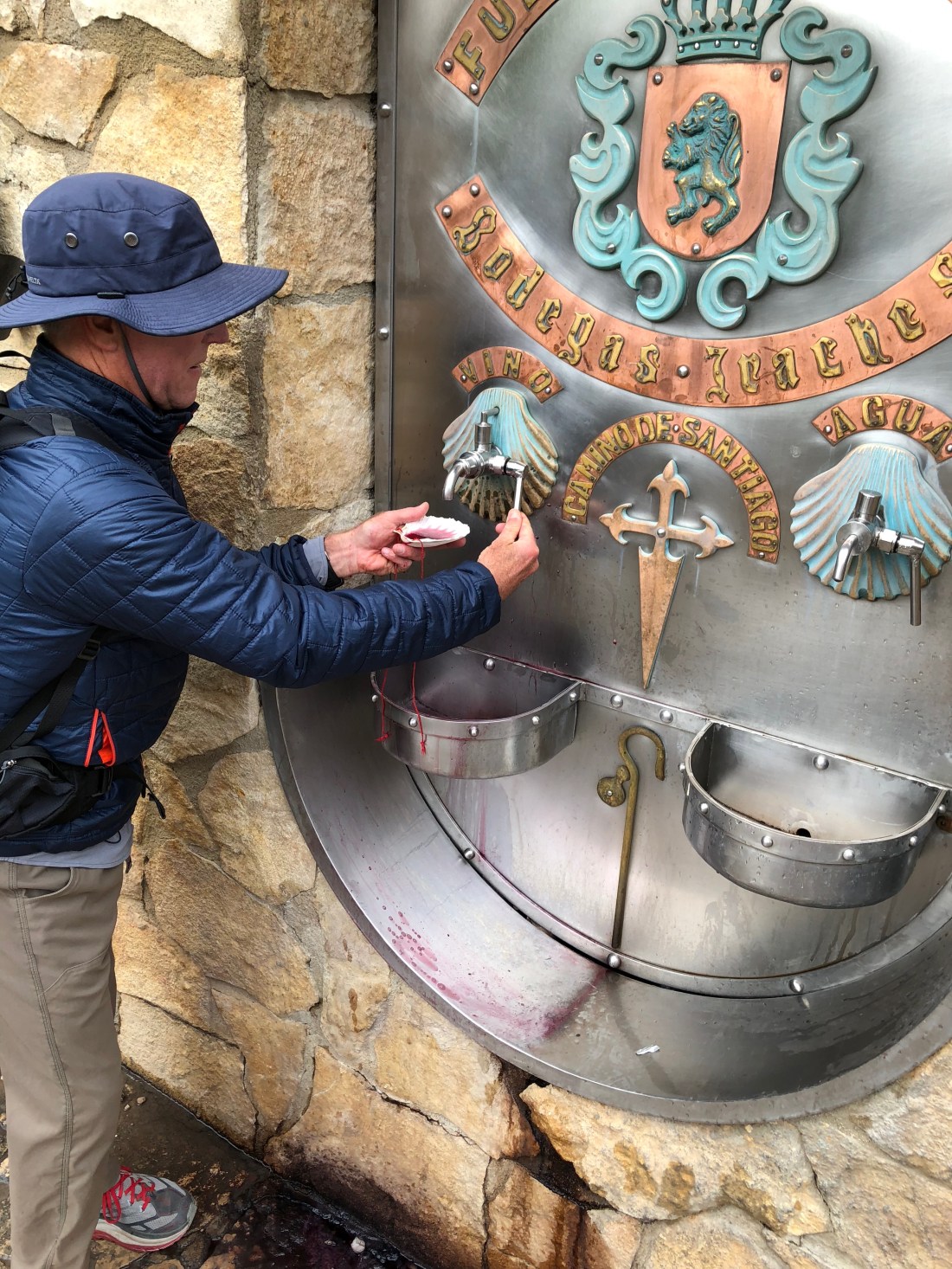
On there outskirts of town, we came across the most famous drinking fountain on the Camino. 

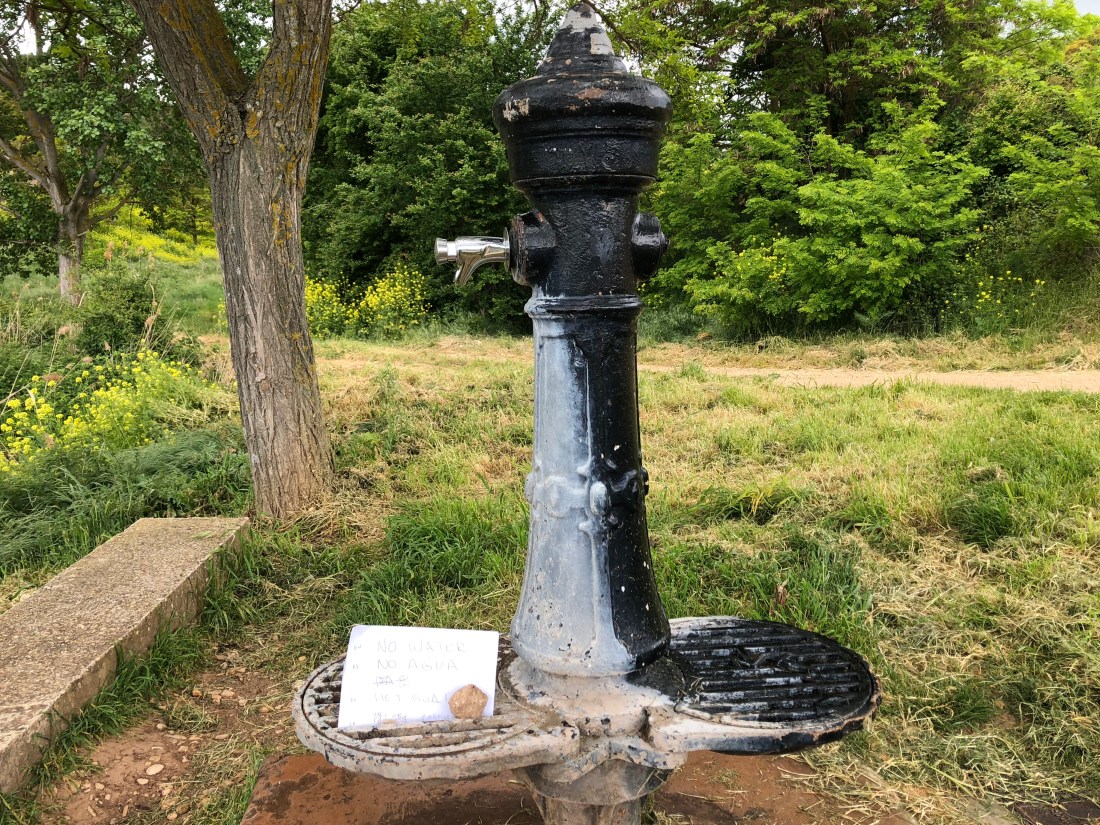
There are drinking fountains for water all along the Camino:IMG_1432

IMG_1547

IMG_1485

This fountain just outside of Estella is unique, however, because it dispenses wine:IMG_1493

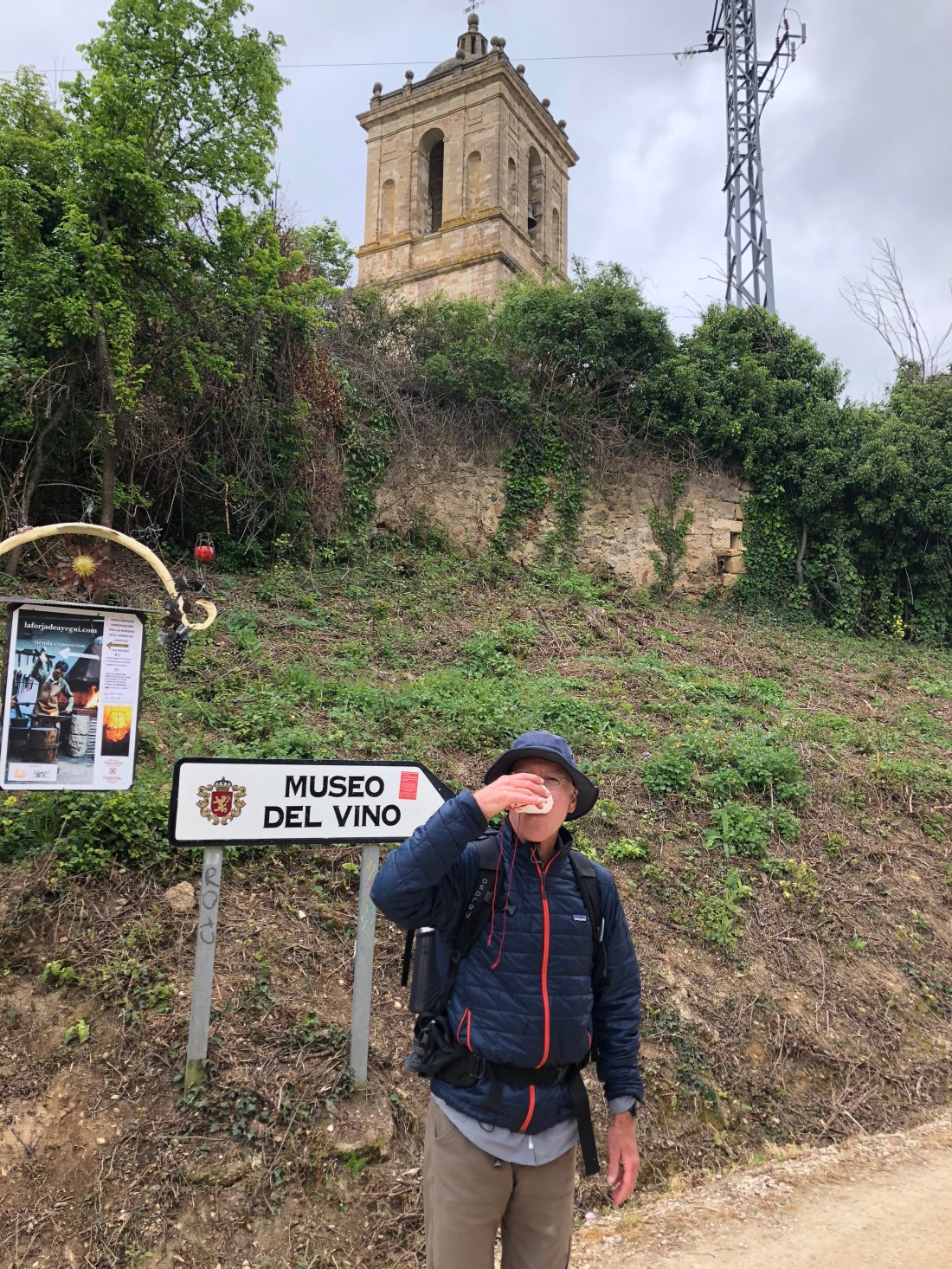
Buen Camino!IMG_1500

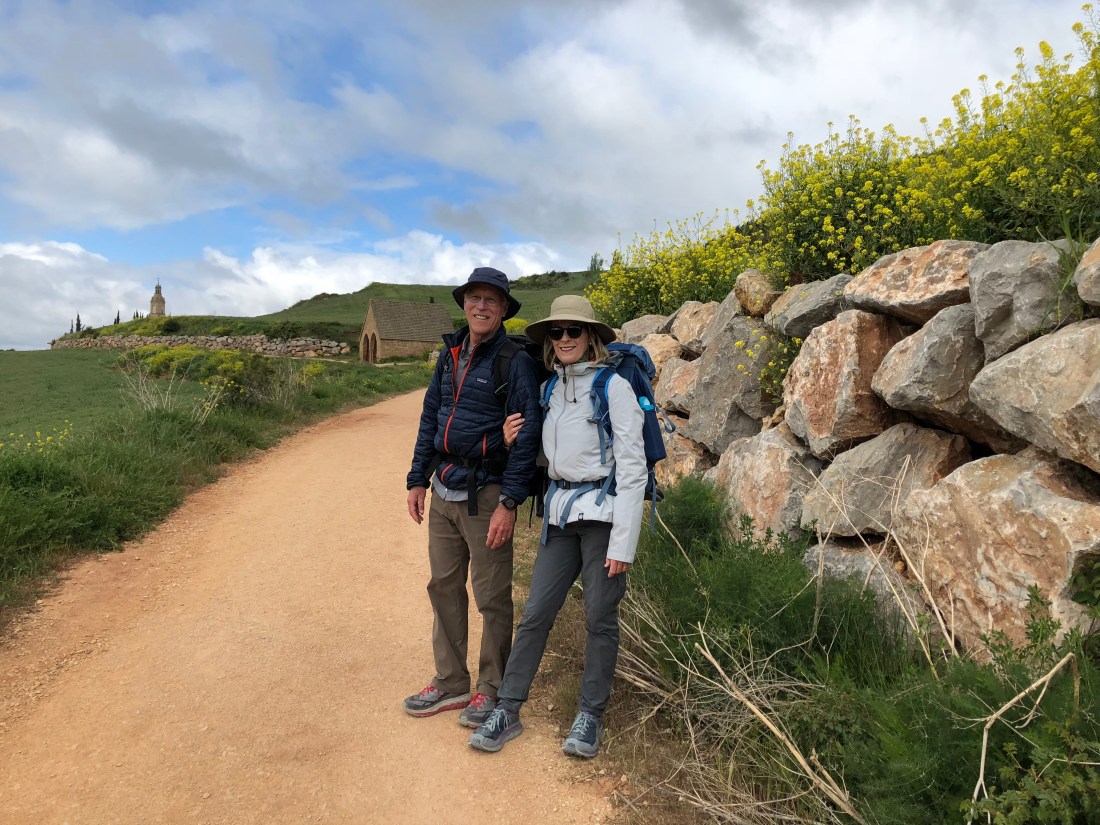
Leaving the wine fountain, the path went through a wooded area, and then by several villages. 

Here we are on the path to the village of Azqueta:IMG_1533.jpg

Unlike most village churches, the church in Azqueta, the Church of San Pedro, was open:IMG_1540

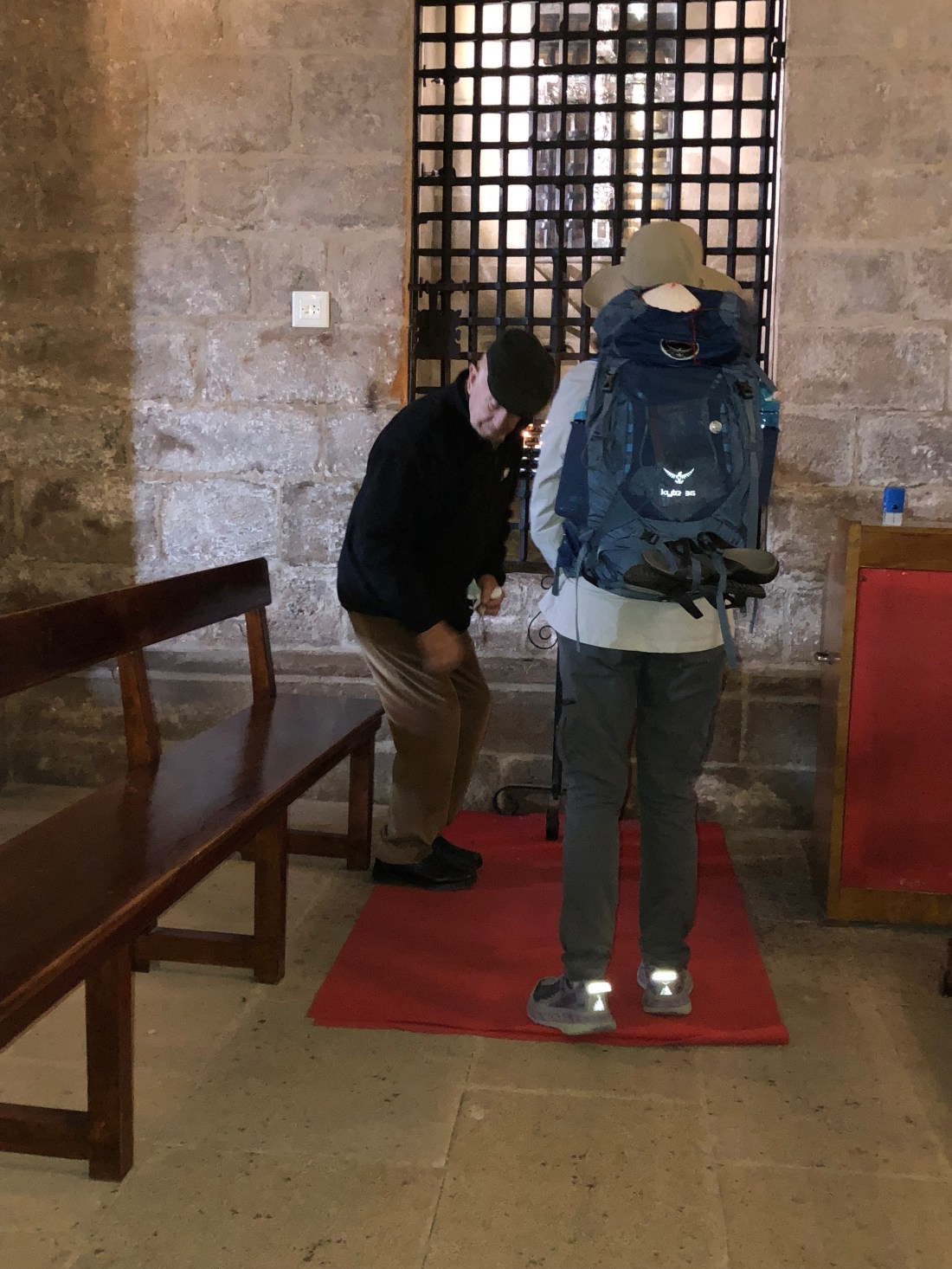
Anne went inside and lit several candles:IMG_1538

The path went down a hill and then back up to the village of Villamayor de Monjardin:IMG_1512

From there, the path dropped downhill and into a long valley with mountains in the distance:IMG_1570

We could see a castle at the end of the valley on a far hilltop:IMG_1575

The path turned out of the valley and into Los Arcos, where we spent the night:IMG_1596

Puente la Reina to Estella

We got an early start this morning, leaving the albergue in Puente la Reina at just after 7:30.  It was clear and cold, 39 degrees when we left. 

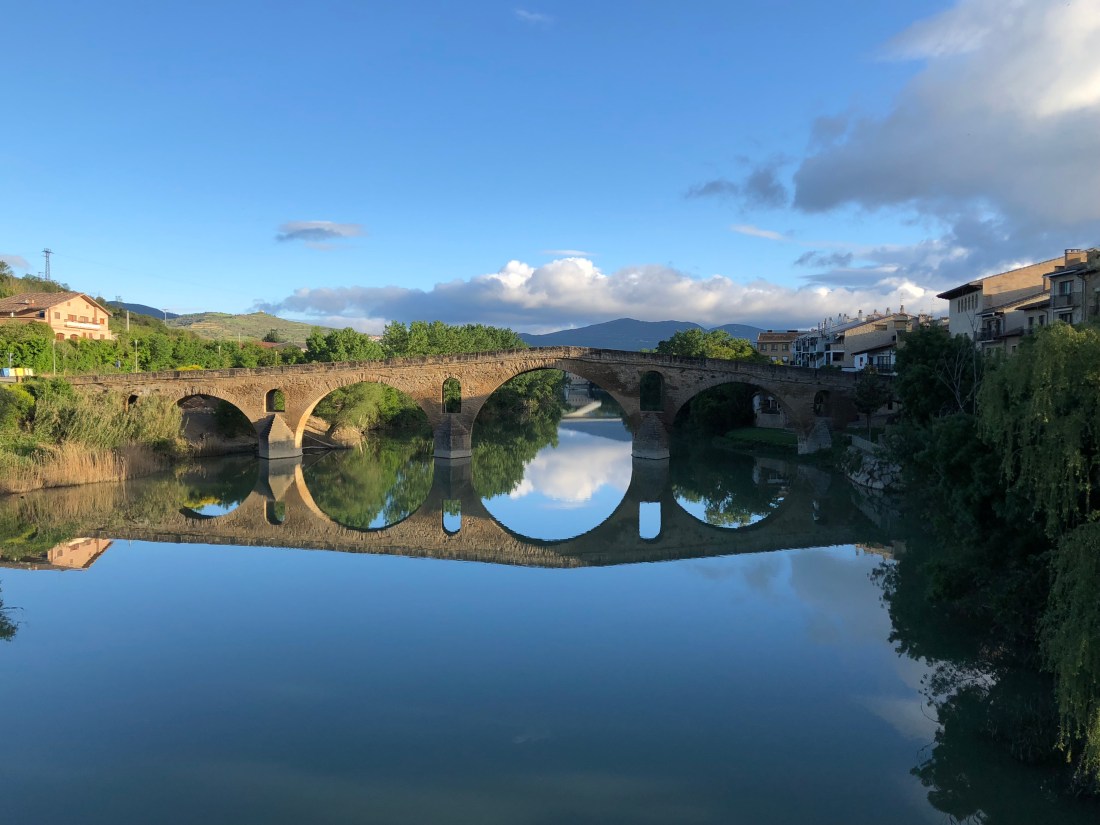
But the sun was up, and it was just right for Anne’s photo of the Puente la Reina bridge:IMG_1381

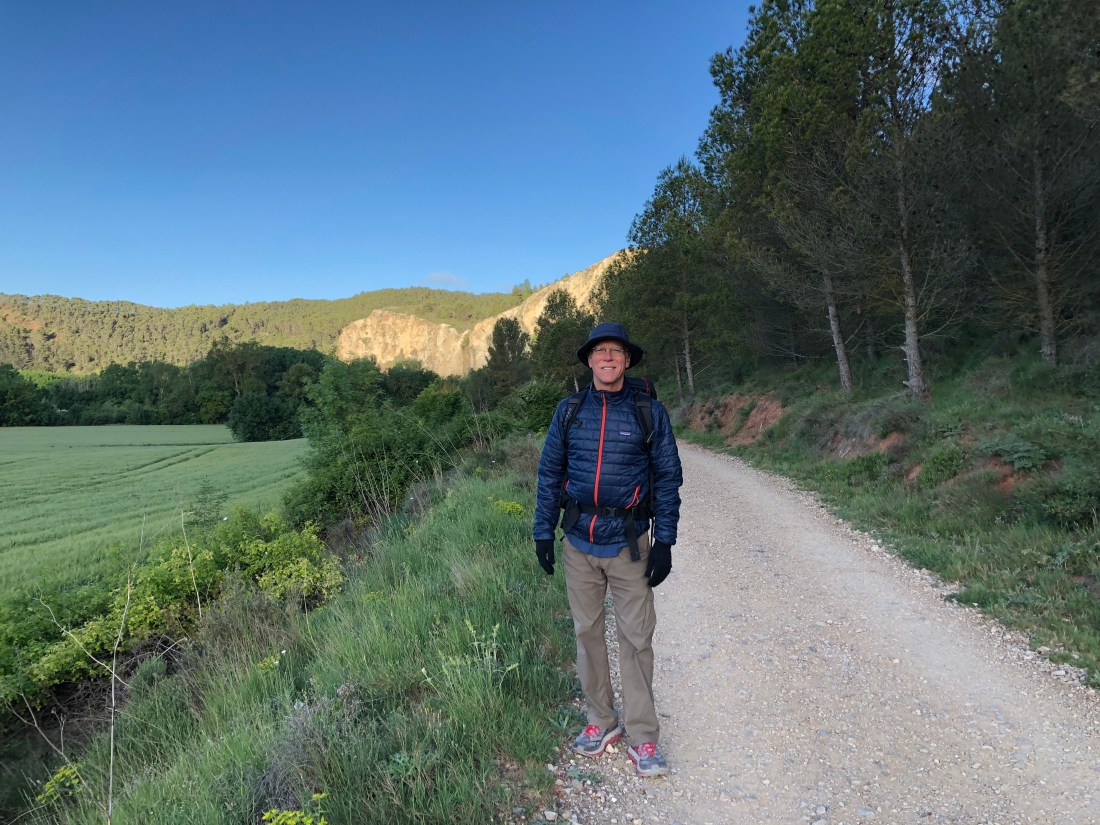
After leaving town, we walked up a valley lined with small fields:IMG_1384

At the end of the valley were a series of small villages sitting on hills, like the one here:IMG_1397

Along the path were grape vines:IMG_1399

And olive groves:IMG_1401

The land is more open and drier than the the areas we have walked through to the east.

Chastened by yesterday’s search for a room that almost didn’t exist, Anne and I have begun making room reservations.  We had hoped to get rooms at the end of each day’s walk and avoid the need to be at a certain place at a certain time.  But that is not going to work.  There are more and more people on the path, joining in from new towns along the way.  Before we arrived in Pamplona, there were long stretches where we walked alone.  That now rarely happens.  Also, people are walking faster.  And they are less friendly.  Perhaps everyone is tired after six days of walking.  Or perhaps they are in a hurry to get to their destination.  It’s first-come-first-served at many of the albergues.  They may be seeing others not as fellow pilgrims but as competitors for a bed.

We are spending the night in Estella by the rio Ega.  Our hotel is across the street from the town’s cathedral:IMG_1437

As in other Spanish cities, there are a lot of churches in Estella.  Here is the view from the patio to the left of the cathedral: IMG_1441

And looking off the patio to the right of the cathedral, here are the towers of the church where we  will attend a pilgrim’s Mass tonight:IMG_1434 2

Pamplona to Puente la Reina

It was cold and windy when we left Pamplona.  It had rained the night before and was threatening to rain more.

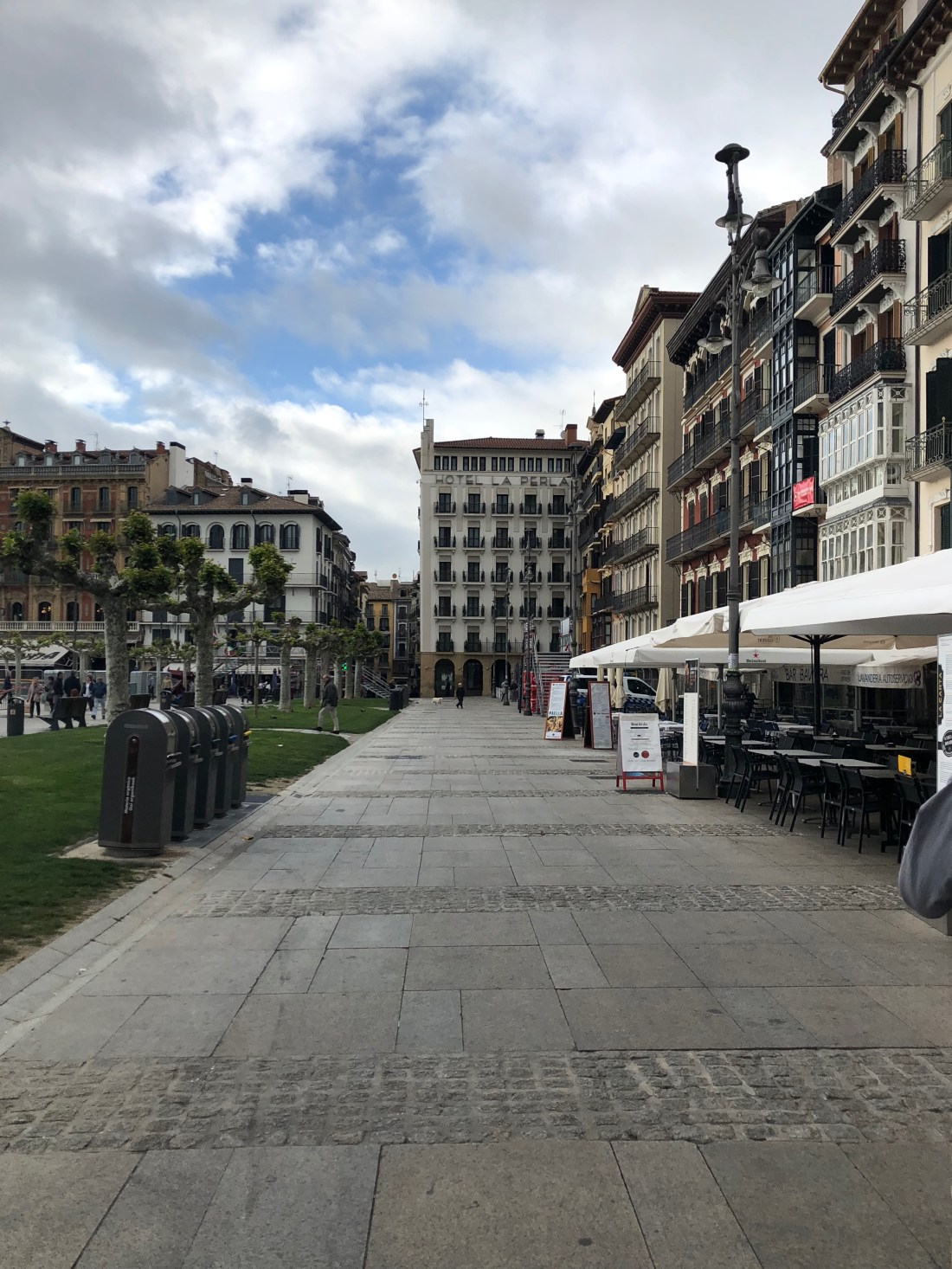
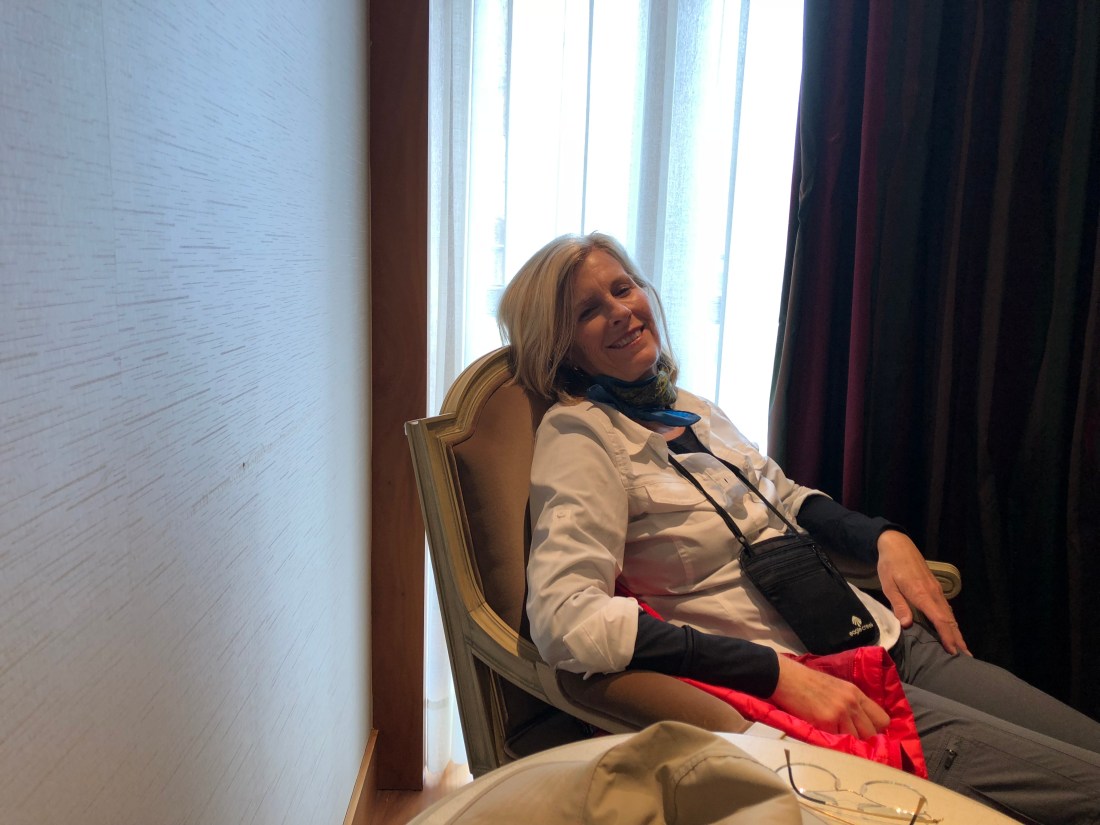
Anne was feeling a lot better after spending two nights in Pamplona at the Gran Hotel La Perla, a very un-pilgrim-like lodging:IMG_1062

She probably would have continued to stay at the hotel had she known what the day would bring.

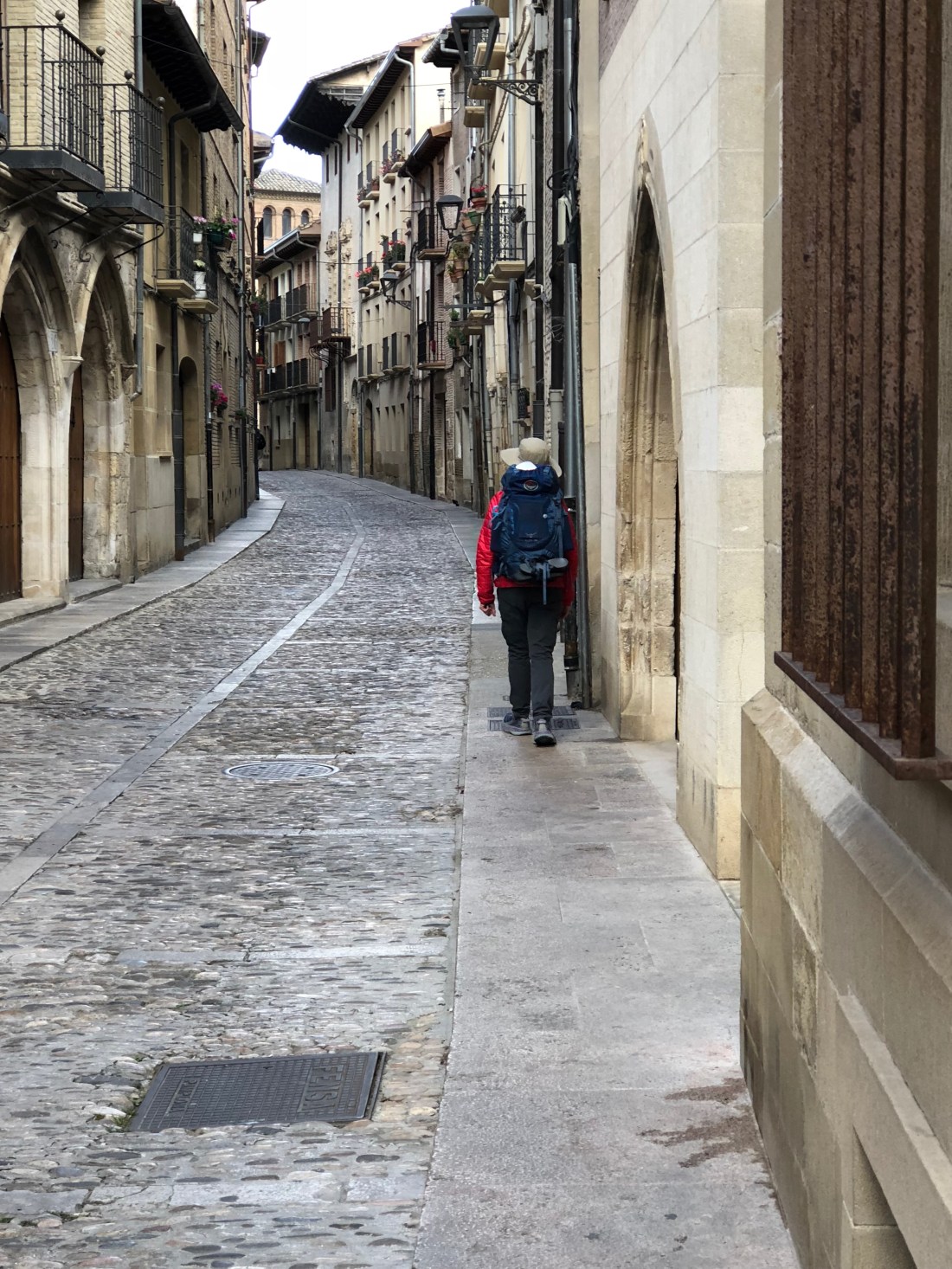
La Perla is on Pamplona’s main square in the old part of the city.  Leaving Pamplona, we walked out of the old quarter, through a business district, suburbs, and into fields outside the city.  Gone were the woods and pastures that had led us into Pamplona. 

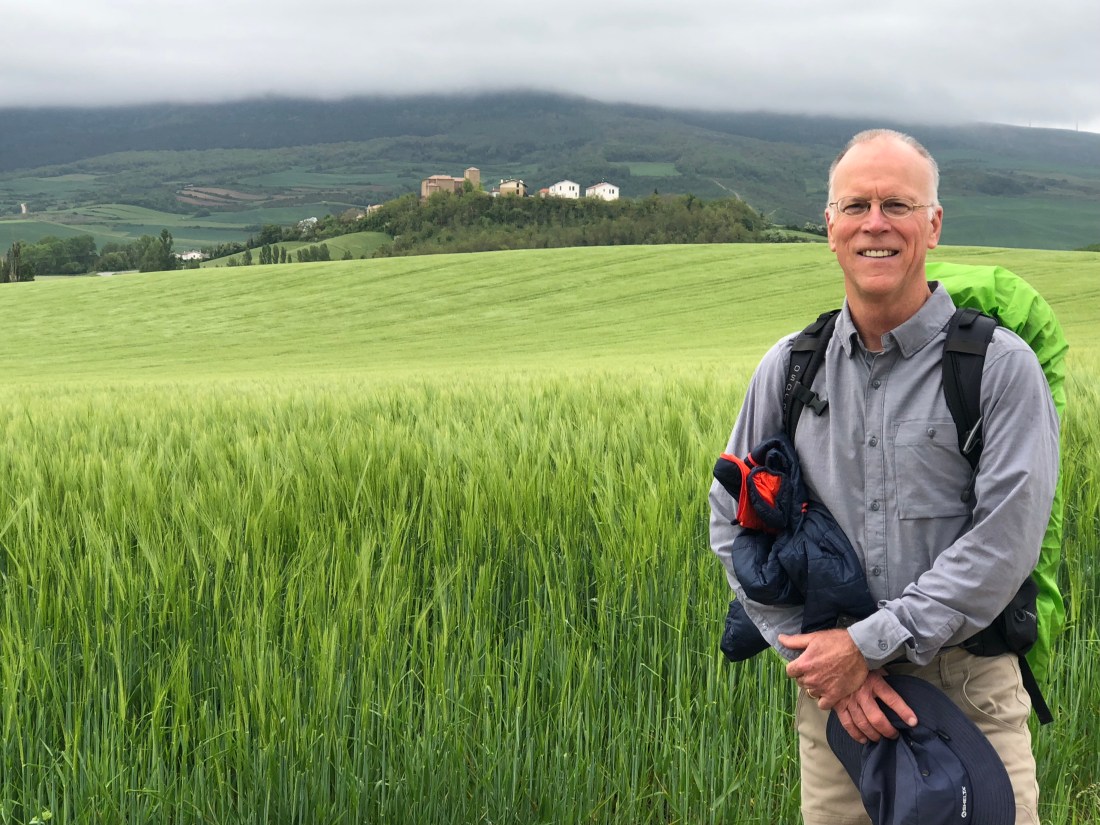
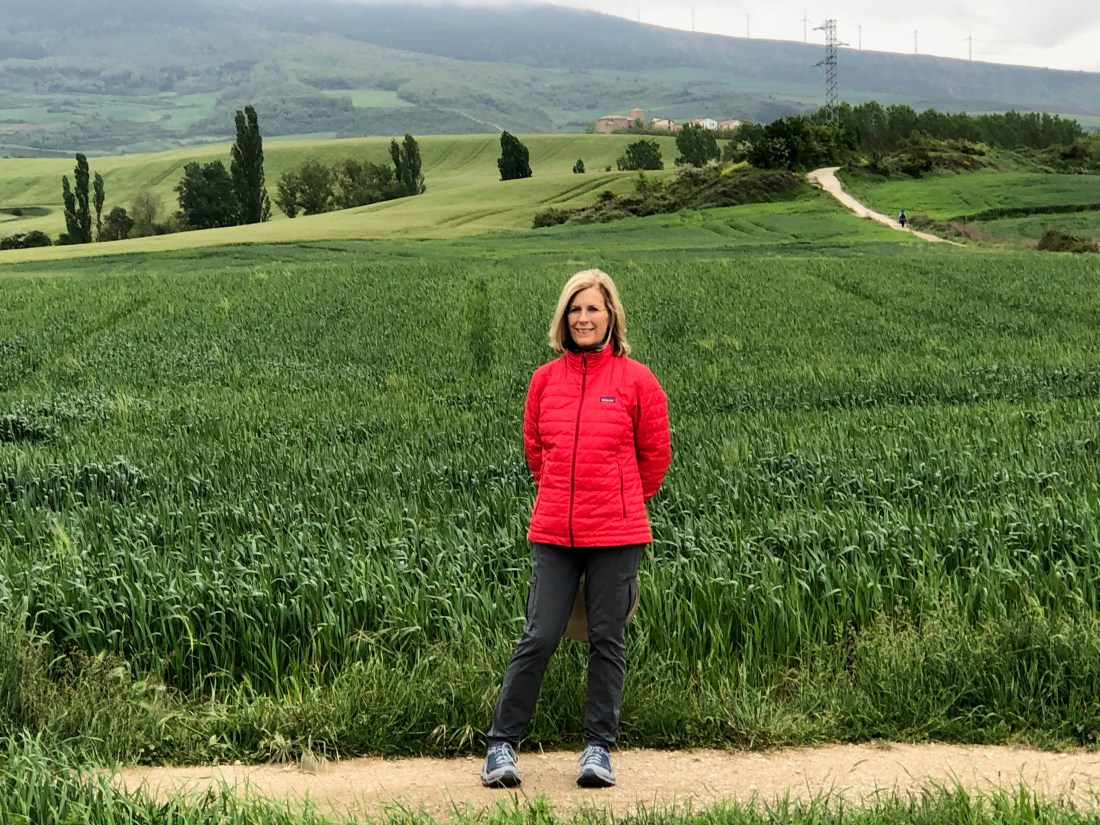
Now, we were traveling over rolling hills.IMG_1120

The path would occasionally lead up to an a village or church set on a hill: IMG_1109

The halfway point of the hike was a high ridge separating the basin that Pamplona sits in from the valley where Puente La Reina is located, our destination for the night.  It was a steep hike up to the top of a ridge lined by windmills.  In the background is the ridge that we would walk over, with the windmills lining the ridge barely visible:

IMG_1105

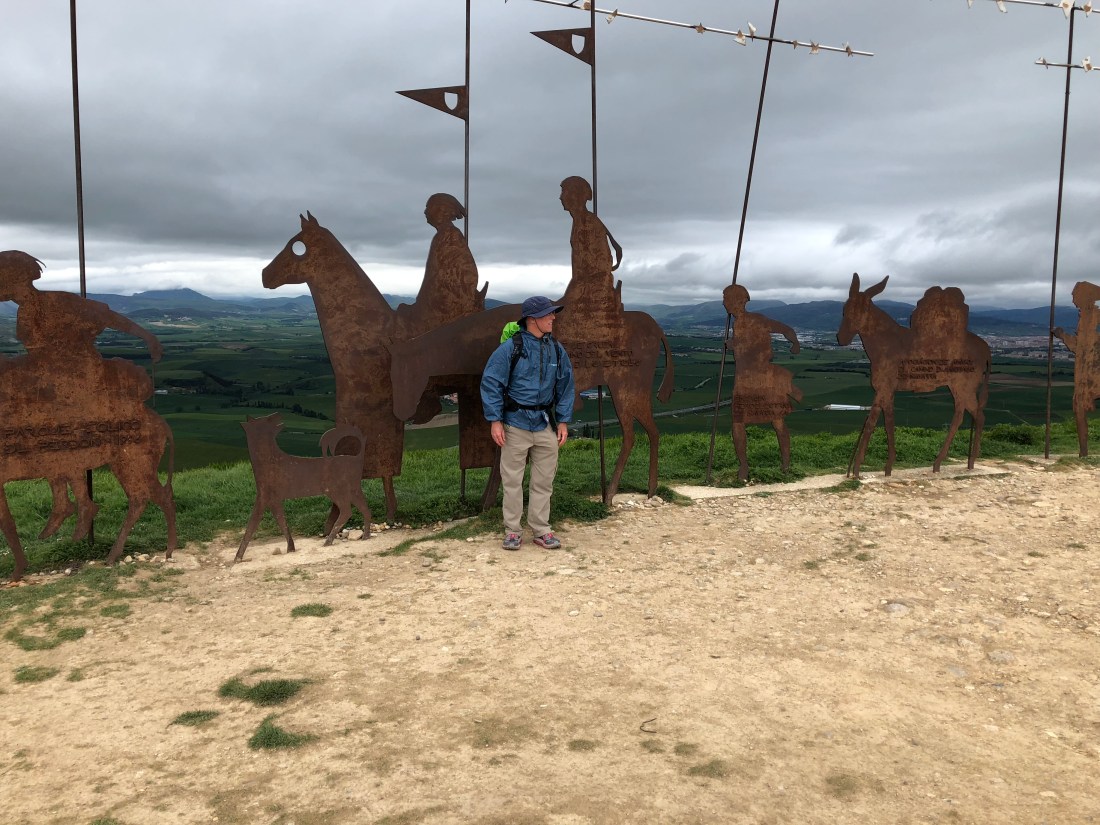
At the top of the ridge was a sculpture dedicated to the peregrinos:

IMG_1343

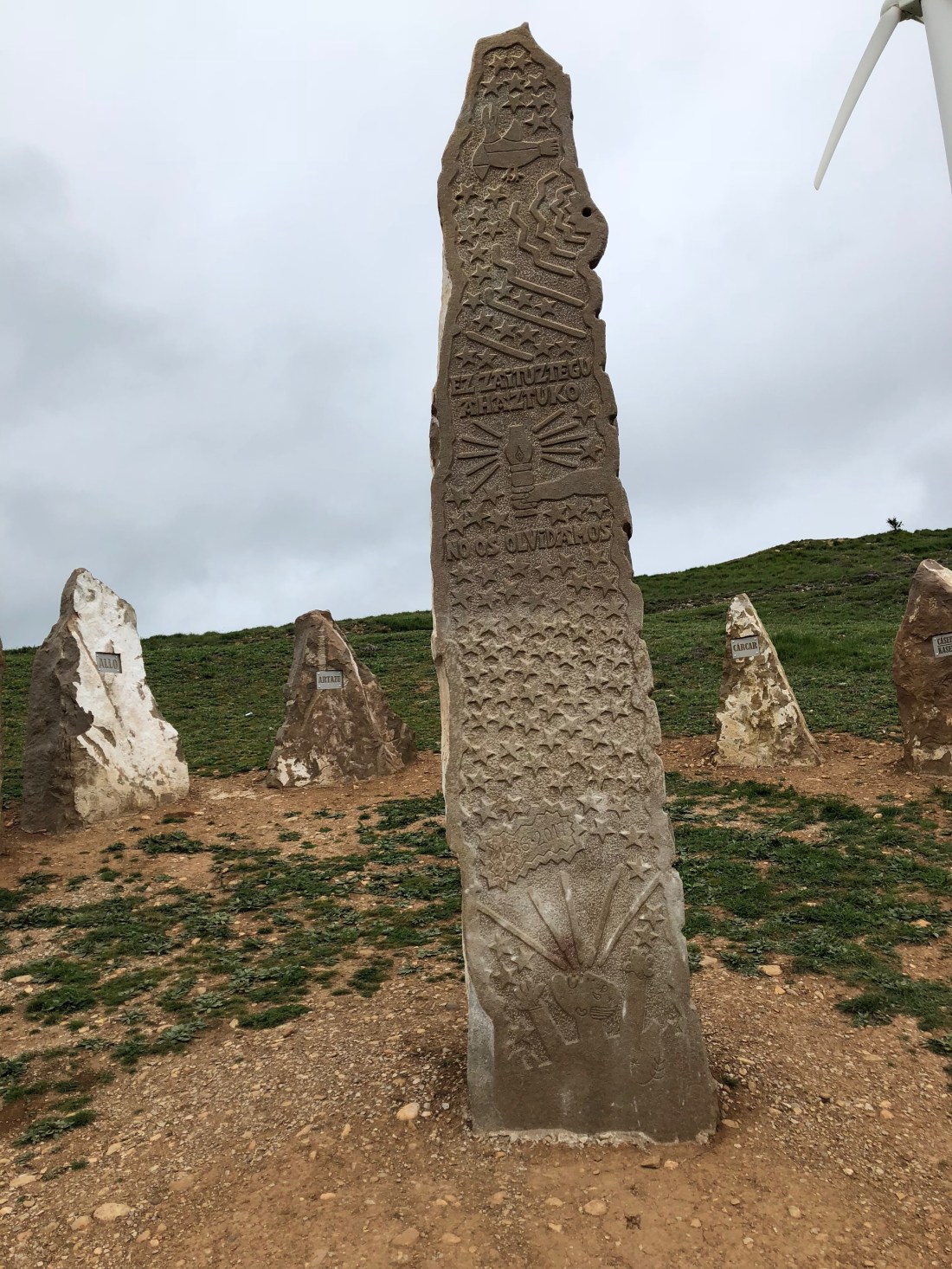
There was also a monument to the citizens of Navarre murdered by Franco’s supporters during the Spanish Civil War.  Navarre is the Spanish district that we had been crossing since entering Spain three days ago:

IMG_1353

This is the view from the top of the ridge back towards Pamplona:

IMG_1340 2

And this is the view towards Puente la Reina:

 IMG_1347

During the walk, we fell in with a Latvian.  He is part of a large Camino demographic, Europeans who vacation on the Camino.  The Latvian had set aside ten days to walk the Camino, with no particular goal.  Earlier, we had met a woman in her thirties from Bordeaux who was on a six-day vacation on the Camino.  It was her eighth trip, and she too was just seeing how far she could travel in six days.  For this group, the Camino is a scenic hike with good food, good wine, good company, and a bed at the end of the day.  So far, we have always found good company on the Camino.  Good food and wine are a little less certain.  And, as we were about to discover, a bed at the end of the day cannot be counted on at all.

Several miles outside of Puente de la Reina, we passed a bus unloading a church group of twenty elderly Germans from Hamburg onto the Camino. They were spending ten days on the Camino and were ending their first day in Puente la Reina after a short walk.  That was not good news.  A church group surely had hotel reservations, which meant that at least twenty beds in Puente la Reina were already spoken for.

Sure enough, all the hotels in Puente la Reina were full. 

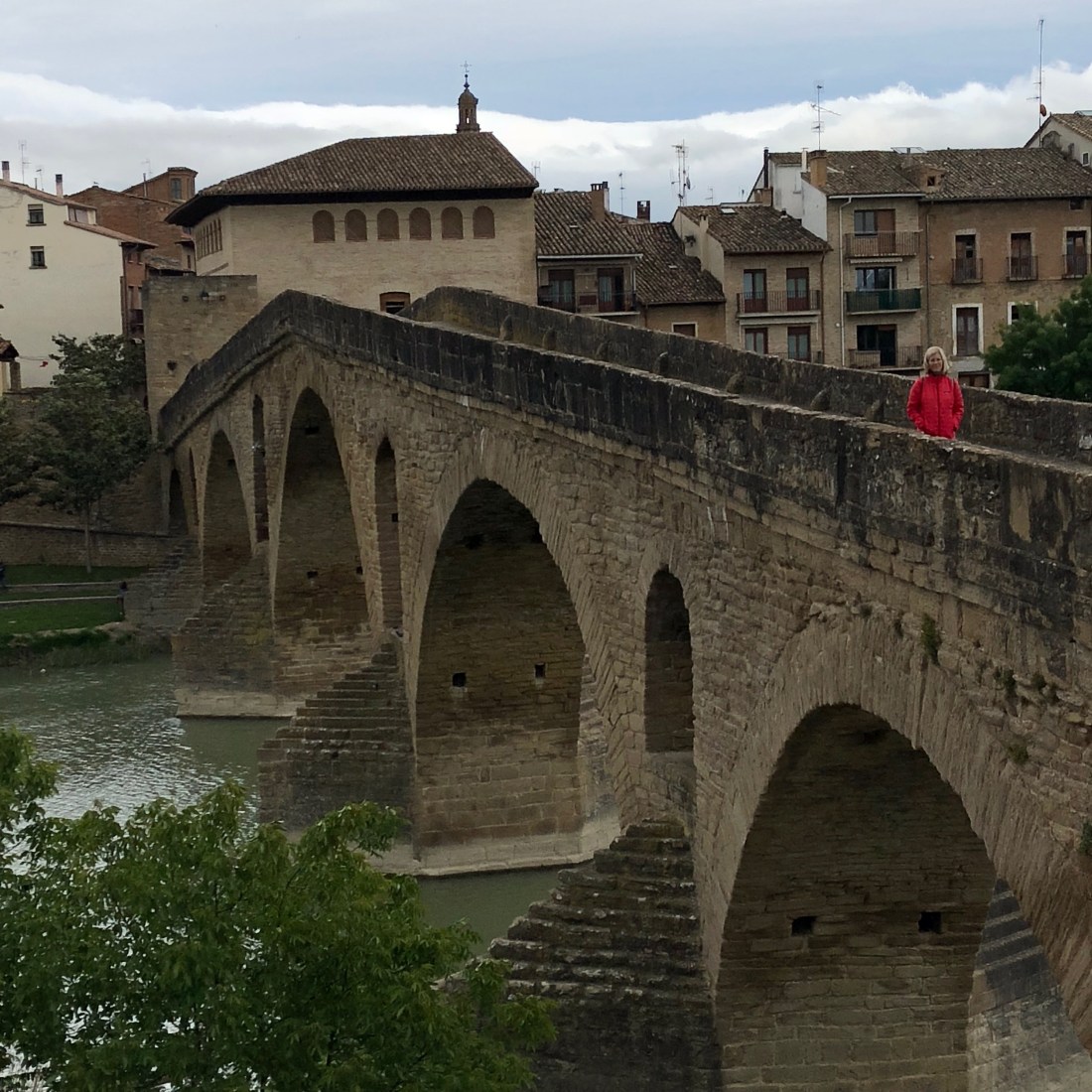
These pictures show why staying in Puente la Reina is in such demand.  Here is the foot bridge that the town is named for:
IMG_1365

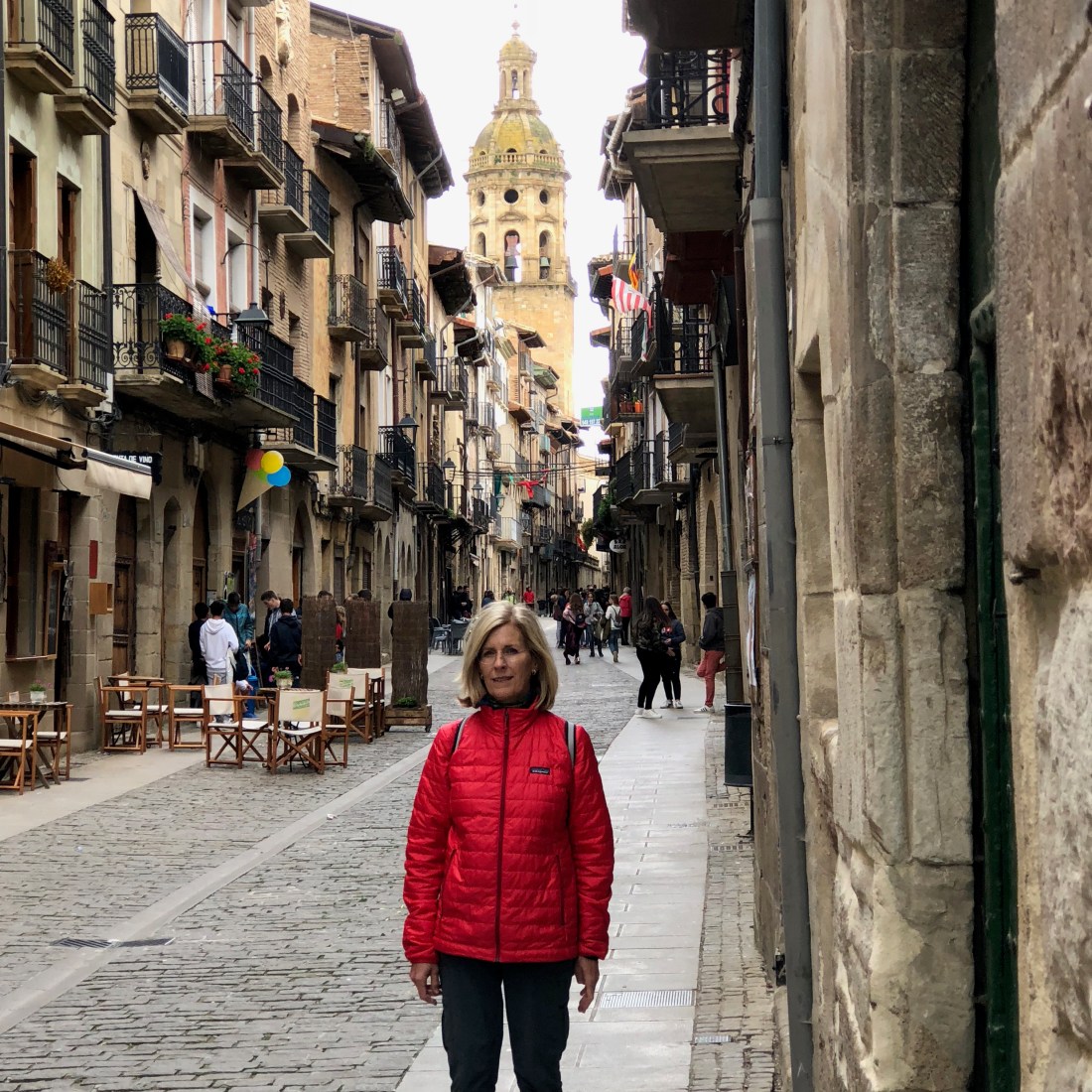
Here is the town’s Calle Mayor:

IMG_1369

It was late in the day, and I sat at a table in front of a restaurant and began calling the albergues listed in our guidebook.  Nothing.  Then I called the hotels and albergues in the town up the road, a not-insignificant 5 km walk, especially at the end of a long day of walking.  Nothing there either.  Anne looked unhappy.  

Finally I called the last albergue in the guidebook, which it described as having only group sleeping.  The person answering the phone at the albergue said they had room but that he would not take a reservation.  He said that I needed to come over right away.

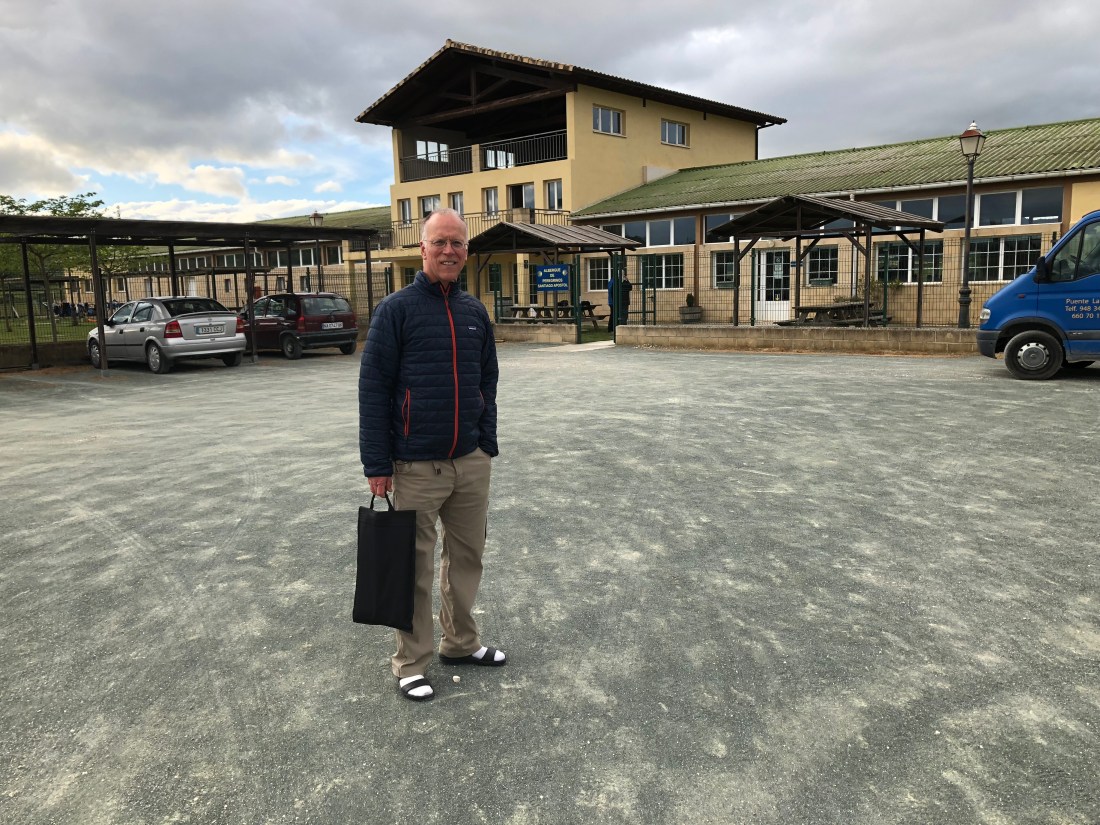
Here is the albergue:IMG_1376

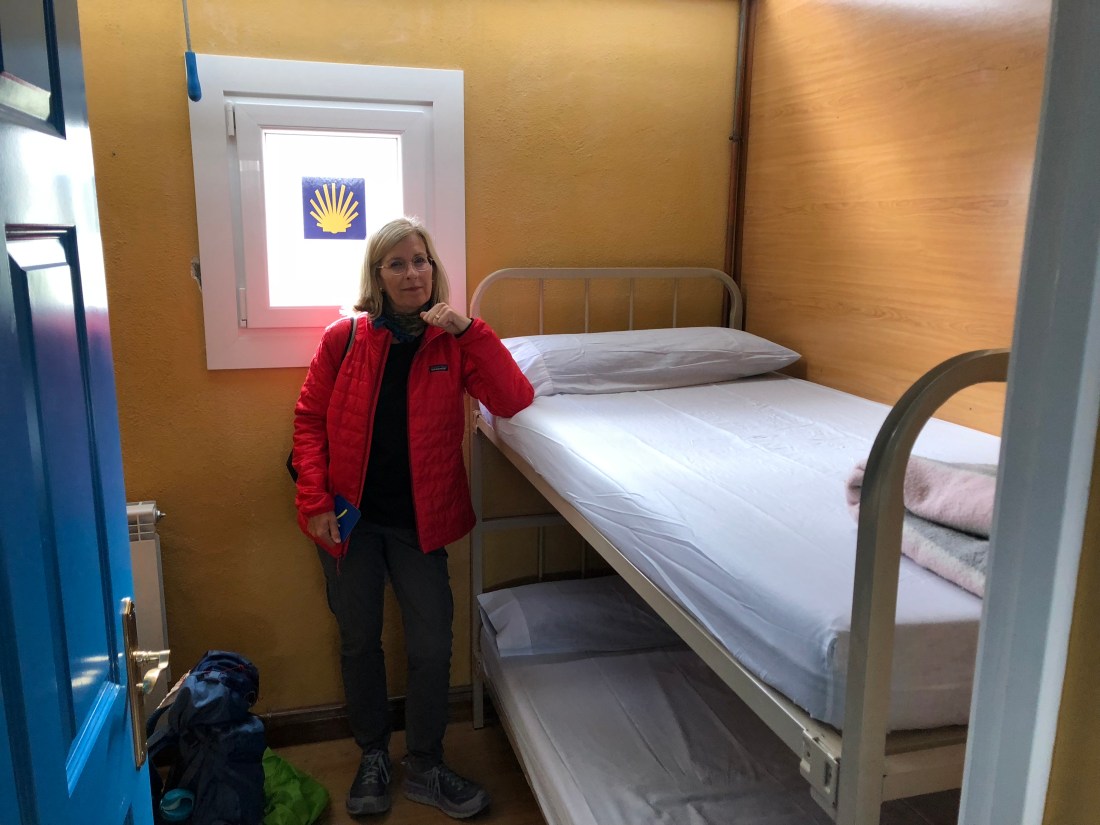
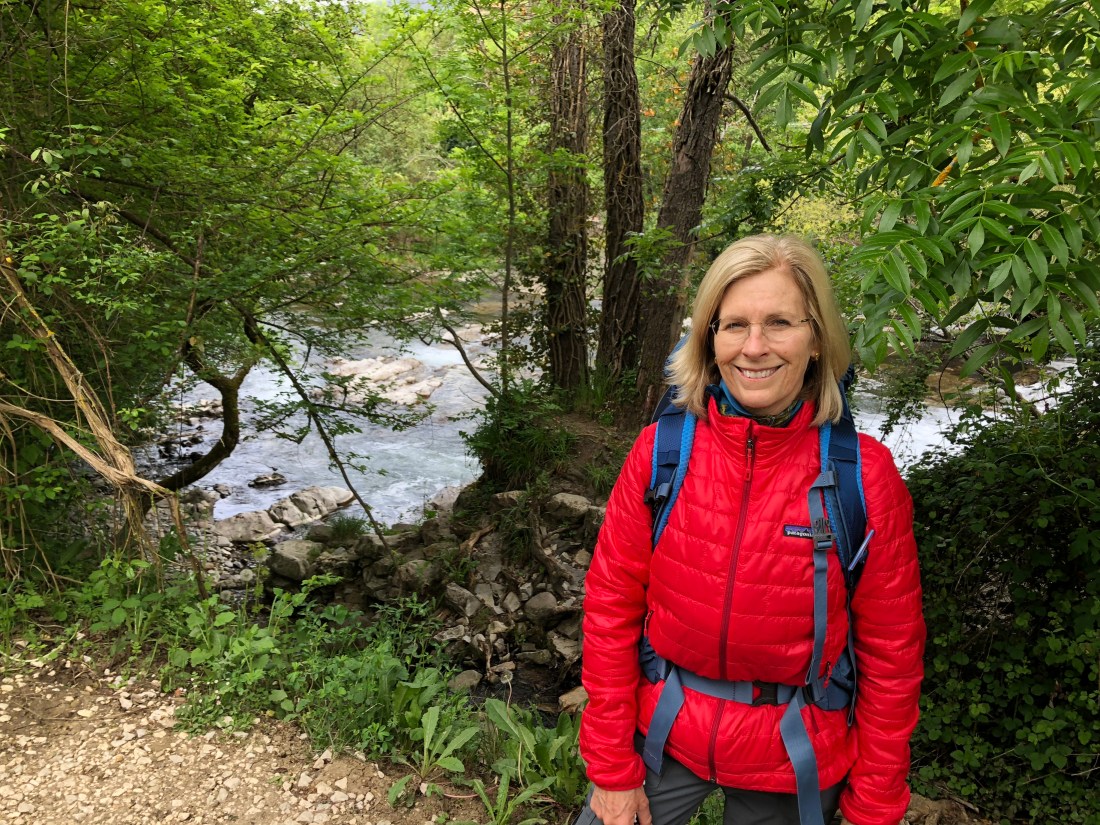
Despite what the guidebook said, the albergue had private rooms.  We got the last one.  Not the Gran Hotel La Perla, but Anne is smiling:IMG_1364

Larrasoana to Pamplona

Much of the walk today was beside the rio Agra, which flows down a valley to Pamplona:IMG_1033

There were several churches along the way.  Most appeared deserted, as do most of the churches we have come across  This is the chapel in Larrasoana, where we started our day:

IMG_1004

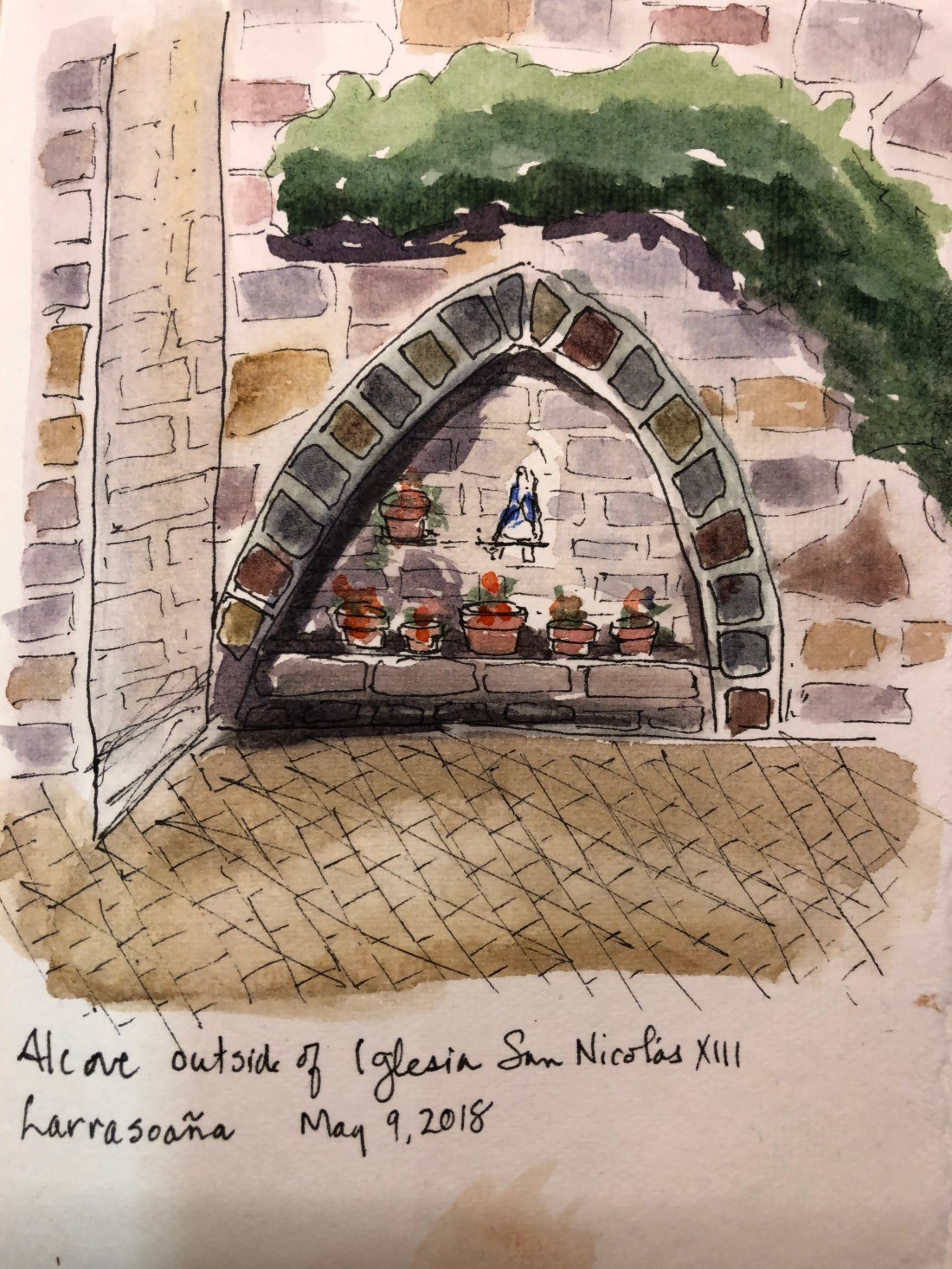
Anne painted a picture of the alcove on the back wall of the church:

IMG_1095

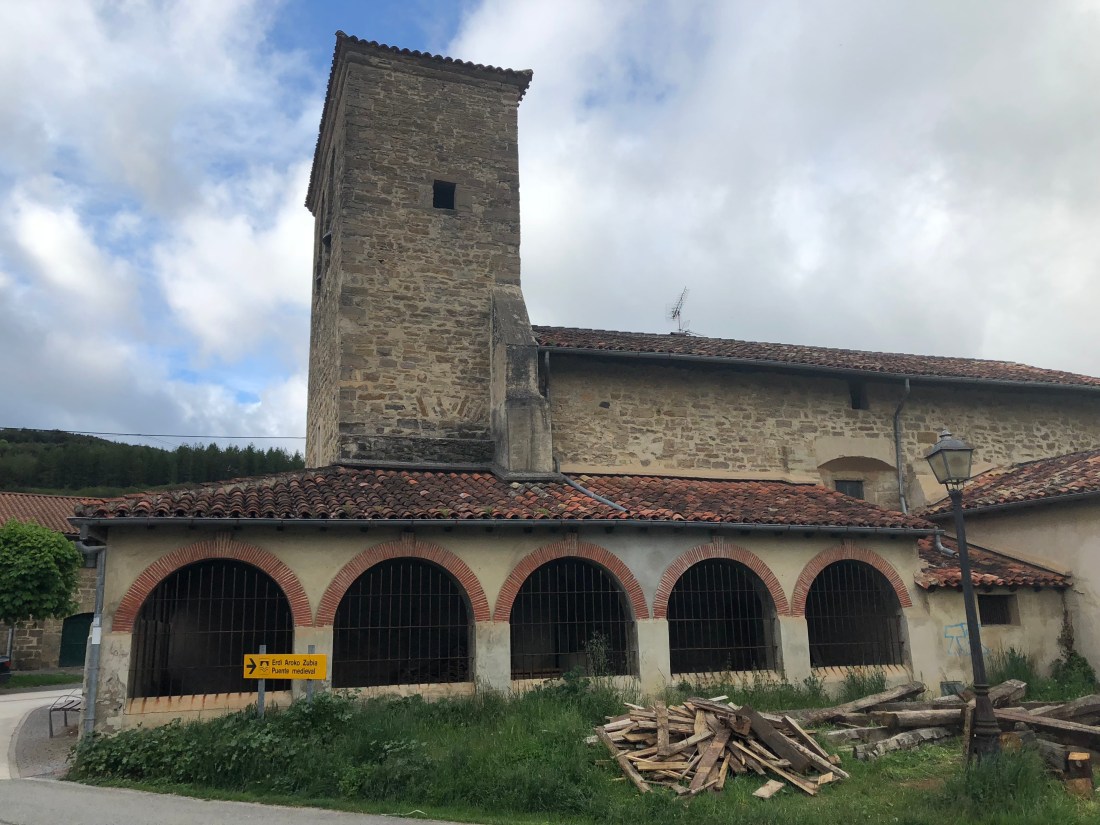
This is a church in Irotz:

IMG_1040

A church that was open is the inglesia de San Esteban in Zabaldika, run by the Sisters of the Sacred Heart. One of the sisters invited us into the chapel:

IMG_1052

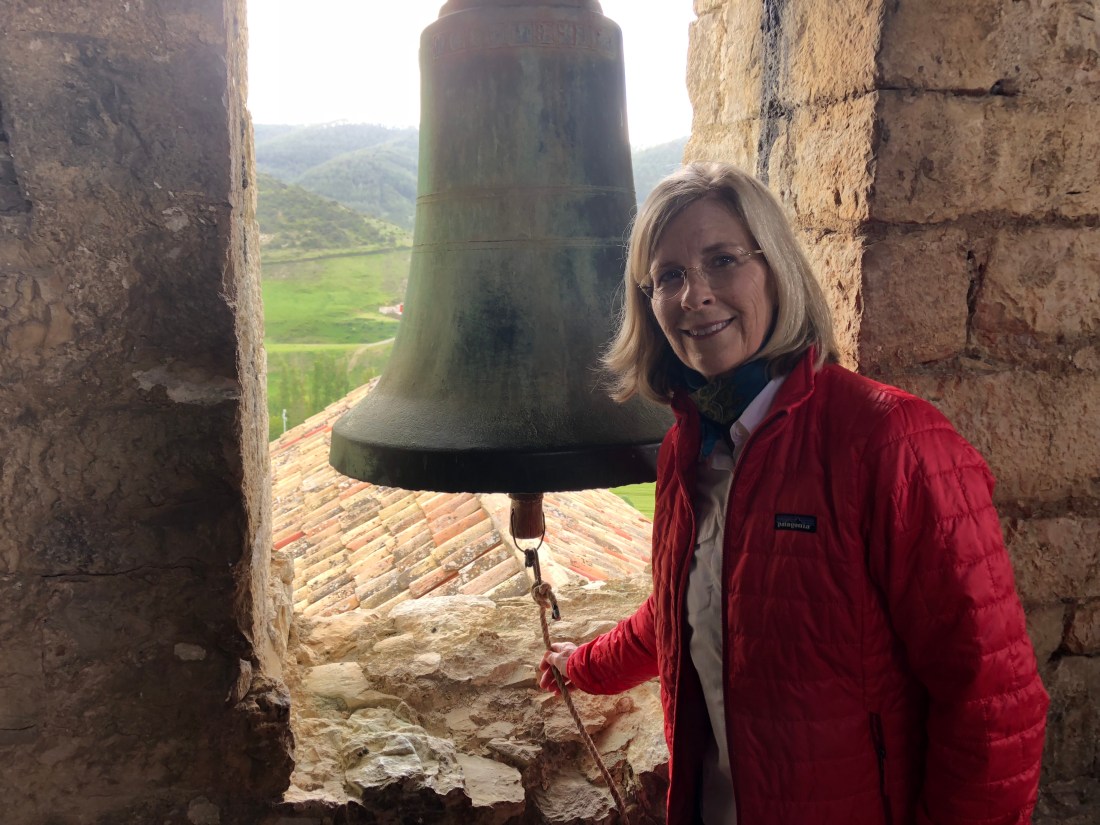
She also invited us to climb the bell tower and ring the bell, but only once.  Here is Carlotta Valdes in the bell tower:

IMG_1047

When we climbed back down the bell tower, the Sister gave us a piece of paper and invited us to write our intentions on it and place it beside a crucifix with hundreds of other slips of paper.

Last night in Larrasoana, we stayed in a pensione, where we learned about a Spanish Camino tradition.  The pensione served dinner, and there were six other guests in addition to Anne and me, including two Spanish brothers and their wives.  We were all about the same age and bonded quickly, despite speaking little of each other’s language.  At dinner, one of the brothers asked me if I was retired.  I told him that I was.  He told me that he too had recently retired, as had his wife and his brother.  In fact, he said, in Spain, “Jubilado, Camino. Jubilado, Camino. Jubilado Camino.”  There are a lot of couples on the Camino that look a lot like Anne and me, and a lot of us apparently are recently retired.  
Not that our reasons for walking are all the same.  The next day we bumped into the brothers and their wives in the square in Pamplona.  It was like greeting long lost friends.  When we told them we were staying in Pamplona for two nights, one of the brothers said that they were planning on staying for two nights further down the road in Estella. He began praising the cathedral there.   At that, his wife rolled her eyes.  She pointed to her husband and made walking motions with her fingers, then drinking motions with her thumbs and open mouth.  Walk then drink, walk then drink.  We all laughed.  Estrella is famous for its fountain near the Camino that provides the pilgrims with free wine. 

It is hard to criticize him though.  The wine here is good, and cheap.

We are spending two nights at a hotel on the square in Pamplona.  Anne has been struggling with a cold and needs a couple of days of rest.  The hiking has been more physically demanding than either of us had guessed.  

IMG_1060

Burguete to Larrasoana

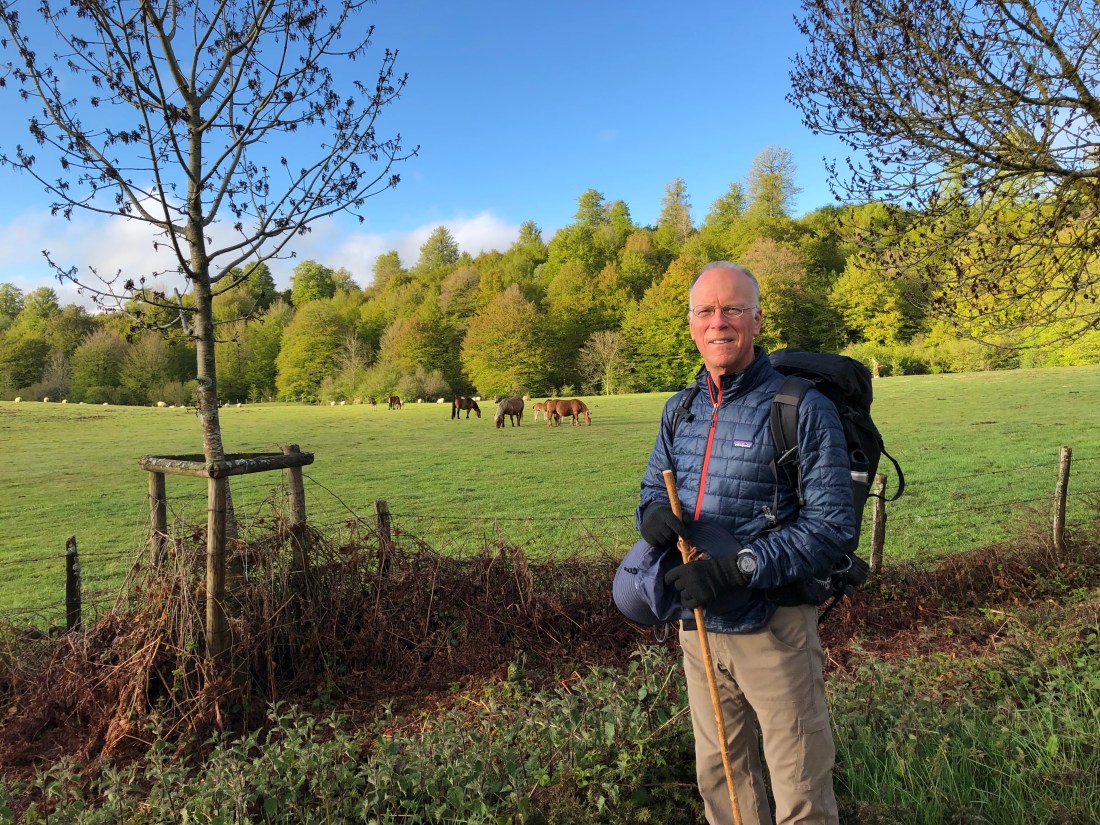
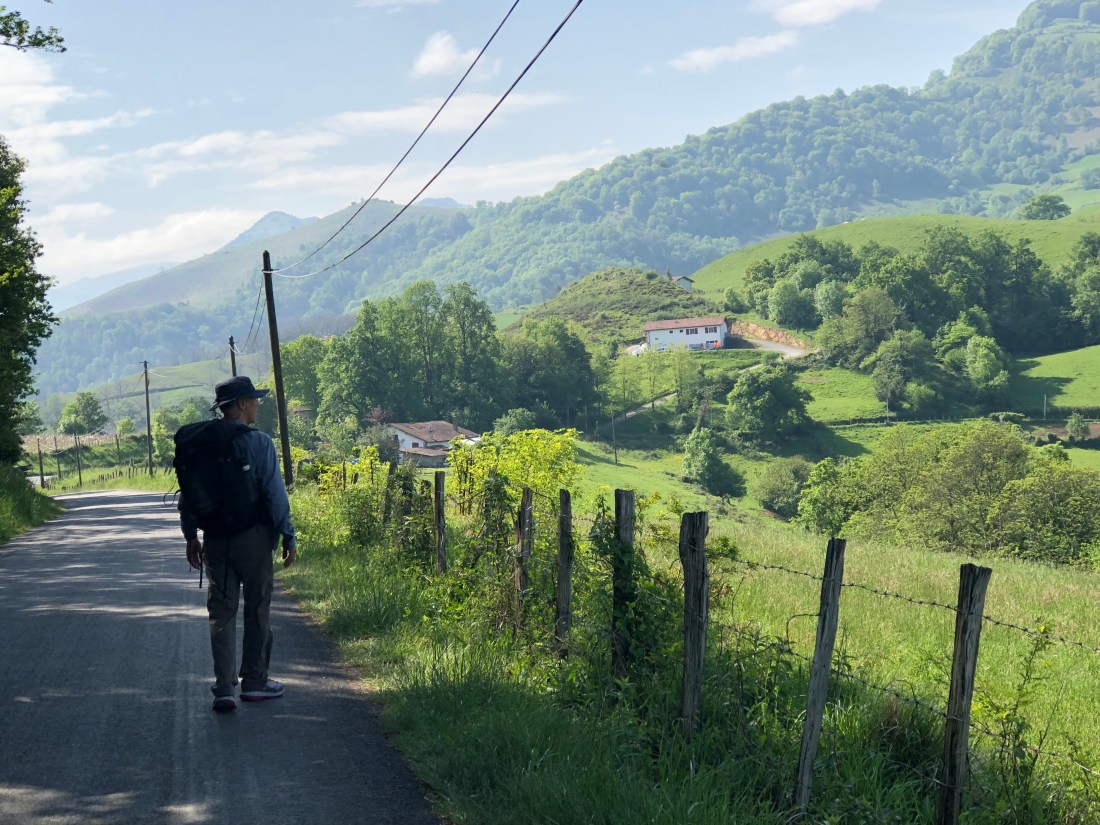
It rained most of the night but was clear and chilly when we left Burguete, walking between pastures outside the village:IMG_0984

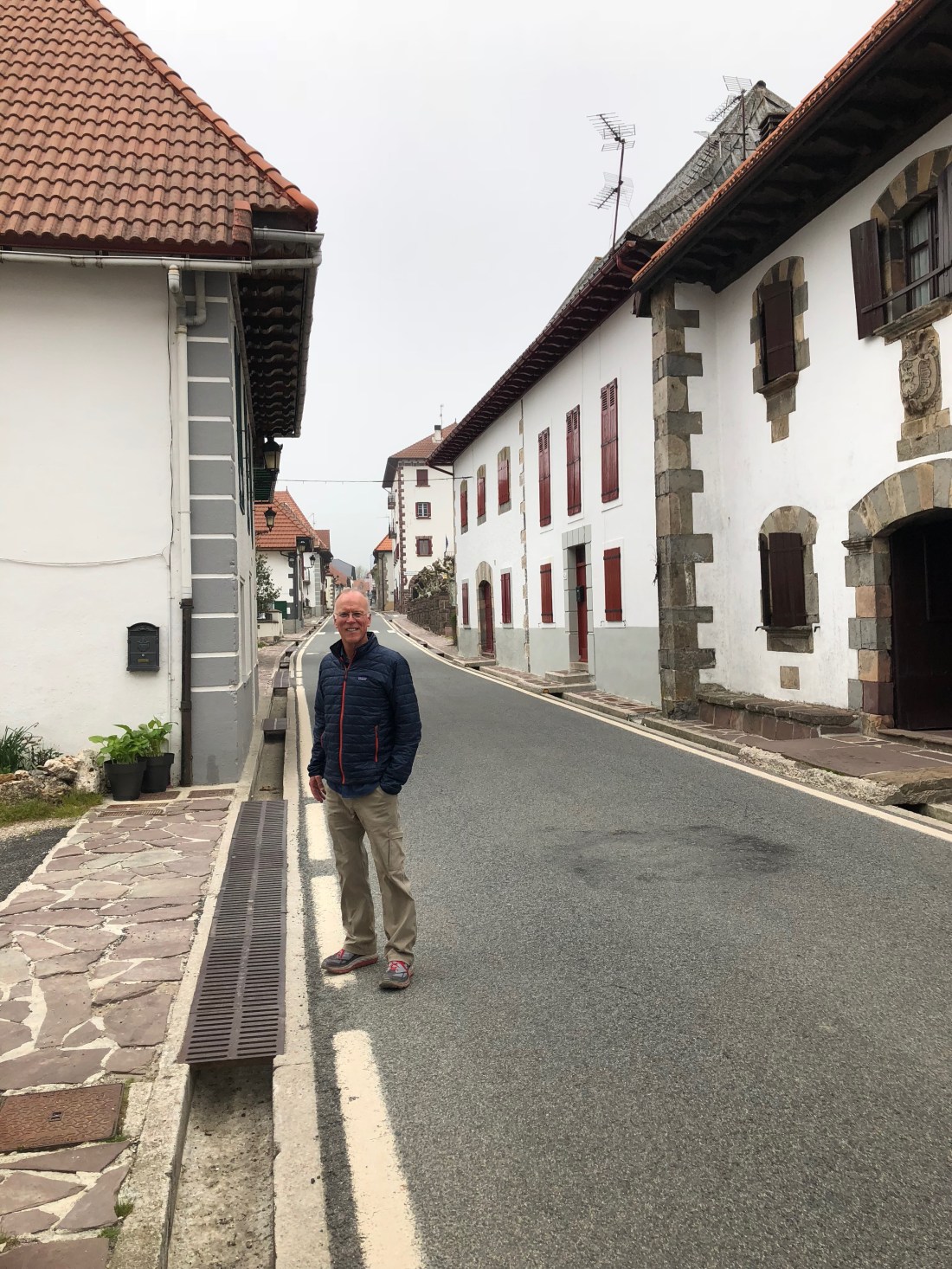
We walked through Basque villages where we saw very few people:

IMG_0988

IMG_0993

This village was in a deep valley, and there was a steep hike out of the valley:

IMG_0995 2

Much of the walking today was in forests.  We could have been in a national park in the U.S., except for one thing: the trails.  Switchbacks and water bars are innovations that have not made it to this section of the Camino.  If the Camino leads up a ridge, the trail goes straight up the ridge:

IMG_1045

And when the way is down, the trail goes straight down.  Because there are no water bars, the steep trails are often deeply rutted and rocky.  This kind of hiking puts a lot of pressure on the knees.  Also it would be slippery if the ground was wet. 

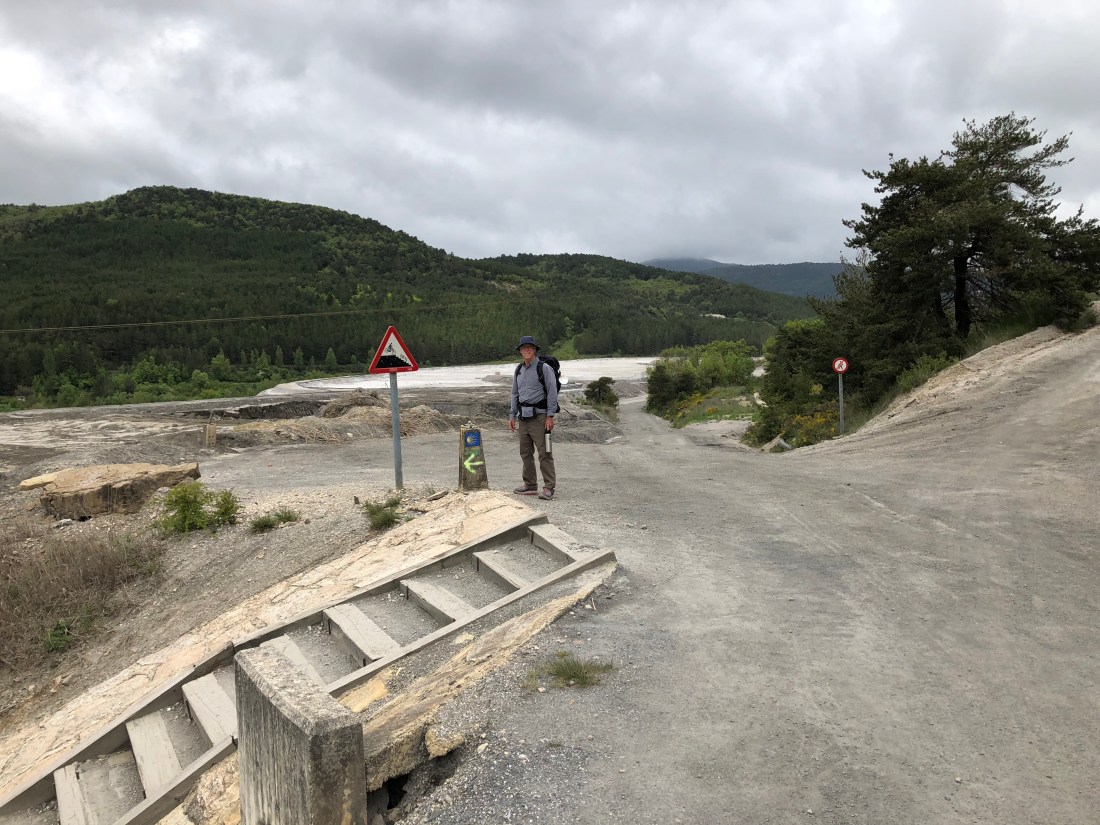
Not all the hiking today was pastoral.  We came upon this scene at a highway crossing:

IMG_0997

And we passed behind a cement plant that had several settling ponds:

IMG_0999

Walking along, we fell in with an Australian and his English friend.  The Australian had a collapsed artery in his foot and had to stop every 15 minutes to shake it to get the blood back to his toes.  During a stop he asked if I had heard about an American girl that had been murdered on the Camino several years ago.  I had not.  He told me a young woman traveling alone had disappeared along the Camino.  Shortly after she vanished, a local farmer tried to exchange American dollars at his bank.  He was questioned, confessed, and lead the police to a shallow grave on his farm where he had buried the girl’s body.  The Australian, who had hiked throughout the world, said that the girl had violated one of his cardinal rules for travel, which is to never accept an invitation to someone’s home.  

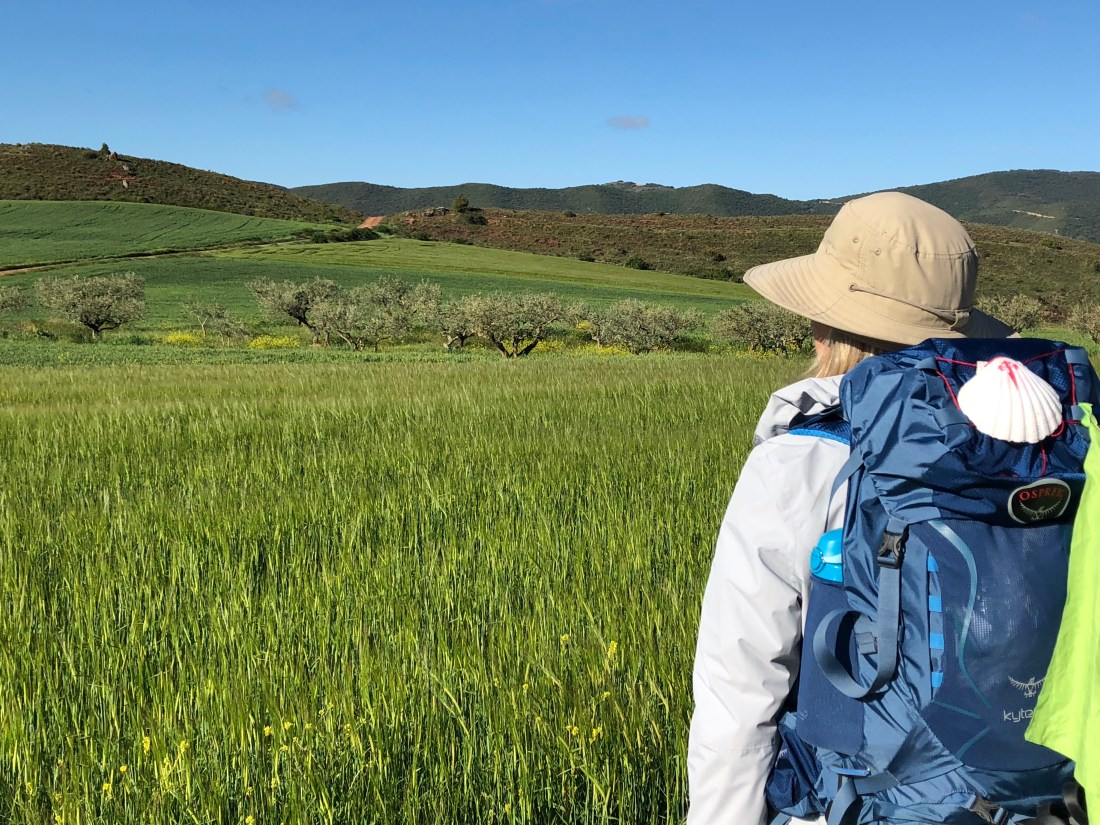
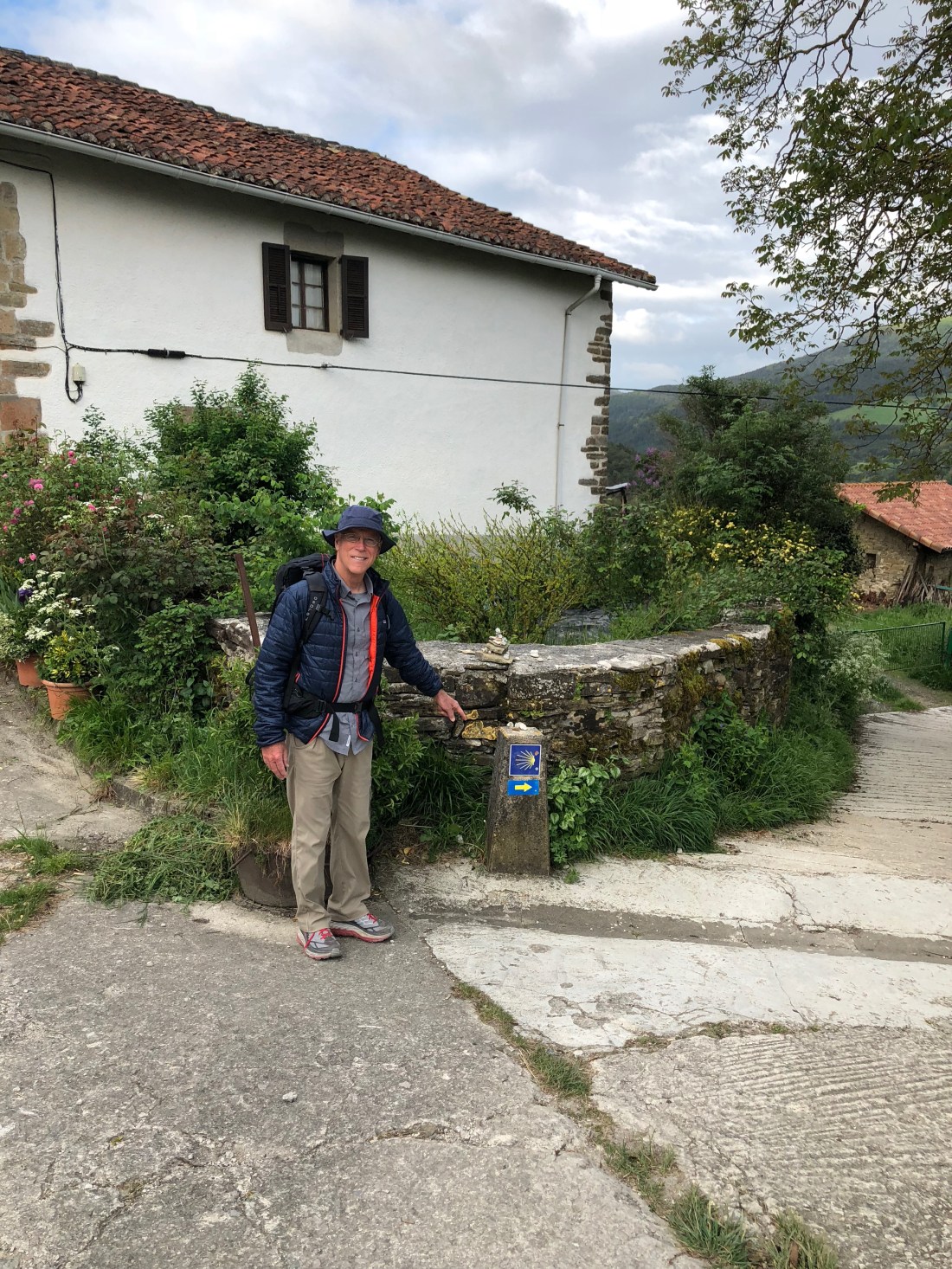
I later told Anne the Australian’s story, and she said that he was wrong. Anne had read about the murder and the real story was even more disturbing.  The Camino is marked with signposts and scallop shells.  (See the page “The History of the Camino” on this site for an explanation of the scallop shell as a symbol of the Camino.) Here is a marker:

IMG_1020

The murderous farmer had lured his victim onto his farm by leading her off the Camino with fake markers.  I am sure that there is a cardinal rule here that rivals the Australian’s, but I’m not exactly sure what it is, and I’m pretty sure that it would be harder to apply. 

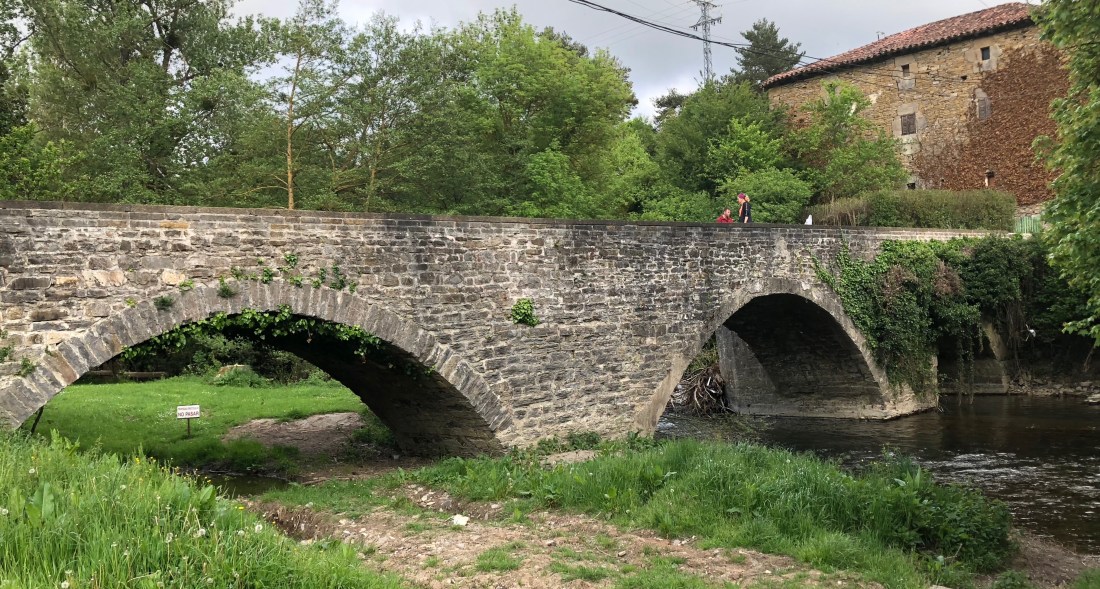
After a long day of hiking, we spent the night at a pensione in Larrasona.  Here is the bridge to to Larrasona, the Puente de Los Bandidos:IMG_1006

Tomorrow there is a short walk to Pamplona and a return to city life. 

Orrison to Burguete

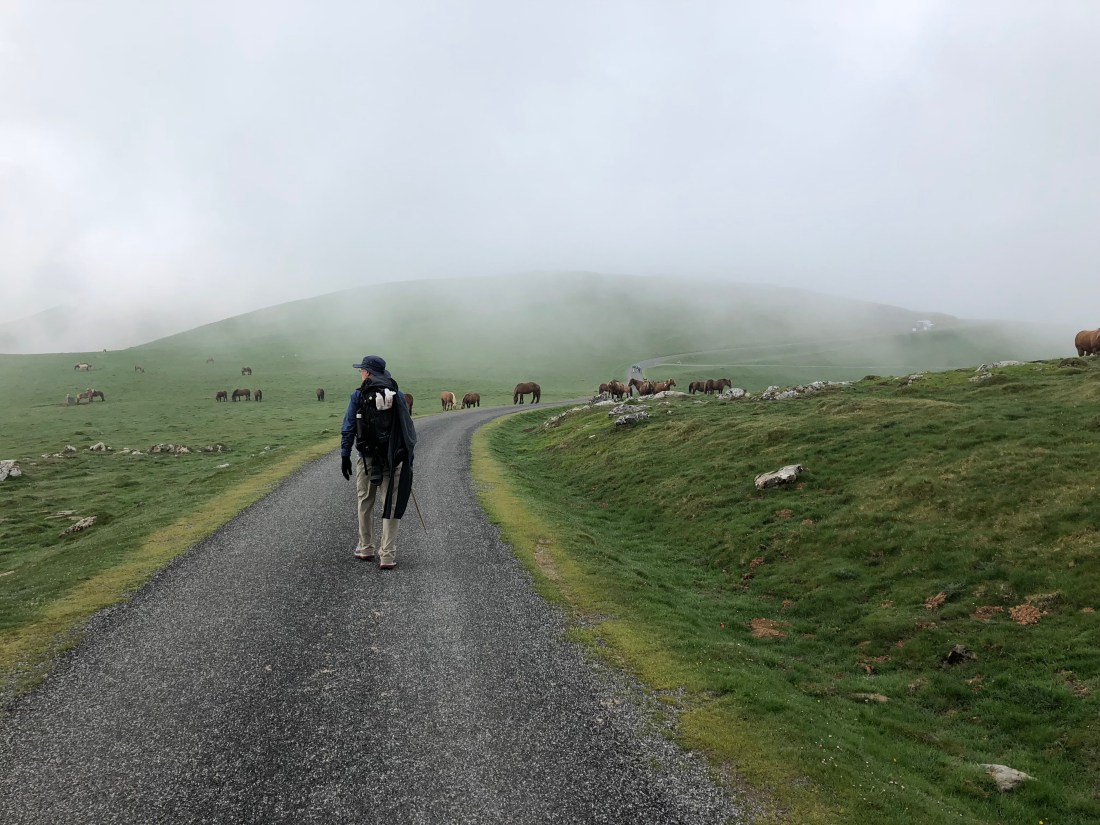
The walk today started under overcast skies.  The road—steep at times—went up into the clouds.  It led up to open pastures with herds of cattle and horses wandering on the road:

IMG_0952

The night before, the albergue had a group dinner.  There were about 60 people at three long tables, all ages and nationalities.  Across the table from me is Massimo—more about Massimo later:

IMG_0948

At the end of dinner, as was the tradition, people stood in turn, introduced themselves, and explained why they were walking the Camino.  It was striking that none of the 60 people there mentioned faith as a reason for walking the Camino. Some made oblique references to faith—they were walking the Camino for a friend or relative. But no one directly mentioned faith.

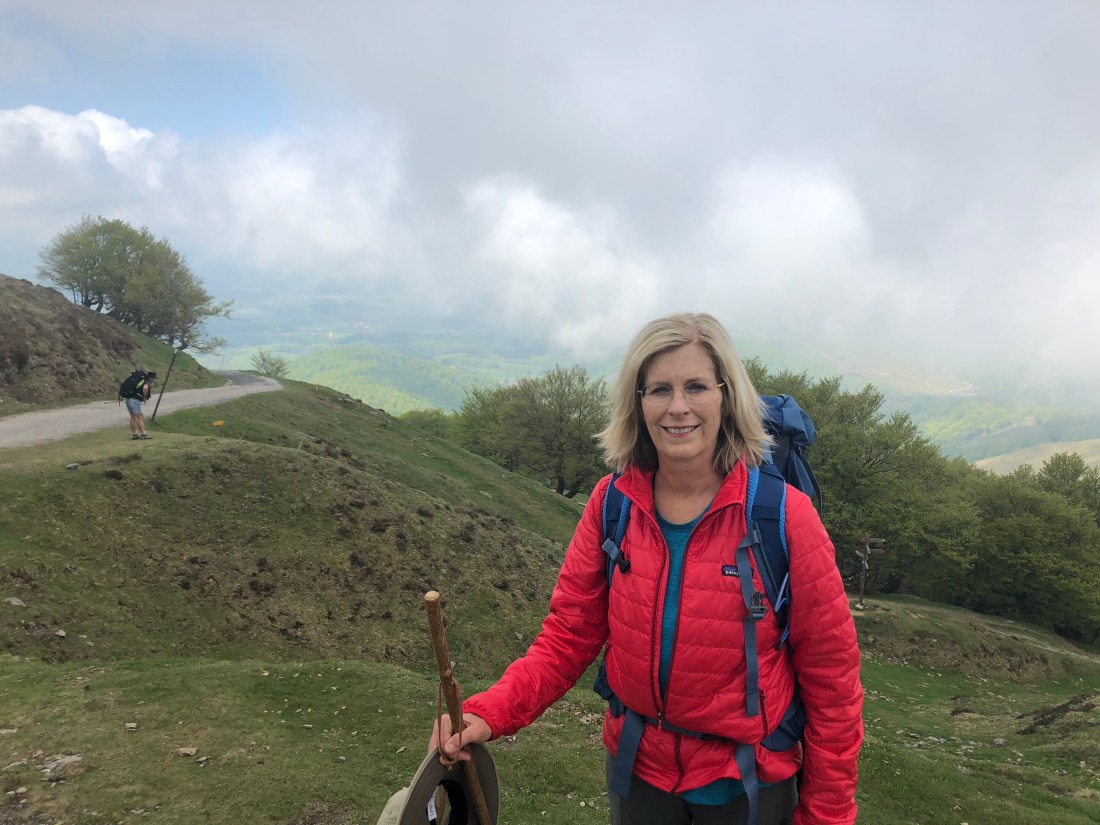
Not that faith is gone from the Camino. First, there are the shells, an ancient symbol of the Camino because of their use in an early baptism important in the Camino’s history.  (See the “History of St. James” page on this website.)  Not everyone has a shell; but many do.  And yesterday, while Anne and I were walking through the fog at the top of the Pyrenees, we caught up with a young woman, wearing black tights, hiking boots, and a black lycra jacket.  Out of step with her modern dress, in her right hand, she held a brown wooden rosary.  As she walked along, she recited the rosary.  The Church has many portals to faith, most importantly the sacraments.  But none are nearly as powerful as being in the presence of one who strongly believes.

After a long climb to the top of the mountain, the trail dropped sharply away from the road:

IMG_0963

IMG_0964

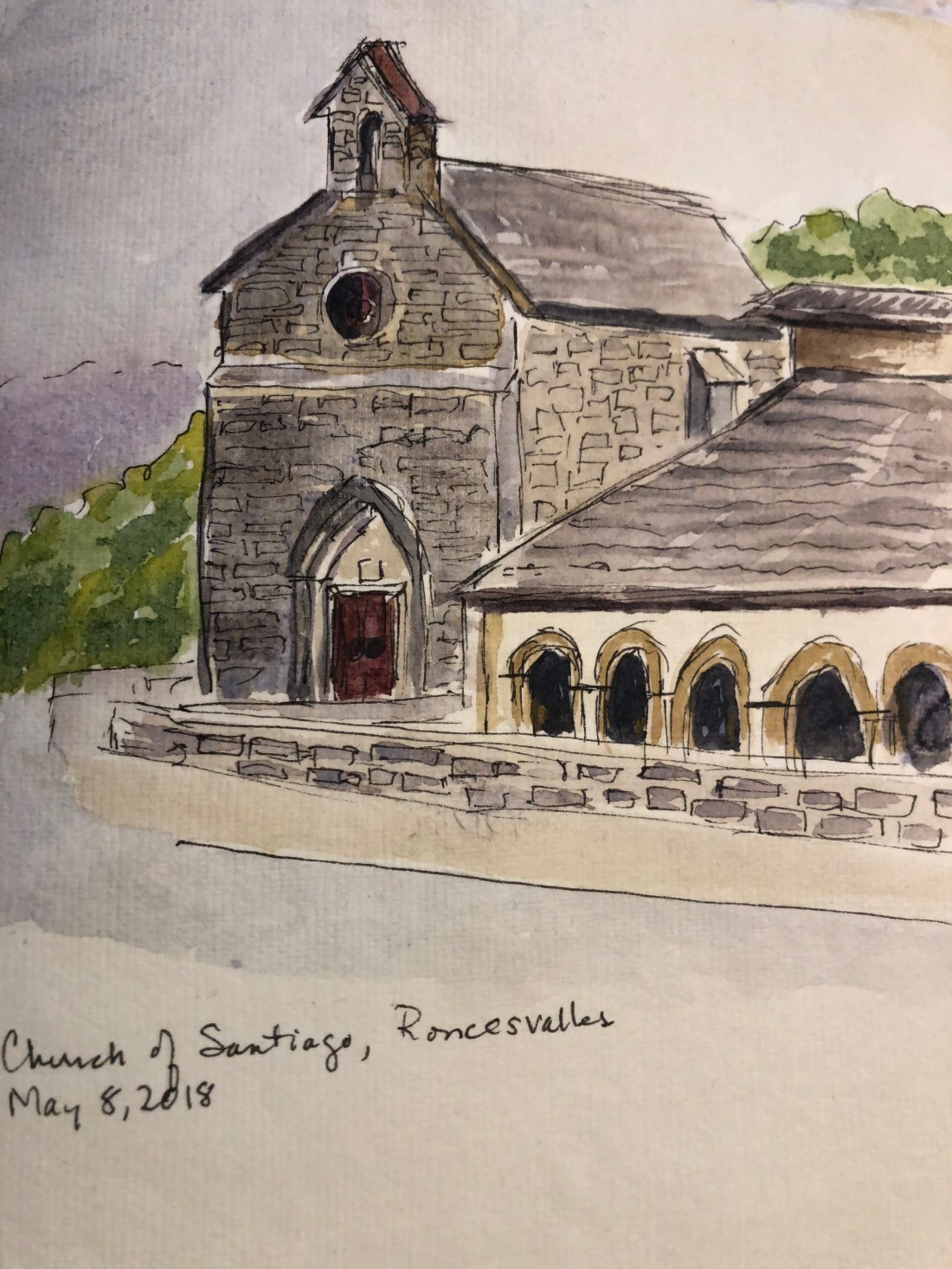
At the bottom of the trail was the monastery at Roncesvalles. Anne painted a picture of the monastery:IMG_1016

There is an albergue in the monastery, but like almost all albergues, people sleep in bunkbeds together in large rooms.  Anne and I have decided to stay in hotels and pensiones, so we walked three kilometers down the road to Burguete, where we stayed in a hotel with a bar that Ernest Hemingway had frequented for some of his drinking:

IMG_0977

It has turned cold and rainy.  We are hoping that tomorrow brings better weather.

St. Jean Pied de Port to Orisson

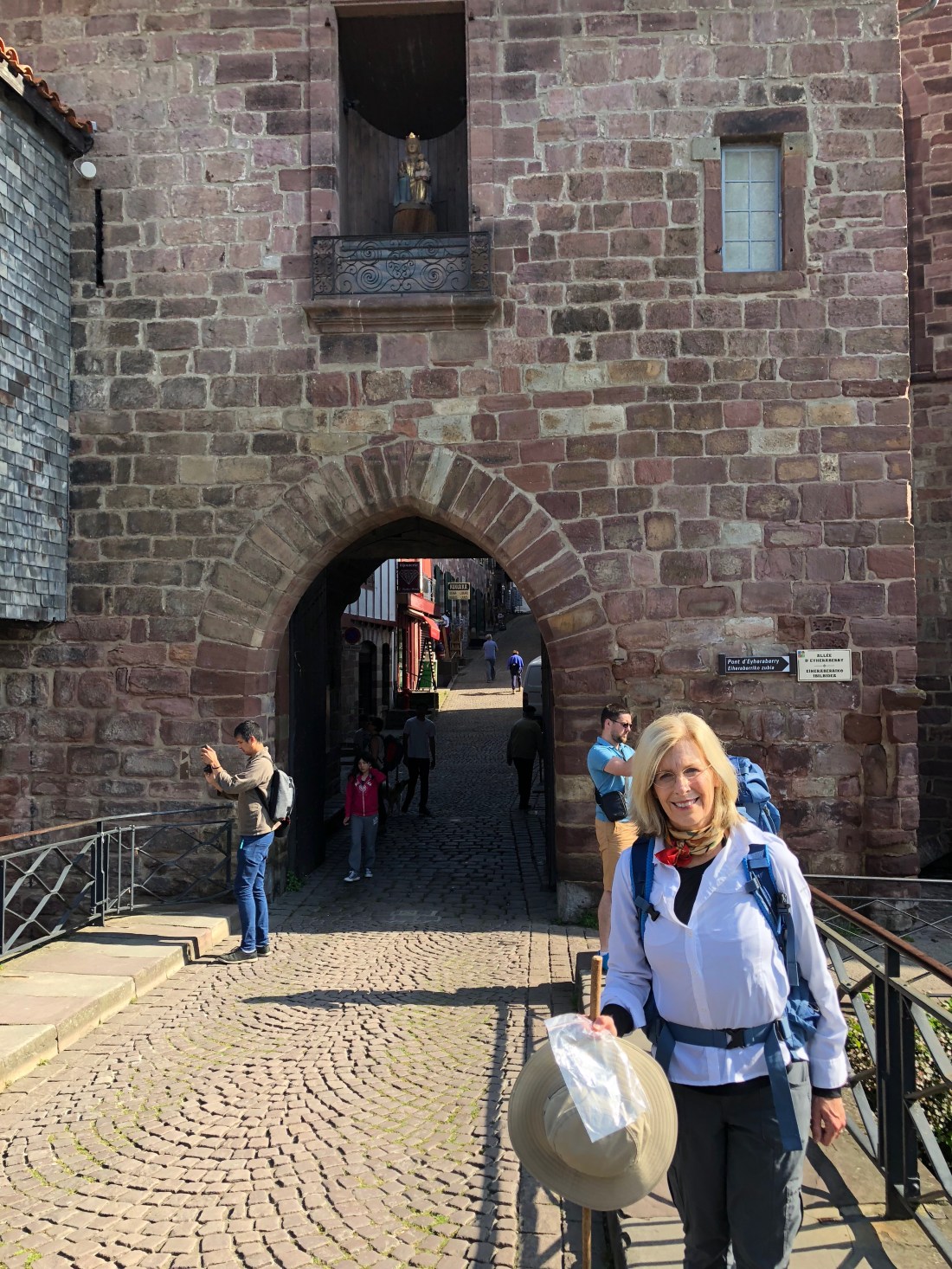
Yesterday was a day of plane and bus travel, always boring.  But we are excited to be on our way.  We flew from Madrid over the Pyrenees to Biarritz, in France. We then took a bus from Biarritz to Bayonne, and another bus from Bayonne to St. Jean Pied de Port at the foot of the French Pyrenees. Upon arriving in St. Jean, we began walking over the Pyrenees back into Spain. 

St. Jean is the traditional starting point for the French Way:

IMG_0920

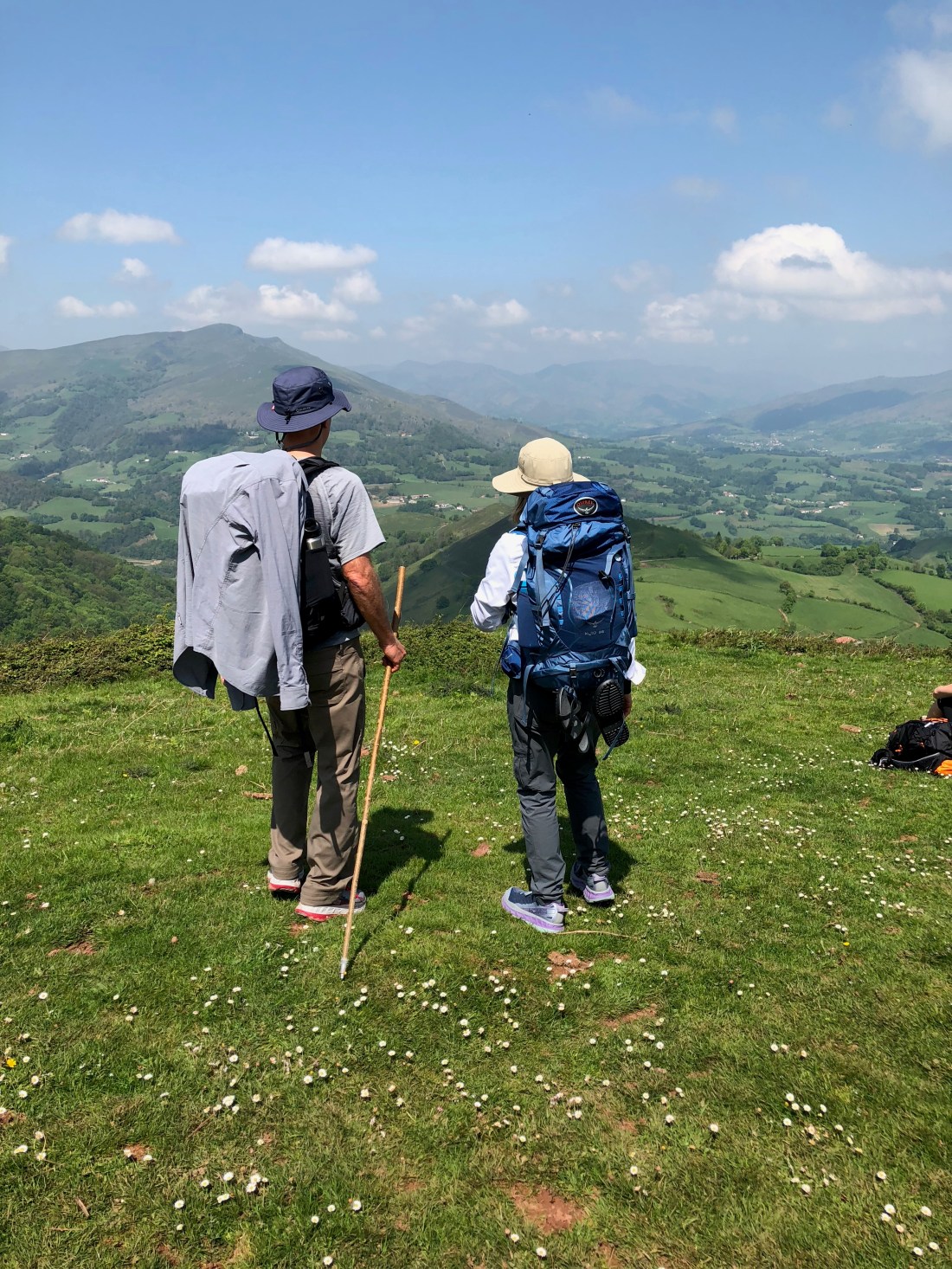
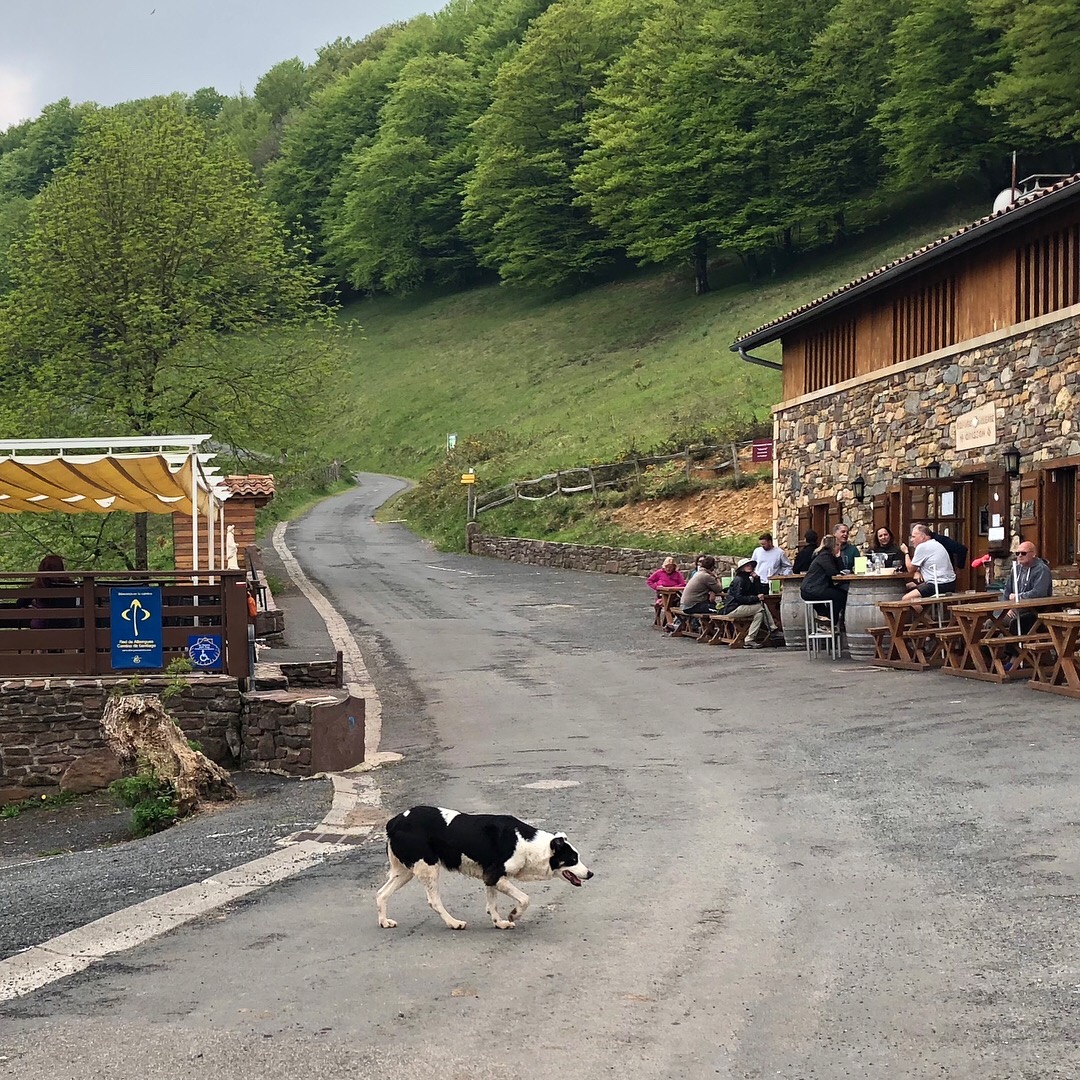
There are two Camino routes from St. Jean over the Pyrenees, and we took the more scenic and steeper “Route Napoleon,” taken by the French when invading Spain during the Peninsular War. It’s a very steep almost unrelenting slog uphill to Orisson, where we are now, that’s much relieved by the scenery:

IMG_0935

 IMG_0925

Orisson, in France, is about halfway up the climb over the Pyrenees.  There is an albergue in Orisson where we will spend the night: IMG_0982 2

There are many men and women in their twenties and thirties from around the world traveling the Camino alone or in small groups.  At the albergue, we talked with a young woman from Taiwan whom we had first met at the bus station in Bayonne.  She has been traveling alone in Europe for the past eight months. She hopes to finish up the Camino by mid June and return to her part-time time job in eastern Europe and more travel.  She said that her mother is unhappy that she had left her husband behind in Taiwan to travel alone.  She said that her mother had urged her mother in law to forbid her from leaving home.  She calls her mother weekly, unless her mother calls or texts excessively, and then she cuts the calls to once every two weeks.  She talked about her freedom and the value she places on it. But it seems like the freedom of an untethered balloon drifting off into the sky.

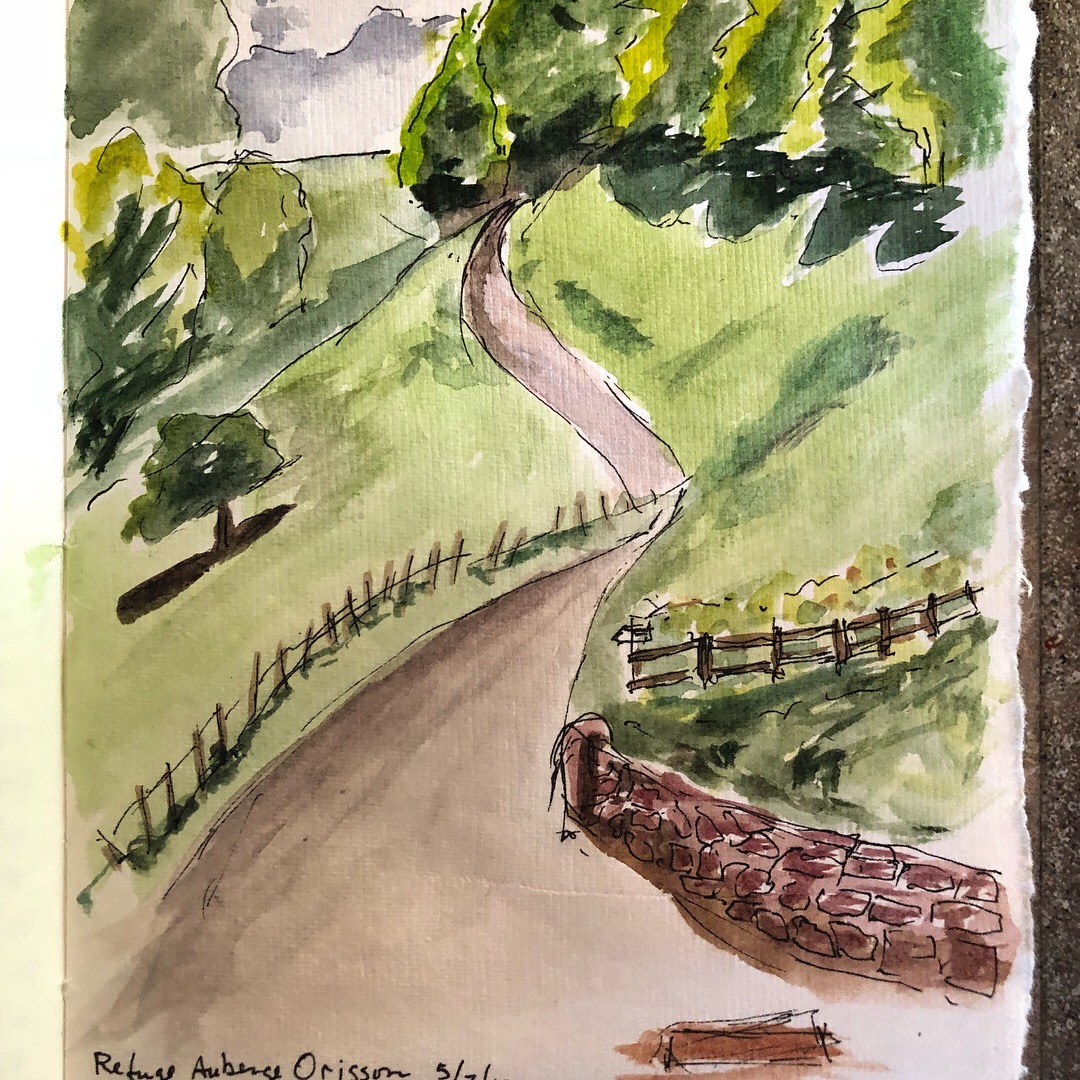
Anne’s has painted the road leading uphill from the albergue, the road that we will take tomorrow morning:

IMG_0983 2

Preparation and First Steps

Bienvenido!

We are about to leave Madrid after ten days of Spanish classes, walking, eating and museum going.

Leaving Madrid for St. Jean Pied Port and the start of the Camino, Anne and I are noticing, with unusual focus, our small aches and pains, especially in our feet and legs.  The smallest pain is thoroughly probed and iced down. Several times, we have packed our backpacks, taken everything out, then repacked them, just to make sure that nothing has been left out.

Anne and I have taken different paths to preparing for the Camino.  Anne has been walking several miles a day.  Her later walks were with a lightly loaded back pack, to get the feel of it on her shoulders.   She has become an expert in the internet’s vast literature on the Camino.  I have prepared by mountain biking and reading Spanish history.   I have been giving Anne lectures on the paintings in the Prado, a picture gallery of the Spanish royal family (pero las lecturas son muy cortas porque yo comprendo muy poco). The moment of truth is fast arriving.