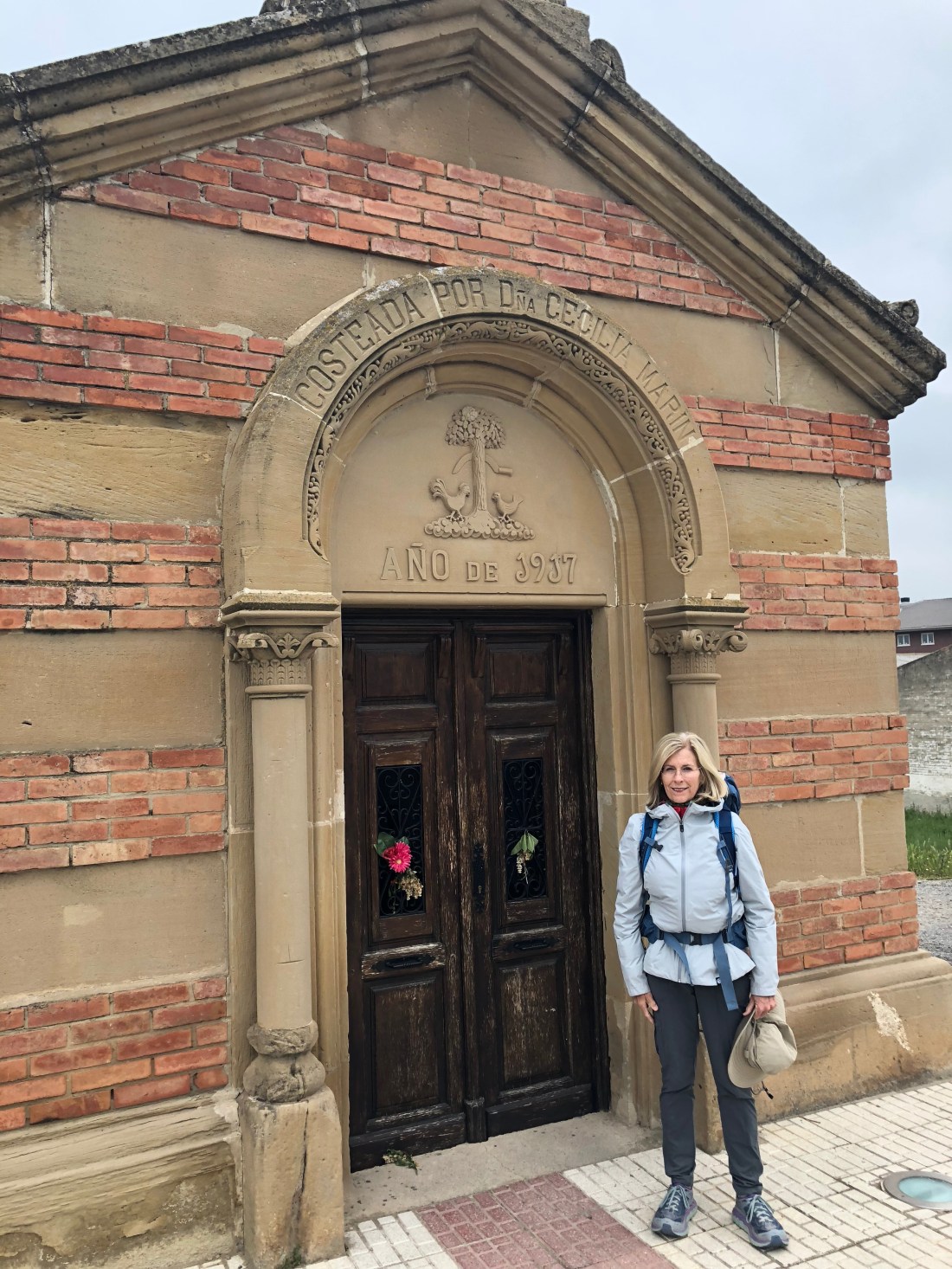
Castrojerez to Boadilla del Camino

We’re back on the Camino.

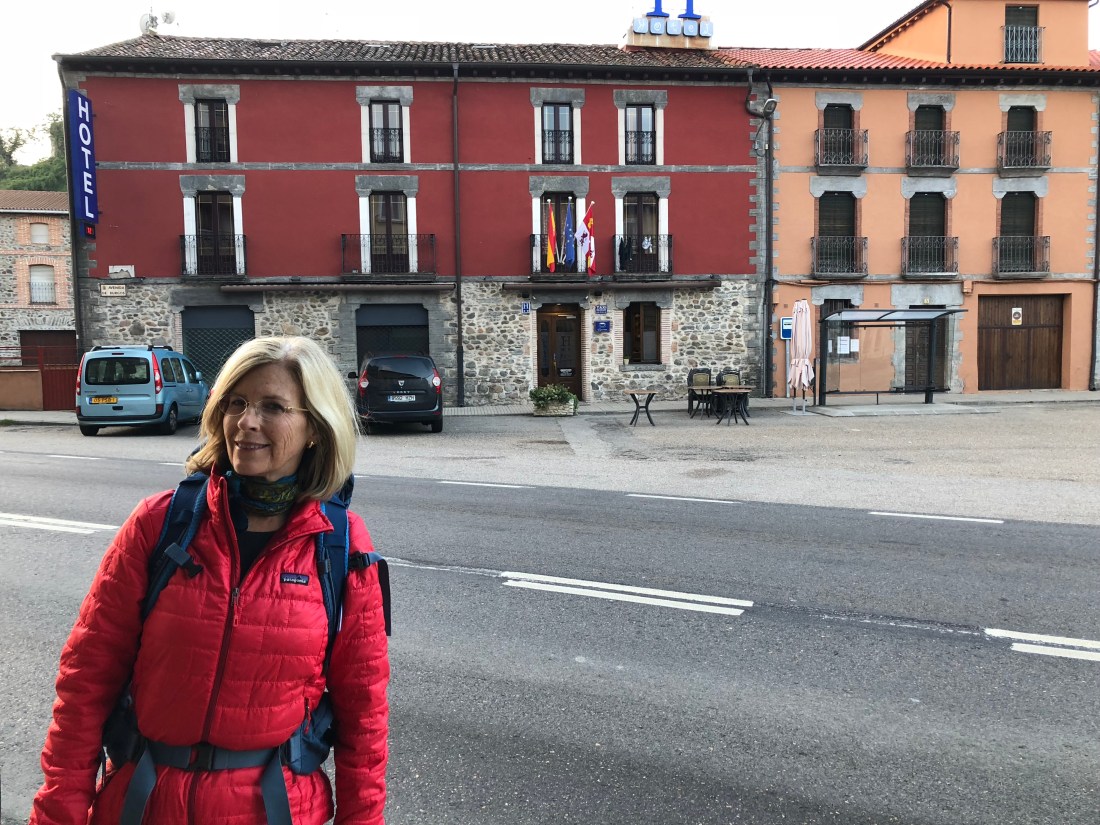
It was hard leaving the hotel in Castojerez.IMG_2169
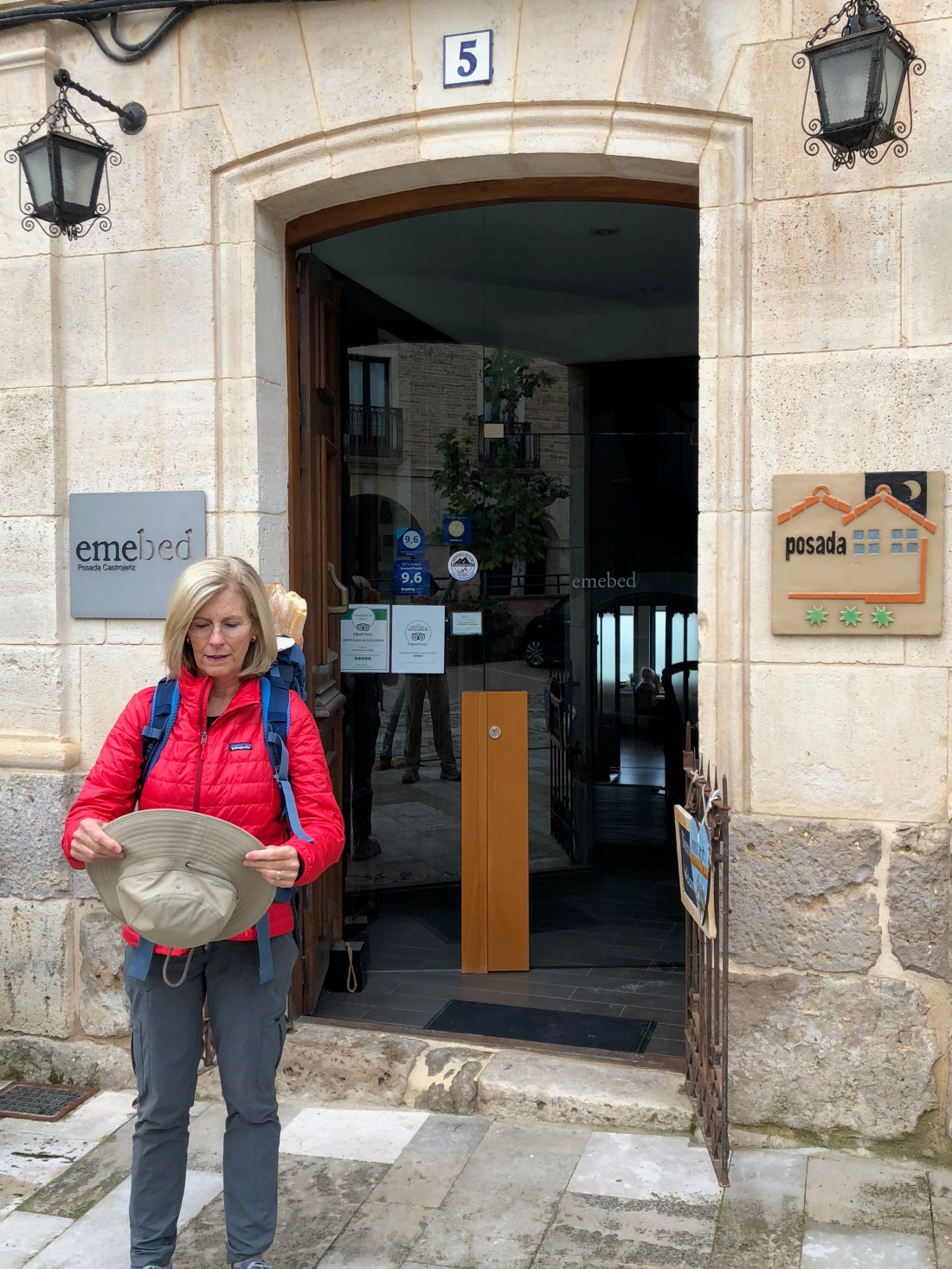
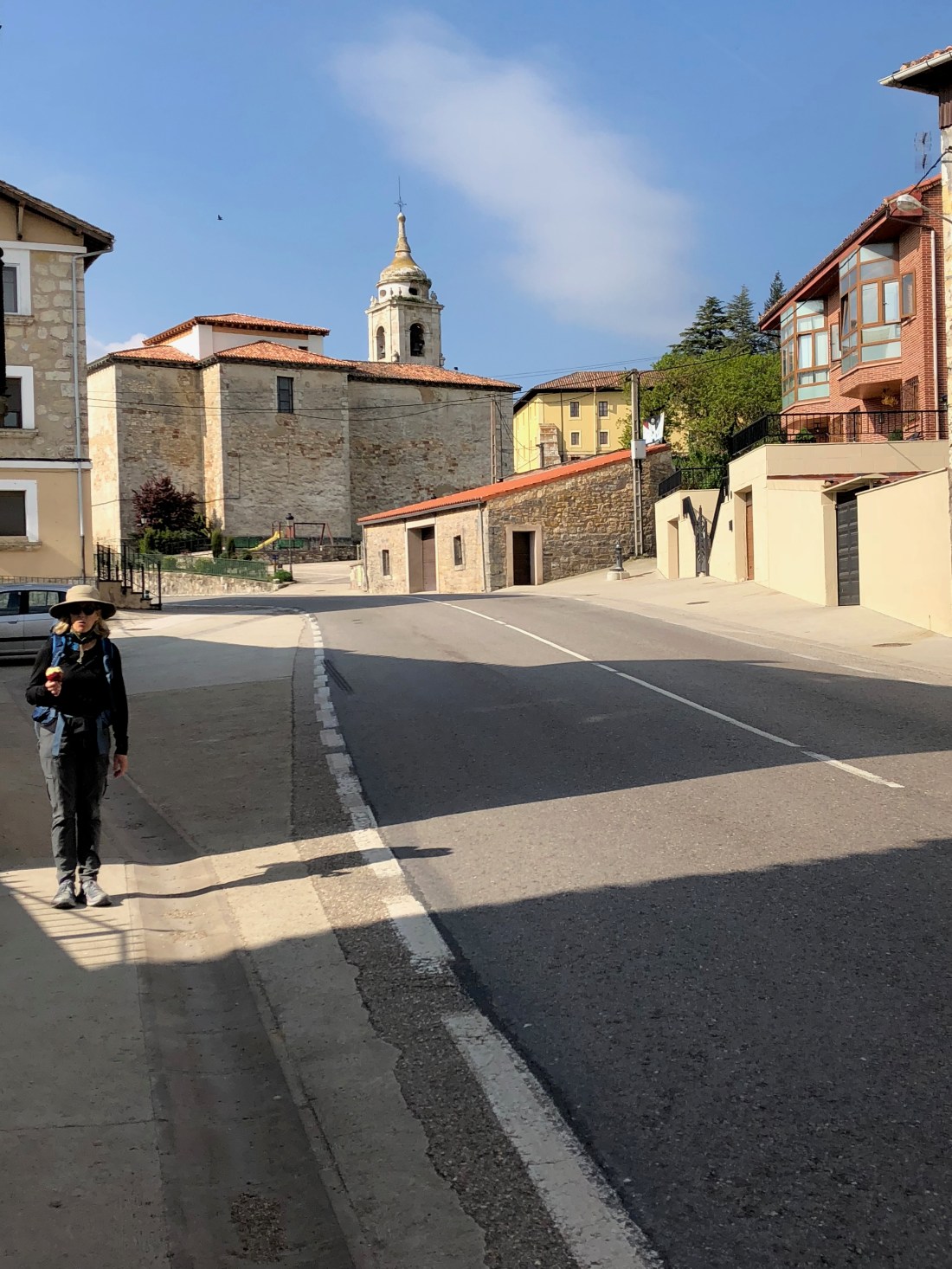
The people running the hotel were very  kind. 

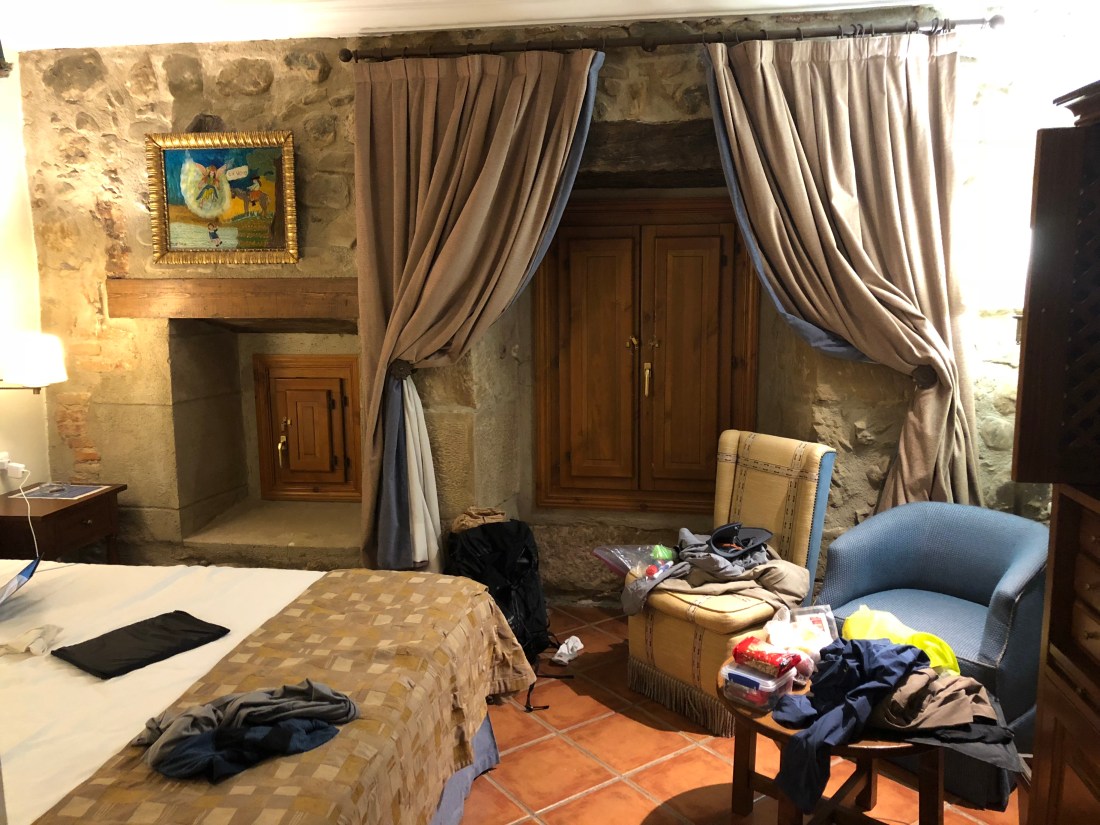
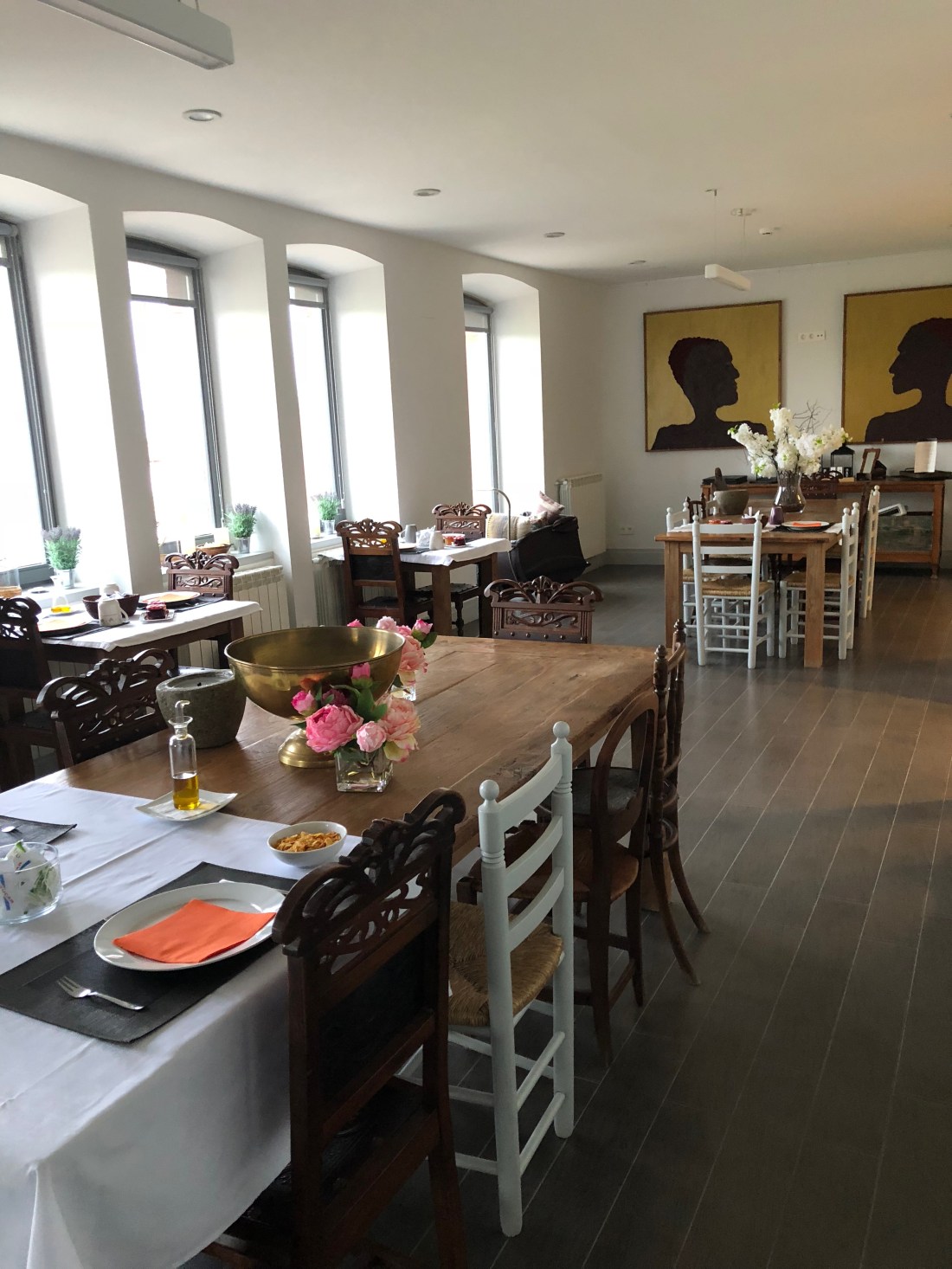
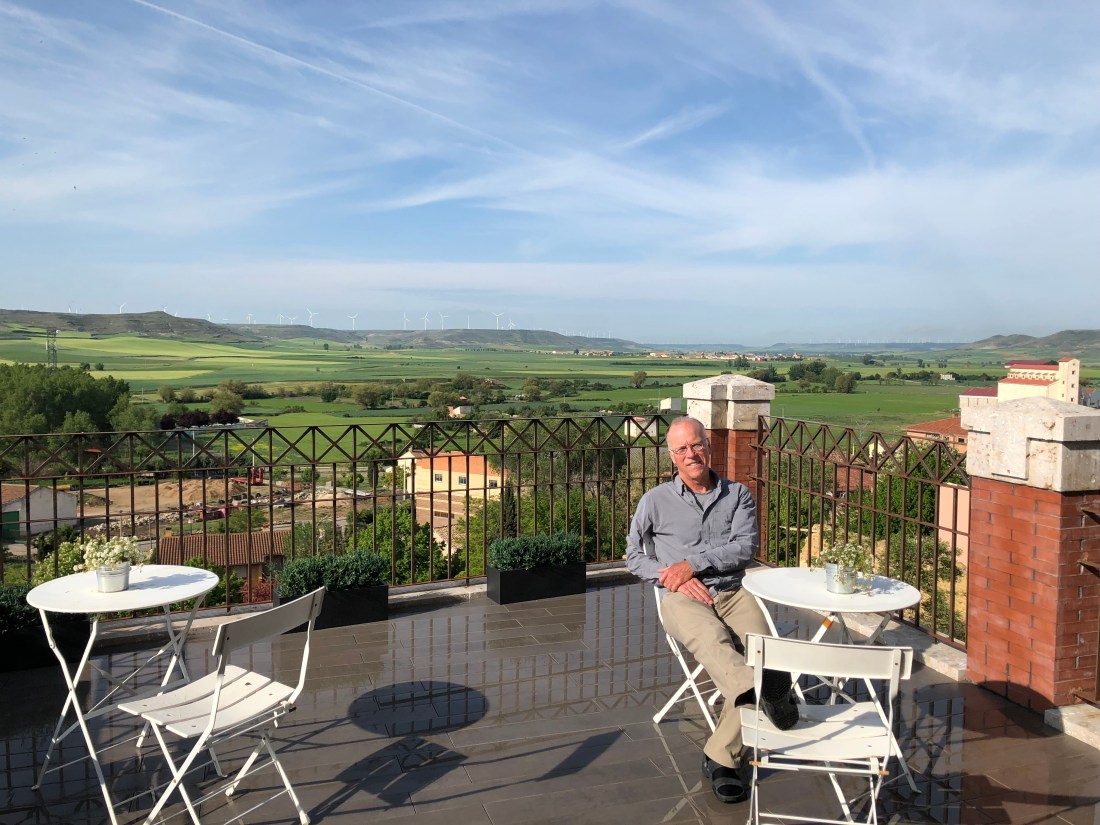
And the hotel was charming.IMG_2166When we left there were hugs and kisses. We promised to return.  
Starting out the walk today, my leg is much better.  The swelling and pain are gone.  But my leg is stiff from the middle of my shin down over the top of my foot.  I can feel it pull with each step.

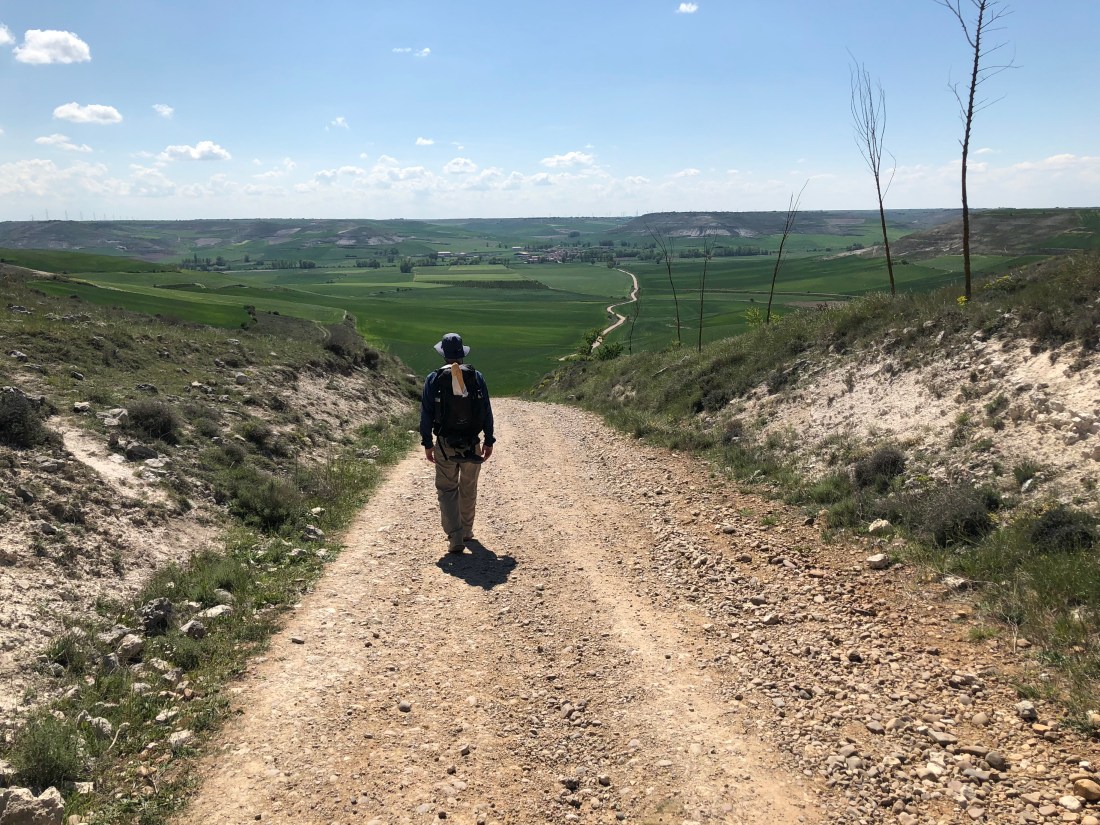
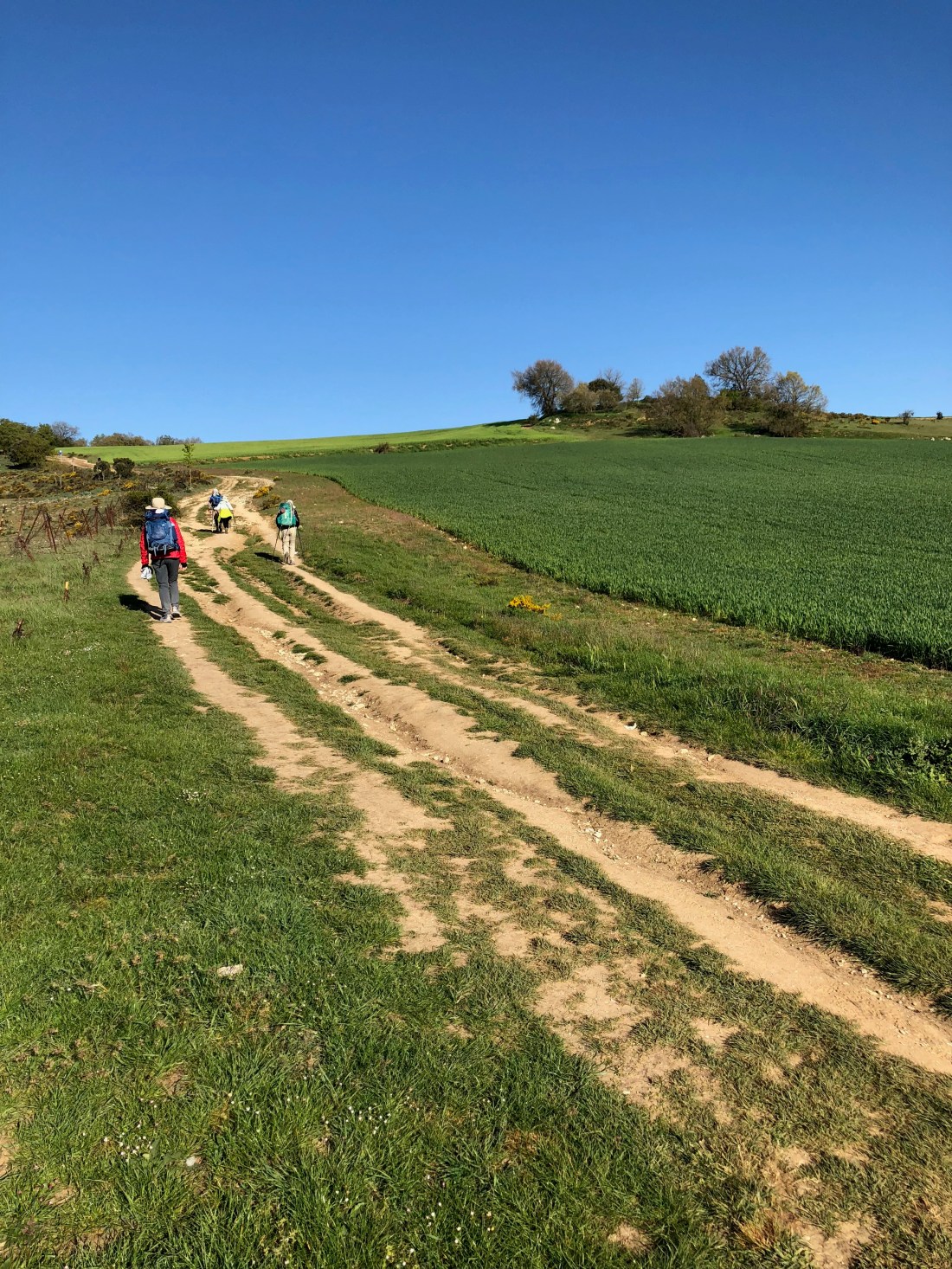
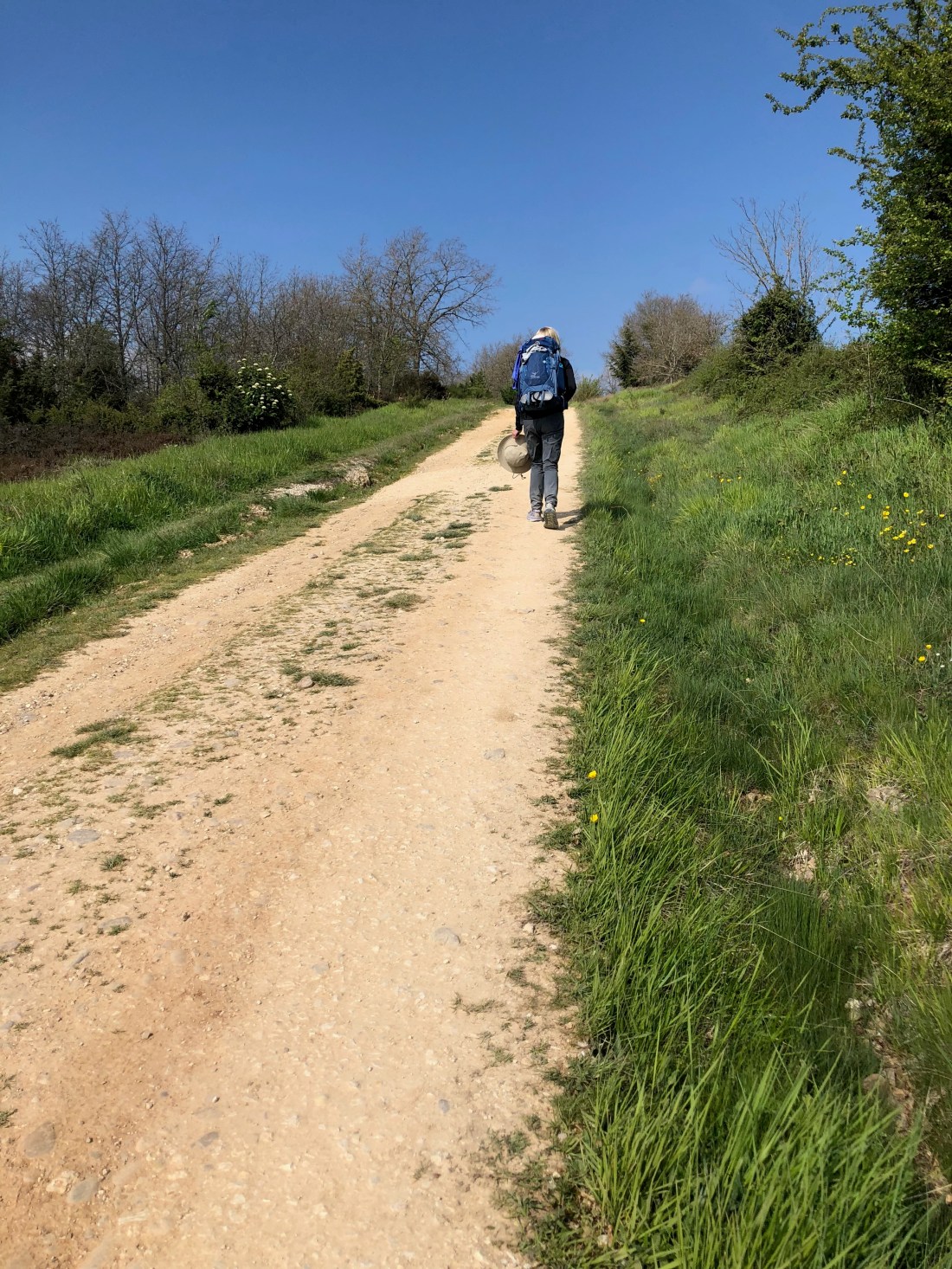
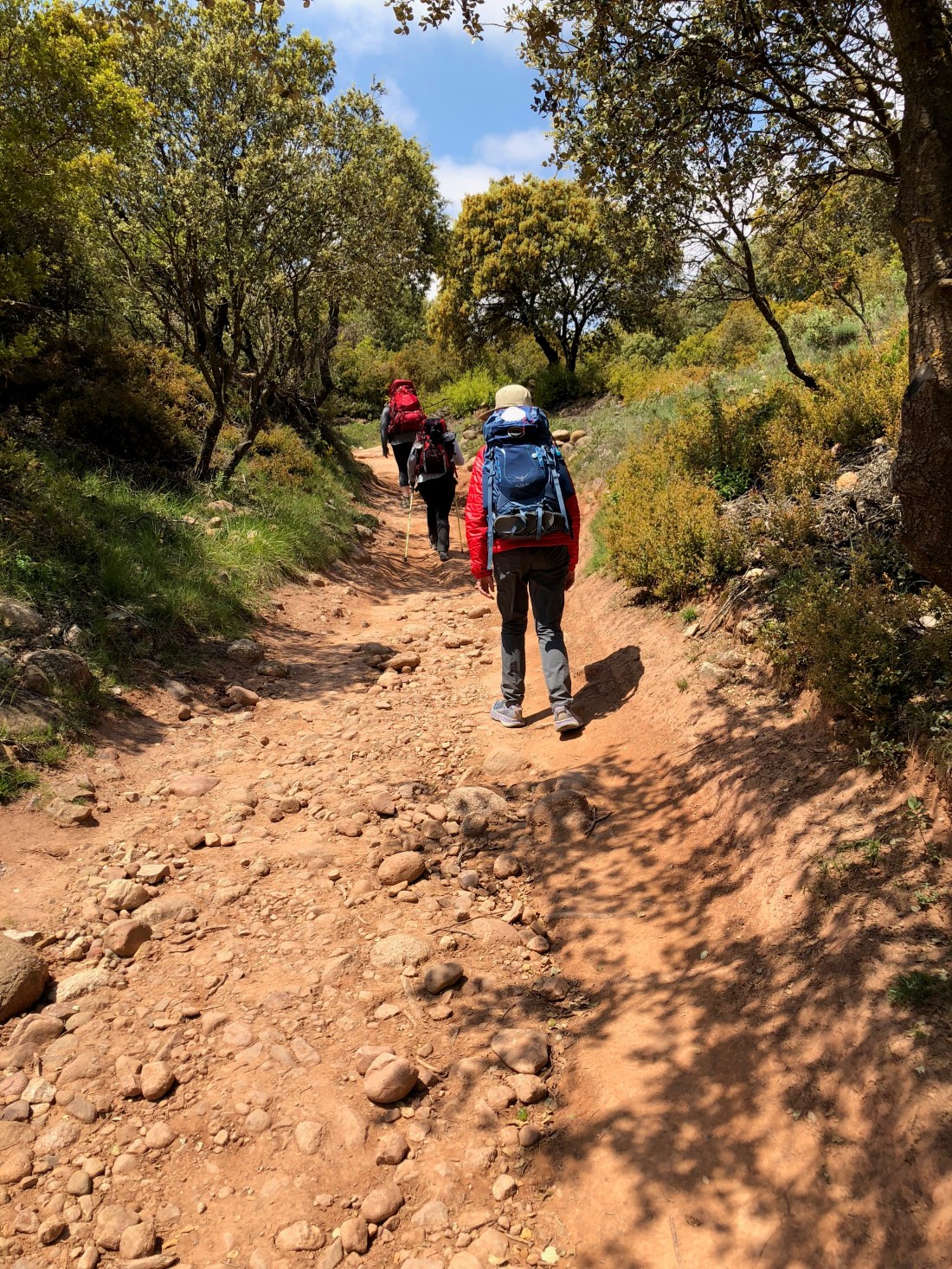
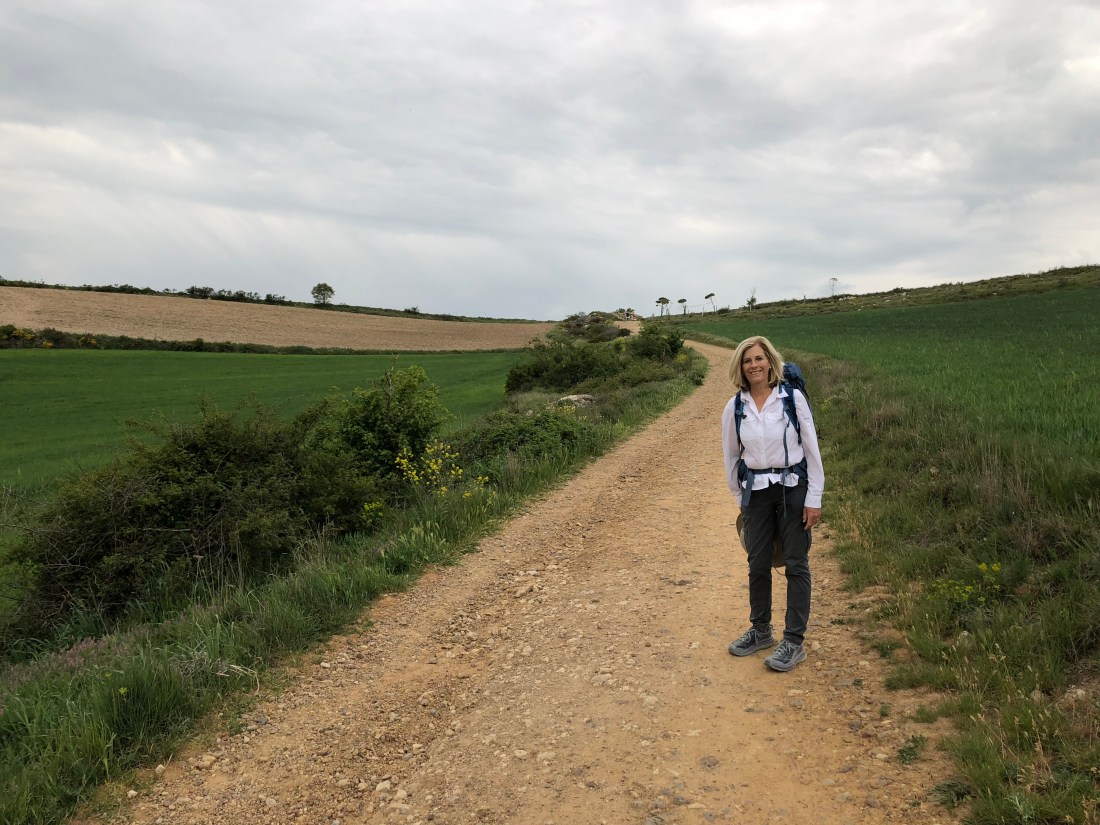
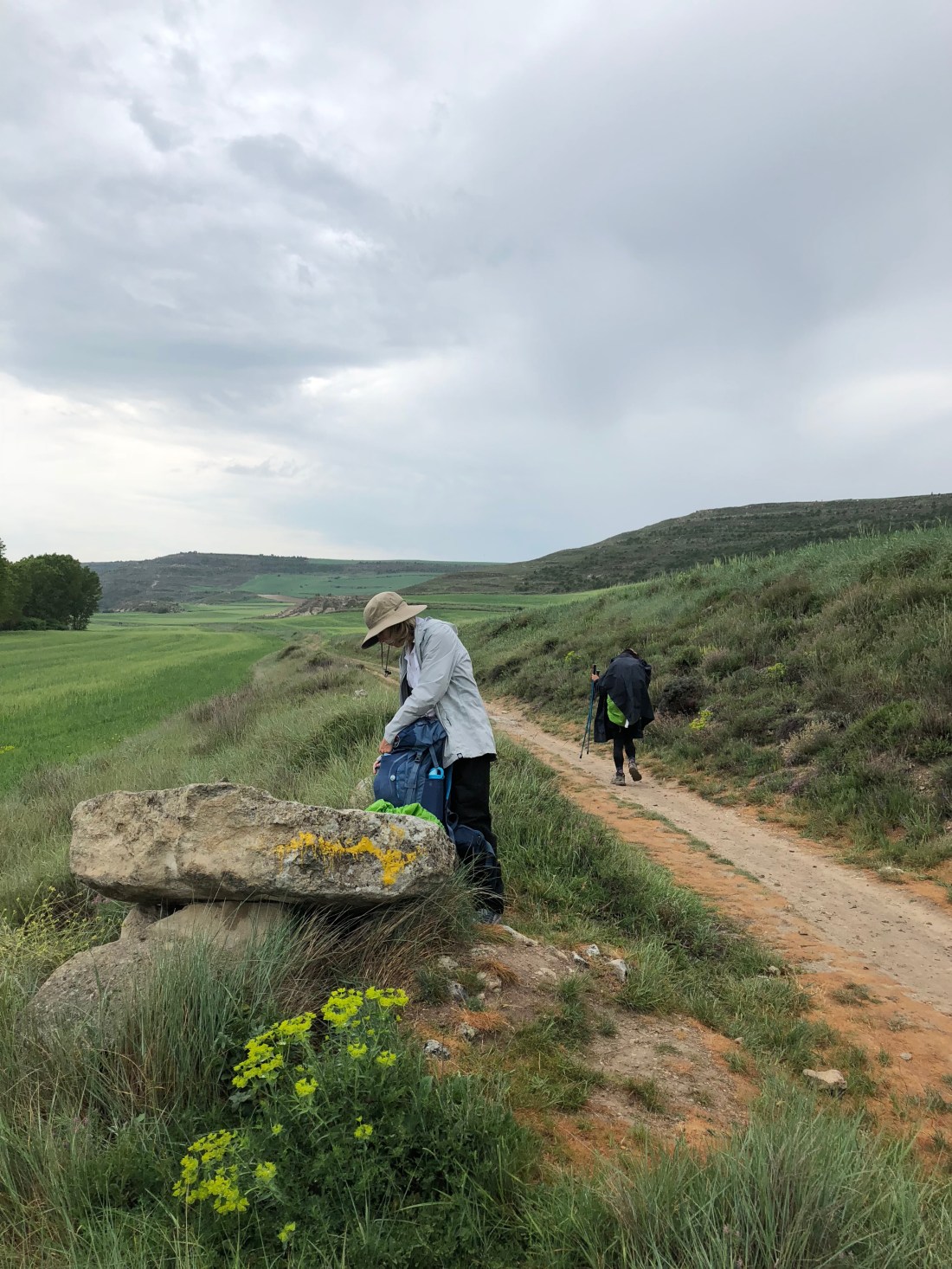
We started out under cloudy skies.  The Camino headed up a high meseta into the clouds.IMG_2174To help my leg, we loaded all our heavy stuff into my backpack and left it at the hotel for a Camino delivery service. Anne is carrying her backpack, which should be lighter, but doesn’t feel like it.  I walk slowly, and Anne slows down to wait for me.
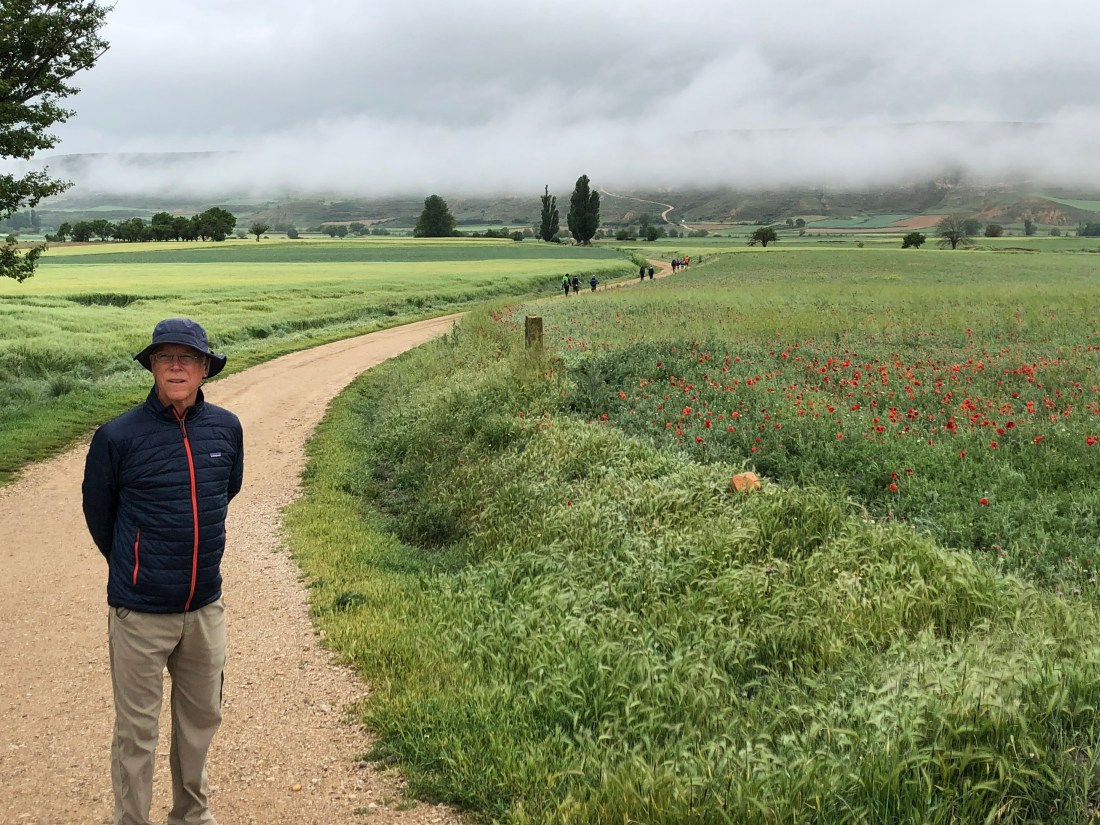
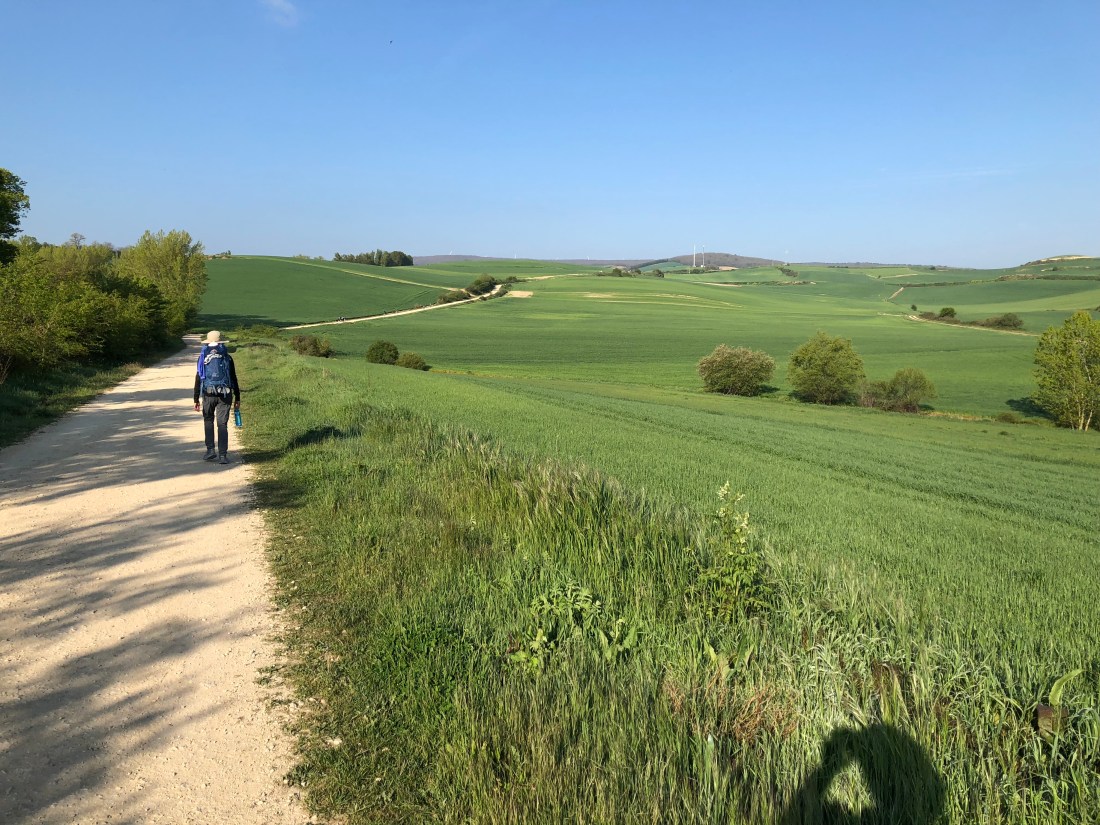
The trip along the top of the meseta is short. After just a few minutes, we walk back down.IMG_2176
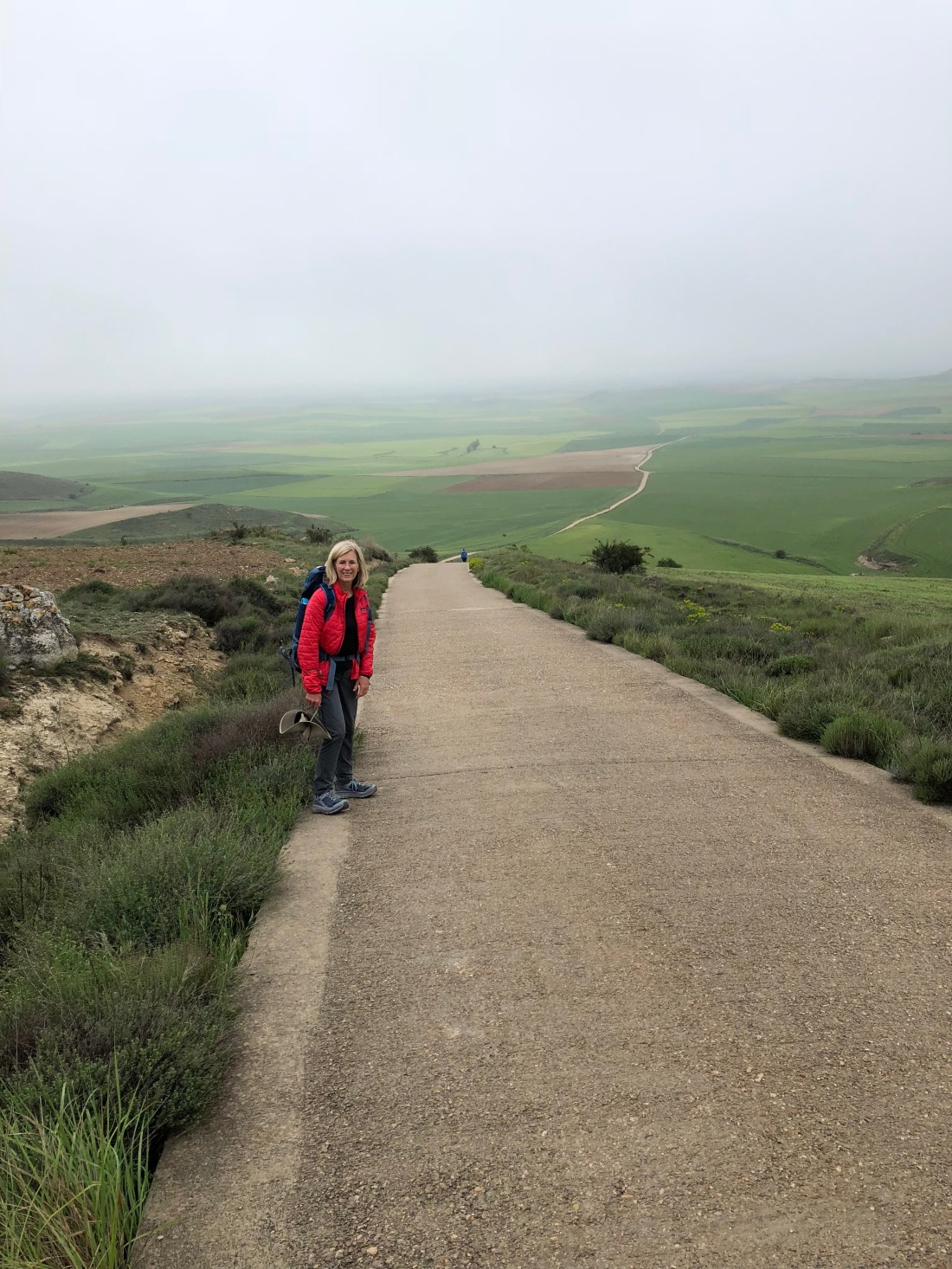
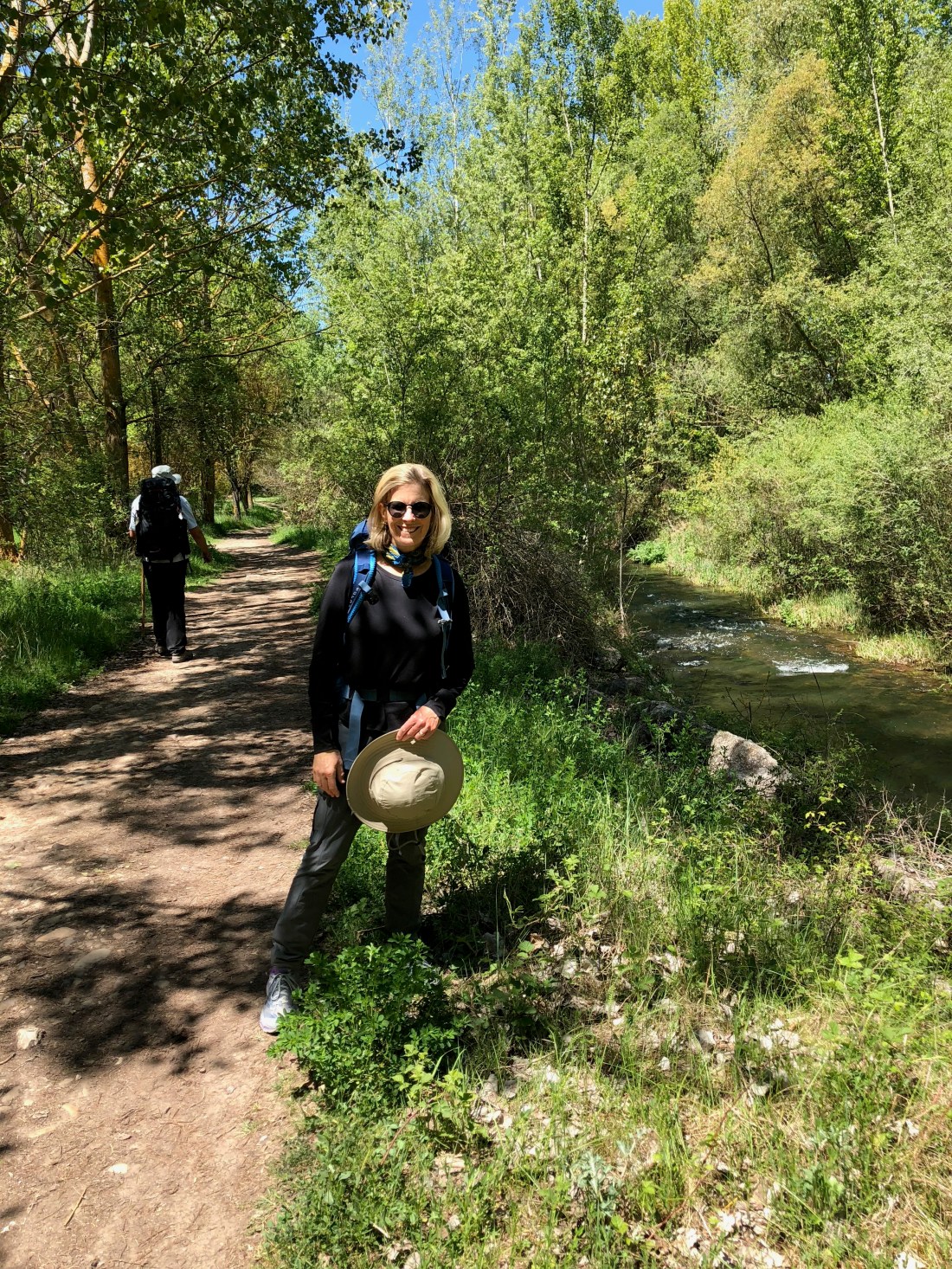
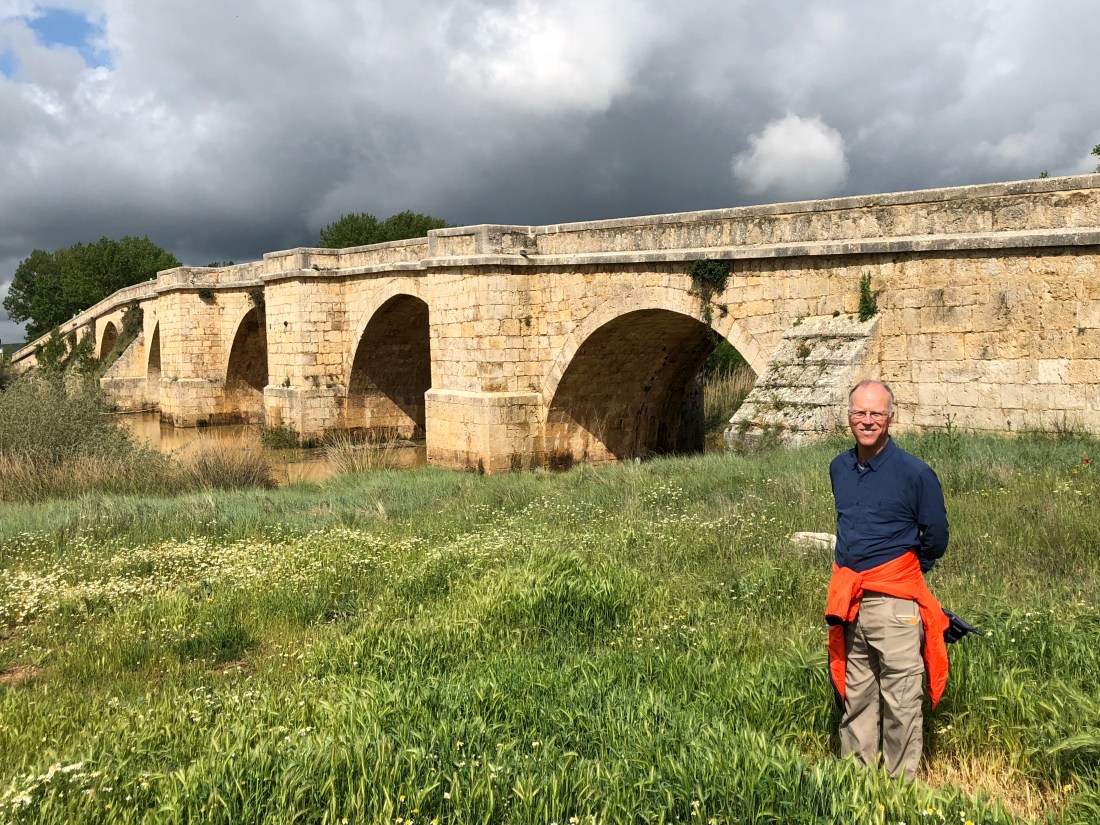
The Camino leads past an old albuerge beside the rio Pisuerga.IMG_2177
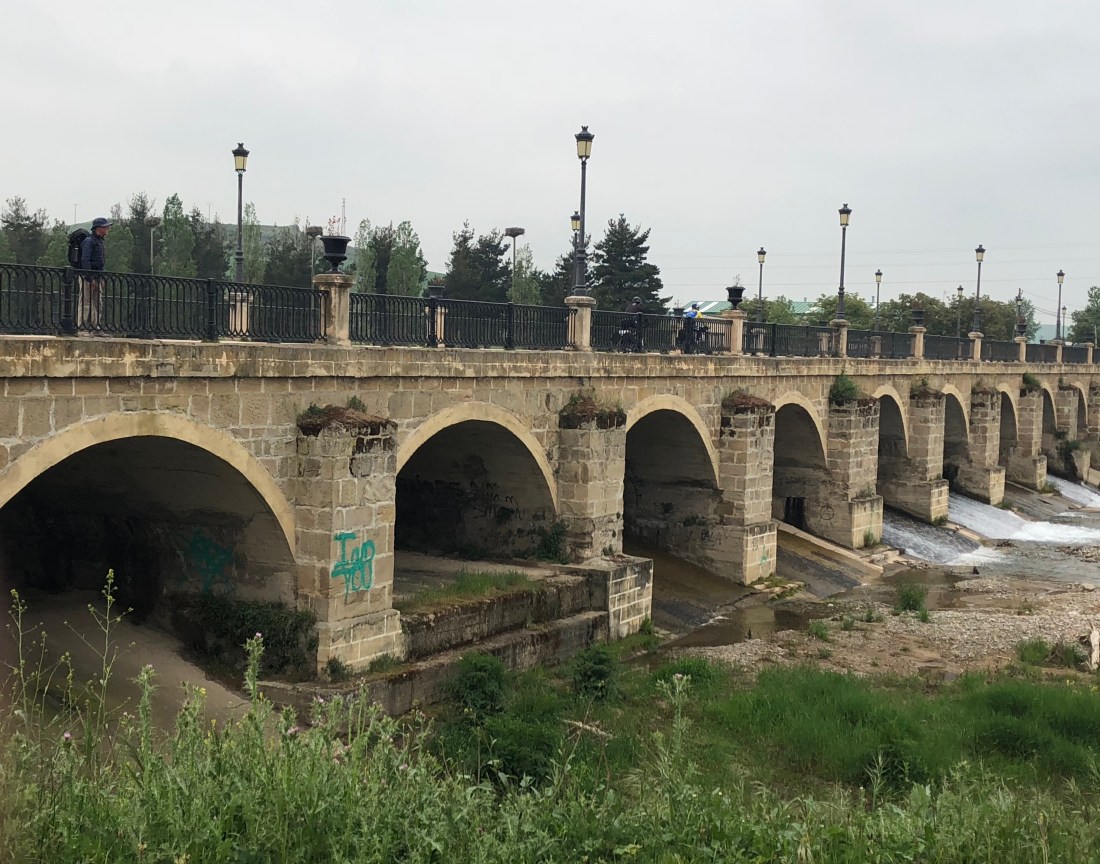
And then goes over a bridge just beyond the albergue.IMG_2182
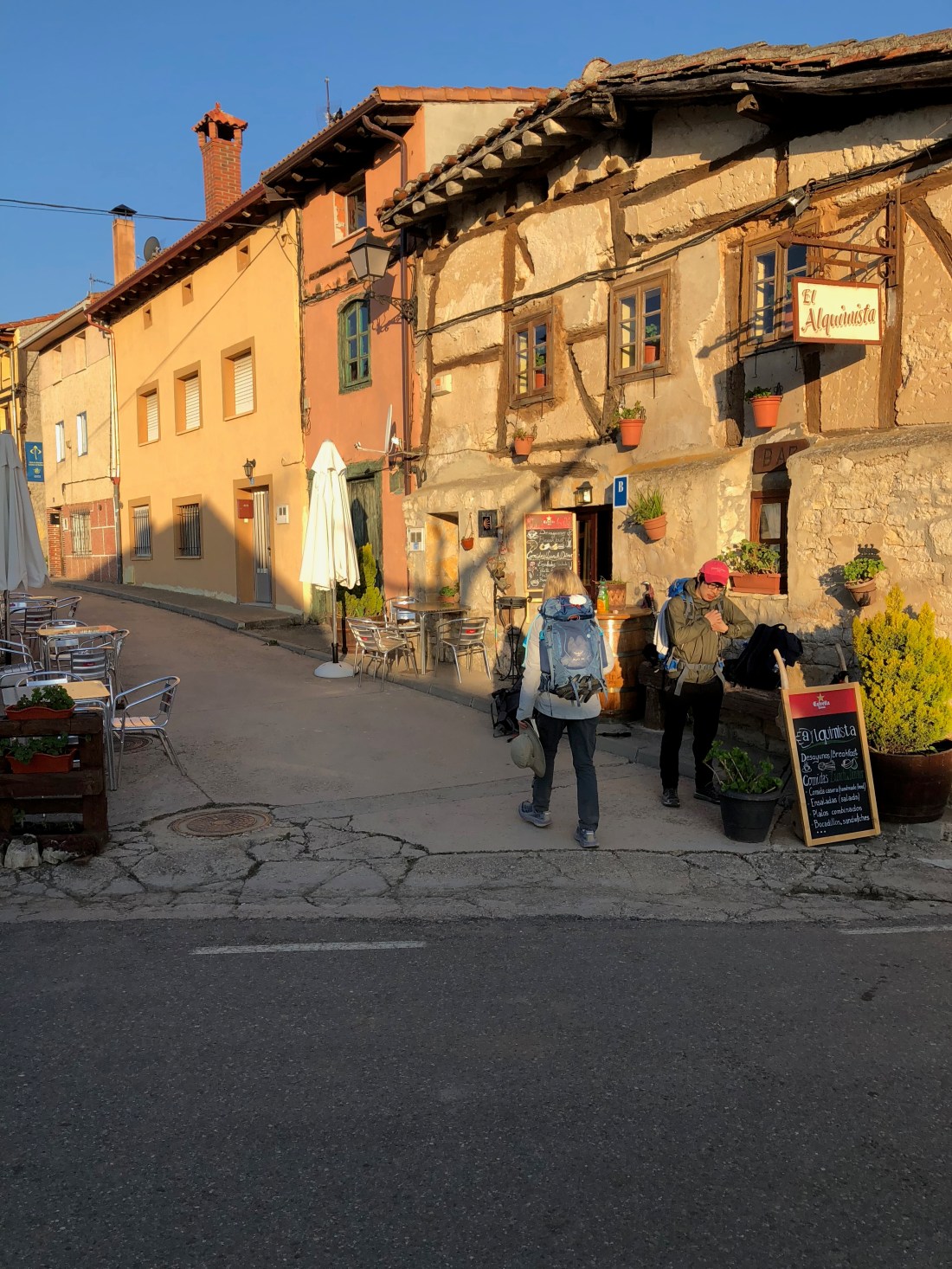
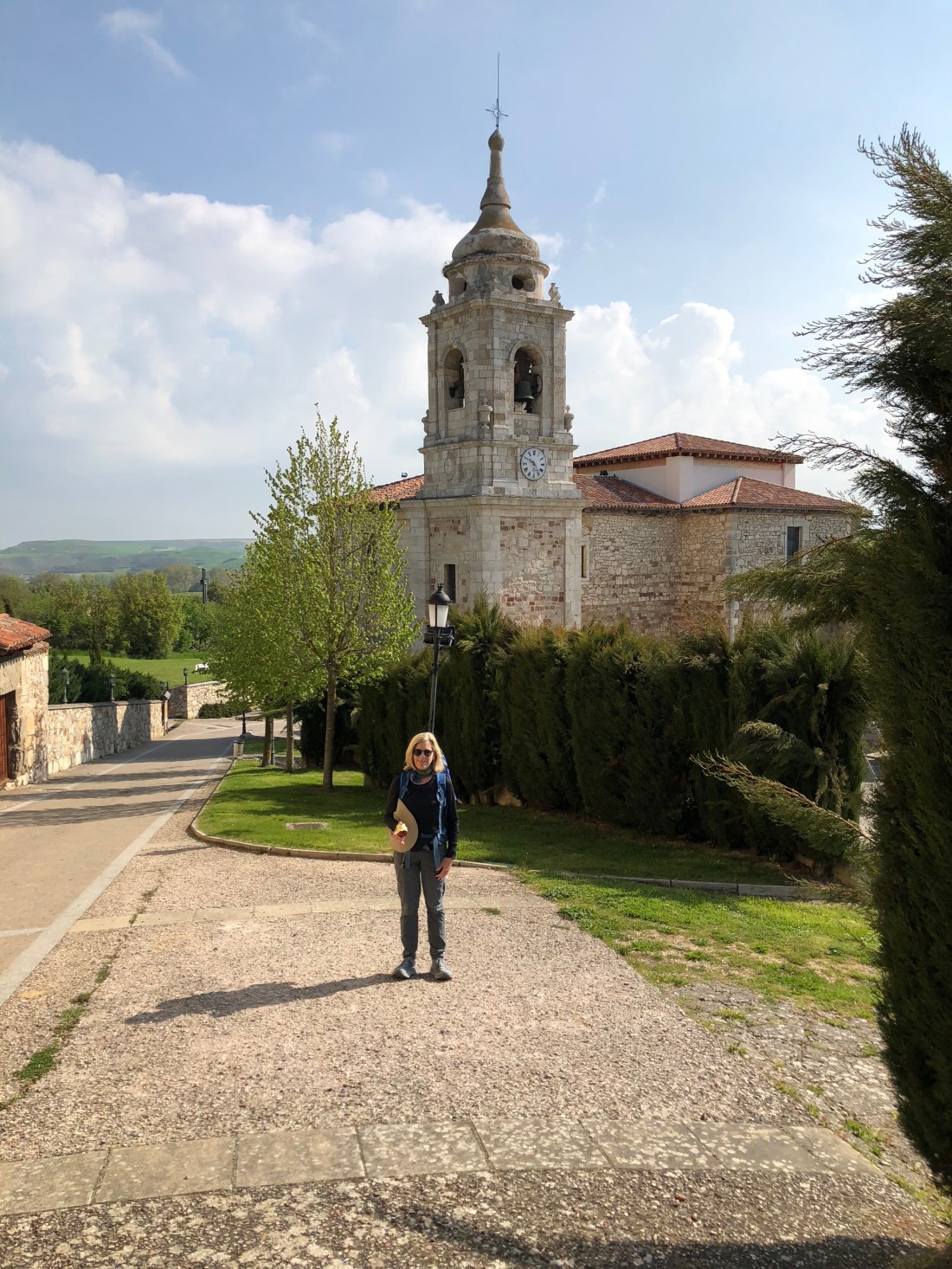
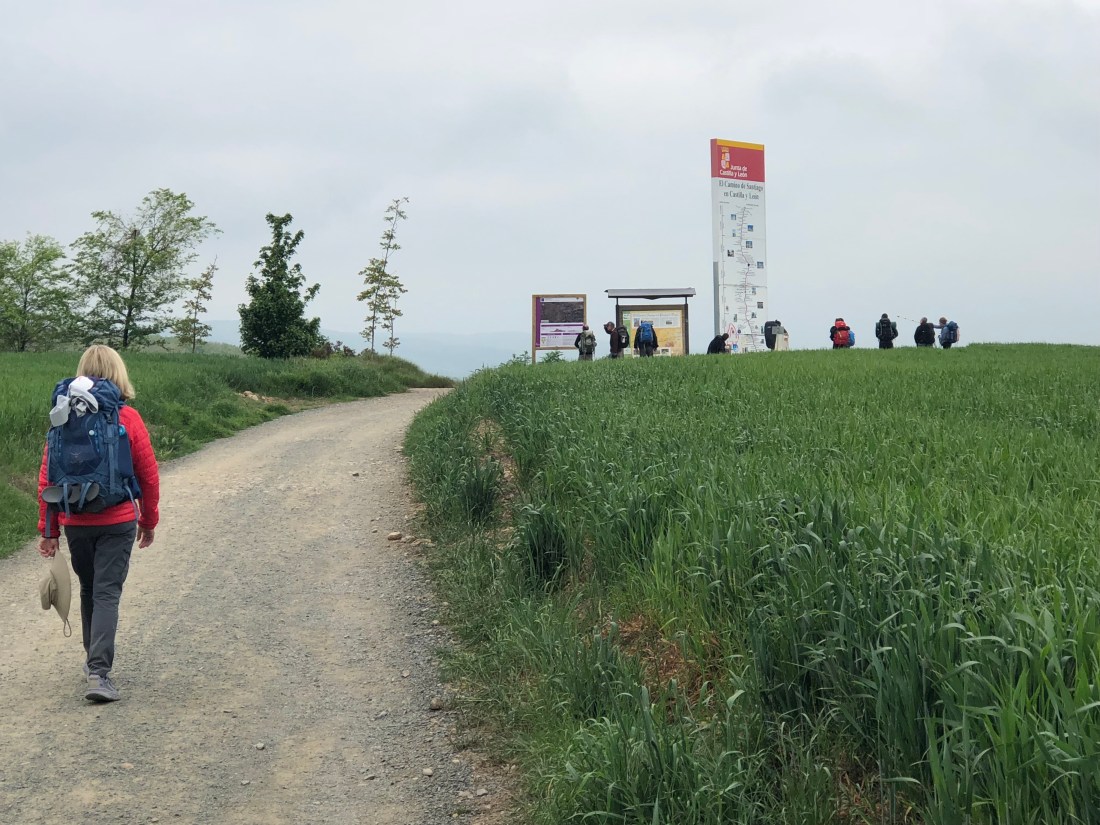
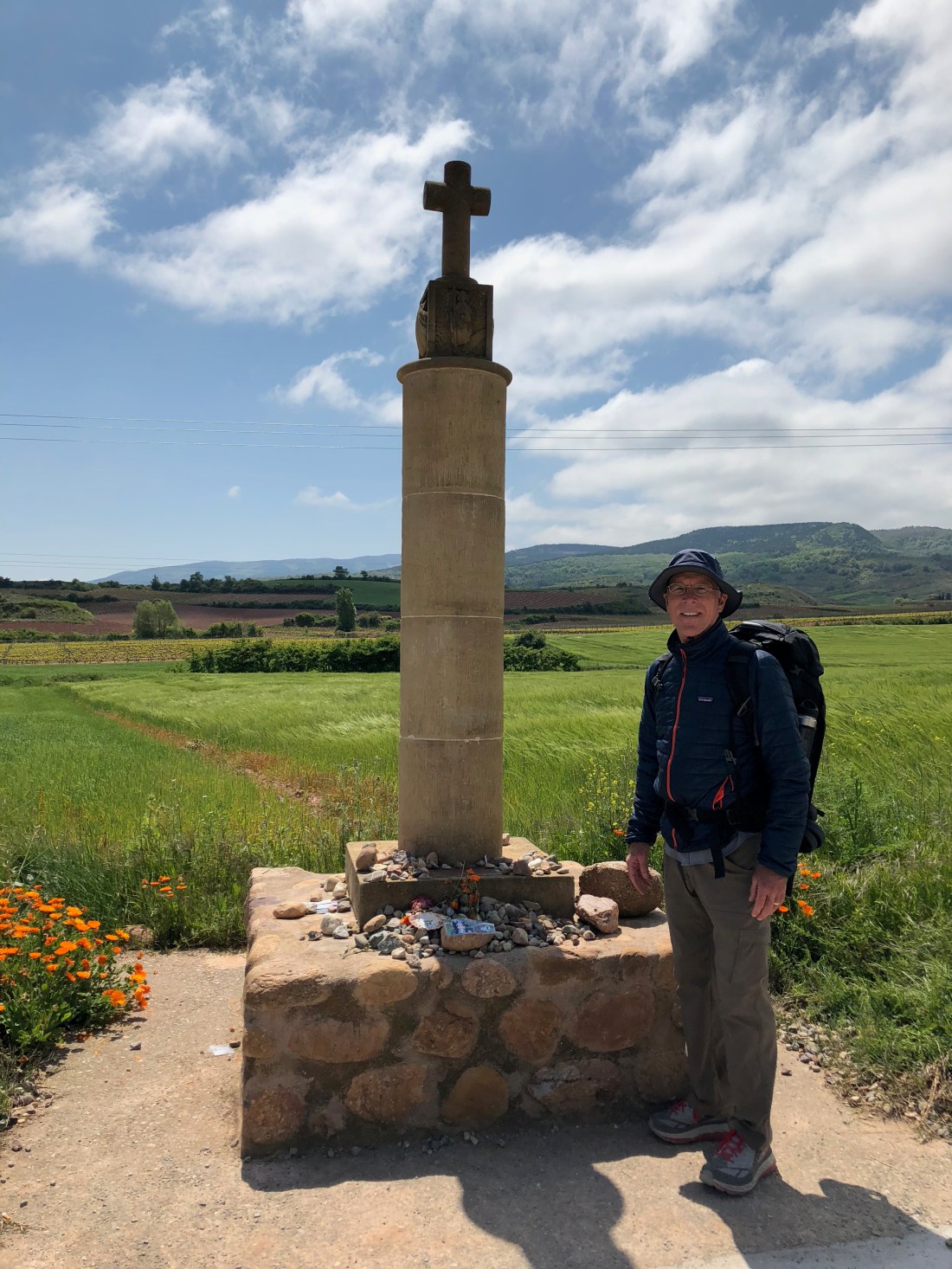
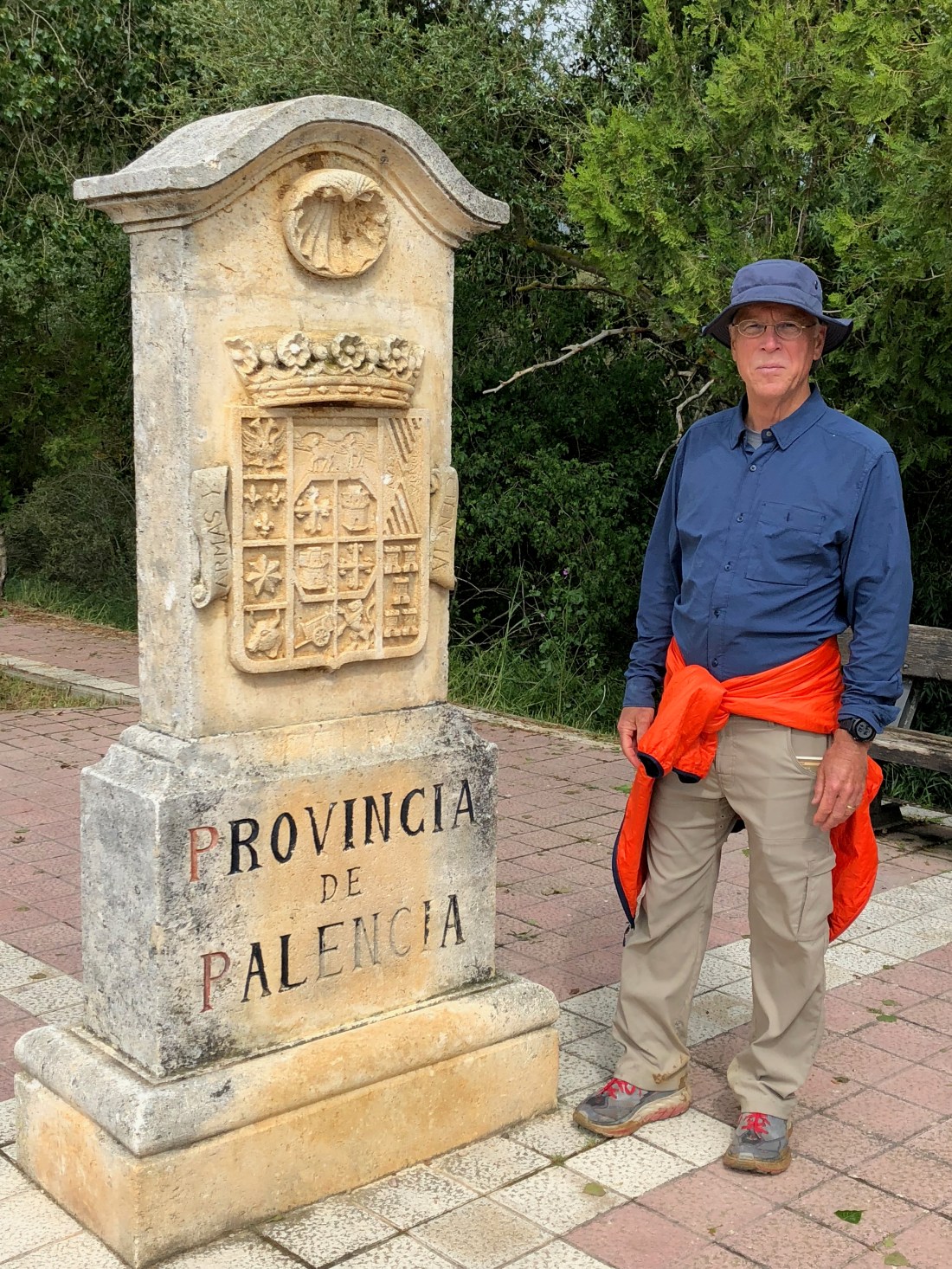
Near the village of Itero de la Vega is a border maker for the province of Palencia, which is part of the autonomous region of Castile-Leon.IMG_2187We stop in a cafe in Itero de la Vega and each order tortilla patata—elsewhere we’ve been, it’s called tortilla Espanola.  I asked for tortilla Espanola in a bar yesterday and was quickly corrected.
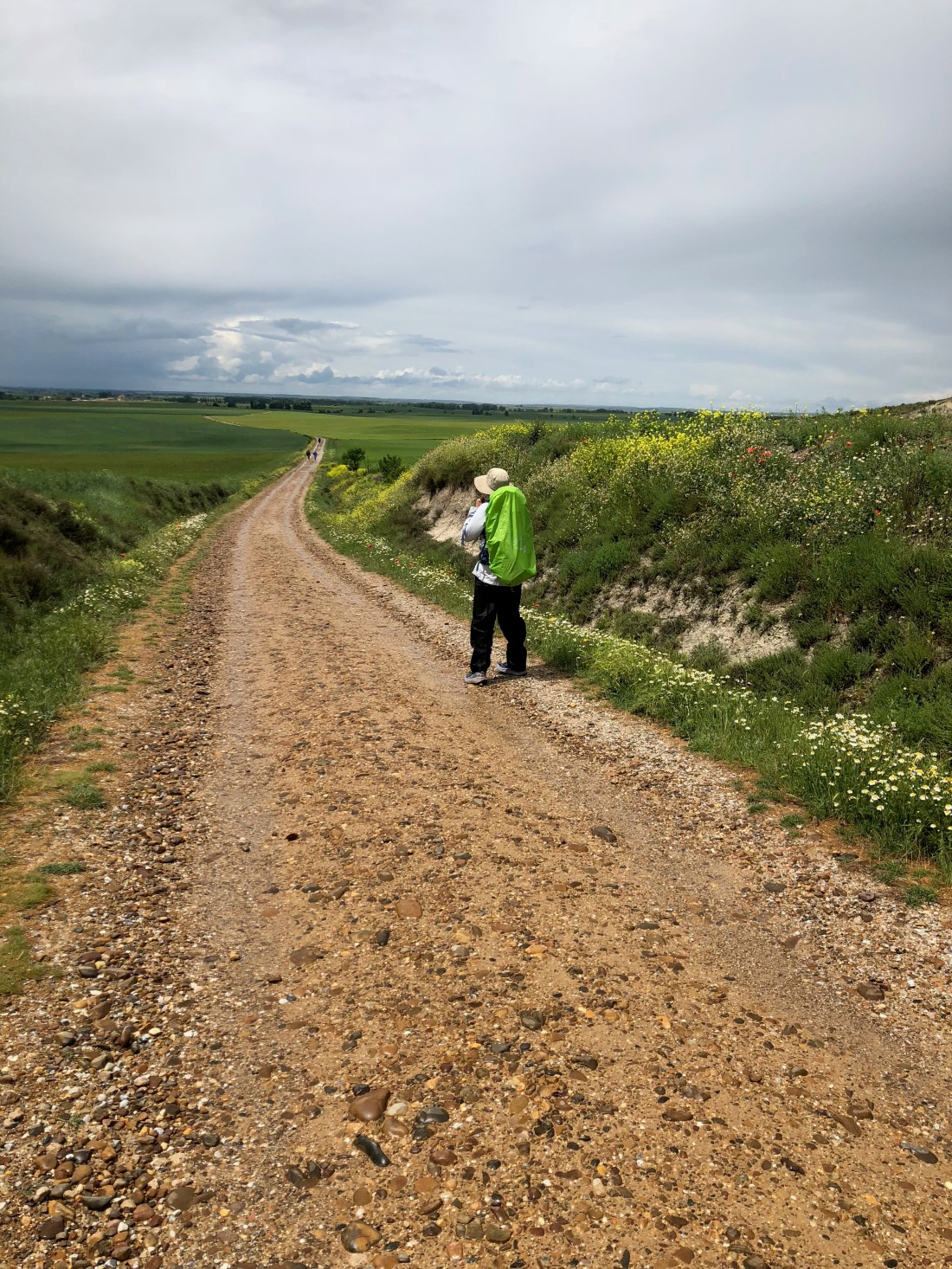
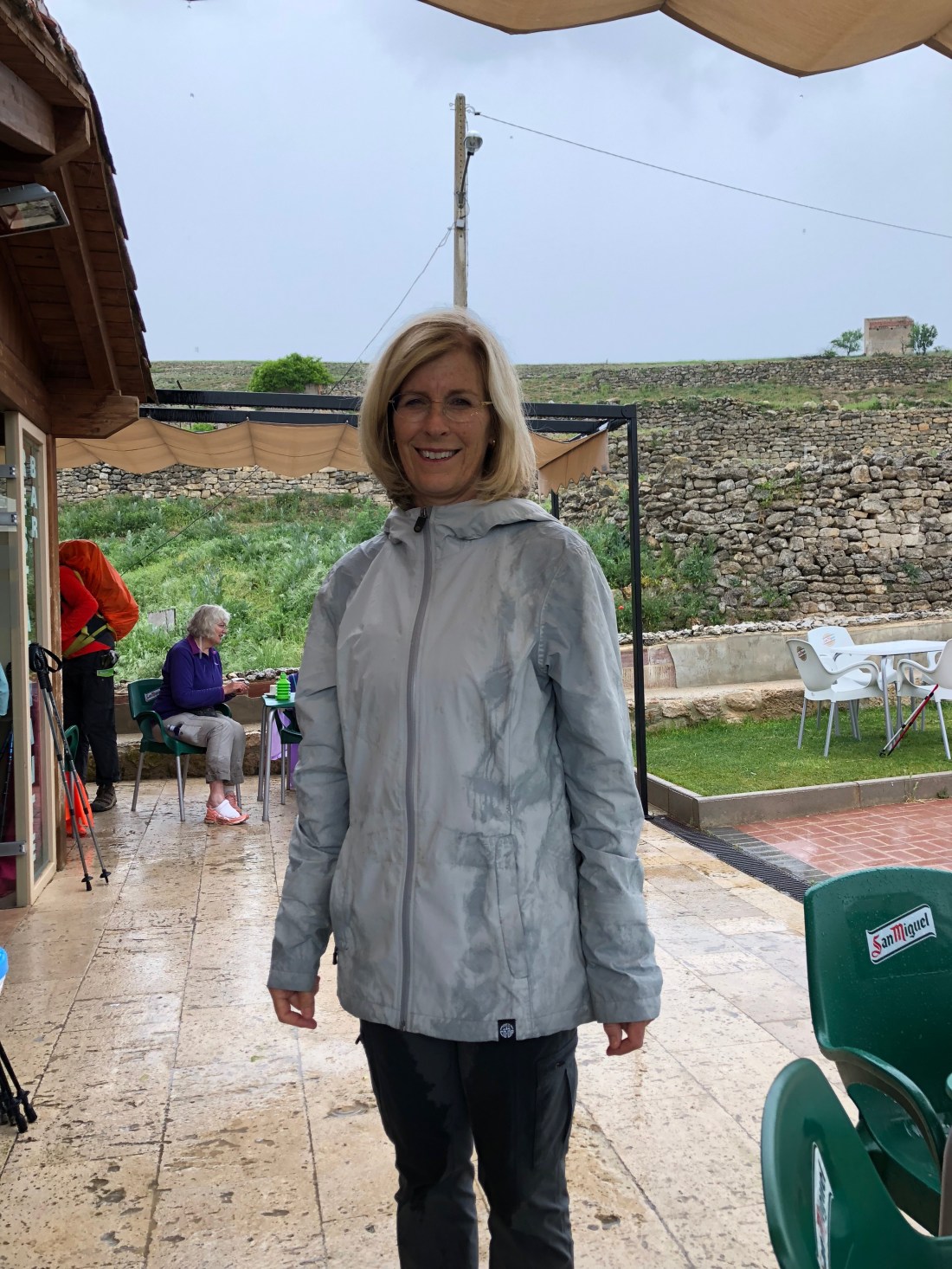
When we leave the cafe, it’s starting to rain.  By the time we get to the outskirts of the village, it’s raining hard.  We are about a mile out of town and we hear thunder overhead.

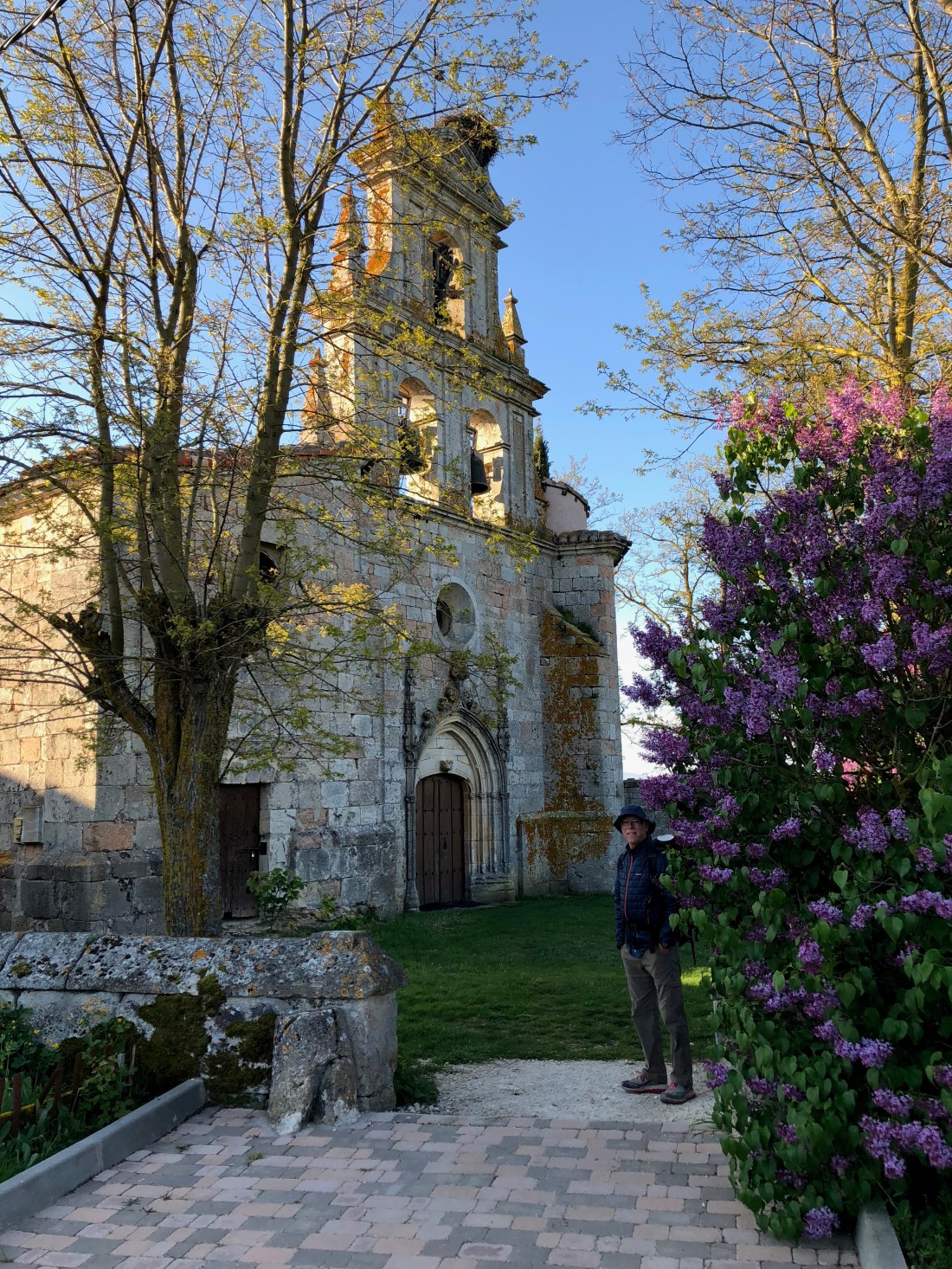
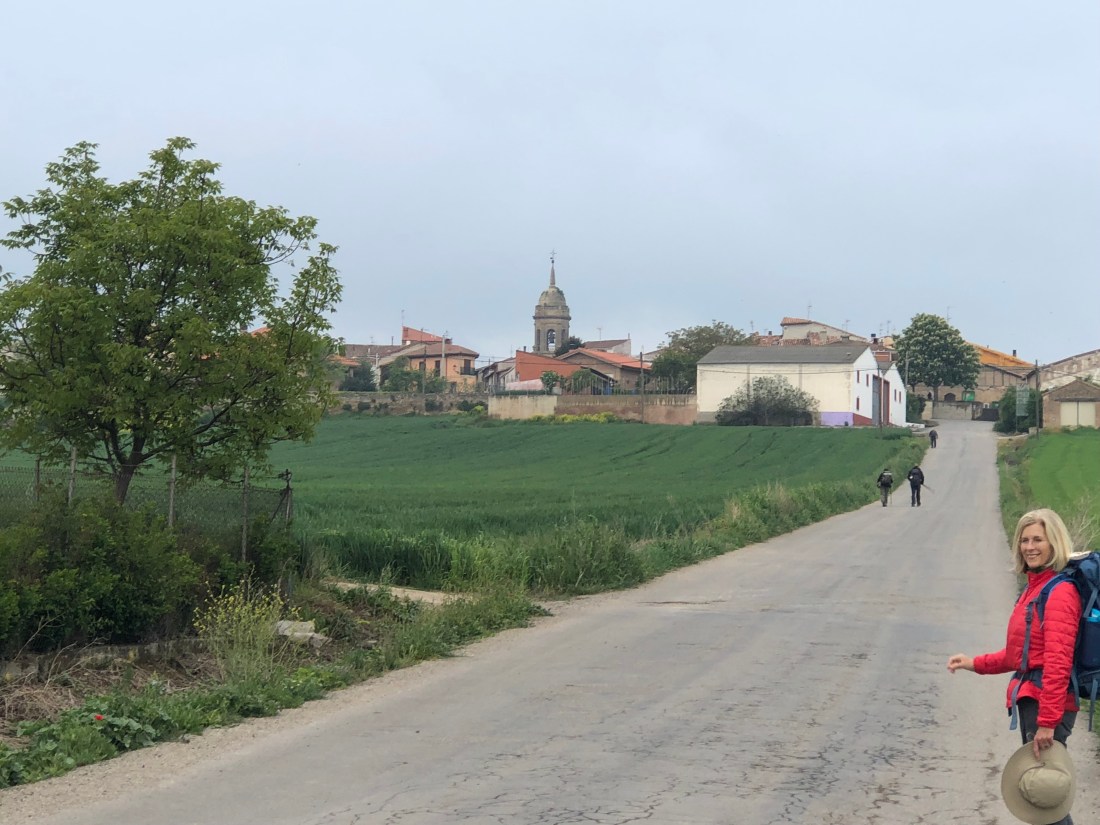
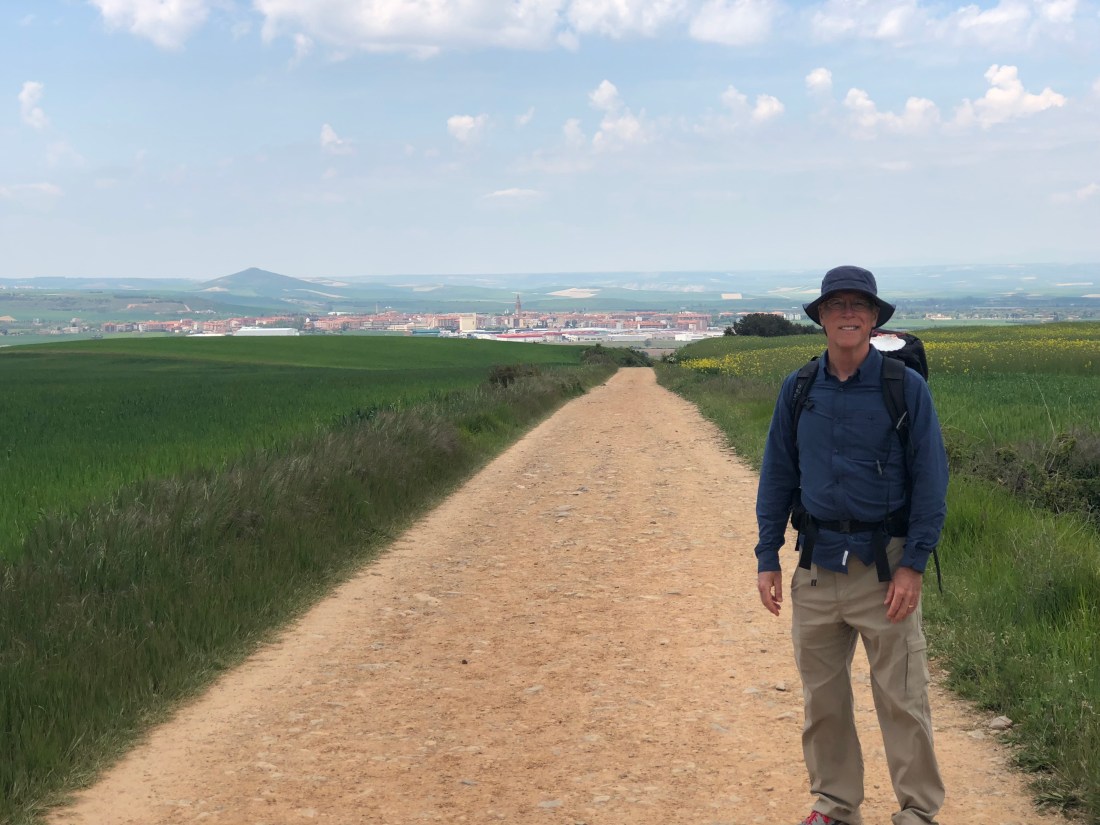
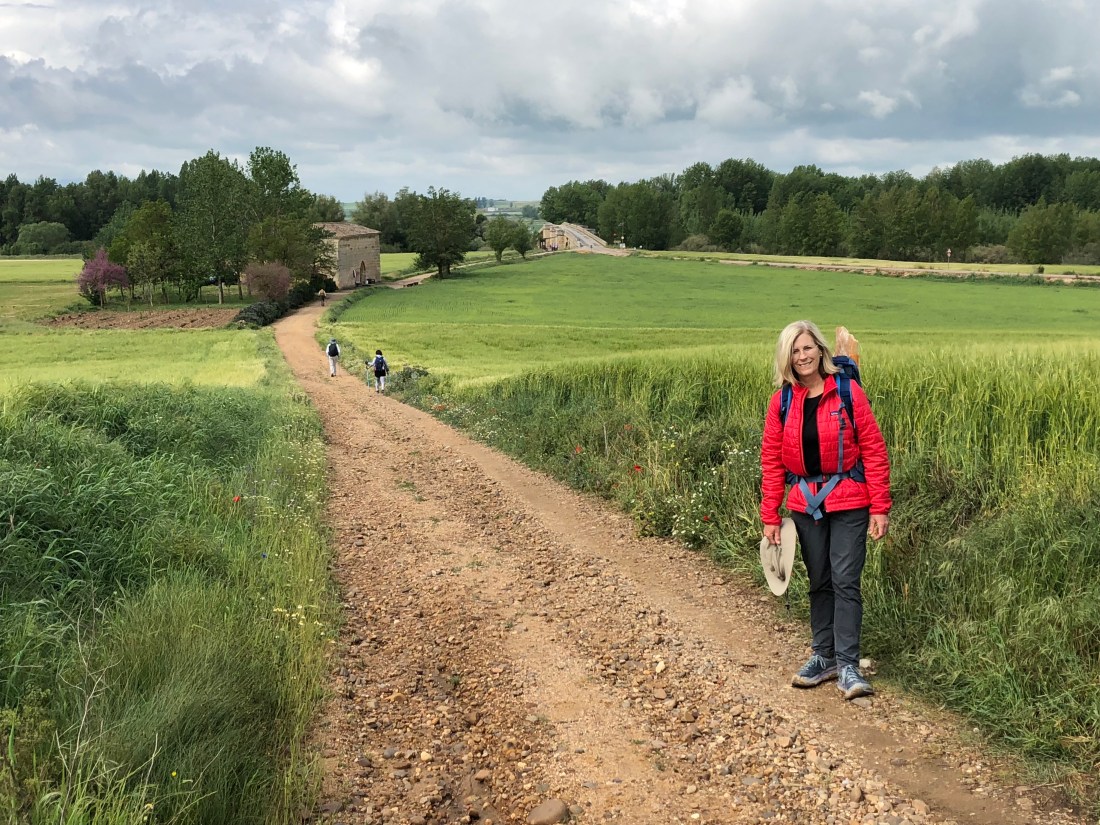
As we come down a hill to Boadilla del Camino, which is our day’s destination, the rain stops.IMG_2188We are walking less today than we had originally planned.  We have redone our schedule to reduce the distance we walk each day.  Up to this point, we have followed the schedule in John Brierley’s guidebook.   We have found, however, that the distances are too long for us. Some days in Brierley’s book are as long as 30 kilometers, with is over 18 miles.  A typical day for Brierley is around 25 kilometers.  Anne and I have decided on a 20 kilometer limit, with an occasional 25 km day when necessary.
This change of schedule will increase the number of days that we’re on the Camino.  Brierley’s book schedules 33 days from St. John to Santiago with no lay days.  We added on five days to Brierly’s schedule to deal with rain or injury.  We also planned on using some of those five extra days in Burgos, Leon, and Santiago.  We are not even half way through the Camino, and we have burned through all of our extra days.  

Re-doing Brierley’s schedule to limit our typical day to 20 km adds an extra five days to the trip.  As it stands, our new schedule has us arriving in Santiago on June 20, and our flight back to the U.S. leaves from Madrid on June 15.  Also, based on our experience on the Camino, we will need at least three more rest days before Santiago.  And that doesn’t give us any extra days in Leon and Santiago.  Realistically, we will need an additional 10 days to two weeks beyond our scheduled departure date to finish the Camino.

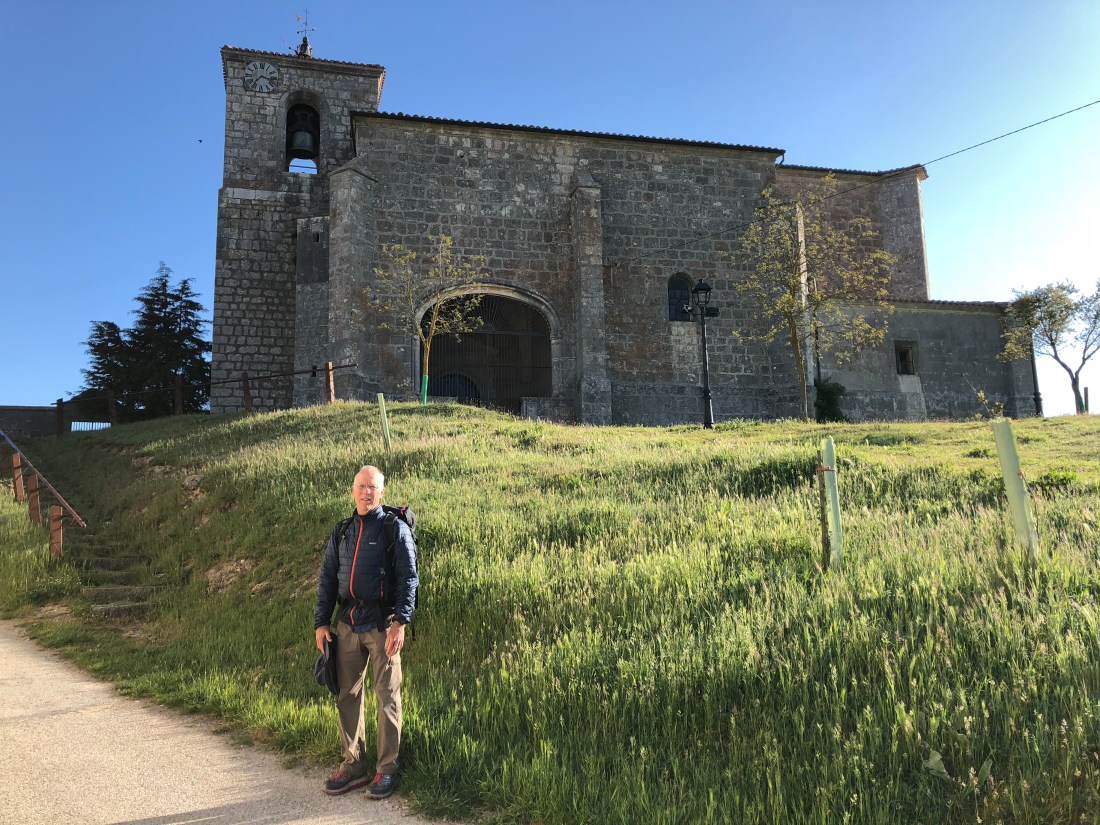
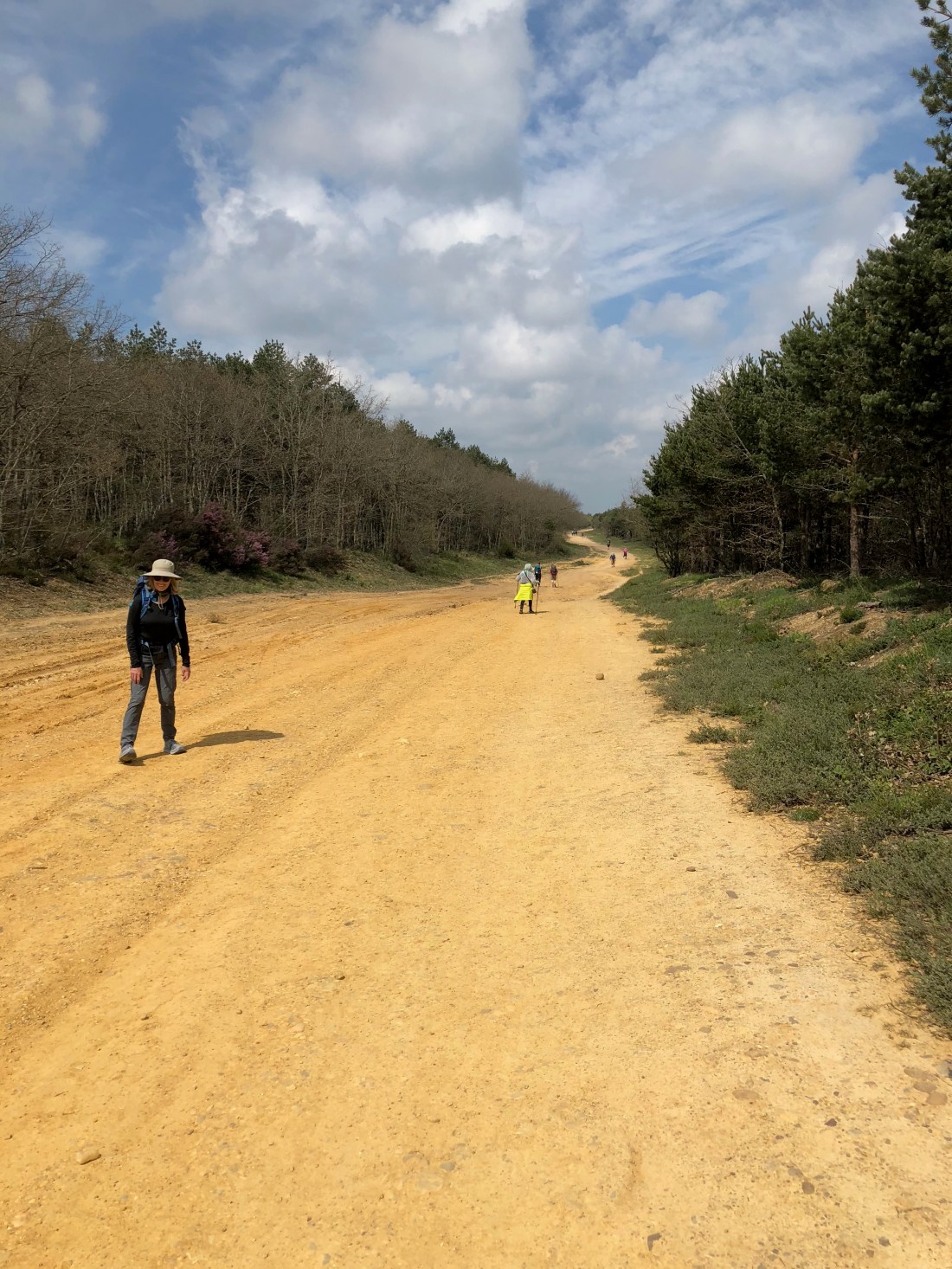
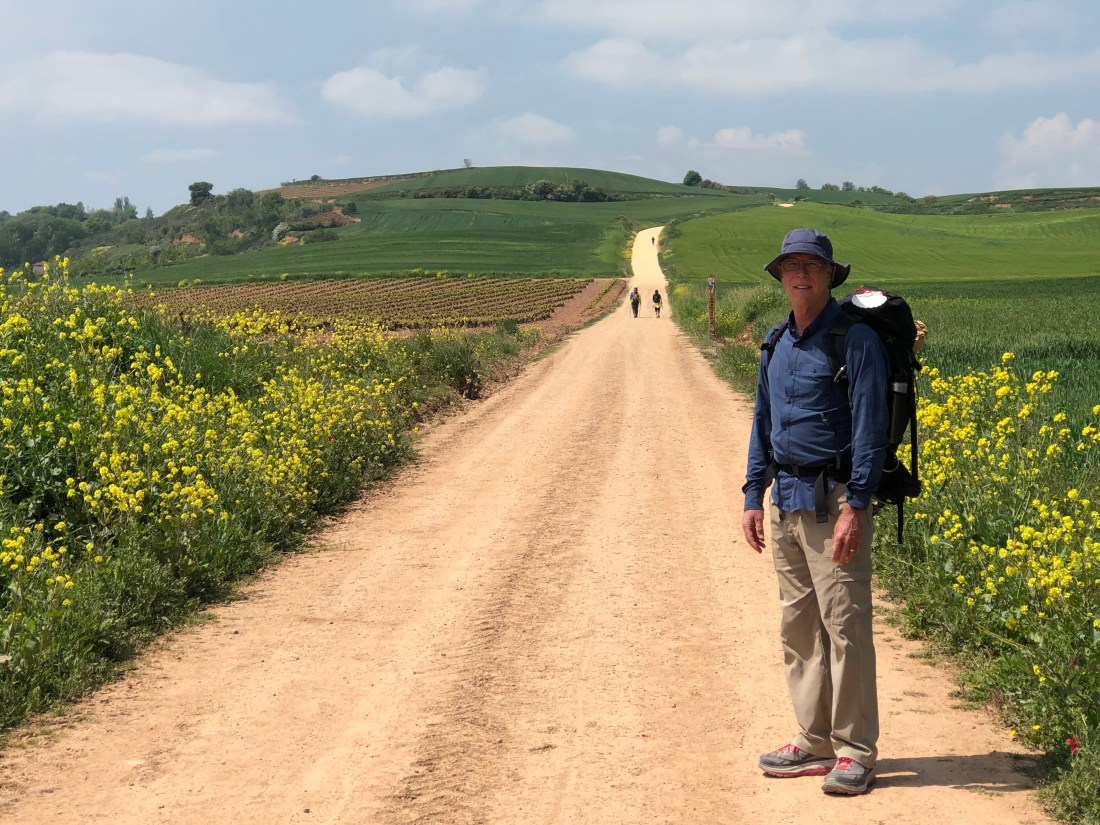
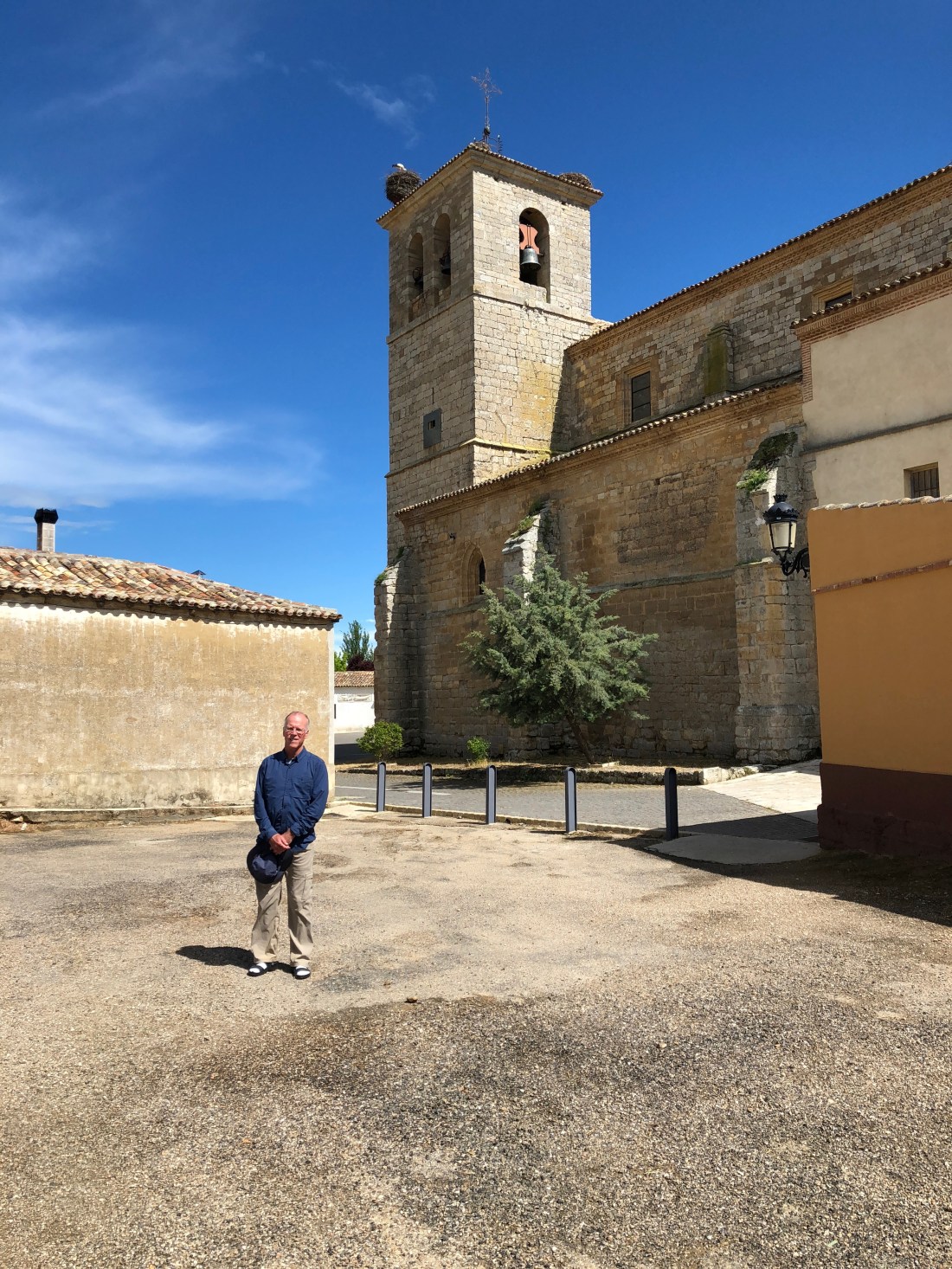
By the time we get to Boadilla del Camino the sun is out.IMG_2193
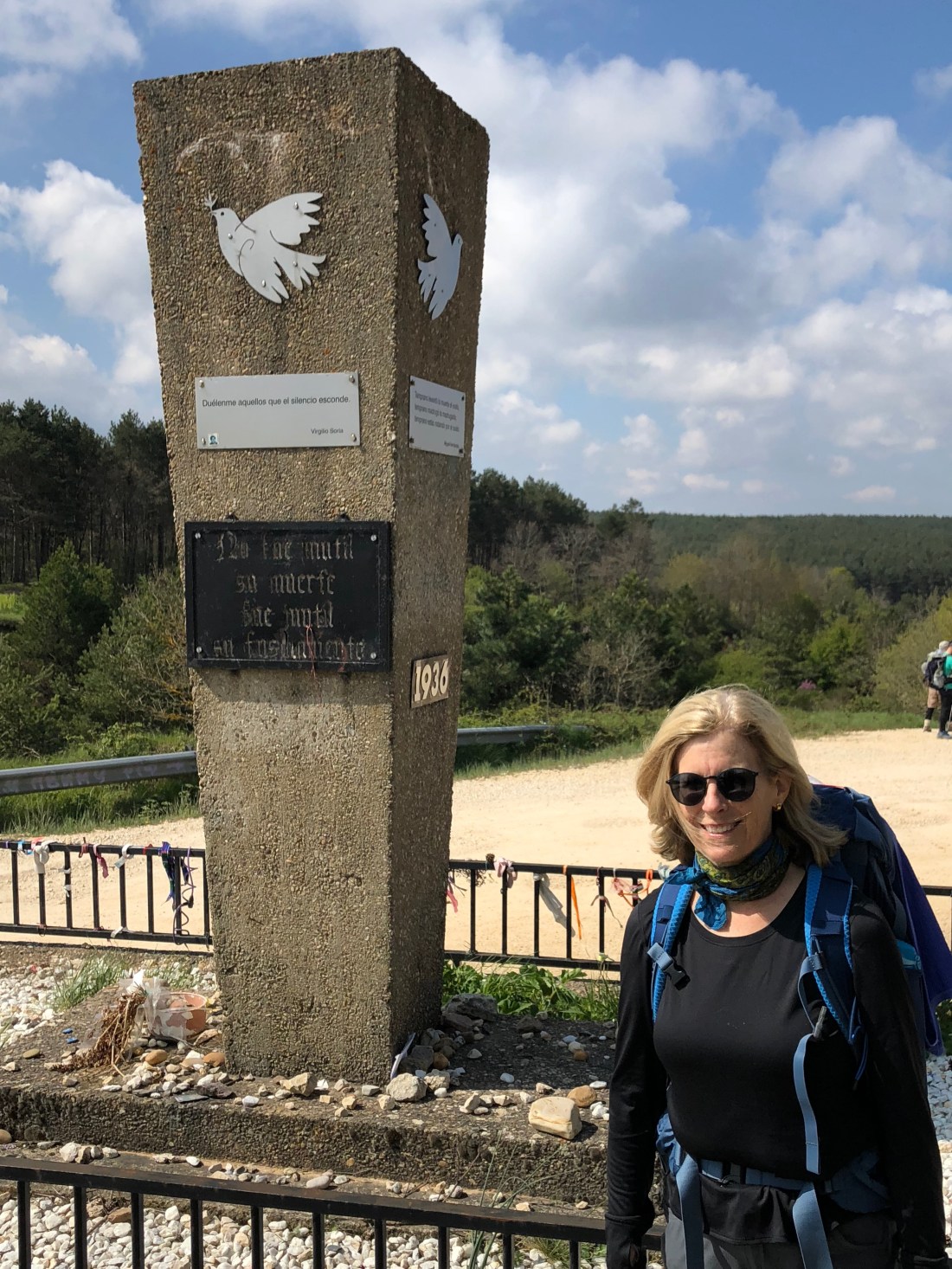
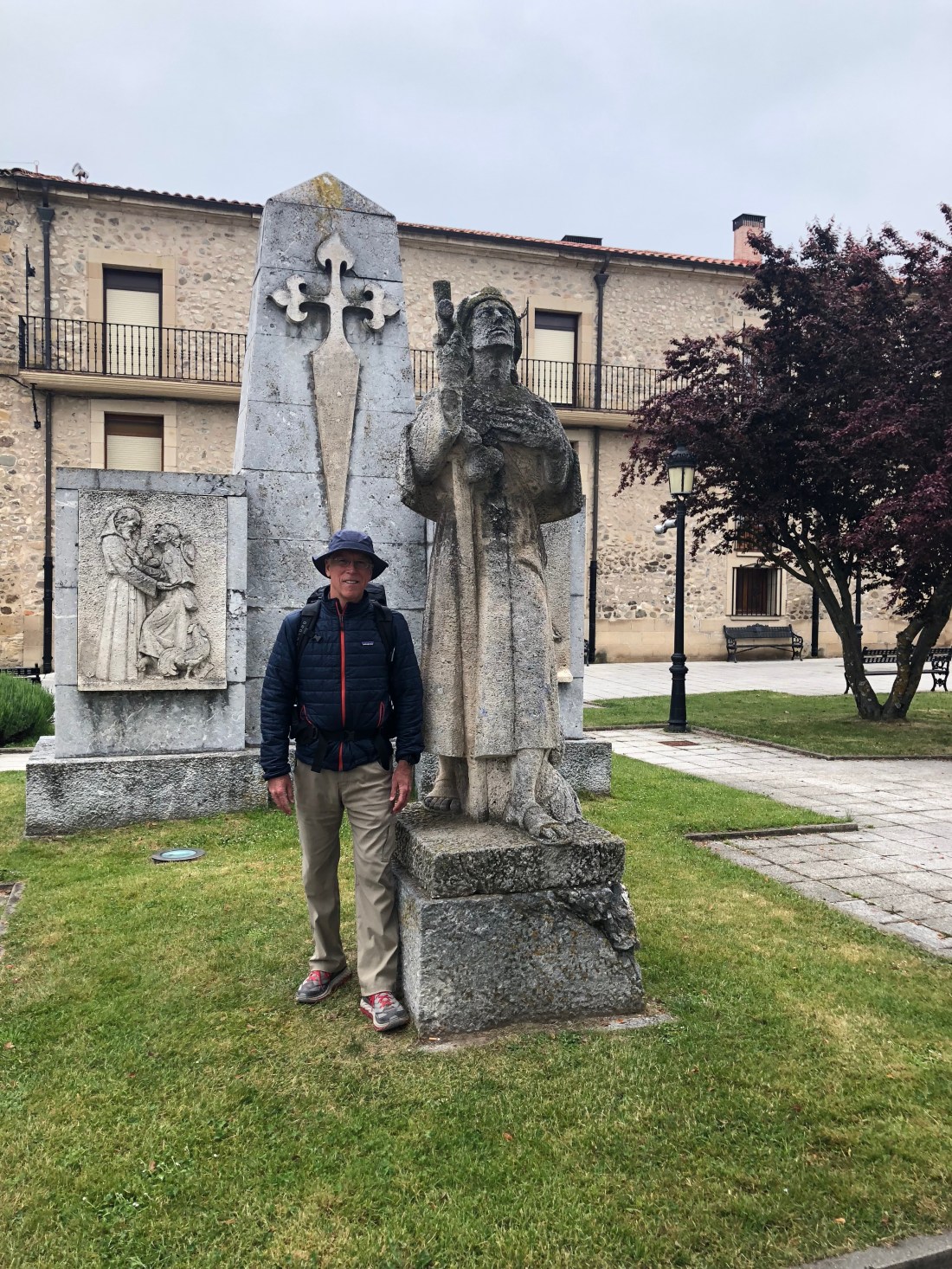
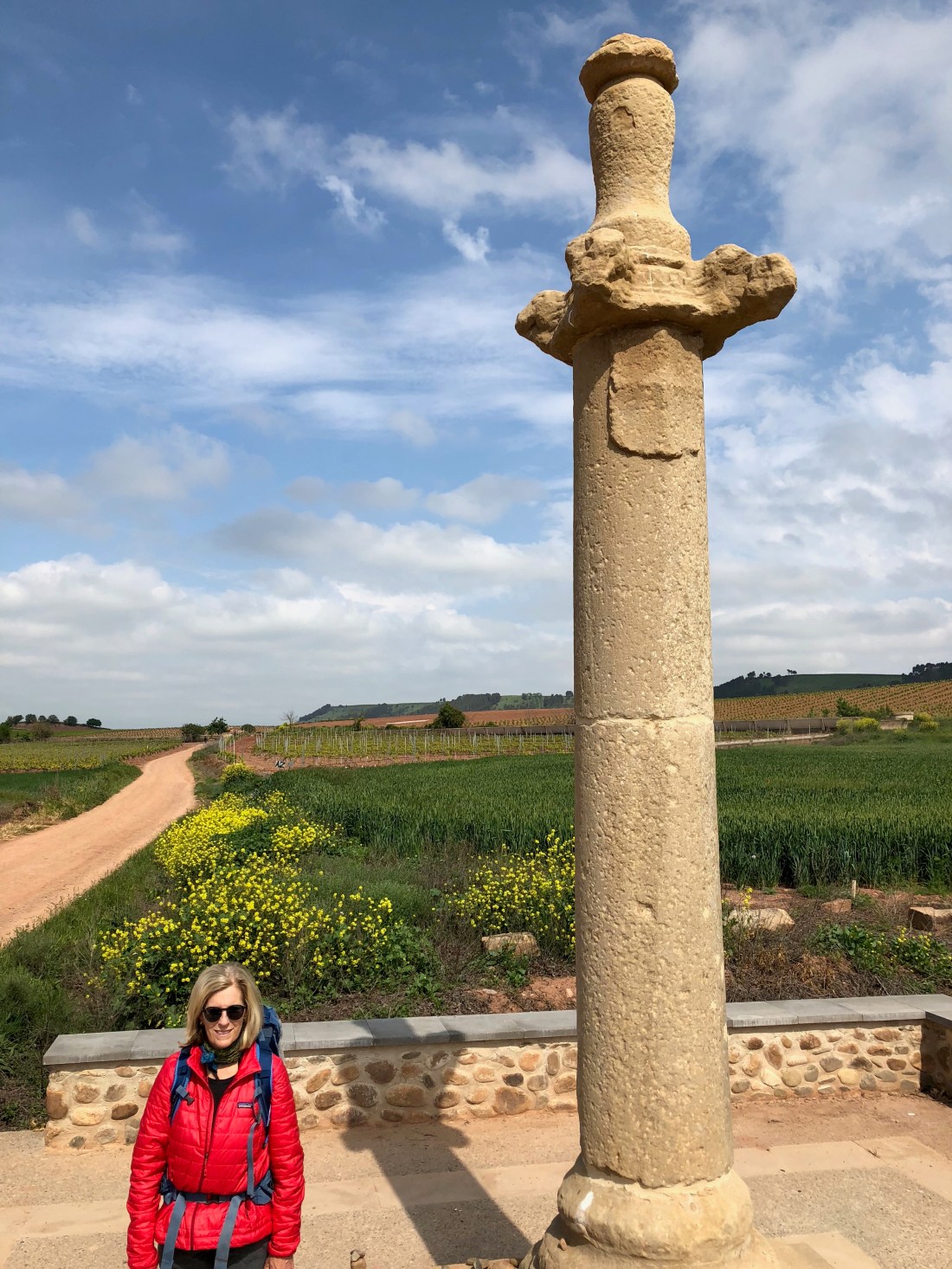
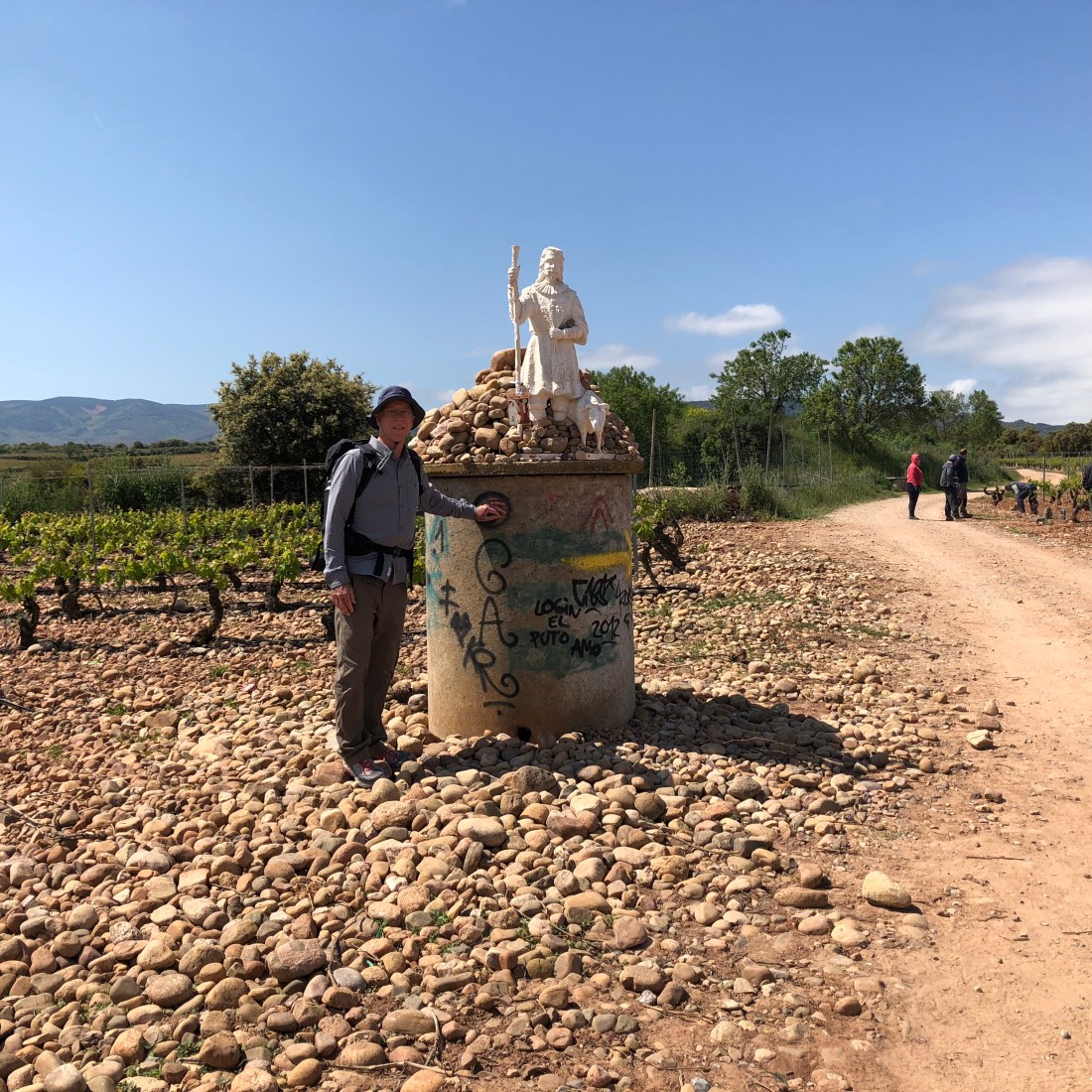
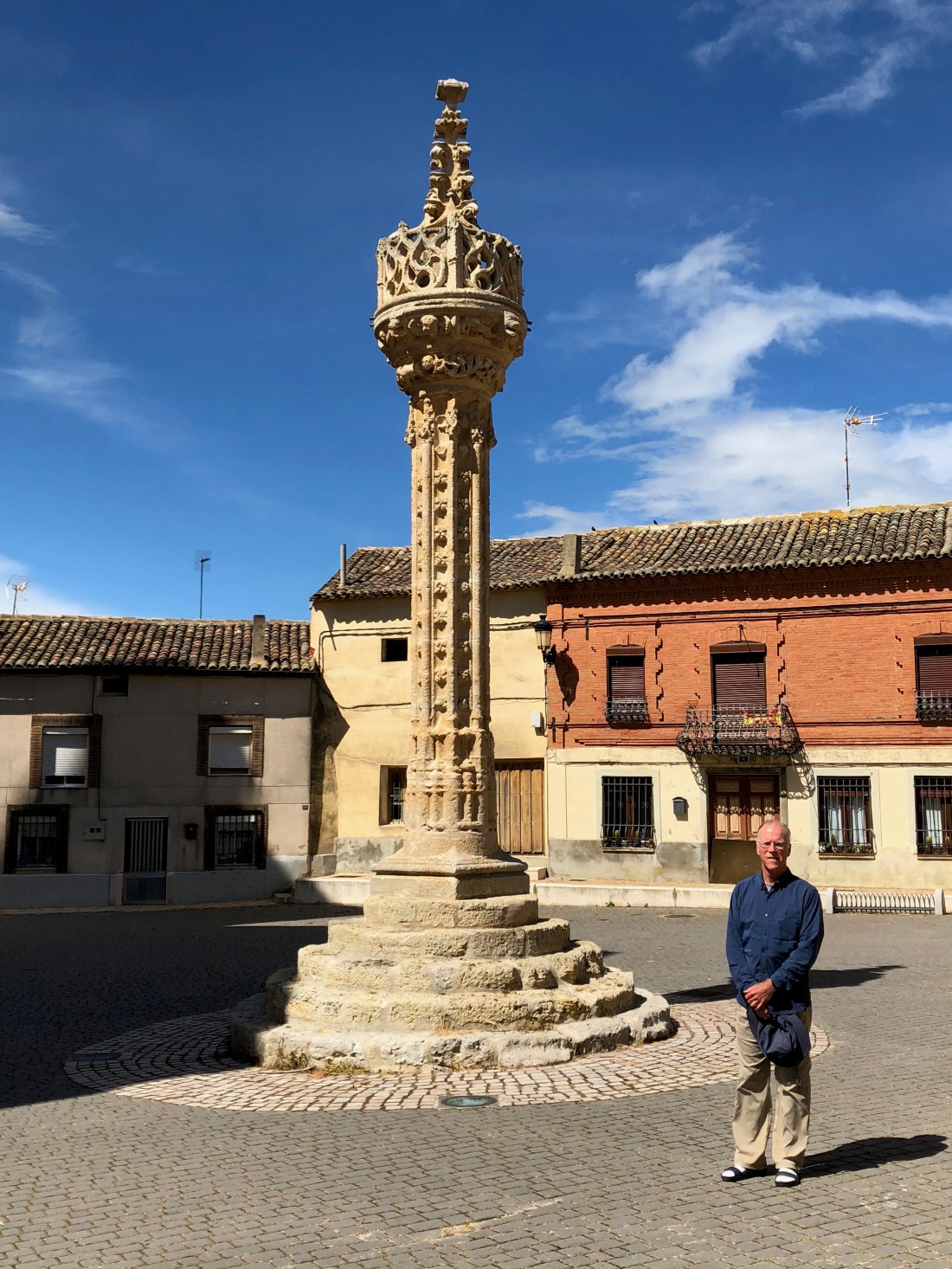
Here is a monument in front of the hotel where we are spending the night.IMG_2195
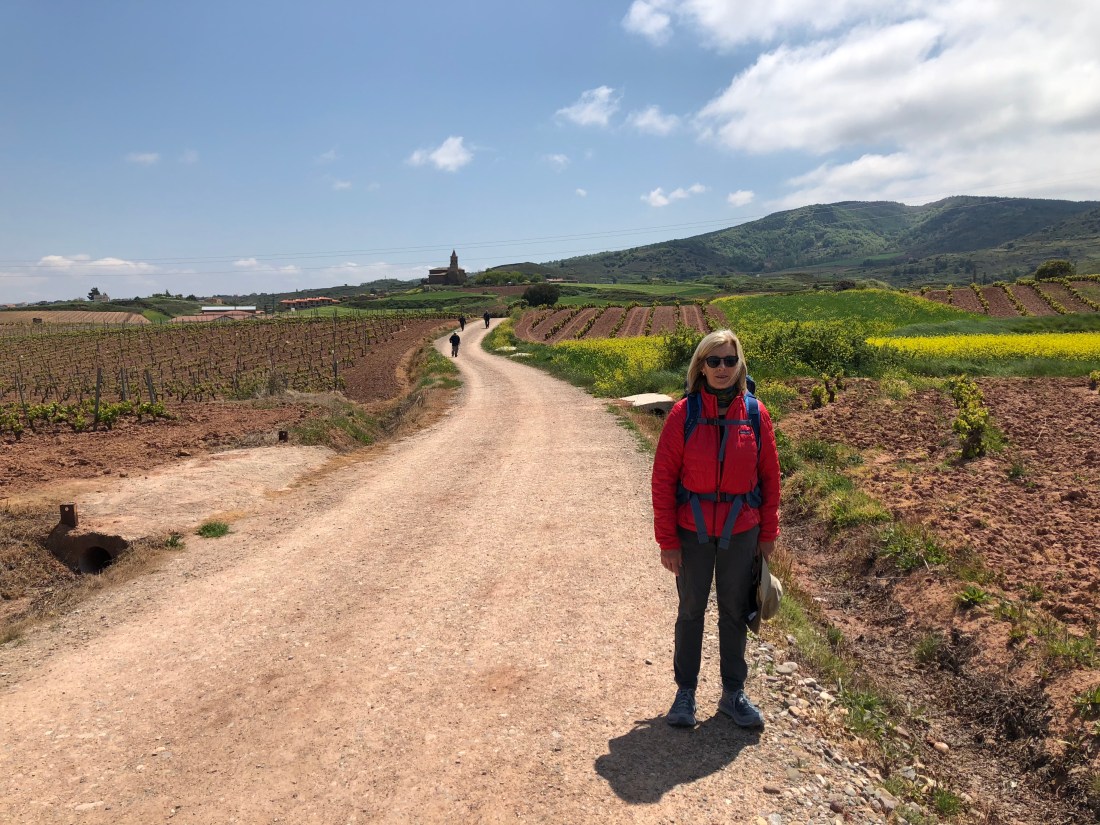
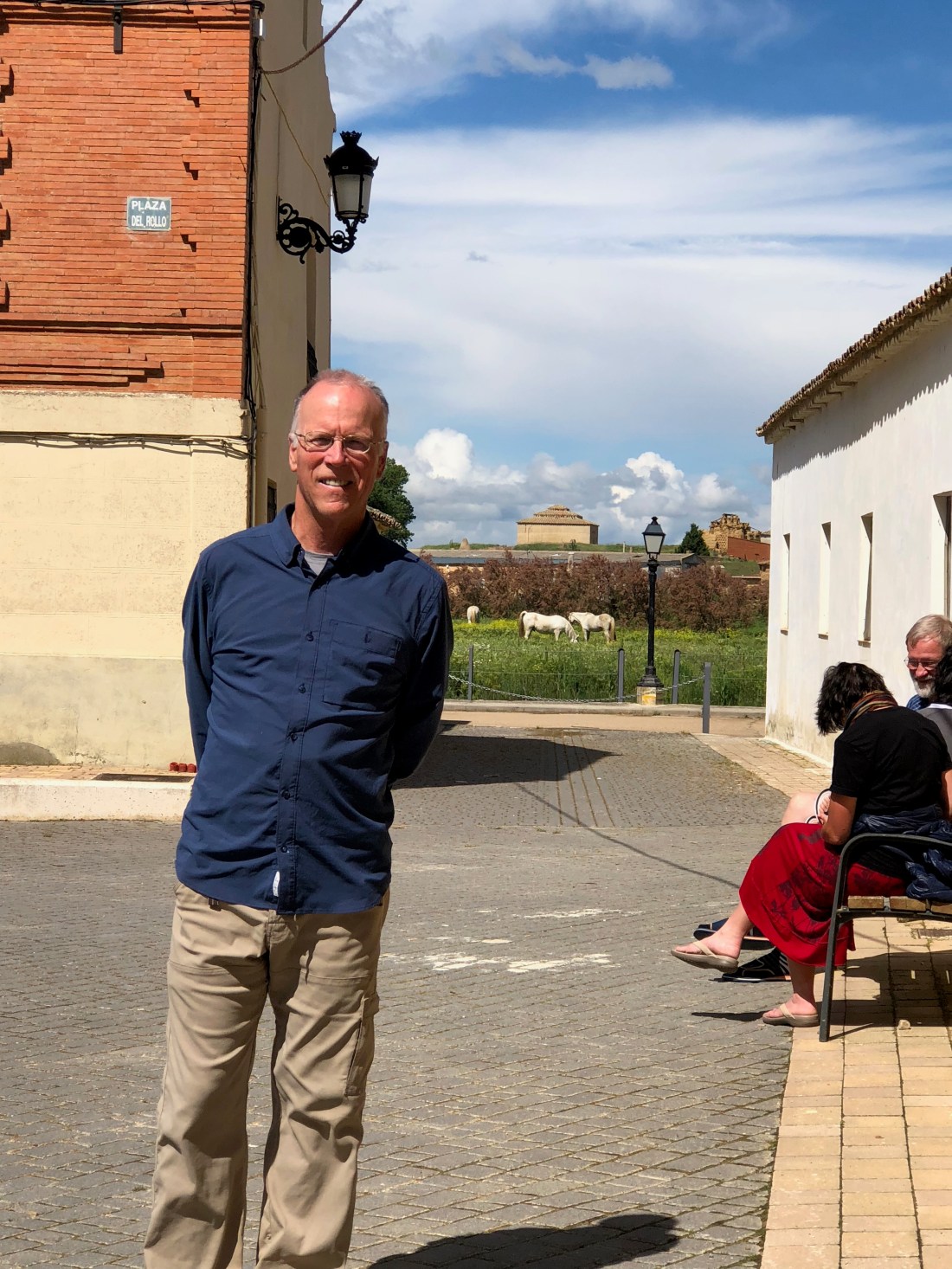
And here is the view from the front of the hotel back to where we came from today.IMG_2200By the end of today’s walk, my leg is sore and swollen, although not as bad as it was before we rested in Castrojerez.  Discussing how we should proceed leads to the first serious disagreement between Anne and me.  I suggest that we tack on extra time to account for our new schedule, including time for my leg to heal.  Anne agrees to extend the trip but wants to know how long.  I don’t know, because I don’t know how long my leg will take to heal.  Anne wants to put a limit on the trip because she wants to get back home to help Hollis, who announced her engagement shortly before we left.
Also, Anne has carried a backpack all day, walking slower than she would like through rain, mud, and thunder and lightening.  And now she just wants to know how much longer this will continue.

 .
Castrojerez, Day 3

There was thunder and lightning last night and lots of rain.  It has been raining off and on most of the day.  

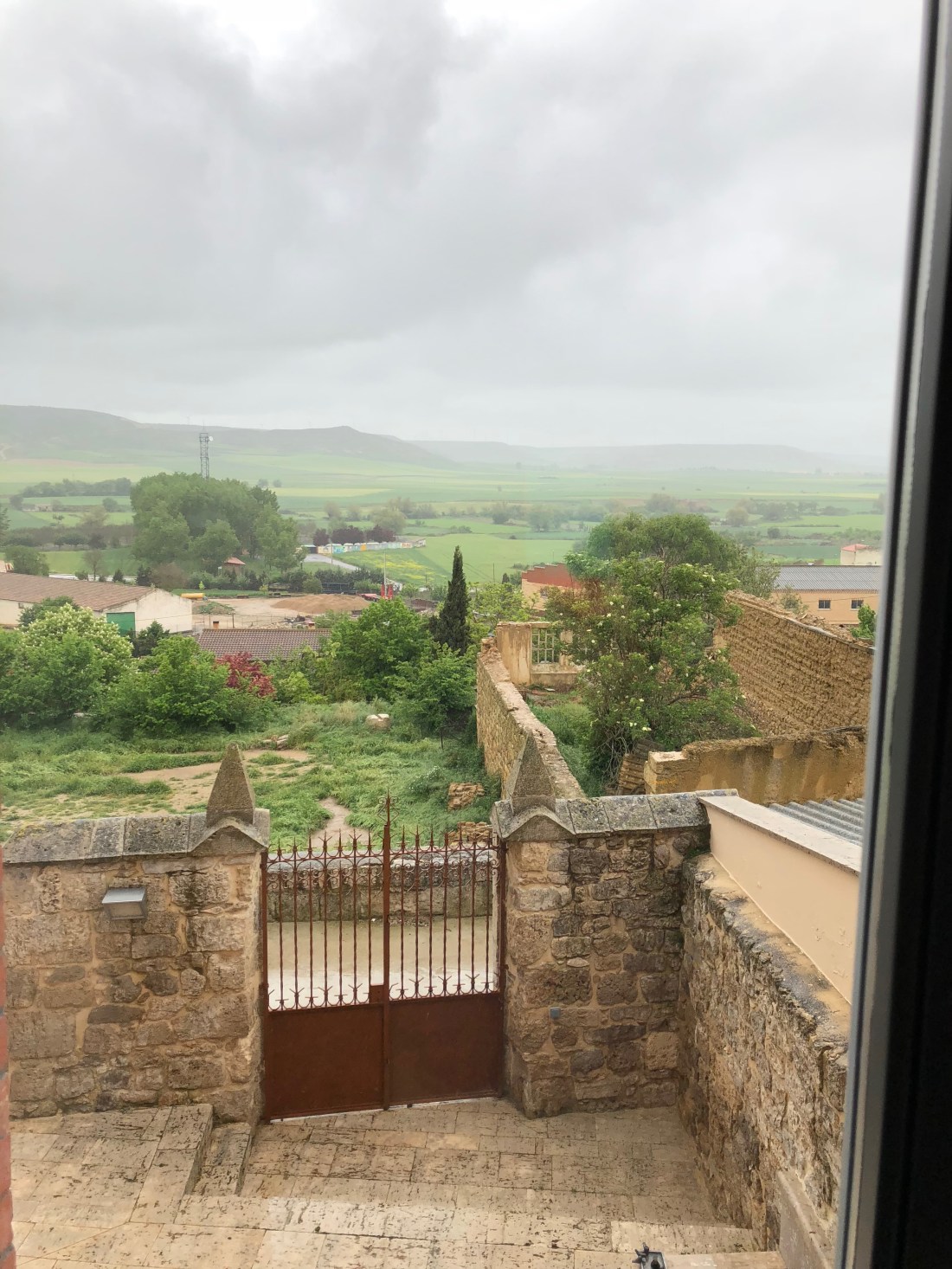
This was the view today from our hotel room.IMG_2158It was a good day to be inside.

I have been icing my leg—which is getting better—and reading. 

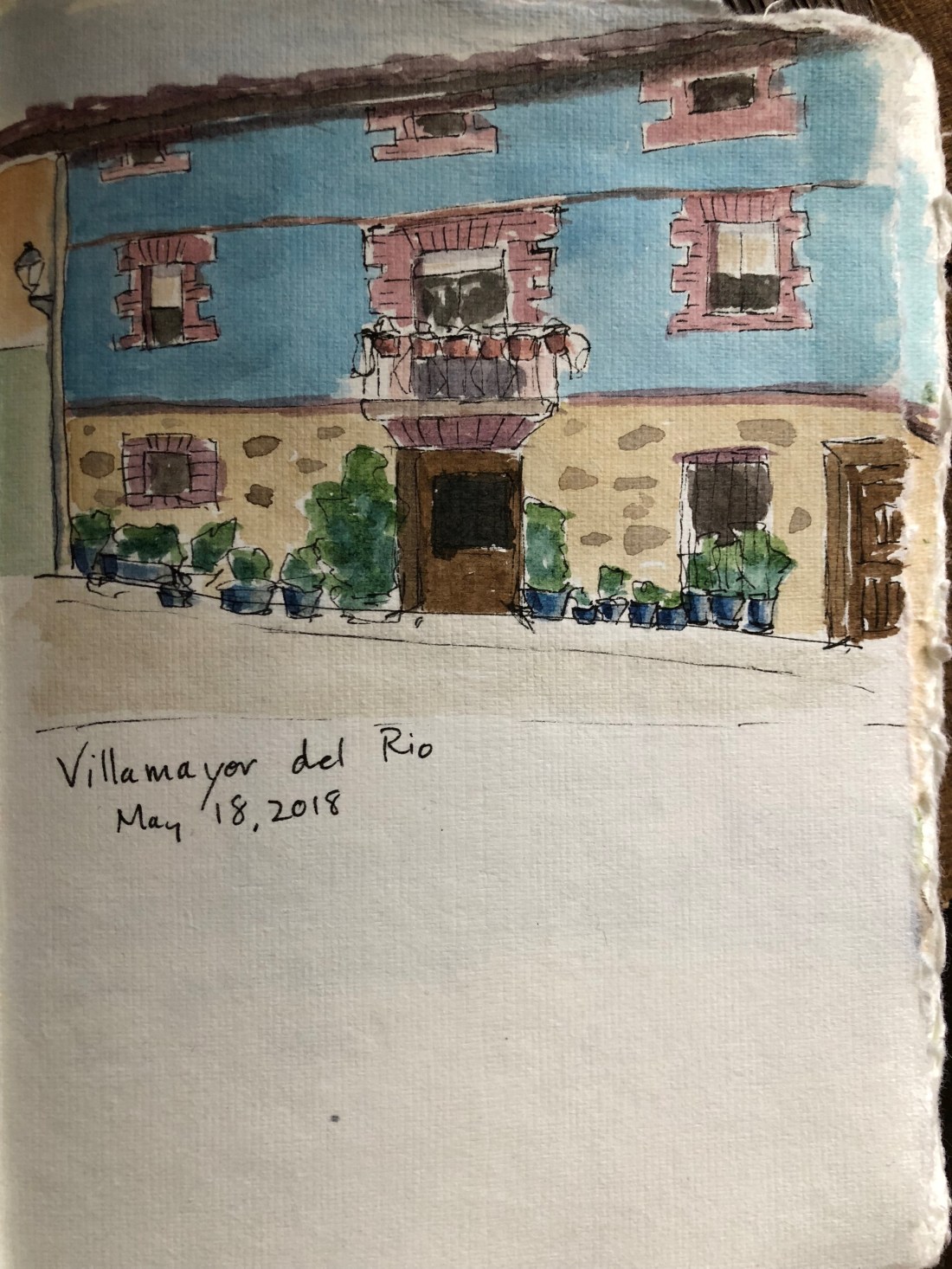
Anne finished up this painting of a house in Villamayor del Rio.IMG_2161After two days in the hotel, we are re-thinking the kind of pilgrims we want to be.
Castrojerez, Day 2

We’re staying in Castrojerez until my leg feels better.  Not a bad place to be holed up for a few days.IMG_2155I went to a local masseuse, a man in his 70’s who was recommended by the hotel where we’re staying.  He had a massage table in an anteroom just inside the front door to his house.  I showed him where my leg hurt.  He poked around for a few seconds, grunted knowingly, and dug his thumbs into the tendons and muscles around my foot.  More suffering on the Camino.  When he was done, he said that he thought I would be good to go tomorrow, “manana, creo que si.”  
We’ll see.

Hornillos del Camino to Castrojeriz

It rained hard today.

We left our Casa Rural—Spanish for bed and breakfast—in Hornillos del Camino under cloudy skies and walked back up onto a meseta. IMG_2113We were on the top of the meseta when the sky opened up.  The rain softened the Camino—at first it felt good underfoot—and then it got sticky.  Gobs of mud stuck to our shoes. 
We walked through the mud in the rain for several miles before we came to the village of Hontanas where we stopped at a cafe.IMG_2117

After several hours, the rain stopped.IMG_2119

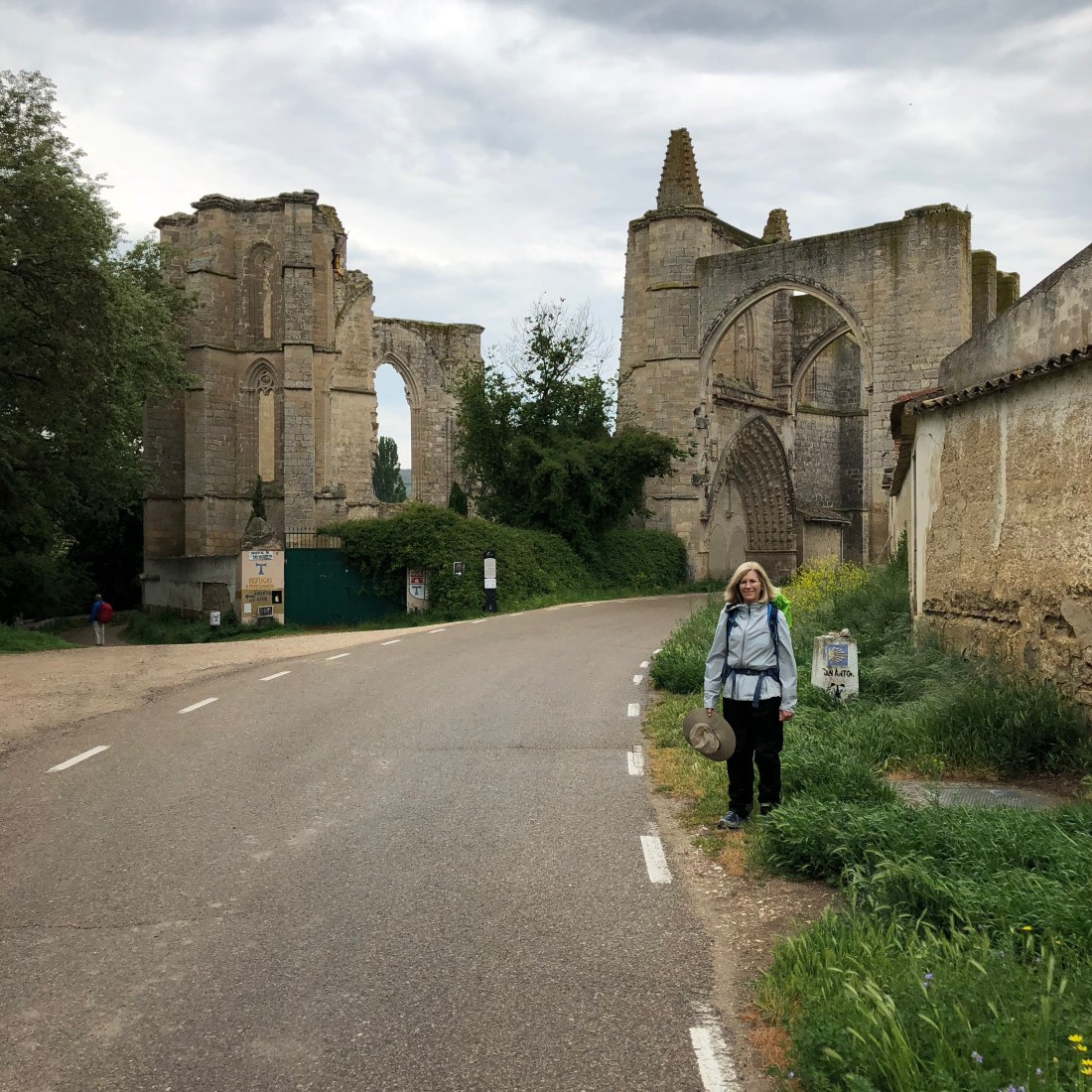
We walked past the ruins of the convento de San Anton.IMG_2120

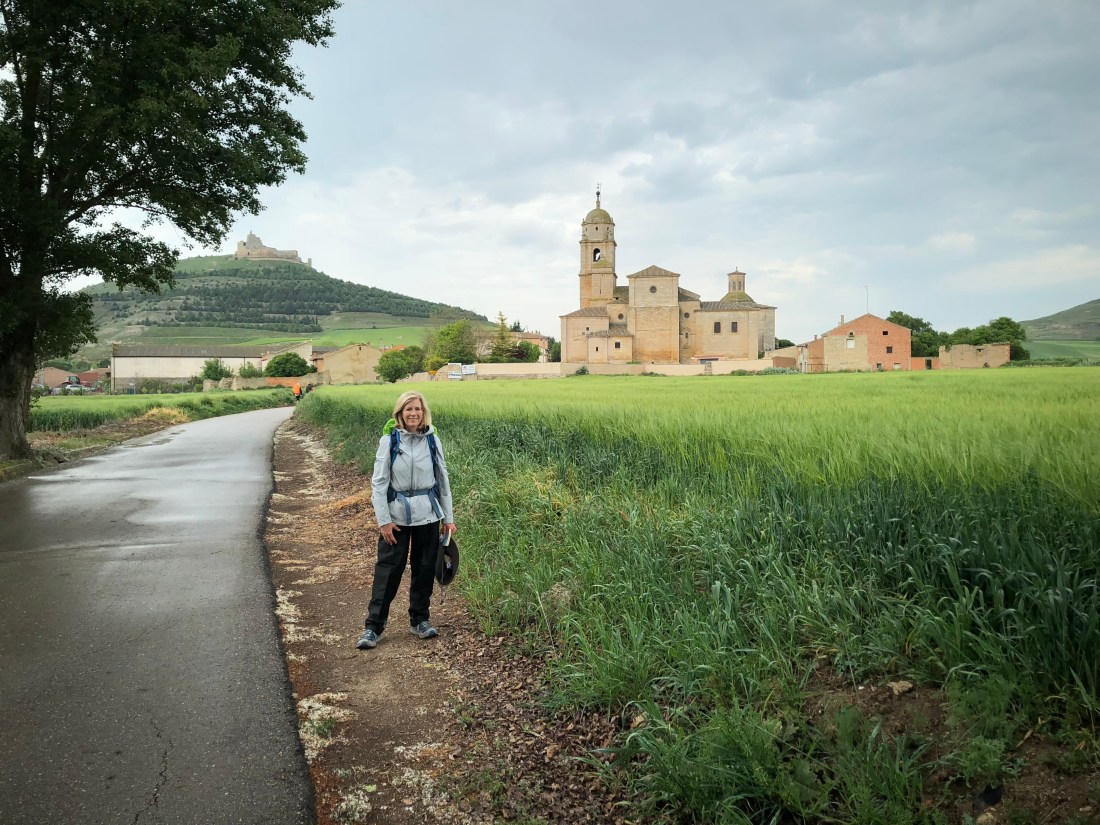
By the time we reached Castrojeriz, our stopping point for the day, the sun was coming out.IMG_2127

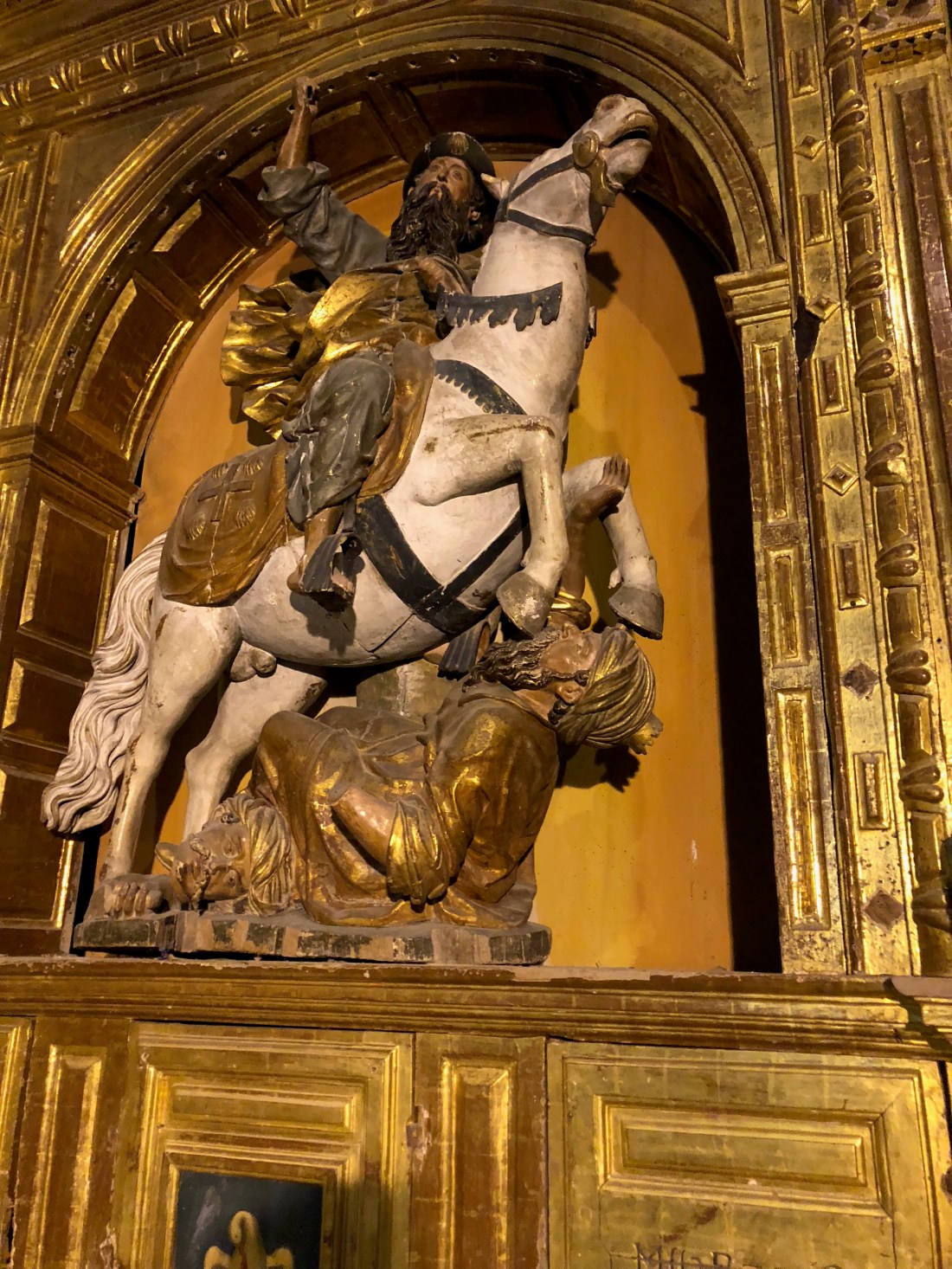
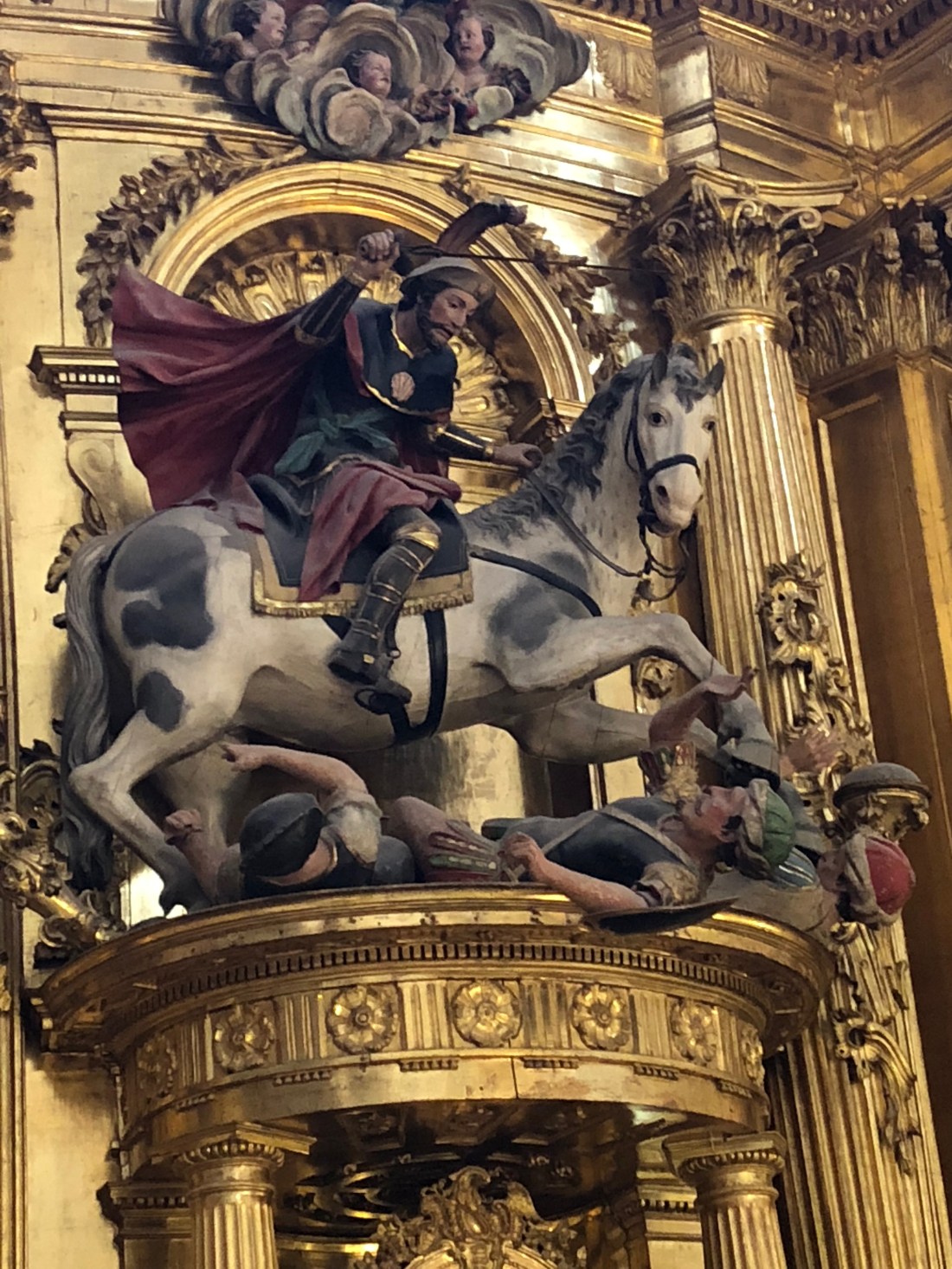
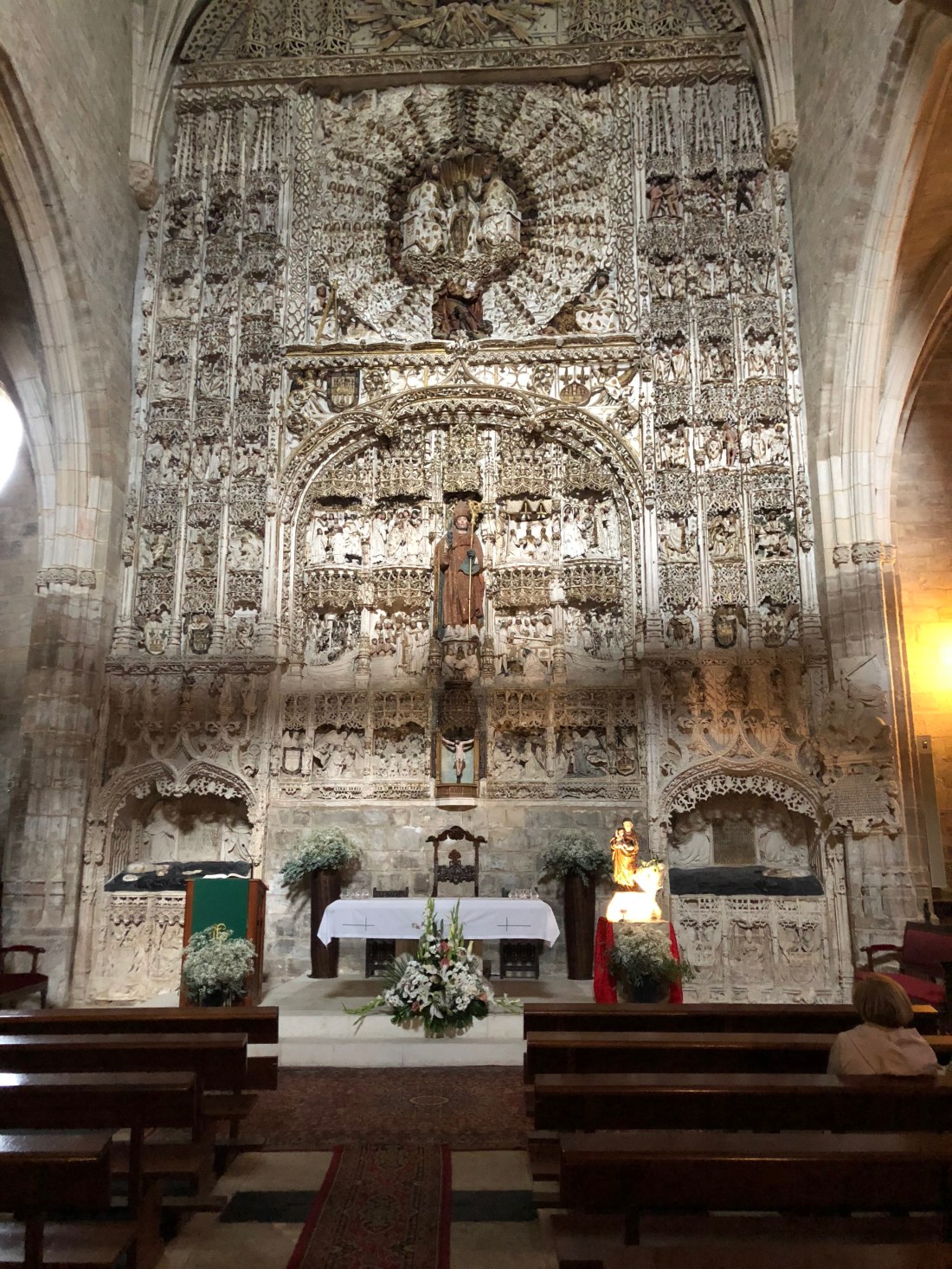
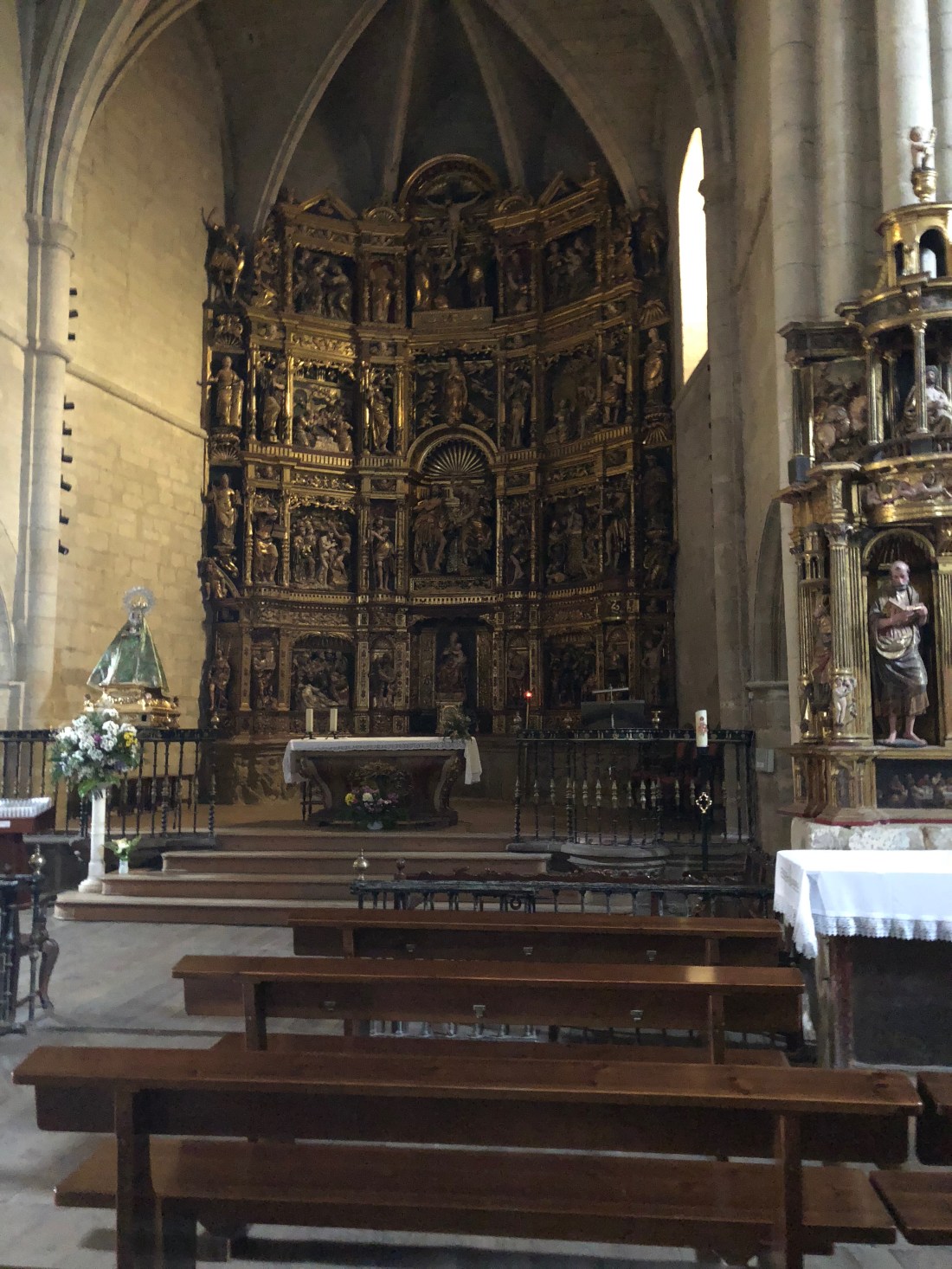
We went into the church in Castrojeriz and saw an altarpiece depicting the Camino’s tradition of violence. The altarpiece shows Santiago Matamoros, St. James the Moor-Slayer, in battle—with a scallop shell on his hat.IMG_2135

A chapel in the Burgos Cathedral has a similar depiction of St. James. In this one, the scallop shell is on his chest.IMG_2041According to legend, Santiago lead Christians in battle against the Moors following the death of King Alfonso II of Asturias.  When Alfonso died, the Moors demanded reinstatement of a tribute of 100 Christian virgins that Alfonso had refused to pay. The Christians rose up in battle to resist the Moor’s demand, and Santiago rose from the grave to lead them.
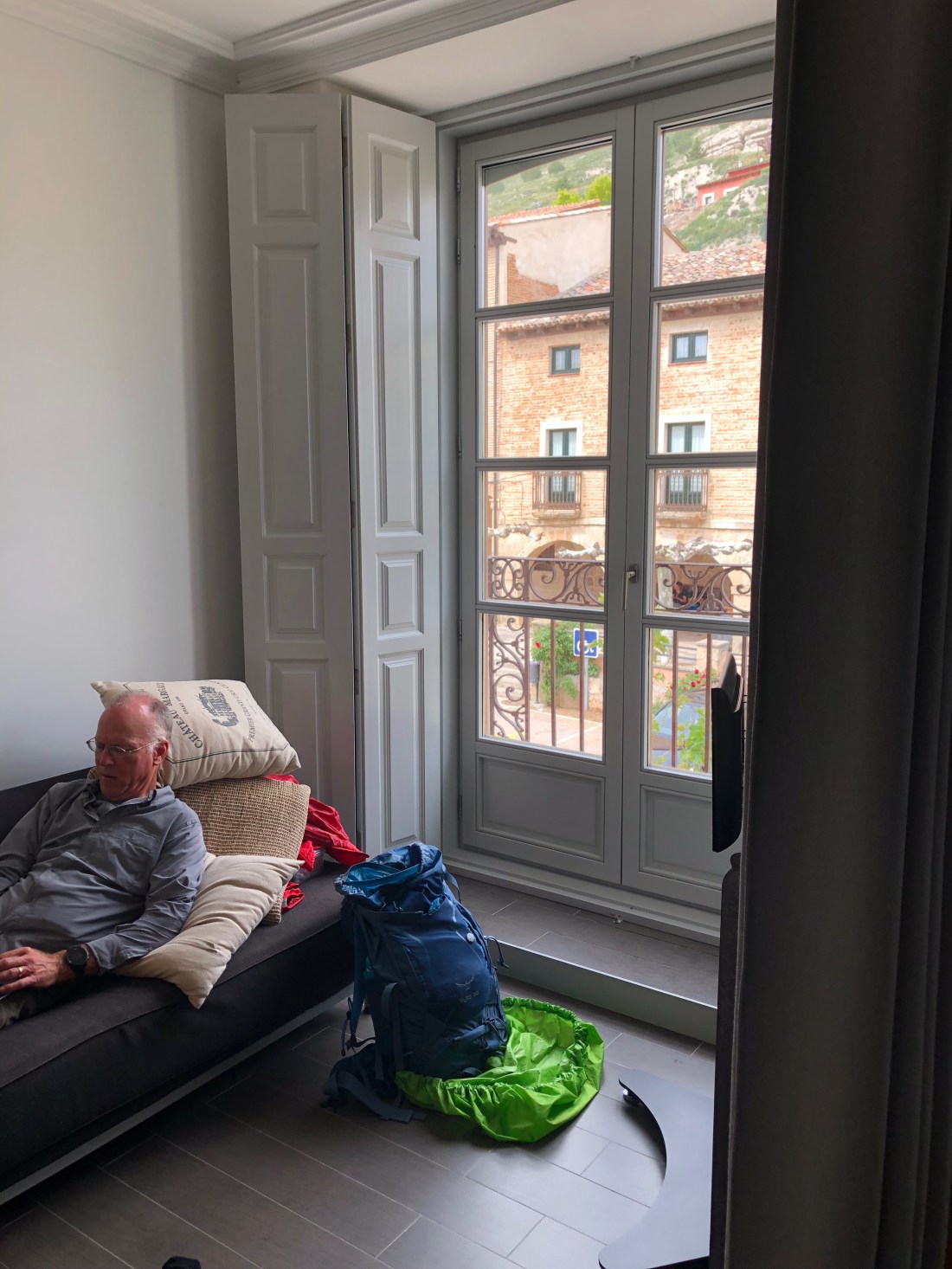
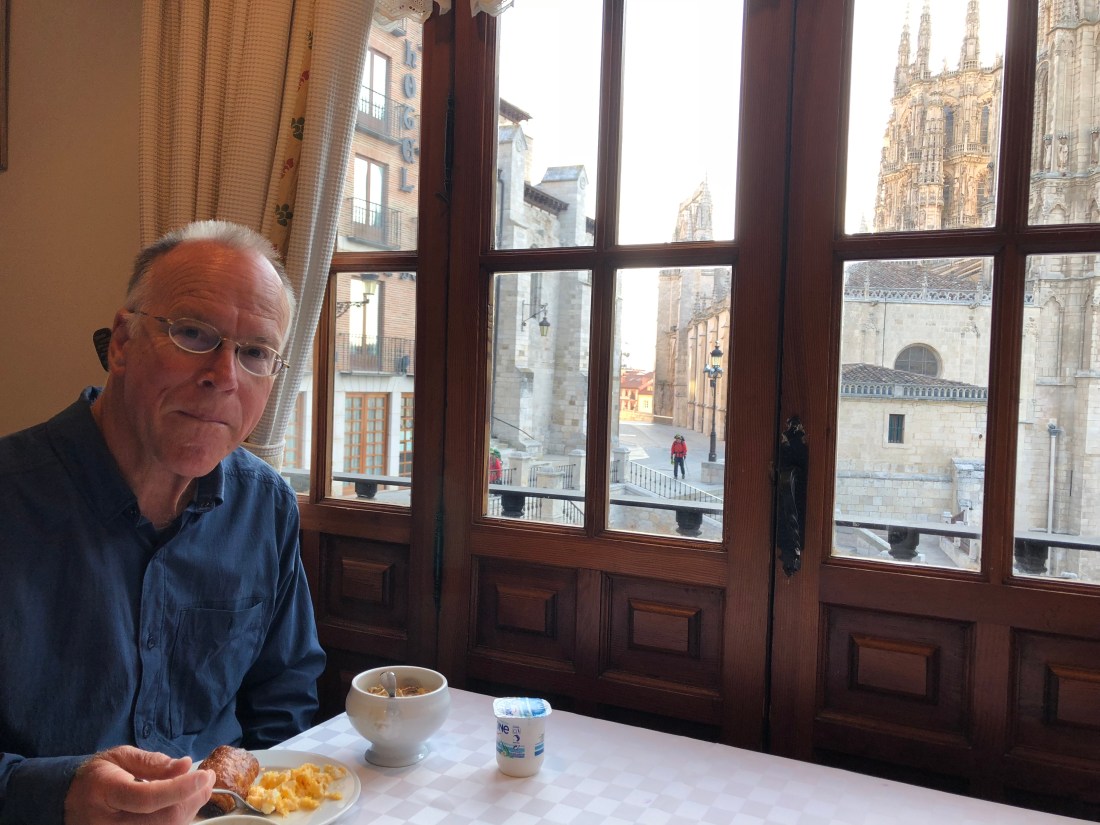
The pain in my left shin increased during the walk today.  I looked on the Internet and found a video of stretches designed to cure shin splints.  I did the stretches, and my foot promptly swelled up.  

We have decided to take at least two days off to give my leg a chance to recuperate. 

This should be a good place to rest.IMG_2146

Burgos to Hornillos del Camino

We got a late start from Burgos this morning.  At the hotel, we prepared for a long day of walking.IMG_2053On the way out of Burgos, we visited a monastery that was a highly recommended stop in our guide book, John Brierly’s A Pilgrim’s Guide to the Camino Santiago.  Brierly let us down, again. 
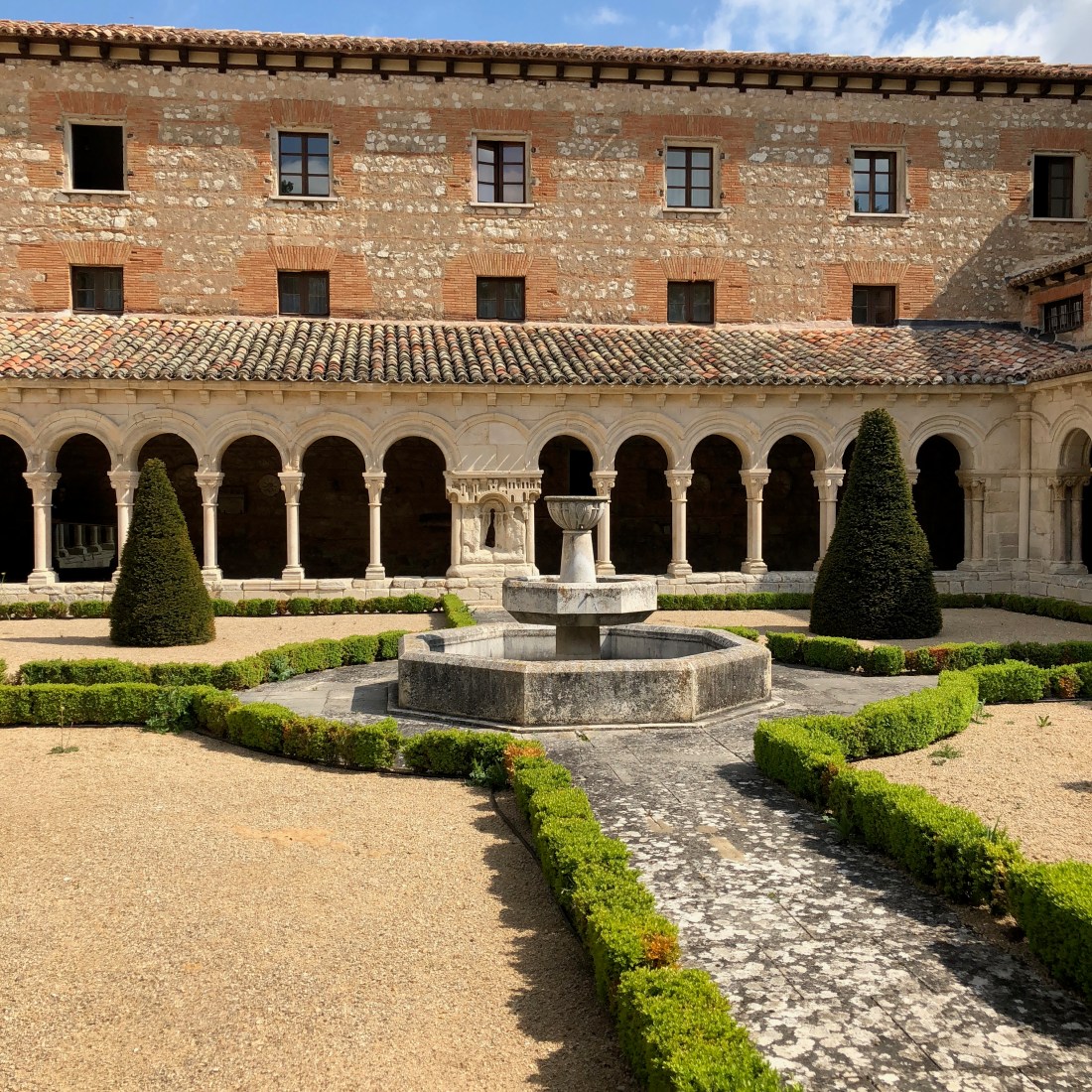
He fails to mention that the monastery, the Monastario de las Huelgas Reales, did not open until 10 a.m.  Nor does he mention that the monastery can only be seen by guided tour; that the first tour does not begin until 10:30 a.m.; and that the tours are entirely in Spanish.  The monastery was beautiful, but not more than many of the other churches and cathedrals we have seen.IMG_2065A couple who spoke only French was also on the tour.  The guide, after each of her presentations, would pull the French couple over and give them an abbreviated version in French.  After one of these excursions, I asked the guide a question in English.  She shrugged her shoulders as if she did not understand.  Maybe she didn’t understand English.  I am surprised how easily people identify Anne and me as Americans, even when we don’t speak.  I have asked  people how they knew that we were Americans.  They only laugh.  Maybe they are too polite to tell us.
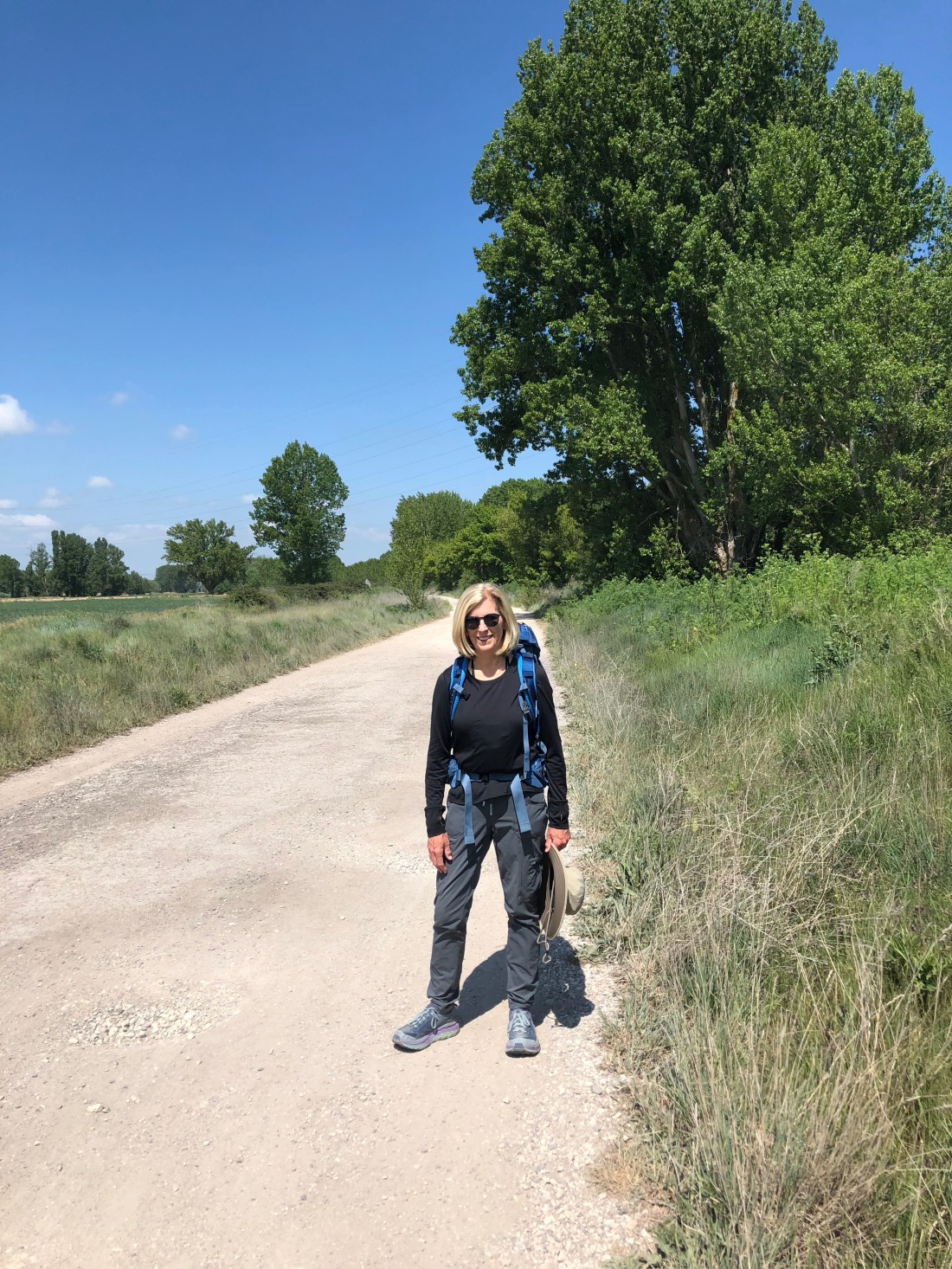
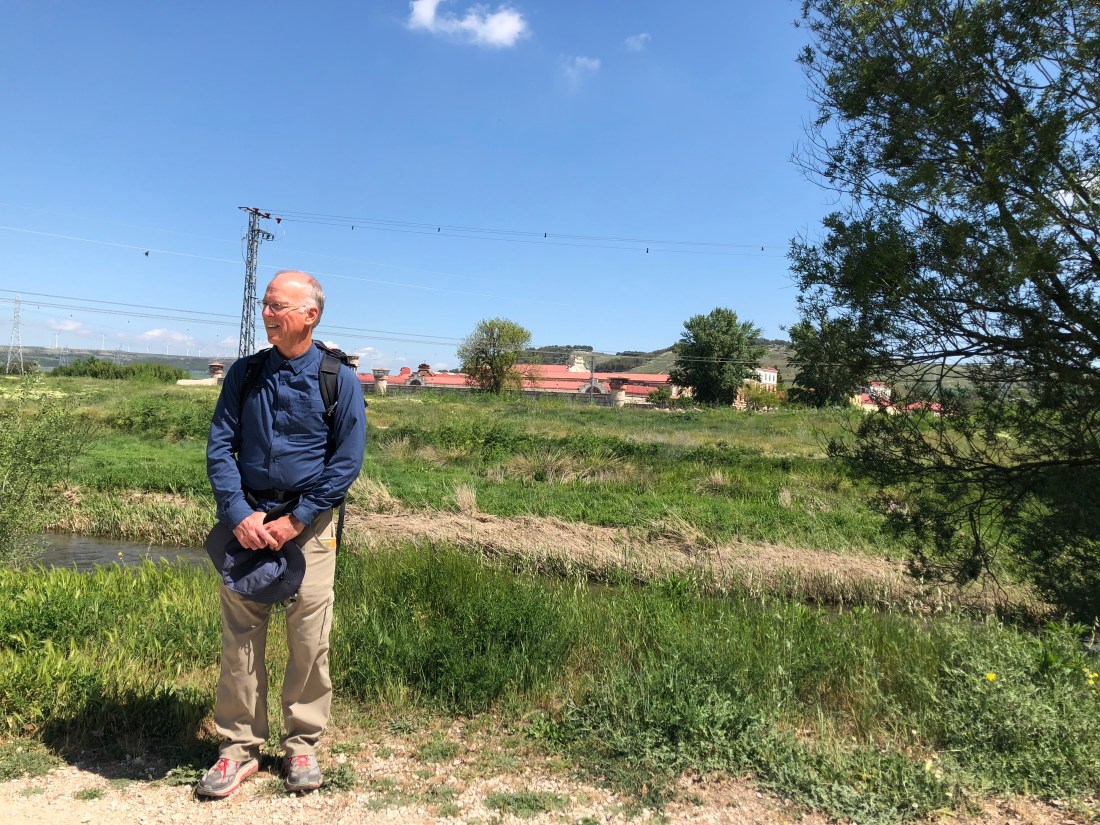
After leaving the monastery we were quickly out of Burgos on a path that passed by fields.  IMG_2071

The Camino went by a prison.IMG_2072

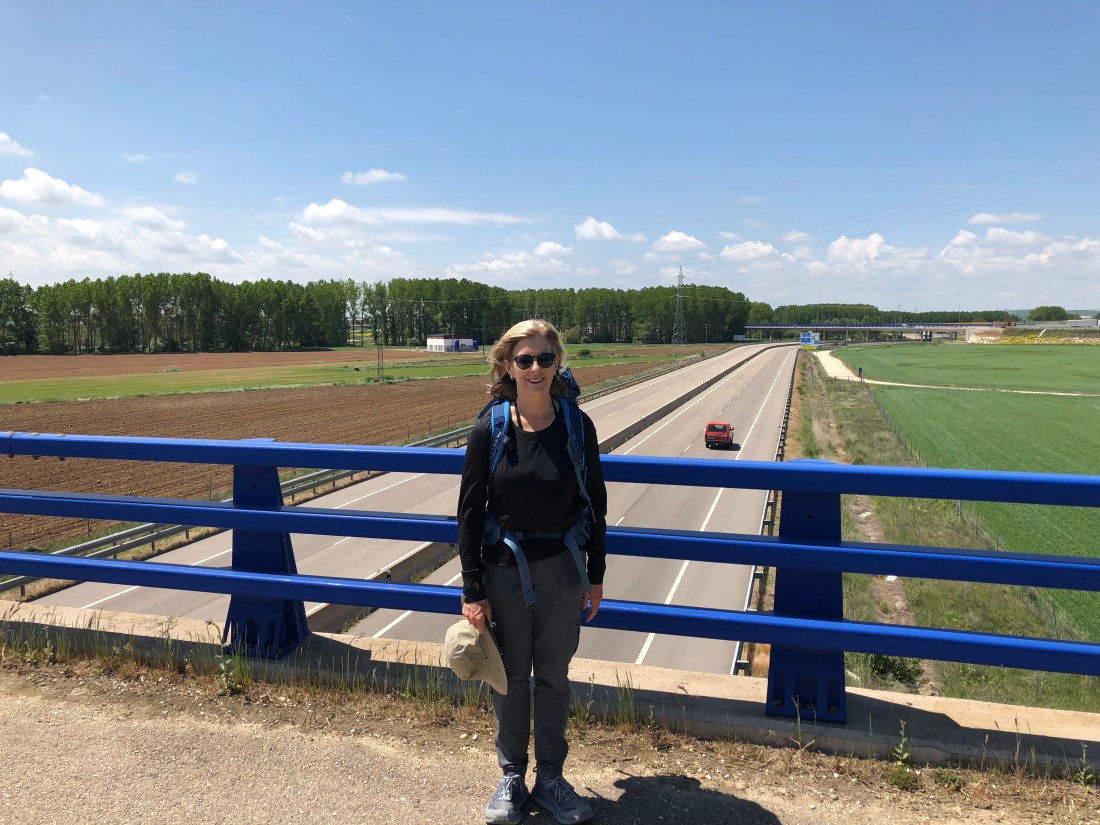
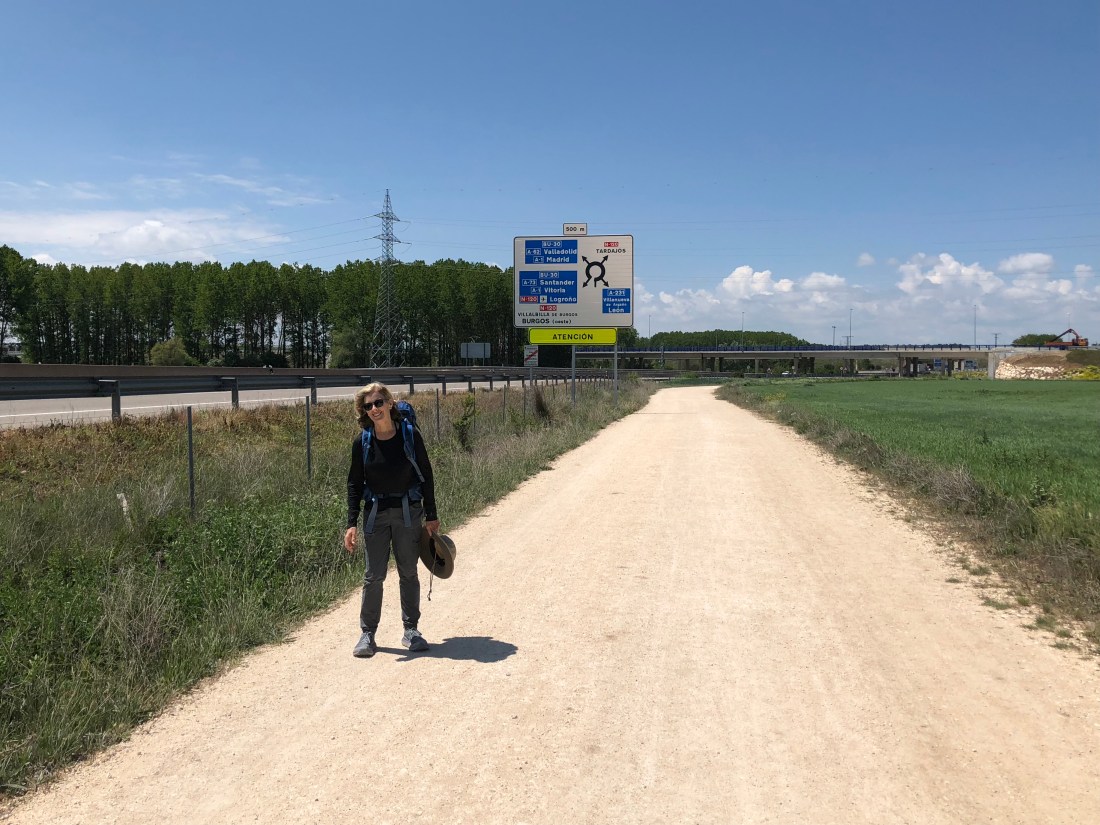
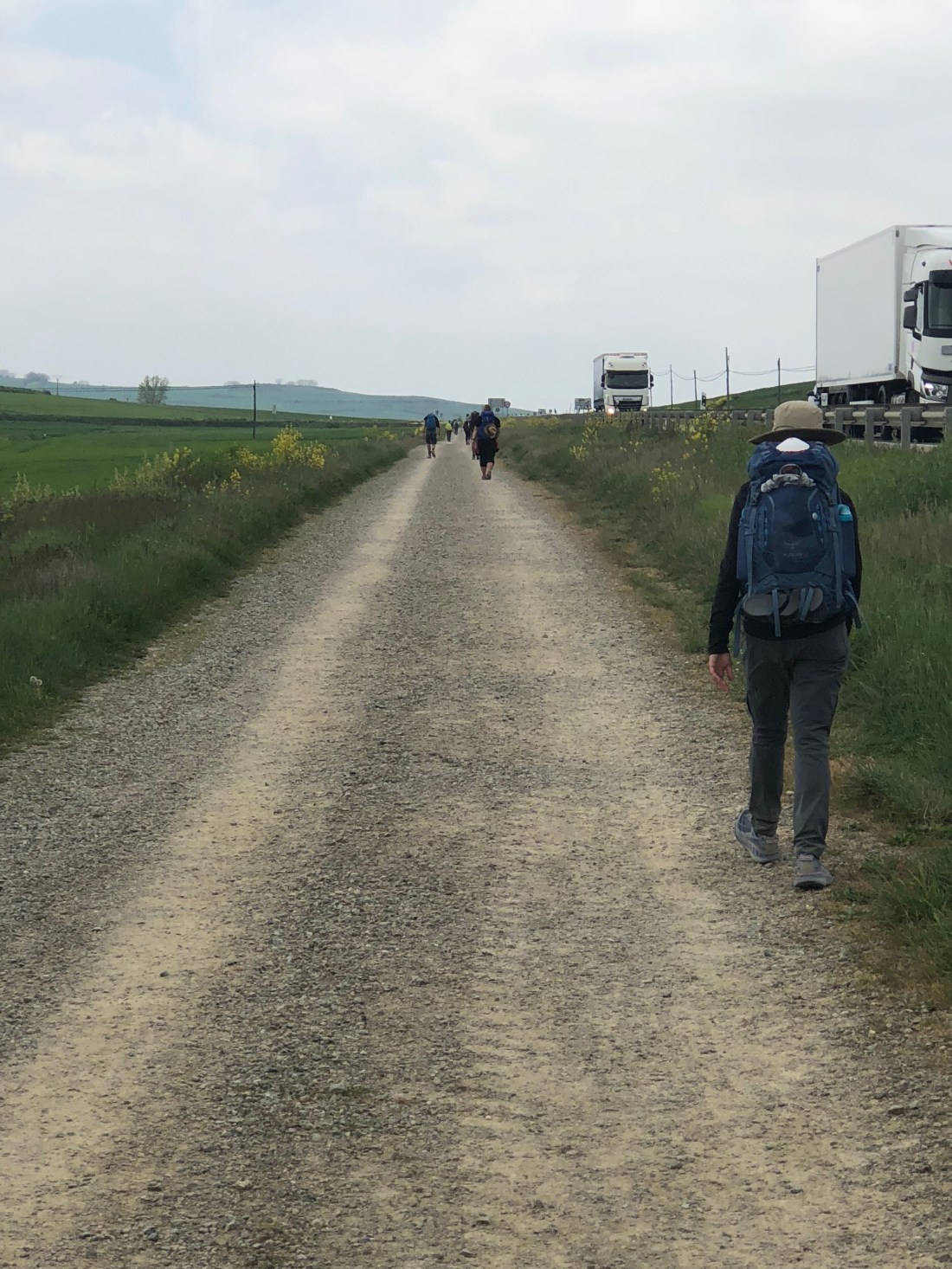
We didn’t see a lot of people on the Camino today, which is understandable because much of it was beside busy highways.IMG_2075

IMG_2076As we have learned, lots of people skip the drearier parts of the Camino by hopping on buses or hiring a car.
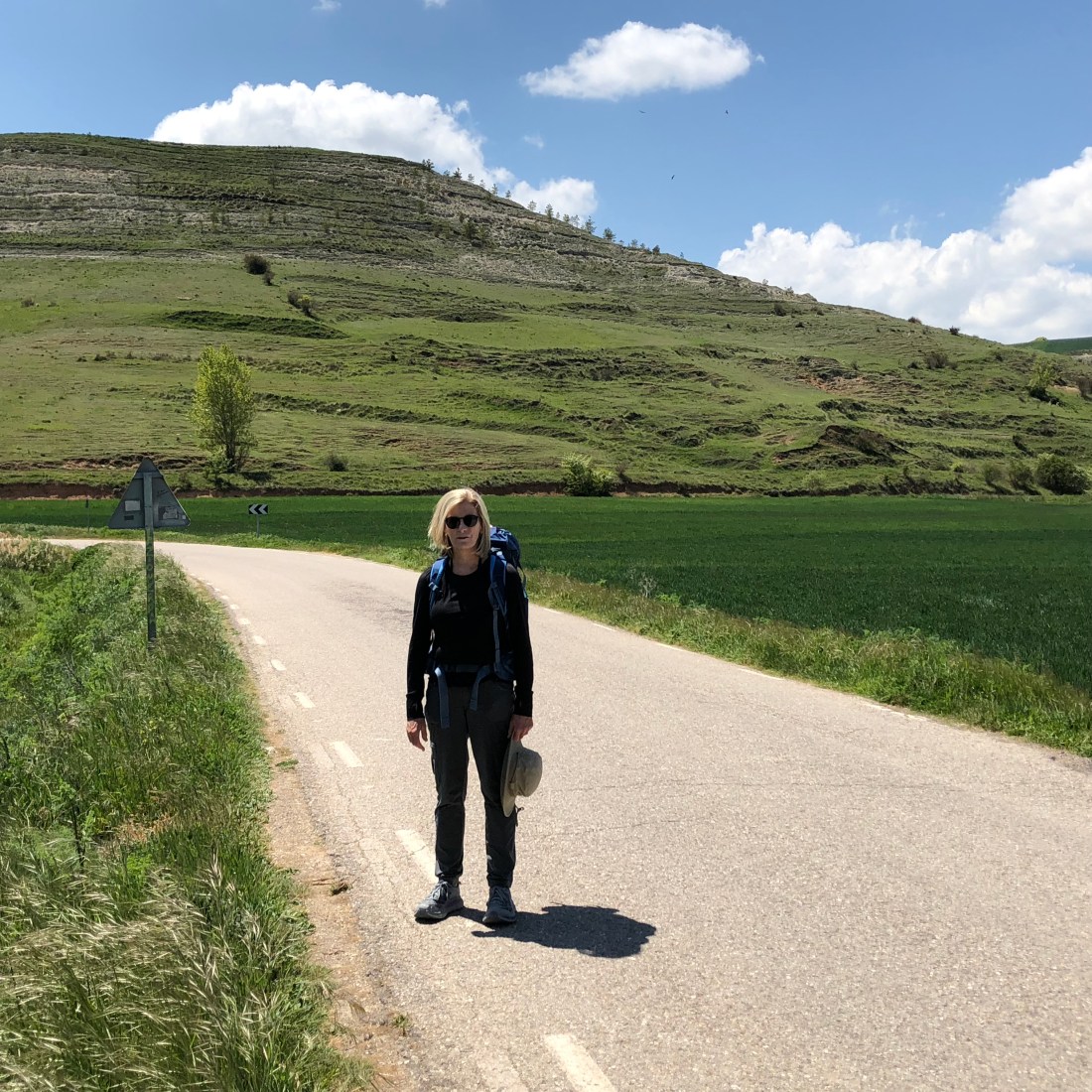
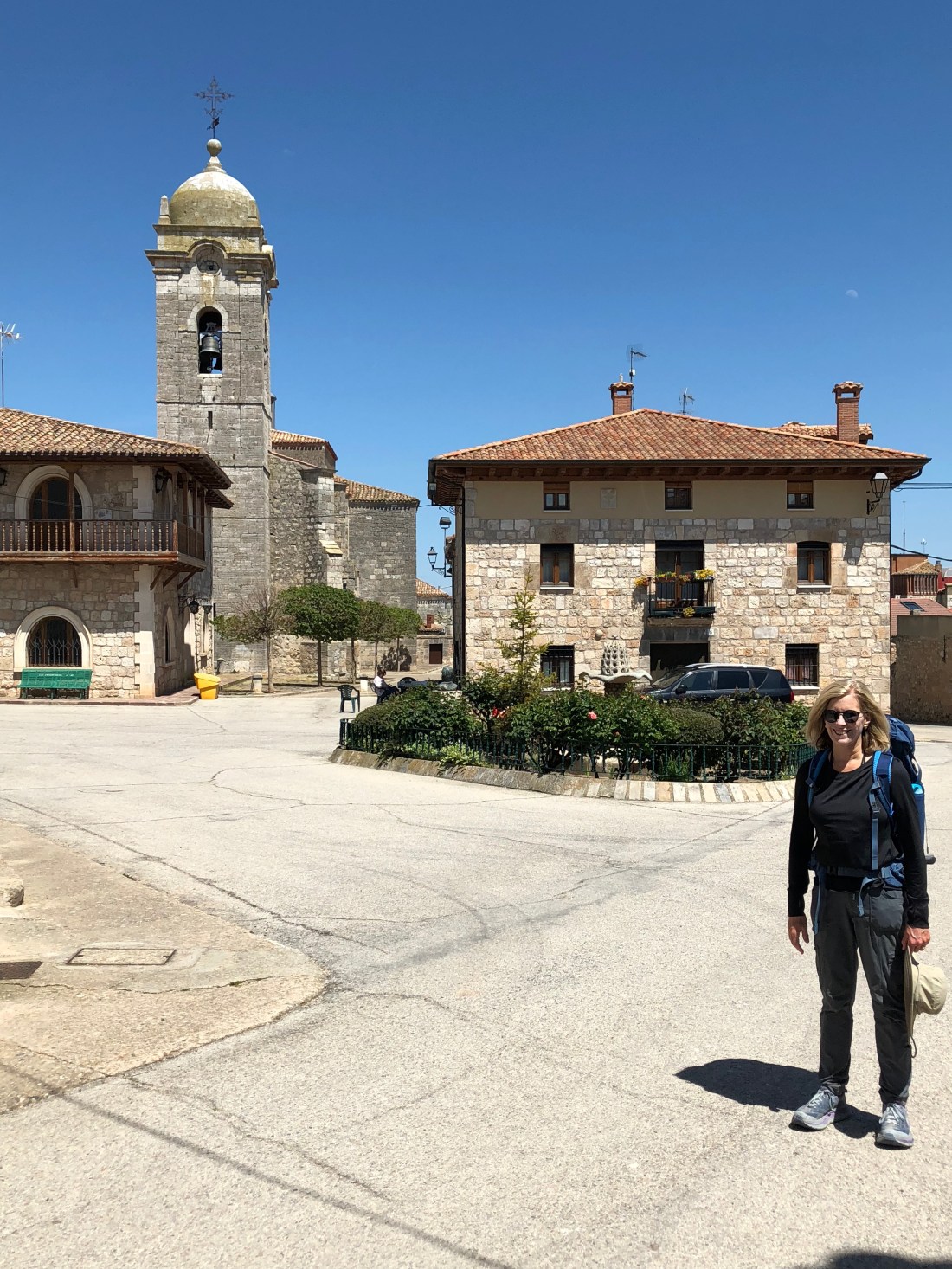
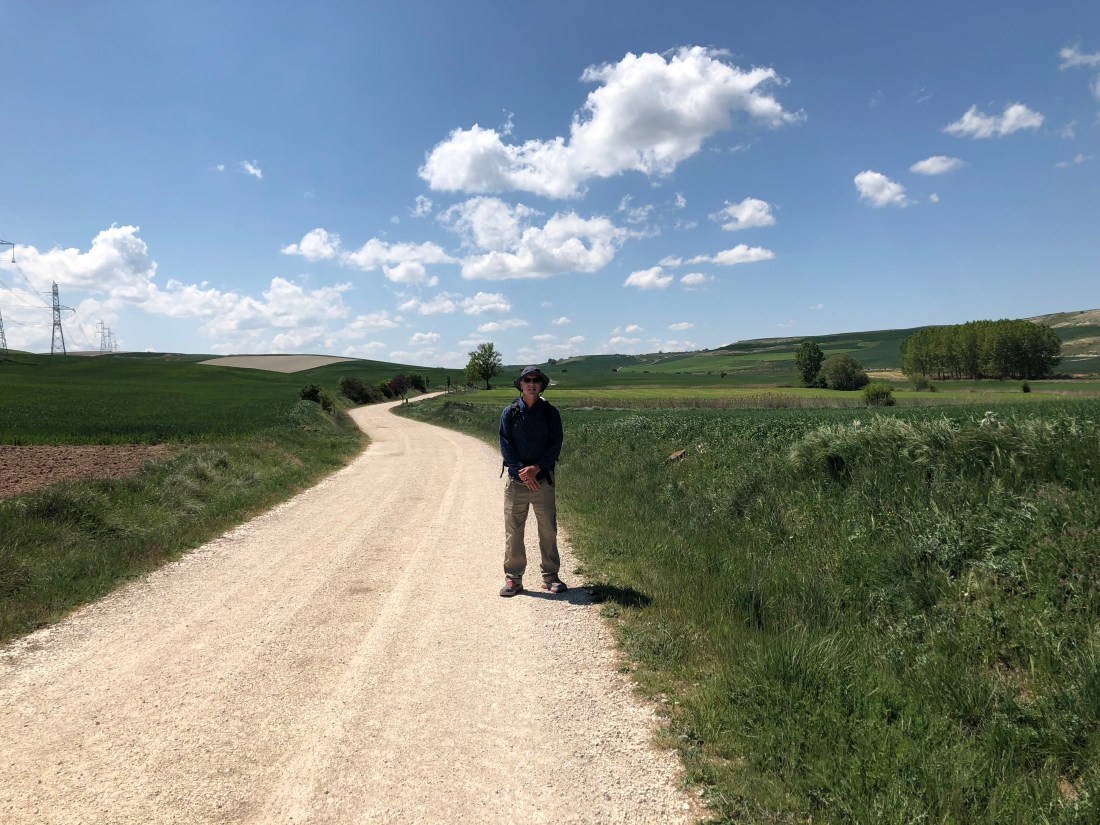
This raises the question, would a Real Pilgrim take a bus?  How much hardship must a pilgrim experience to authentically experience the Camino?  

There many ways to smooth out the bumps on the Camino.  Anne and I have been staying in good hotels and restaurants when we can.  Are we any less pilgrims?  We had originally planned on finding hotels as we went along. We thought it would be very pilgrim-like to find our bed at the end of the day wherever we happed to land.  Maybe pilgrim-like, but totally impractical.  A few days ago in Puenta La Reina, we ran a serious risk of sleeping in a field on the side of the Camino.  We are spending a lot of time now trying to find reservations at the next town down the Camino. We are looking into hiring a booking service  that will make the reservations for us. Do Real Pilgrims use booking services?

After we got through the highway interchanges, the scenery improved as the Camino began to climb up to the Meseta.

Our first view of the Meseta is in the background.IMG_2079

Before entering the Meseta, we went through the village of  Rabe de las Calzadas.IMG_2086

The Camino then began a long climb up onto the Meseta.IMG_2090

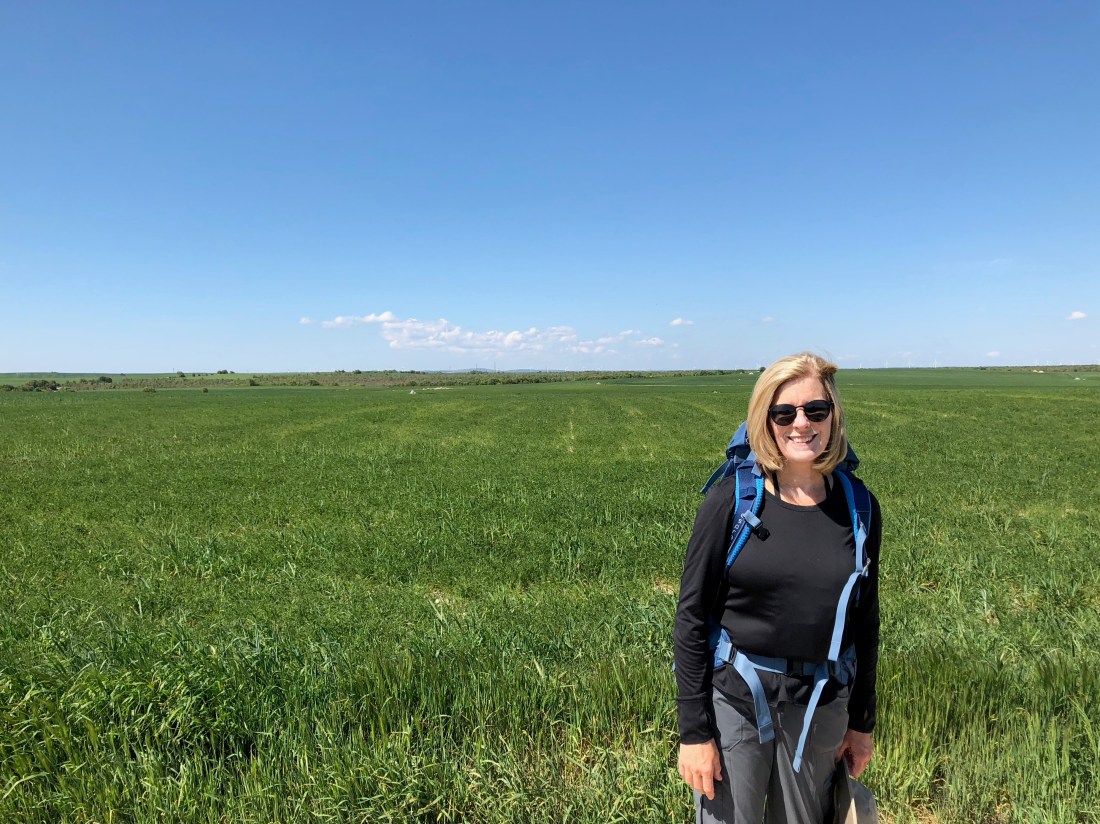
At the the top, the Meseta extended to the horizon in all directions.

IMG_2094

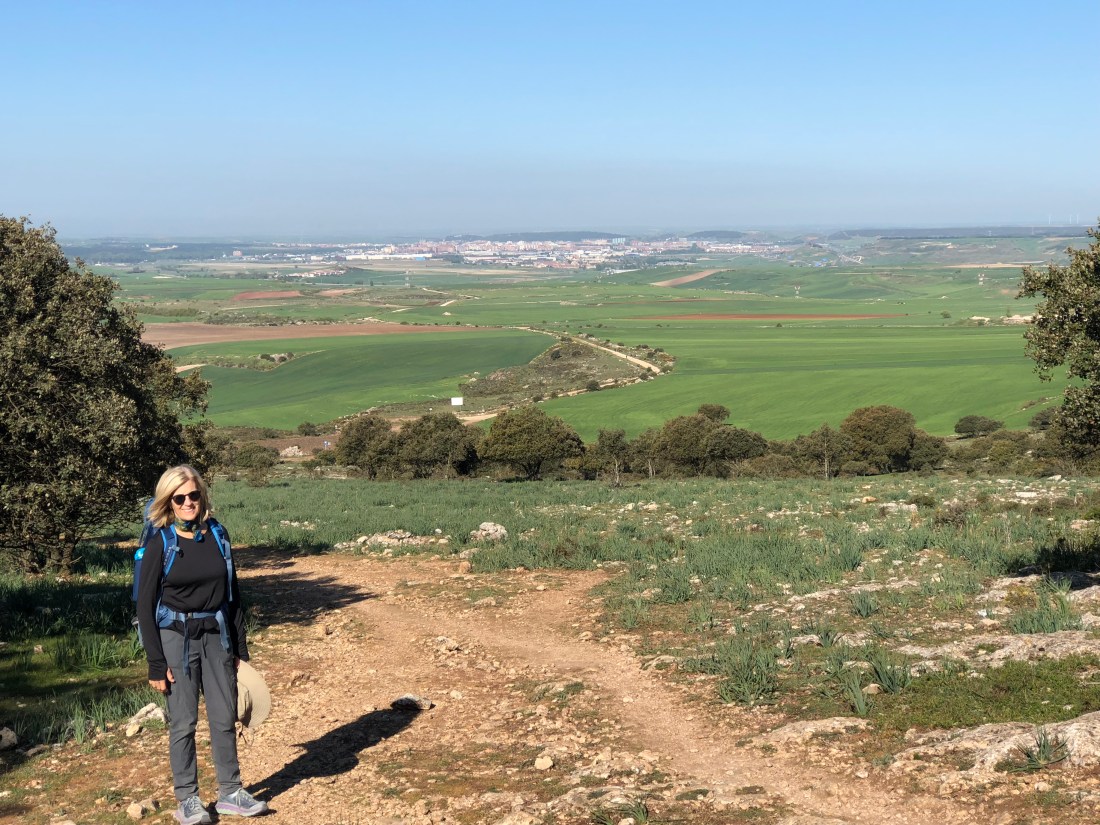
After walking for several miles on the top of the Meseta, the Camino dropped sharply to the village of Hornillos del Camino, our destination for the day.IMG_2100On the way down, I had sharp pains in my right shin.  It had been bothering me since the race to the albergue three days earlier in San Juan de Ortega. It has been getting steadily worse.  If it does not get better tomorrow, I will hire a service to deliver my backpack to the next day’s destination.  If it continues to get worse, the photos I post in the future may be from the window of a bus.
I doubt that anyone on the Camino today has a fully authentic pilgrim experience.  I haven’t seen anyone dressed in a rough wool robe and sandals carrying water in a gourd.  Those hardships are long past.  As we go along, Anne and I have been turning to more and more of the services available to smooth out the Camino, grateful that there are there.

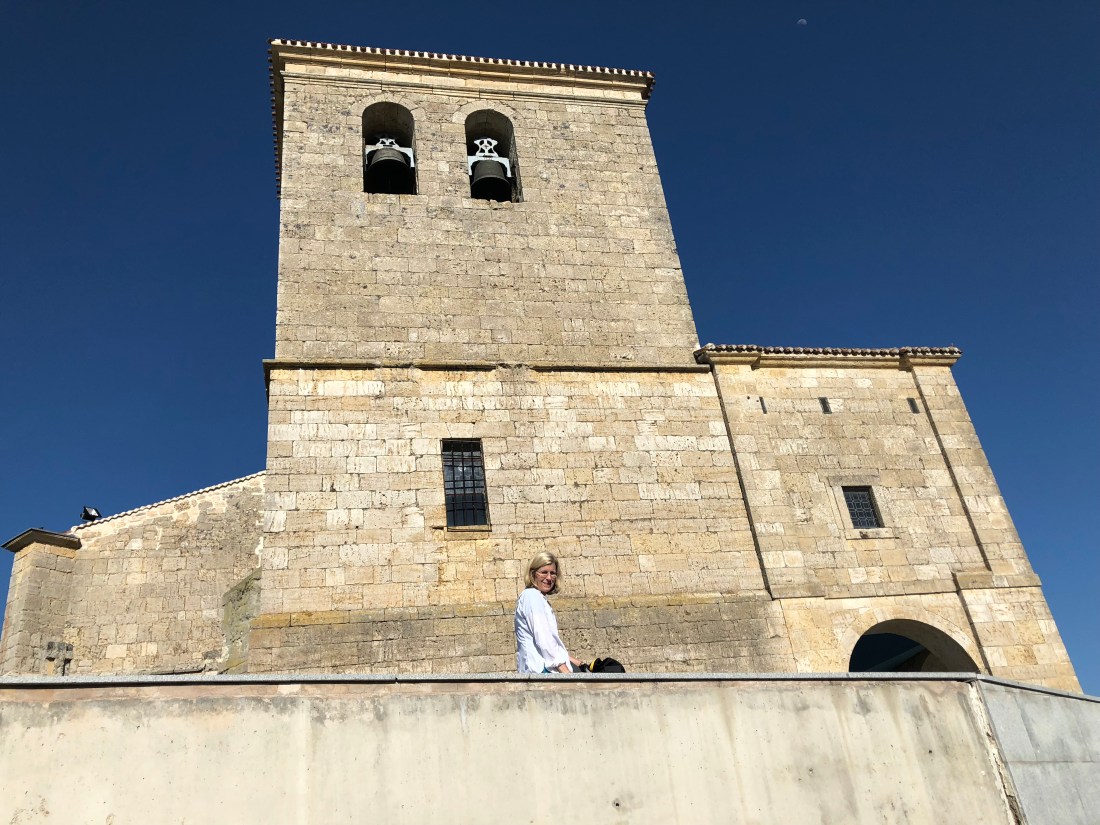
Here is the church in Hornillos del Camino.IMG_2102

San Juan Ortega to Burgos

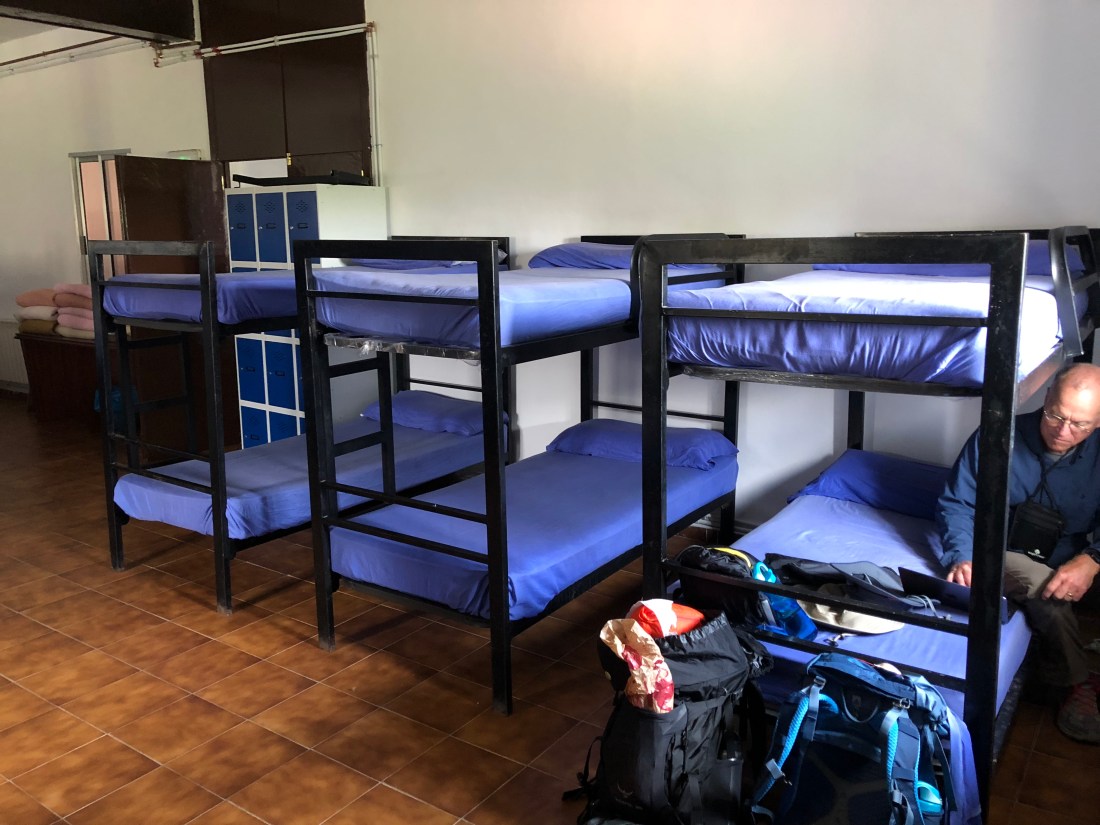
Last night we stayed in a historic pilgrim hostel dating from the middle ages.  I’m pretty sure my mattress and pillow were part of the original furnishings.

We were in a large room with about 40 beds.  Every bed had pilgrim in it when the lights went out at 10 p.m.  The air in the room was damp and smelled like sweaty clothes.  After about 15 minutes, the snoring started up and continued until the lights came on at 6 a.m.  Anne and I had been up for about an hour at that point, awakened by pilgrims who were getting an early start, rustling through their gear and shining their flashlights.

At dinner in the albergue the night before, Anne and I had sat across the table from a French woman who was on the final leg of a 1200 km walk from Geneva to Santiago.  She has done the trip in segments over a two year period.  Some legs she walked with friends; some she walked alone.  Her final leg from Pamplona to Santiago, which she is walking alone, goes through some large and medium sized Spanish cities.   

The French woman—she never told us her name—told us that she had visited Washington D.C. and New York City but had no plans to return to the U.S.  She said that it was “too crazy.”  She said that she worked for the International Red Cross, primarily in Afghanistan.  She said that when she was in Afghanistan neither she nor her guards were armed because “violence just causes violence.”

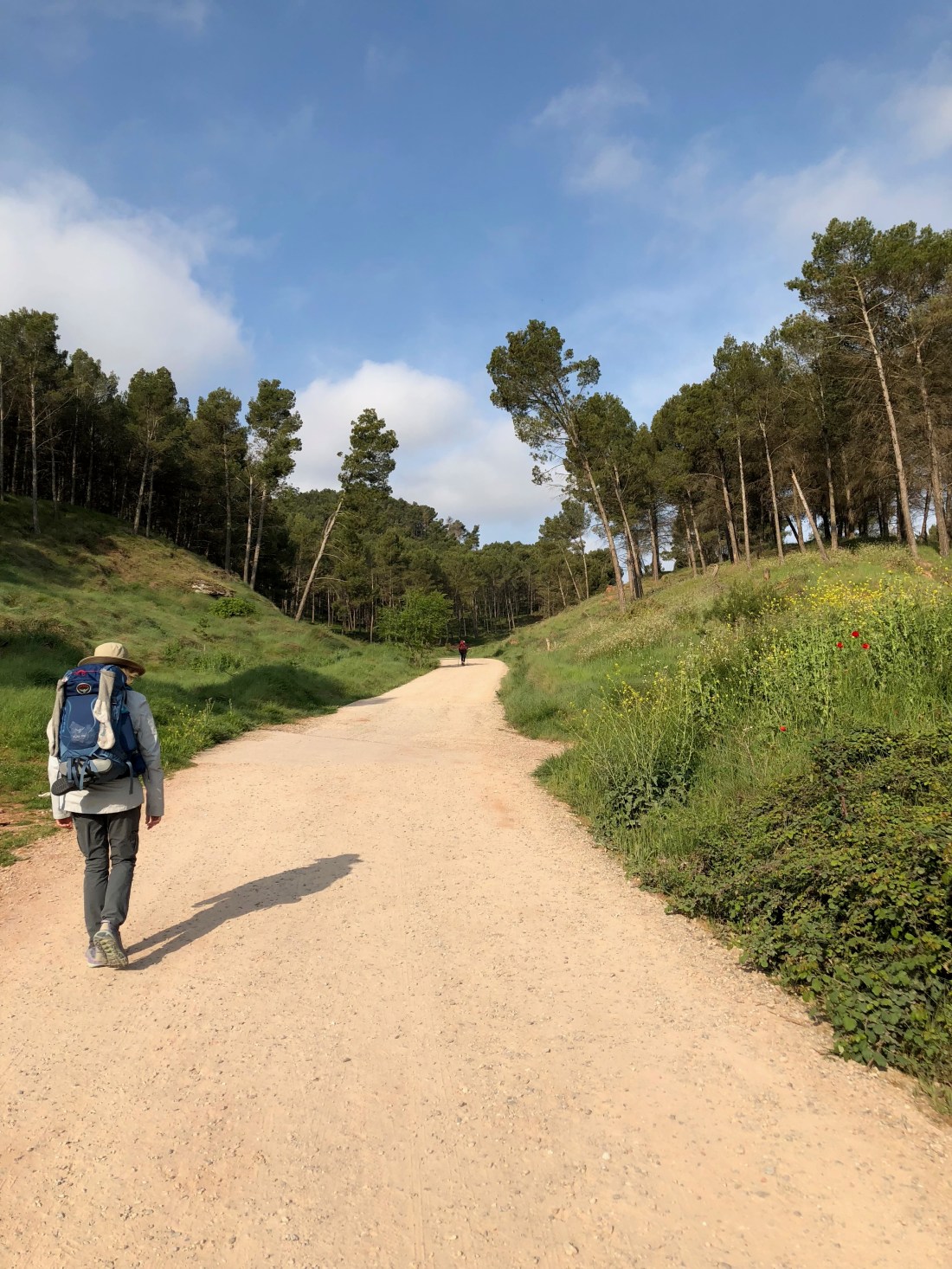
The albergue didn’t serve breakfast, and there were no cafes or markets nearby, so we got an early start, walking again on the wide track over the mesa that we had been on yesterday.

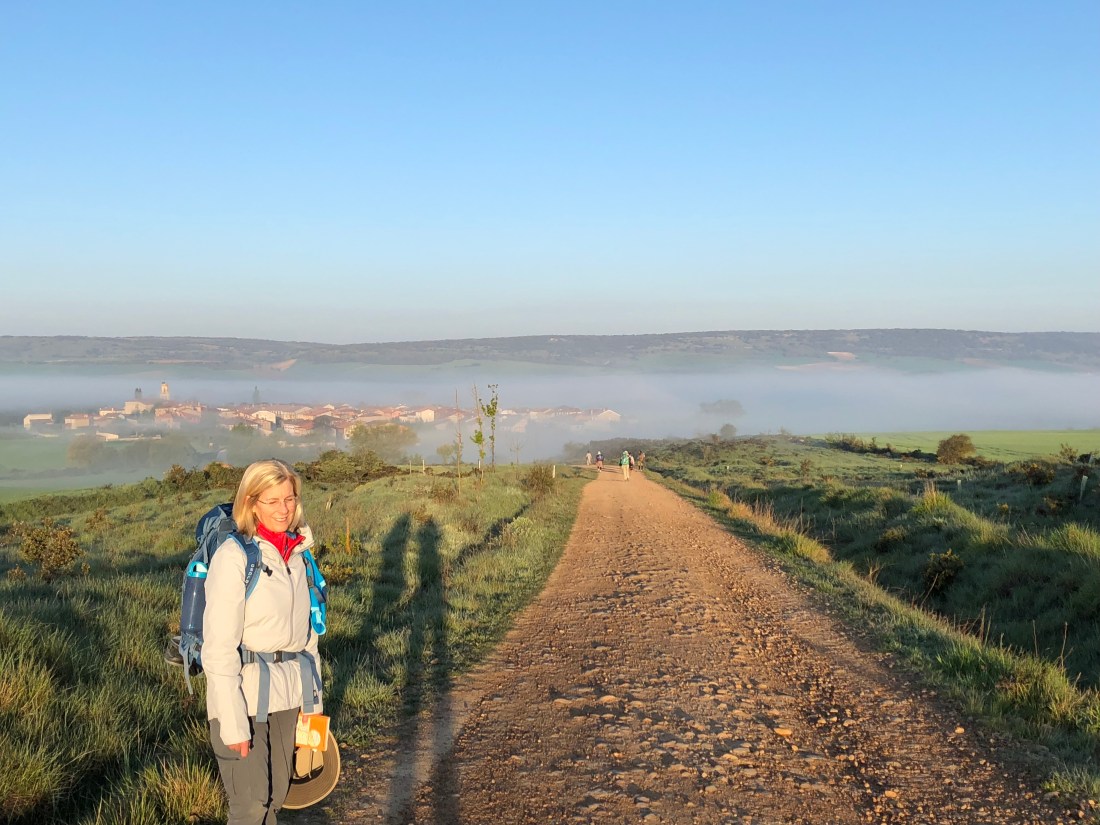
After walking for almost an hour, we saw the village of Ages in the valley below:IMG_1945

All the hungry pilgrims from San Juan Ortega descended on this cafe in Ages. It is very unusual for a cafe in Spain to be open this early—it was around 7 a.m.–especially on a Saturday morning:IMG_1946

This is the church in Ages:IMG_1948

We walked on to the next village, Atapureca where we saw this church, which, like the church in Ages, was locked:IMG_1953

The trail then headed uphill to another long mesa:IMG_1958 2

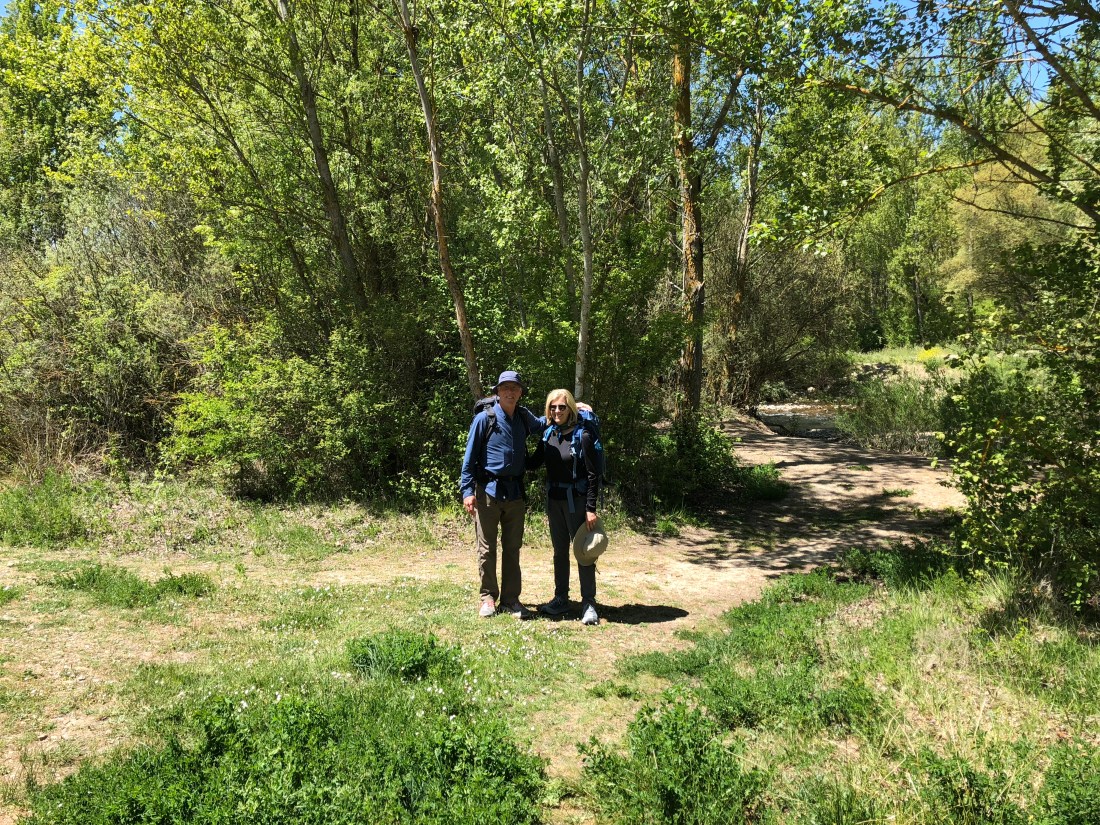
Coming down from the mesa, we could see Burgos in the distance, our destination for the day:IMG_1963In the next village, Villaval, we bumped into several old friends that we hadn’t seen in several days, and had wondered if we would see again.  We saw Dirk the German, whom we have seen at several masses along the way, and who on a hill outside of Pamplona told me that he was fascinated by all the newly injured pilgrims because of their connection to the ancient tradition of suffering on the Camino.  Anne and I decided that Dirk must be part of an interesting backwater of German Catholicism. We also bumped into two young Asian women—one named Kiki, I never caught her friend’s name—who were solemnly carving up an enormous steak at a cafe in Puente la Reina.  Kiki pointed to the steak and told Anne, “this muscle will become my muscle.” We saw a quiet young woman, traveling by herself, who described her nationality by saying that she lives in Sweden but is Hungarian.  We met her in Orisson on our first day of traveling.  And we probably saw for the last time a group that we also met on our first day in Orission, Eliaine, Mercedes, and Mercedes’ husband.  They are about our age and are catching a bus in Burgos for Leon and then for Santiago. They had planned to walk the entire way to Santiago but injuries have forced them to stop their walk.
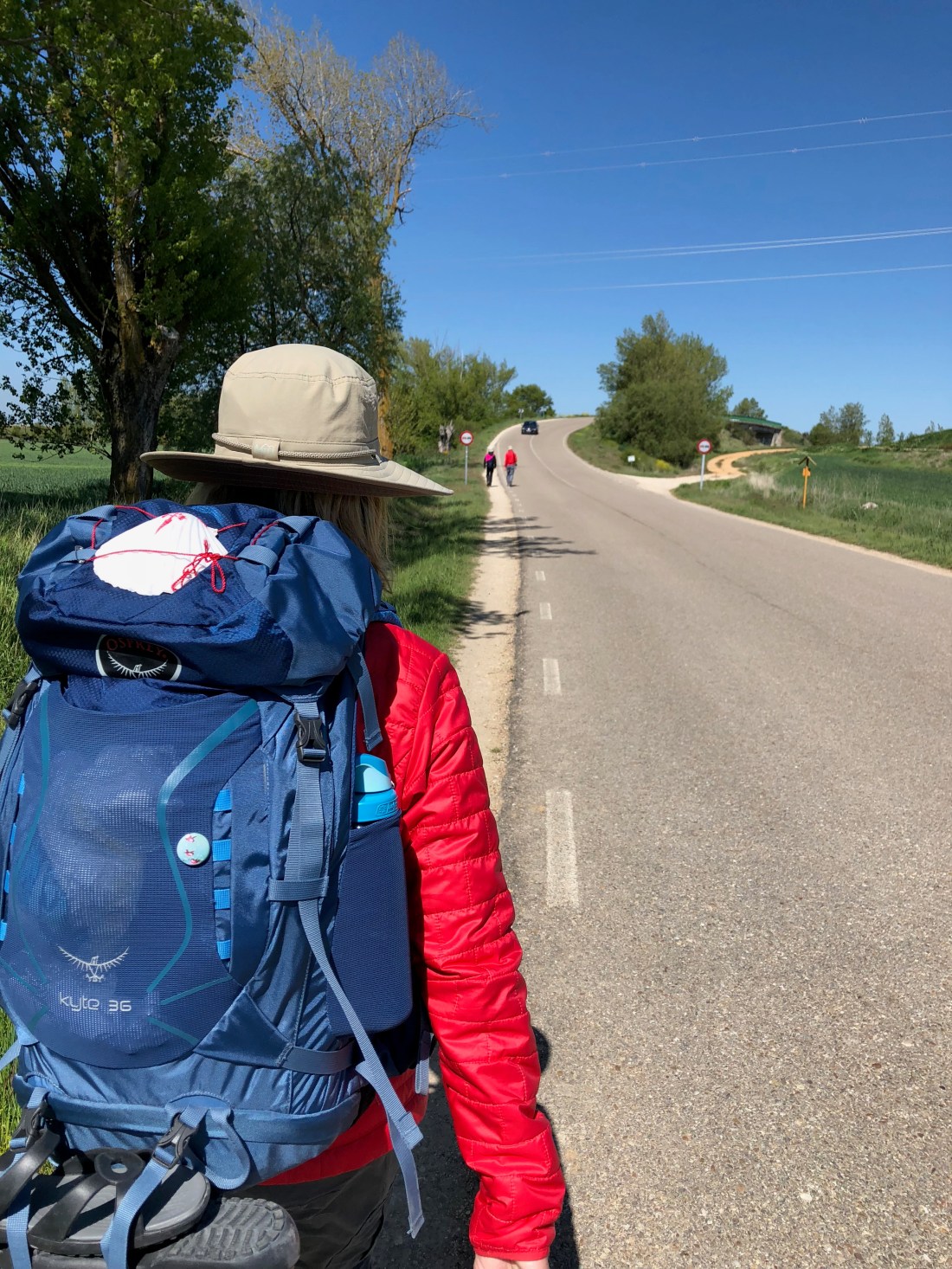
After leaving Villaval we walked along a road: IMG_1970

We turned off the road and walked several miles through farmland, until we reached a park leading into Burgos:IMG_1994

A river ran along one side of the park, the rio Arianzon, that flows past Burgos:IMG_2015The park went on for miles, and the closer we got to Burgos, the more people joined the path.
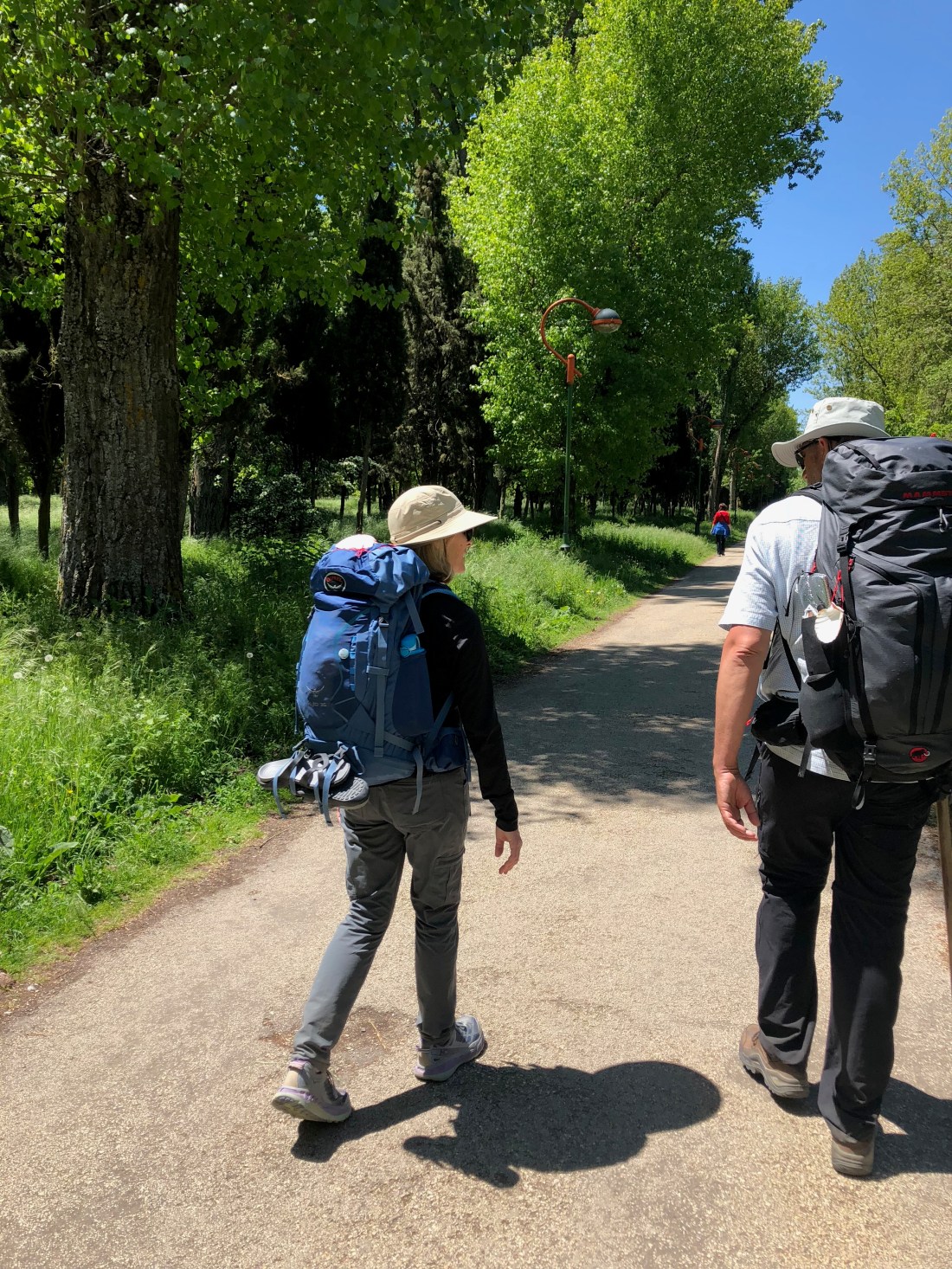
Anne is walking with Mario, who said he is a Croatian living in Germany:IMG_2016Anne and I have felt very safe this entire trip, walking through parks, cities, and rural areas.  Until the fear of violence, particularly gun violence, dropped away, we did not appreciate how constant it was and how much of a price we paid for it.  The French woman we met in San Juan Ortega is right—a country where women can’t walk alone and where there is pervasive fear of gun violence—is too crazy.
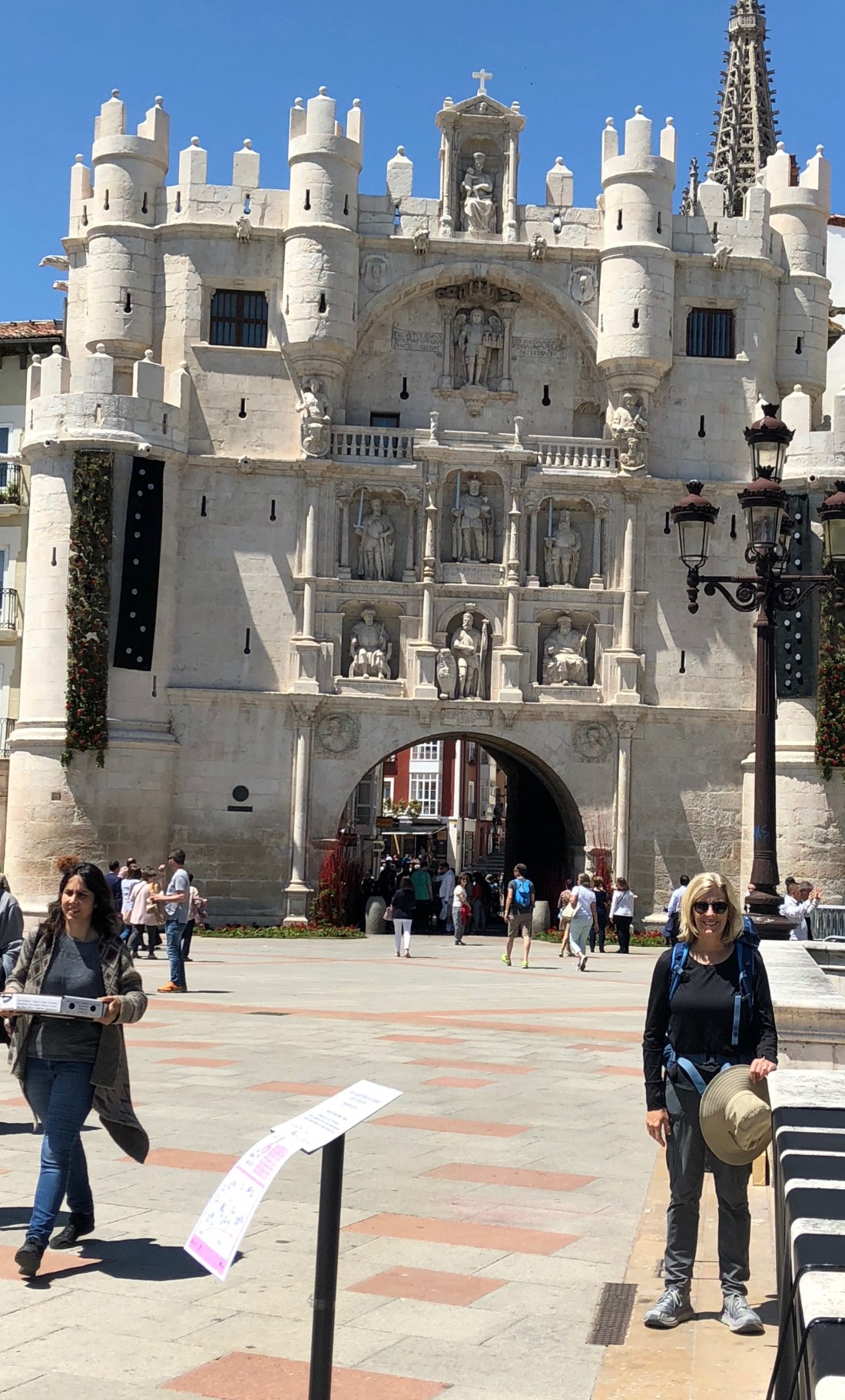
Here is one of the gates to the old part of Burgos:IMG_2017

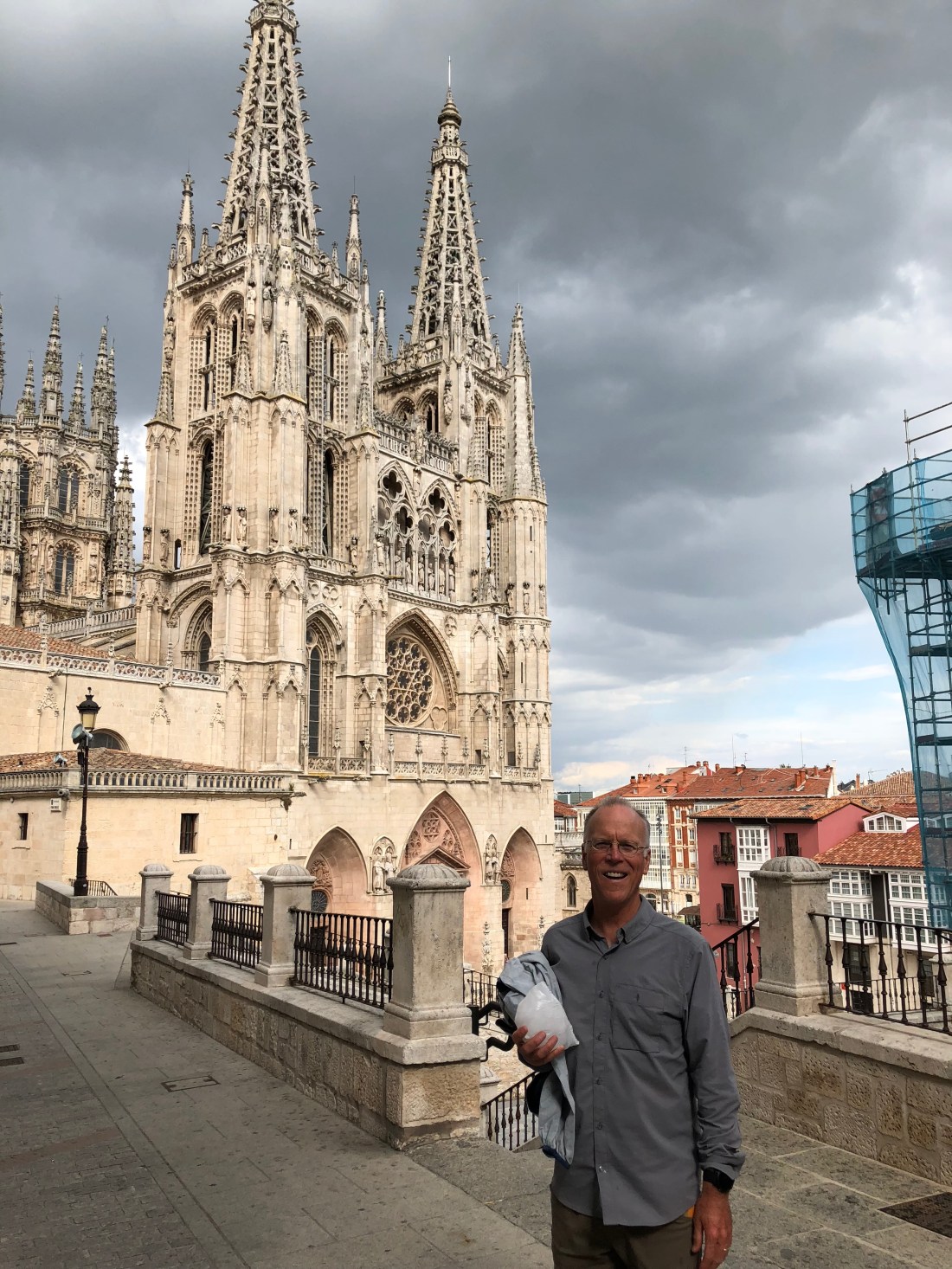
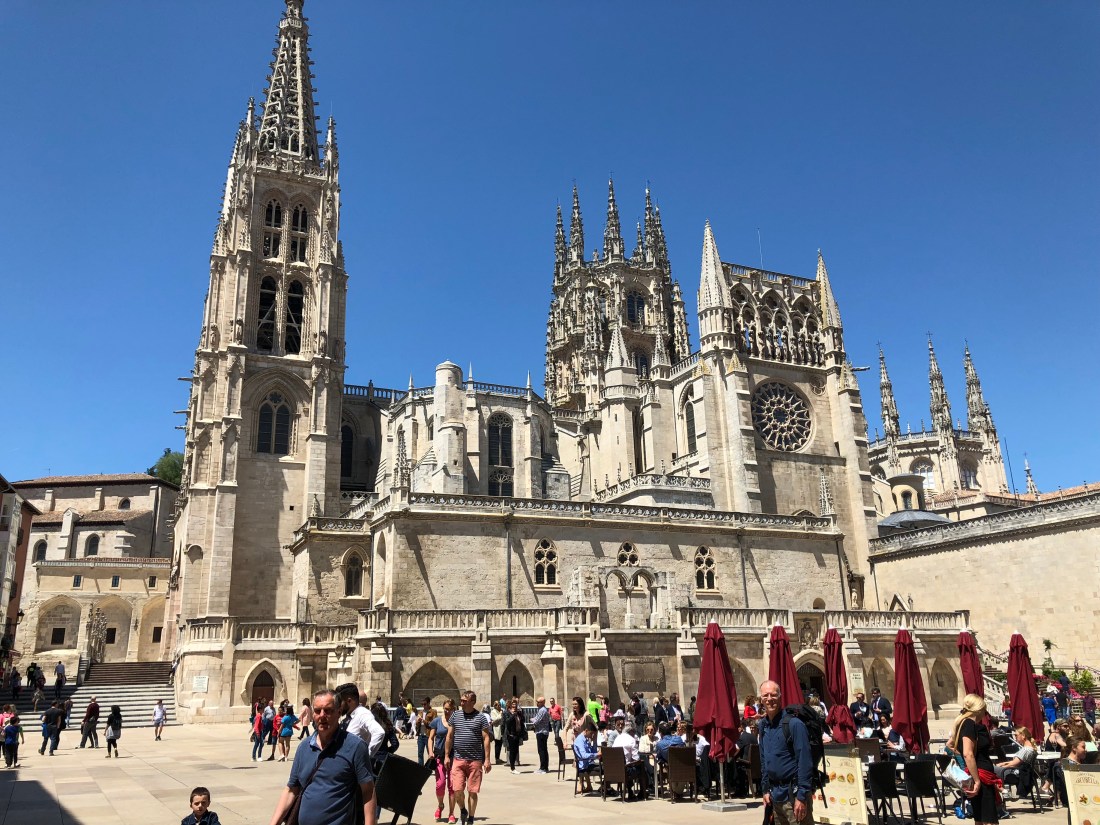
And here is the cathedral:IMG_2020

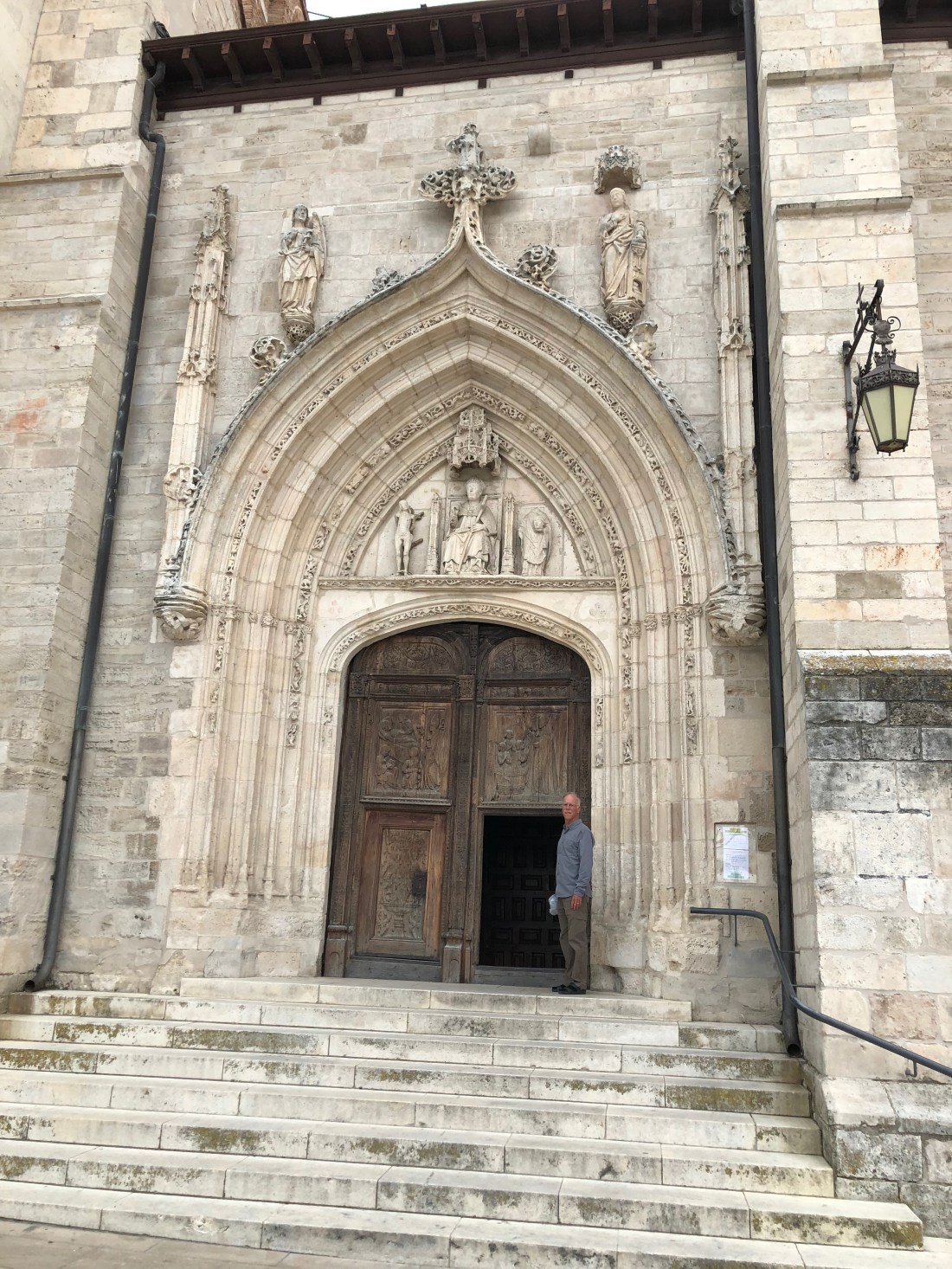
Next to the cathedral is the church of St. Nicolas, where we went to Mass on Sunday:IMG_2045

Here is the alter at St. Nicholas:IMG_2050

Our hotel is right across the square from the cathedral.  We are spending an extra day in Burgos, resting and applying ice:IMG_2051

Belorado to San Juan Ortega

The hotel we stayed in last night in Belorado was the only place in town we could find that had a room available:

IMG_1884We are planning on spending the night in the village of San Juan Ortega in an abergue.  We called ahead yesterday to reserve a room in the town’s only pensione, but it was full, completo.  And the albergue is not answering the phone. Anne is concerned that it will fill up quickly, and we won’t find a bed.  So we are leaving Belorado early. We are on the Camino at 7:15 a.m. And we are walking fast.
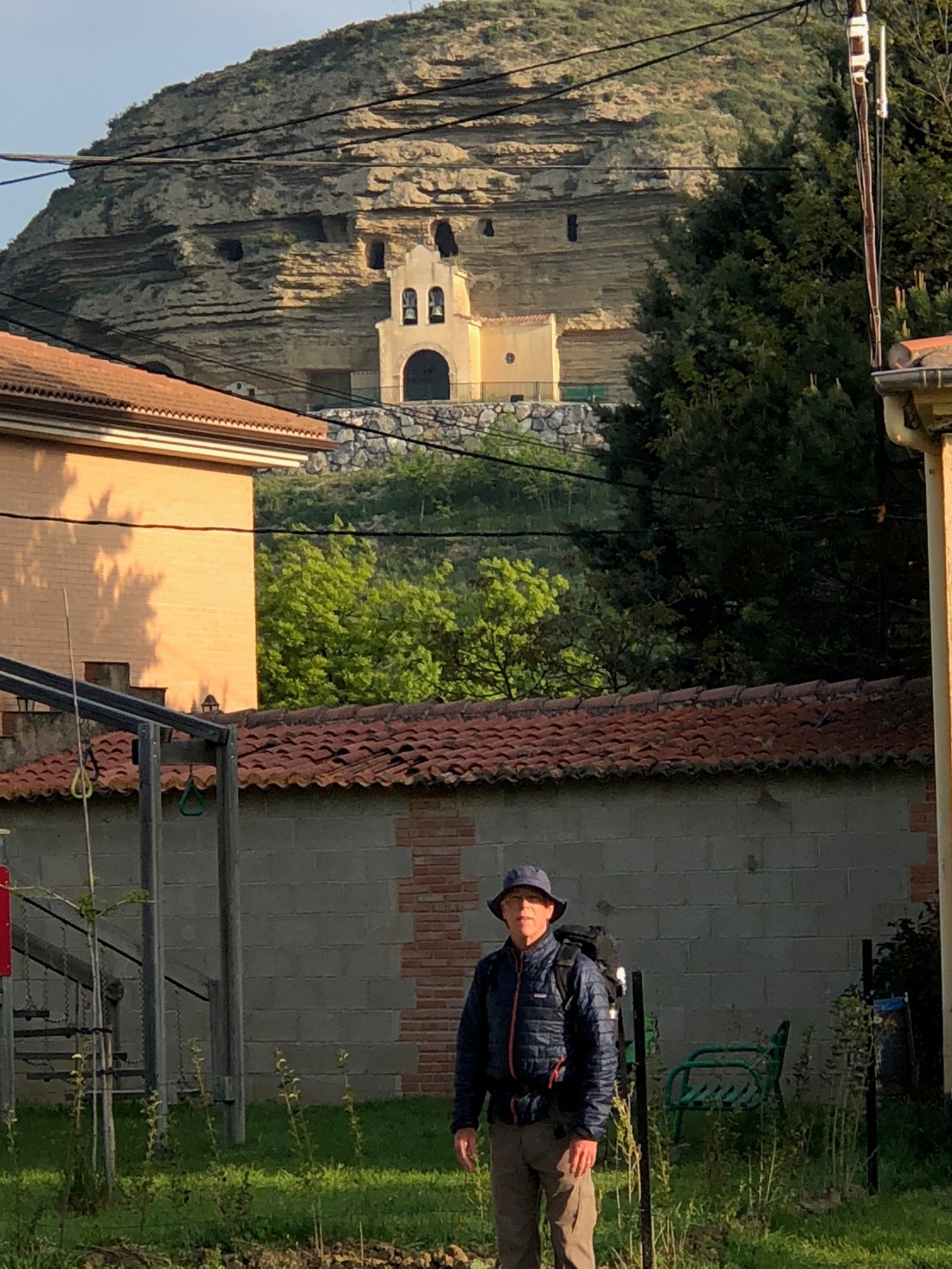
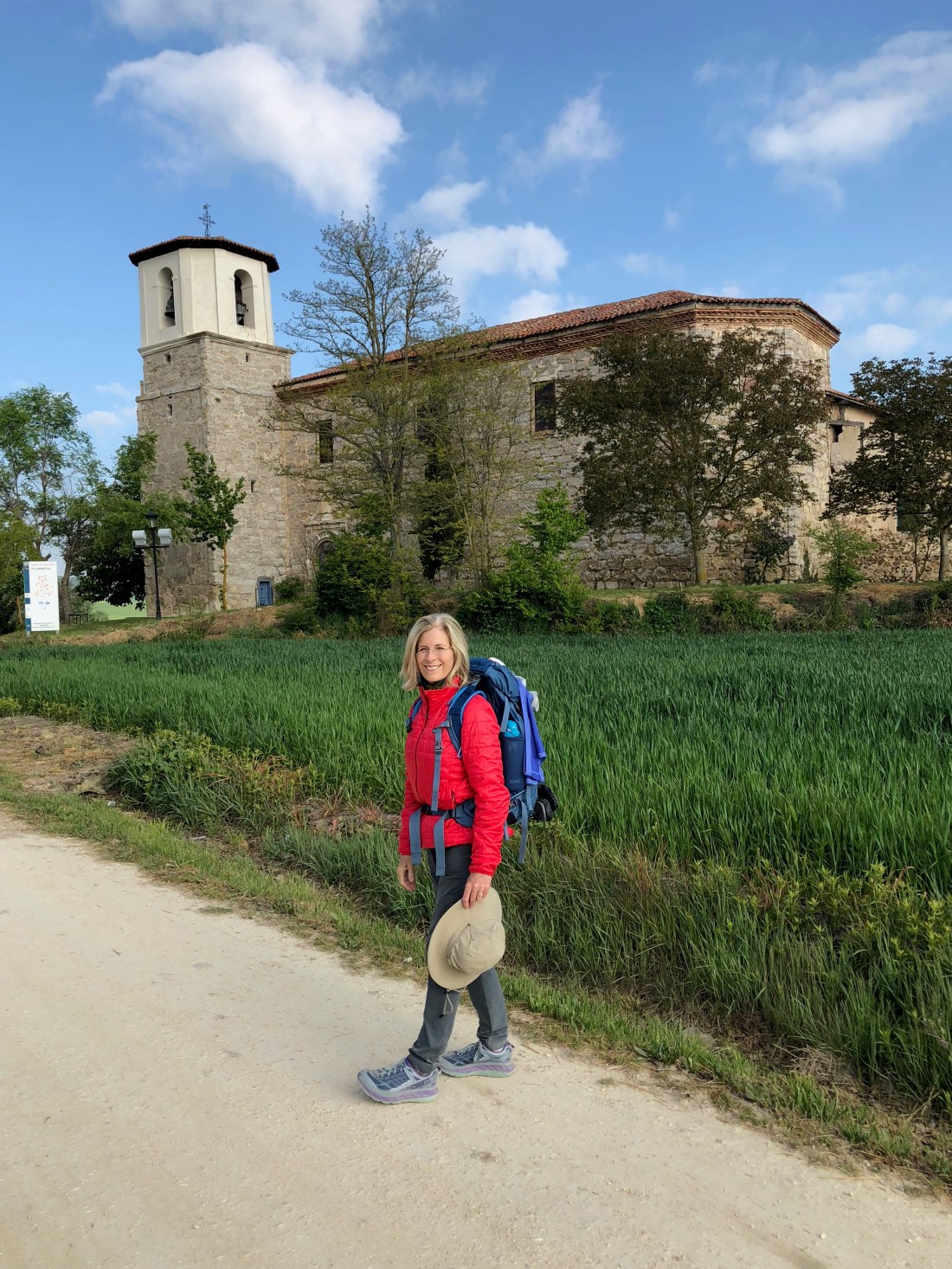
In the next village, Tosantos, a hermitage has been built into bluffs above the village:IMG_1890

We passed through the village of Espinosa del Camino:IMG_1906

The Camino then went up and over a hill:IMG_1907

And then to the village of Villafranca Montes de Oca:IMG_1914

In Villafranca, we believe we have discovered why the priest prayed for us last night.  Villafranca is split by a busy highway that narrows as it goes through the village.

The Camino goes right along the side of the highway at its narrowest part:IMG_1912 2

Big rig trucks race through Villafranca, barely slowing. We have to peer around corners of buildings before stepping out to make sure that we don’t get hit by a truck. The priest’s prayers were effective because we make it though Villafranca in one piece. 

We then climbed a long hill behind the village:IMG_1916

At the top of the hill is another memorial to Republicans murdered by Franco’s forces during the Spanish Civil War:IMG_1919

Much of the day was spent on a wide path on the top of the hill we had just climbedIMG_1920

Near our destination, a large group of pilgrims stared gaining on us.  We walked faster to make sure that we beat them to the albergue.  

We made it to the albergue in record time, at a little after one o’clock.  It was empty when we checked in and claimed our beds:IMG_1925

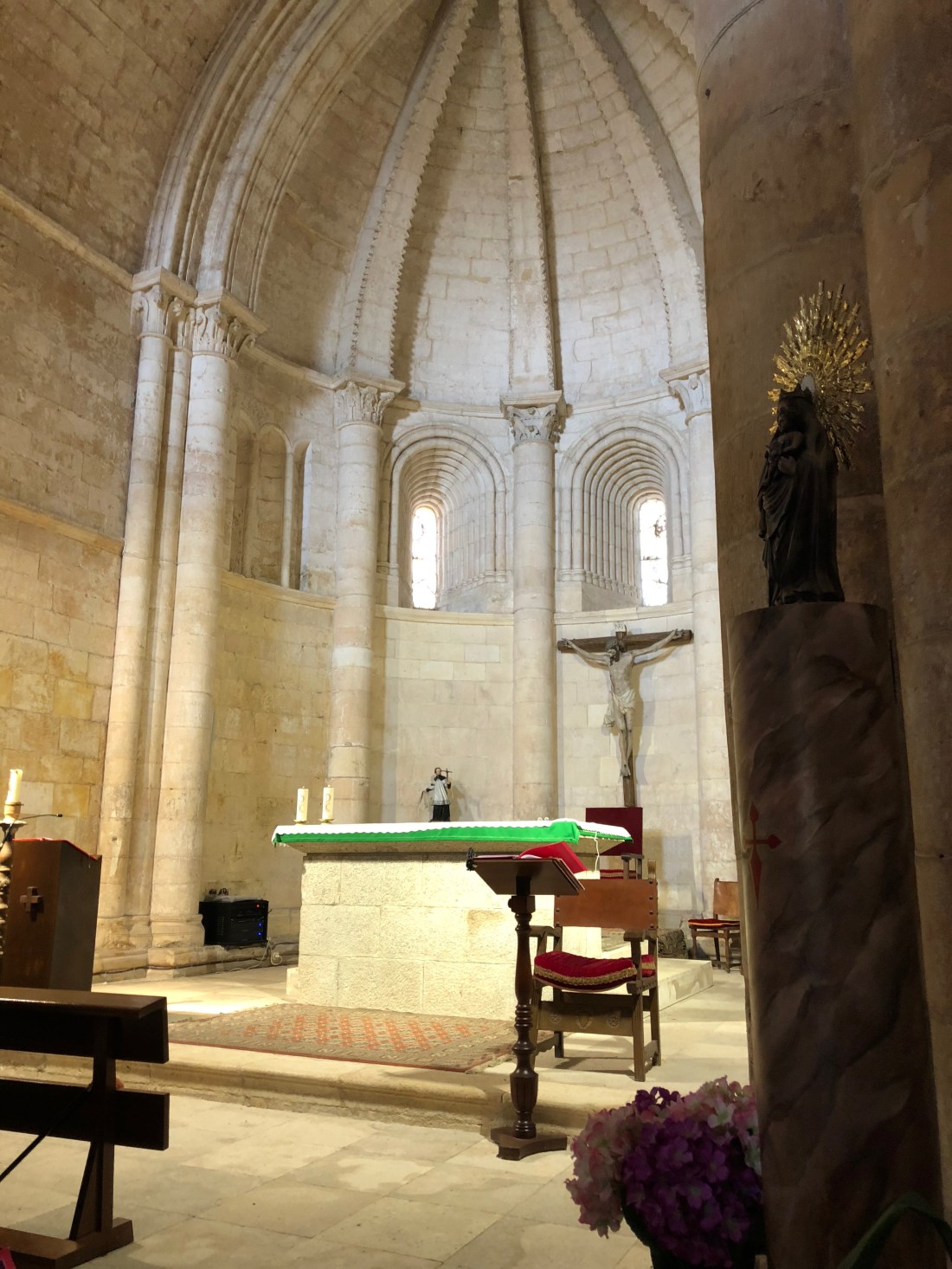
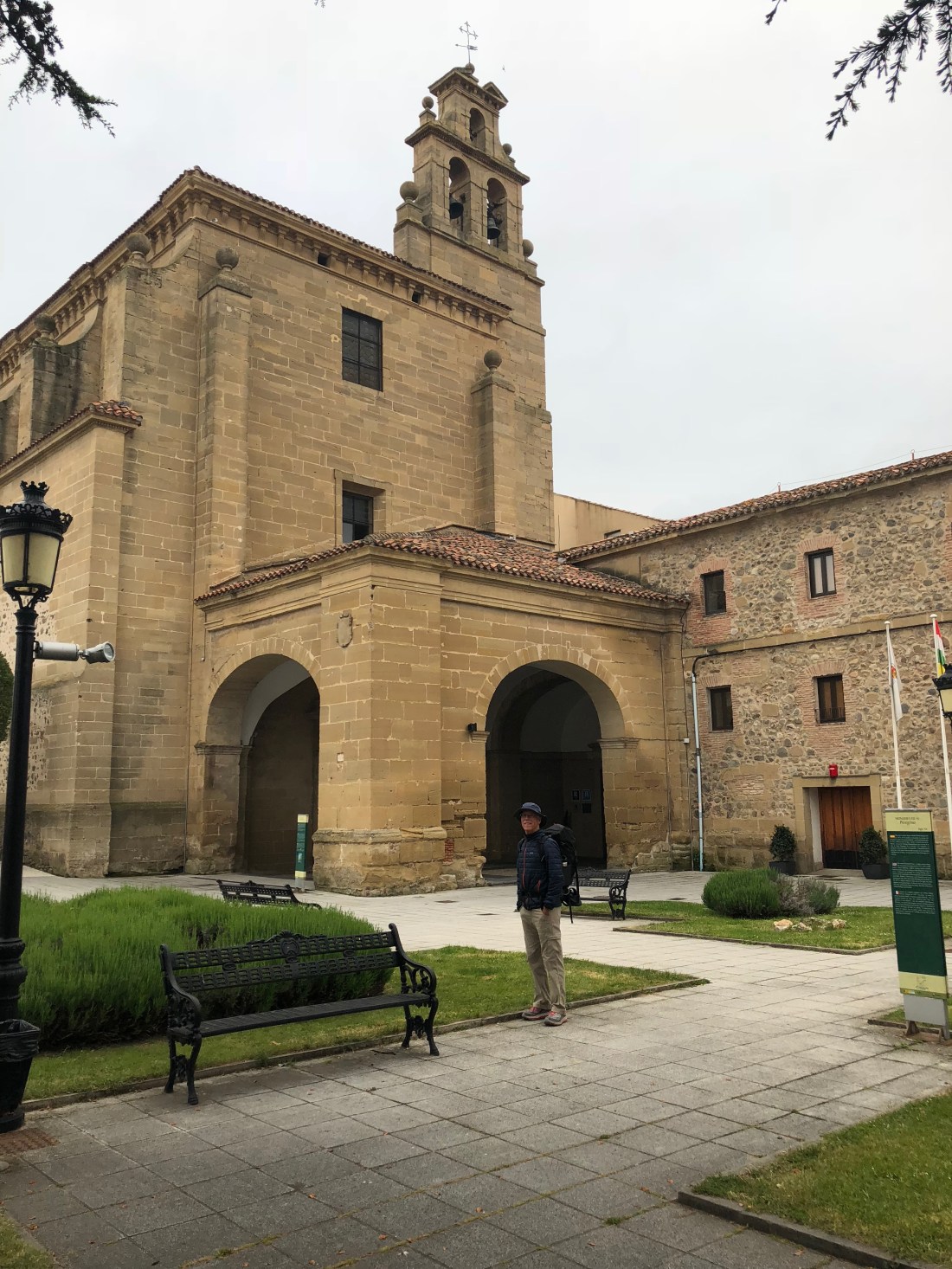
The albergue is attached to the village church where Mass will be held tonight:IMG_1934

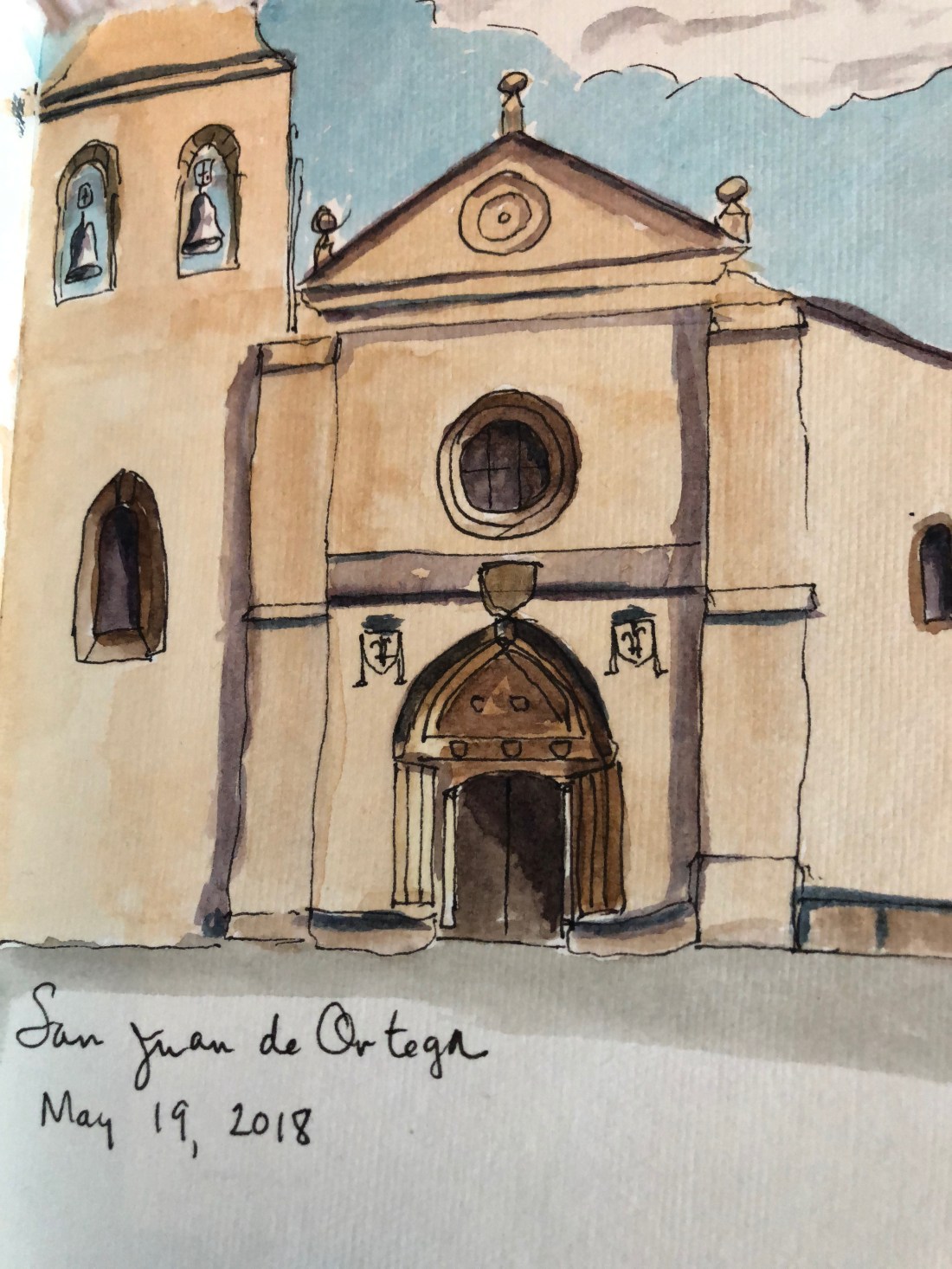
Anne painted a picture of the outside of the church in San Juan Ortega:IMG_2024

After Mass is a communal supper at the albergue.  The people who run the albergue will kick us out at 8 a.m. tomorrow morning.  Then it is on to Burgos where we will spend an extra day at a hotel in the middle of town.

Santo Domingo to Belorado

Yesterday we met the Vanderbilt Spanish Club on the Camino.  They had been walking since Roncesvalles but were about to get on a bus in Santo Domingo that would take them to Burgos.  It will take Anne and me three days of walking to cover that distance.

After today’s walk, we are starting to understand why the Spanish Club skipped this part of the Camino.  Although there is some great scenery, a lot of the walk today was beside a busy highway.  But, as it happened, today was the best day we have had on the Camino.

When we left our hotel this morning in Santo Domingo we passed by a statue dedicated to the peregrinos:IMG_1808

Walking out of town, we passed a small monastery:IMG_1811

We then crossed over the rio Oja:IMG_1815

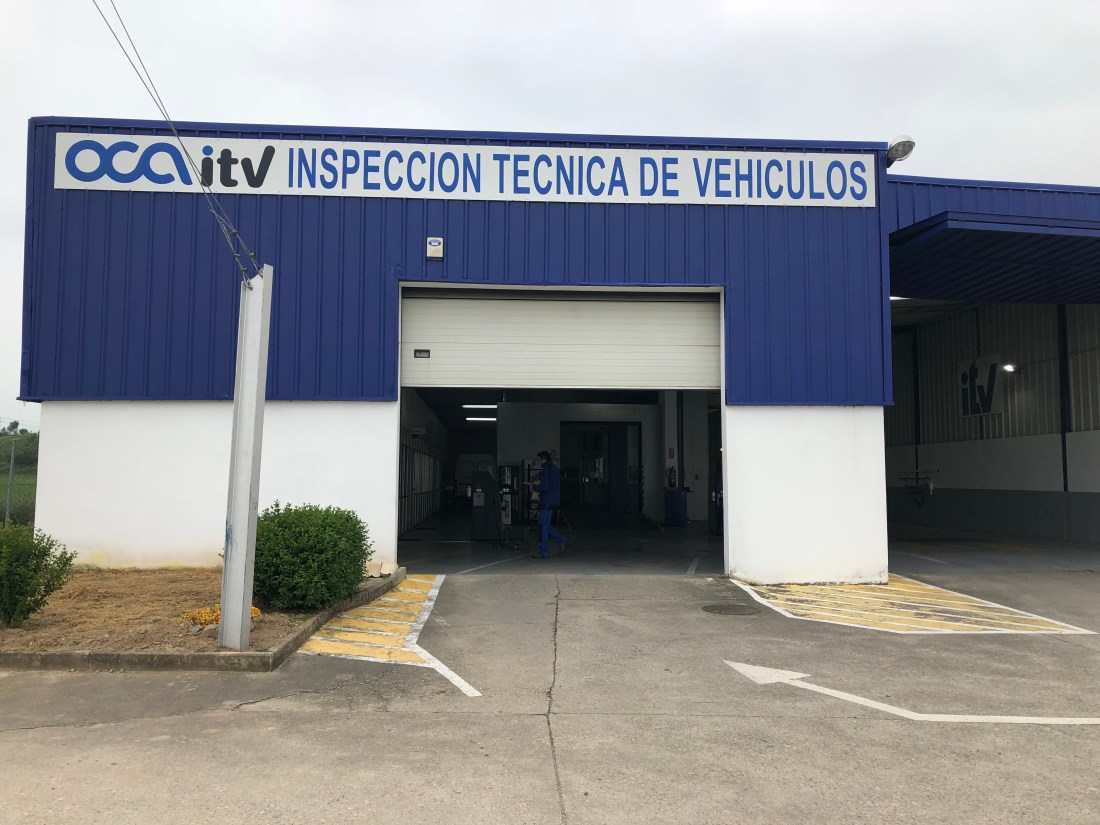
On the other side of the river we came across what appeared to be a publicly run smog-check station, surrounded by farm land, far from even a medium-sized city:IMG_1816

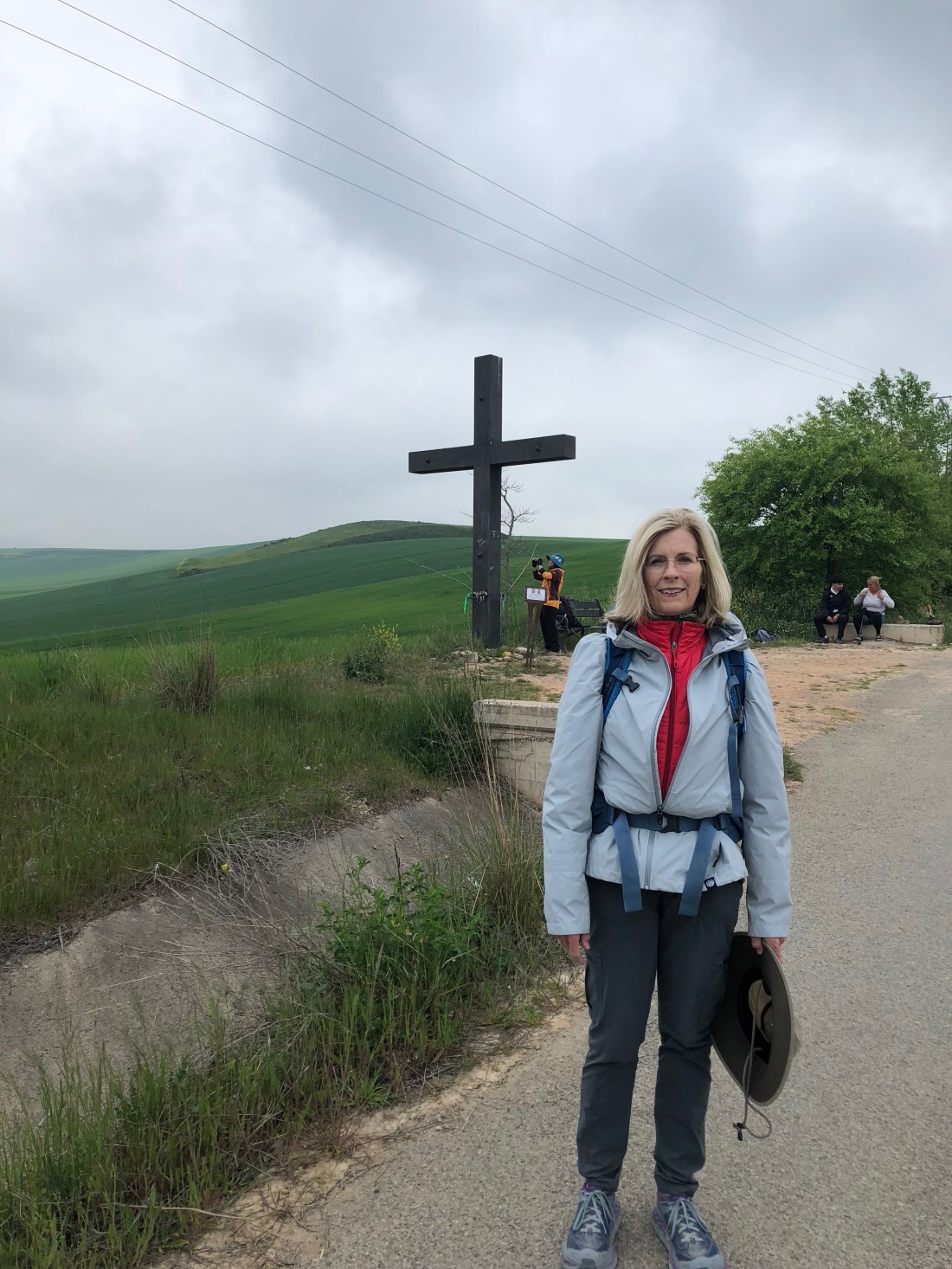
Out in the countryside, we passed the Cruz de los Valientes, the site of a medieval property dispute that was settled by combat:IMG_1818

The Camino went through the village of Granon, which is in the background:IMG_1823

The church in Granon was open. It has the same ornate woodwork found in the churches and cathedrals that we have seen in this area:IMG_1826

At the top of a hill, we came across a marker identifying the border between La Rioja and Castille-Leon: IMG_1831

In an earlier post I had referred to La Rioja and Navarre as provinces.  They are not.  They are autonomous communities, which are larger than Spanish provinces.  There are 17 autonomous communities in Spain and two autonomous municipalities.  Most of the autonomous regions are subdivided into provinces.  We are now in the autonomous region of Castile-Leon, the largest in Spain, in the province of Burgos.

Although there was some great scenery along today’s walk, much of the day was spent walking beside a busy highway:IMG_1869

We put our heads down, resigned ourselves to the walk, and it was over quickly. 

Soon we were on the outskirts of Belorado:IMG_1871We had dinner and then walked over to the main cathedral to see whether there was an evening Mass.
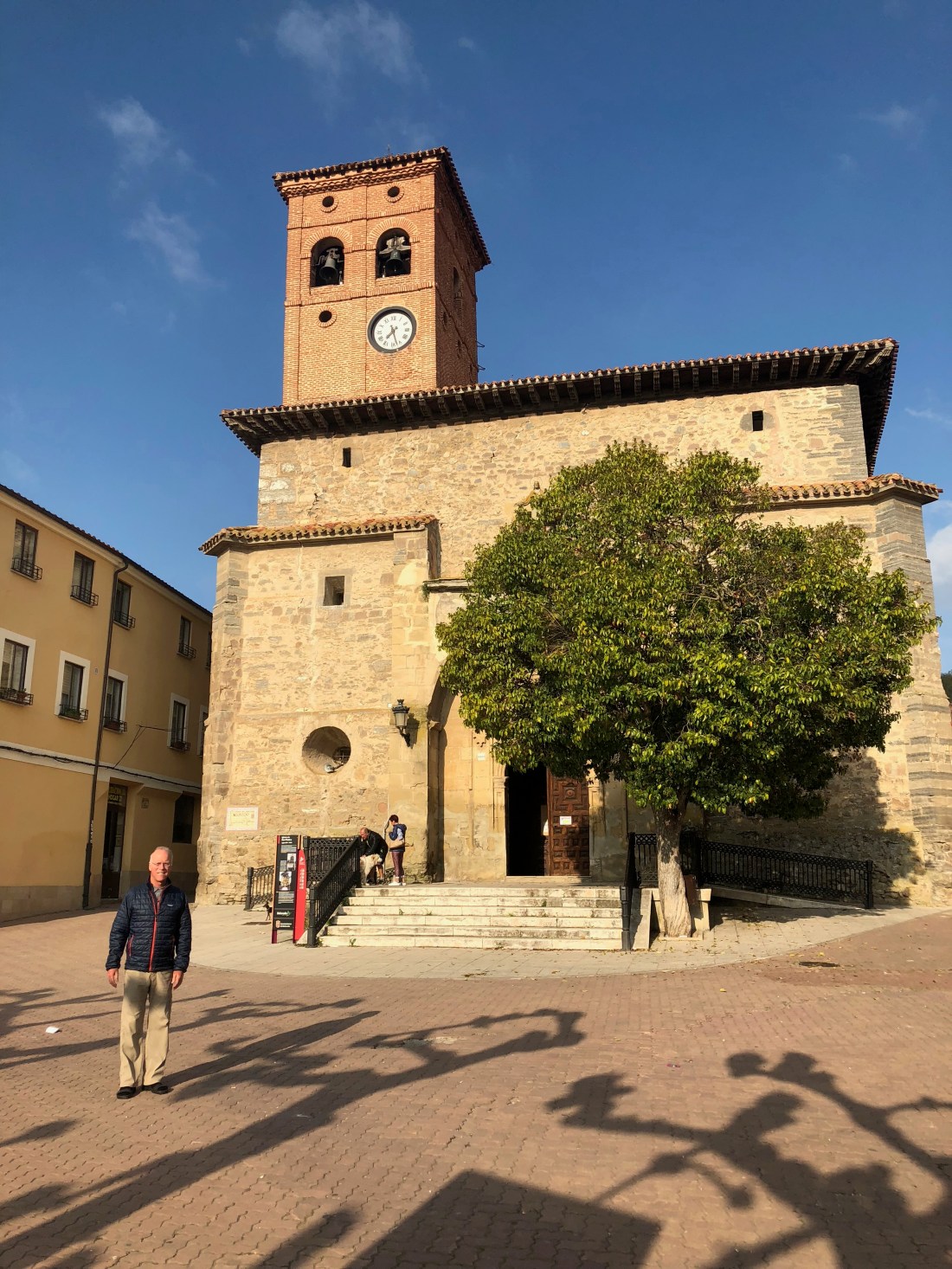
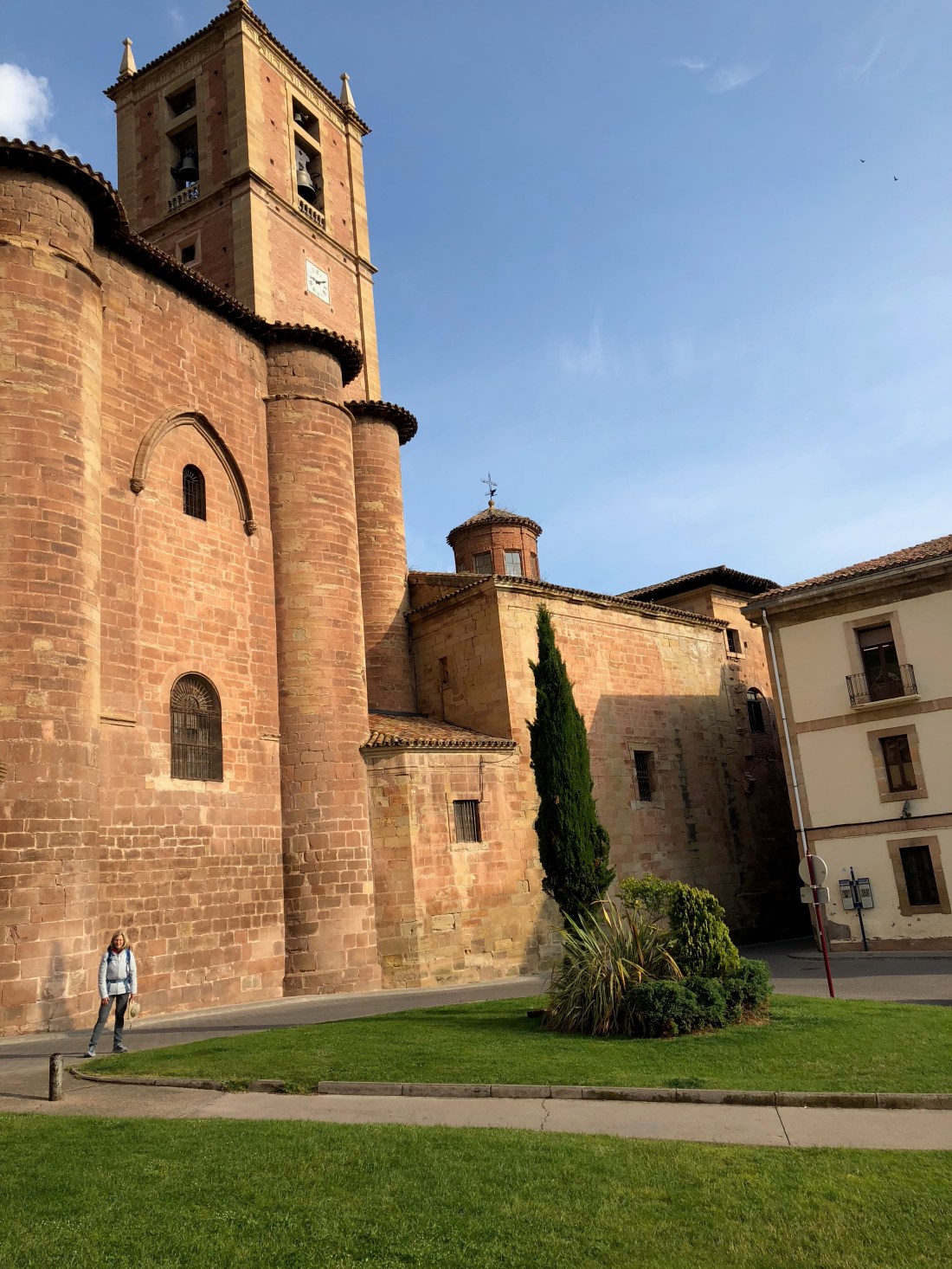
Here is Belorado’s main cathedral:IMG_1874The door was closed, and we could hear singing coming from inside.  There was nothing posted about Mass times.
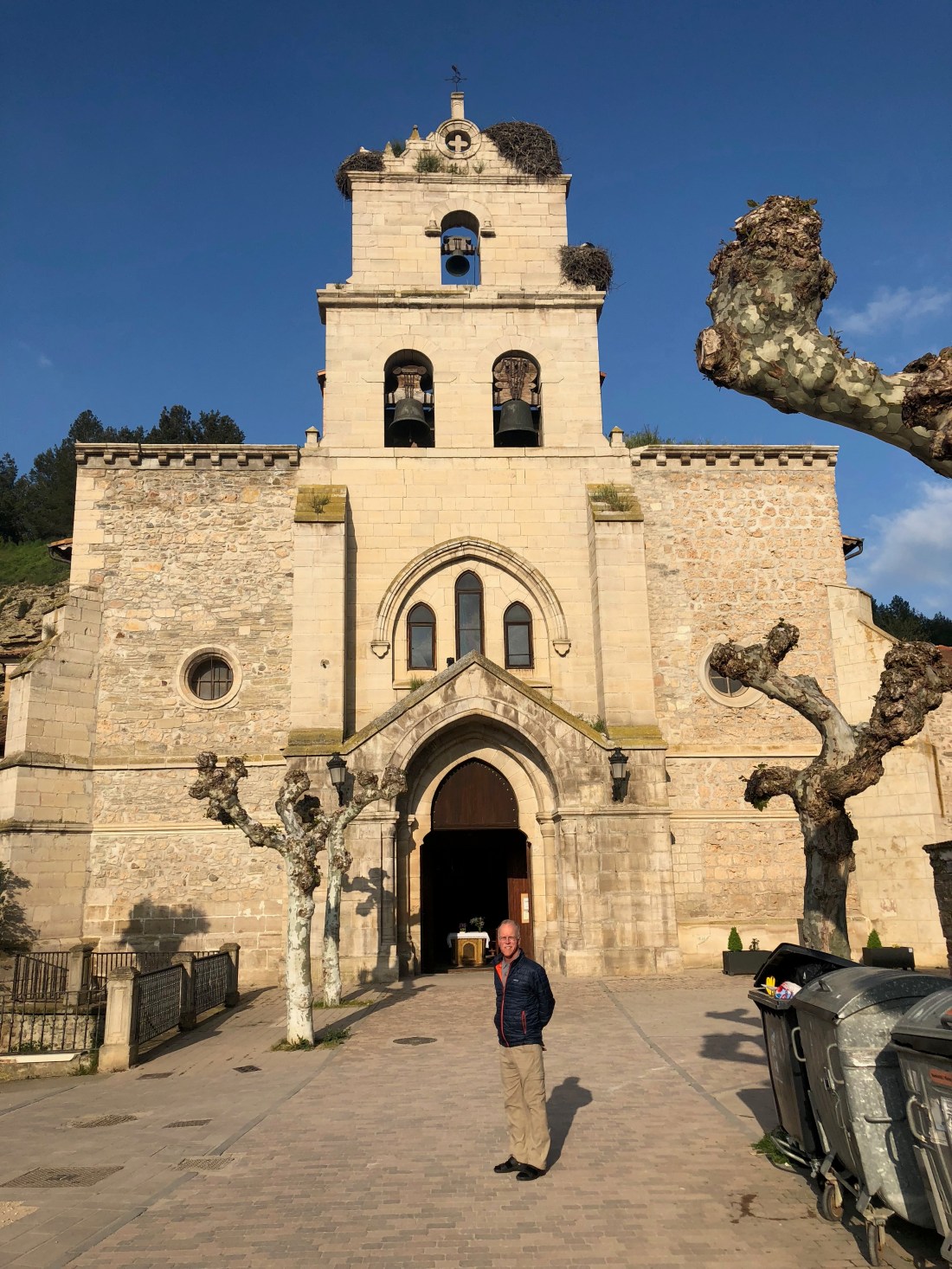
Not wanting to interrupt, we walked over another church, which was about 50 yards away to see if anything was posted there:IMG_1875On the door of that church, there was a notice for a 7 o’clock Mass at the cathedral we had just come from, and it was now just about 7:30.  We decided to go back and sit in the back of church.
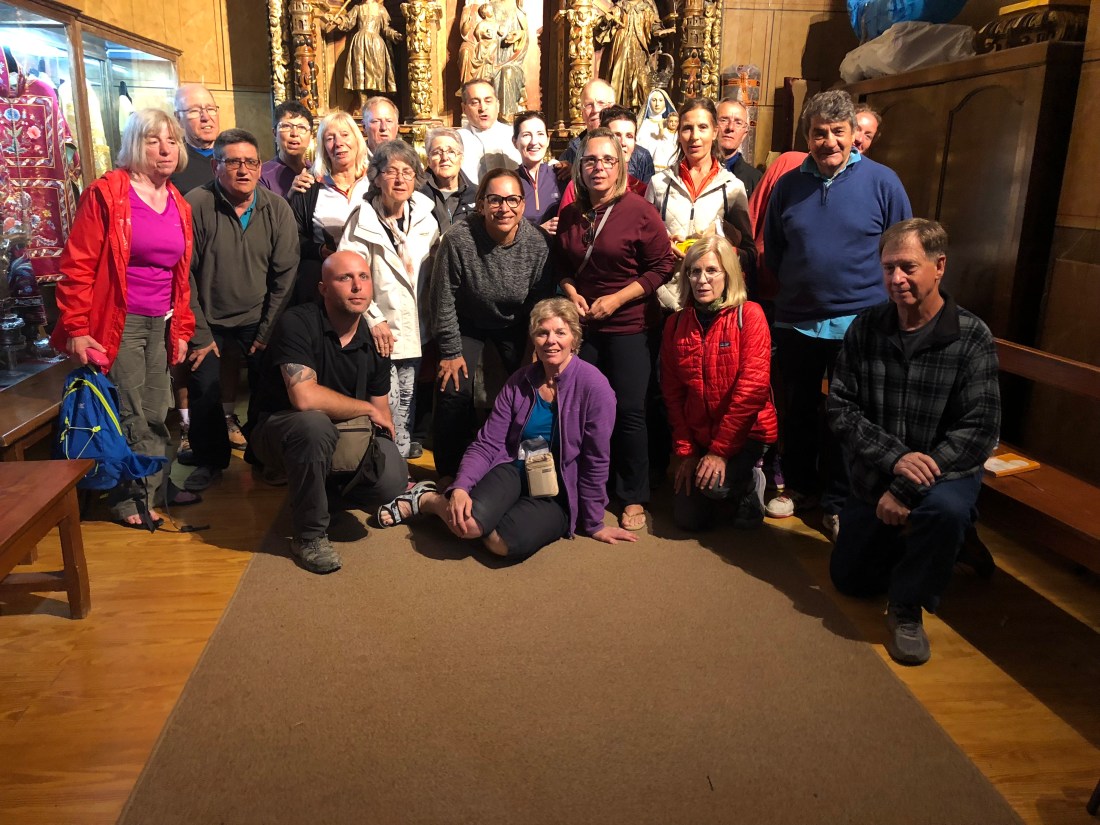
When we walked in, the Mass had just ended, and townspeople were walking out of the cathedral.  An older man said something to us in Spanish, put his hand on my shoulder, and pointed us towards a small room off the main chapel.  The room was filled with about 20 pilgrims sitting in folding chairs around the sides of the room.  In the middle was a priest.  Here is a picture of the pilgrims.  The priest is in back, in the middle, in a white robe.  He is singing, as he was almost constantly while we were there:IMG_1877The priest handed out sheets of paper with prayers and songs in each pilgrim’s language. He had us sing a song or recite a prayer together, each in our own language.  It was a cacophony, perfect for the Friday before Pentecost. 
The priest then called out each country represented in the room and asked those from that country to sing a song. The French started. When he called on the United States, Anne and I stood and sang Amazing Grace.  Fortunately, it is a song that transcends borders.  Everyone there knew Amazing Grace and joined in their own language.  It was fortunate that everyone joined in because I was having a hard time singing, and kept from crying only by staring at a woman’s purple tennis shoe.  Before we left, we thanked the priest.  He put his hands on our heads and prayed for us.
When we left the cathedral, Anne told me that she had been continually tearing up during the pilgrim ceremony.  We turned onto an empty street.  A old woman walked up from behind us and wished us “vaya con Dios.”

When I woke up this morning, for the first time in a very long time, I remembered a dream.  In it was a friend who was stricken with a horrible disease several years ago that has robbed him of almost everything.  In my dream his hair had turned silver.  I have prayed for him for many years.  Not on this trip.  I have been praying for another, older friend.  But now I will start  praying for both of them. 

As we were walking along several days ago, I told Anne that I didn’t understand the point of praying.  Was I reminding God of something that he had forgotten?  Was I convincing him to do something that up to this point he hadn’t seen the wisdom of doing?  Anne started to get annoyed. So I stopped.    

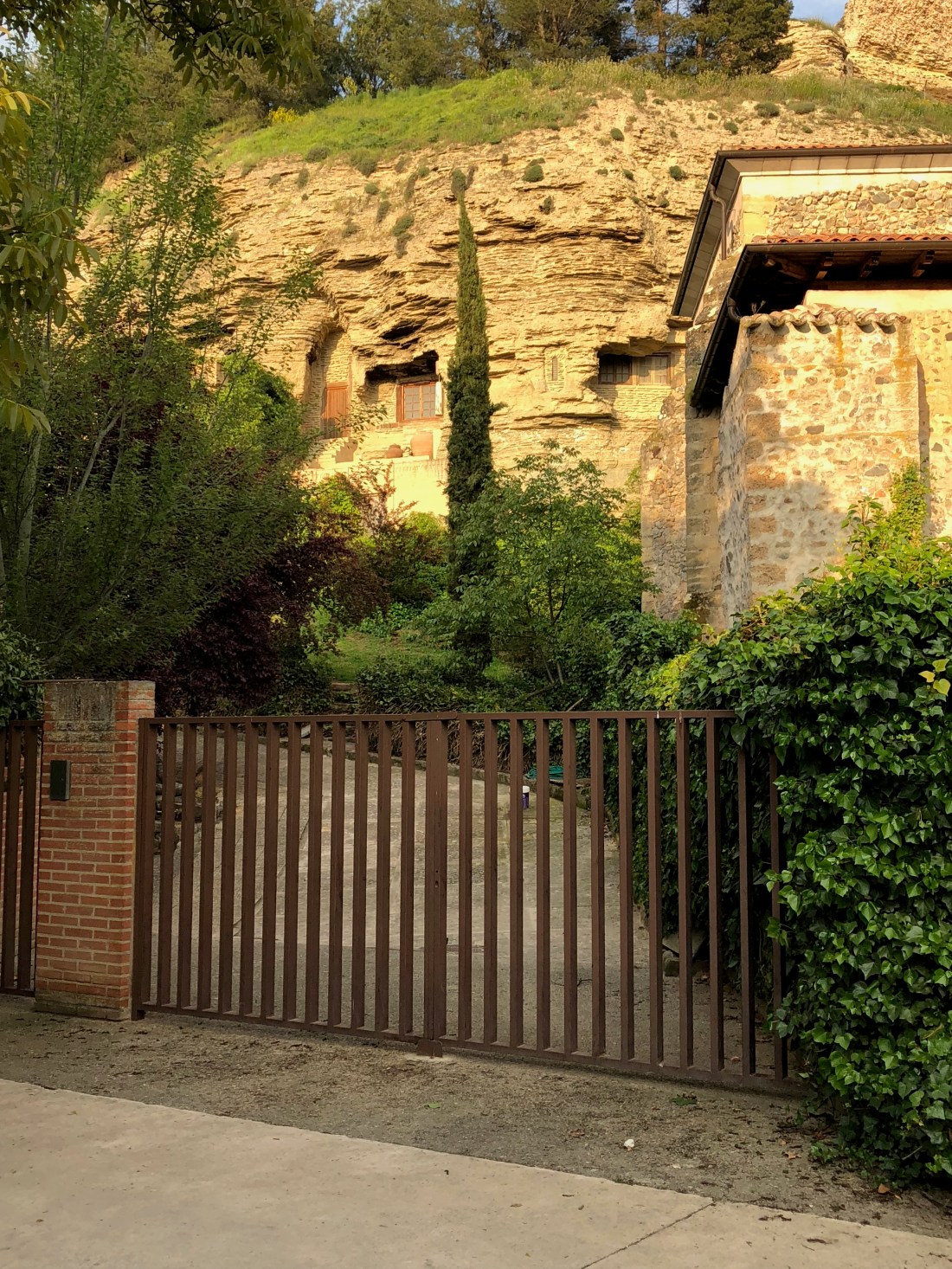
Too bad I can’s put my questions to the hermits who lived in the cliffs behind Belogrado.  But they are long gone, and their caves have been converted into vacation homes:IMG_1879

Najera to Santo Domingo

After arriving in Najera late in the day yesterday, Anne and I checked into our hotel and immediately began applying ice.  We had walked over 18 miles, our longest day so far.  Anne’s shoulder was sore, and the arch of my left foot was cramping.  After about an hour, we both felt better and went out for dinner.  We bumped into a German friend who guided us to a restaurant where he had just eaten. We should have known better.  Cars, classical music, and Sturm und Drang are German specialties.  But not food.

When we got back, my right foot was sore.  I took off my shoe. My foot was swollen and discolored.  There was an indentation around my lower leg from the swelling.  We were out of ice, it was late, and we both were tired.  We went to bed.  

I slept uneasily that night, worrying that our walk may have come to an end.

The next morning the soreness was gone, but my foot was still swollen and discolored.  I iced my foot, and Anne went on the internet.  She found that swollen feet are a common problem on the Camino, largely due to dehydration.  The cure is to drink more water and to occasionally elevate the feet.  I raised my feet, and almost immediately, the swelling went down and the discoloration subsided.  In about 15 minutes, I put my shoes on, and we started walking.

In fact, I had not been drinking much water the day before.  Anne and I are both carrying water bottles in our packs that hold over a liter of water.  I had not been drinking because the more I drank, the more I had to pee, and there almost no bathrooms on the Camino.  This should be a bigger problem for Anne, but as with all things in life requiring delicacy, she was much more adept at navigating this problem than I.  Our fellow pilgrims have no compunctions about stepping to the side of the Camino as the spirit moved them.  I had tried to deal with the problem by not drinking.  I have now been drinking more and keeping an eye out for a tree or other barrier.  My foot is fine.

On the way out of Najera, we passed by the cathedral:IMG_1750

Behind the town, is a high bank with a cut that we walked through:IMG_1751

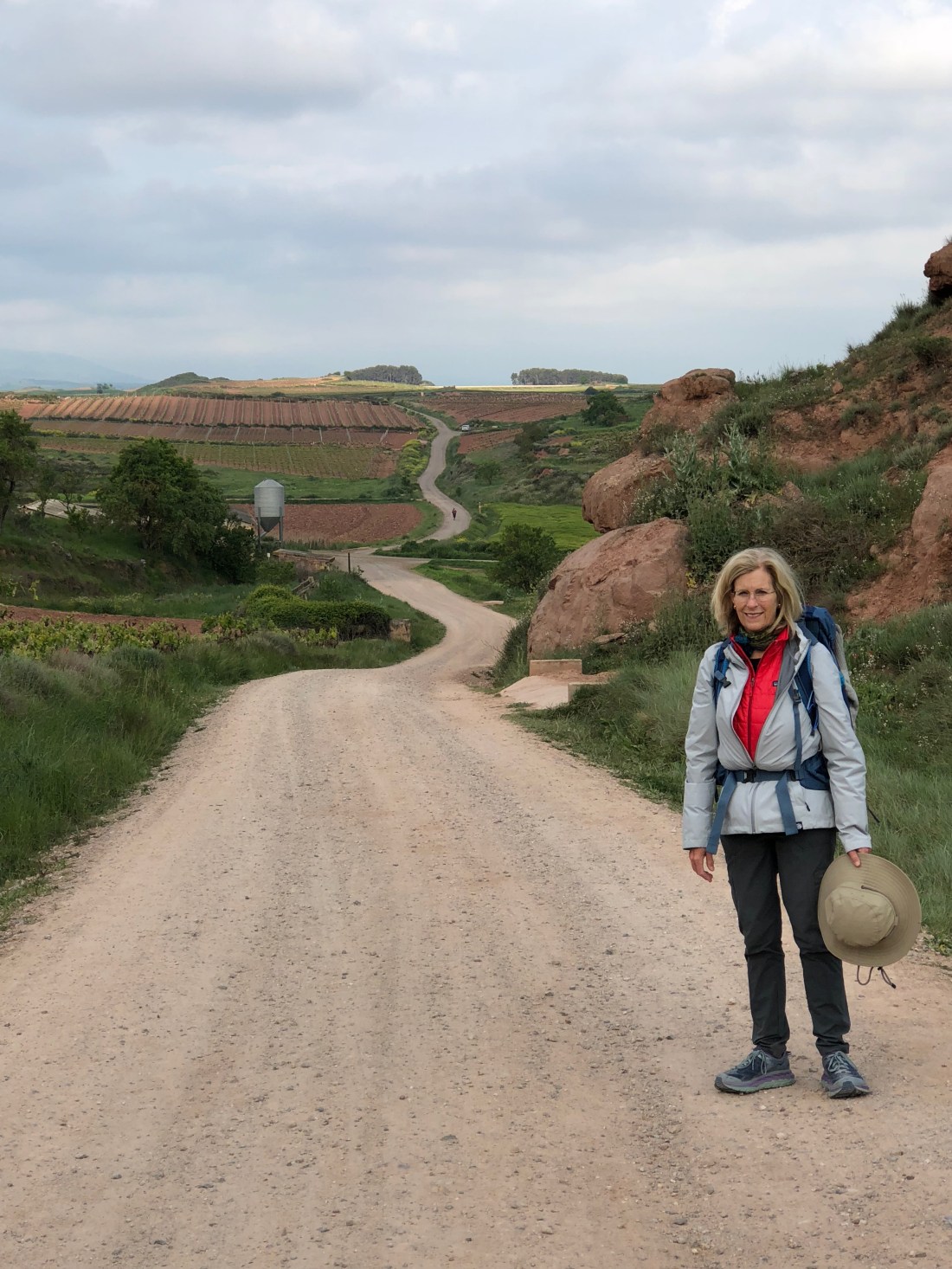
We then walked into a long valley with vineyards and the characteristic red soil of La Rioja:IMG_1753

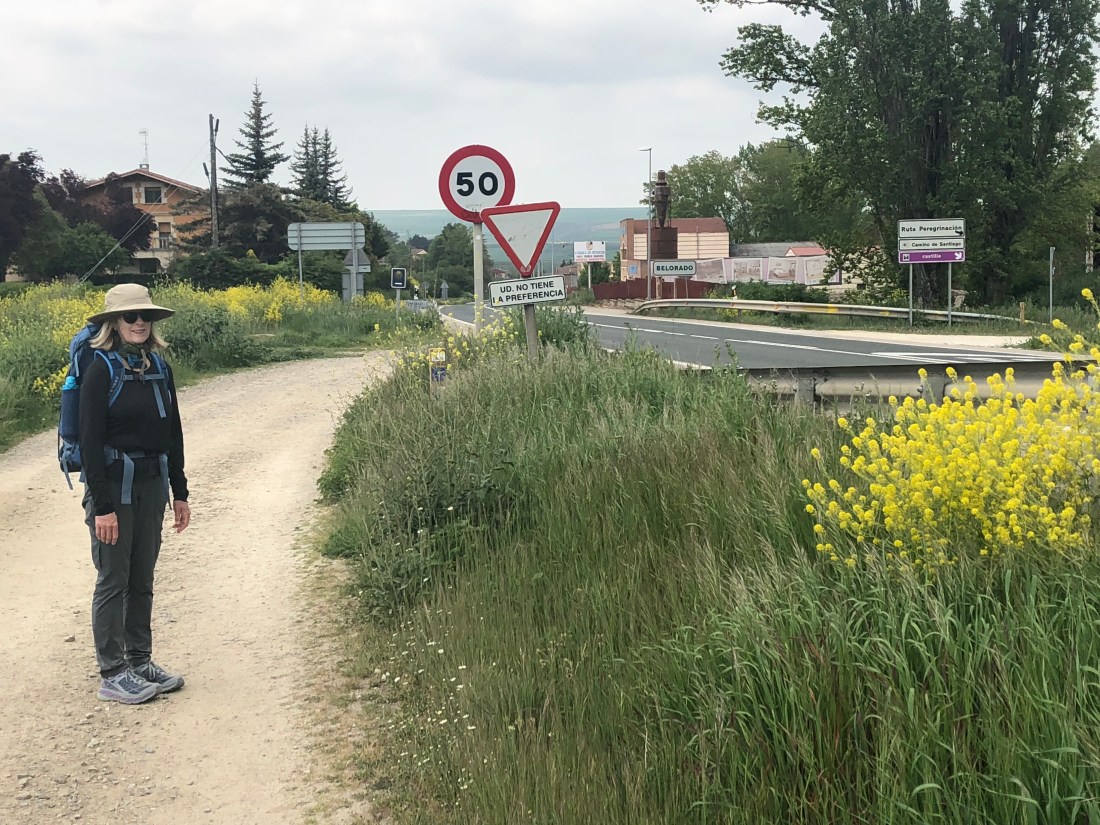
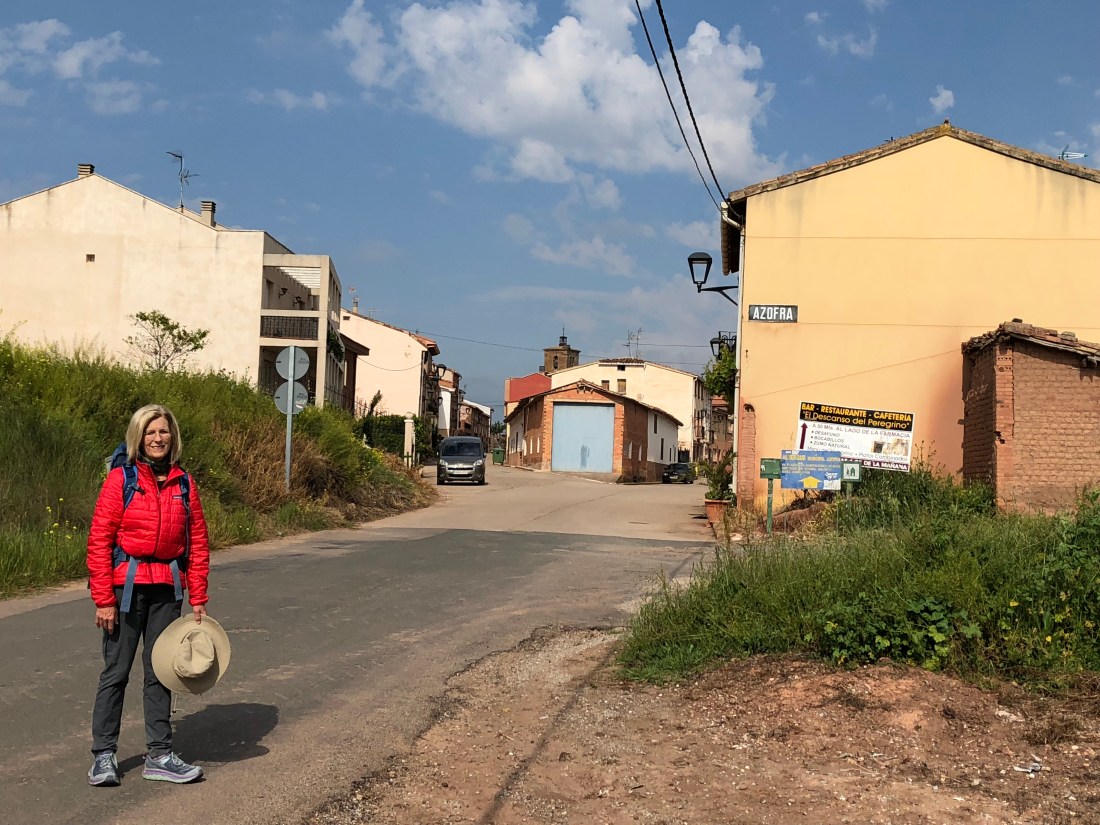
We walked through two villages today.  One of them was Azofra:IMG_1758

This is a 16th century Camino marker just outside Azofra:IMG_1762

The crowds that so quickly gathered have now disappeared.  And lately we have seen very few of the friends that we had repeatedly met up with along the way.  Anne and I are again finding ourselves walking alone or with just a few other pilgrims:IMG_1771

In the background is Santo Domingo, our destination for the day:IMG_1779

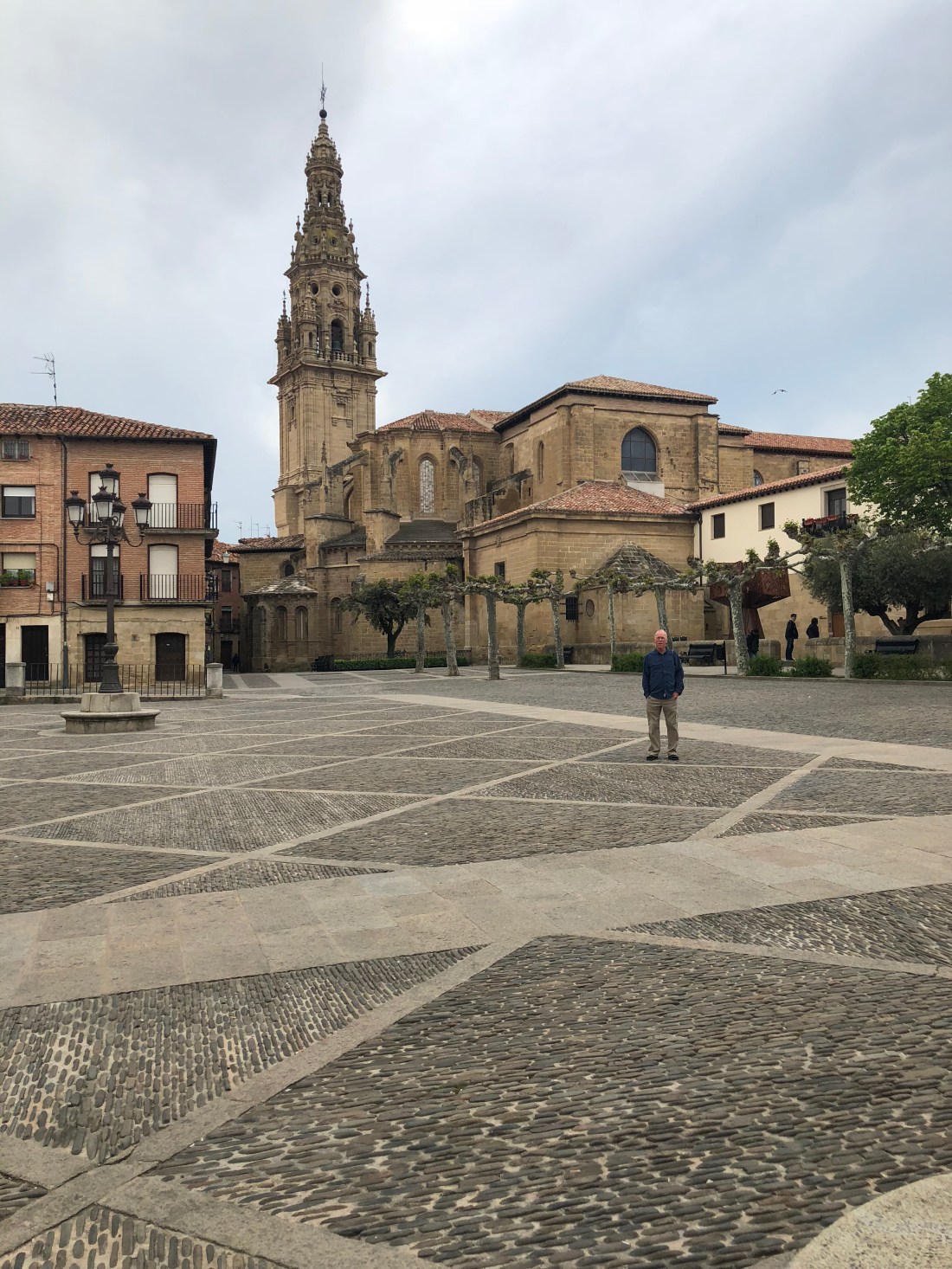
Here is the cathedral in Santo Domingo:IMG_1790

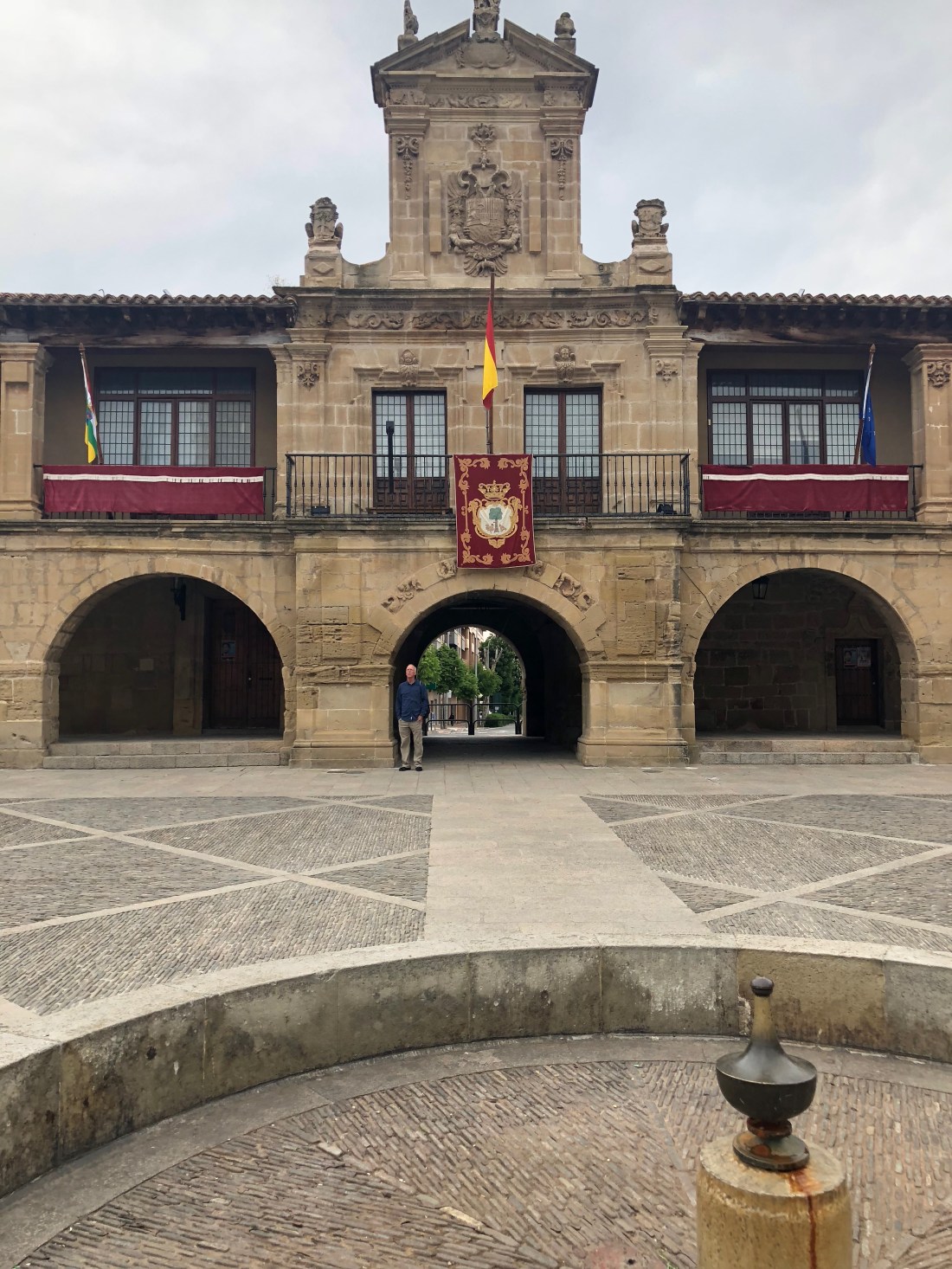
This is the Santo Domingo town hall, the Ayuntamiento:IMG_1788

We spent the night in Santo Domingo in a hotel that is a converted convent:IMG_1809

The Sisters certainly never had it this good:IMG_1794

Logrono to Najera

Yesterday’s walk was our longest so far—18 miles—but it started well.

Yesterday, when we checked out of the hotel in Logrono, we asked if we could buy the breakfast buffet—sometimes it’s available only for groups staying at the hotel.

We were really hungry.  We had arrived in Logrono, at just after 4 in the afternoon, the beginning of the Spanish siesta.  Lunch—almuerzo—the biggest meal of the day, is served from 1:30 to 3:30, so we had missed that.  Restaurants would not open for dinner—sena—until at least 8:00 or 8:30.  We would be getting ready for bed and our next day’s hike by then.

When we asked about the breakfast buffet, the hotel receptionist apologetically told us it was 10 euros.  Anne couldn’t get her wallet out fast enough.  Spanish breakfast—desayuno—is usually really skimpy. Usually just coffee and bread or a croissant.  After a couple of hours of walking with only croissants and coffee for breakfast, we are really hungry.  We carry food but we can’t carry enough.  We try to arrive at a good sized town by lunch but we hadn’t been able to do that in Logrono.  When we reached Logrono late in the afternoon, we went to a restaurant next to the hotel but only the bar was open and the food had been sitting out on the bar for several hours.  We went to bed hungry and woke up even hungrier  And the hotel’s breakfast buffet, unlike the usual Spanish desayuno, had scrambled eggs, bacon, fresh fruit, yogurt, granola, and several different kinds of breads and muffins.  We got our 10 euros worth, without having to stuff any food into our backpacks or pockets.

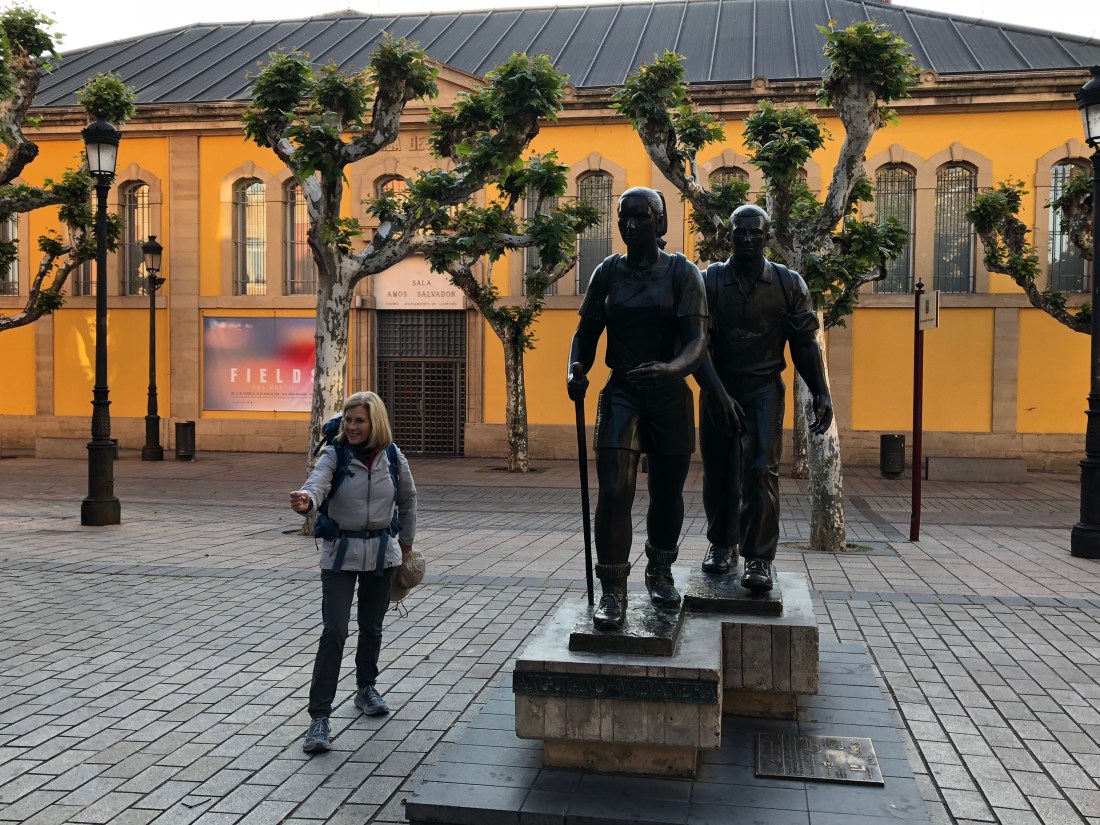
With full stomachs and happy hearts, we hit the Camino and walked out of Logrono.  The walk followed what has become a common pattern in large cities.  We walked out of the old quarter of the city into a business district.  Logrono’s business district has a statue dedicated to the peregrinos:IMG_1674

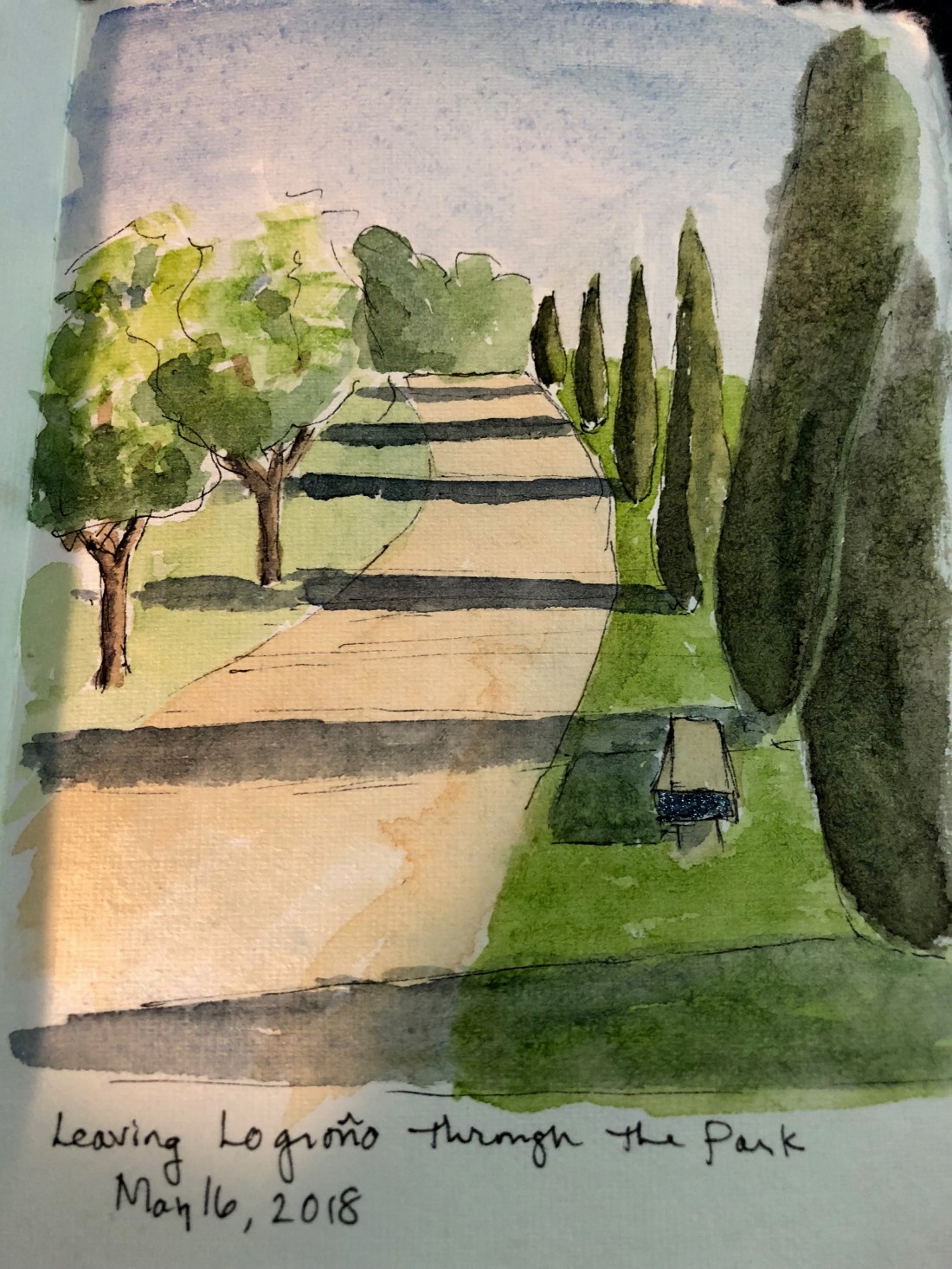
We then walked through a park that took us to the edge of the city.  Here is Anne’s painting of trees in Logrono’s Park:IMG_1746

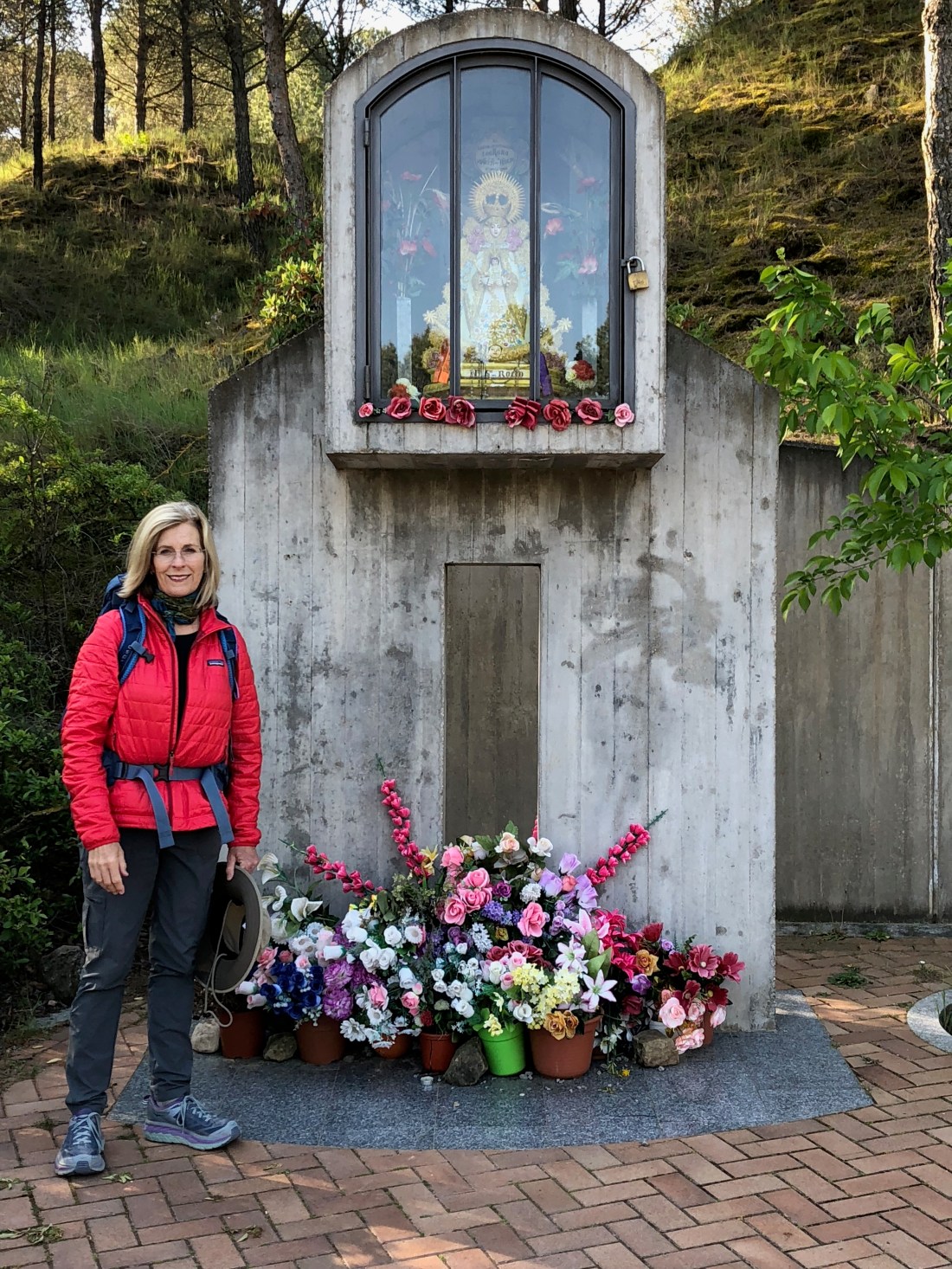
At the edge of town, we came across a shrine to Mary:IMG_1684

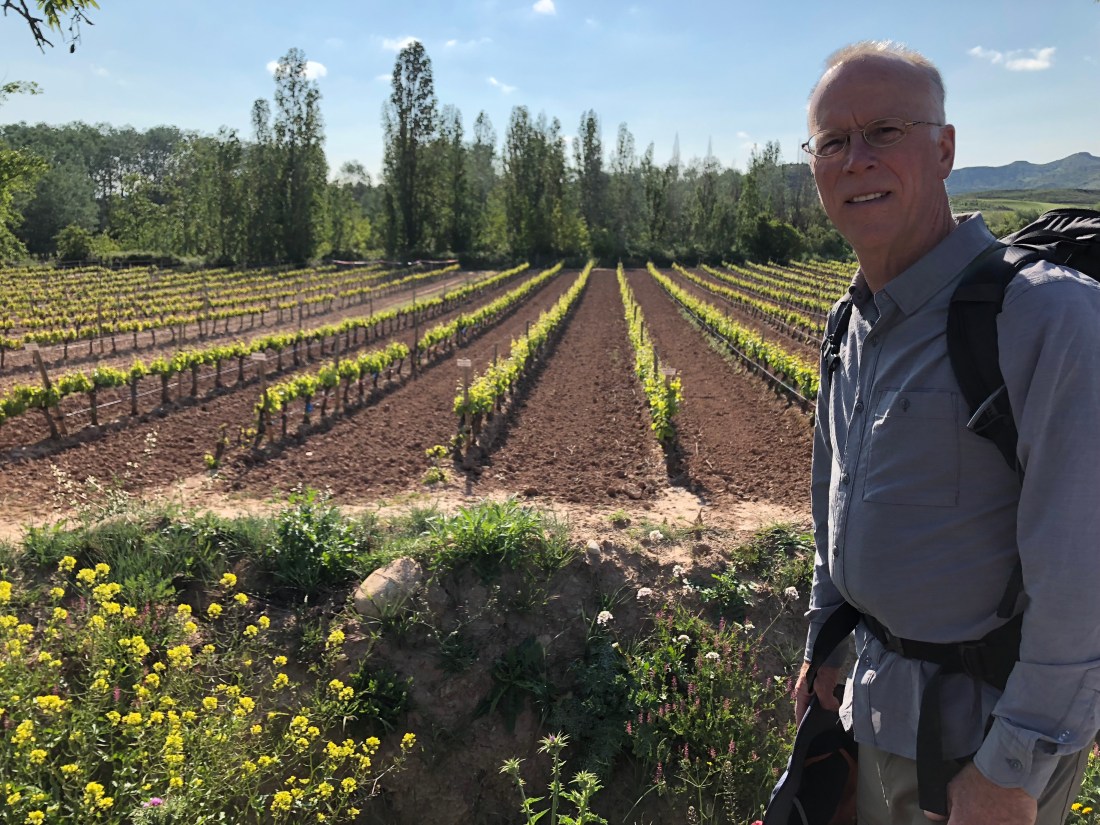
The path went by vineyards:IMG_1691

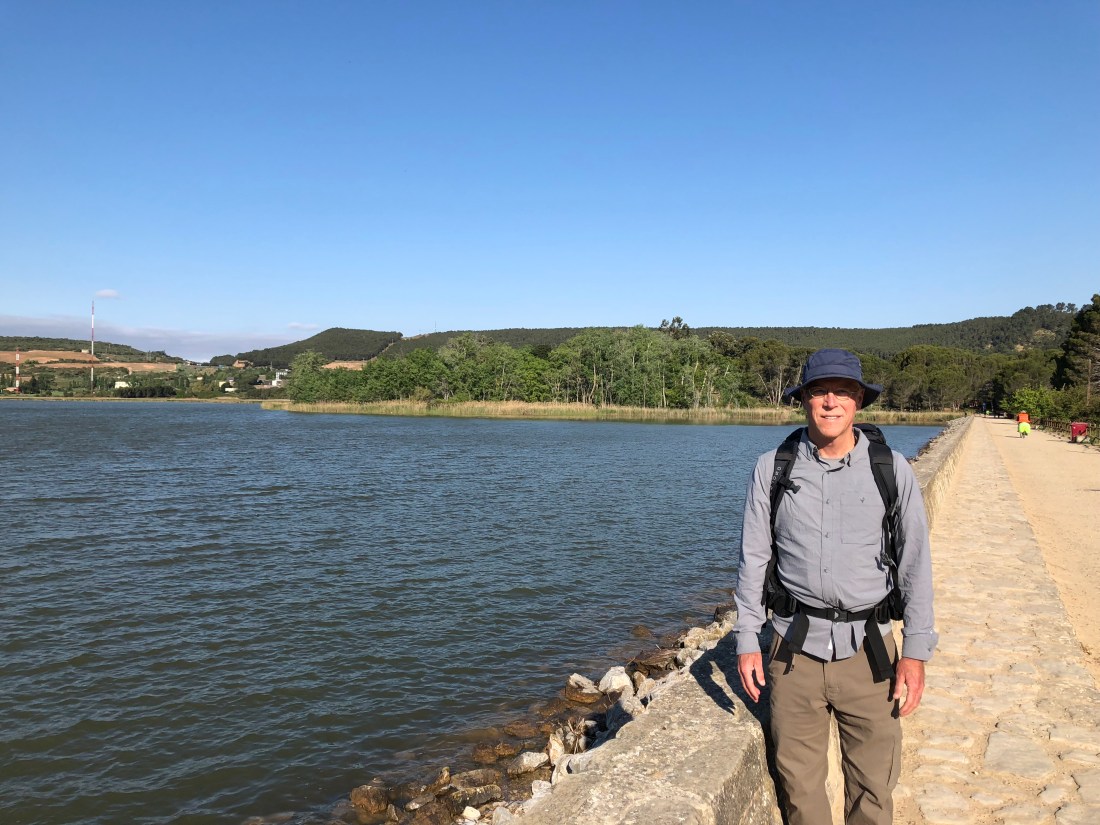
And by a small lake with a park:IMG_1687

Beyond the lake and the park, the path climbed to a pass beside a highway:IMG_1696

It then dropped down into a valley and climbed up to the village of Navarette:IMG_1697

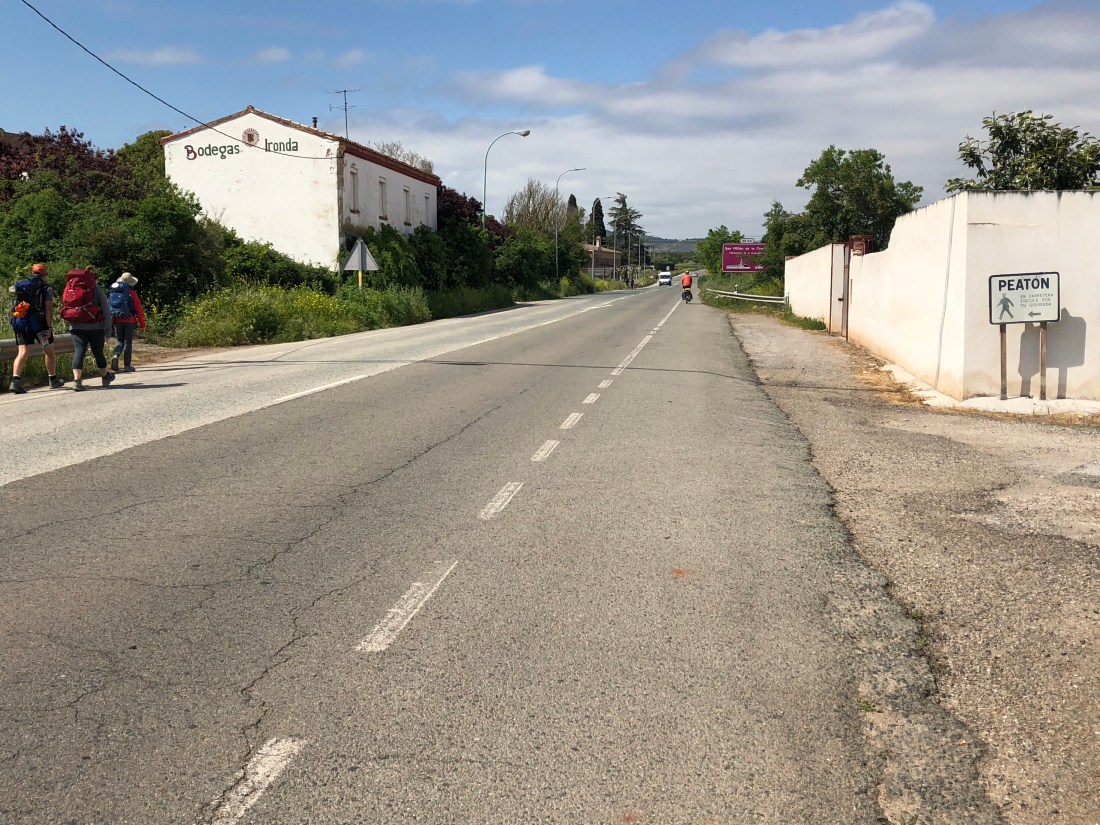
Leaving Navarette, we walked beside a road:IMG_1710

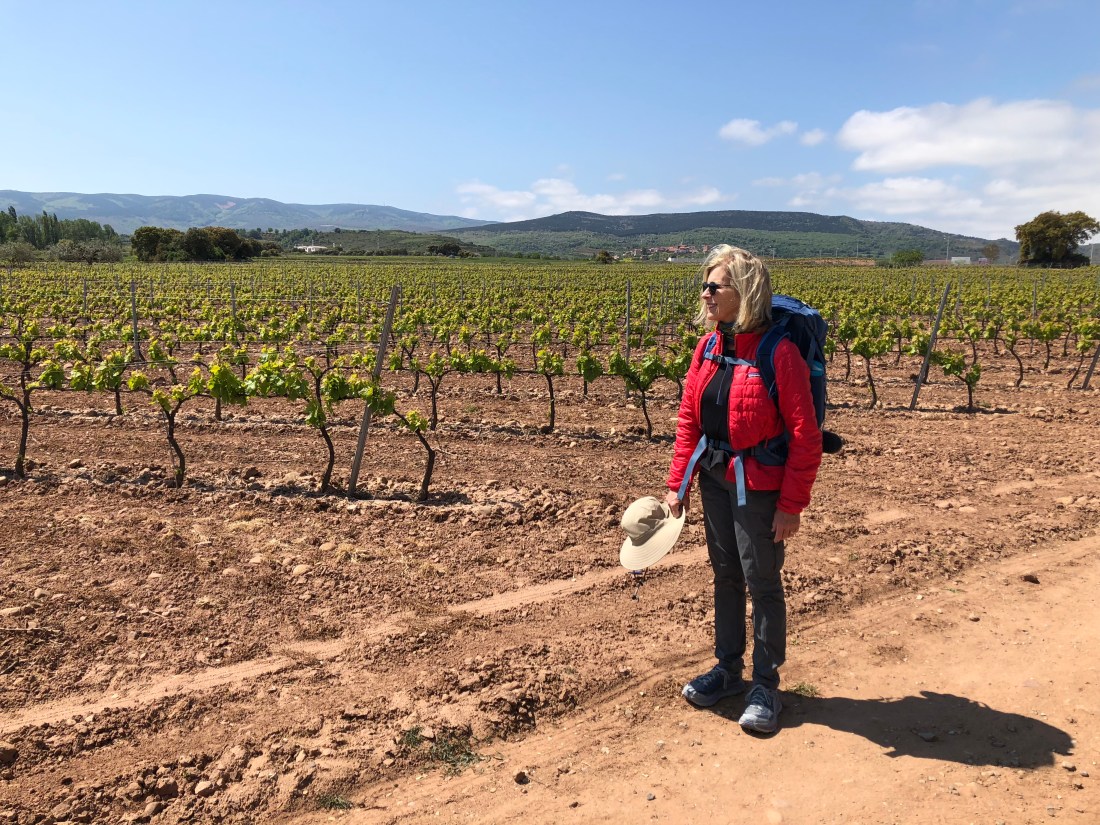
And then turned back through vineyards:IMG_1714

There are more shrines and religious statues along this part of the Camino.  Here are two that we saw along today’s walk.IMG_1713

IMG_1718

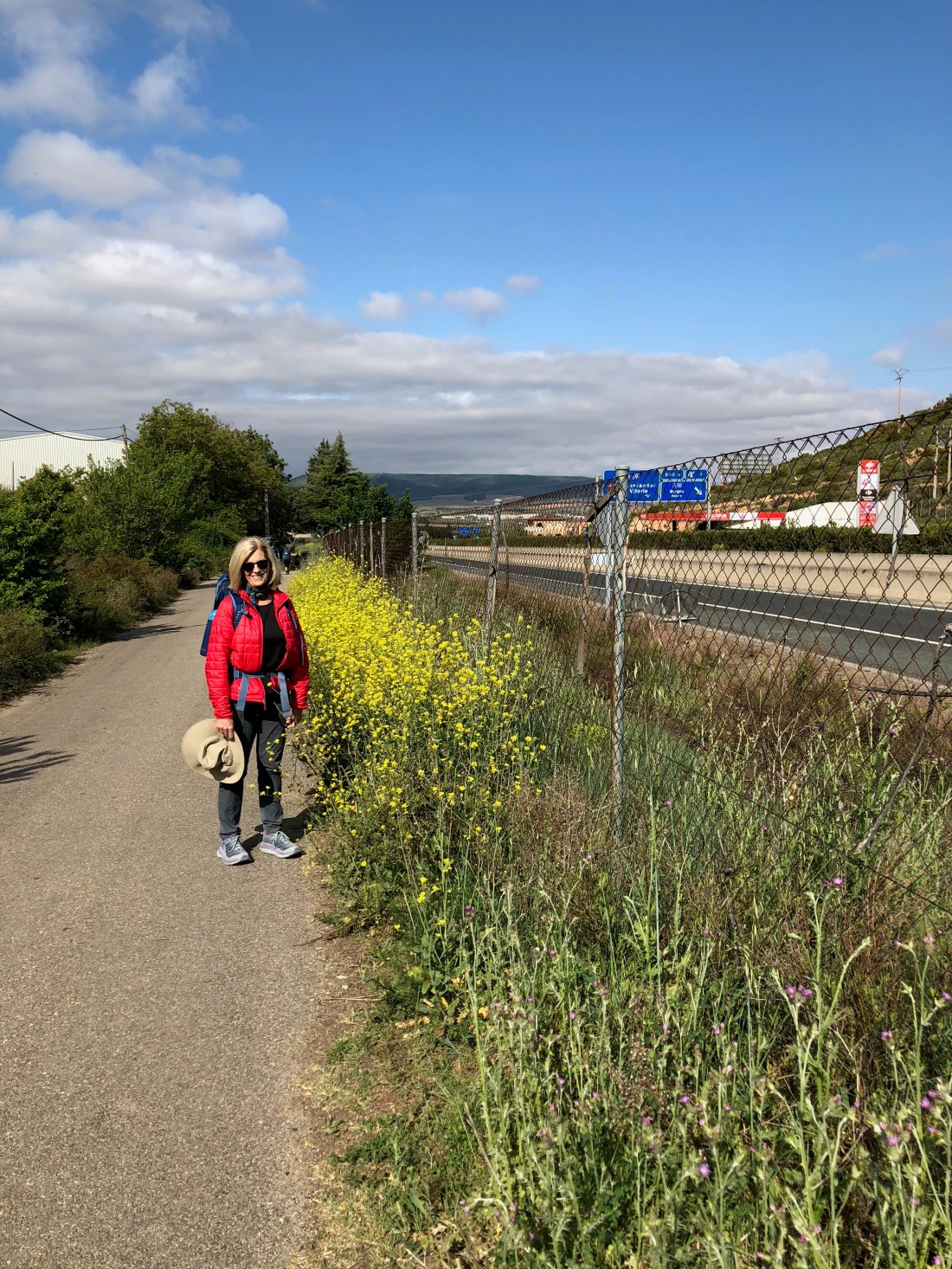
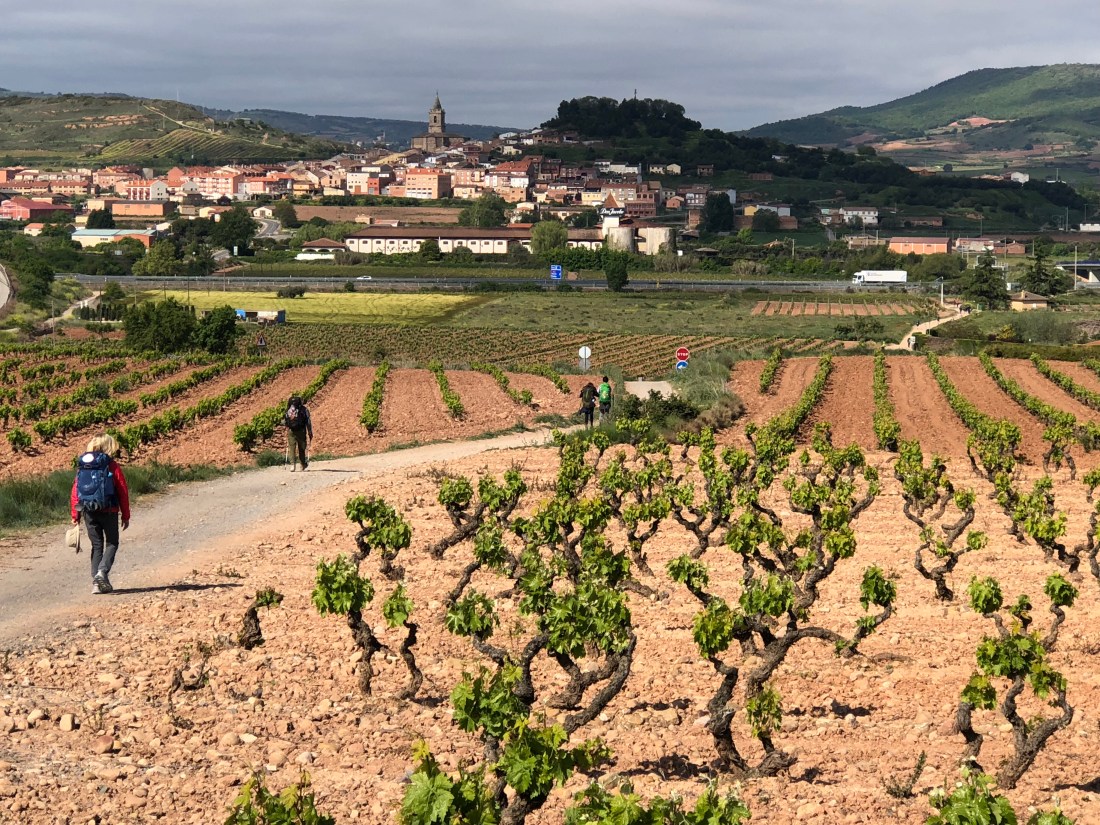
After Navarette, there was only one other village, Ventosa, before we reached our destination for the day, and Anne wanted a pastry.  Ventosa, however, is not on the Camino.  It would add about a mile to walk to Ventosa, and we were not even sure that Ventosa had a panaderia.  Anne spent several minutes at the turnoff to Ventosa, debating whether walking an extra mile was worth the possibility of getting a pastry.  Eventually the chance of eating a pastry won out, and we walked the extra mile to Ventosa.  This is Anne with Ventosa in the background.  Can you tell from the photo whether Ventosa has a panaderia?IMG_1723

At the end of the valley we walked up a steep hill:IMG_1727

And then to our day’s destination, Najera, on the banks of the rio Najerilla:IMG_1742