
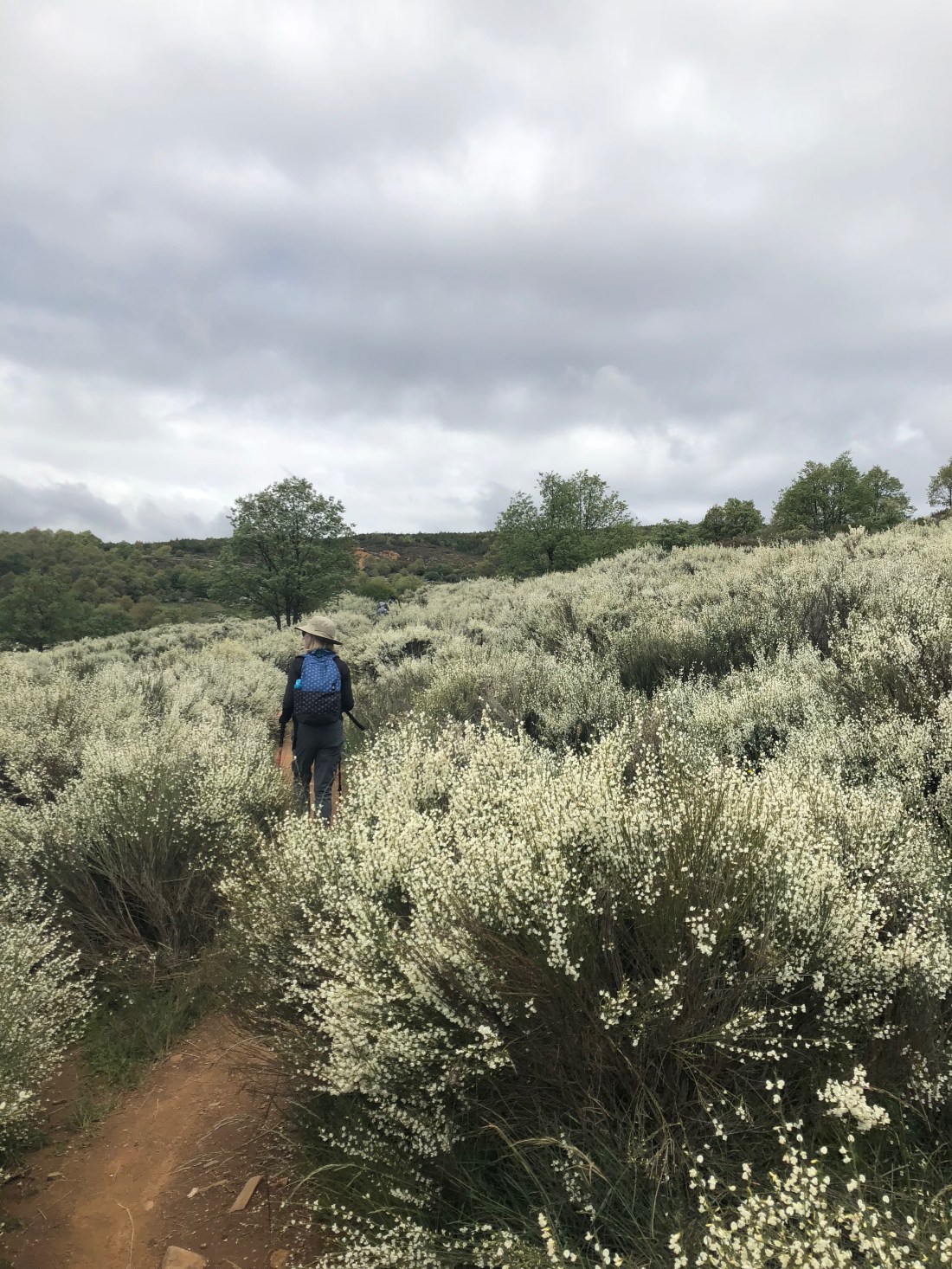
We left our hostel early this morning.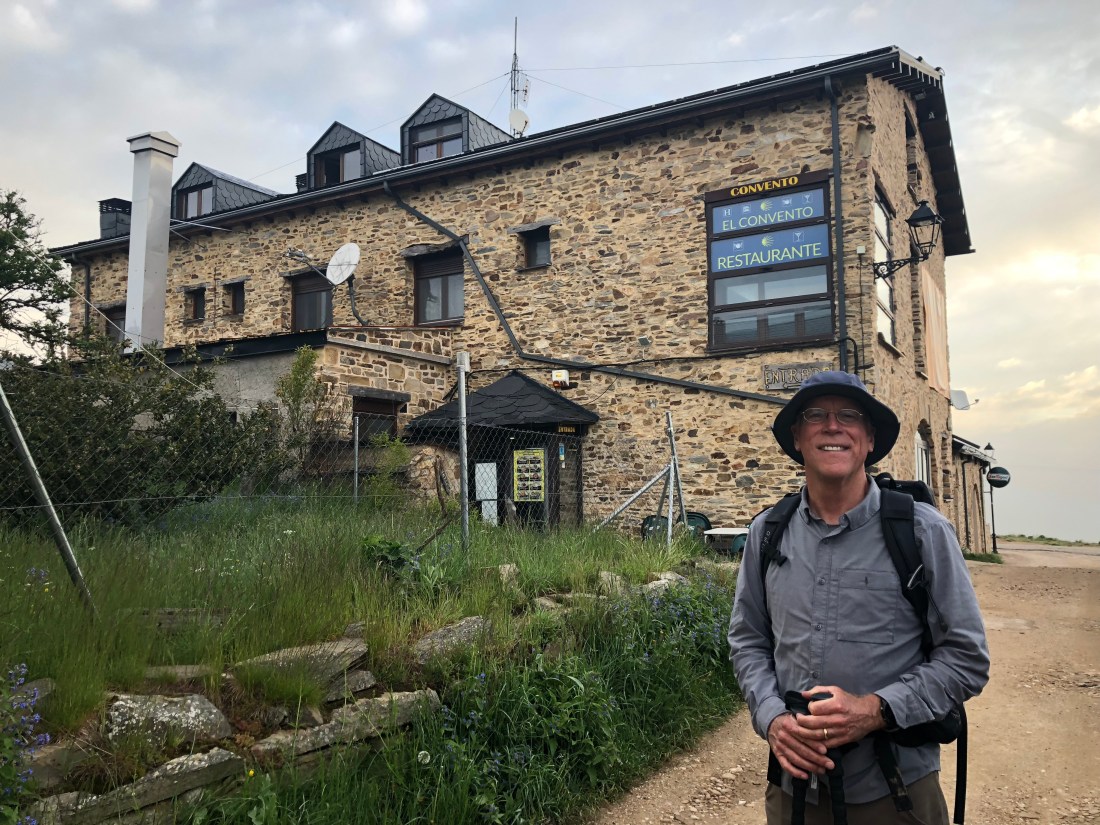 We got an early start because rain is forecast for the early afternoon. We are headed up to the top of the mountains today and then back down the other side. The descent is long and steep, and we don’t want to slip on wet rocks.
Foncebaden is an abandoned village that is being restored to accommodate the hordes of new pilgrims. There is much to be done.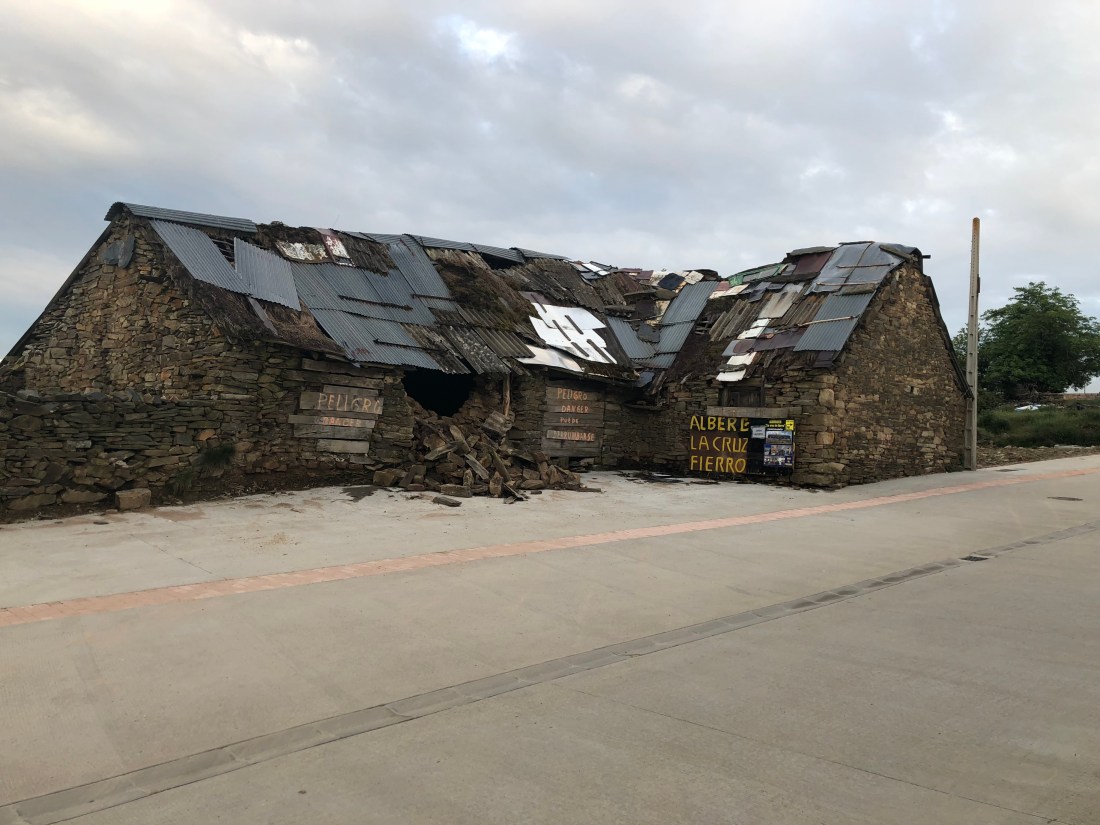
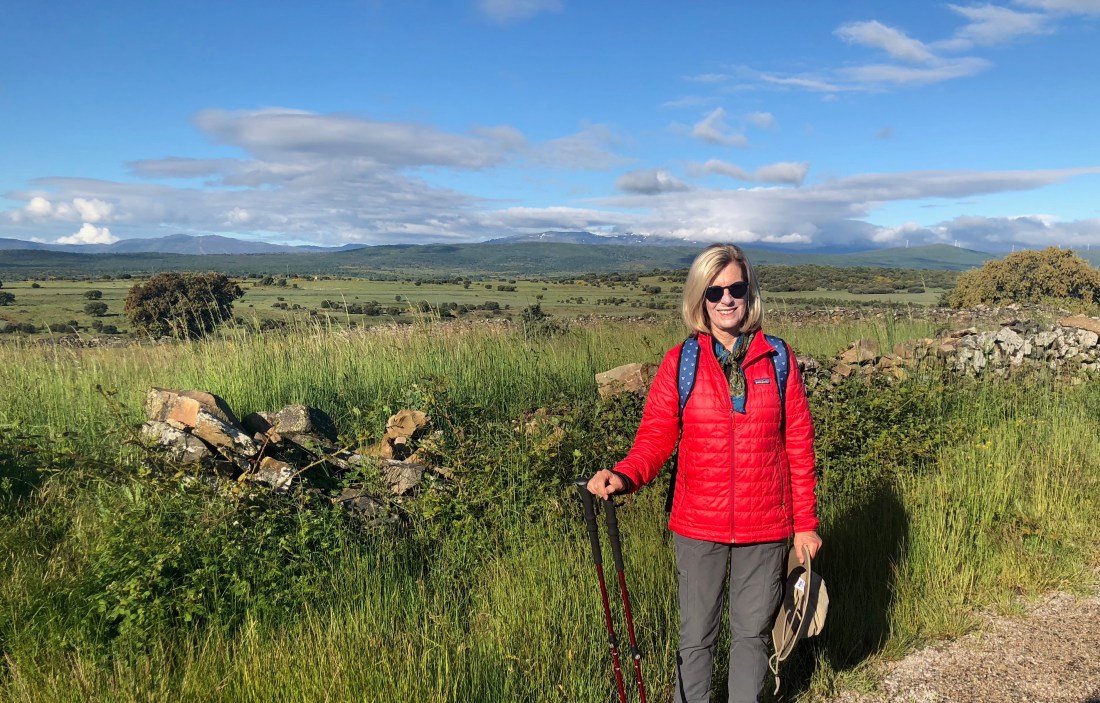
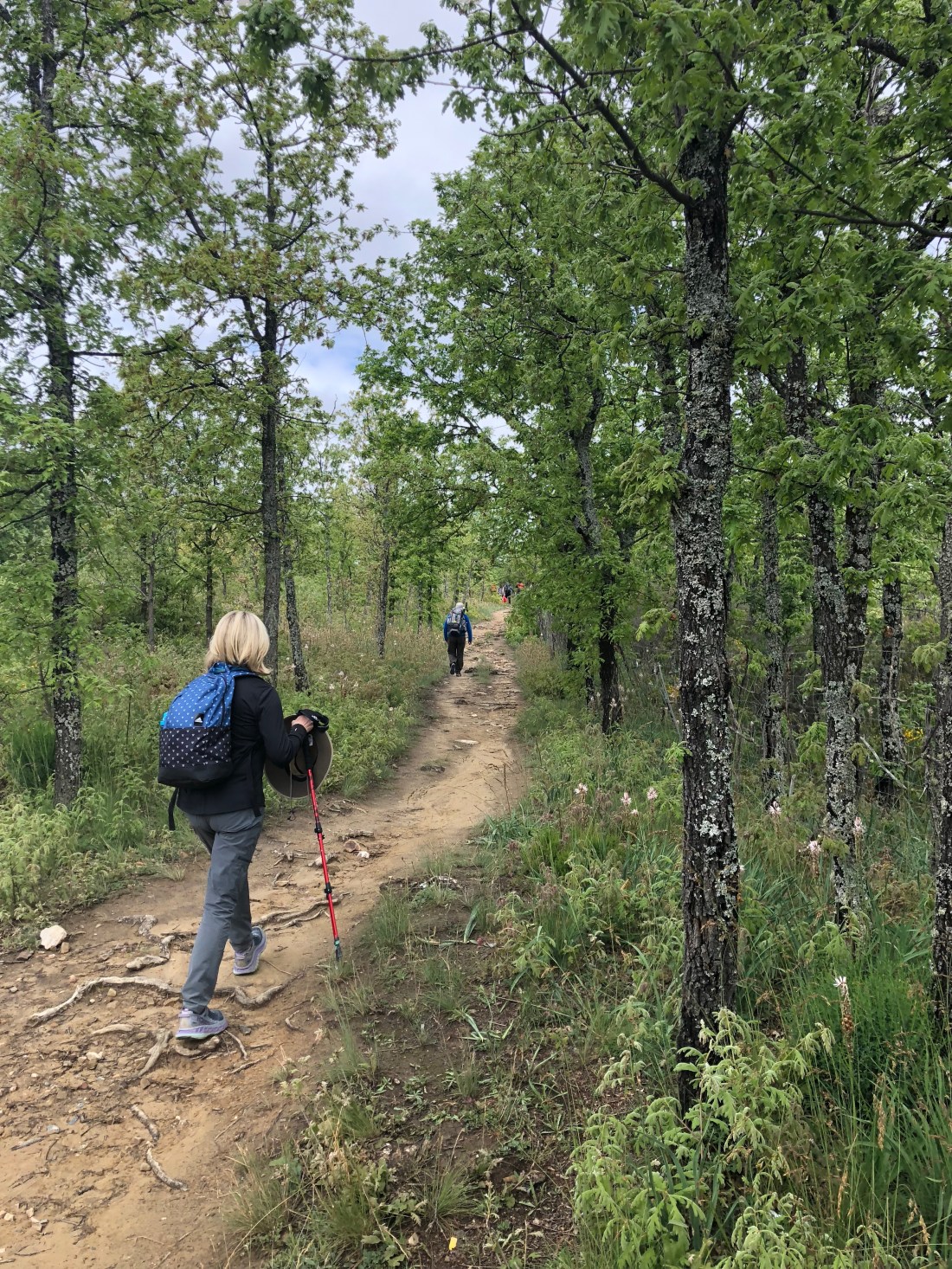
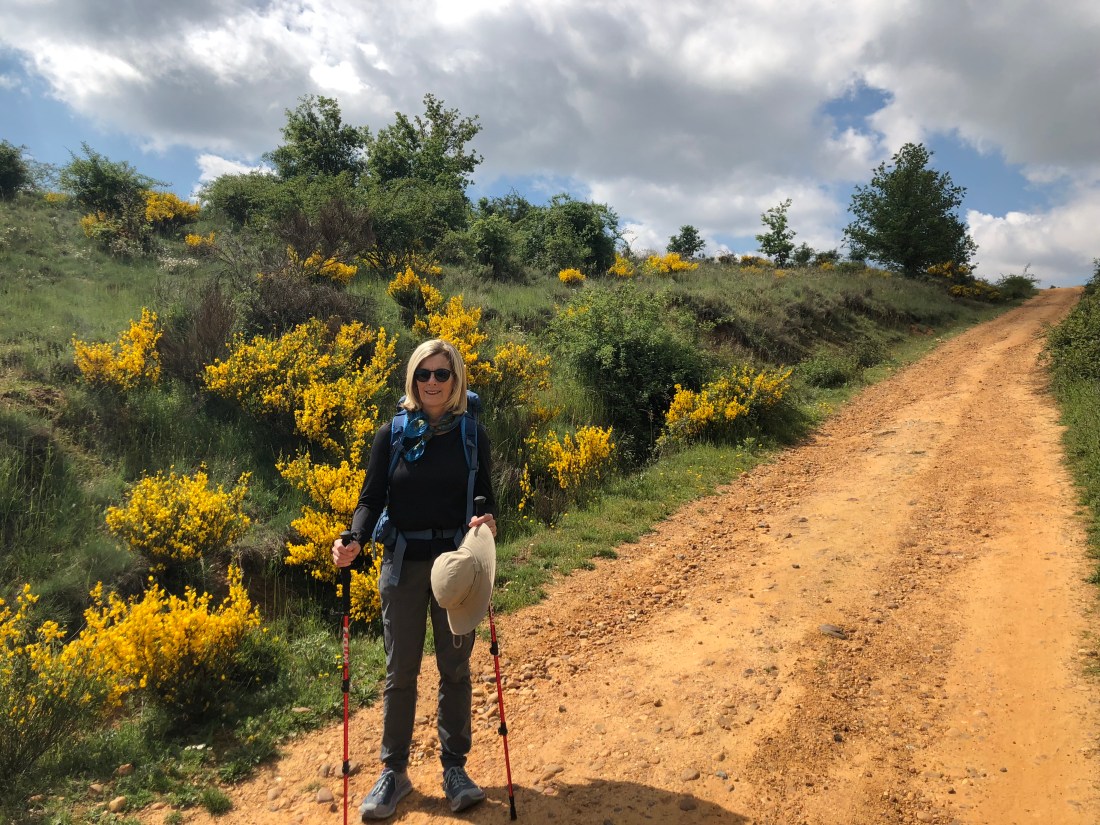
Foncebaden is near the highest spot on the Camino, and we climbed up towards it after leaving the village.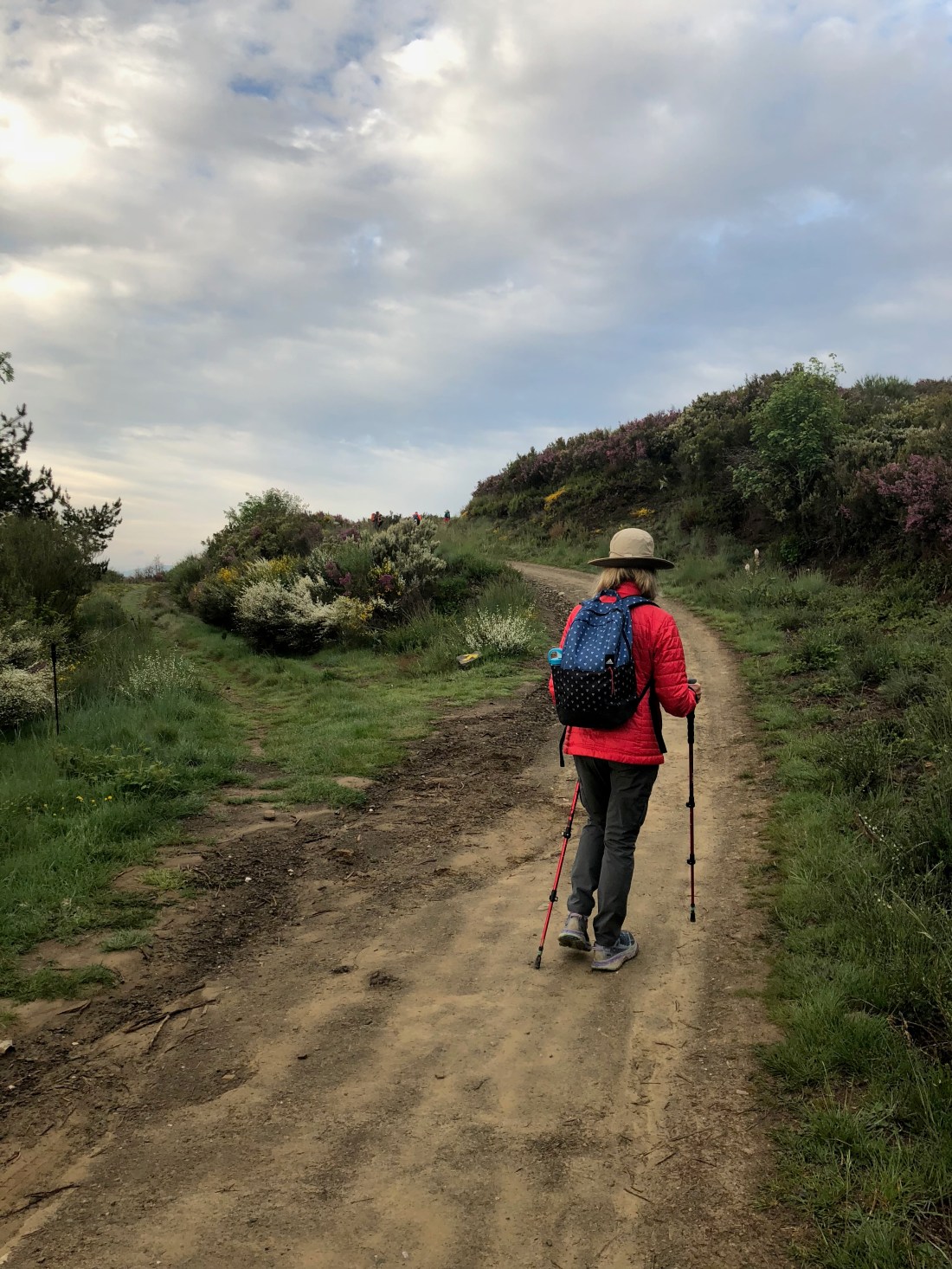
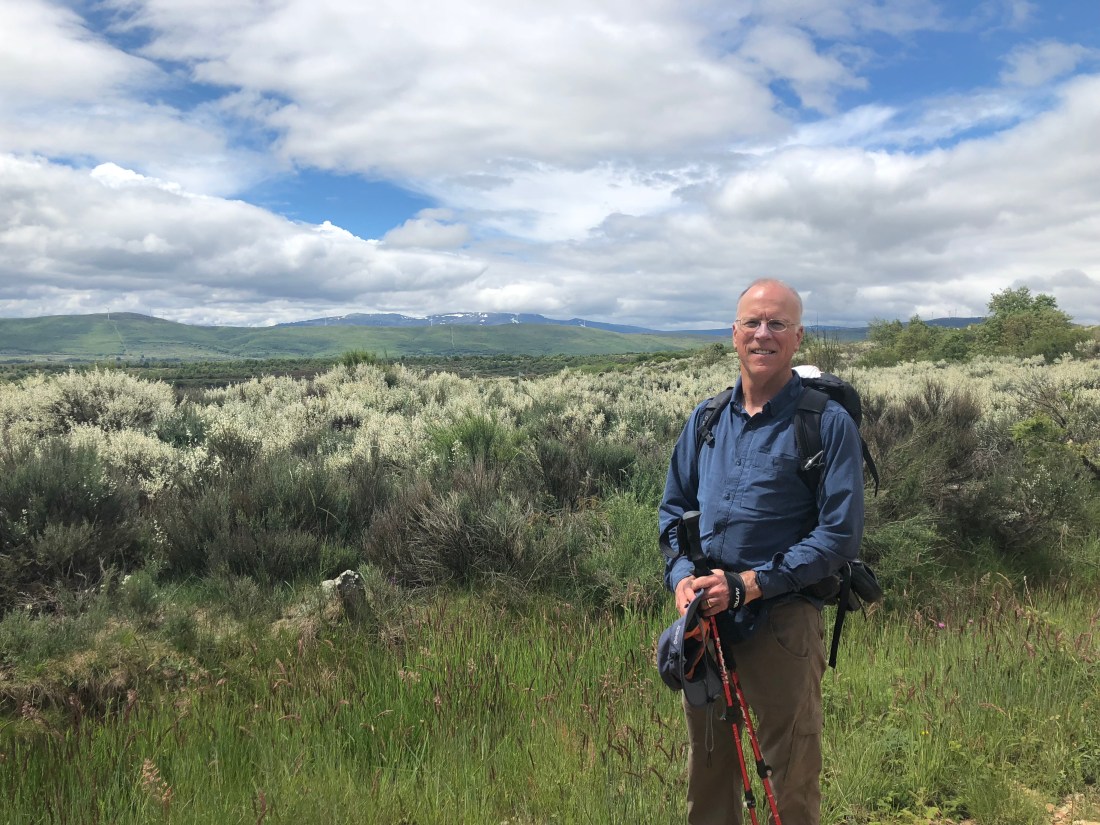
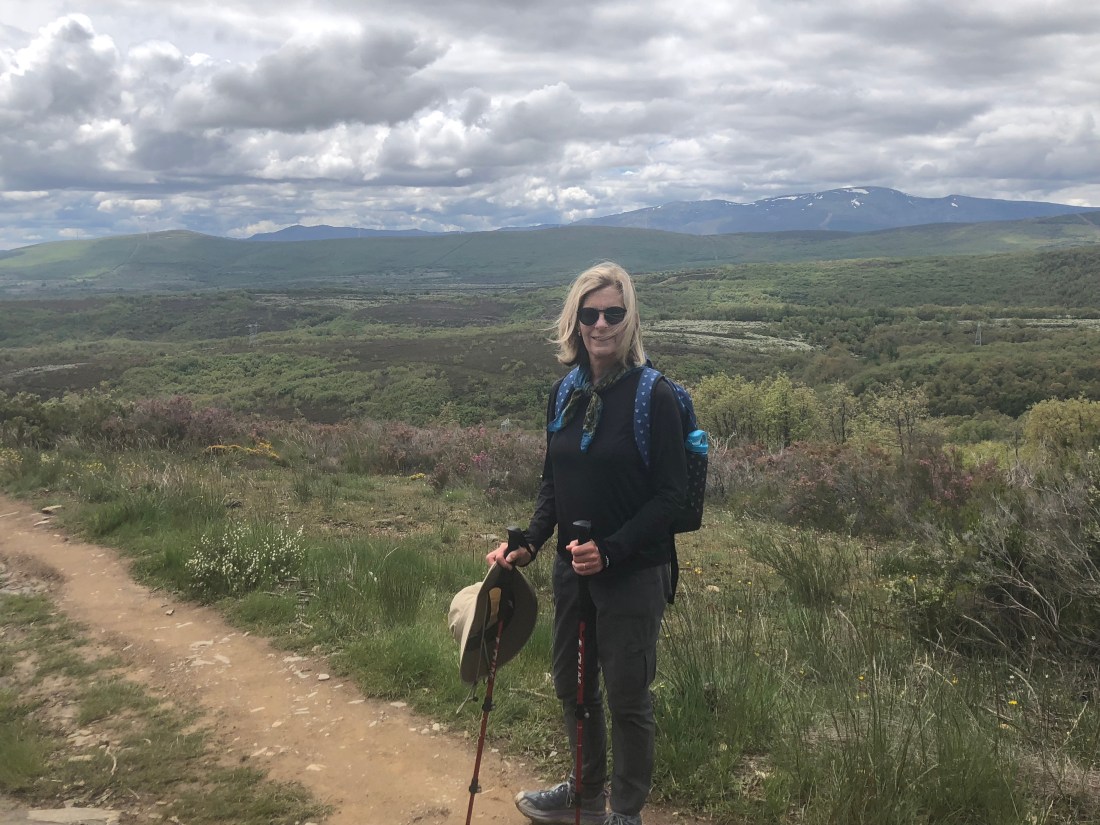
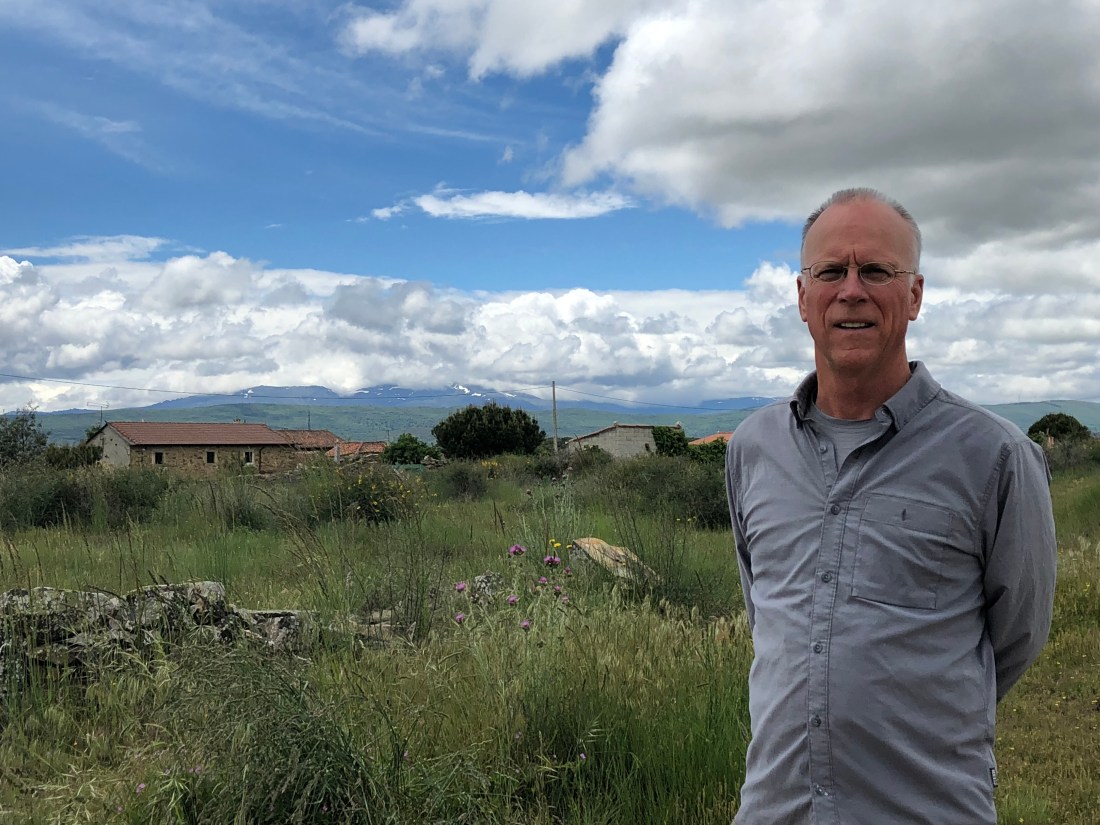
Here is the view of Mt. Telenos from near the Camino’s summit.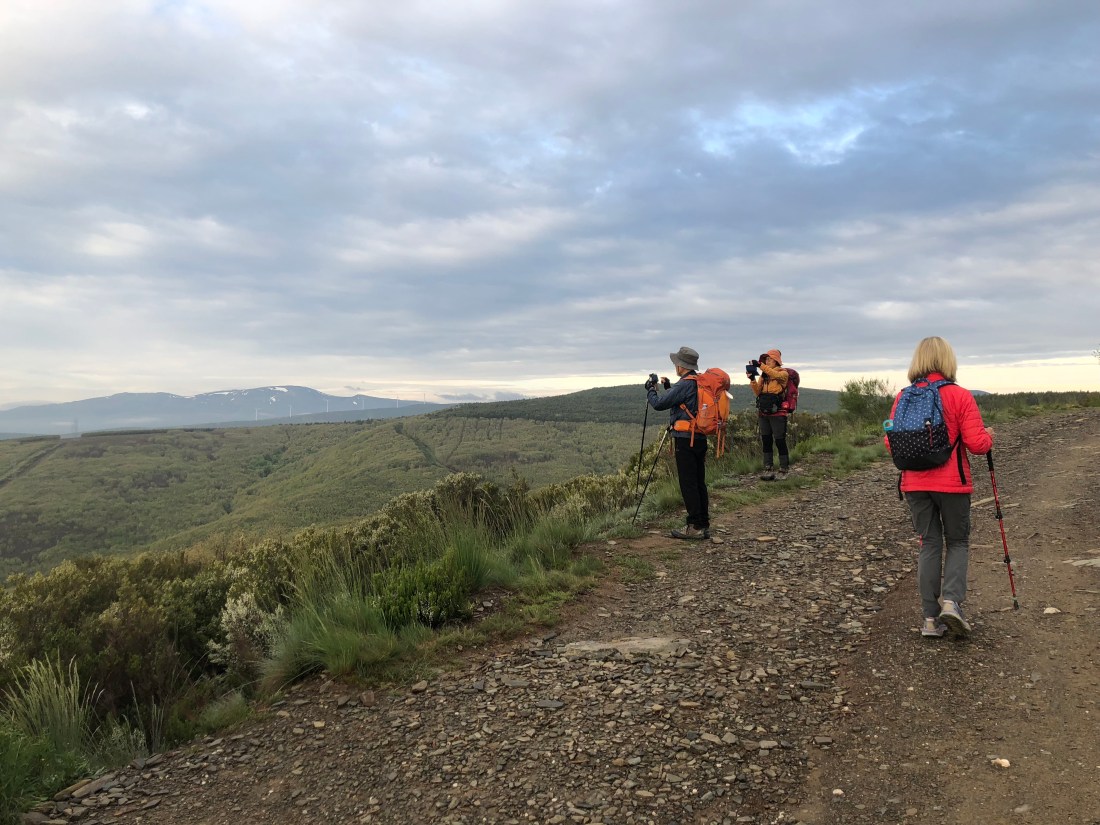
At the summit is an iron cross mounted on a pile of stones. It is a Camino tradition for pilgrims to bring stones from home and place them on the pile to commemorate their purpose for walking the Camino.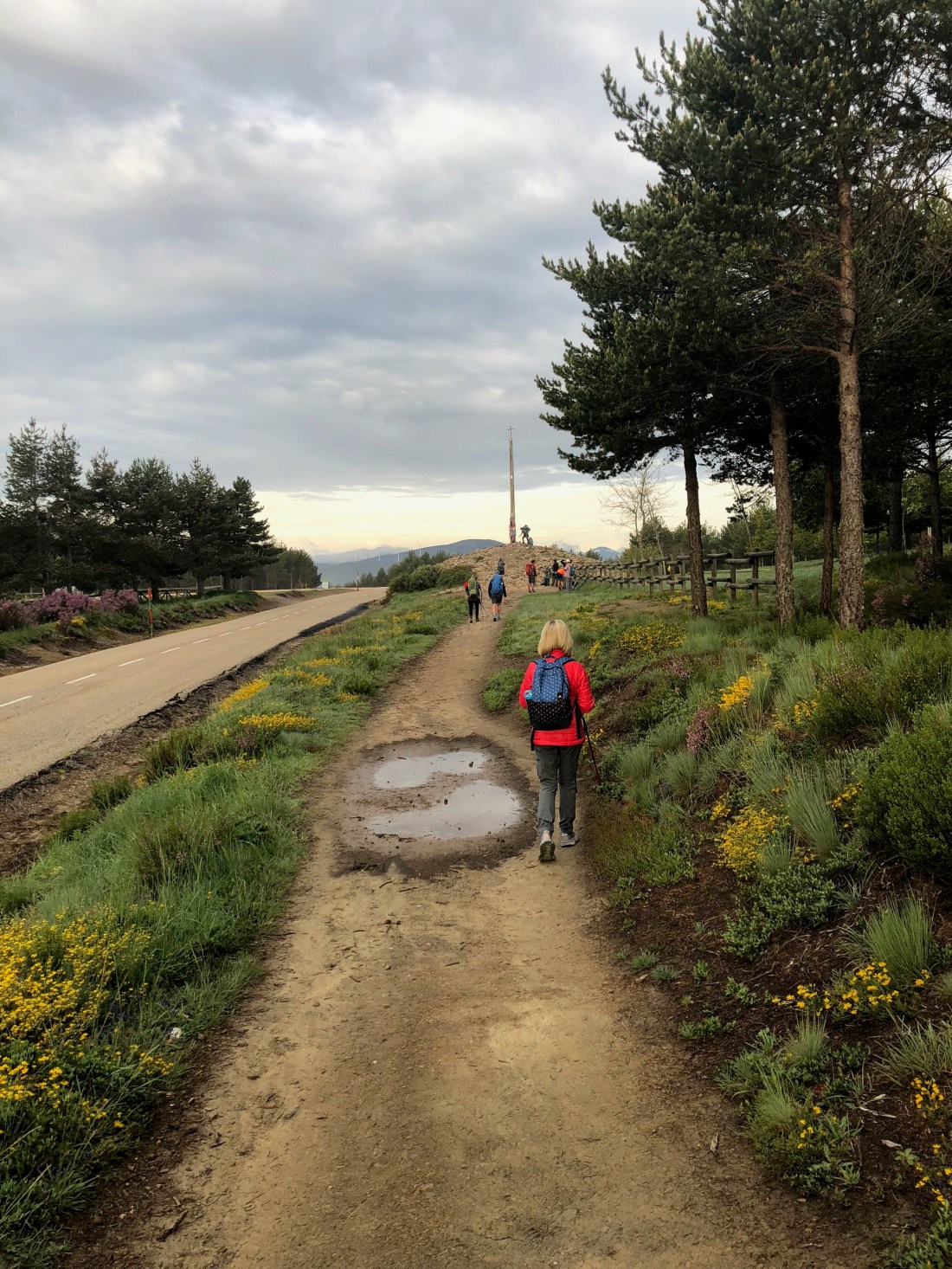 A common question at dinner is to ask the group why they are walking the Camino. The best answer I have heard so far was from a Brazilian who said he had no idea but he was having a great time and he hoped that it would continue.
We rested at a juice and fruit stand near the summit.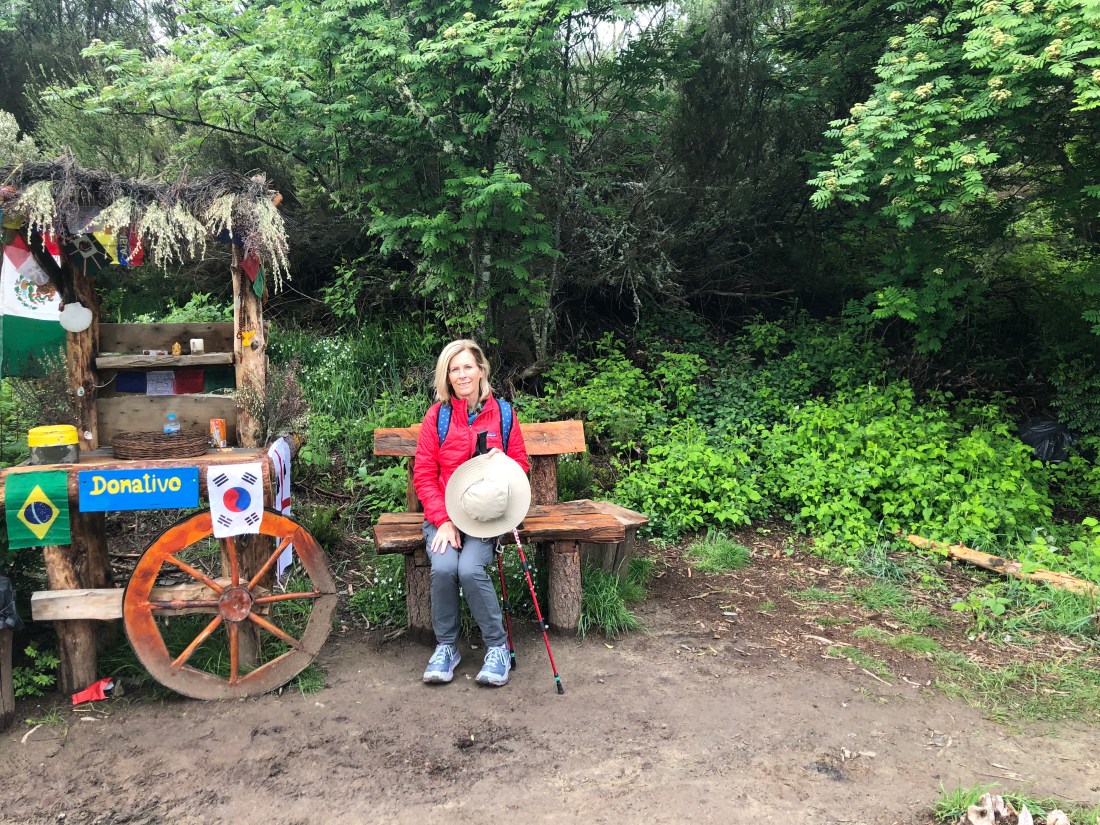
And met some new friends close by.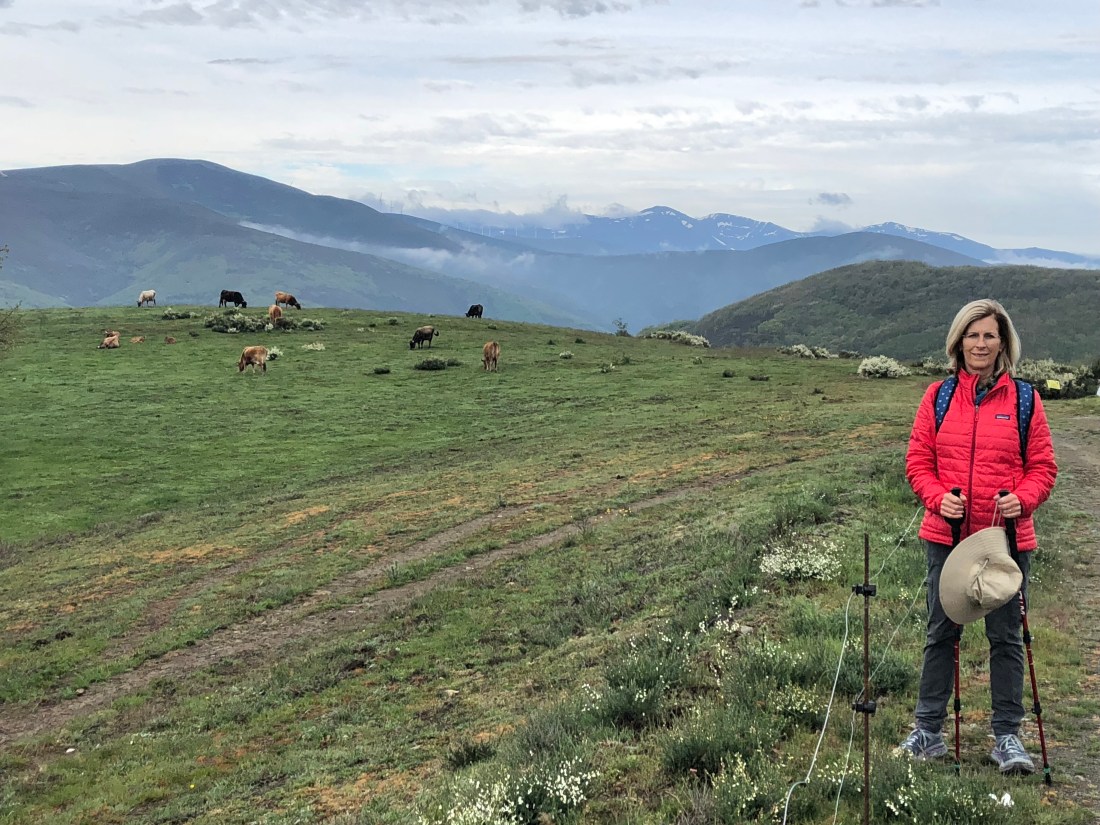
The sun came out briefly.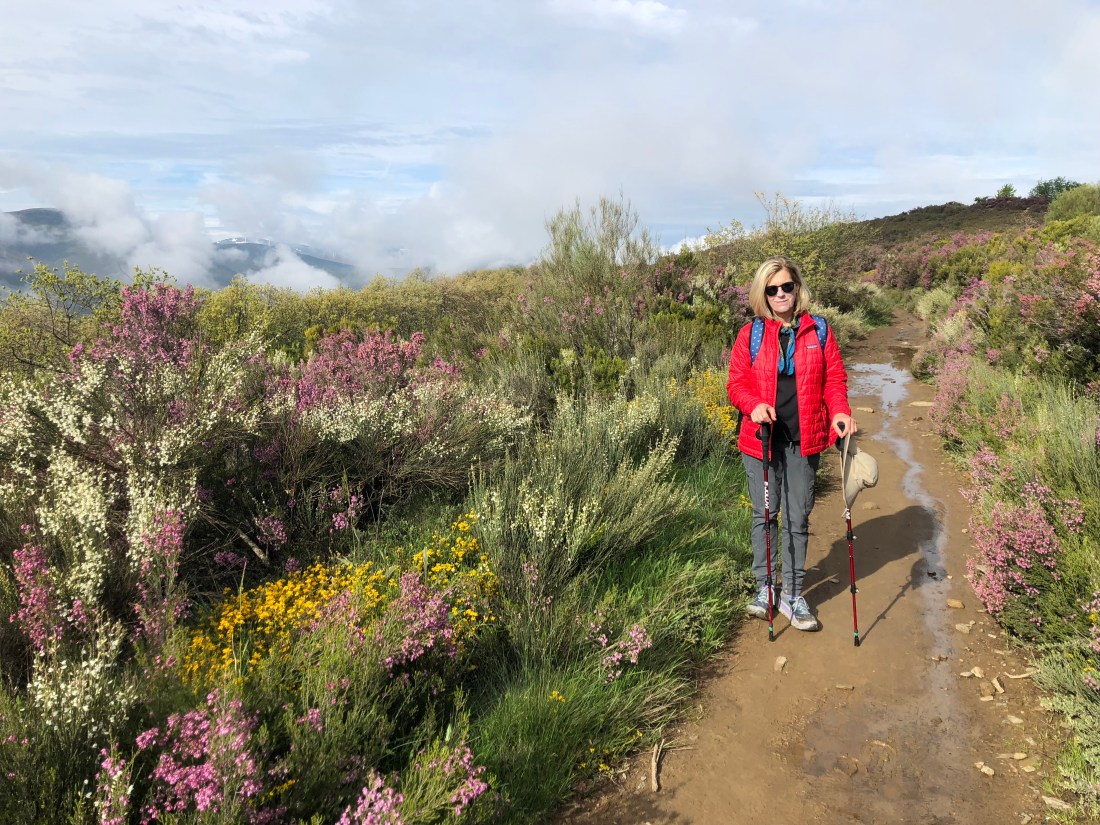
And then we began the long descent down the other side of the mountain.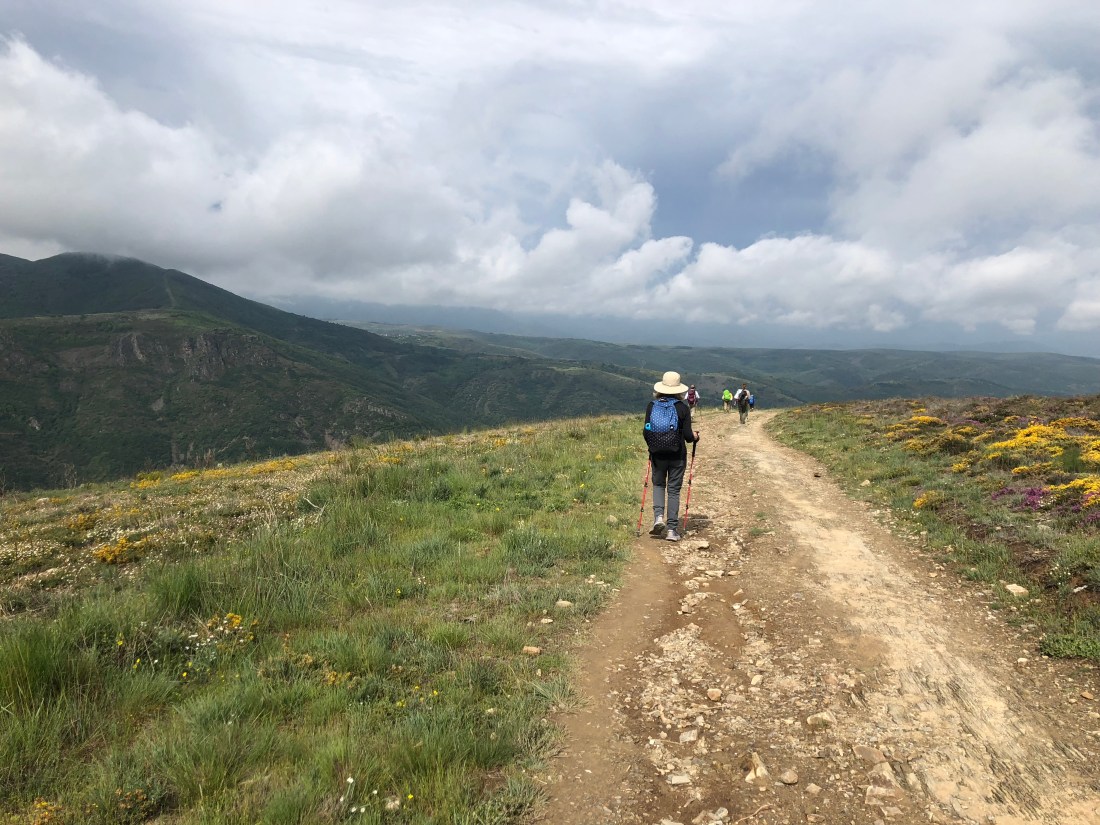
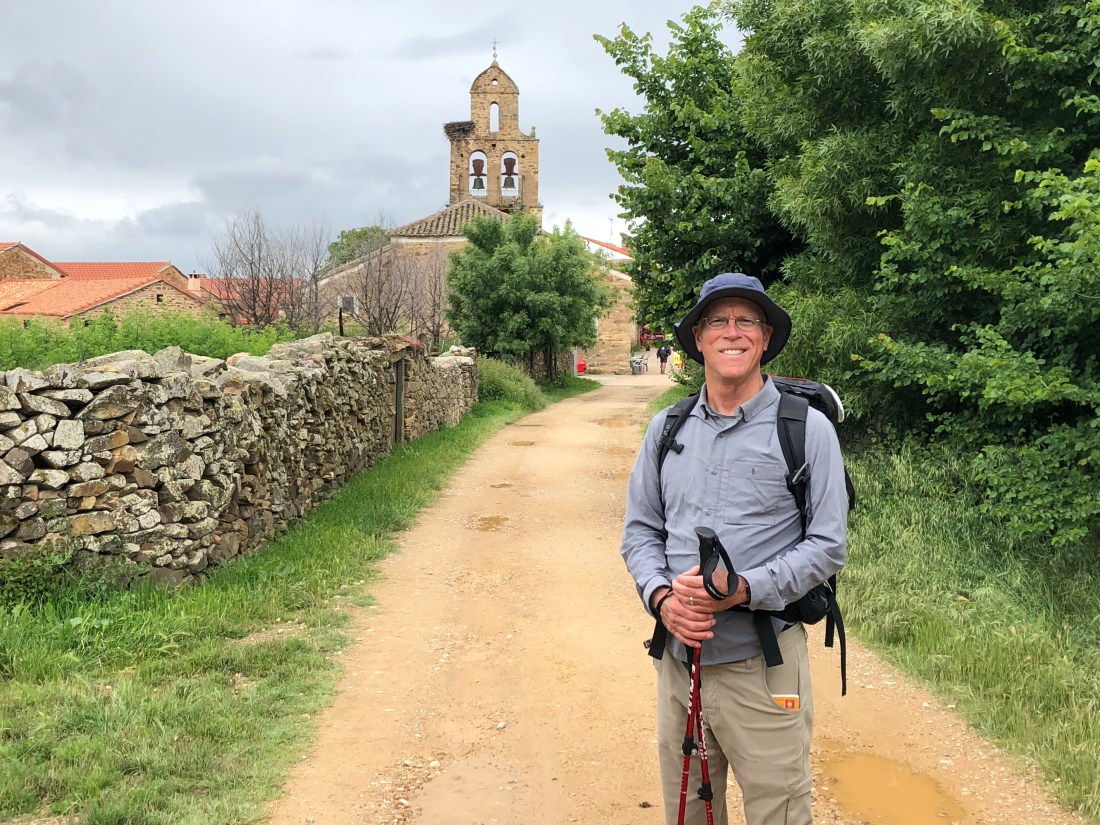
We dropped down to the village of Acebo.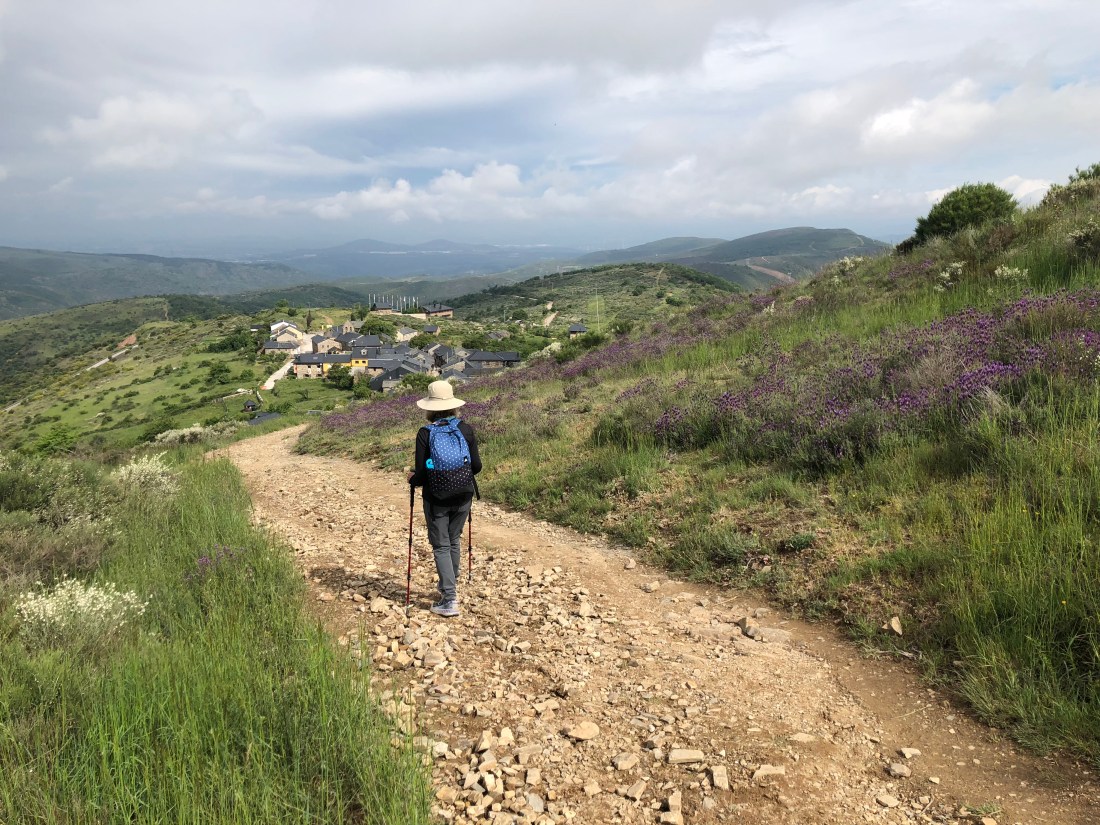
After passing through the village we continued to descend.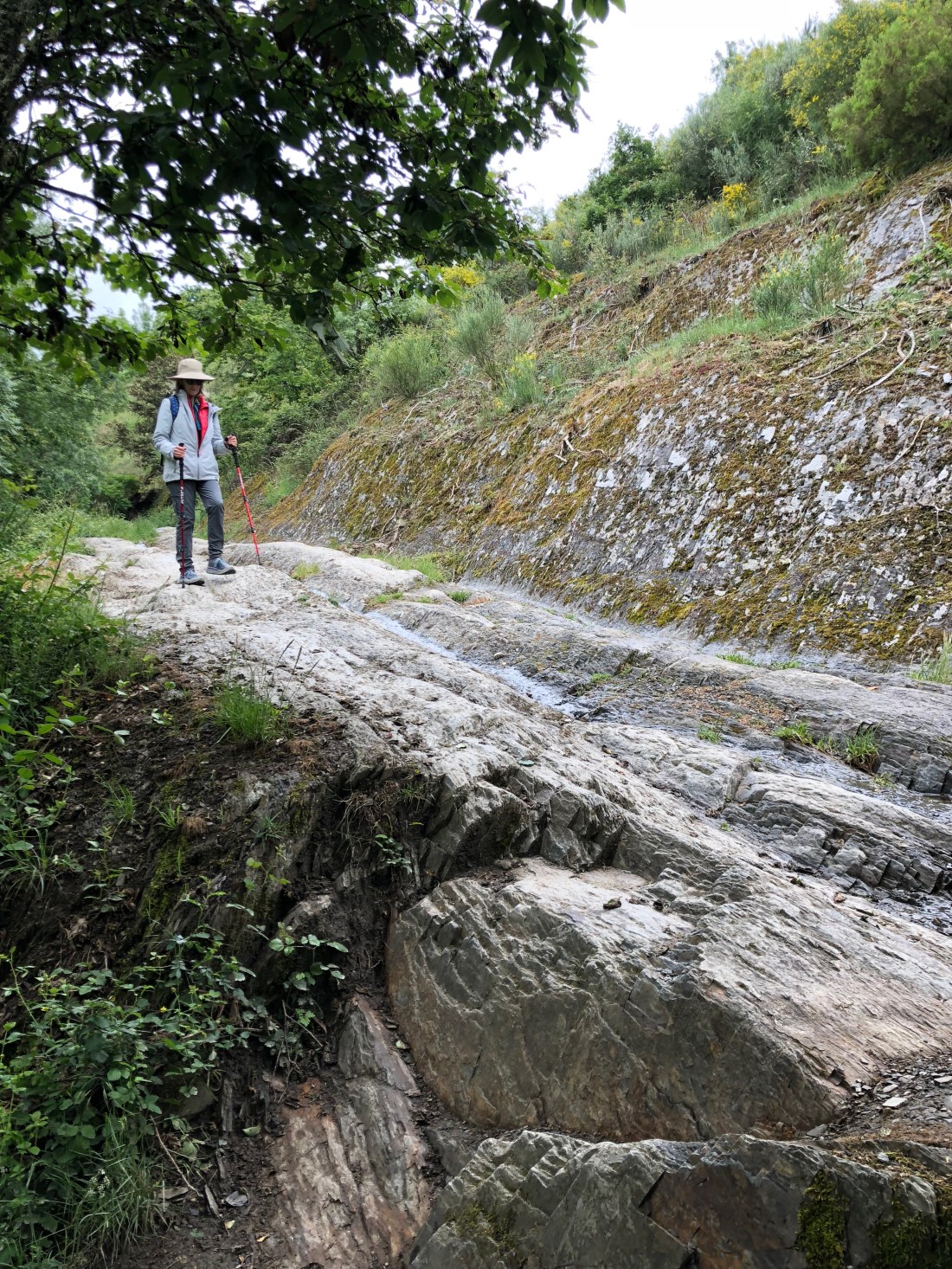
At the bottom of the mountain, we arrived at the village of Molinaseca, our destination for the day, just as it started to pain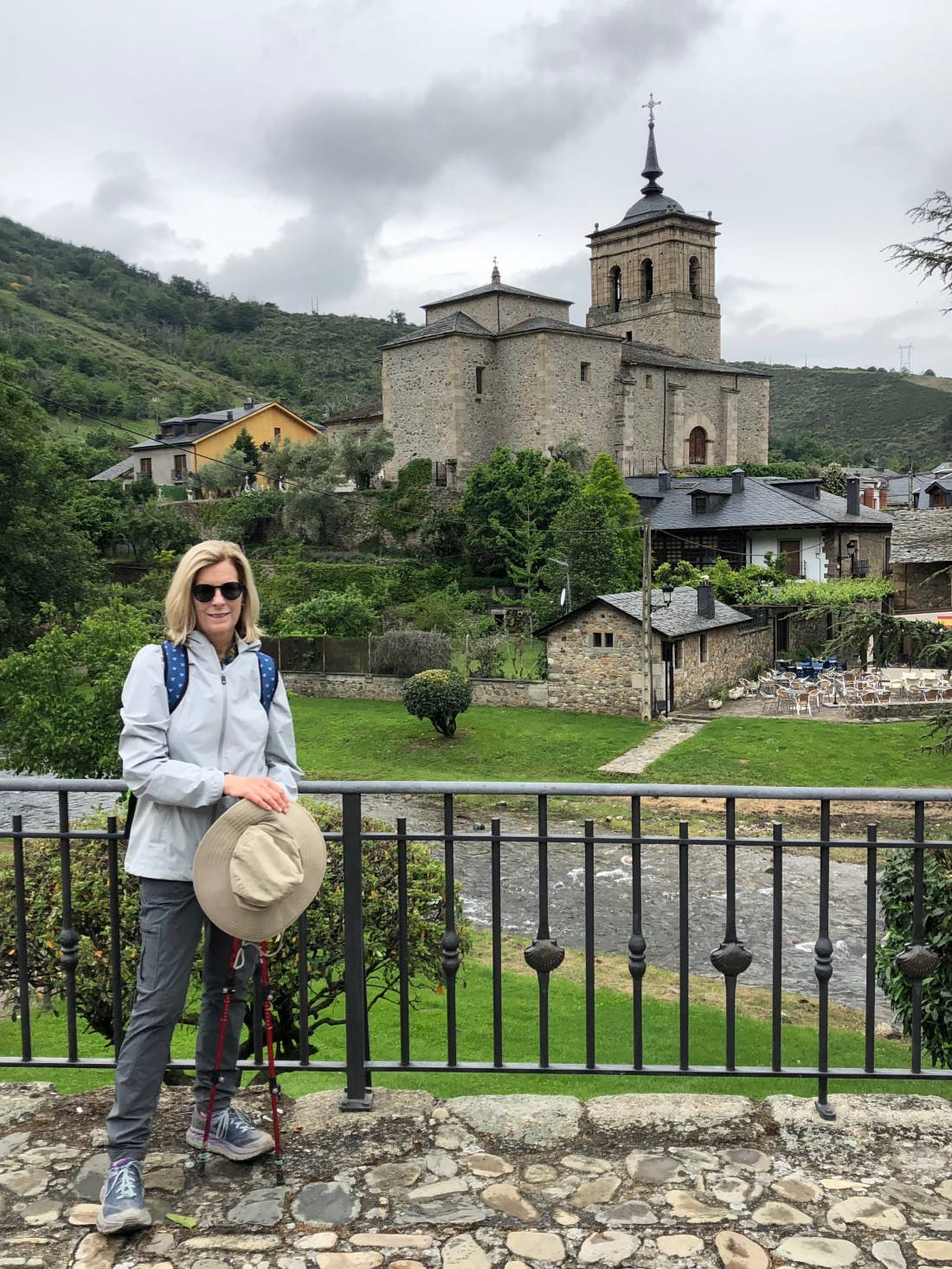 Molinaseca is on the rio Boeza:
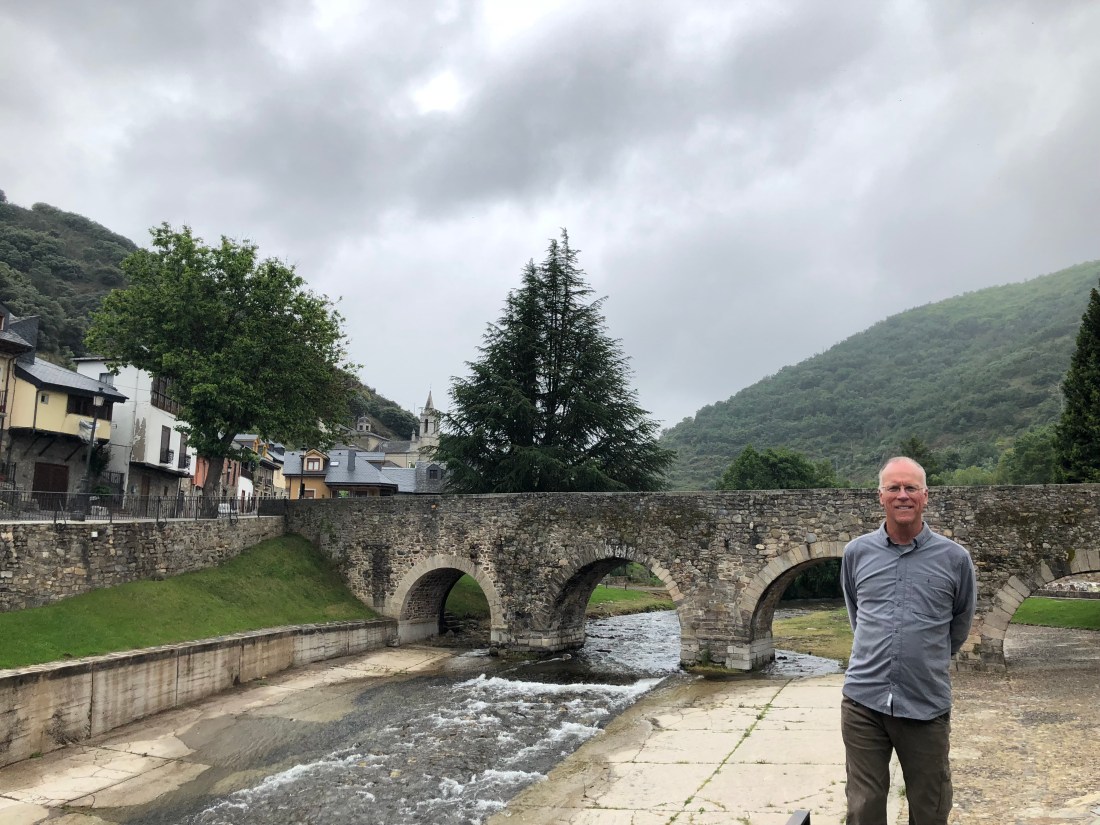 It was a hard walk today. It wasn’t far, only a little over 20 km, but we descended almost 3400 feet. We are no worse for the wear, however. By the time the the walk is over, we should finally be in good walking shape.
The walk today was beautiful, but something is missing. We almost never see the friends we met during the early weeks. We still meet people and enjoy talking with them. But with the number of people now on the Camino, we have little expectation of seeing them again. There are more pilgrims, and they are are younger and moving faster and keeping more to themselves. Lately, people have rushed by us without a word. Two days ago we stood outside an emitage next to a group of 20-something Americans engaged in an obscenity-laced conversation. Something seems lost.
Or maybe we’re just tired and tomorrow’s forecast is for more rain.
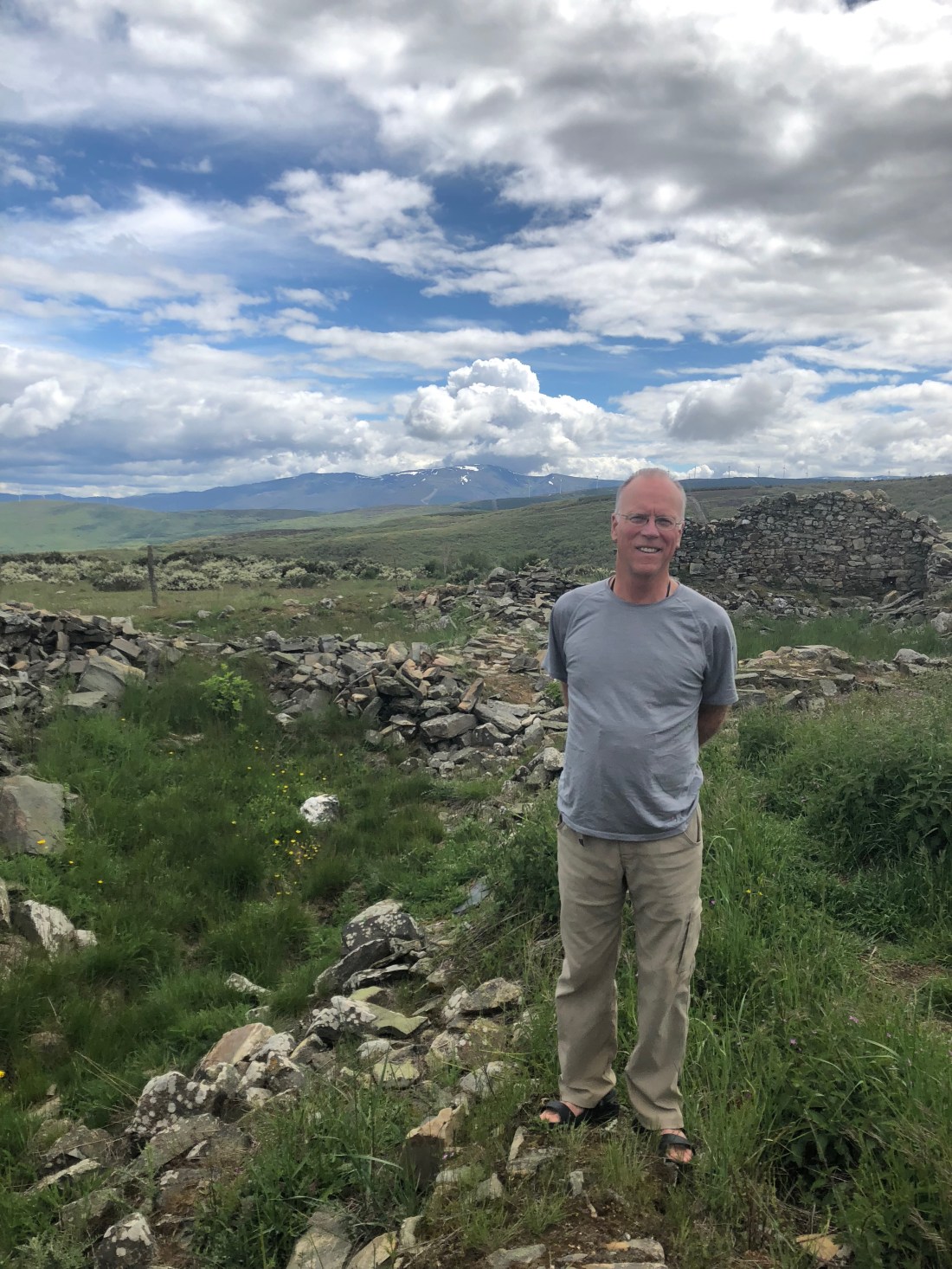
 We would spend the whole day today across a valley from Mount Telenos, the site of ancient Roman gold mines.
 A lot of our walking over the past two weeks has been over the Via Romana, which was built to transport gold from Mount Telenos to Rome.
 Nobody was playing foosball when we checked in this morning, but people were drinking beer, perhaps getting ready for a game.
 After a couple of hours of walking, we came to the village of Rabanal del Camino.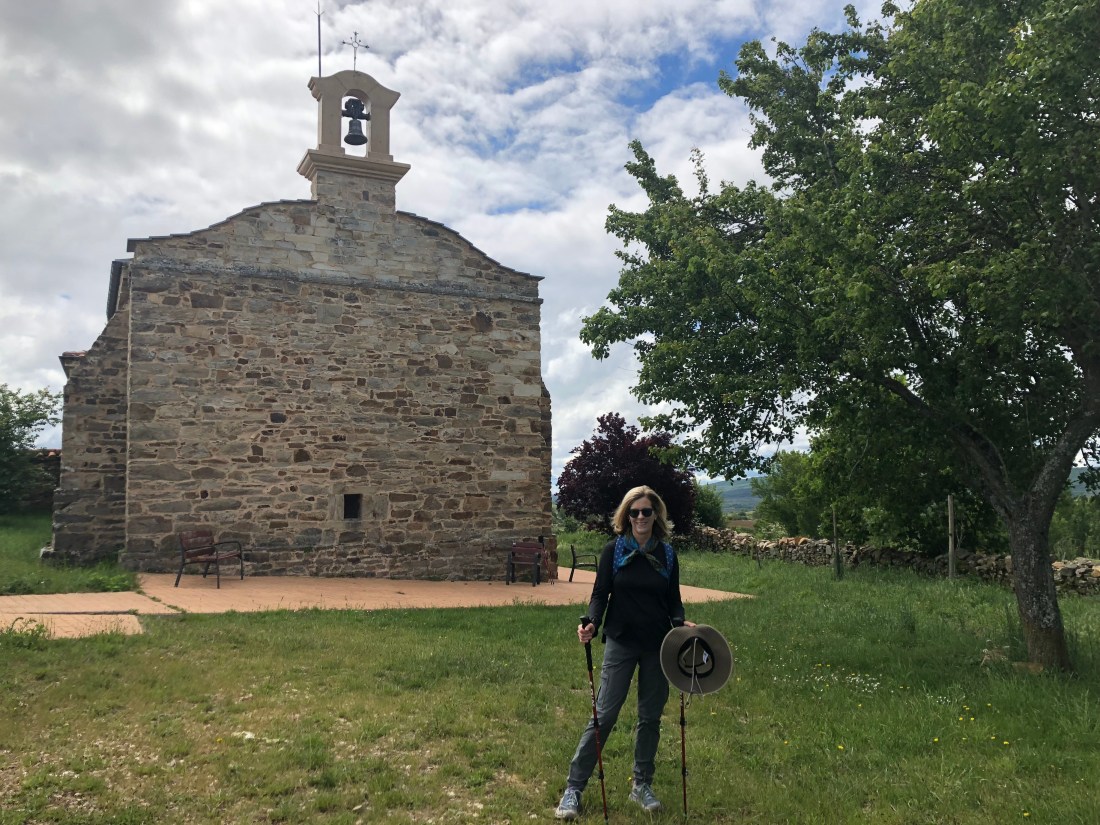
 The number of people on the Camino has picked back up after dropping between Burgos and Leon.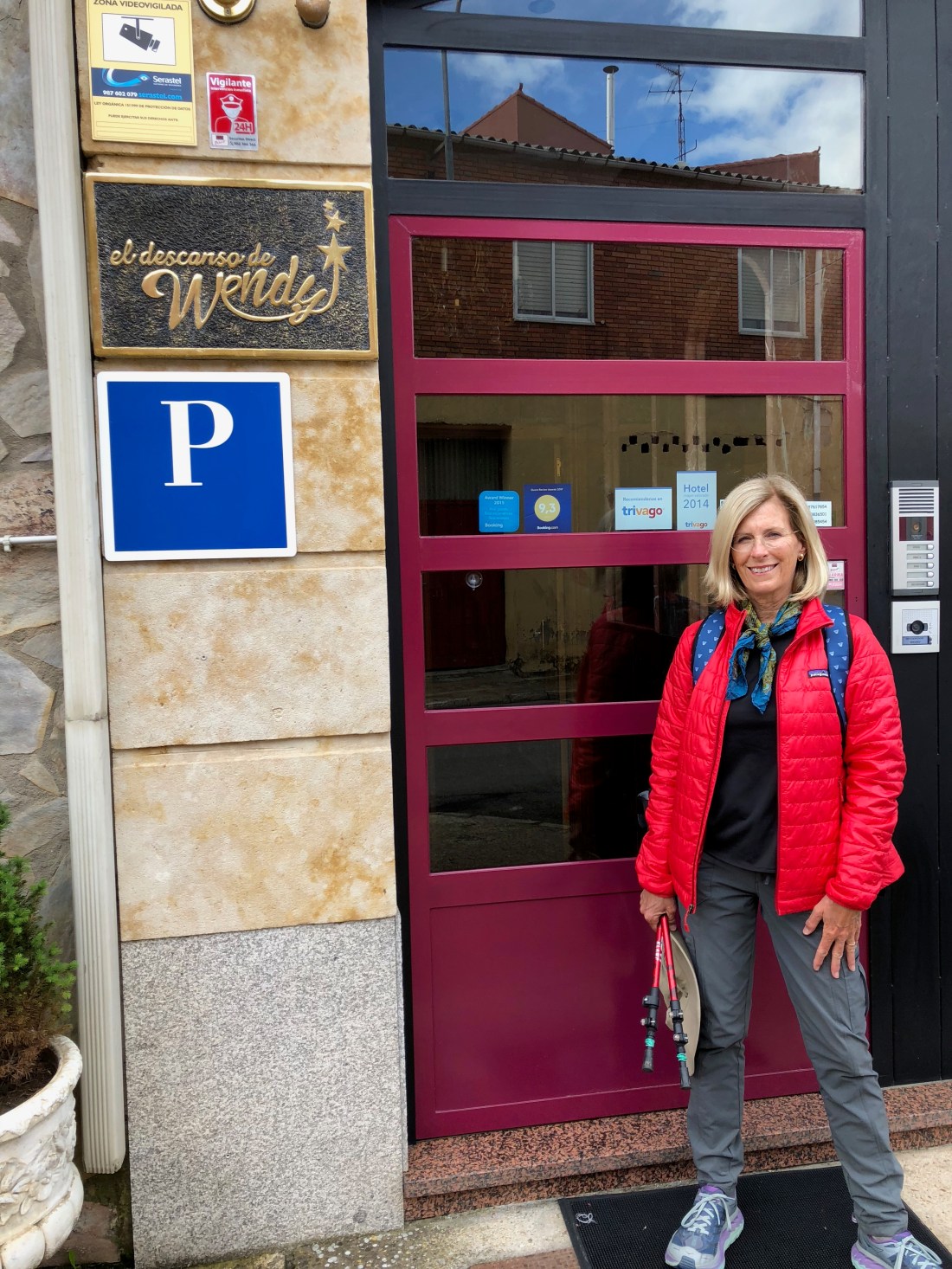
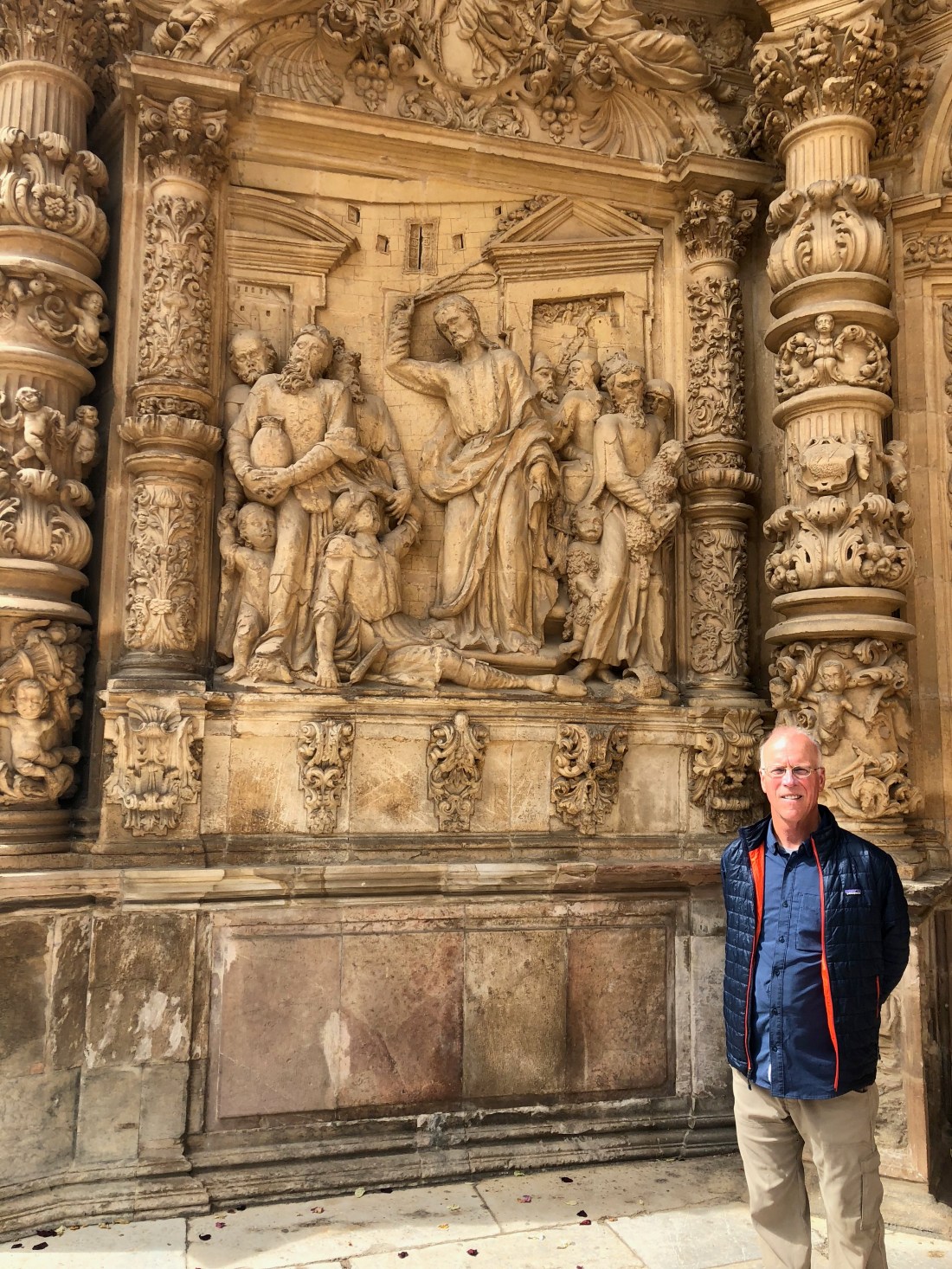
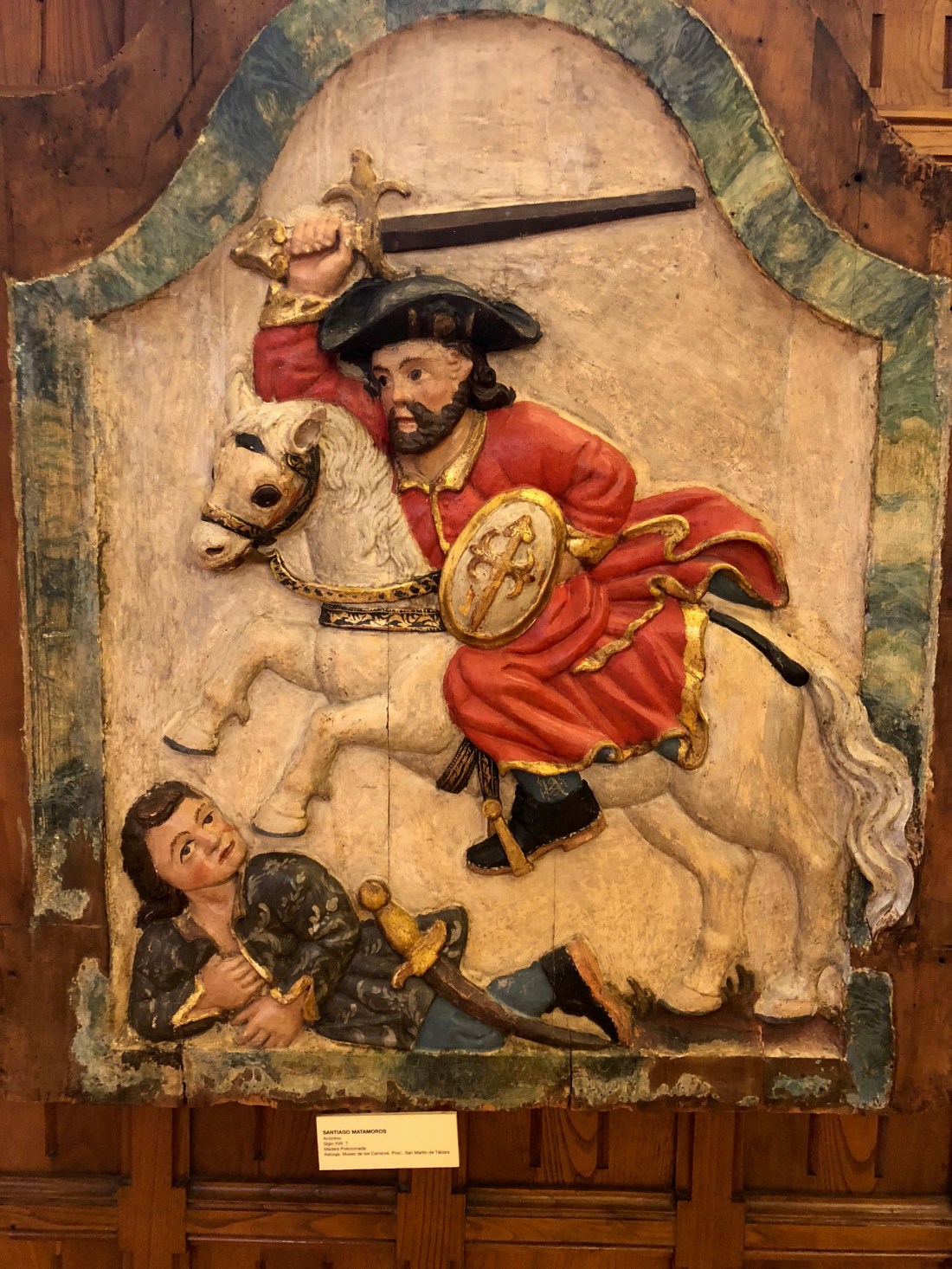
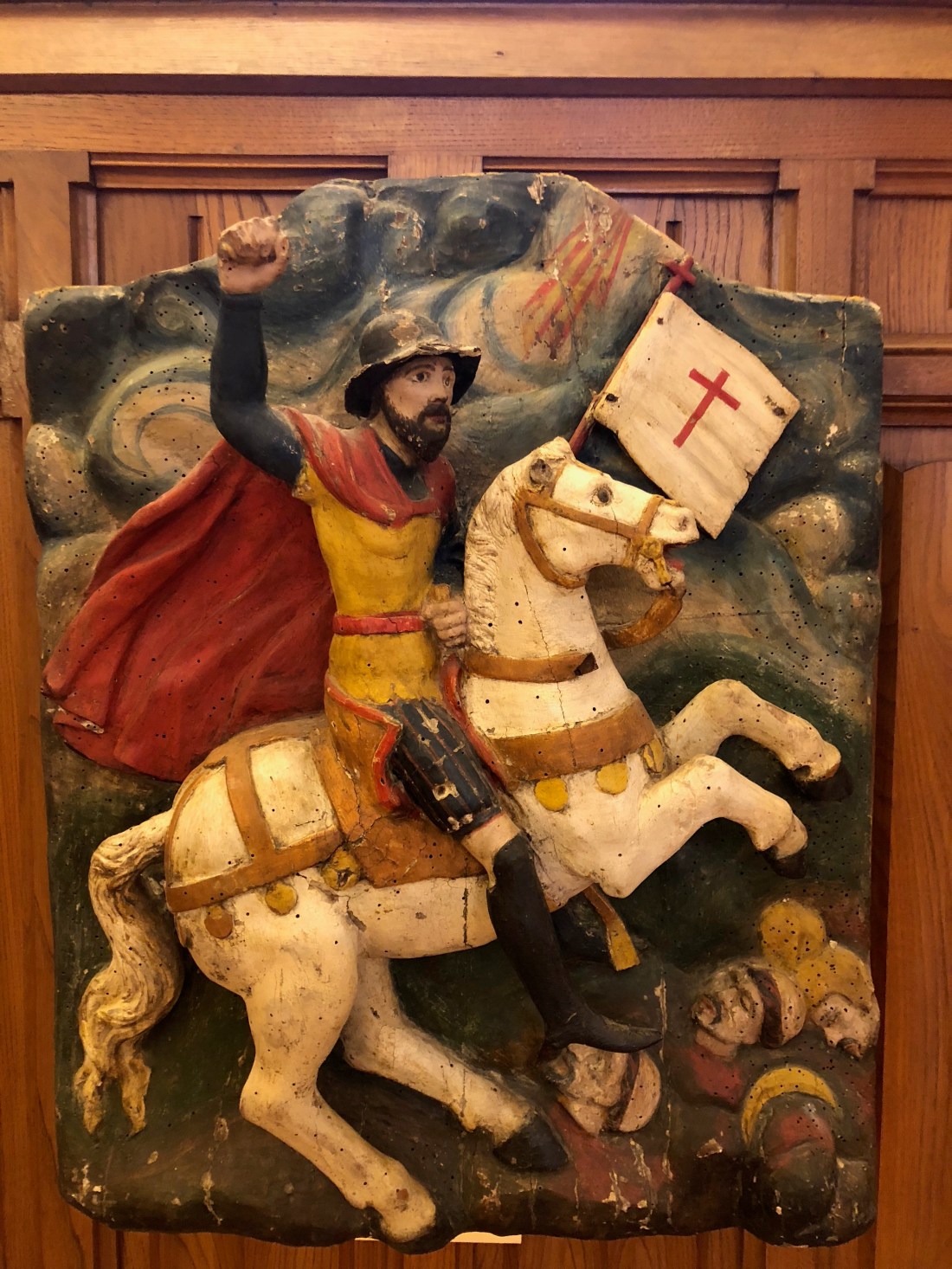 These representations of Matamoros show that it is a matter of fact that religion has been used in the past to justify discrimination. And some people continue to use it that way today. And it is truly despicable.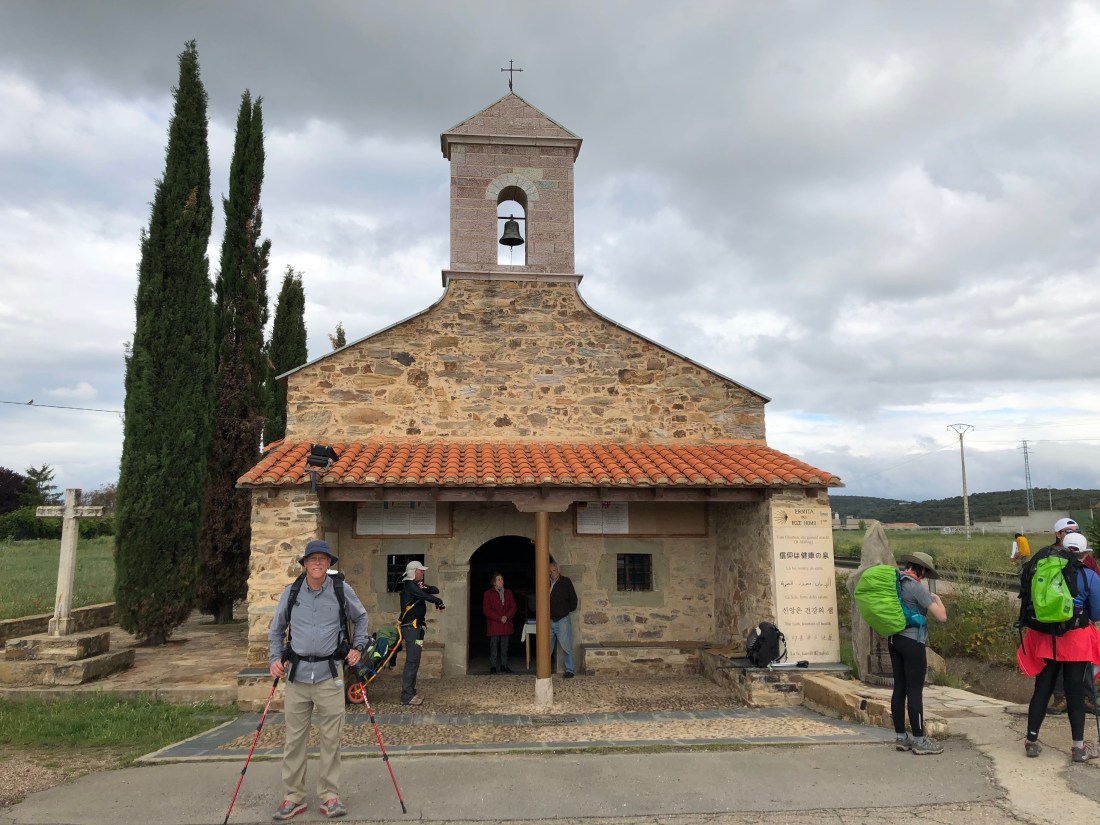

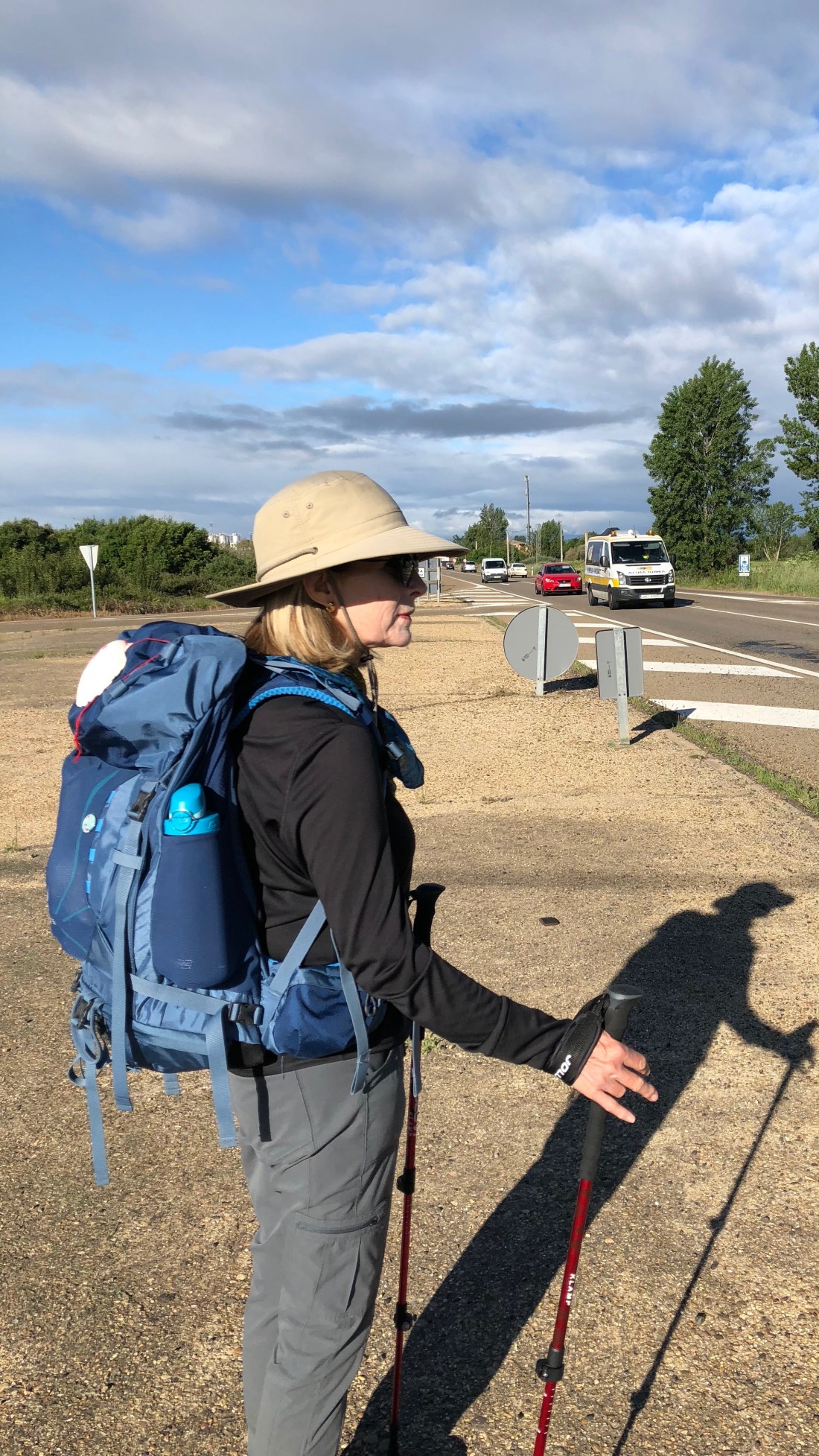
 I carried the pack today, and we shipped Anne’s. She is carrying a new daypack that we picked up in Astorga. My leg is a lot better, and by the end of the day the rash on Anne’s leg was almost gone.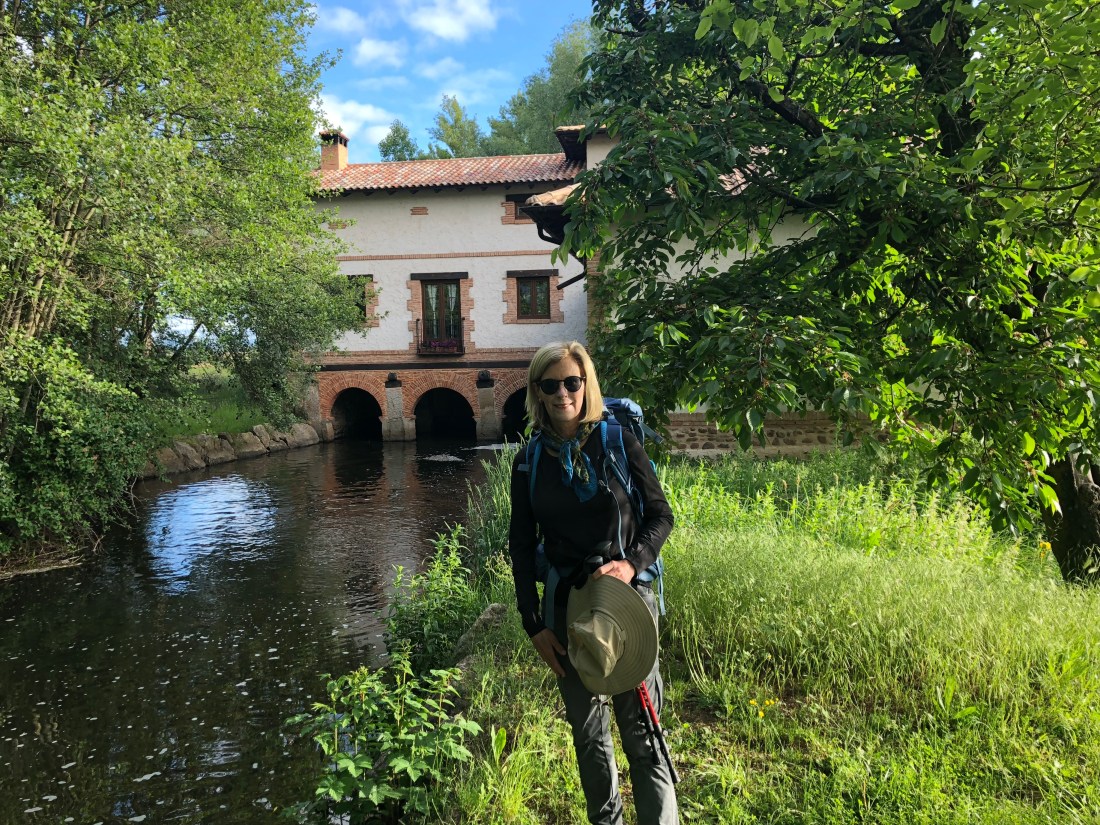
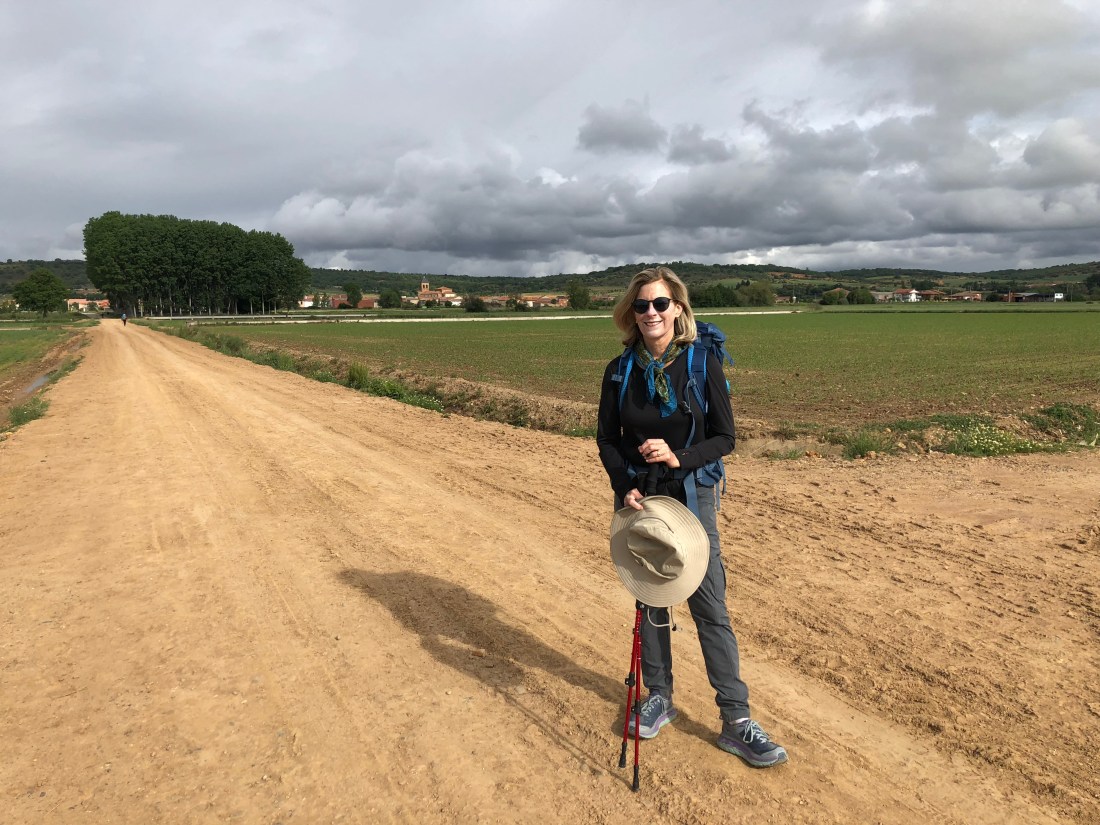
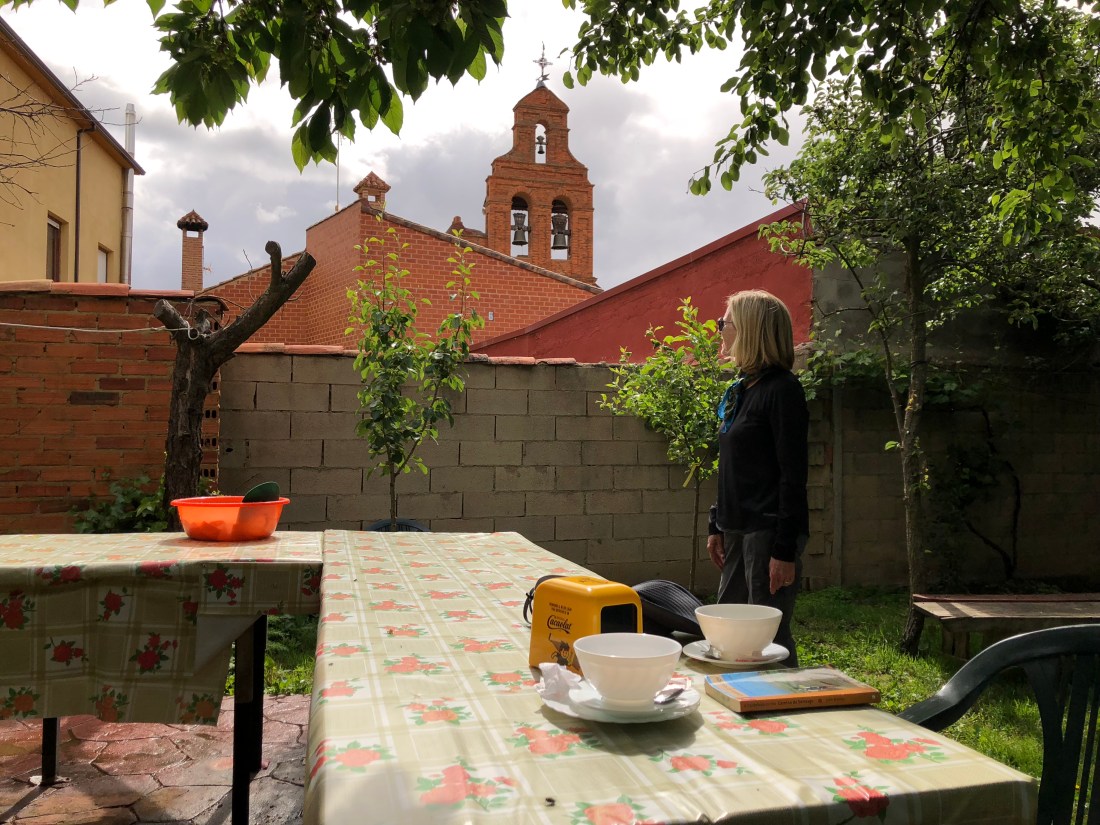
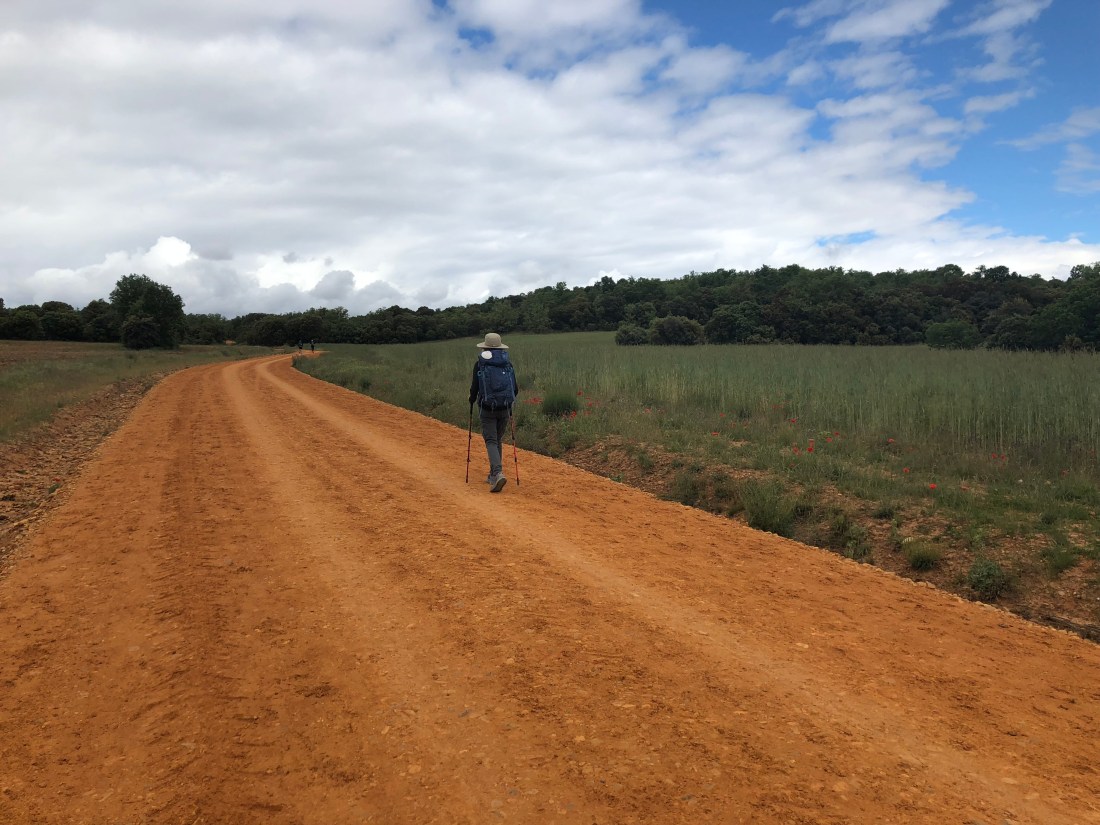
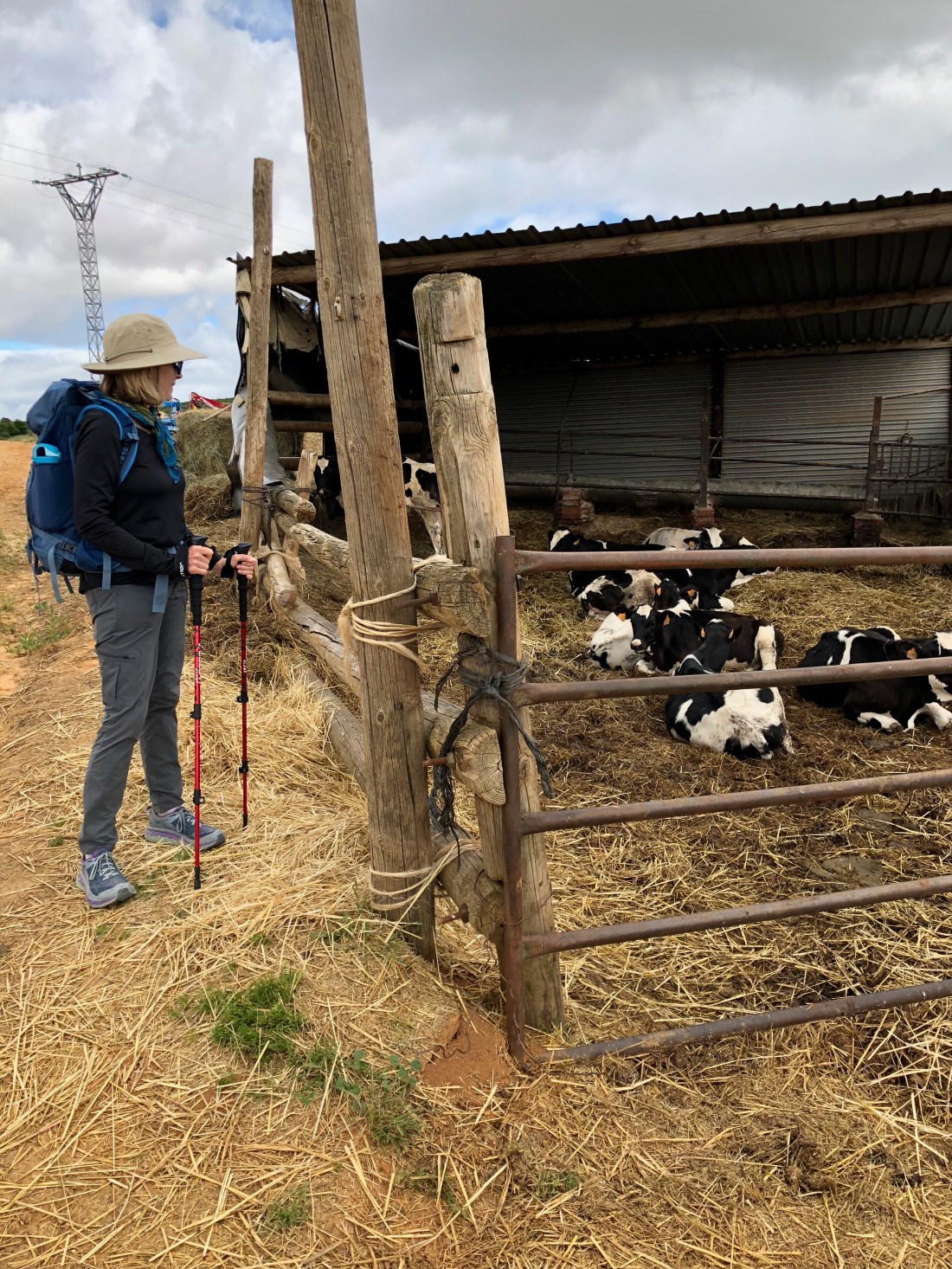
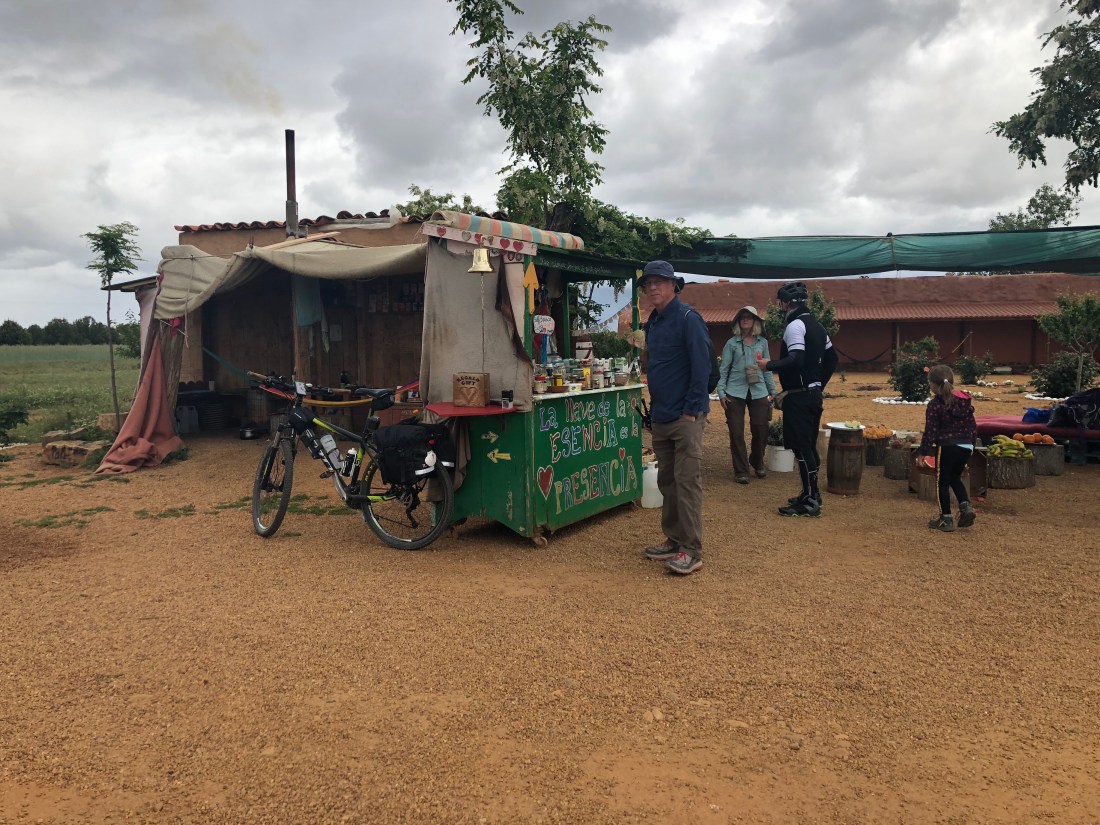 This type of service to the pilgrims is rare but it does occur on the Camino.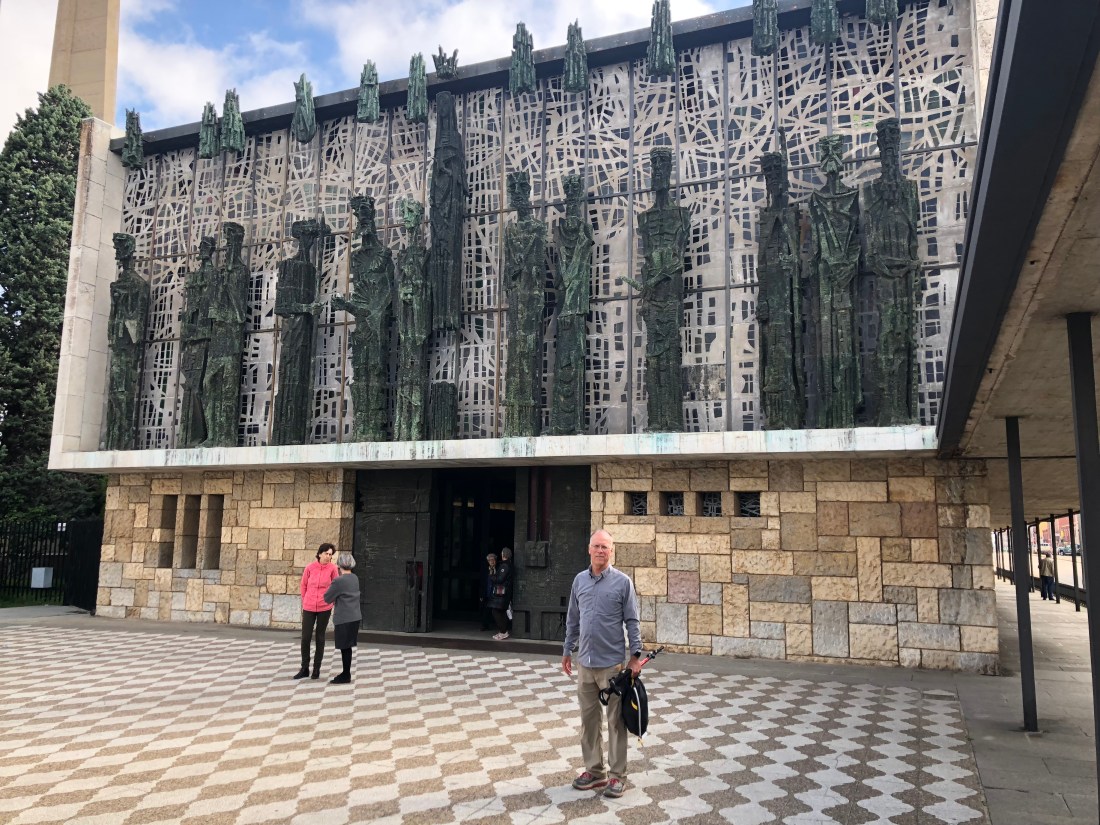
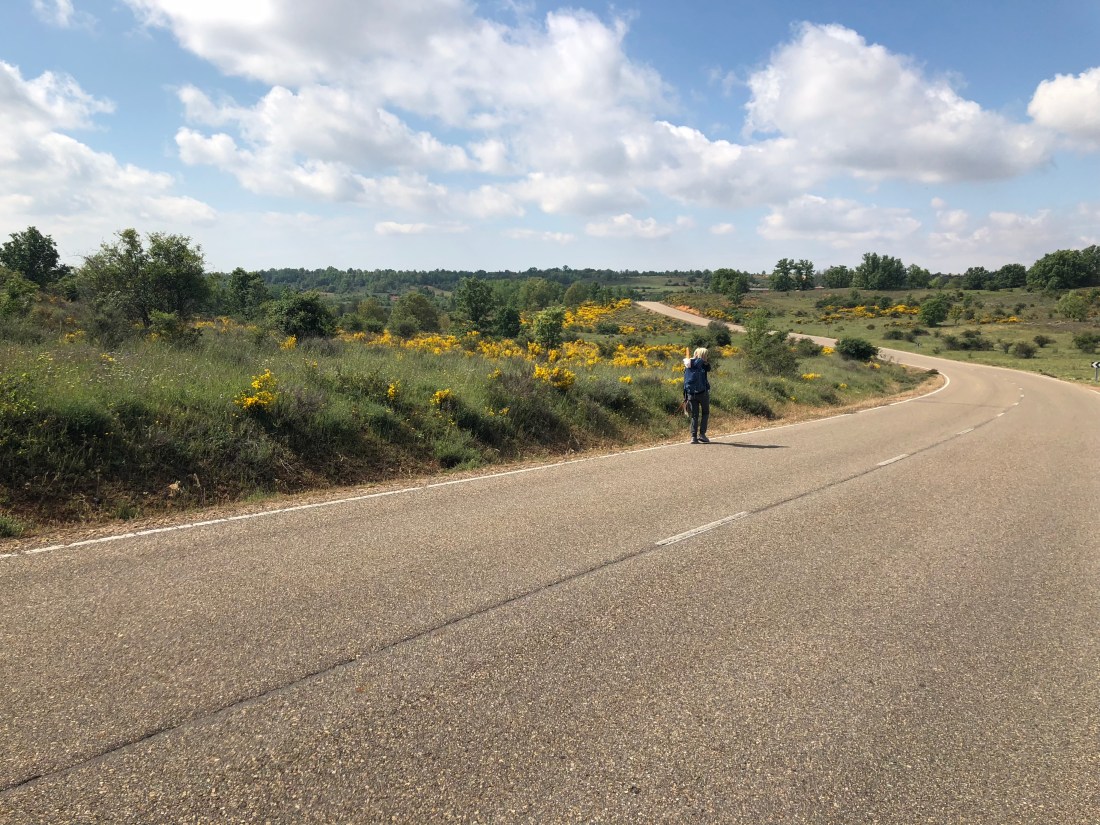
 As we got closer to Villar, the blasts became louder, and we could hear the bell in the village church ringing.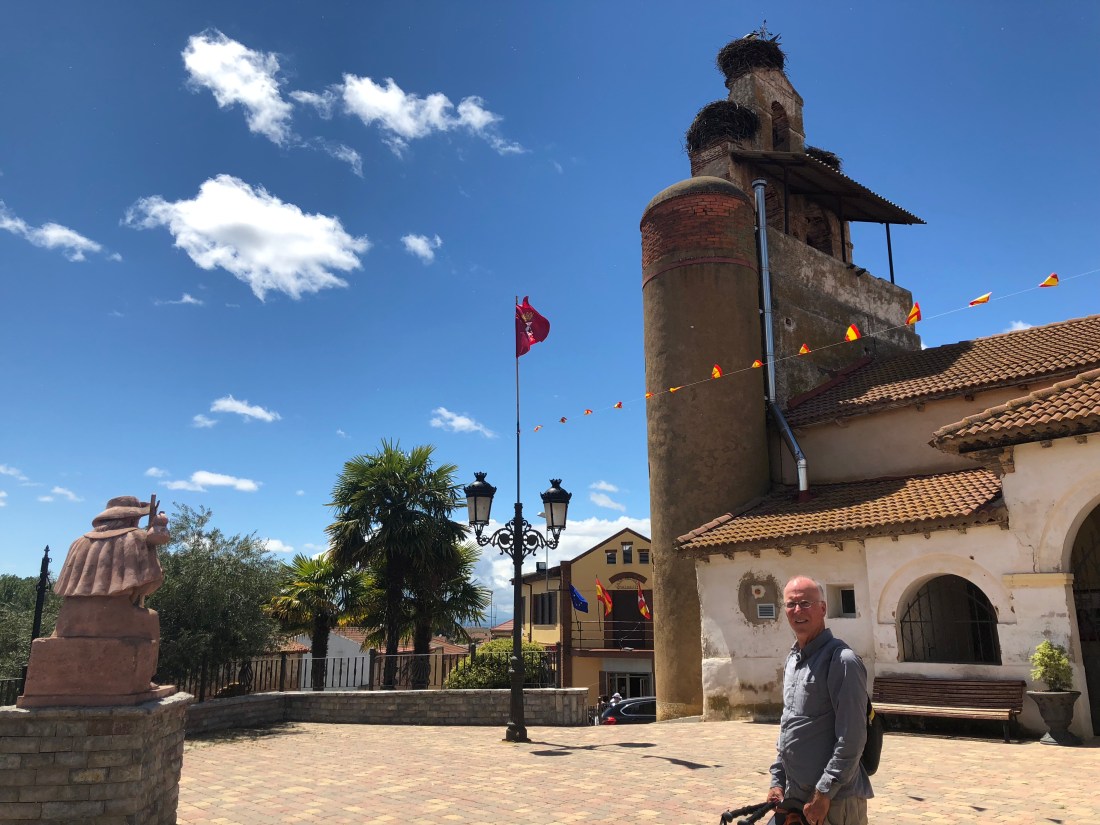
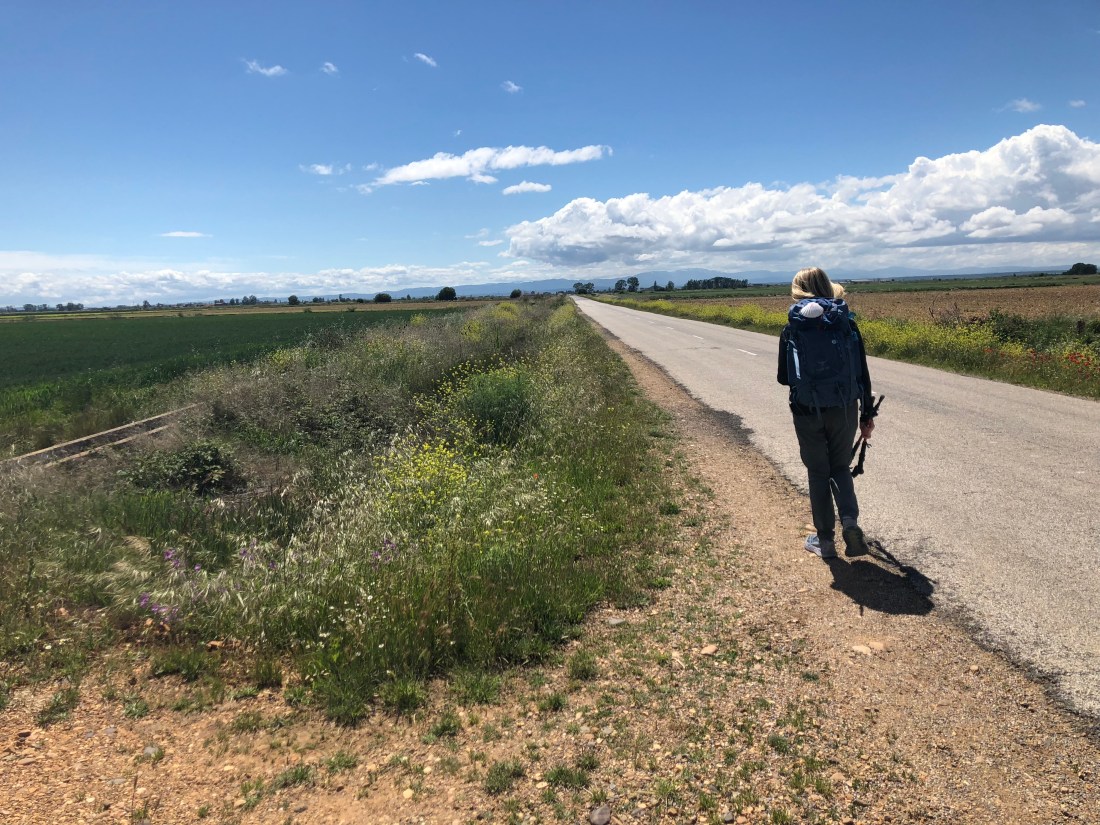 It was a long day, about 15 miles, and it was around 5 p.m. when we finally reached Villavante, which was our destination. Tomorrow is another long day.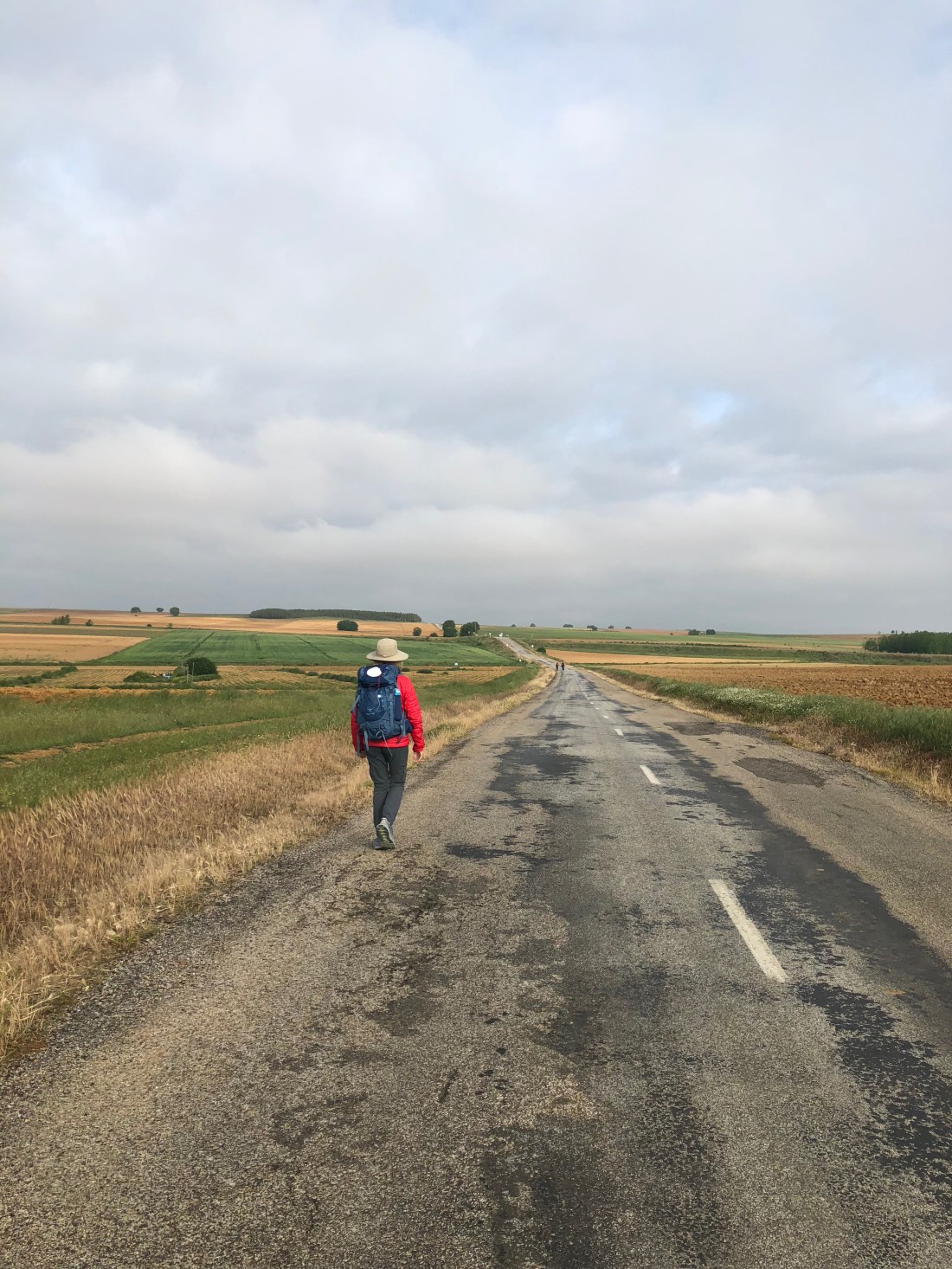
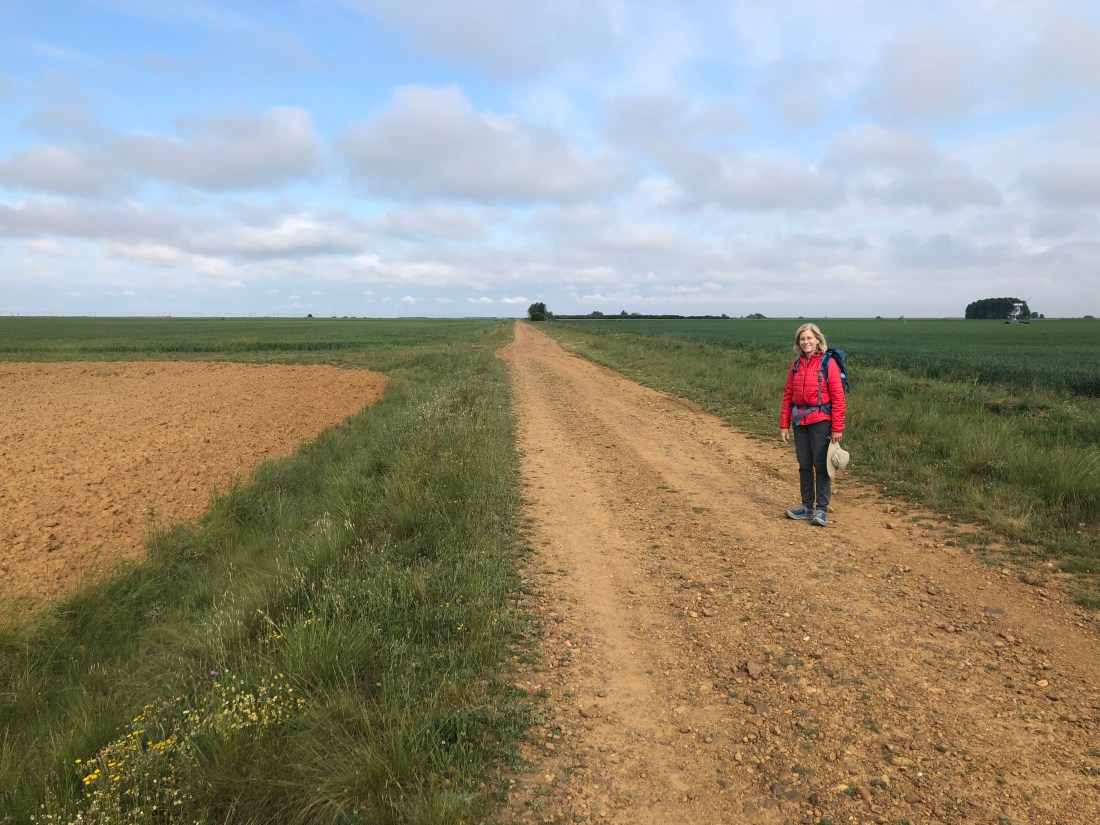
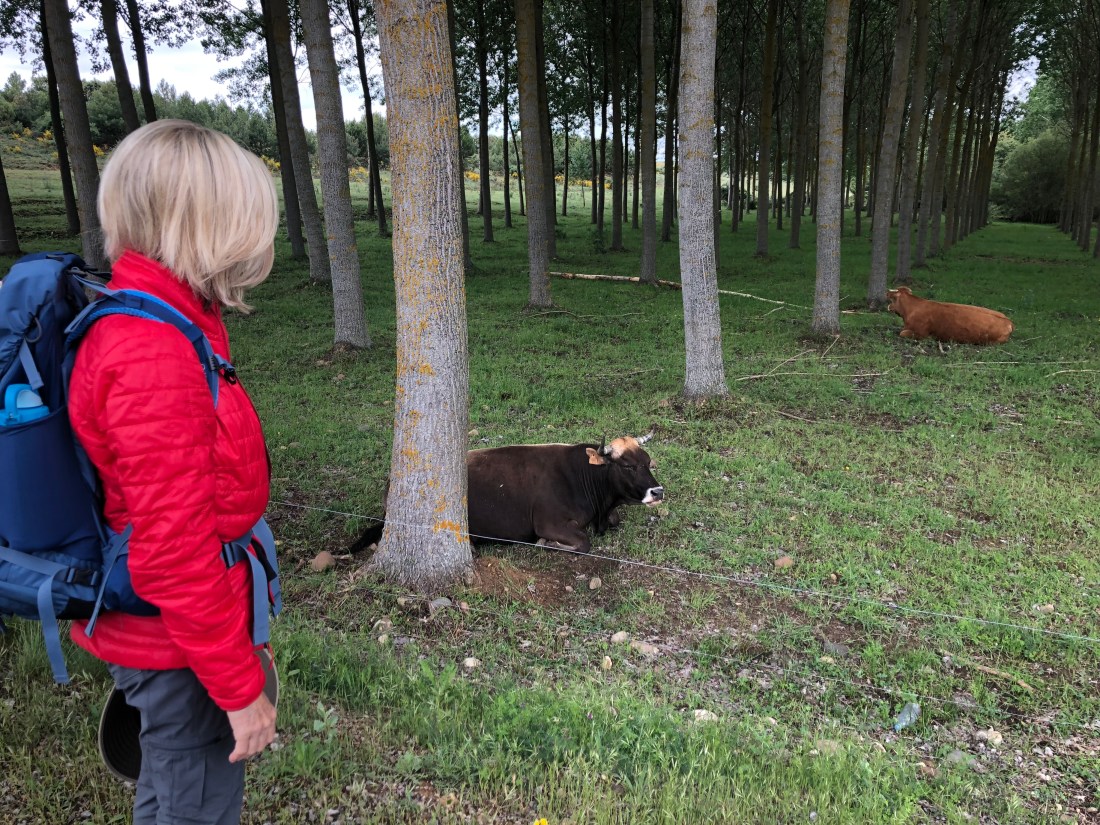 We are still following the more remote track of the Camino.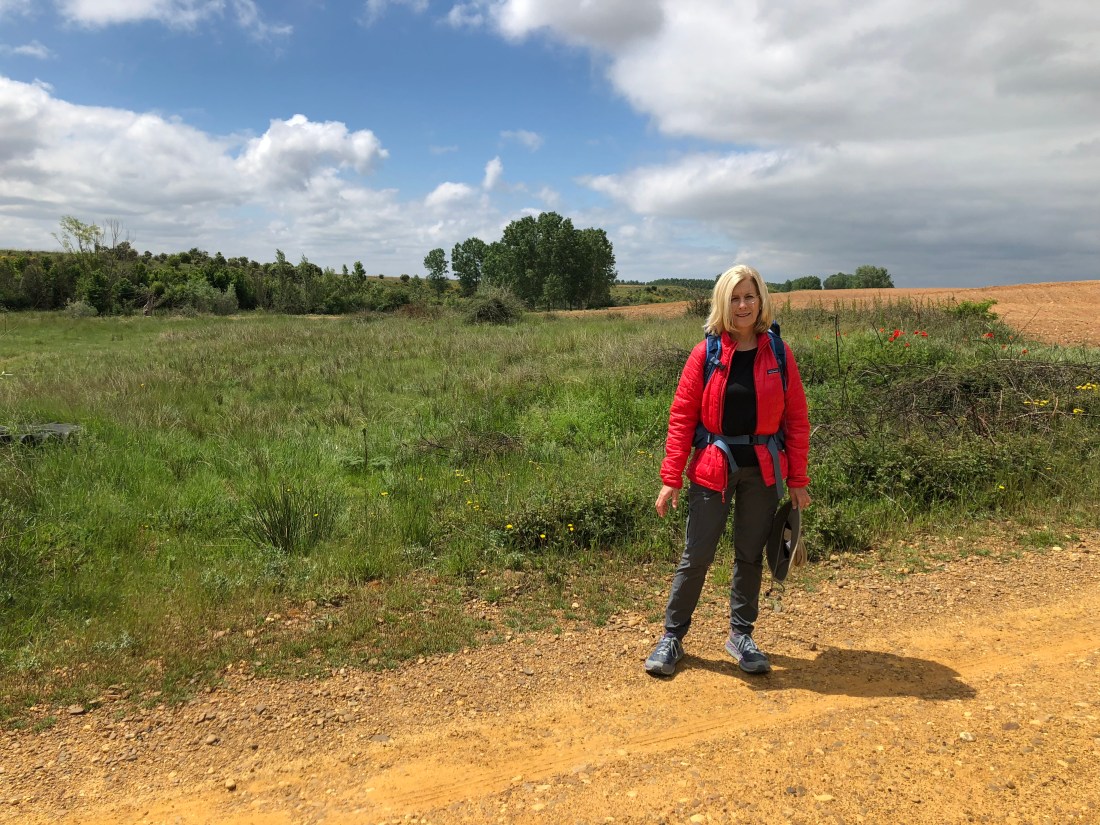
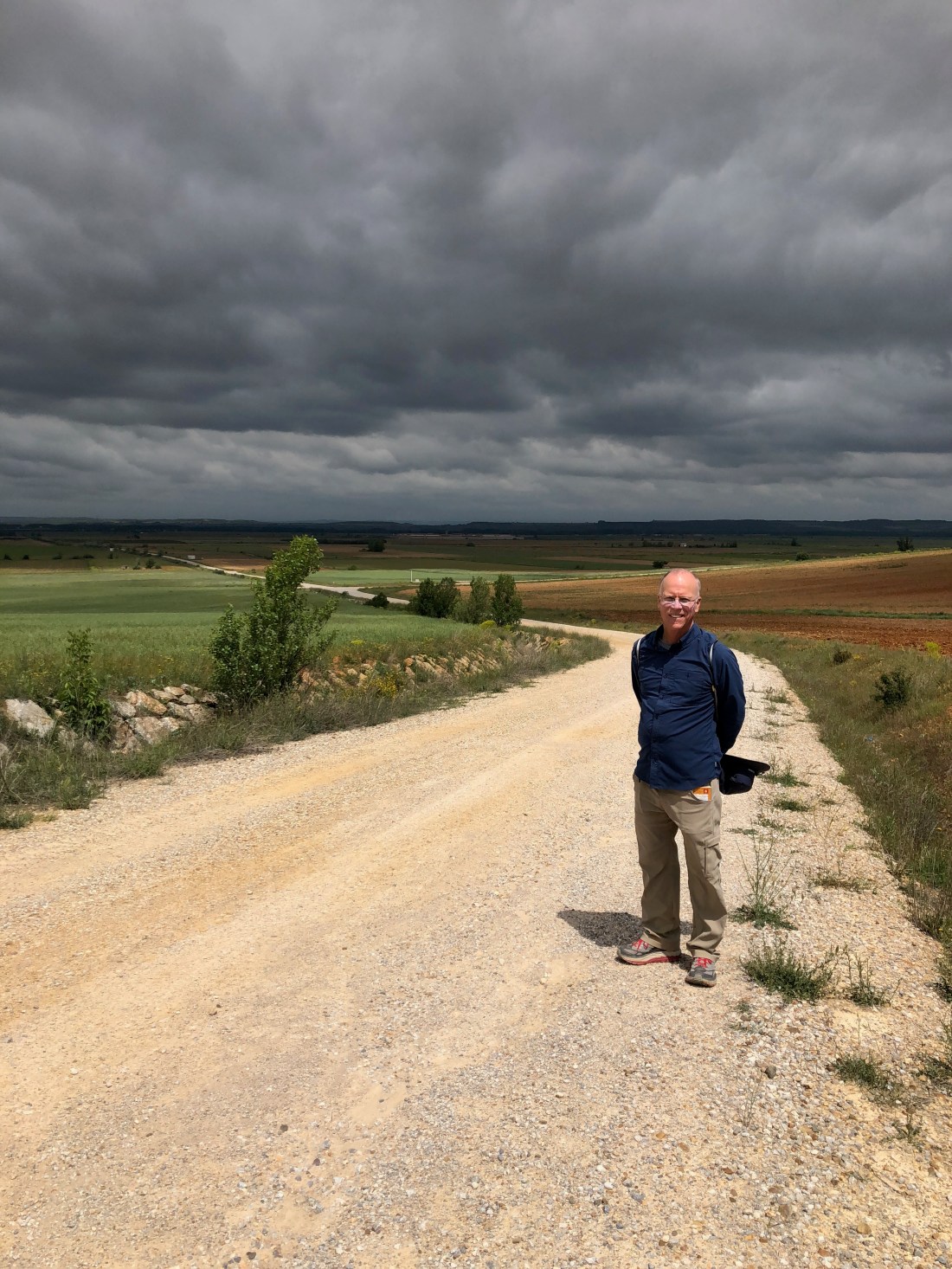
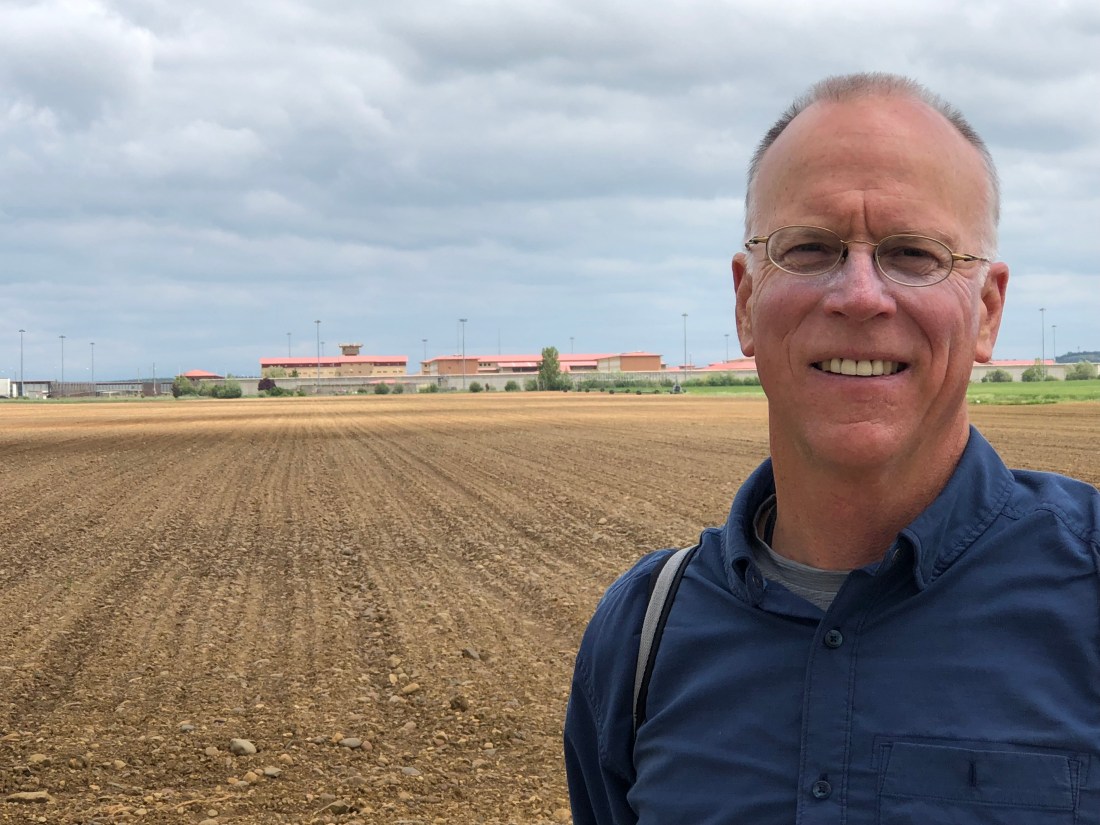 After walking for about another two hours, we reached the outskirts of Mansilla de las Mulas.
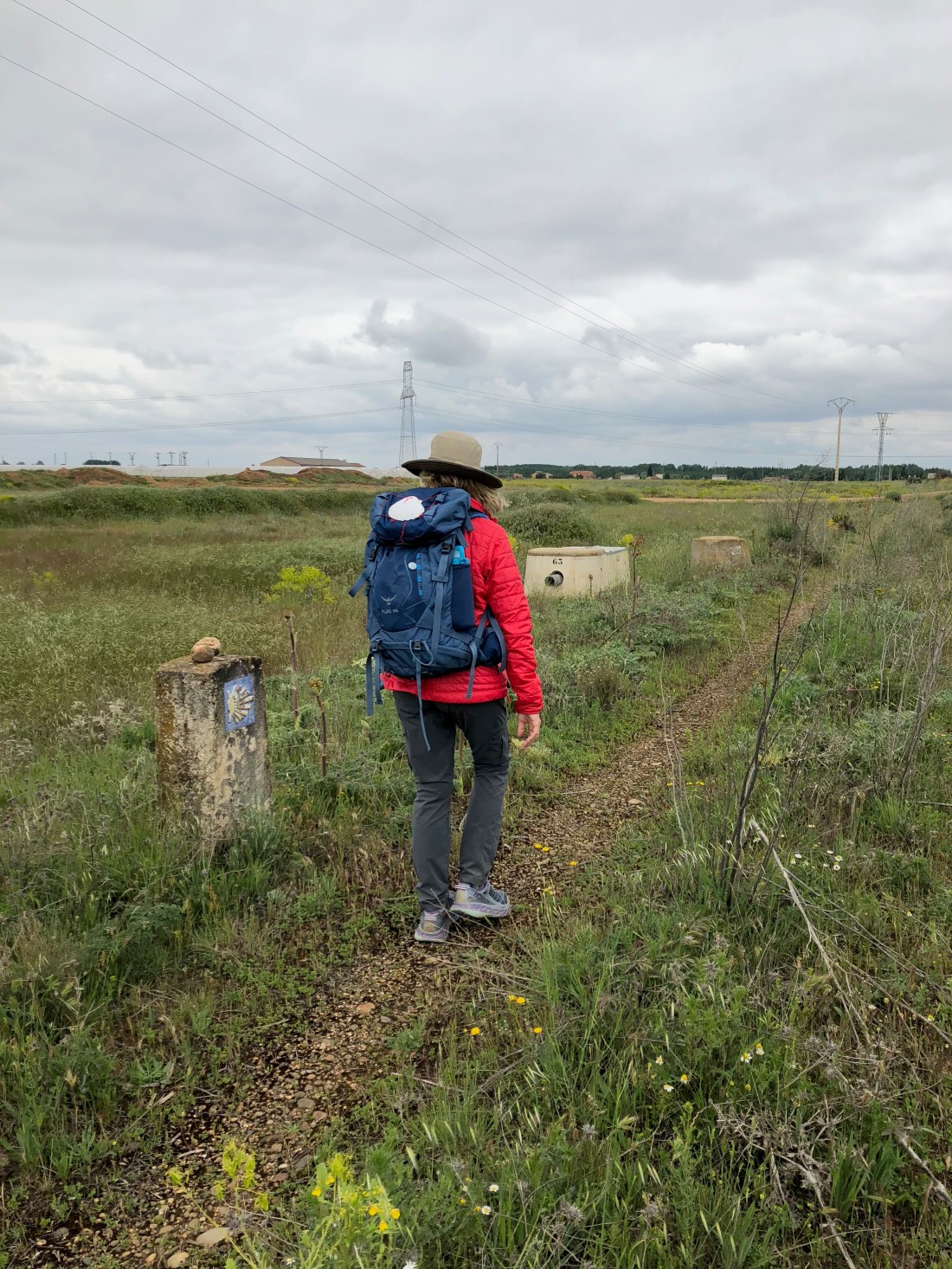 About this time, I heard Anne muttering about “scenic routes” and “European Vacations.”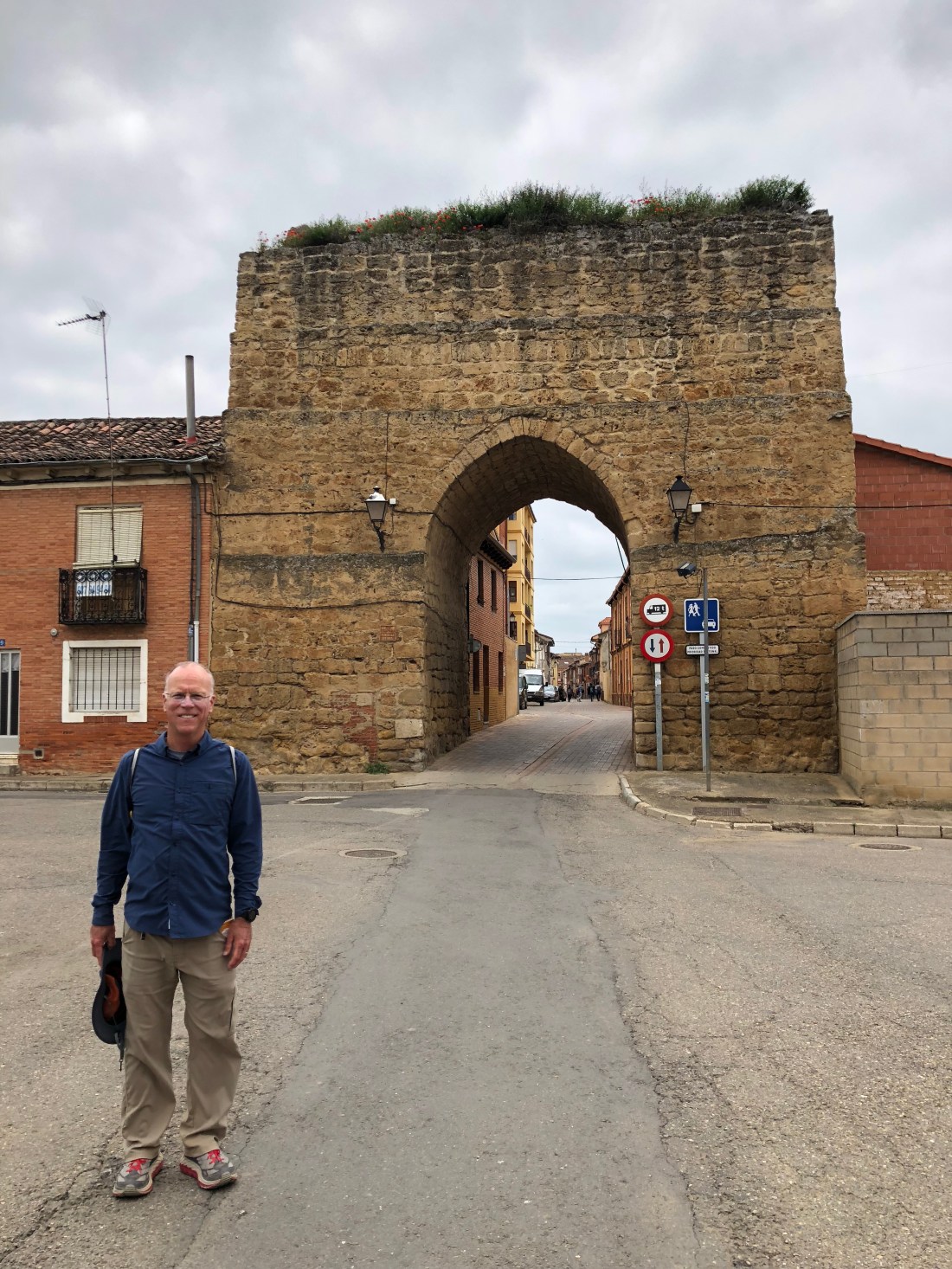
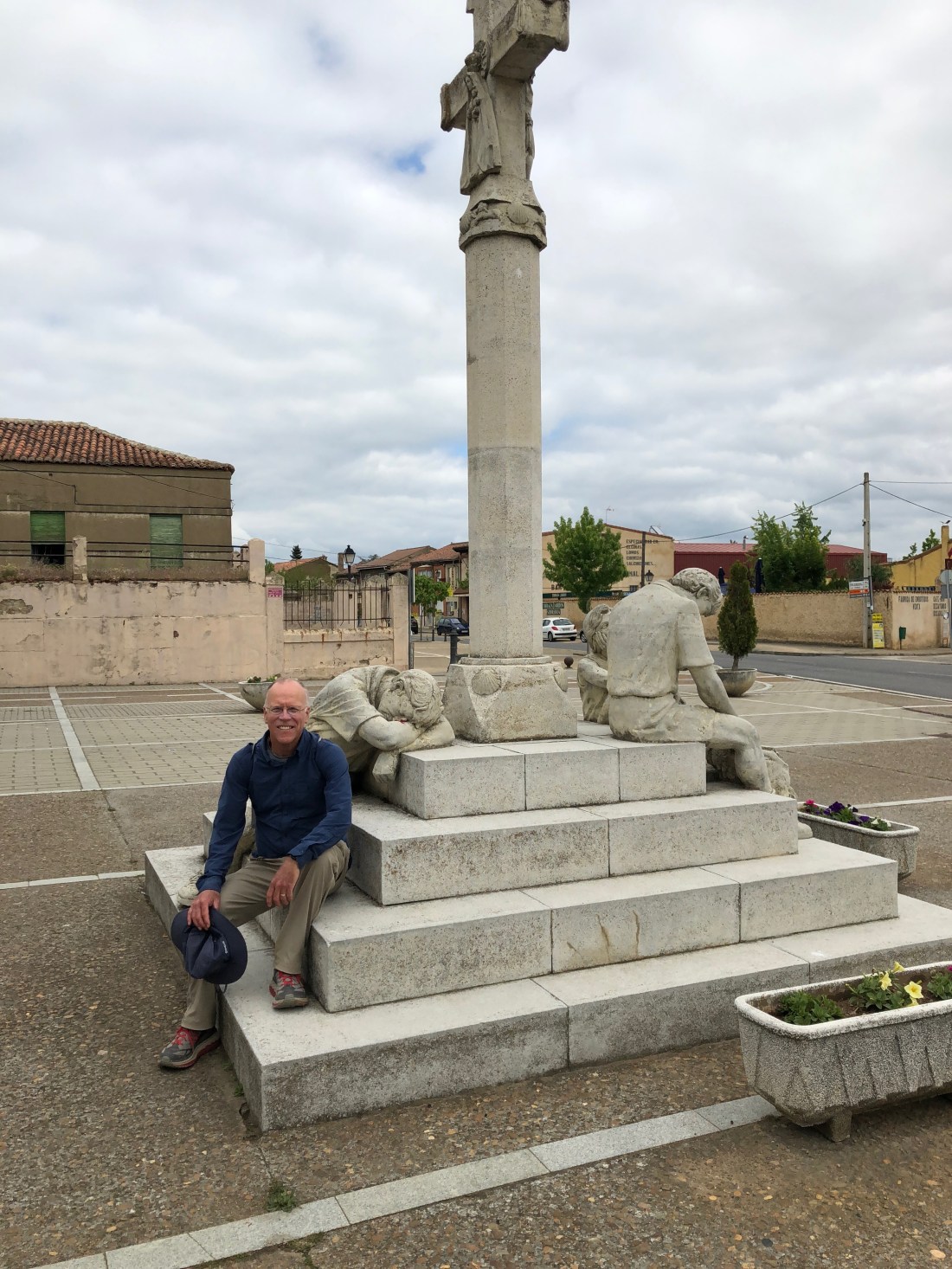
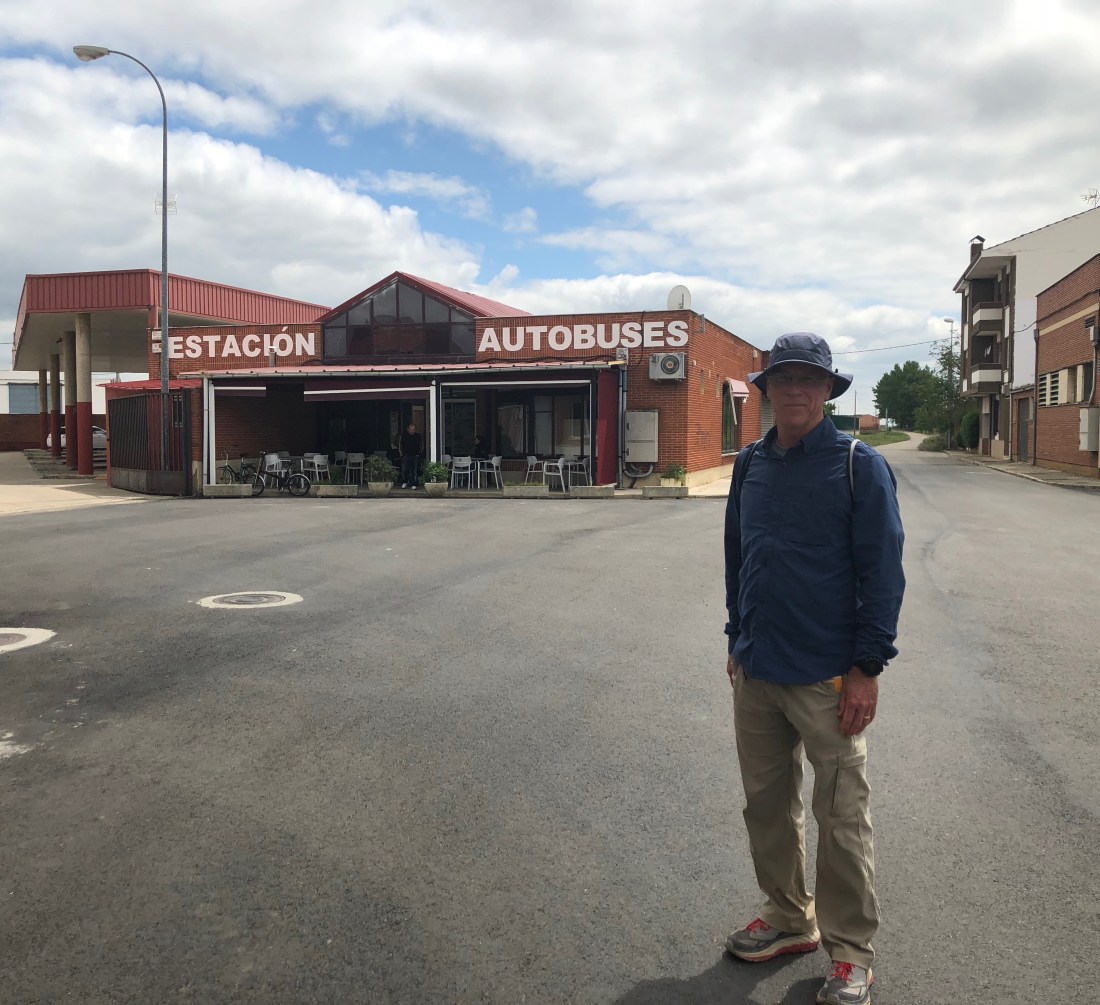 It was easy to decide to bus from Mansilla to Leon.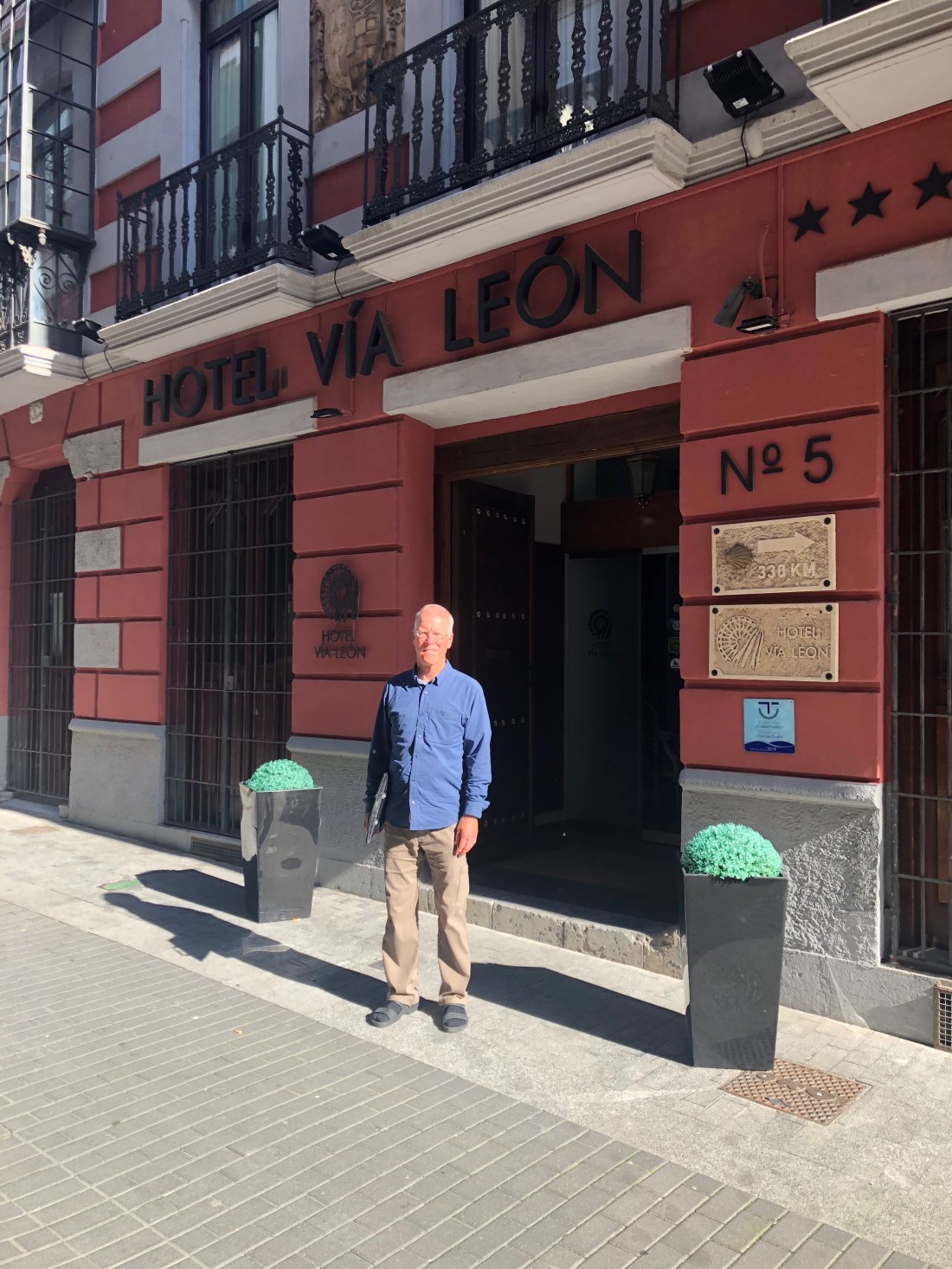
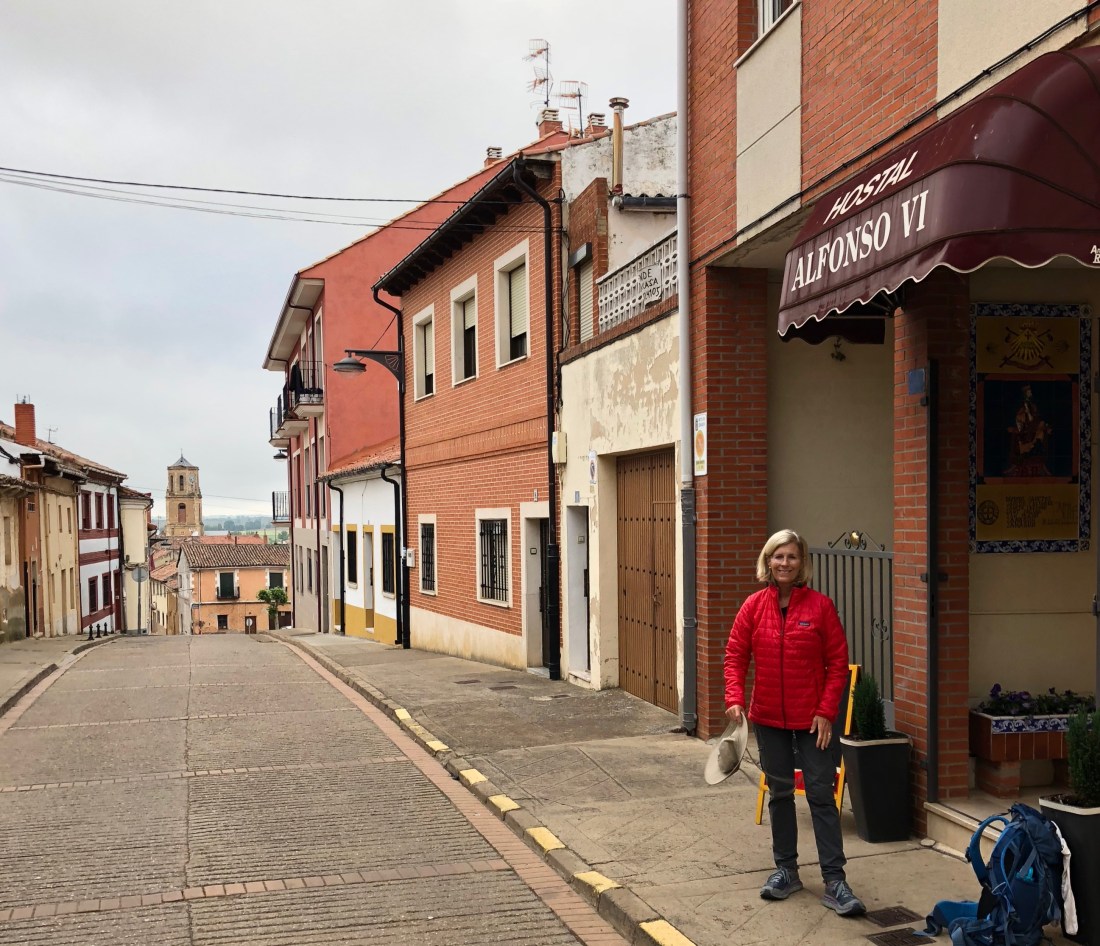
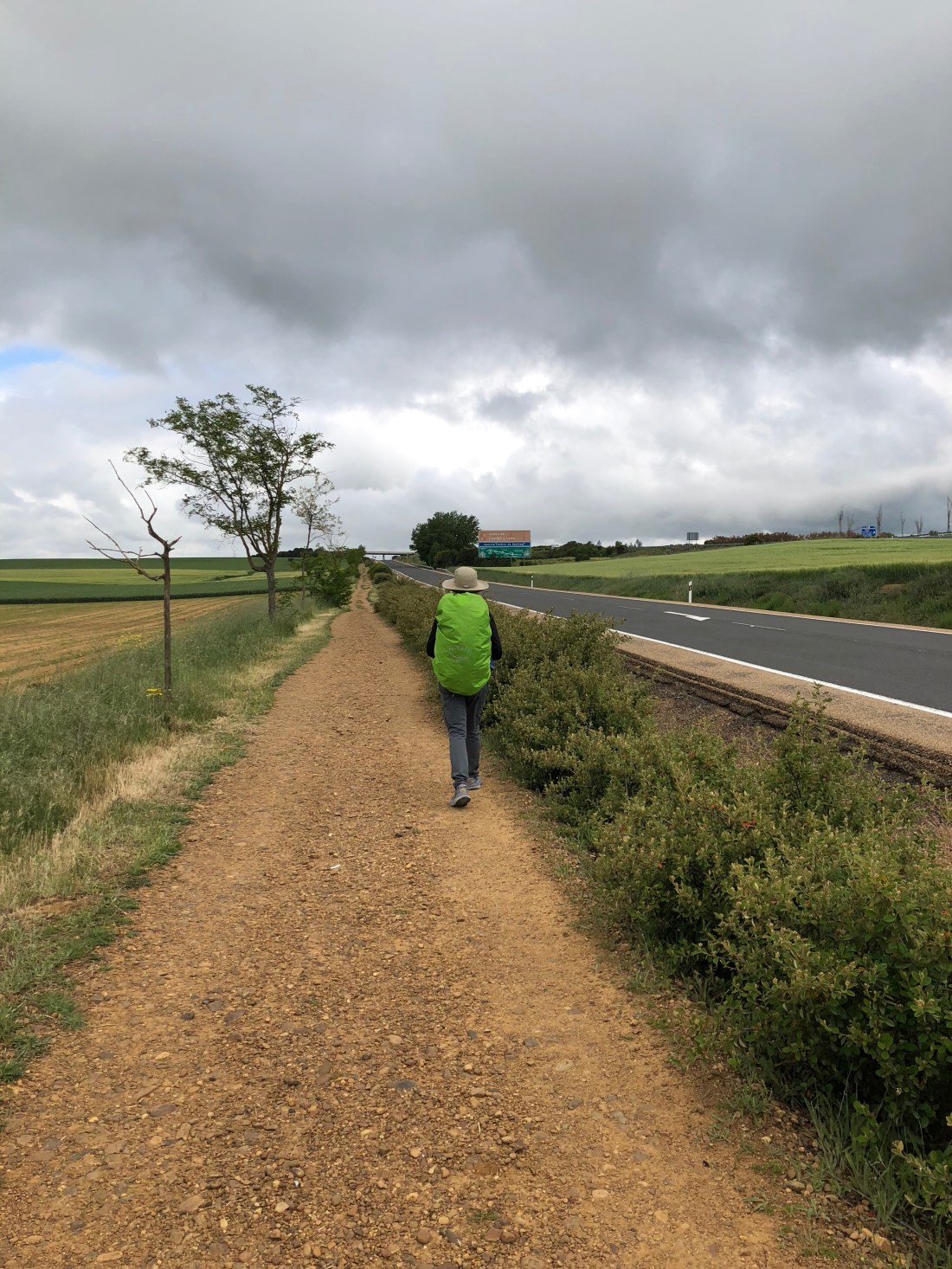
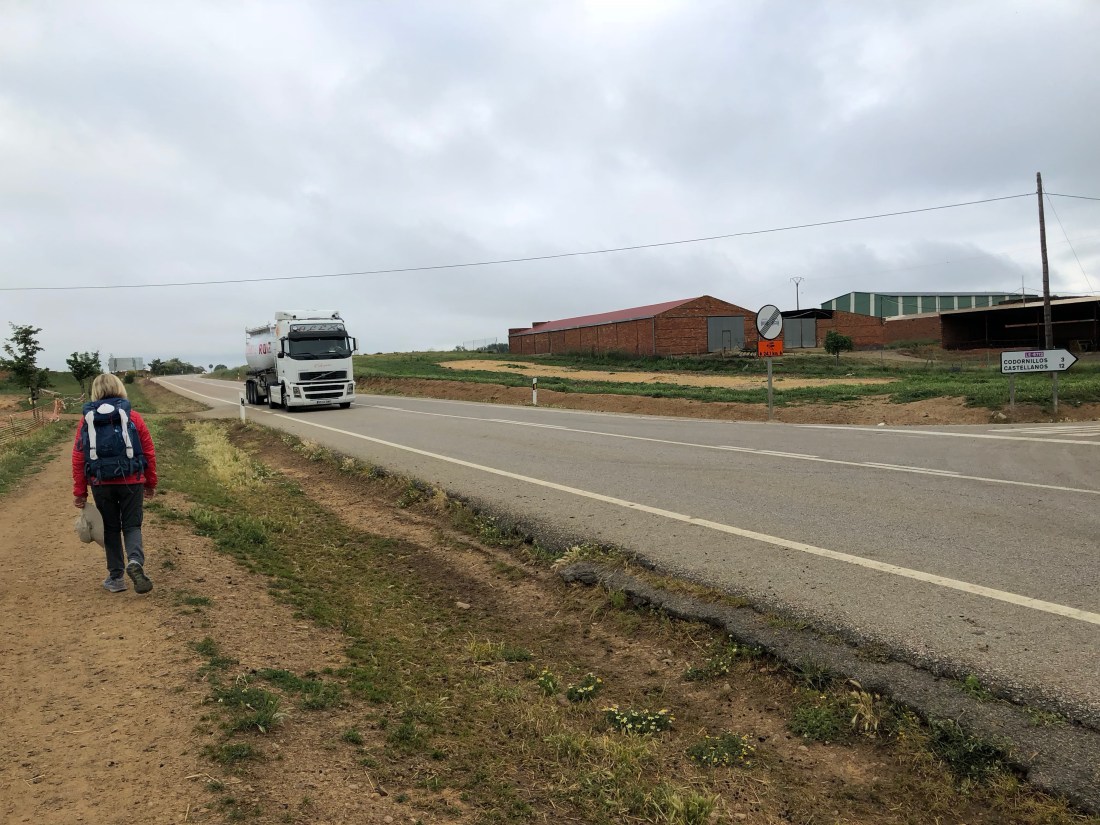 We walked along the highway for about an hour and then came to a roundabout outside the village of Calzada del Coto, where the Camino split into two different tracks.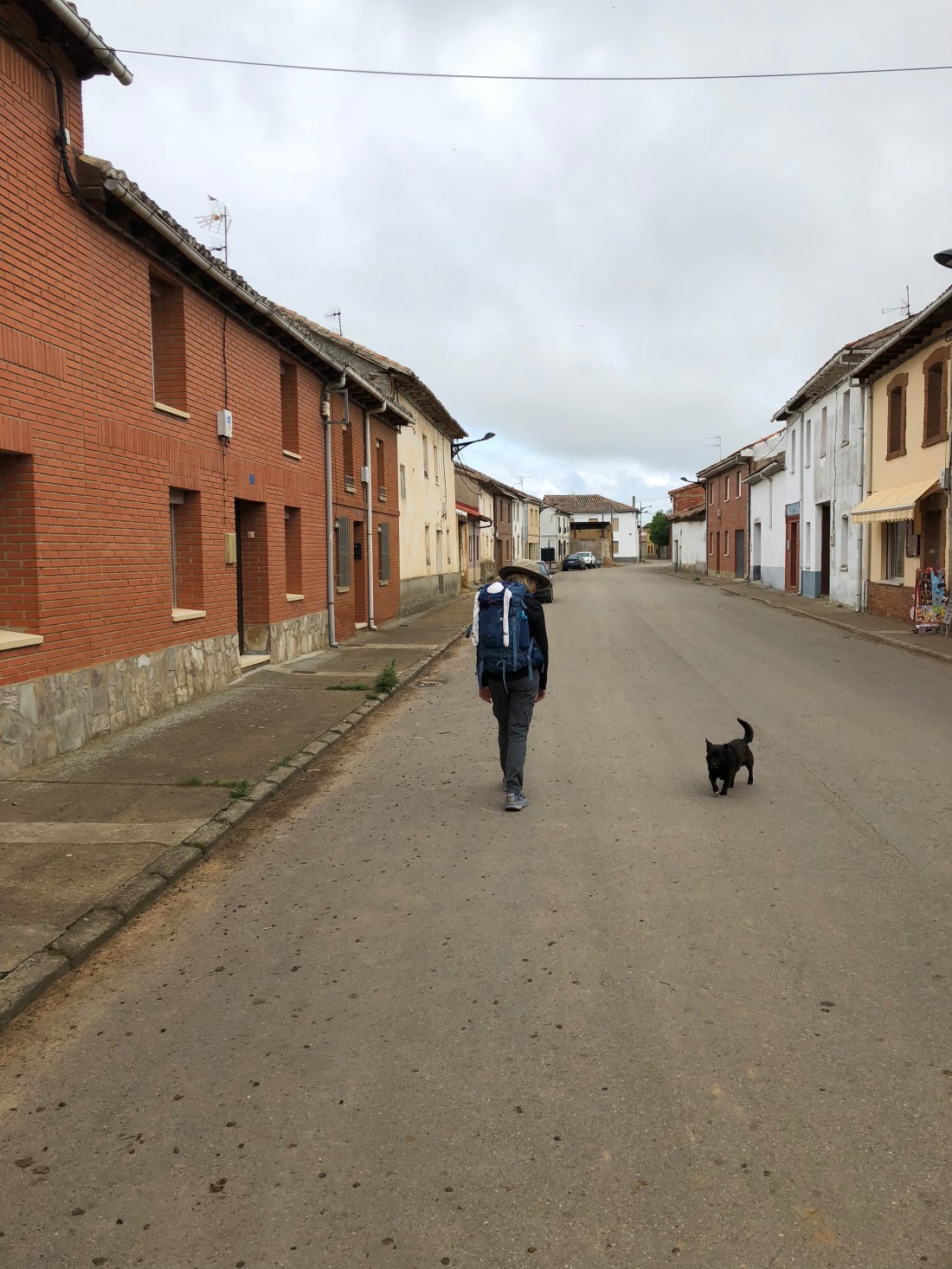
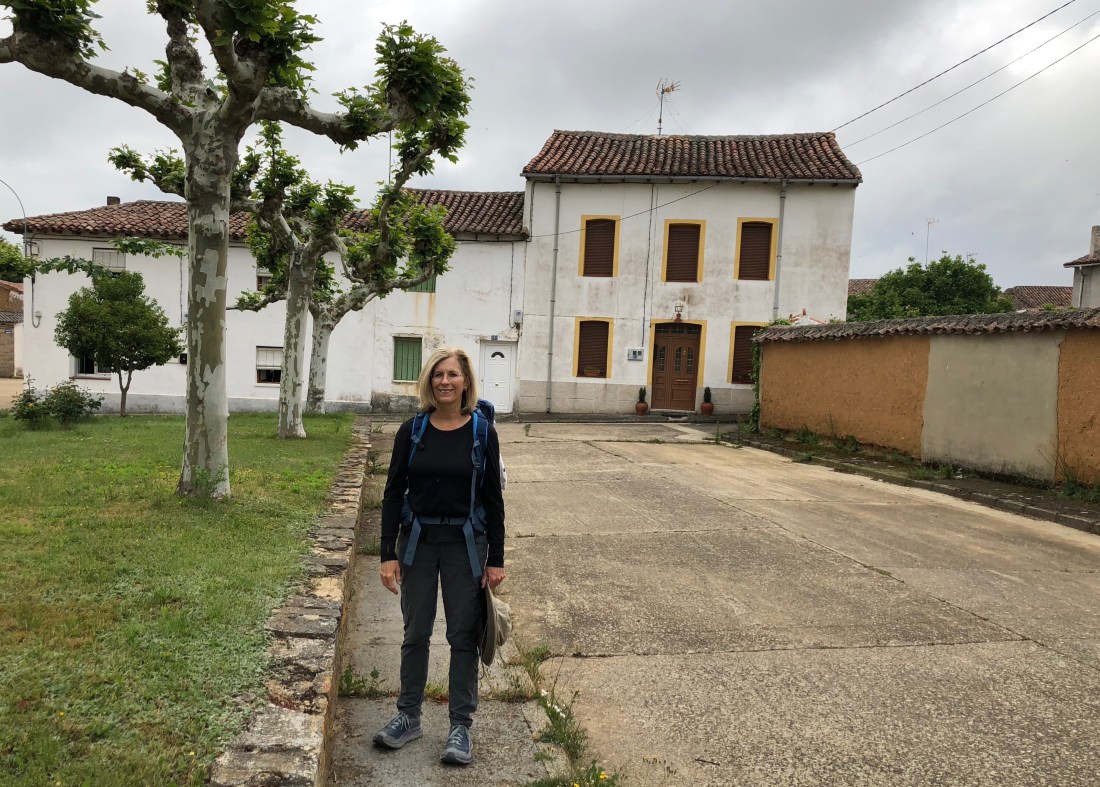
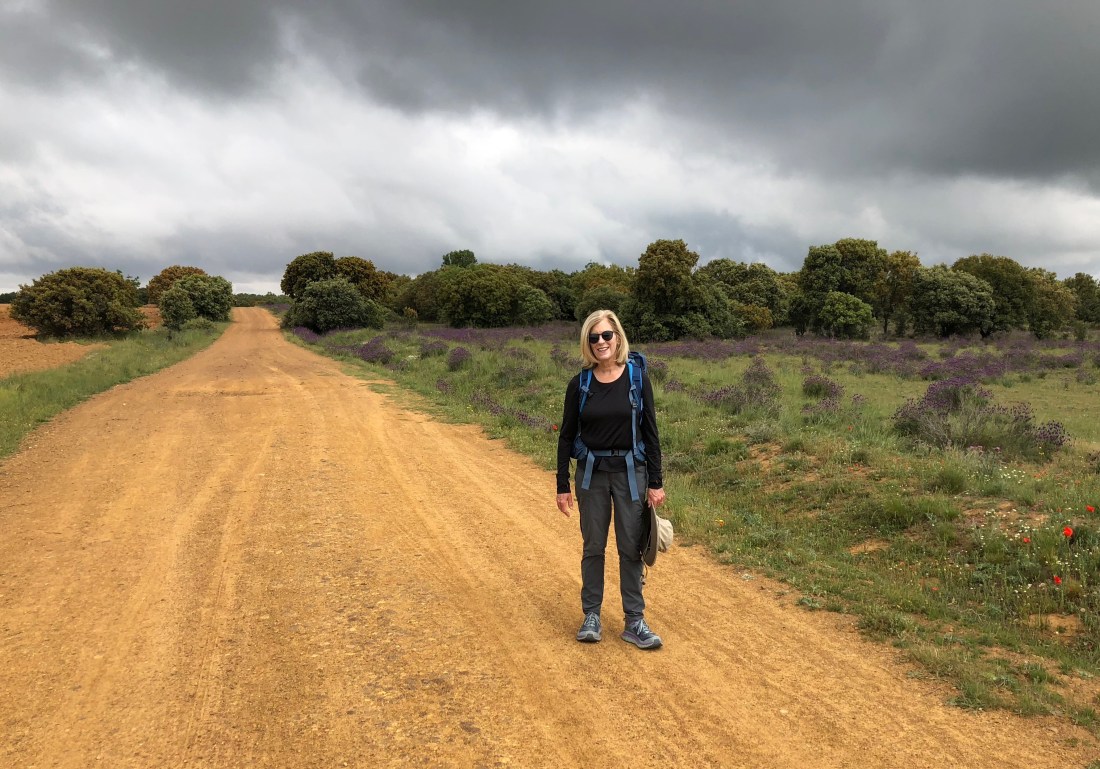 In four hours of walking on this road, we saw two people, both of them young women walking alone.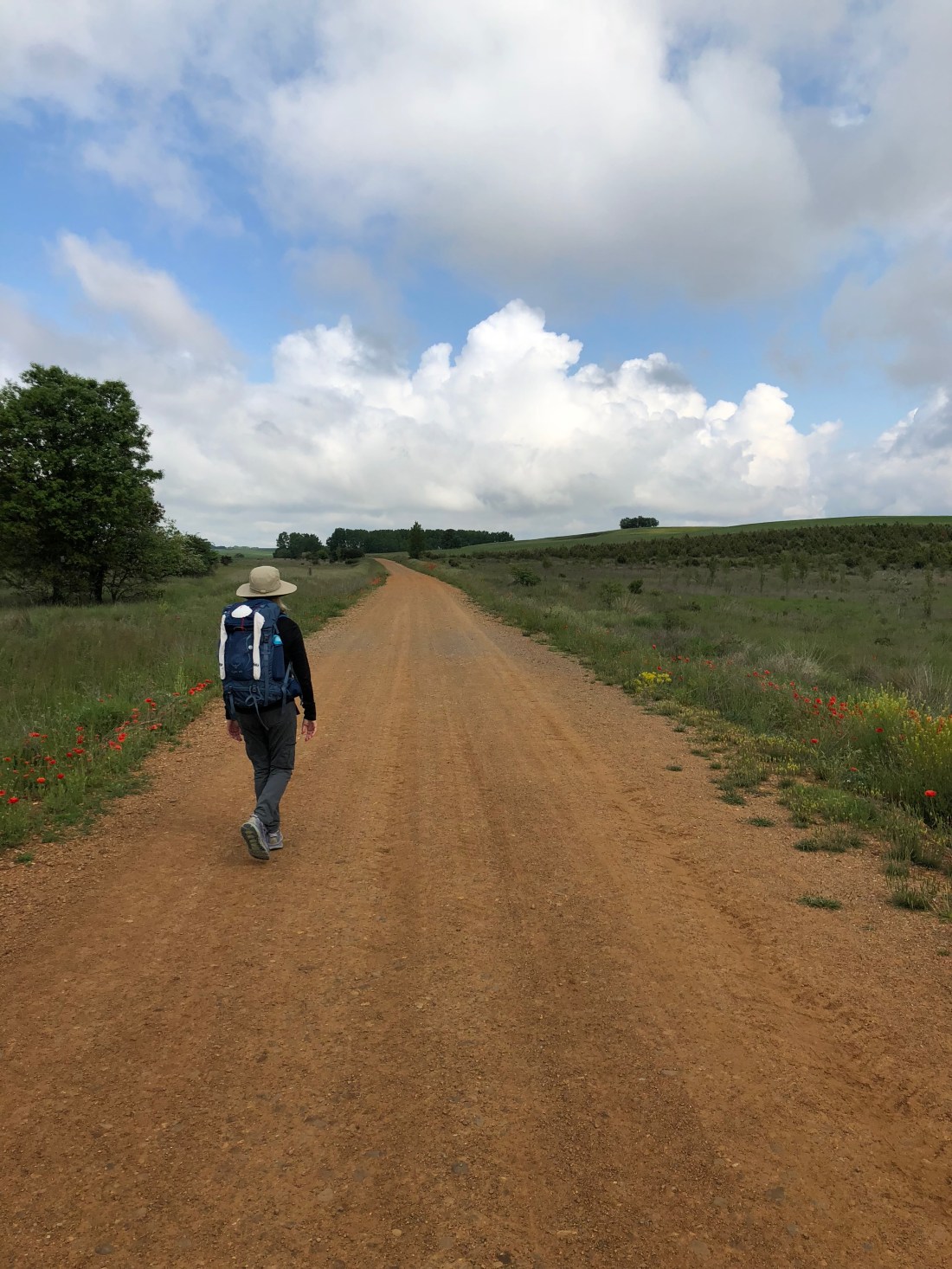
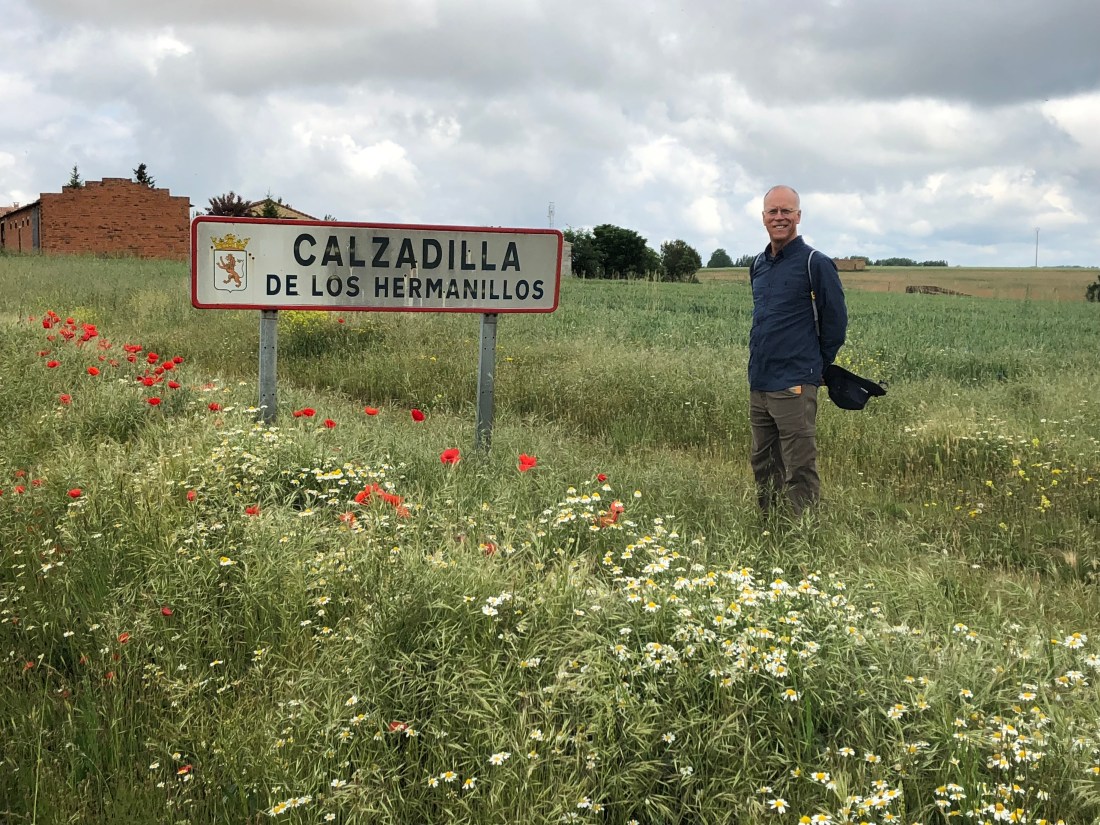
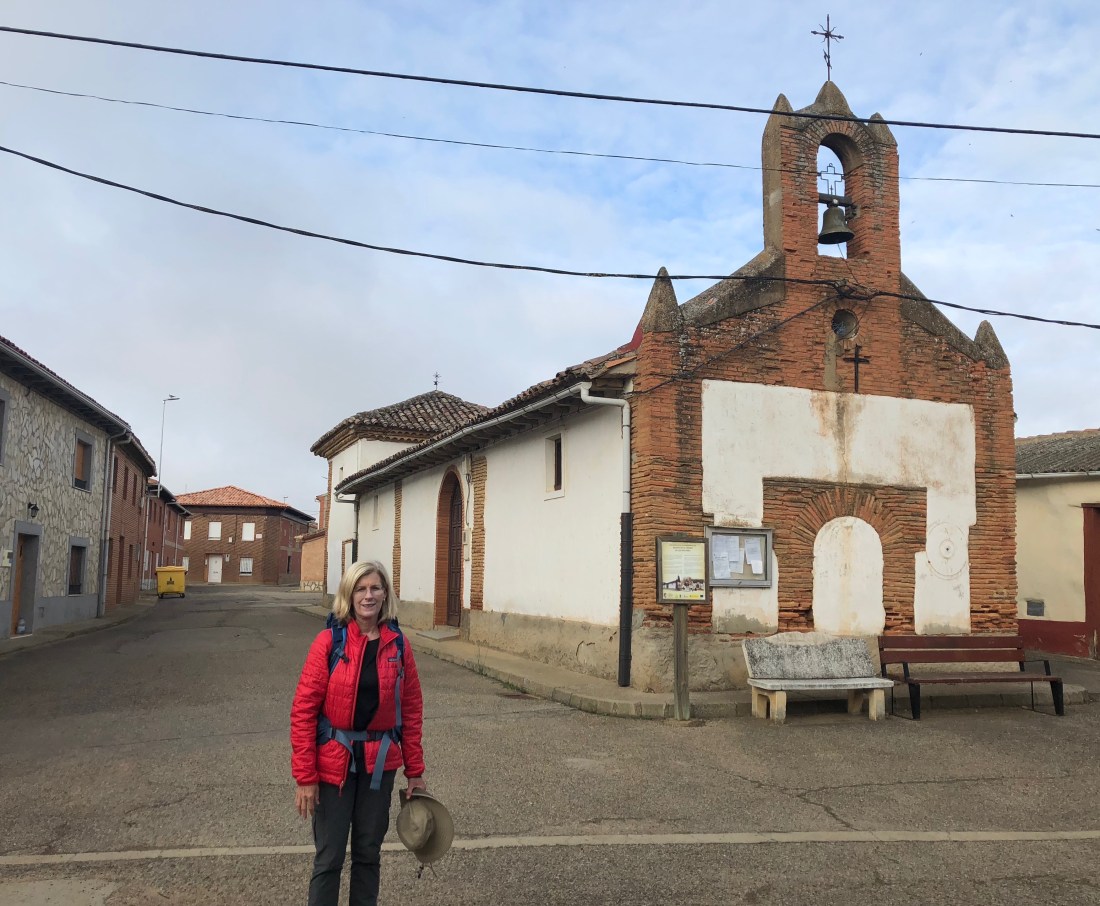
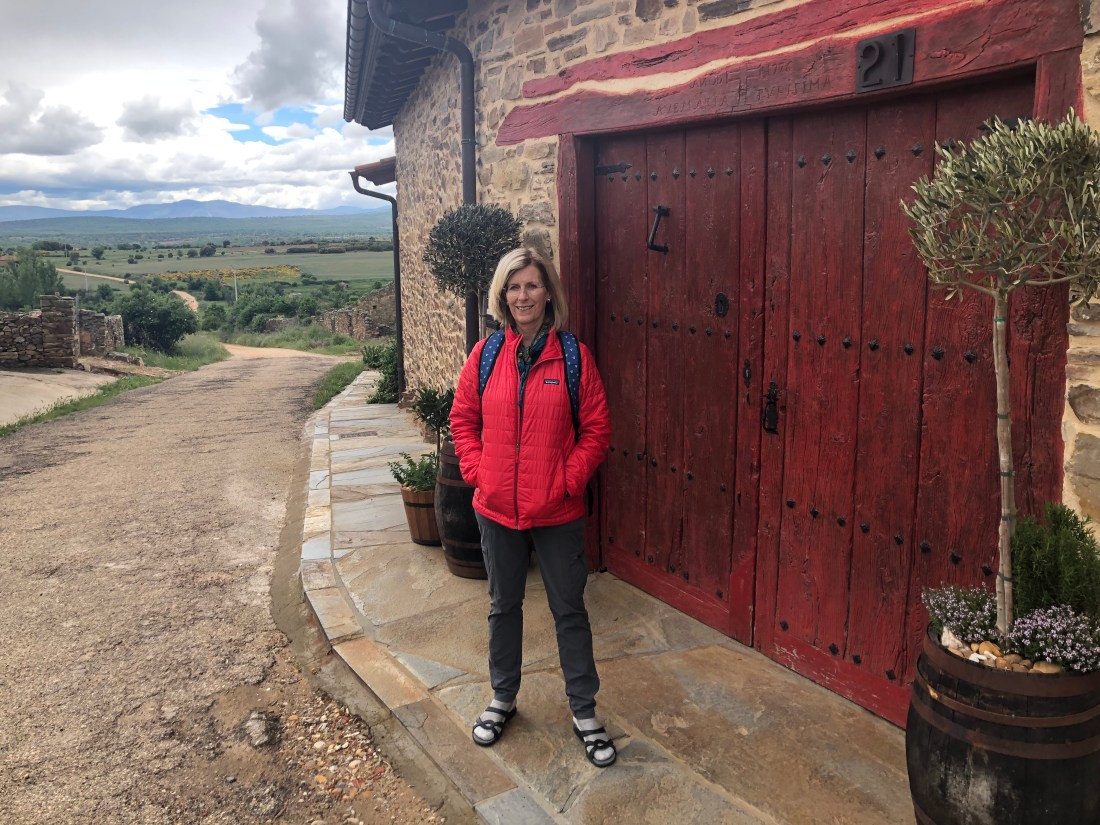
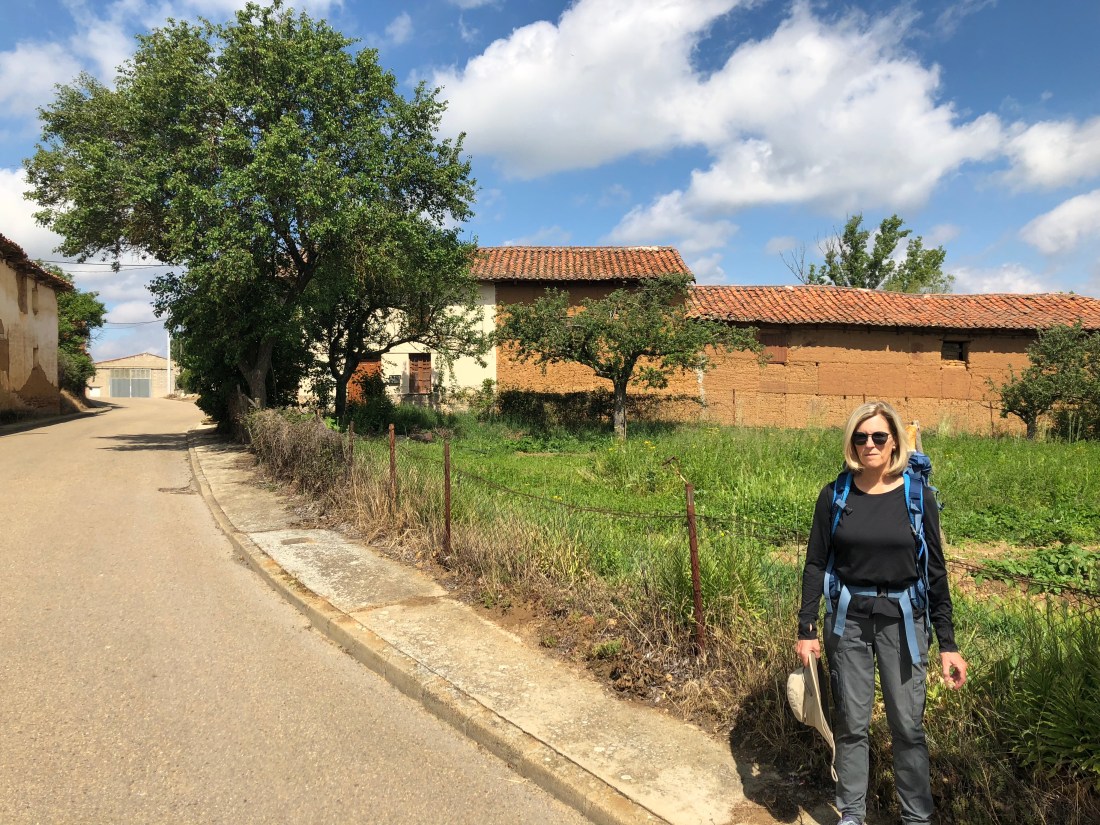
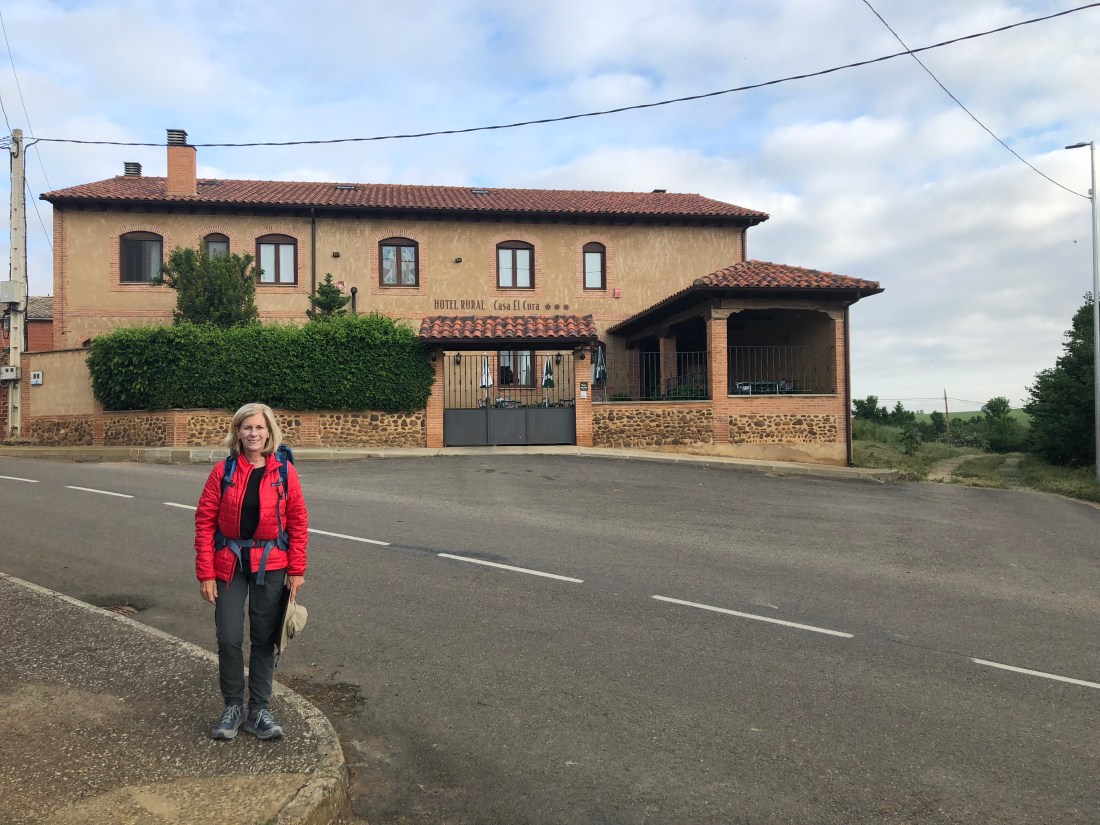 The Casa Rural–much like a bed and breakfast–is run by a young married couple who grew up in the village.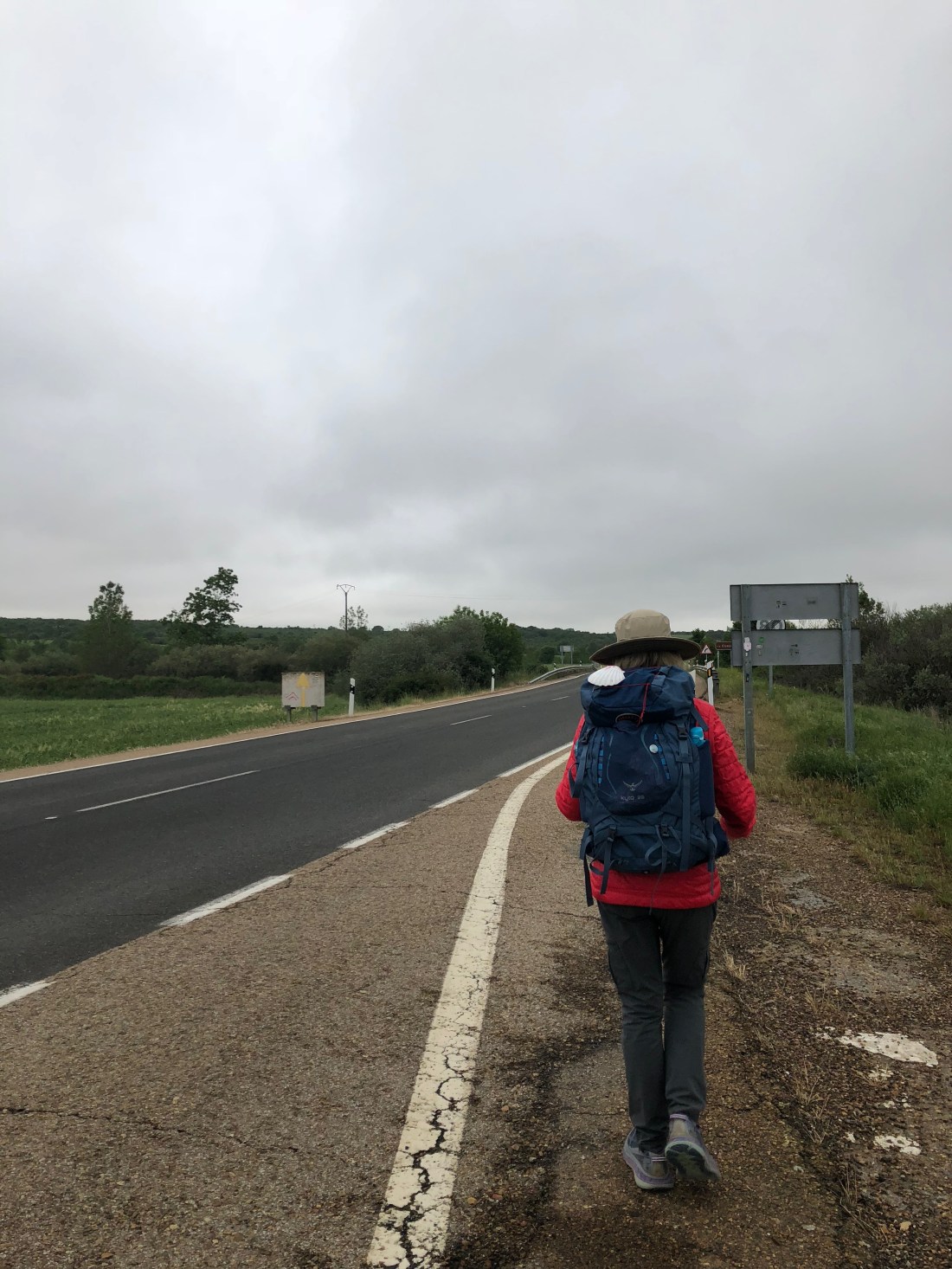
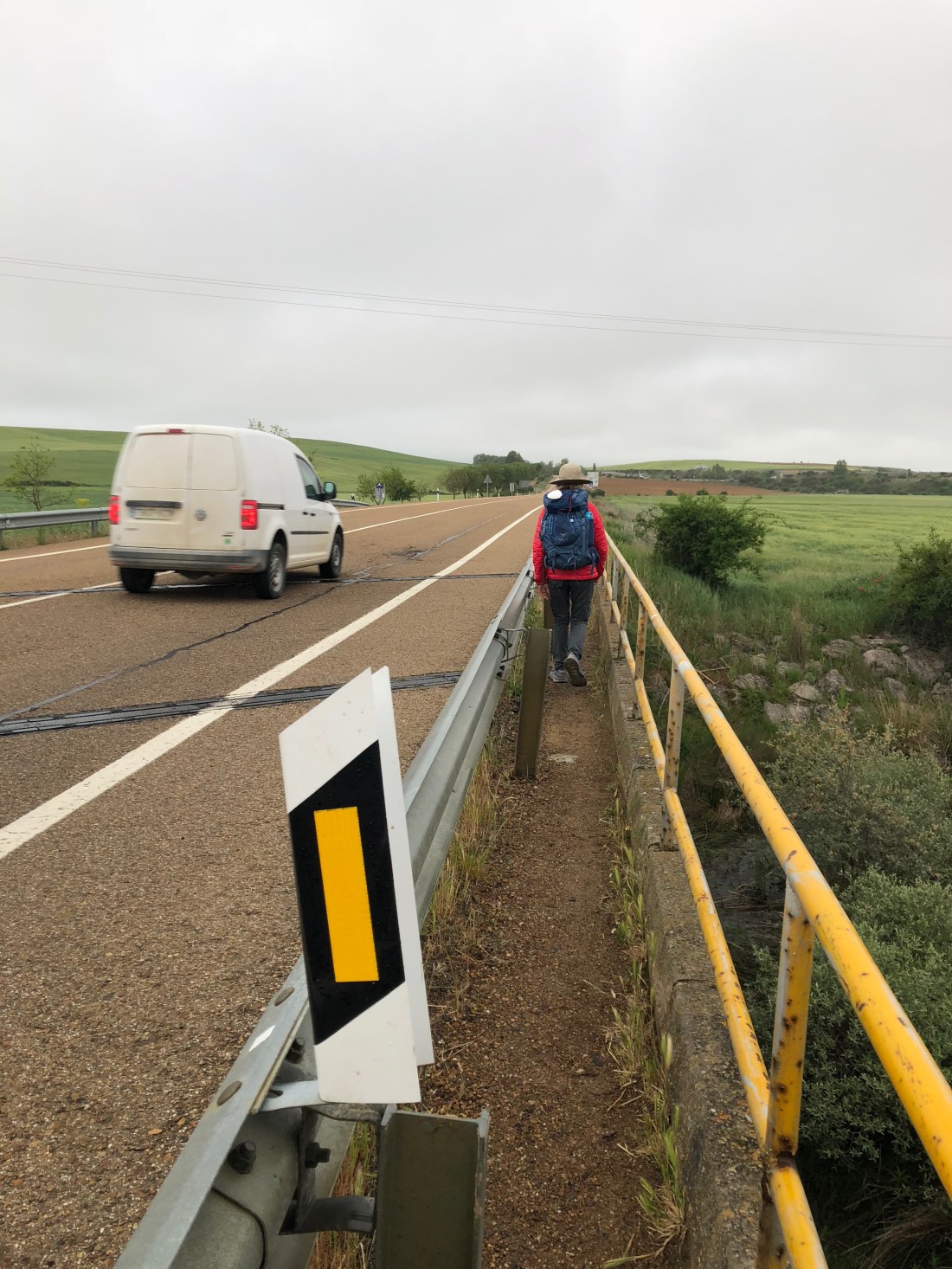
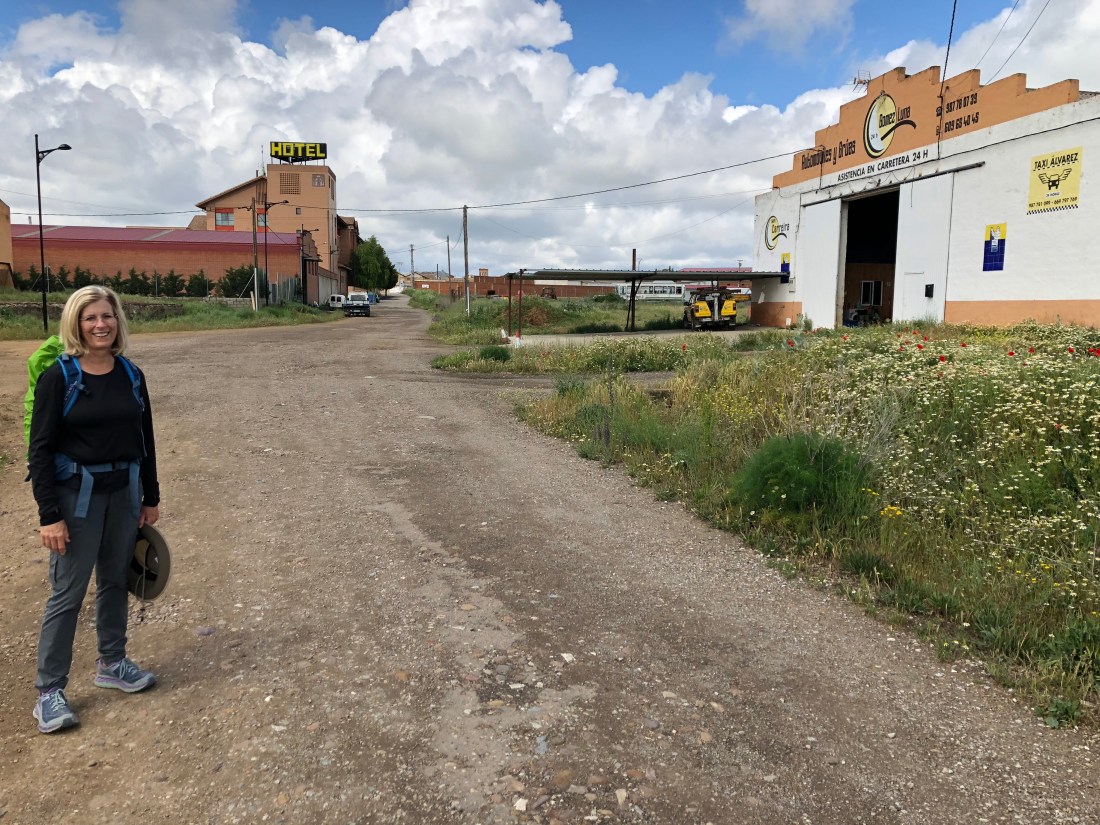 (Anne is laughing because I told her that she should have foreseen this when I promised her a European Vacation.)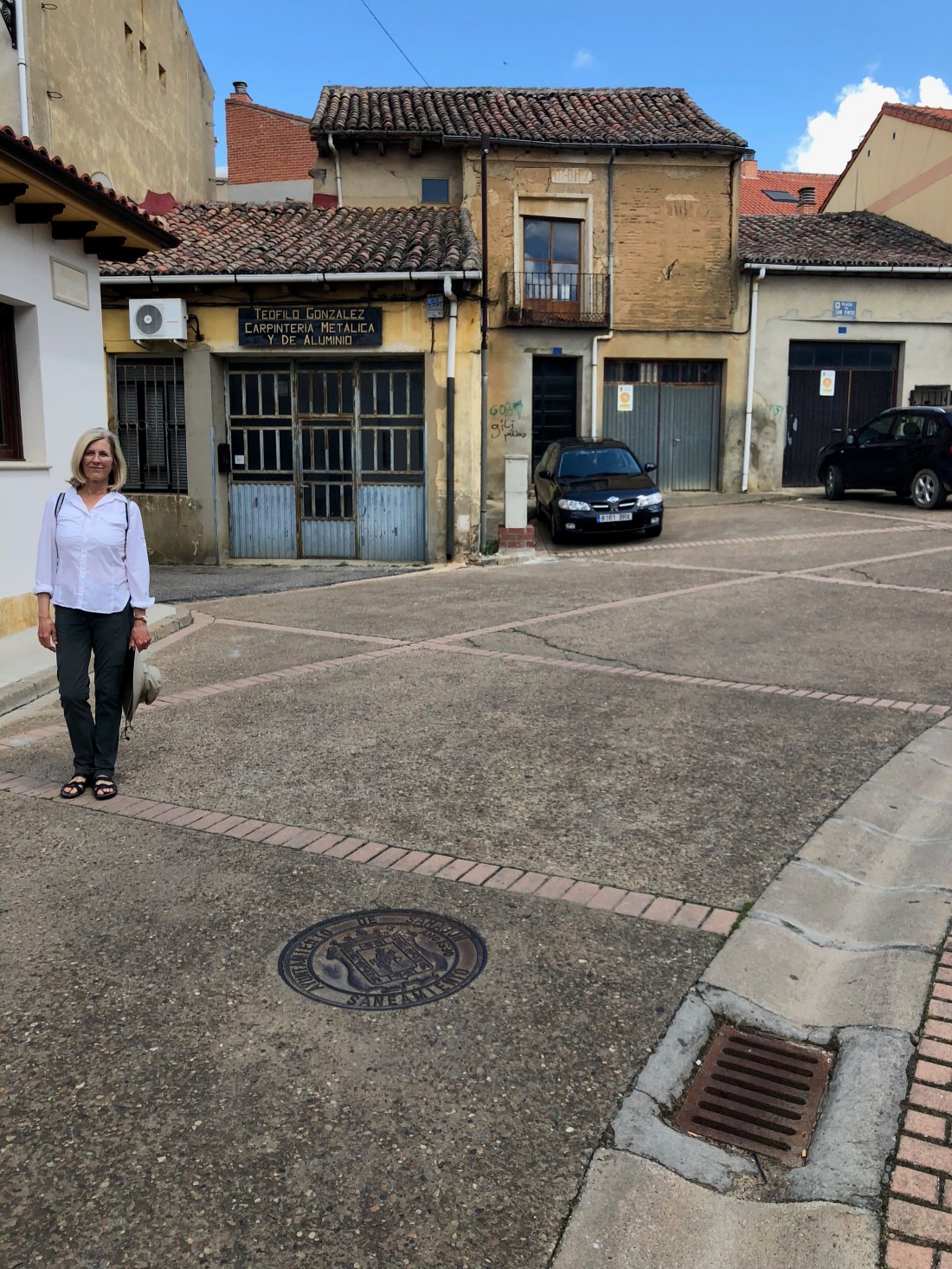
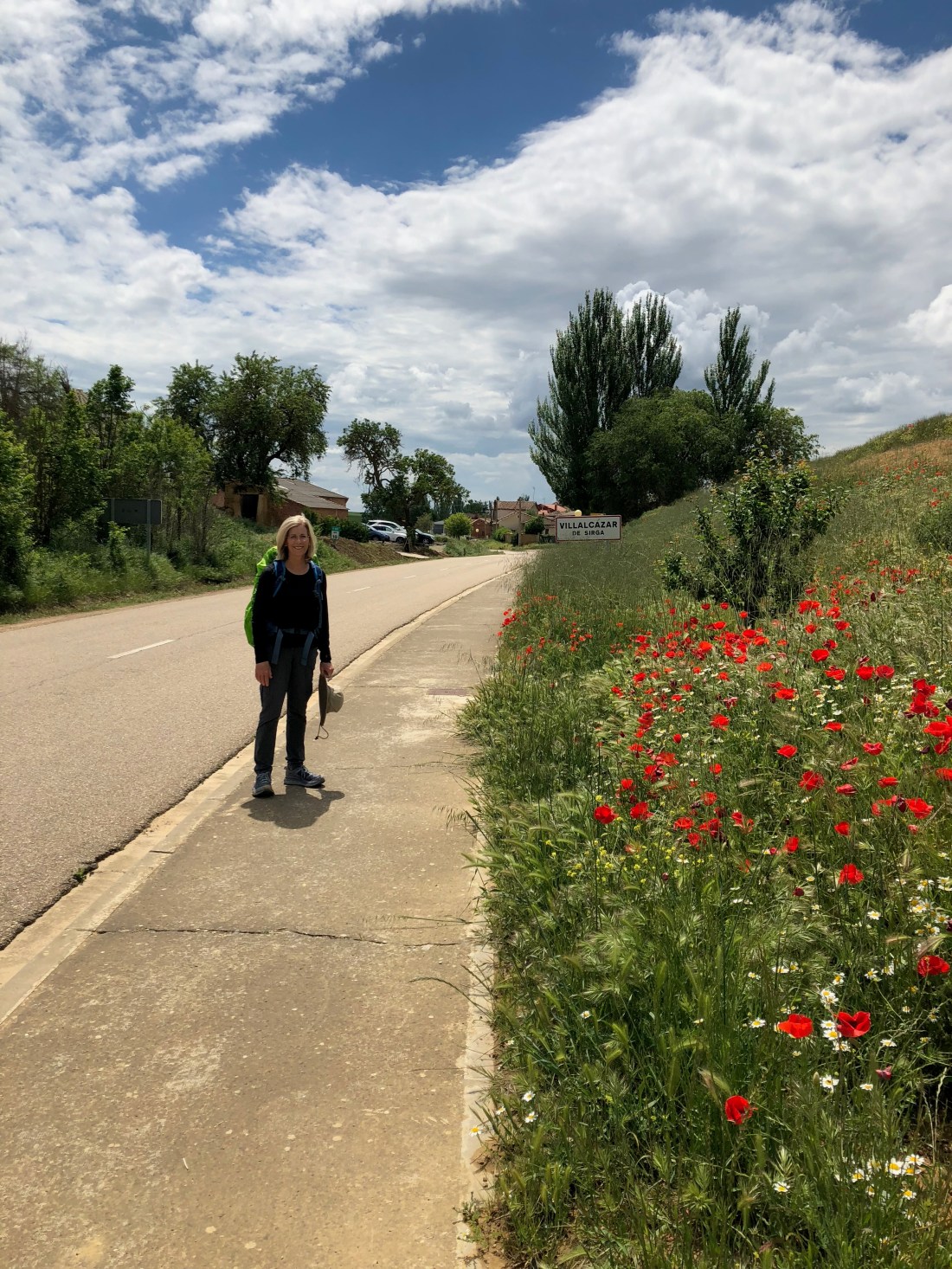
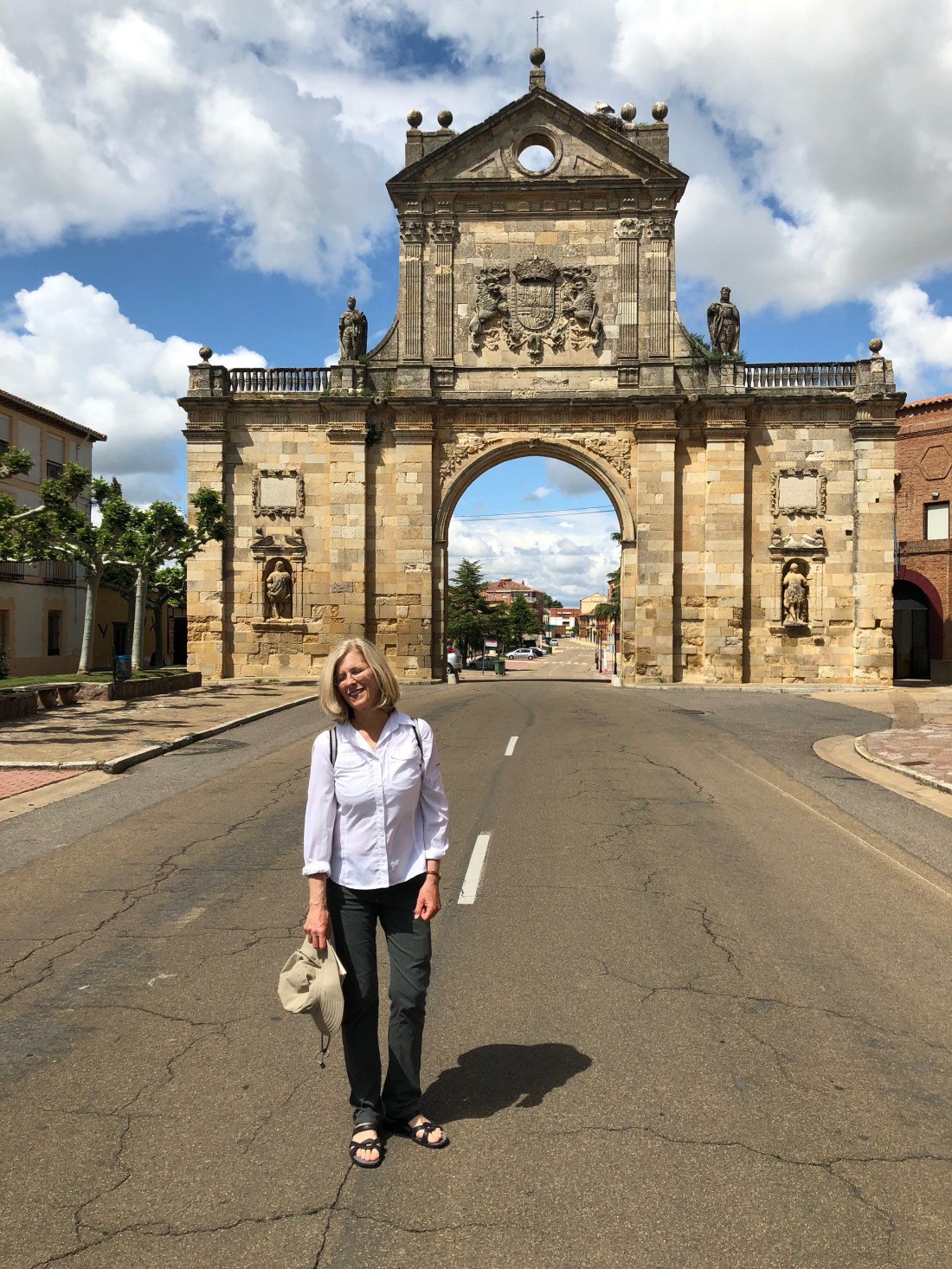 A better approach to this part of the Camino would be to taxi from Villalcazar to Carrion; walk around Carrion; taxi from Carrion to Sahagun; walk around Sahagun; and eliminate almost two days of highway walking.
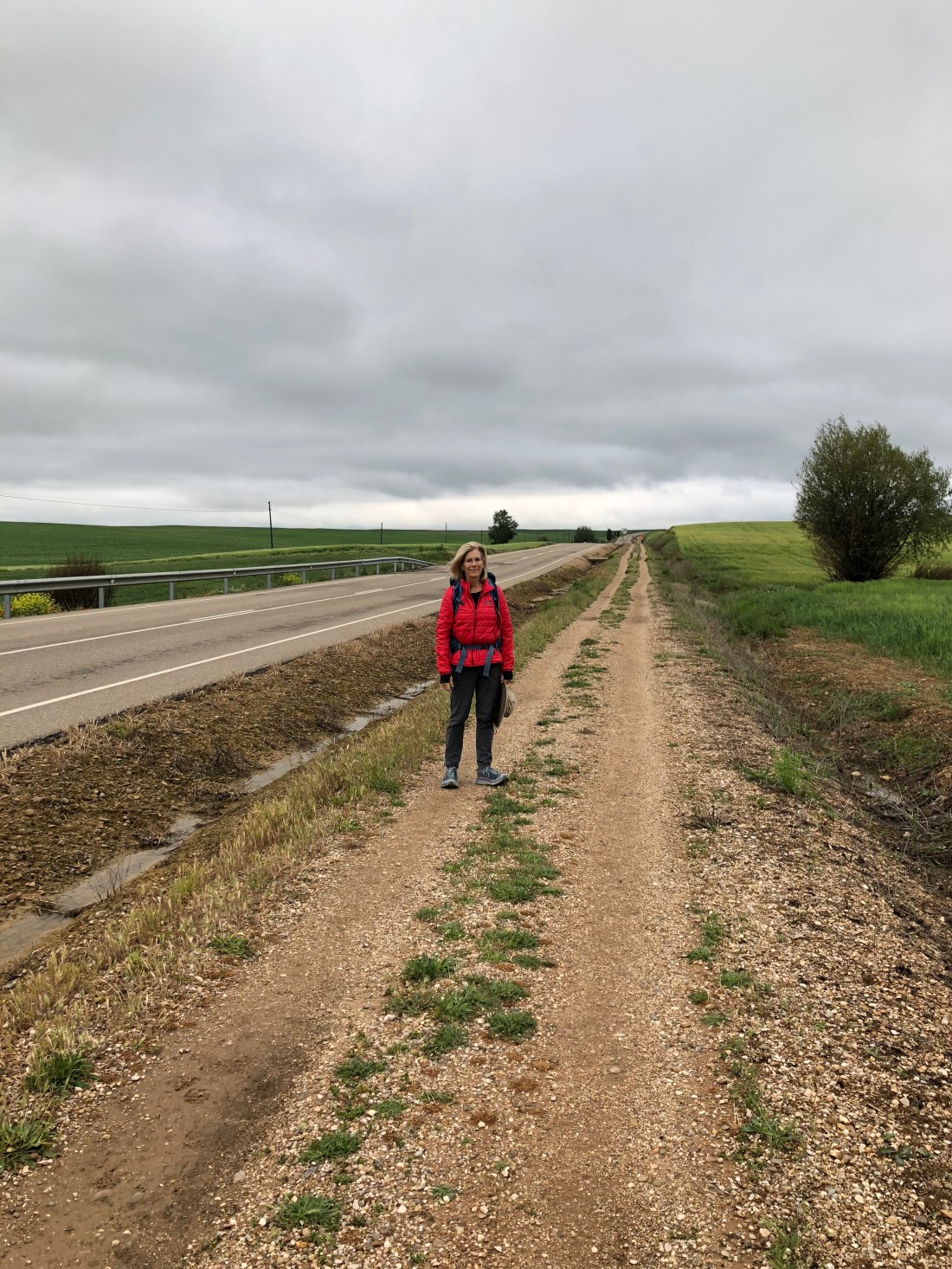
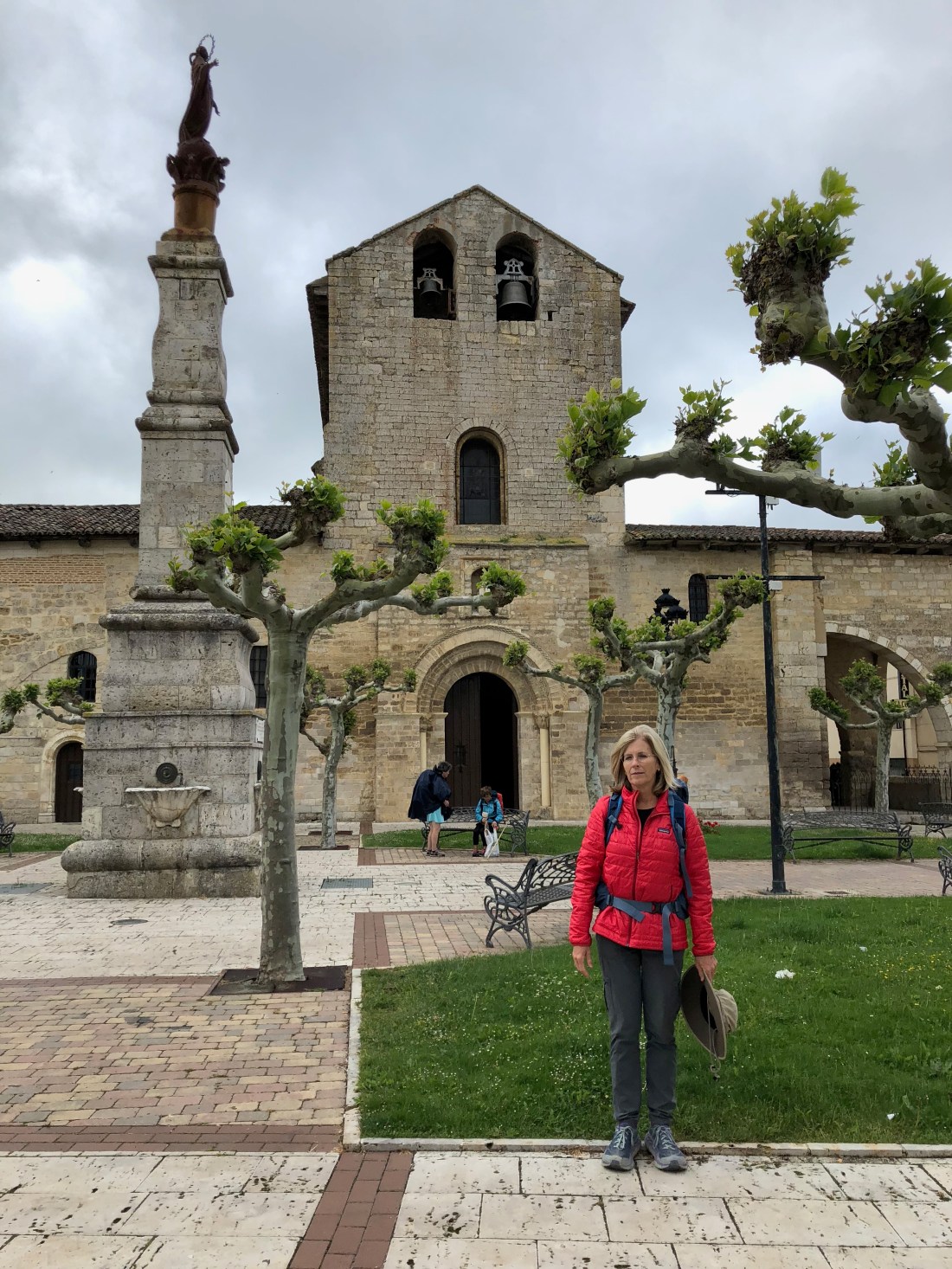
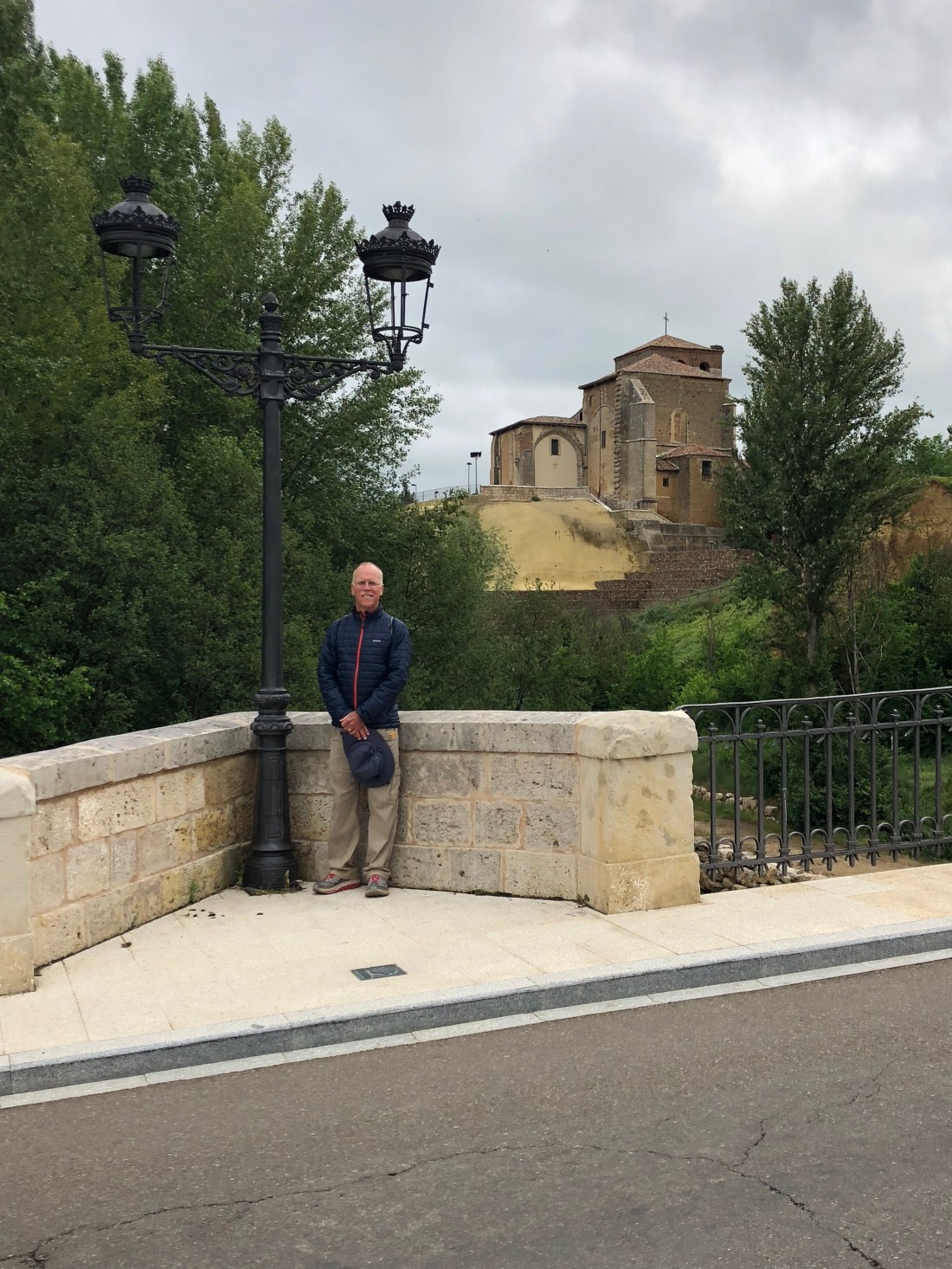
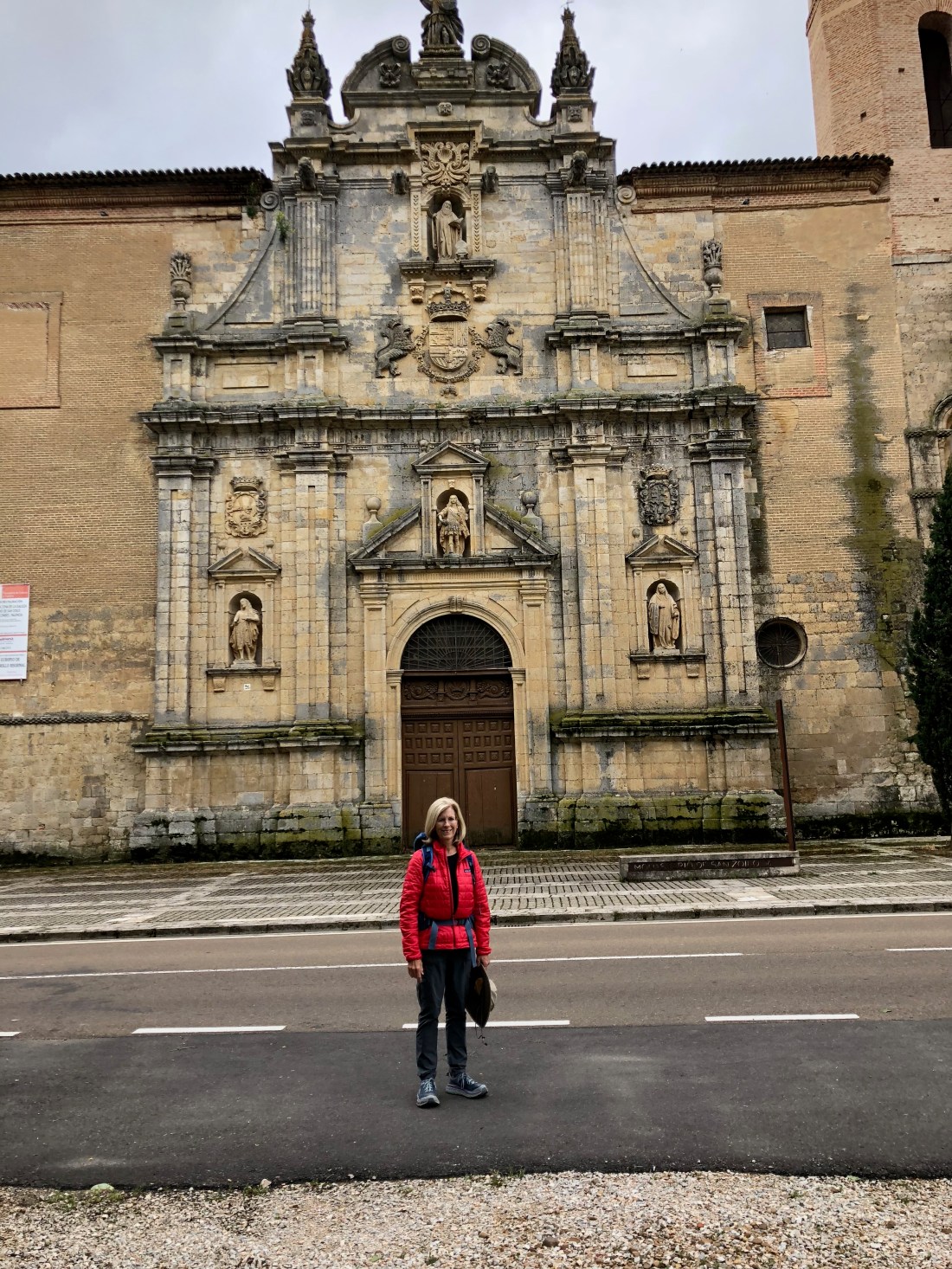
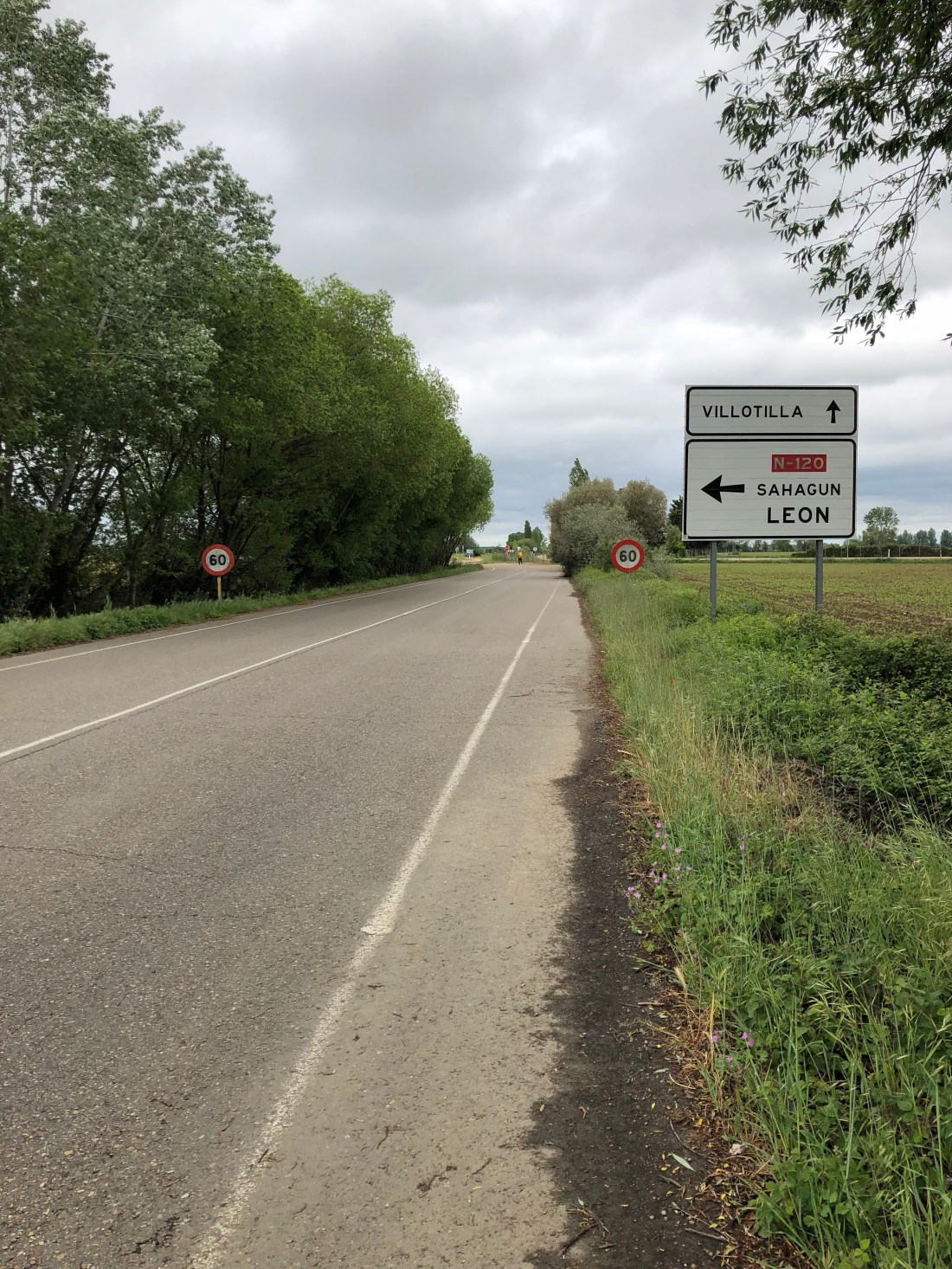 The highway had fast moving big rigs whizzing by.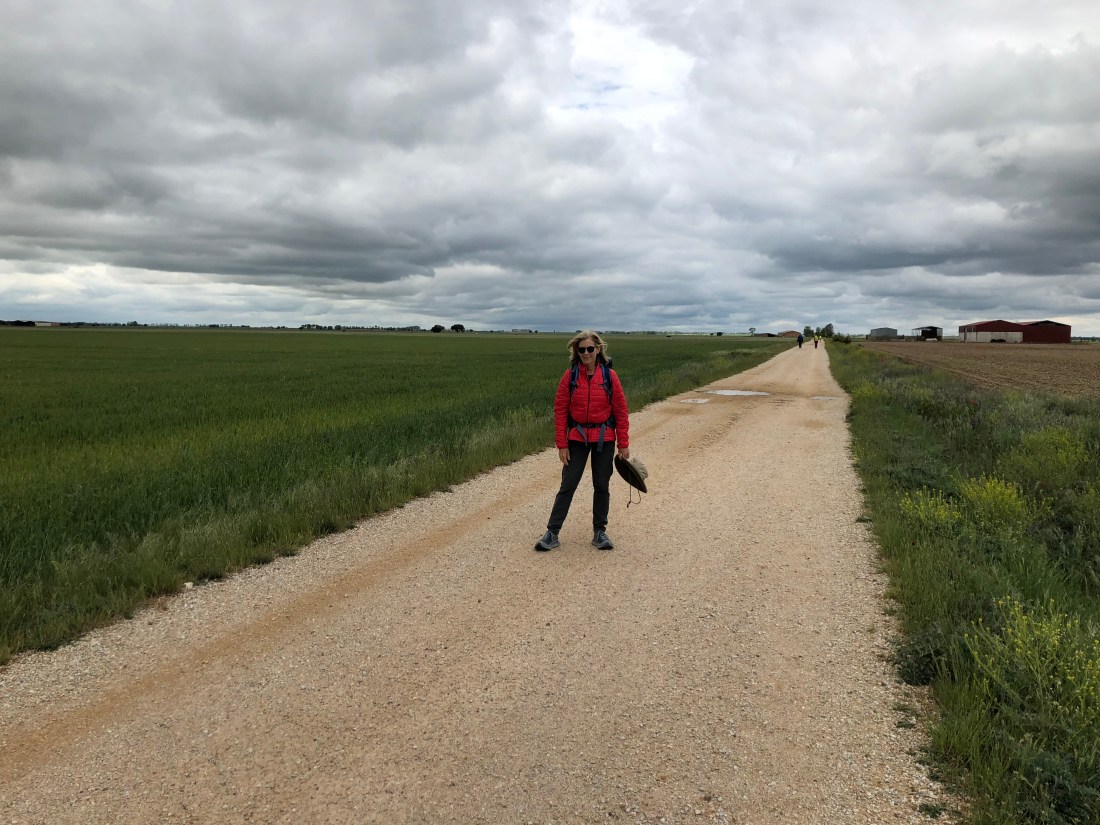
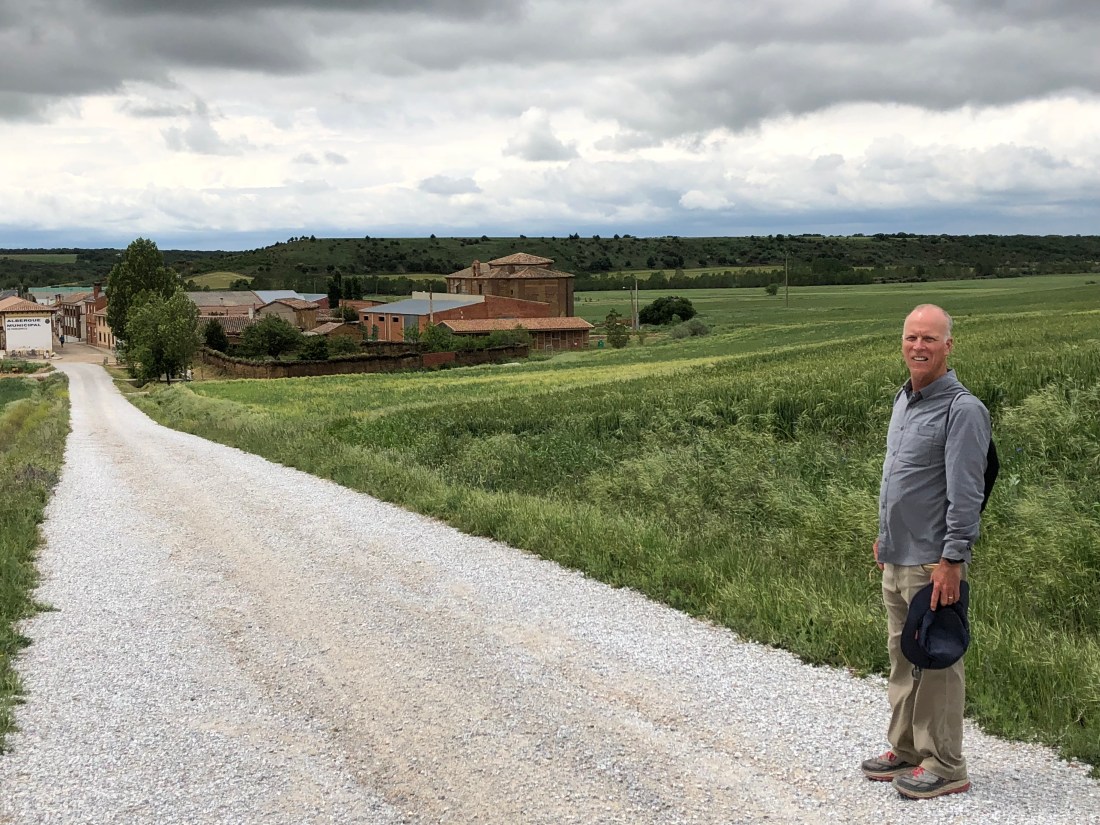 Excepting Carrion, none of this was worth walking.
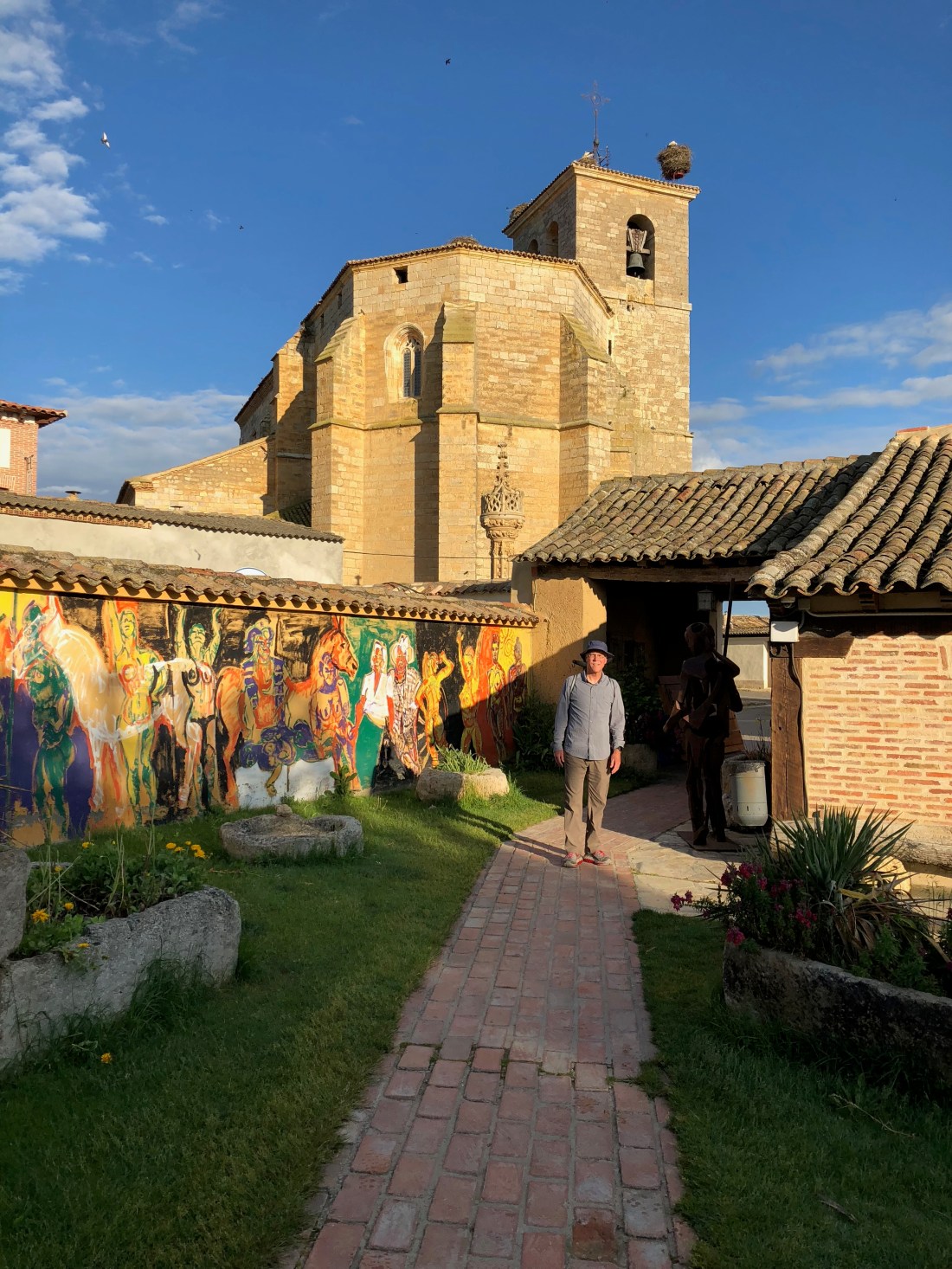 We also had lunch at the albergue yesterday afternoon.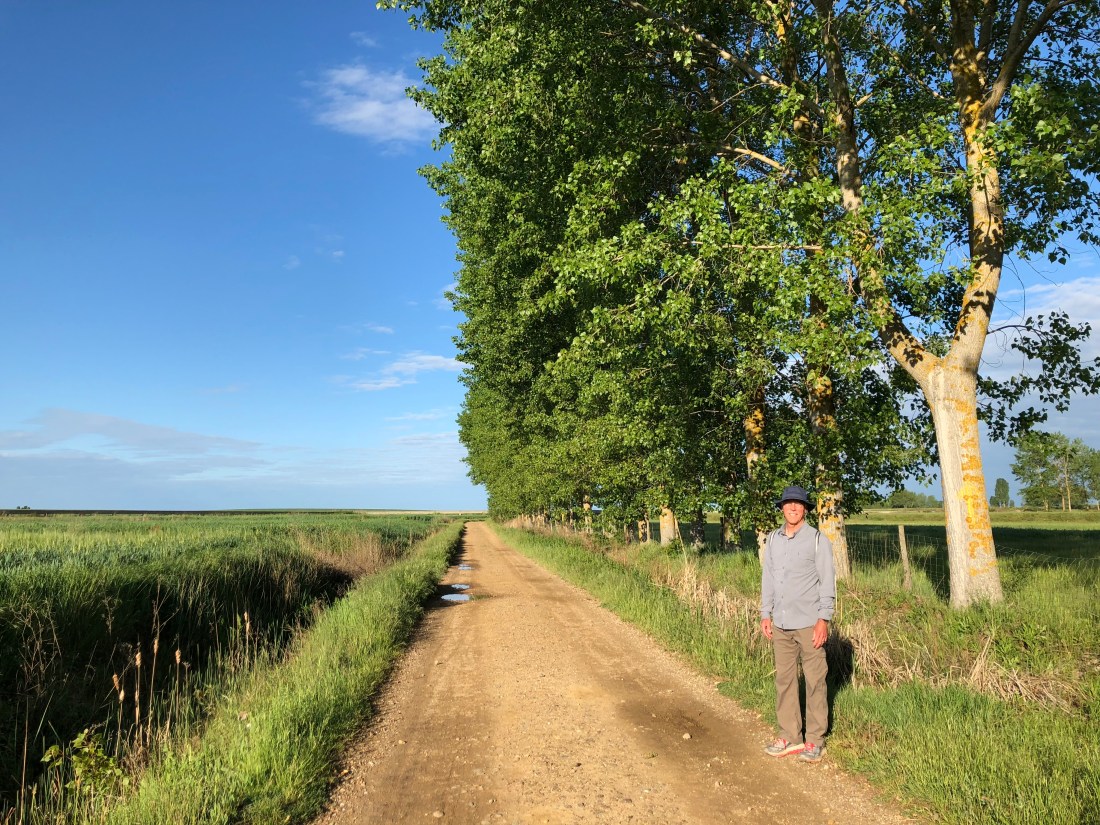
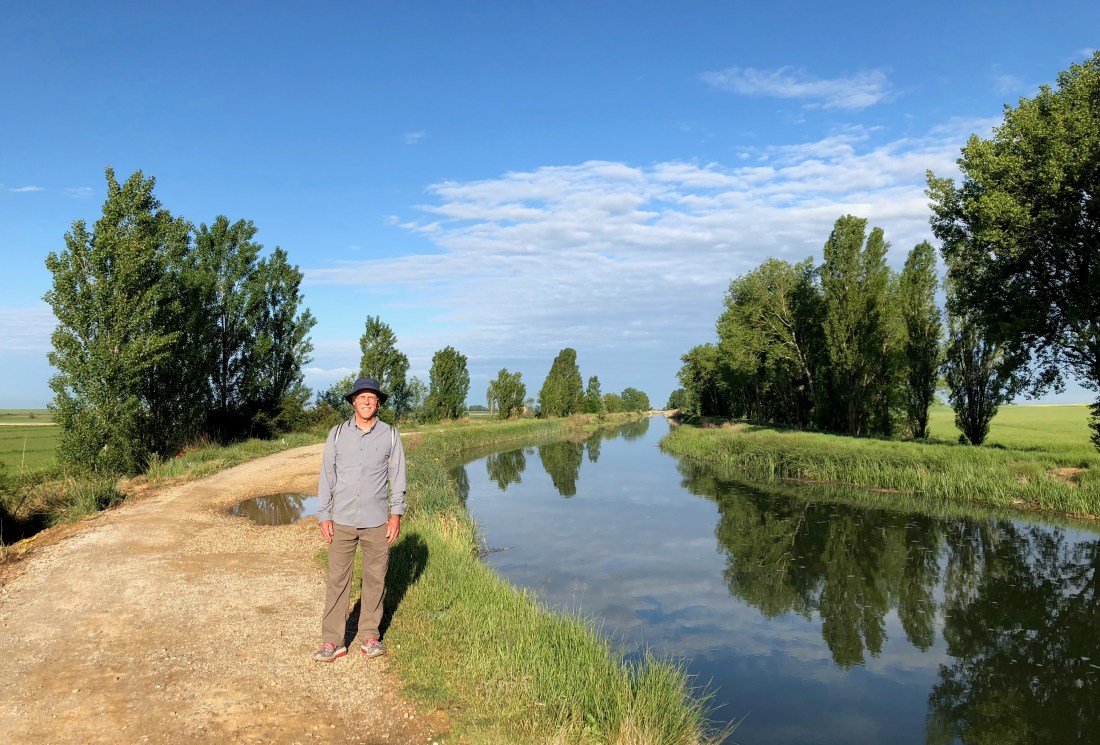 We walked along the canal for about an hour and then came to the village of Fromista.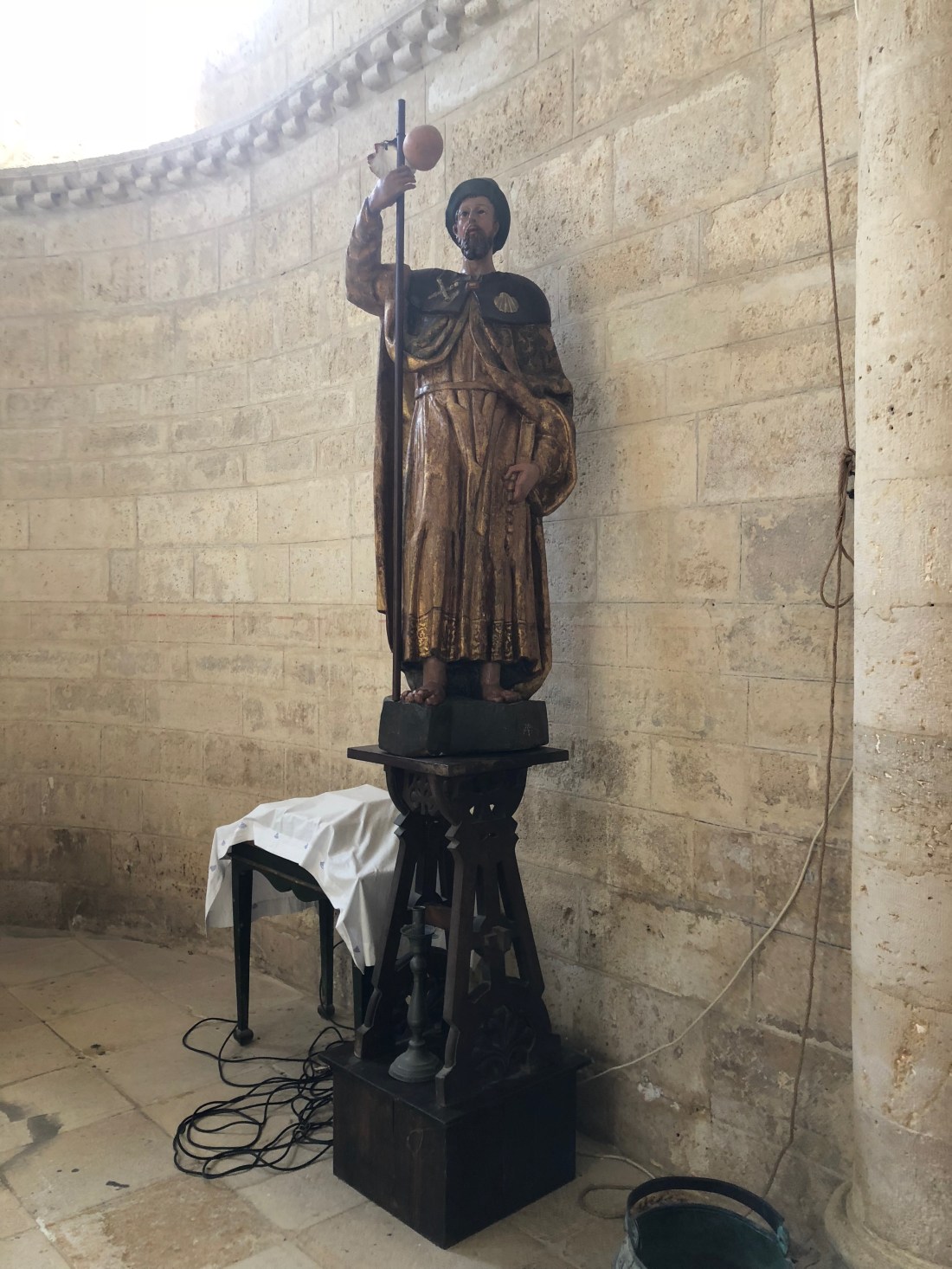
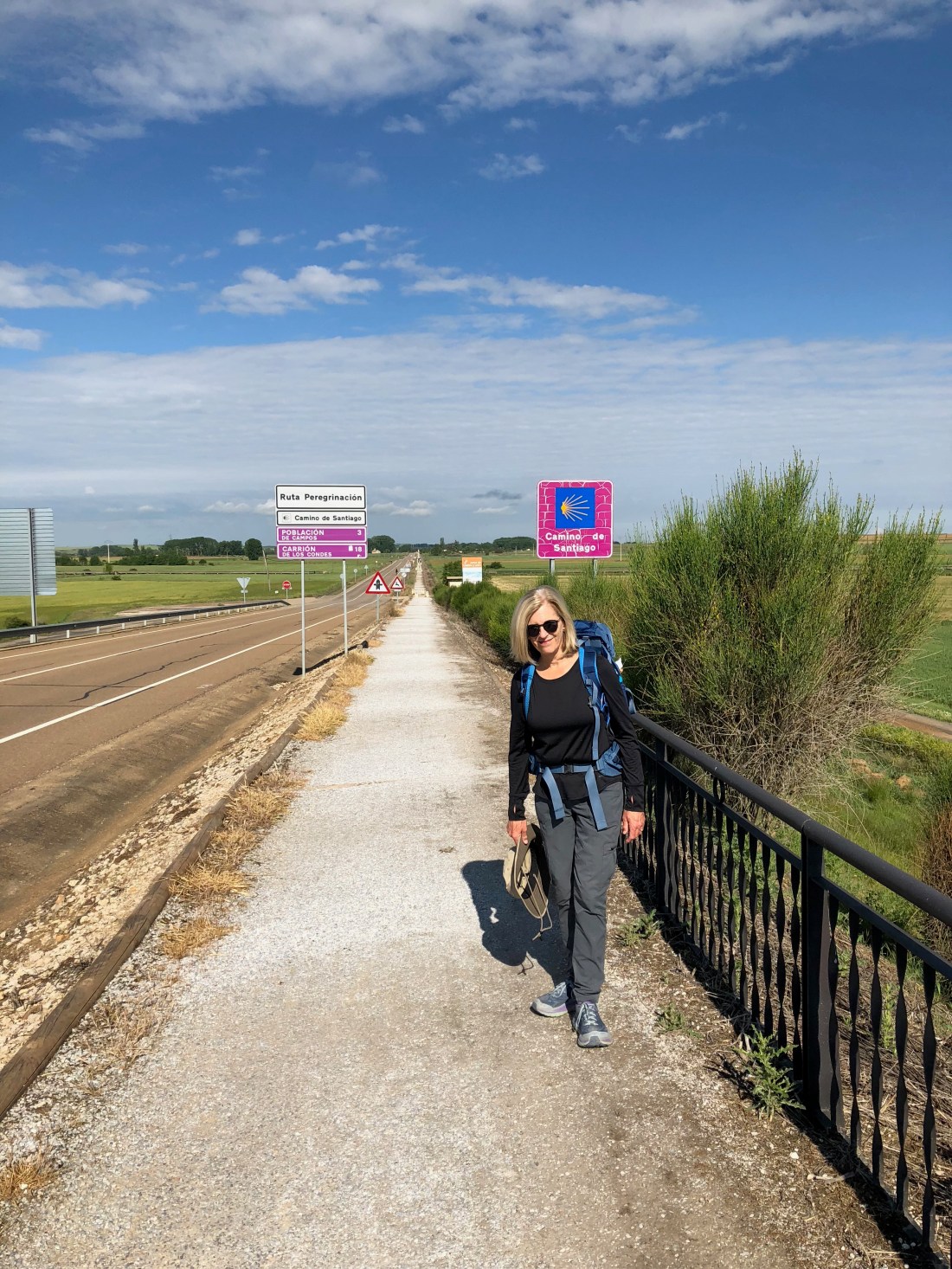 The Camino turned off the highway and went into the village of Poblacion de Campos. We arrived in the village at around 11 a.m. We were hungry and stopped at a hotel as some stragglers in the hotel’s dining room were finishing up a late breakfast. We asked an older woman who was clearing dishes if we could get something to eat.
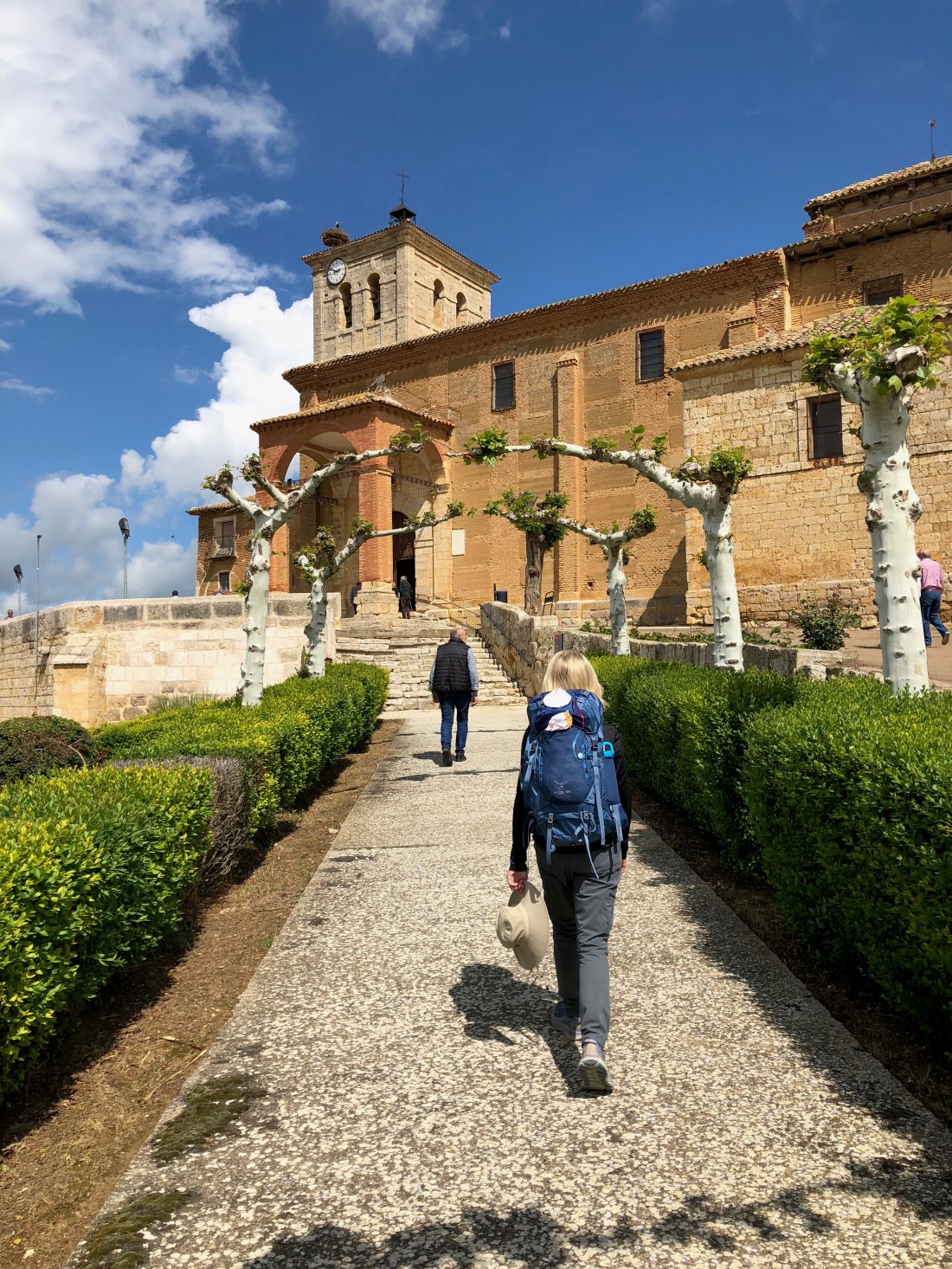 We walked into the church and sat in a pew toward the rear.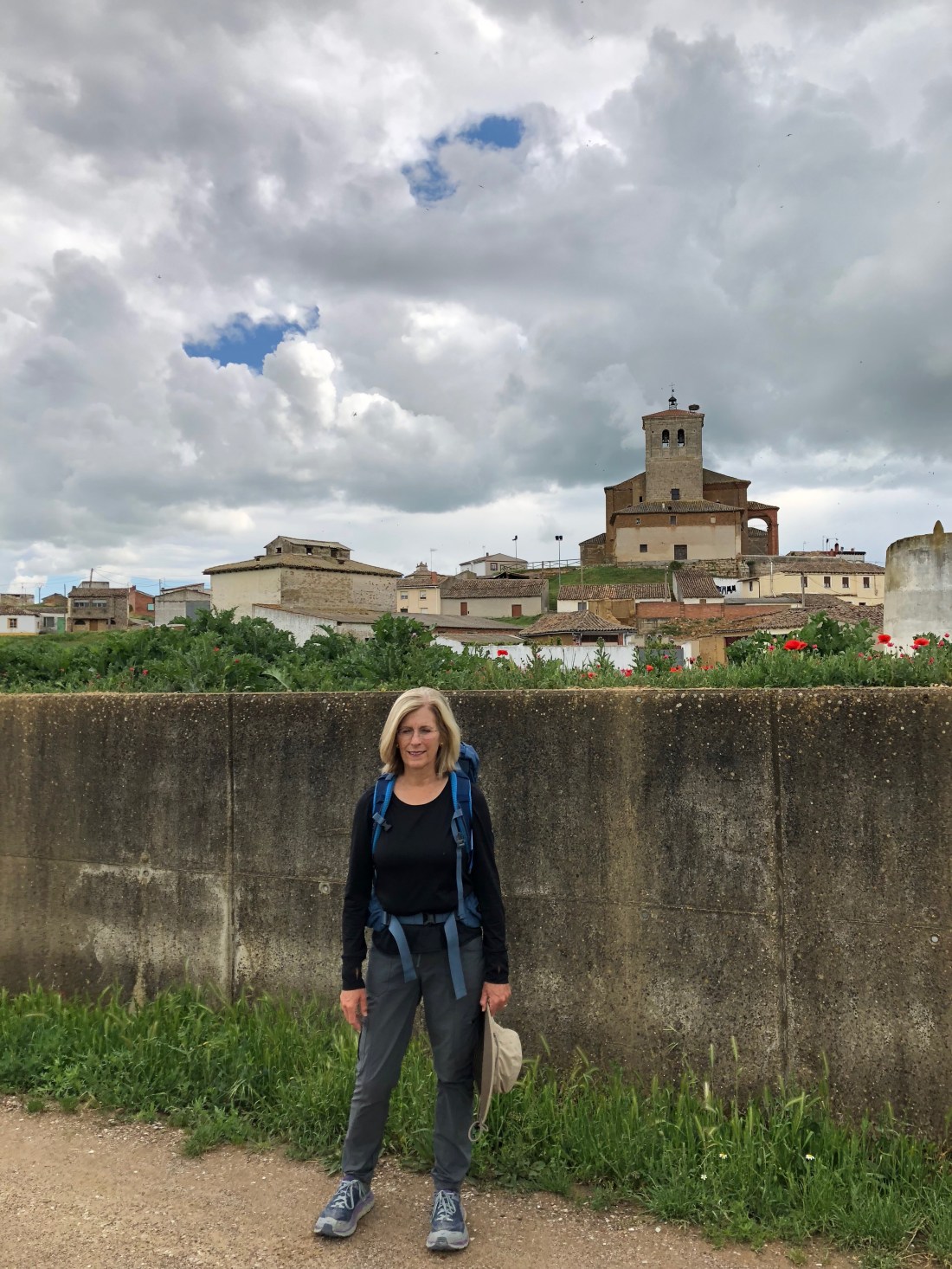
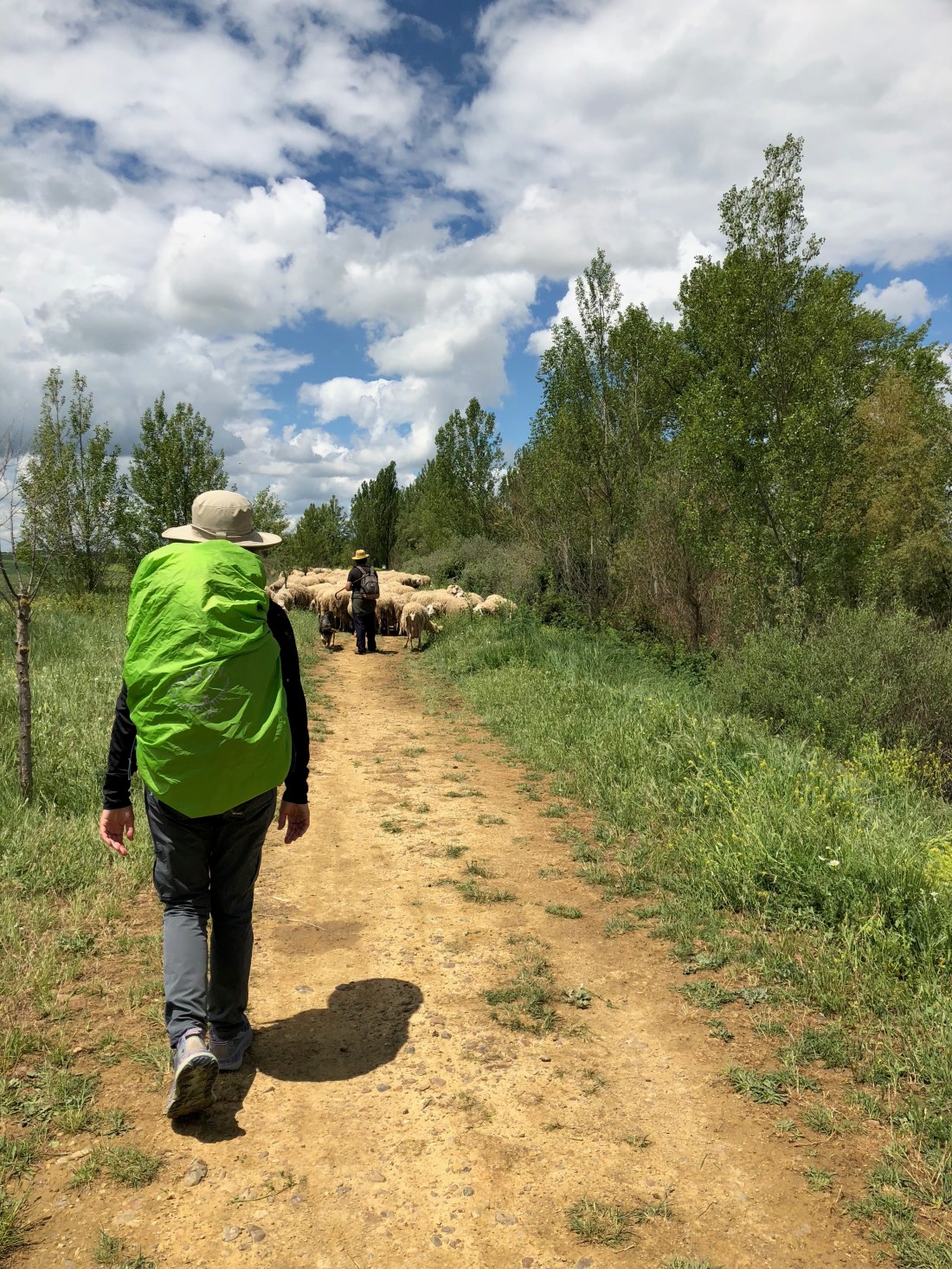 I told her that it was a flock of sheep, but she wouldn’t listen.
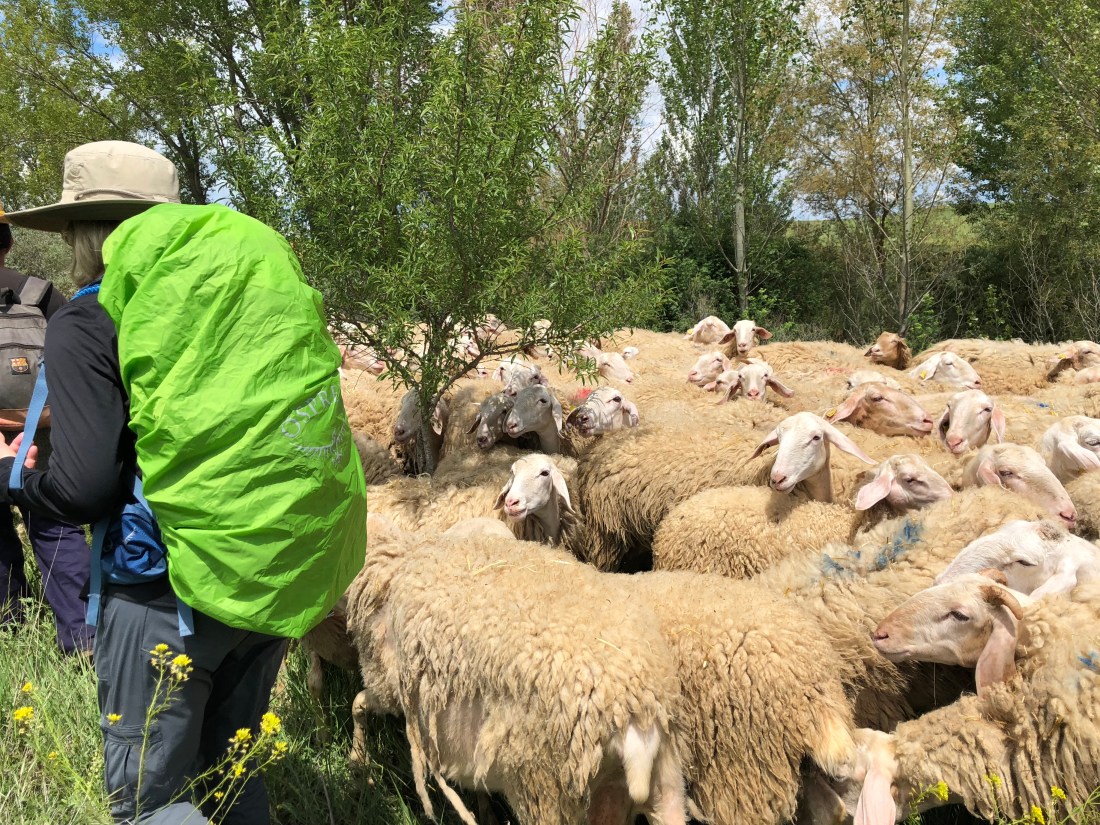 Fortunately, no one was hurt, and we continued on with our adventures.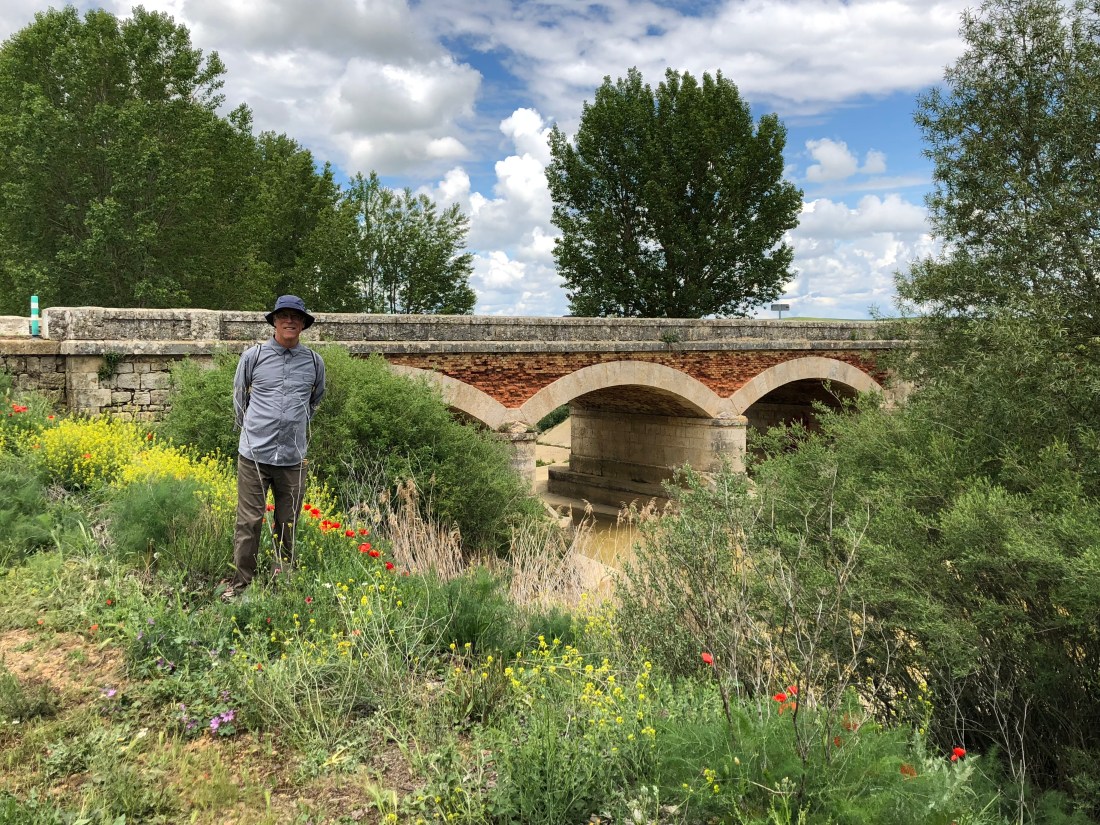
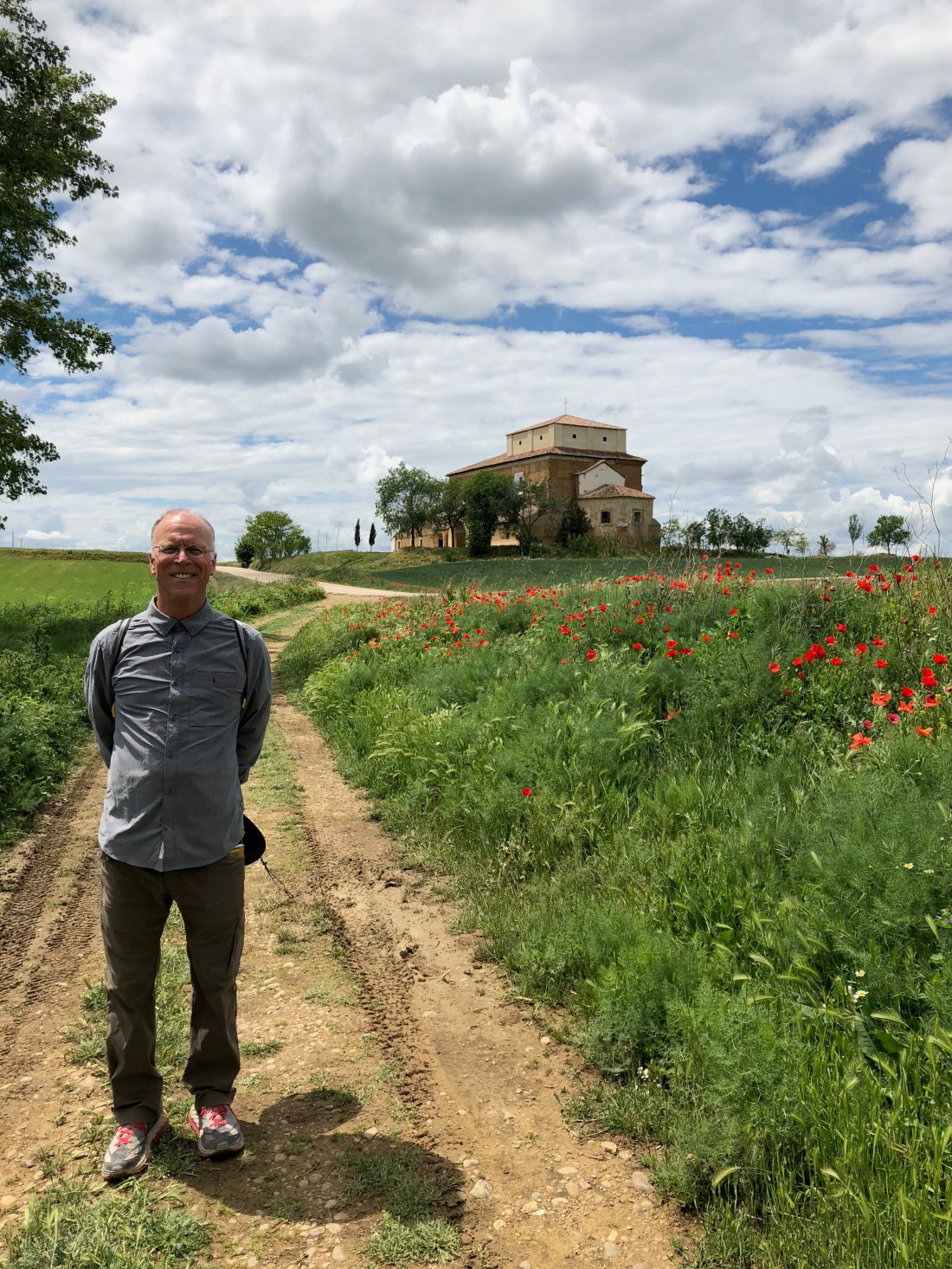
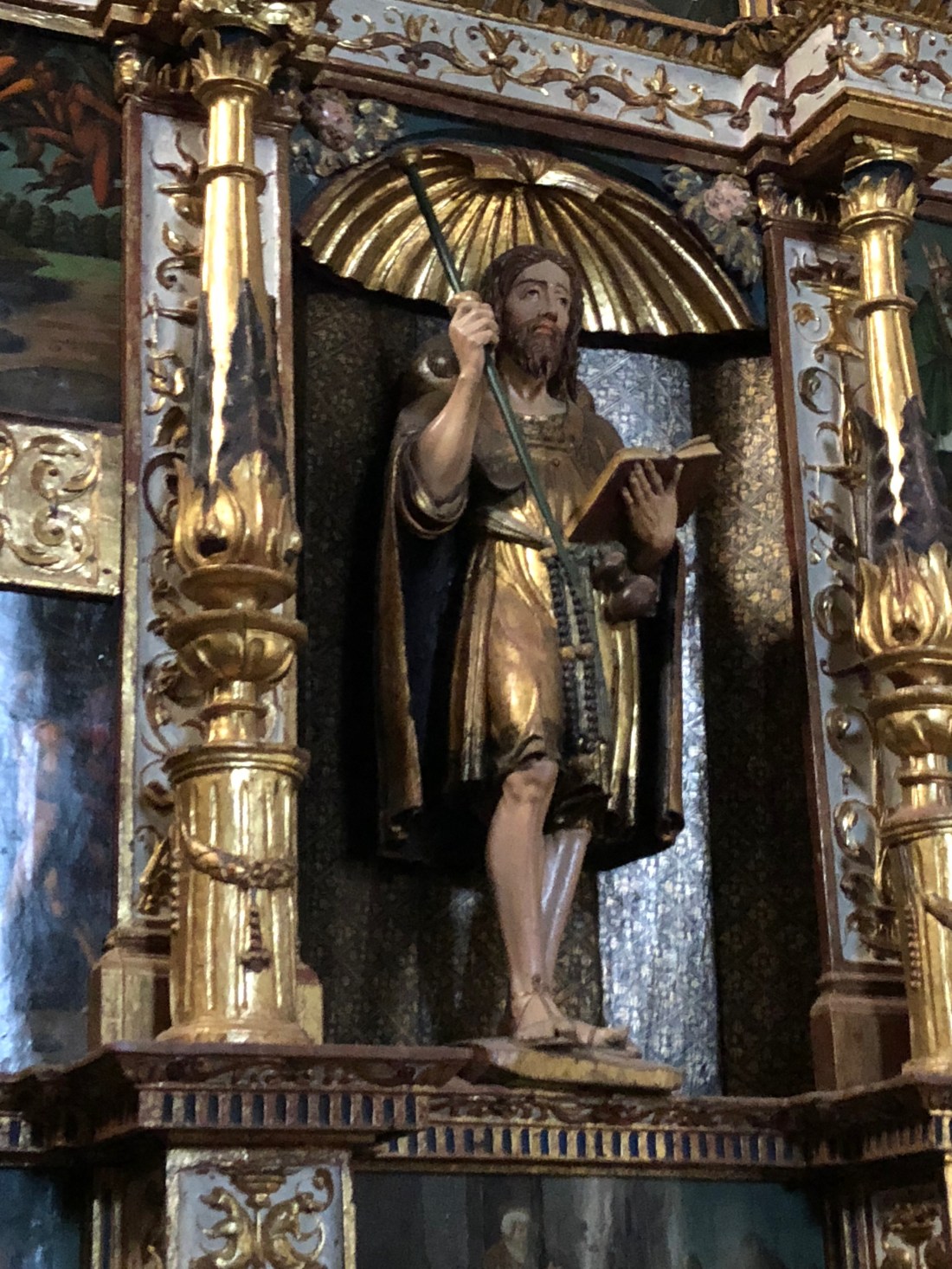 He looks unhappy. Maybe he has shin splints. (Mine feel better, and the swelling has subsided.)
 Kurt's Blog