Foncebadon to Molinaseca

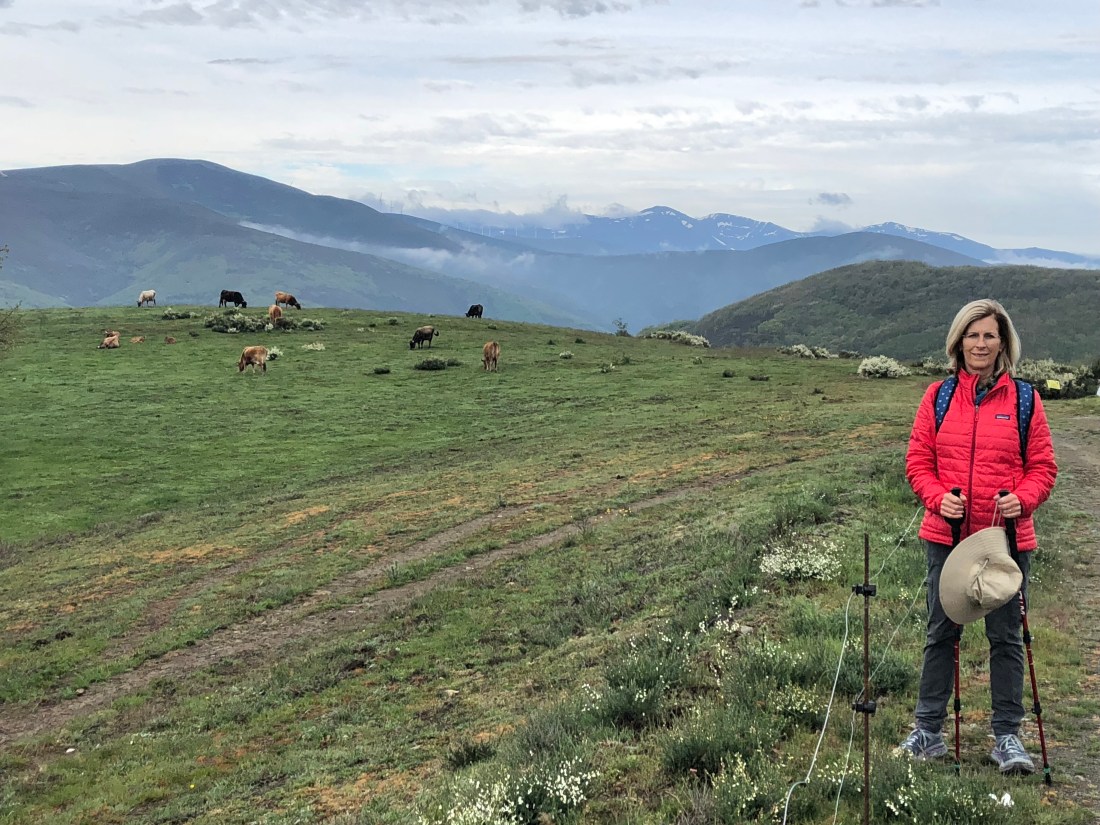
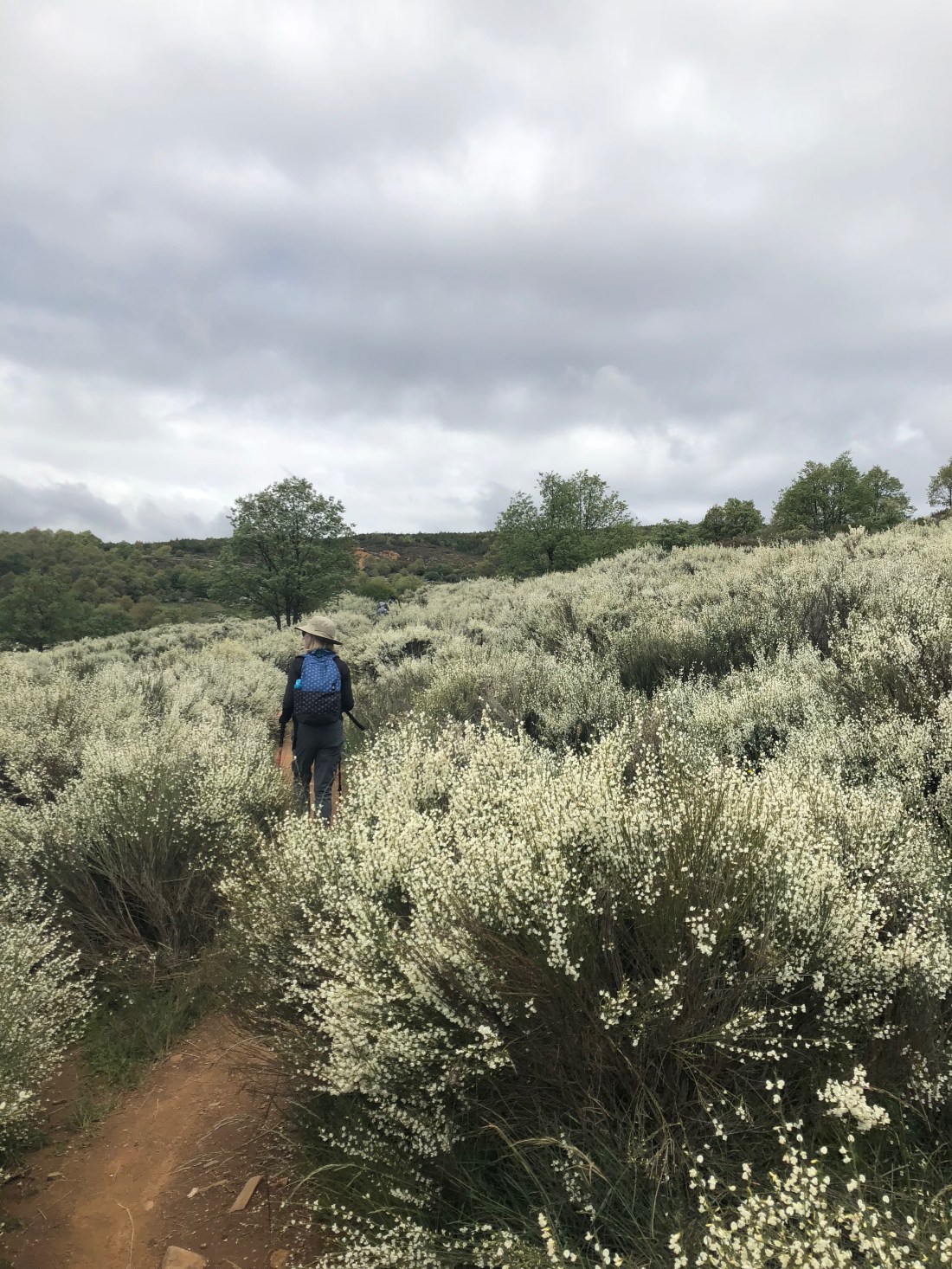
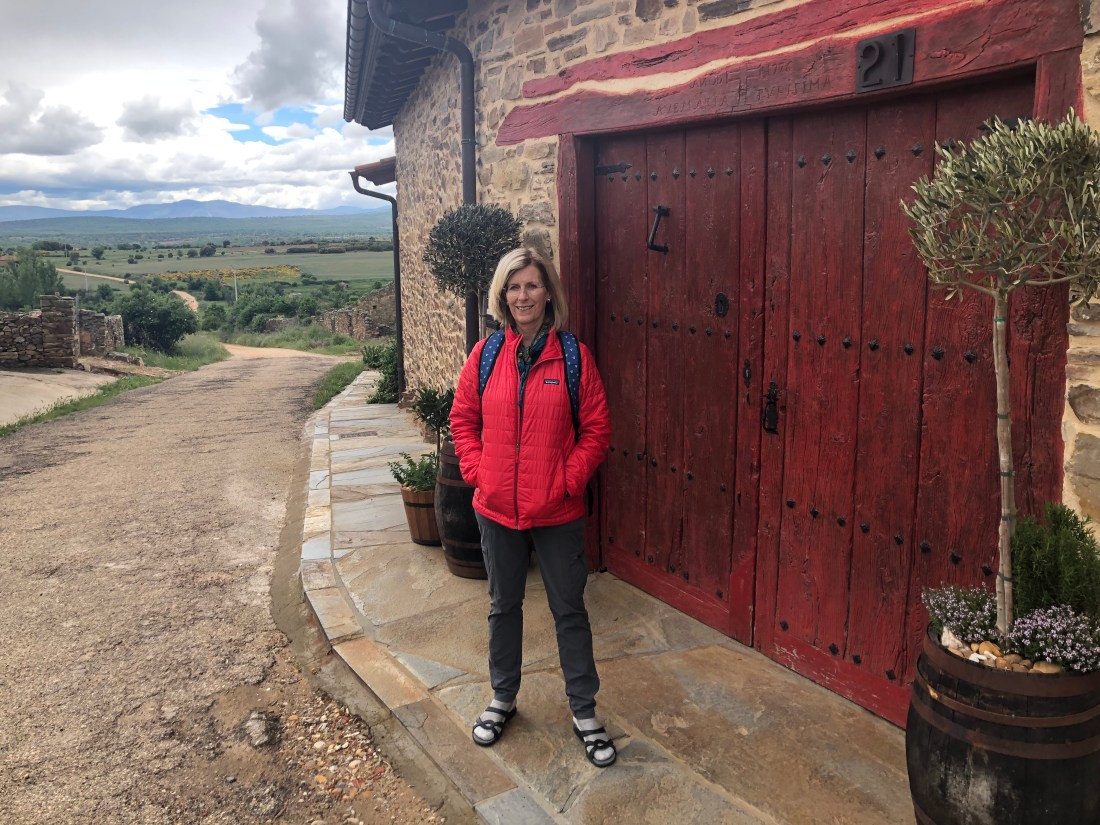
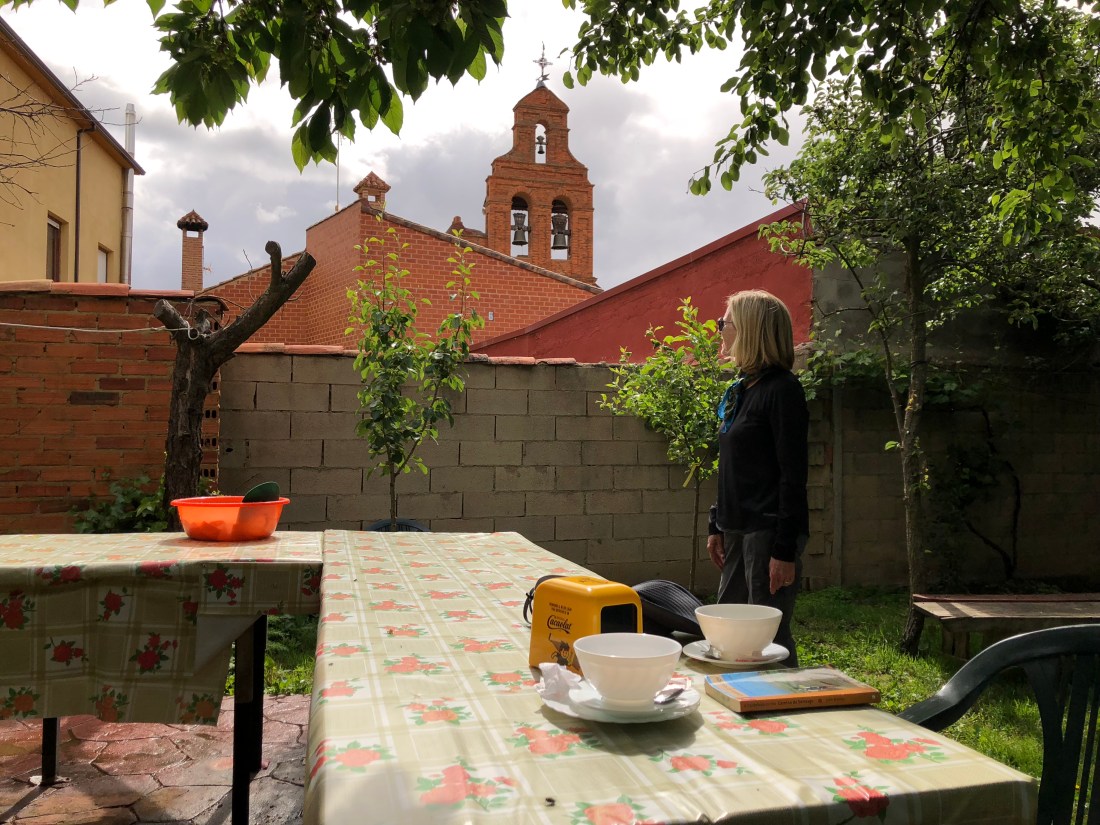
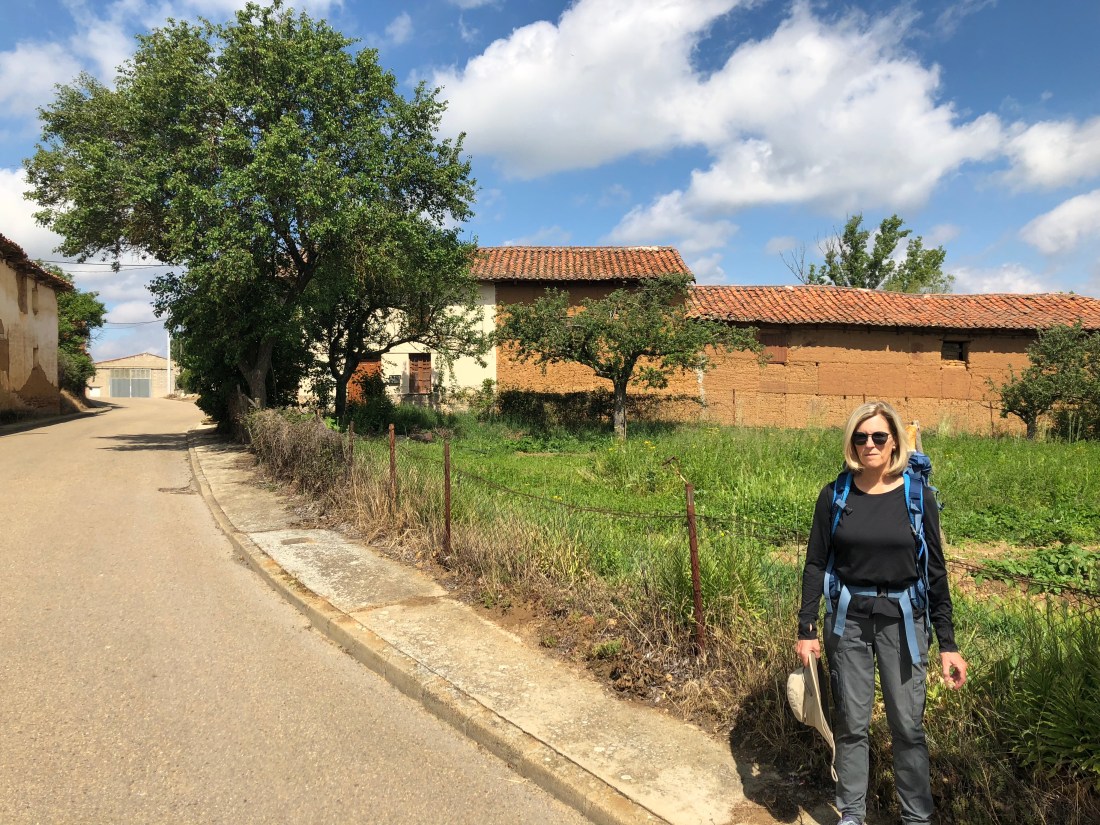
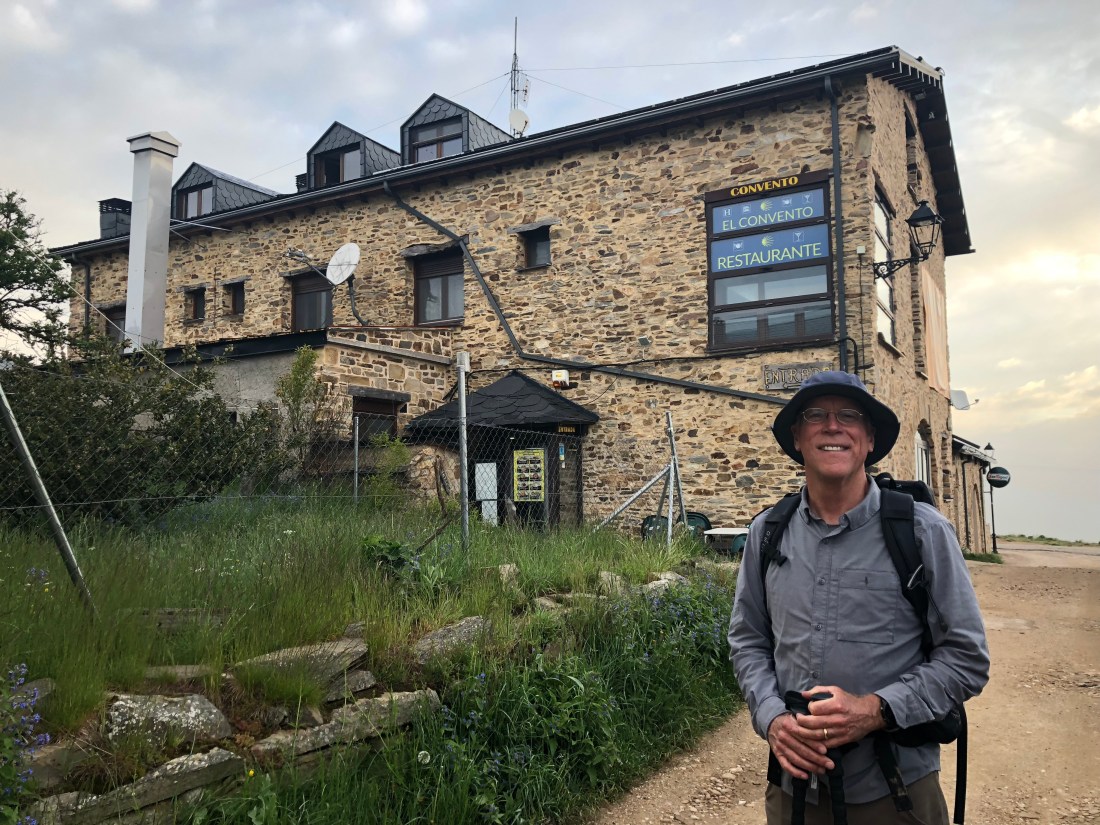
We left our hostel early this morning.IMG_2704.jpgWe got an early start because rain is forecast for the early afternoon.  We are headed up to the top of the mountains today and then back down the other side.  The descent is long and steep, and we don’t want to slip on wet rocks.
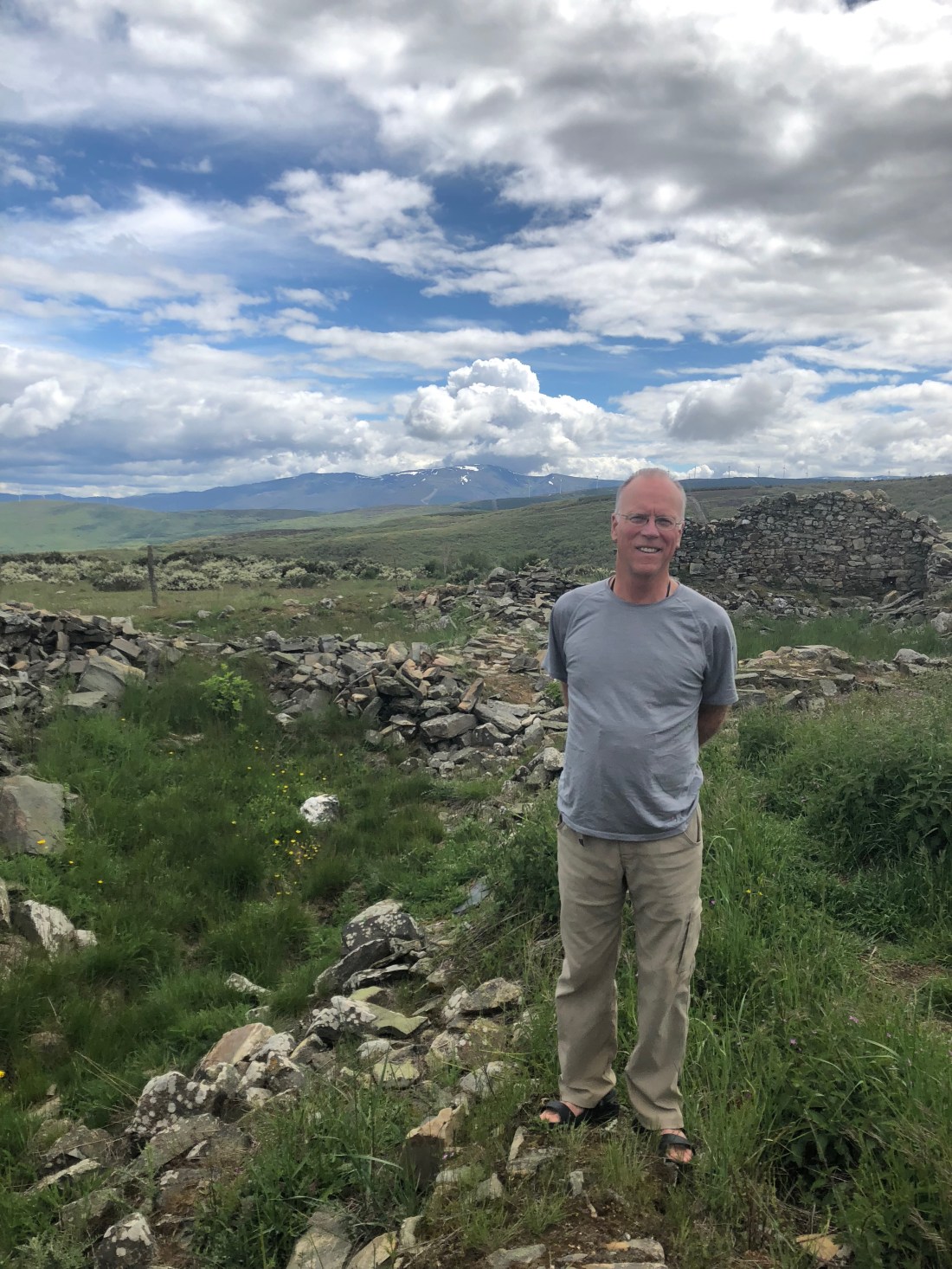
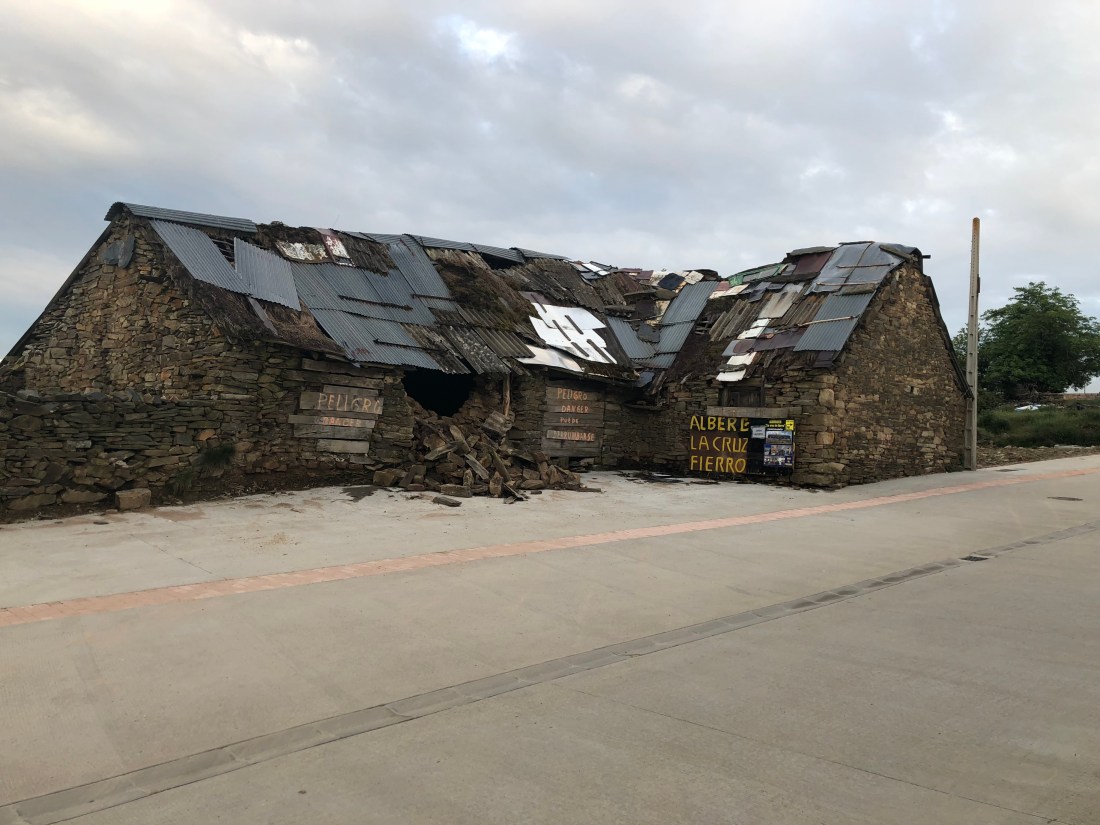
Foncebaden is an abandoned village that is being restored to accommodate the hordes of new pilgrims.  There is much to be done.IMG_2705.jpg
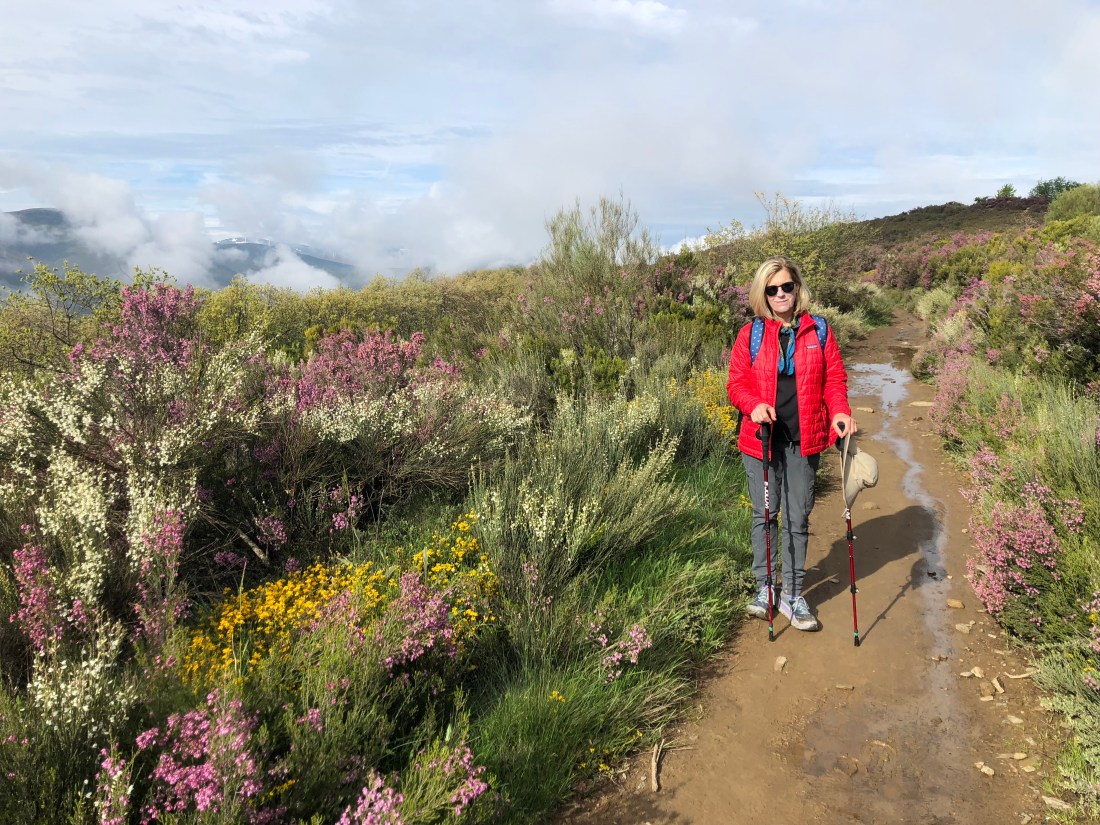
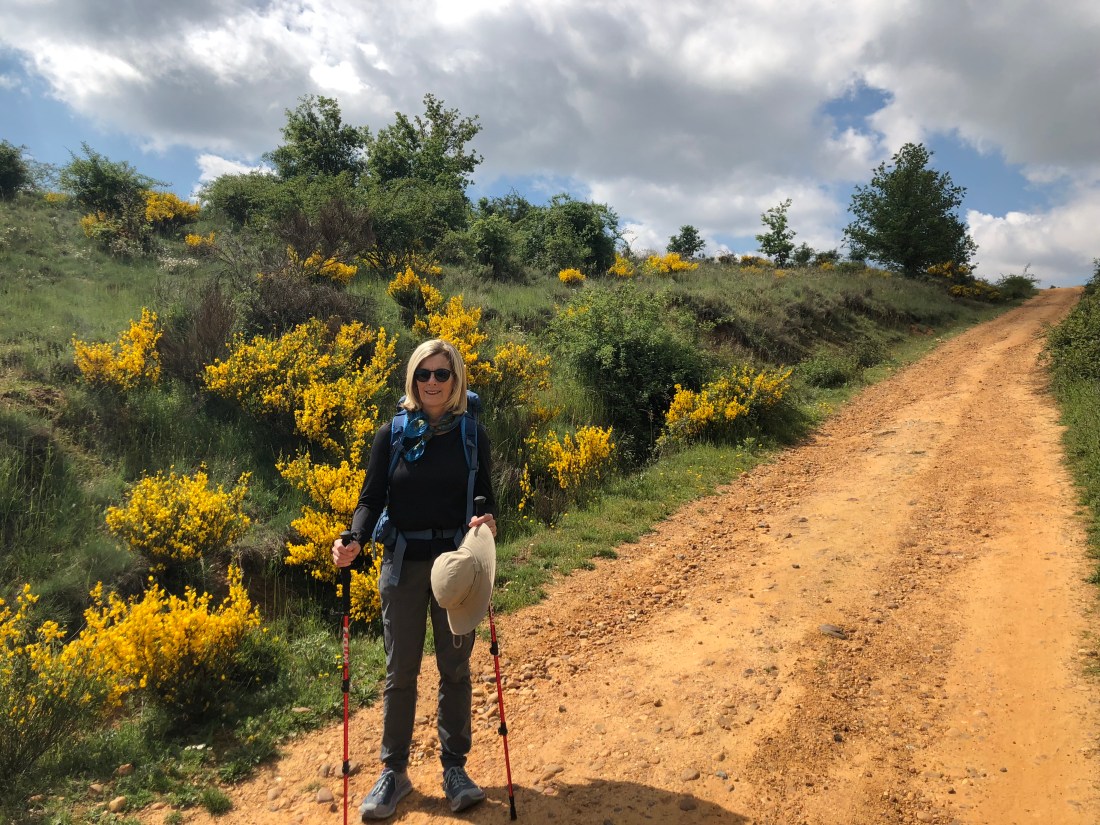
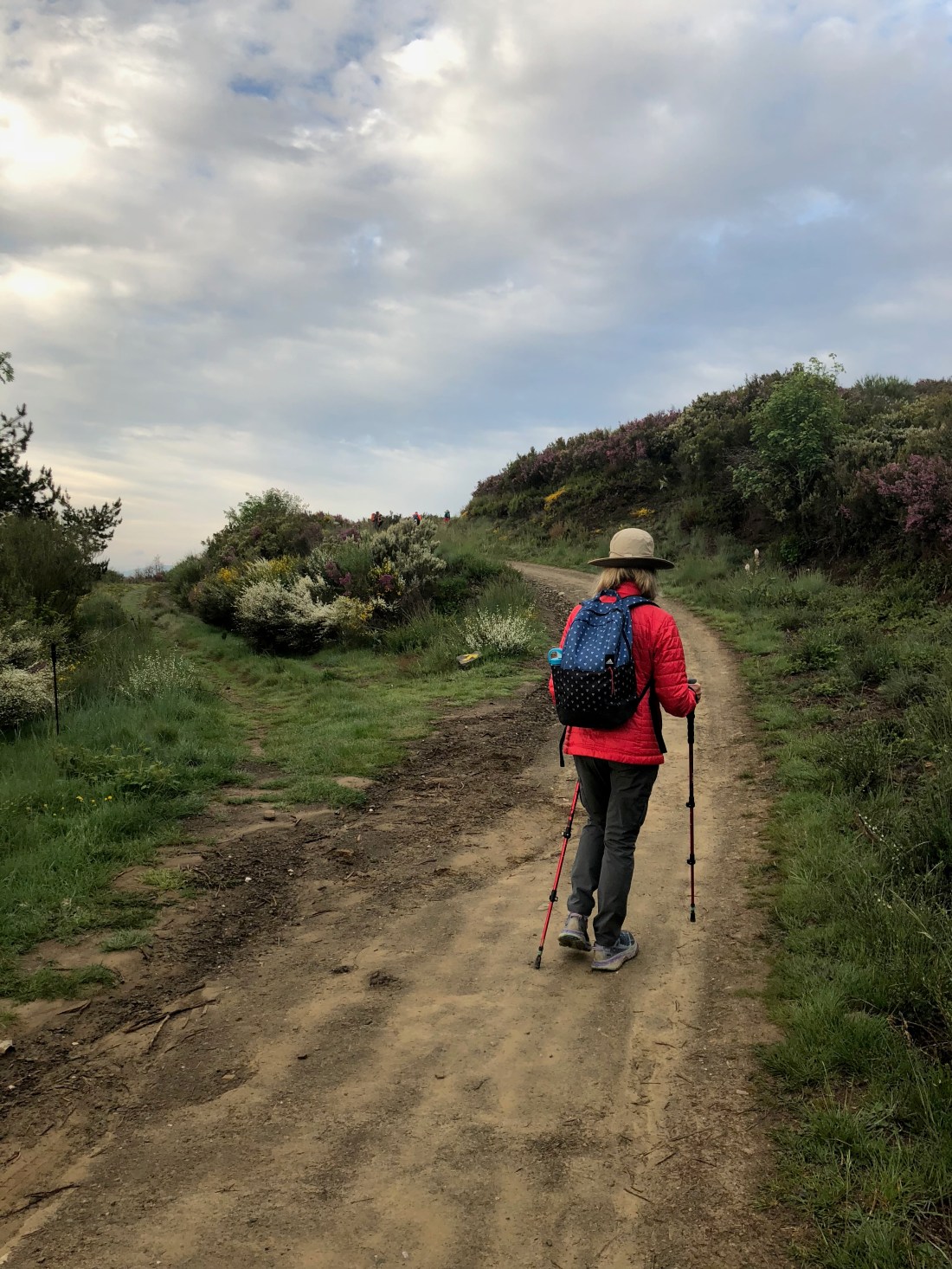
Foncebaden is near the highest spot on the Camino, and we climbed up towards it after leaving the village.IMG_2706.jpg
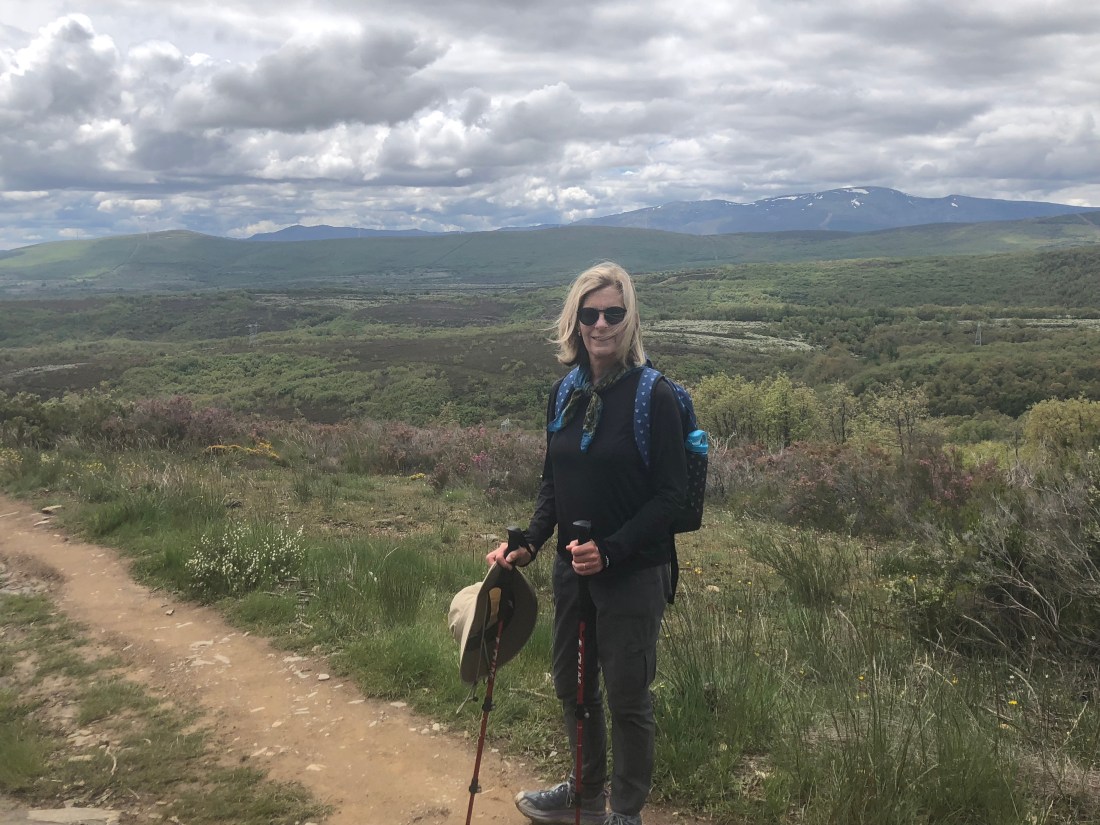
Here is the view of Mt. Telenos from near the Camino’s summit.IMG_2711.jpg
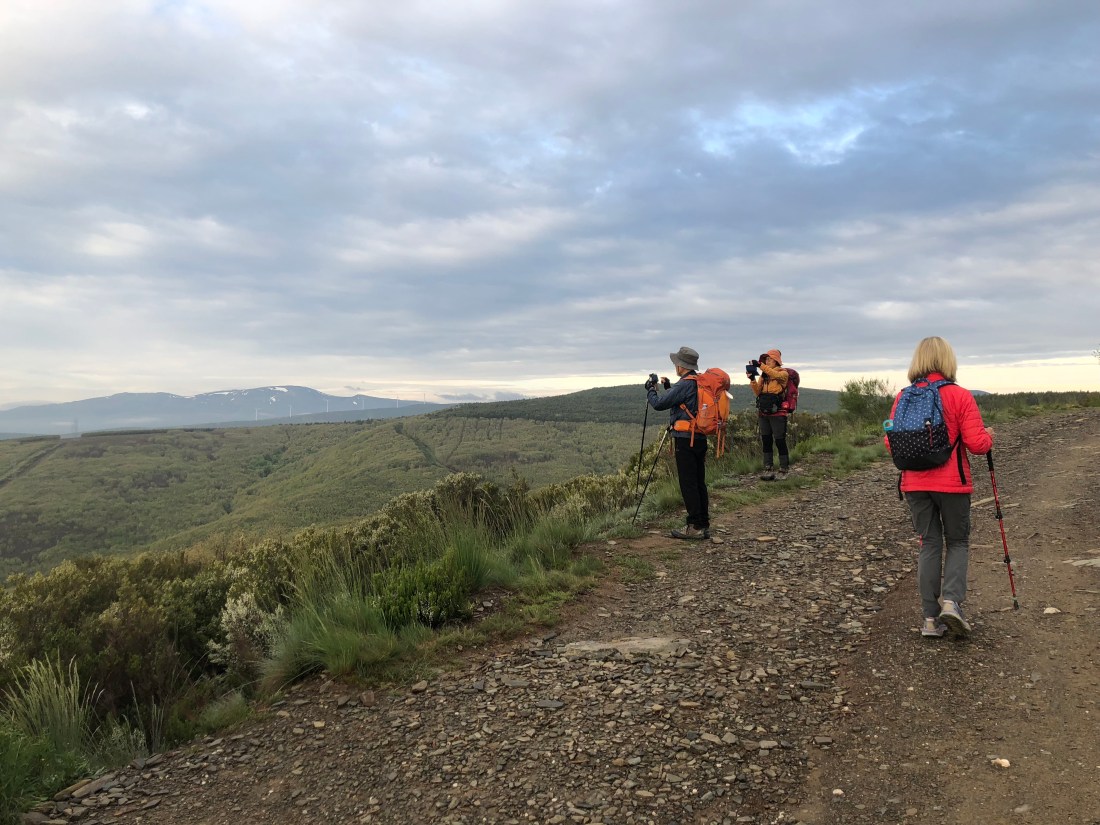
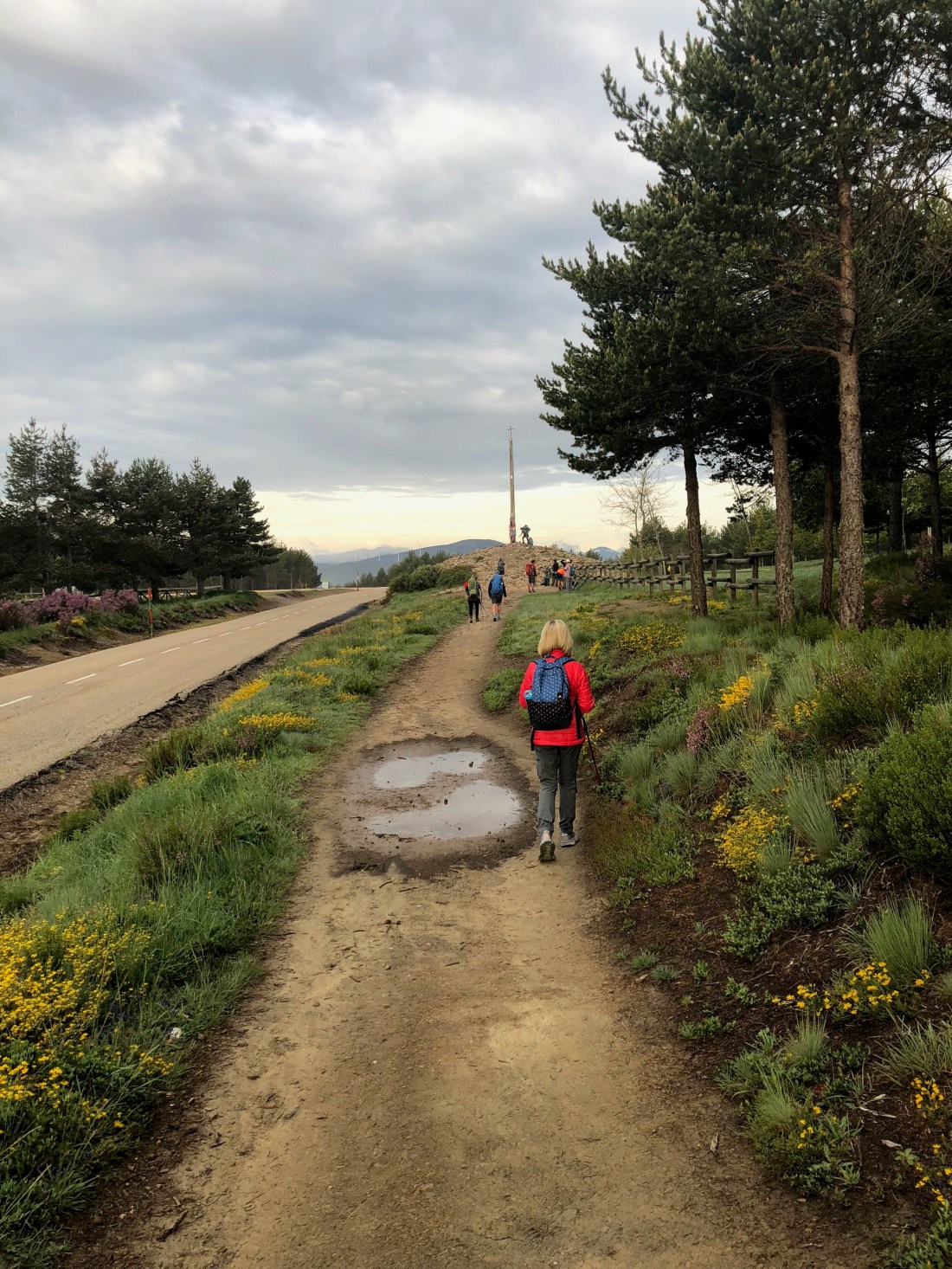
At the summit is an iron cross mounted on a pile of stones.  It is a Camino tradition for pilgrims to bring stones from home and place them on the pile to commemorate their purpose for walking the Camino.IMG_2713.jpgA common question at dinner is to ask the group why they are walking the Camino. The best answer I have heard so far was from a Brazilian who said he had no idea but he was having a great time and he hoped that it would continue.
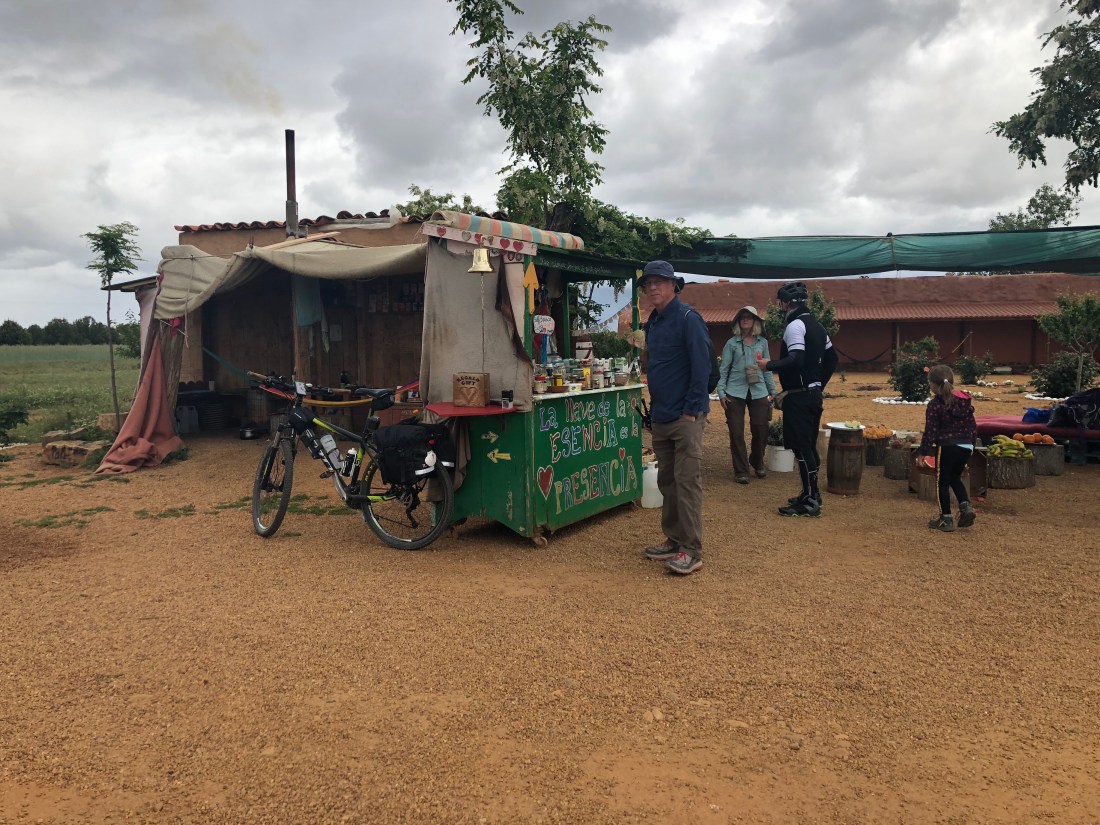
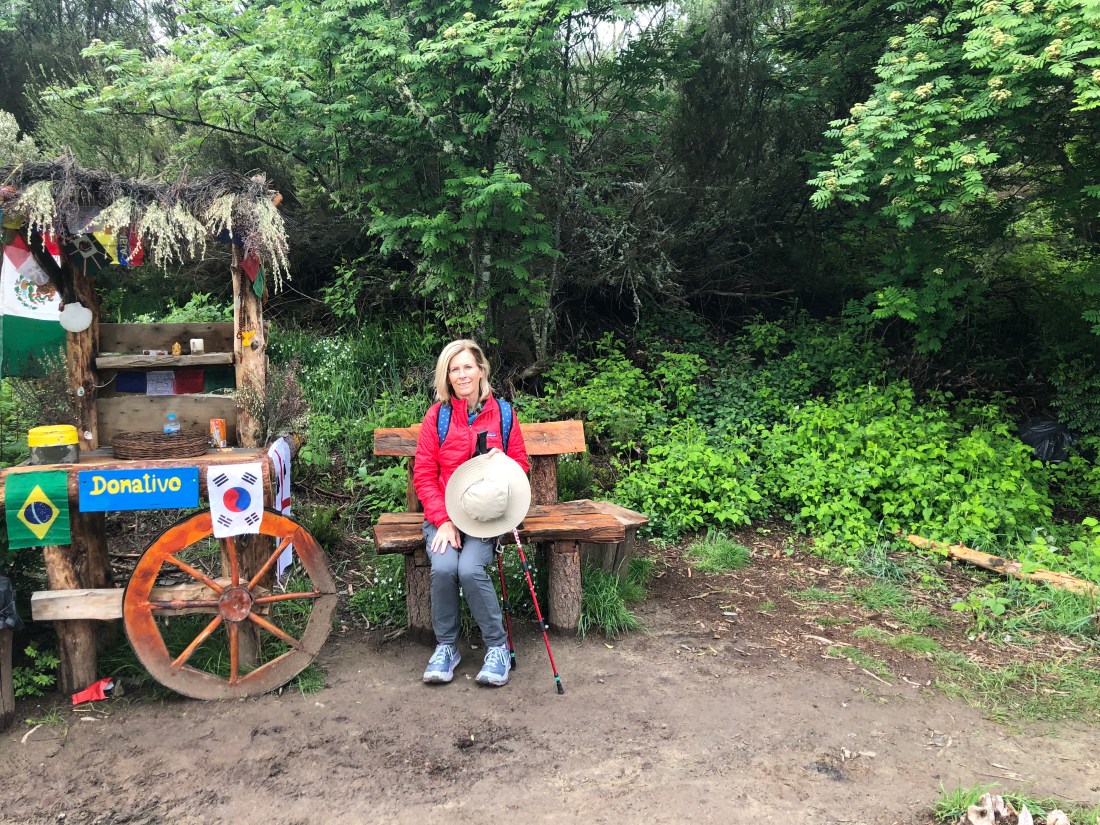
We rested at a juice and fruit stand near the summit.IMG_2721.jpg
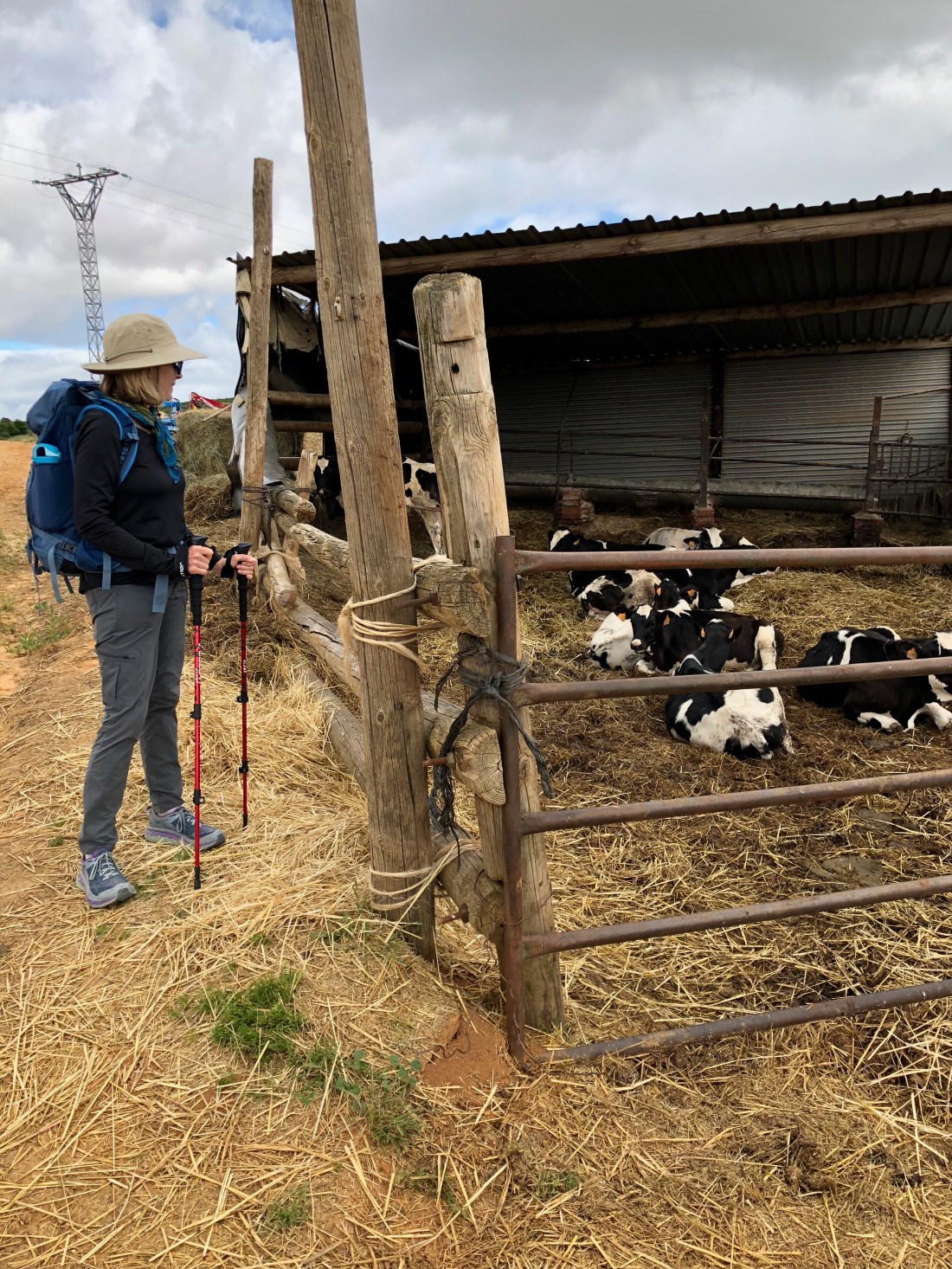
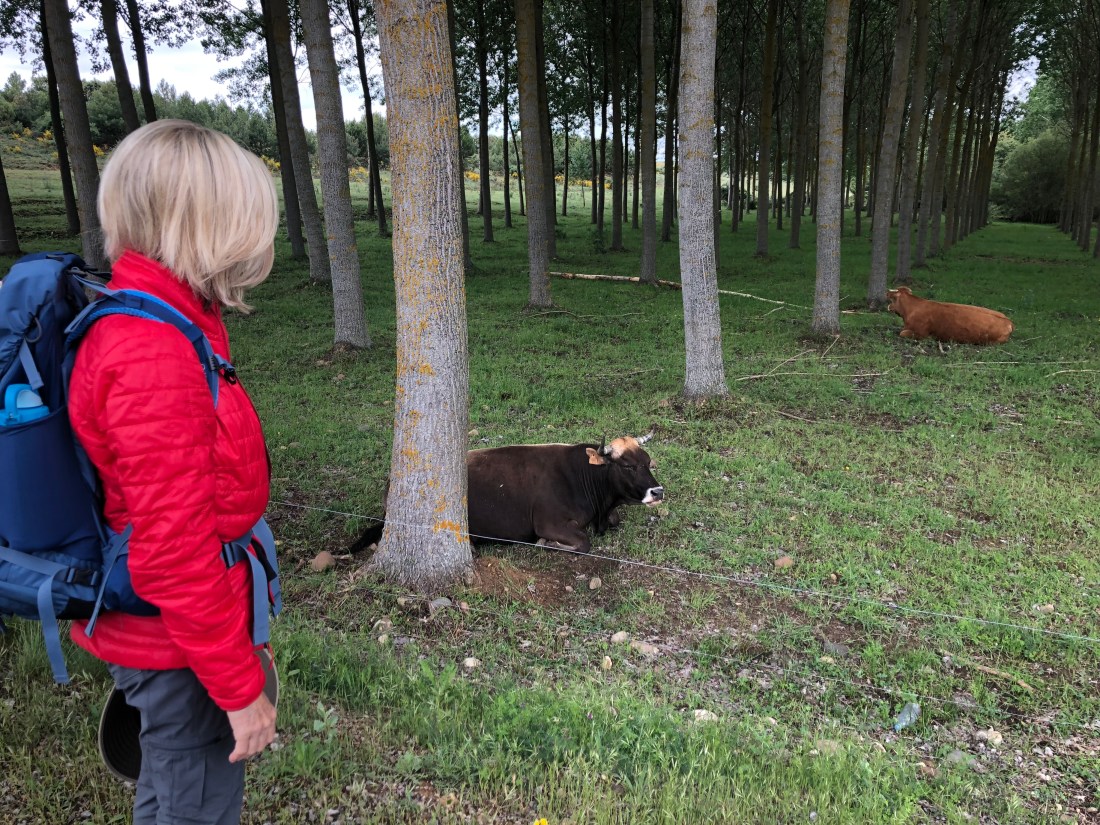
And met some new friends close by.IMG_2727

The sun came out briefly.IMG_2728.jpg

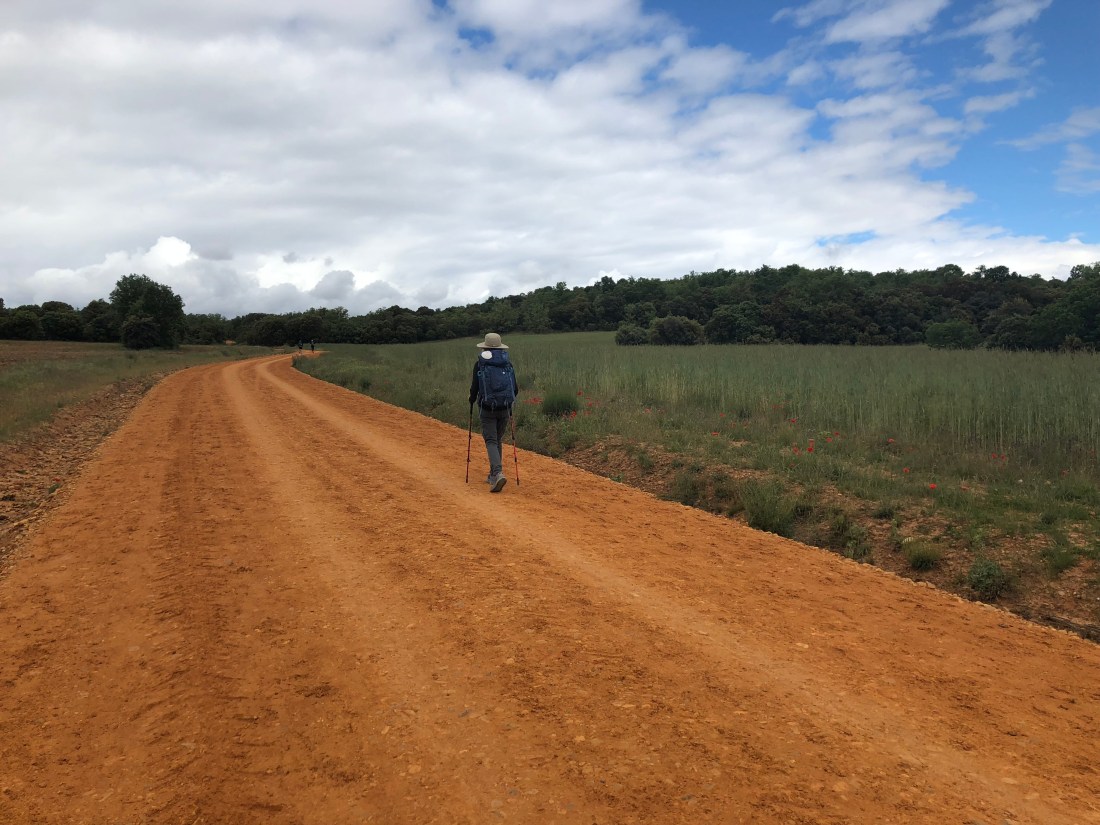
And then we began the long descent down the other side of the mountain.IMG_2736.jpg
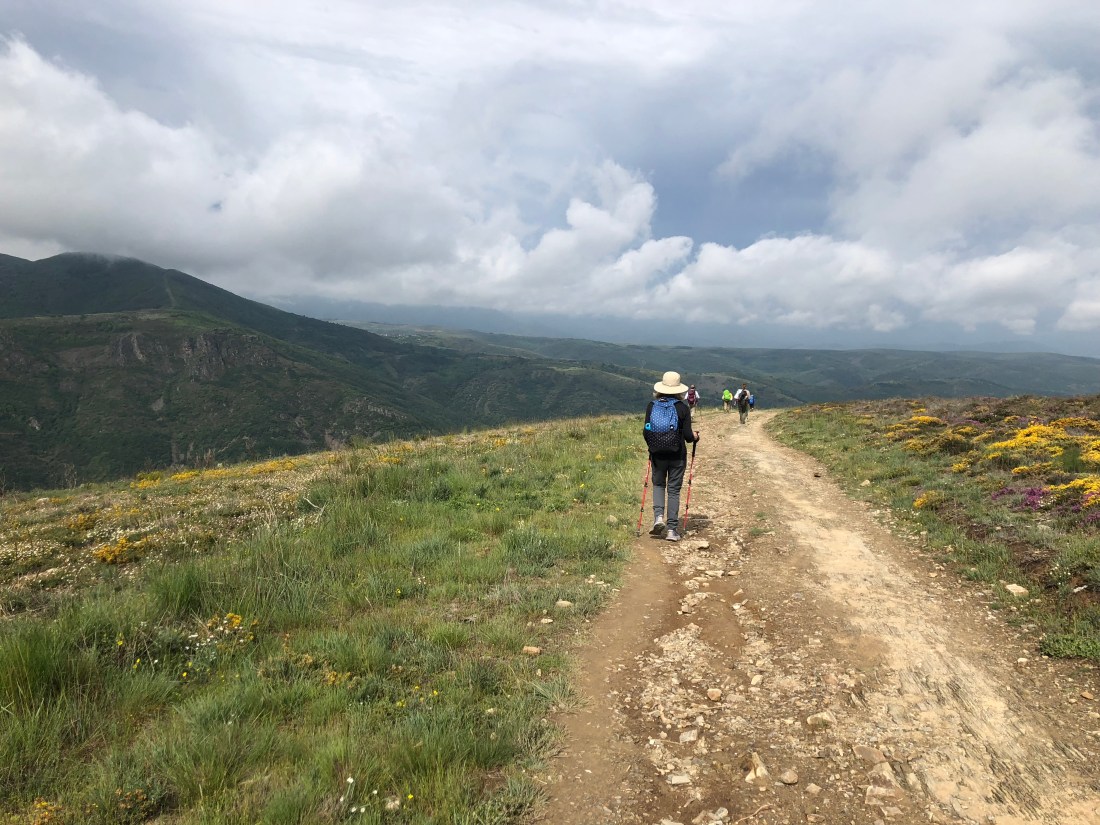
We dropped down to the village of Acebo.IMG_2743
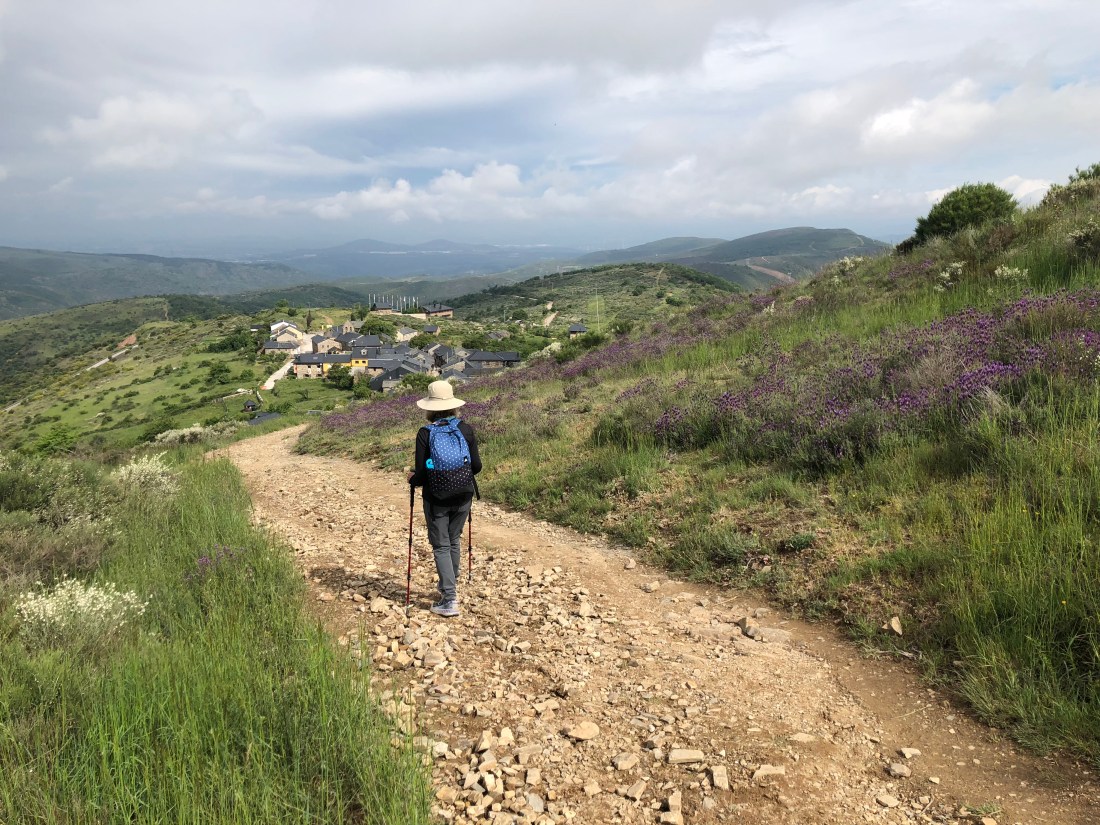
After passing through the village we continued to descend.IMG_2750
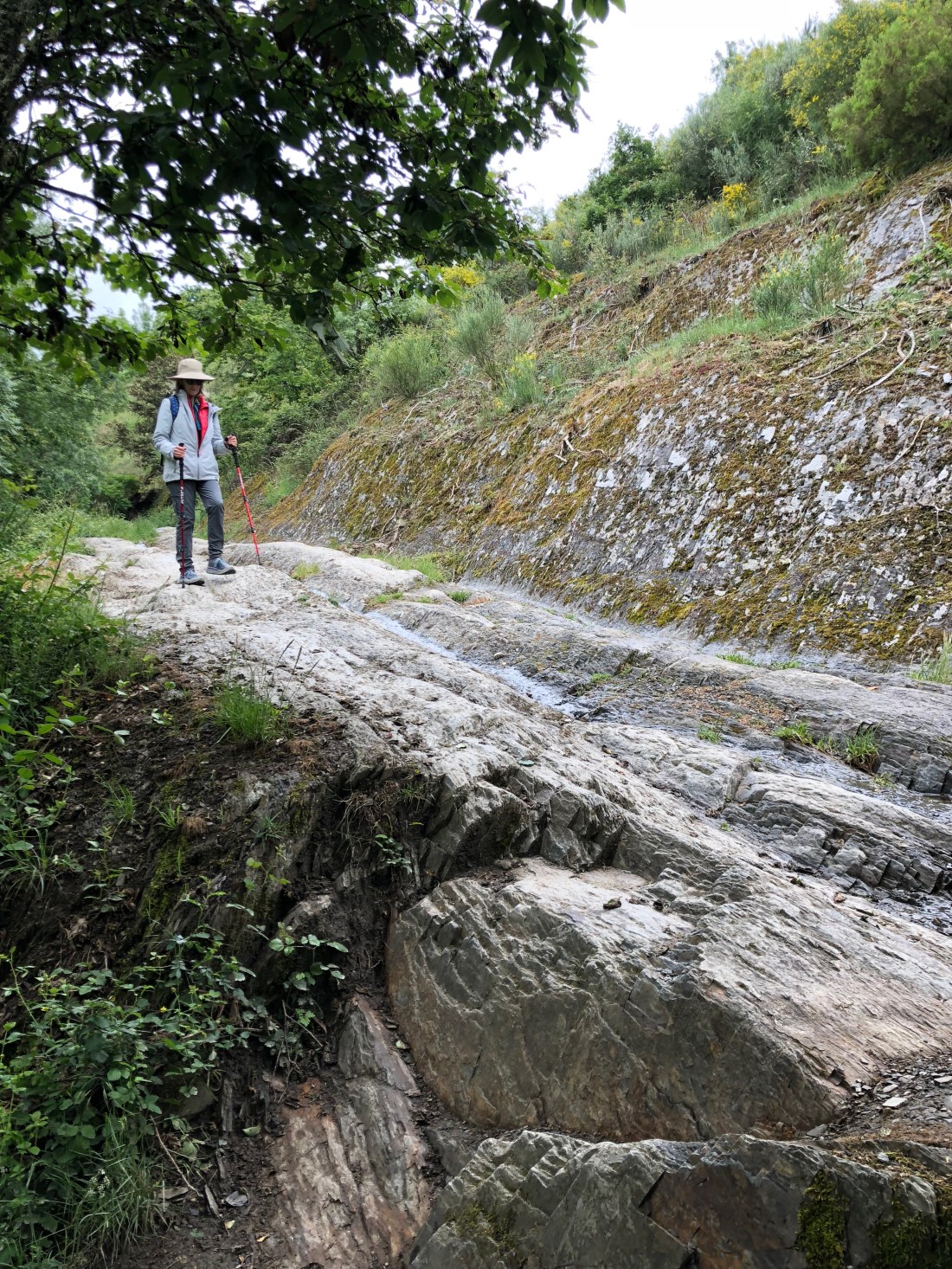
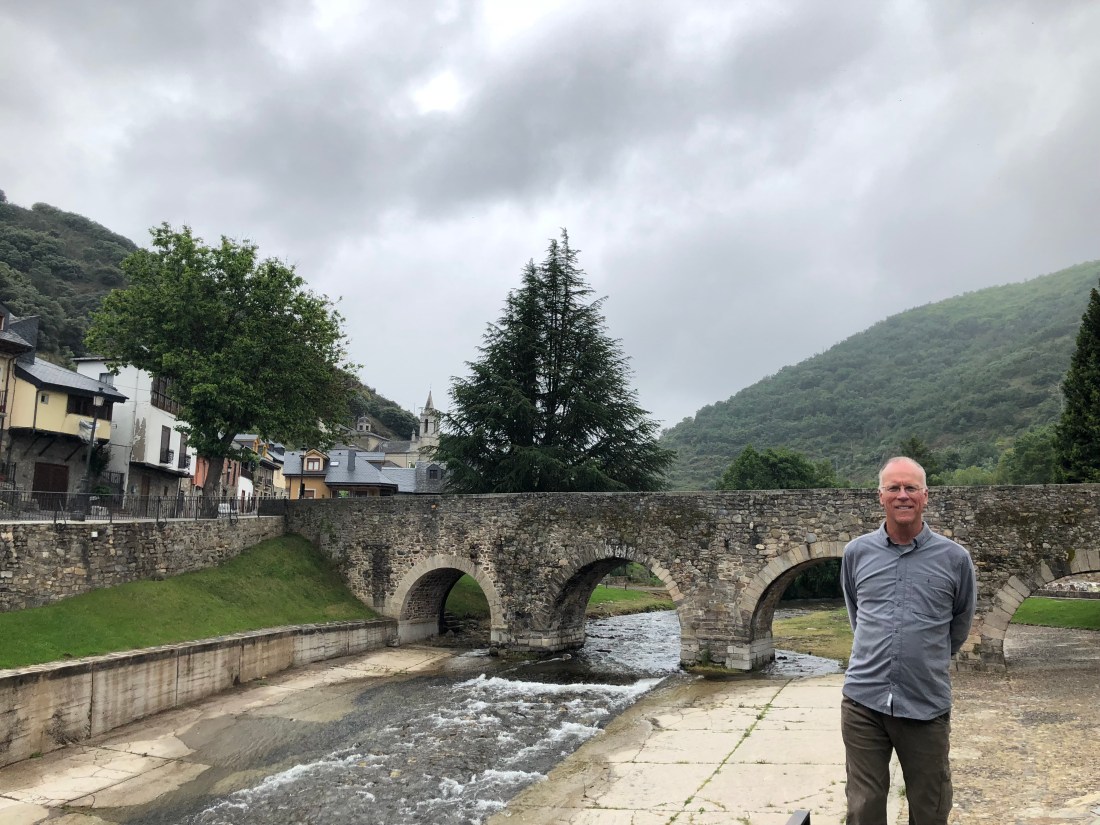
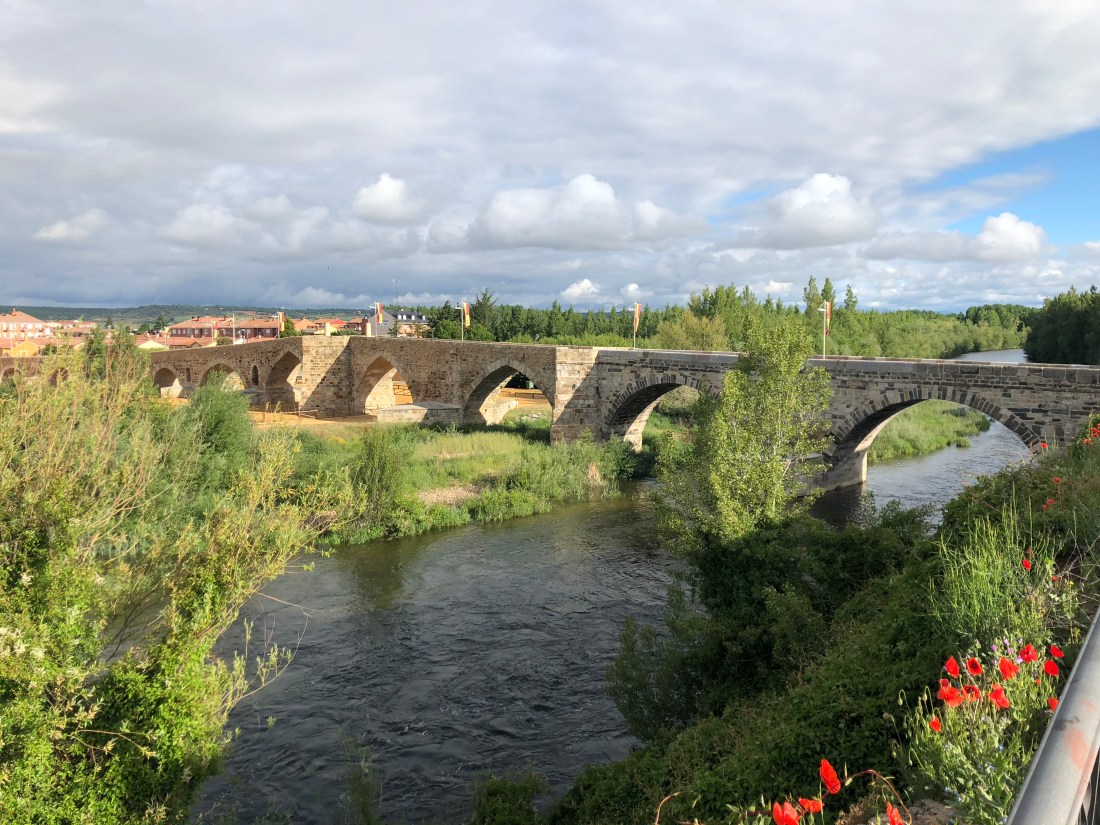
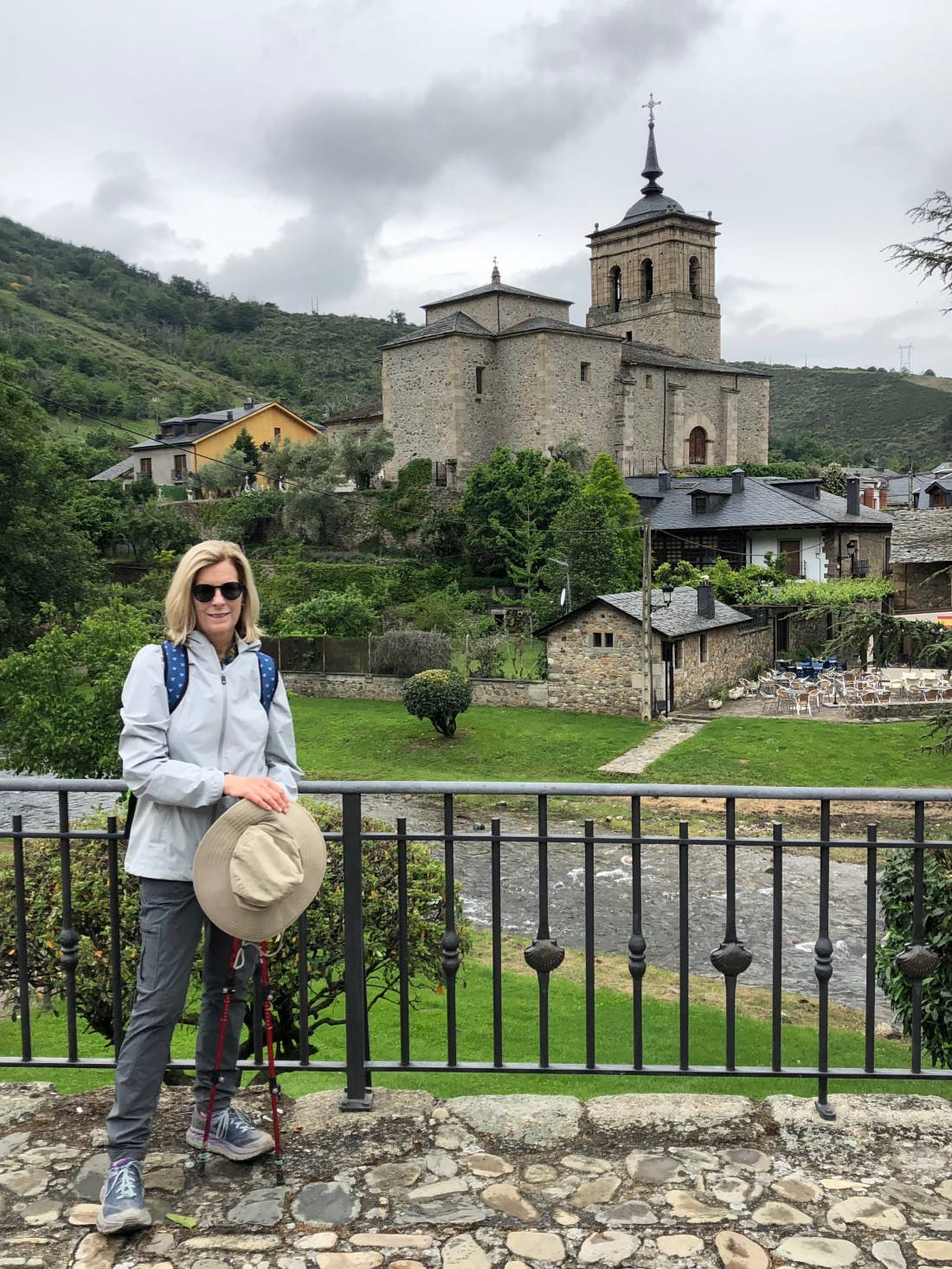
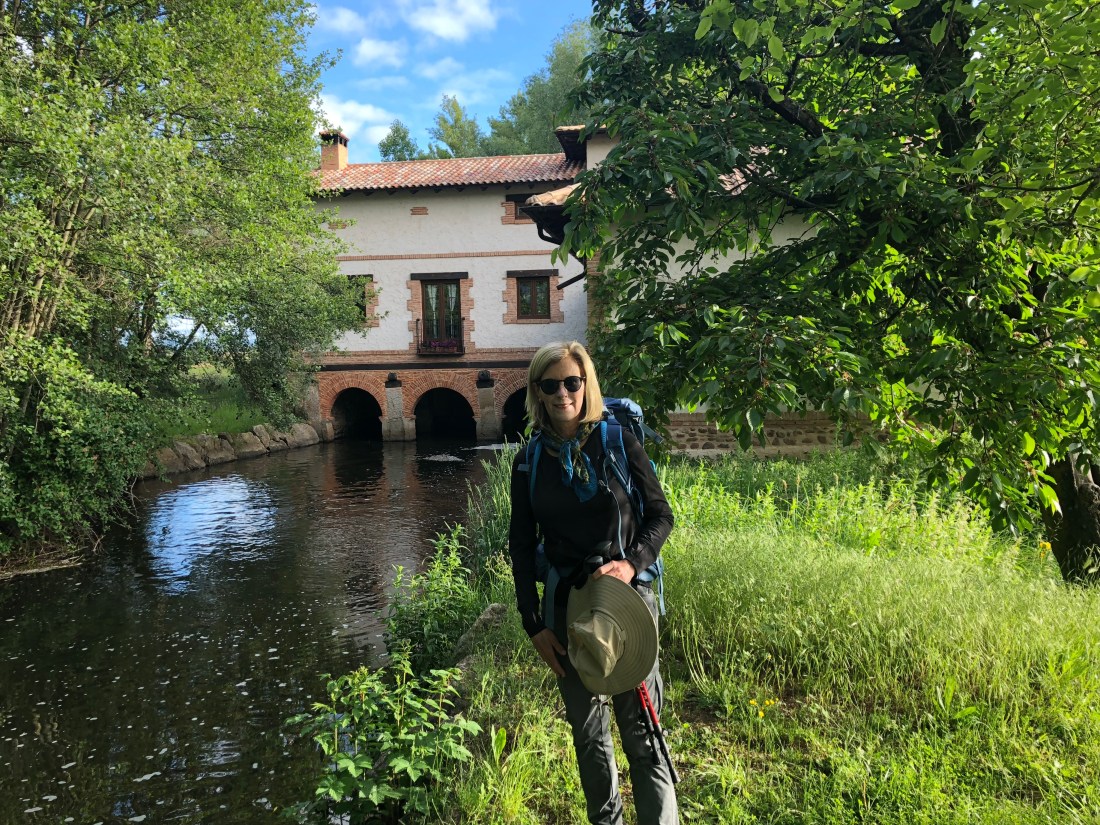
At the bottom of the mountain, we arrived at the village of Molinaseca, our destination for the day, just as it started to painIMG_2761Molinaseca is on the rio Boeza:IMG_2763.jpgIt was a hard walk today.  It wasn’t far, only a little over 20 km, but we descended almost 3400 feet.  We are no worse for the wear, however.  By the time the the walk is over, we should finally be in good walking shape.
The walk today was beautiful, but something is missing.  We almost never see the friends we met during the early weeks.  We still meet people and enjoy talking with them.  But with the number of people now on the Camino, we have little expectation of seeing them again. There are more pilgrims, and they are are younger and moving faster and keeping more to themselves.  Lately, people have rushed by us without a word.  Two days ago we stood outside an emitage next to a group of 20-something Americans engaged in an obscenity-laced conversation.  Something seems lost. 

Or maybe we’re just tired and tomorrow’s forecast is for more rain.
 

Santa Catalina de Somoza to Foncebadon

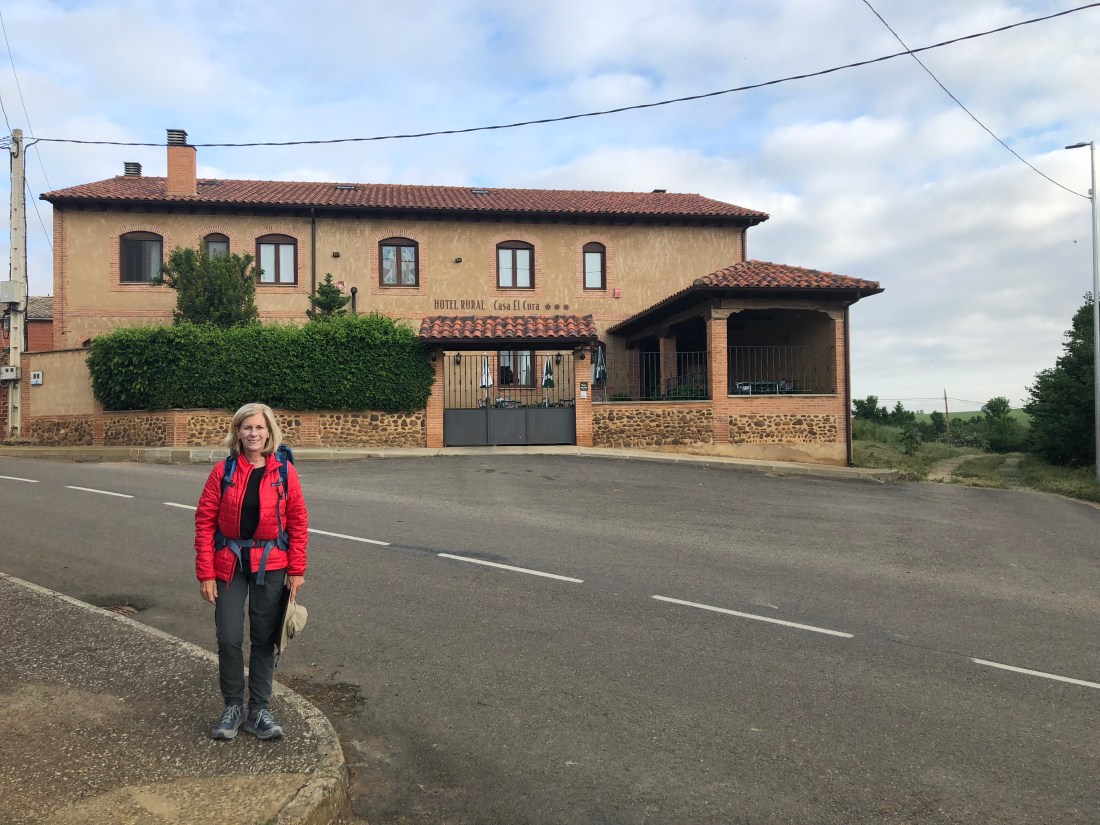
It rained much of the night last night but was clear and sunny this morning when we left our Casa Rural in Santa Catalina de Somoza.IMG_2658.jpgWe would spend the whole day today across a valley from Mount Telenos, the site of ancient Roman gold mines. 
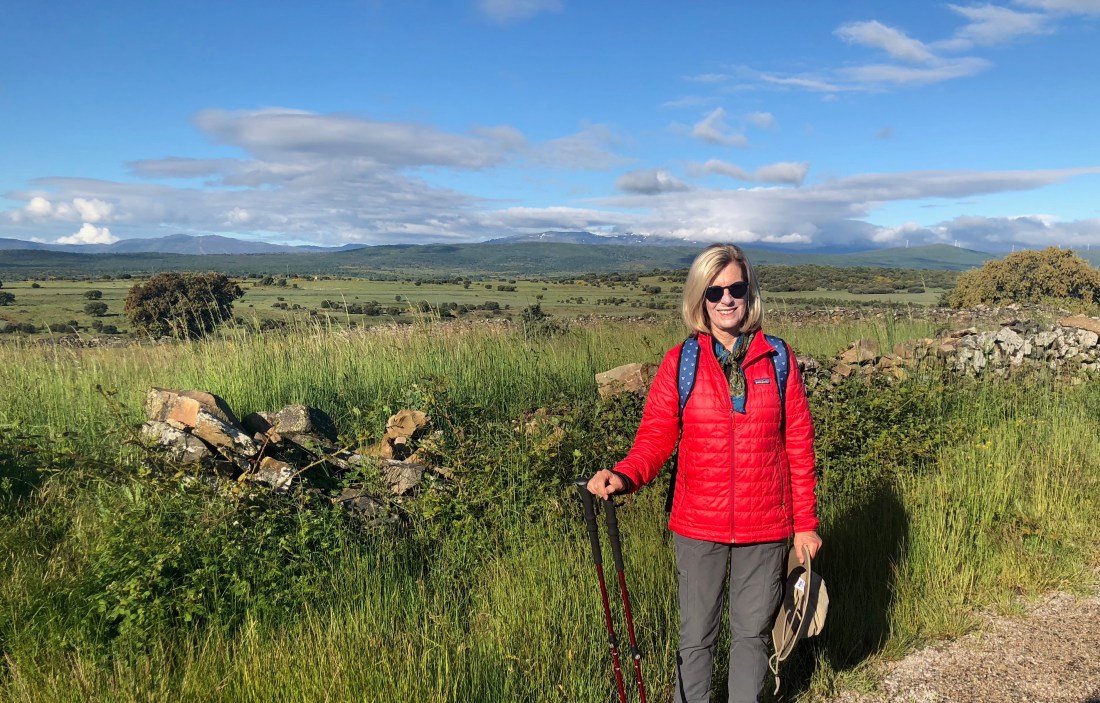
Here is Mount Telenos at the beginning of our walk today on the road just outside Santa Catalina.IMG_2660.jpgA lot of our walking over the past two weeks has been over the Via Romana, which was built to transport gold from Mount Telenos to Rome.
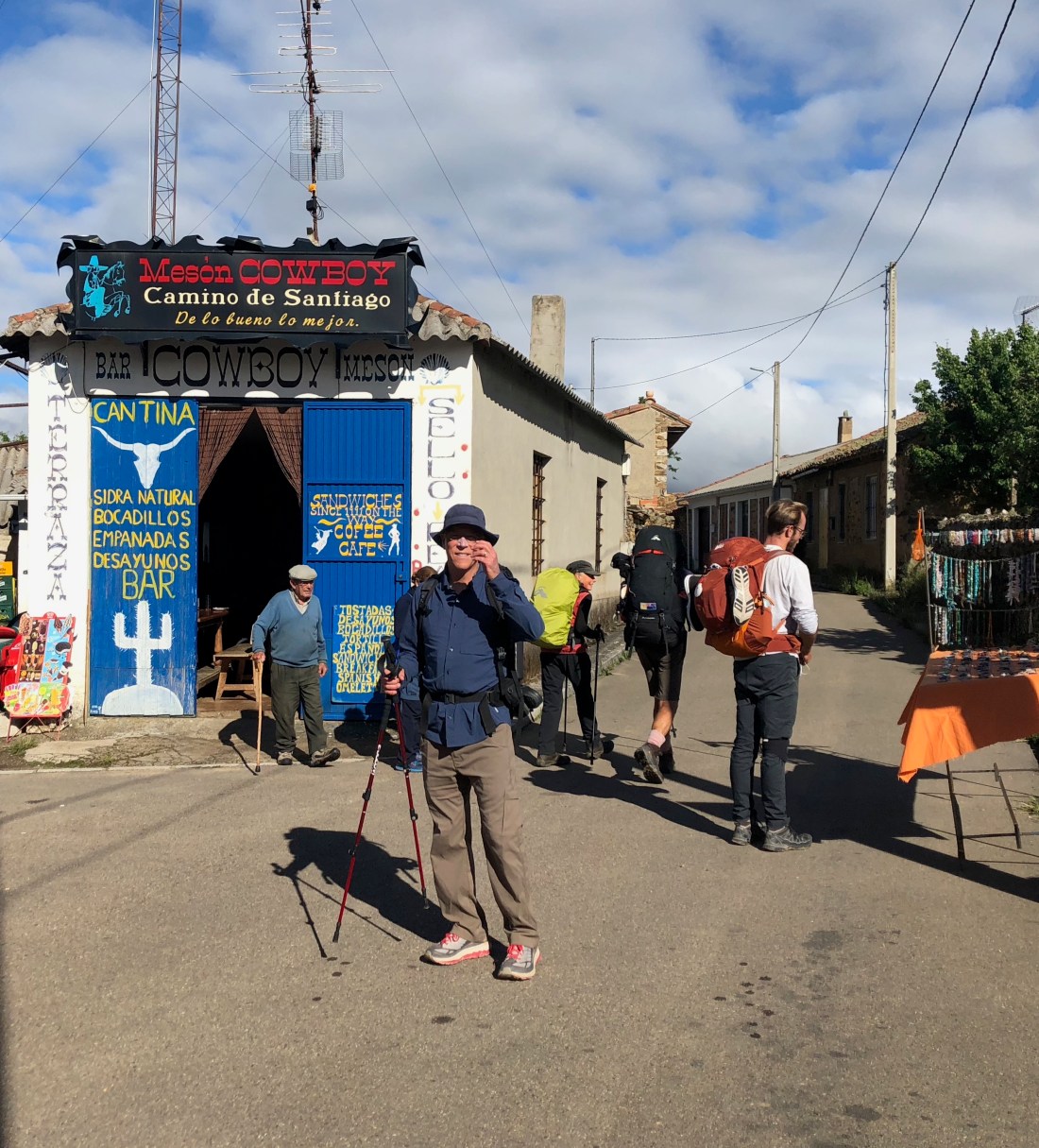
Our first stop today was the village of El Ganso, home of the Cowboy Bar and Restaurant, which has one of the few foosball tables along the Camino:IMG_2663.jpgNobody was playing foosball when we checked in this morning, but people were drinking beer, perhaps getting ready for a game.
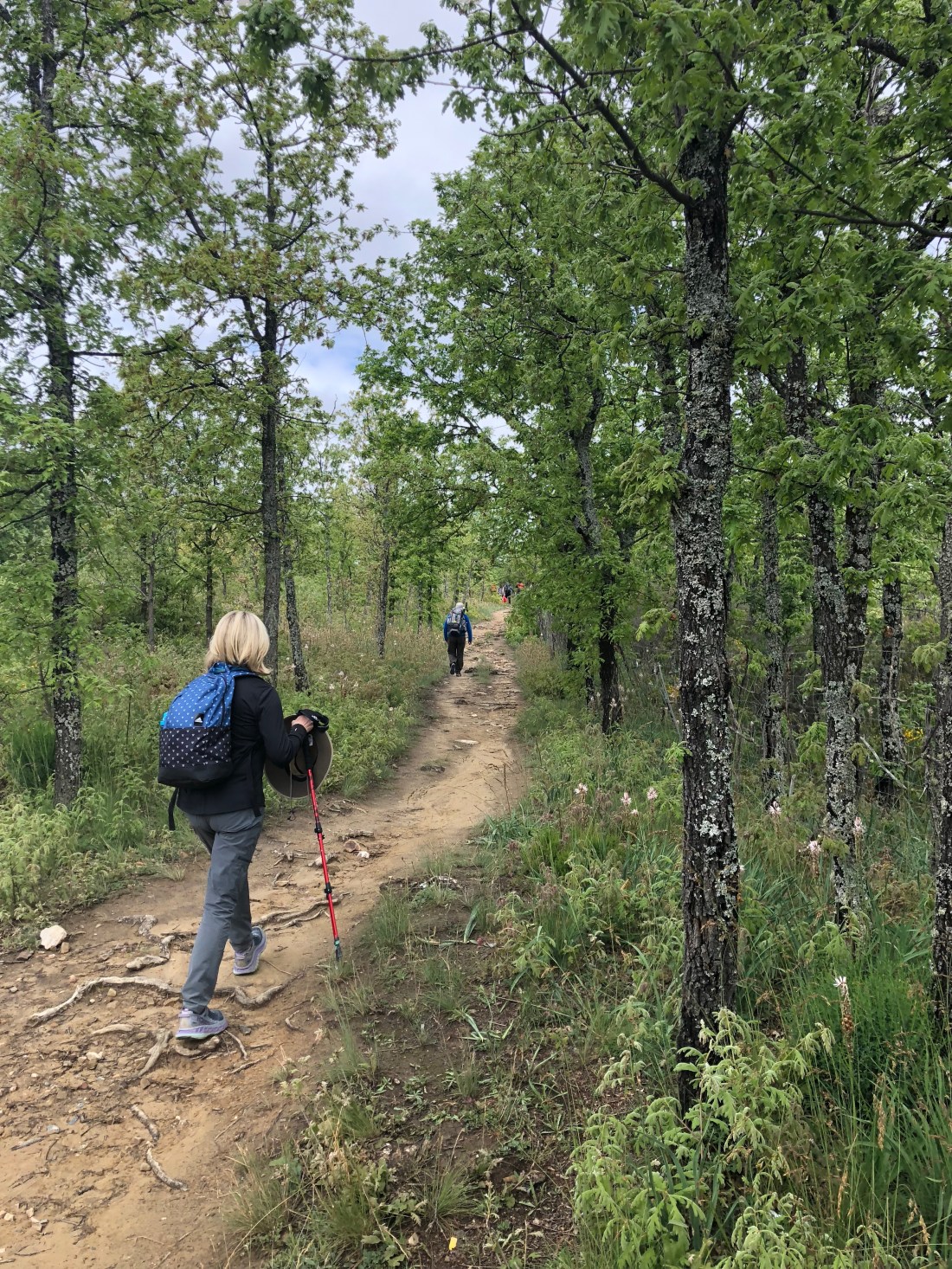
From El Ganso, the Camino climbed through a woods.IMG_2666.jpgAfter a couple of hours of walking, we came to the village of Rabanal del Camino. 
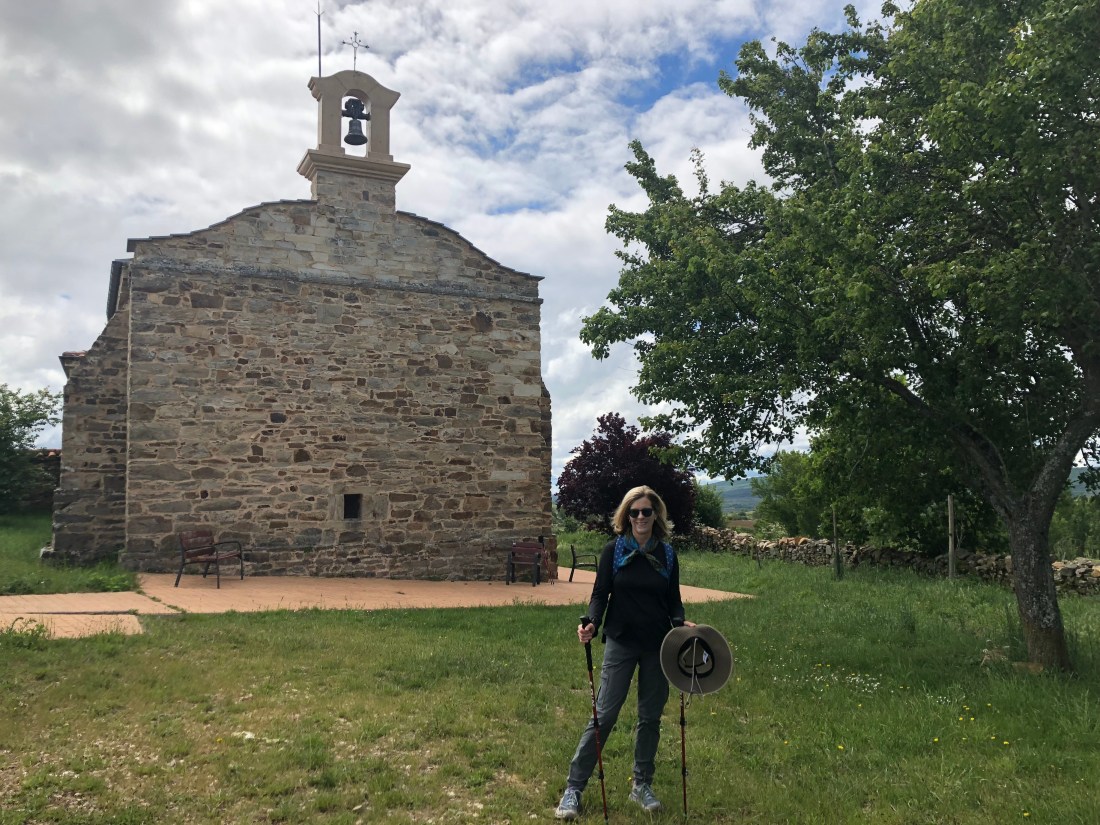
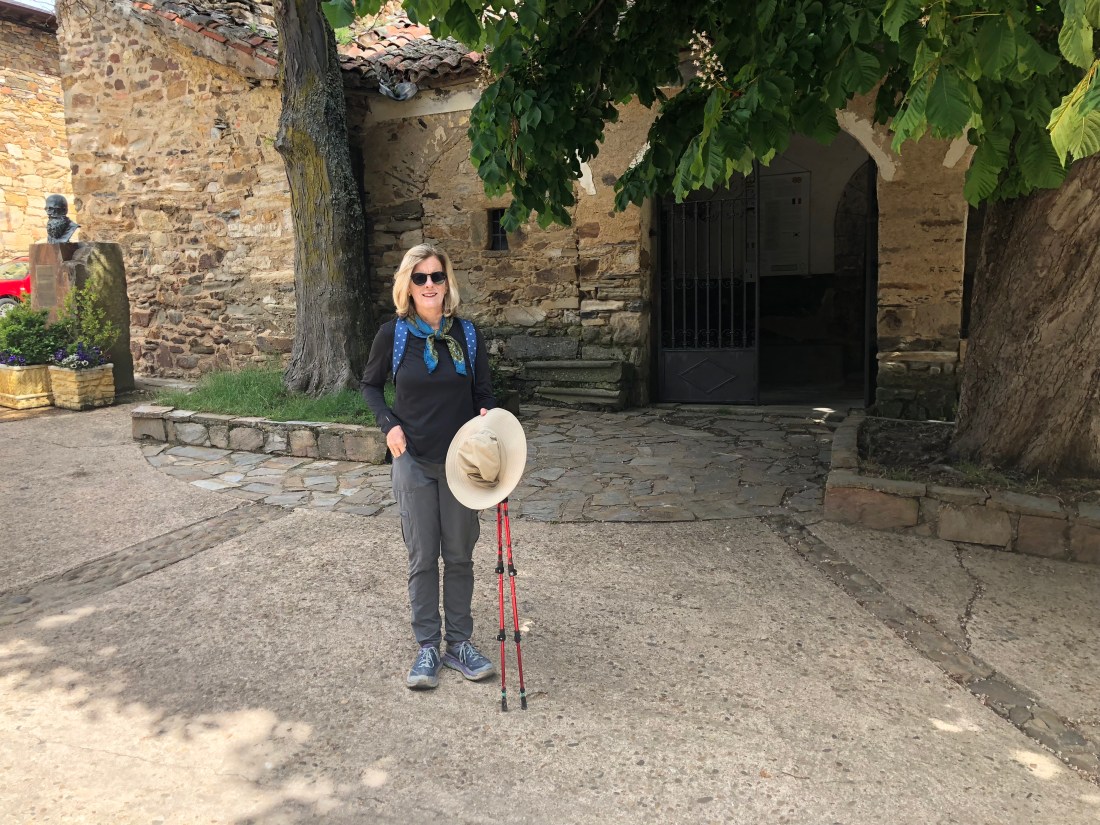
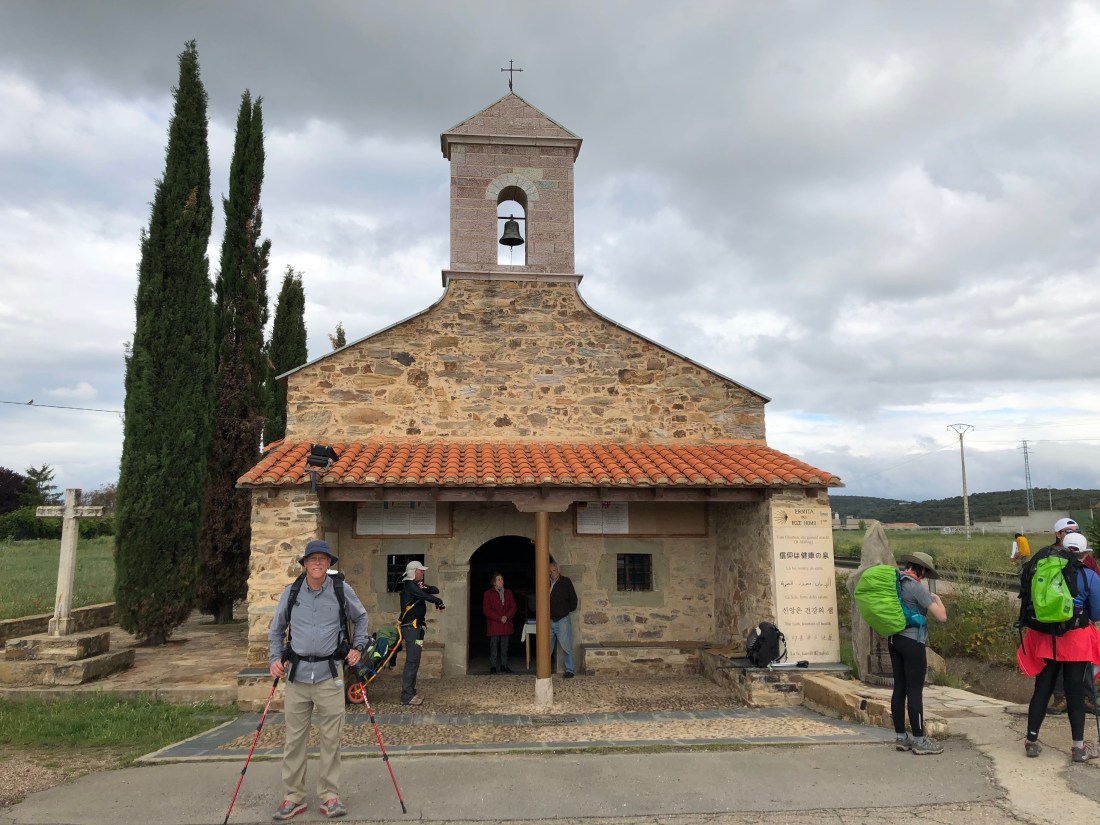
Just outside Rabanal is the Ermita del Benedito Cristo de la Vera Cruz, home of Erman’s Ermits.IMG_2667.jpg

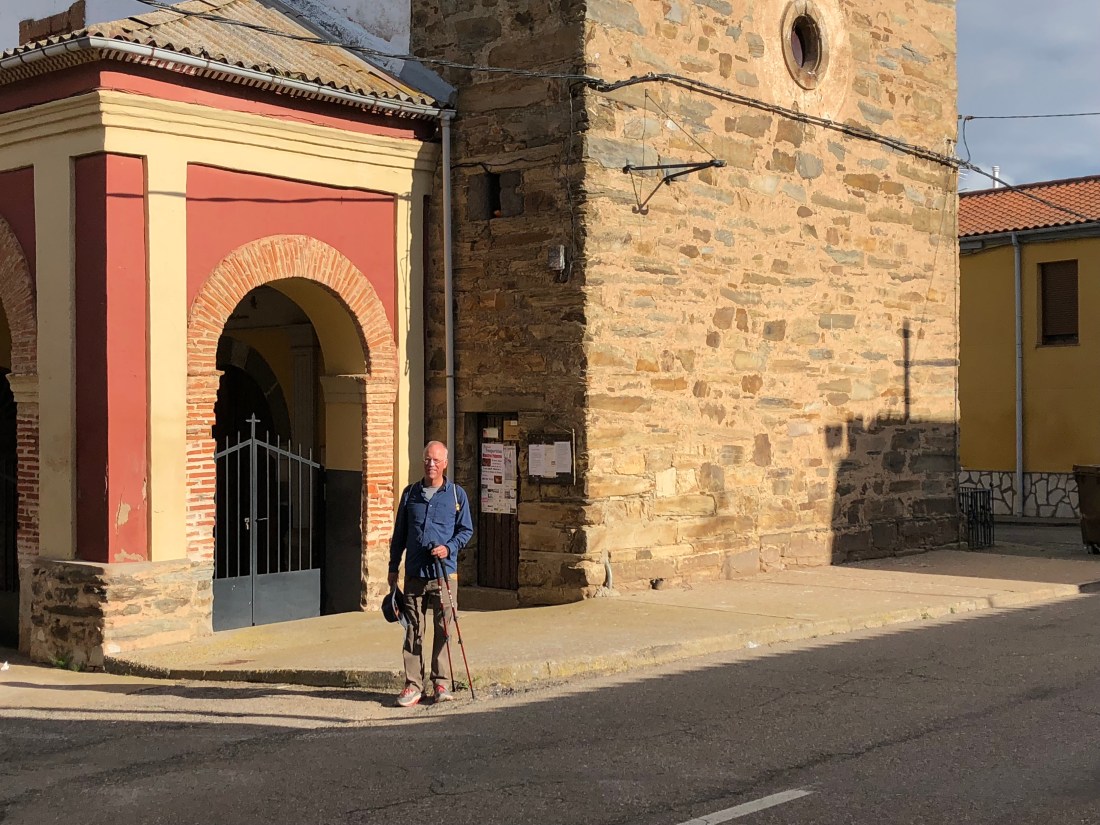
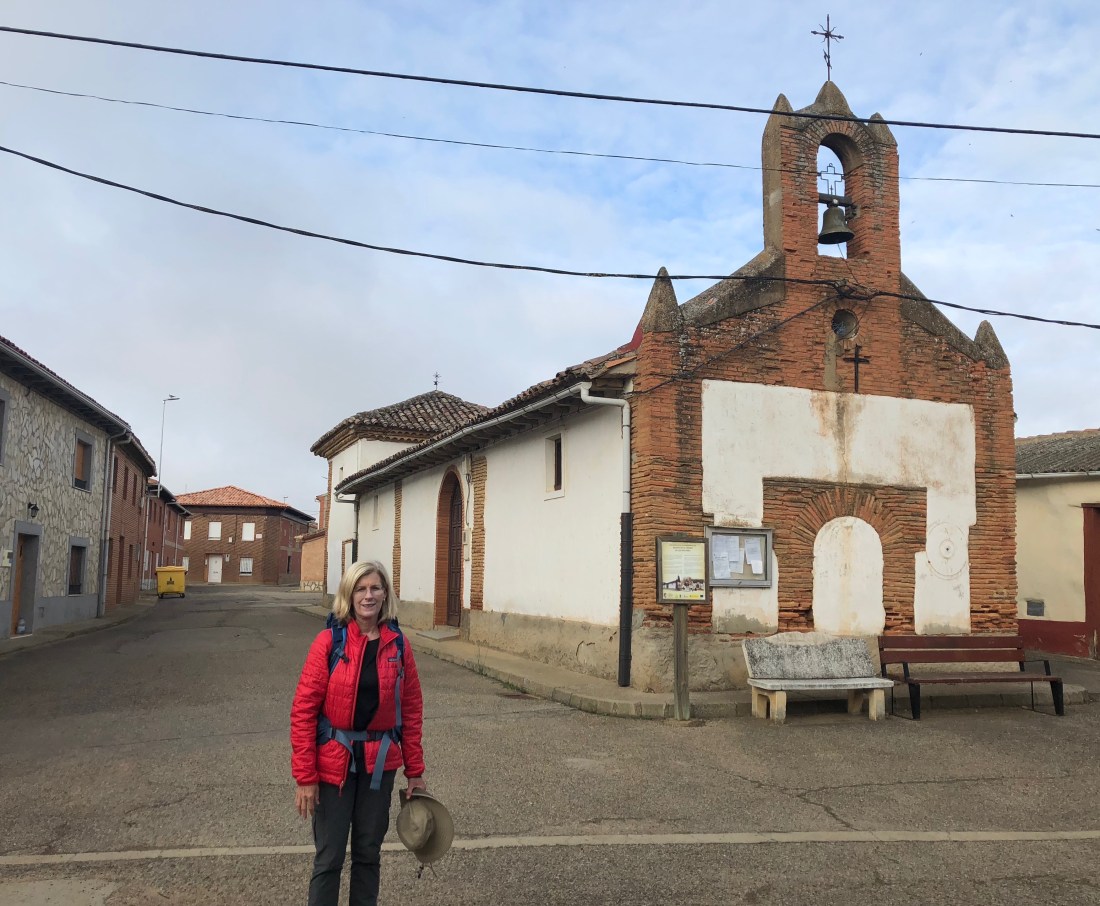
Here is the church in the center of Rabanal.IMG_2676.jpg

After leaving Rabinal, the Camino continued to climb.IMG_2677.jpgIMG_2683.jpg

Near the top of the climb, the clouds lifted from Mount Telenos.IMG_2694.jpg

And here is Mt. Telenos from a lot across the street from our albergue in Foncebadon.IMG_2697The number of people on the Camino has picked back up after dropping between Burgos and Leon.  The crowd seems younger.  There are a lot of pilgrims in their 20’s and 30’s.
Anne’s hiker’s rash has returned, but over a much smaller area of her leg.  My leg is almost completely healed.  

We start out with a short climb tomorrow, and then a long, steep descent to Molinaseca, where we will spend the night.

Astorga to Santa Catalina de Somoza

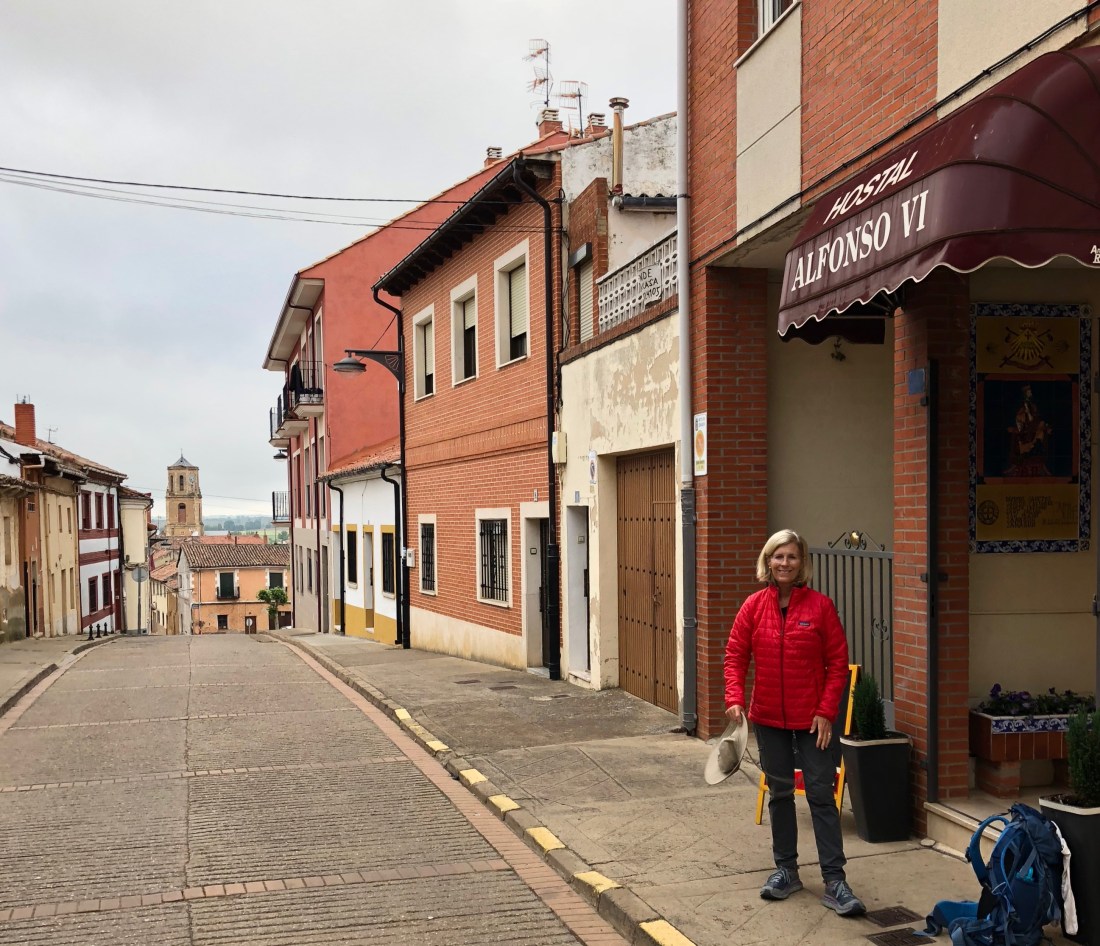
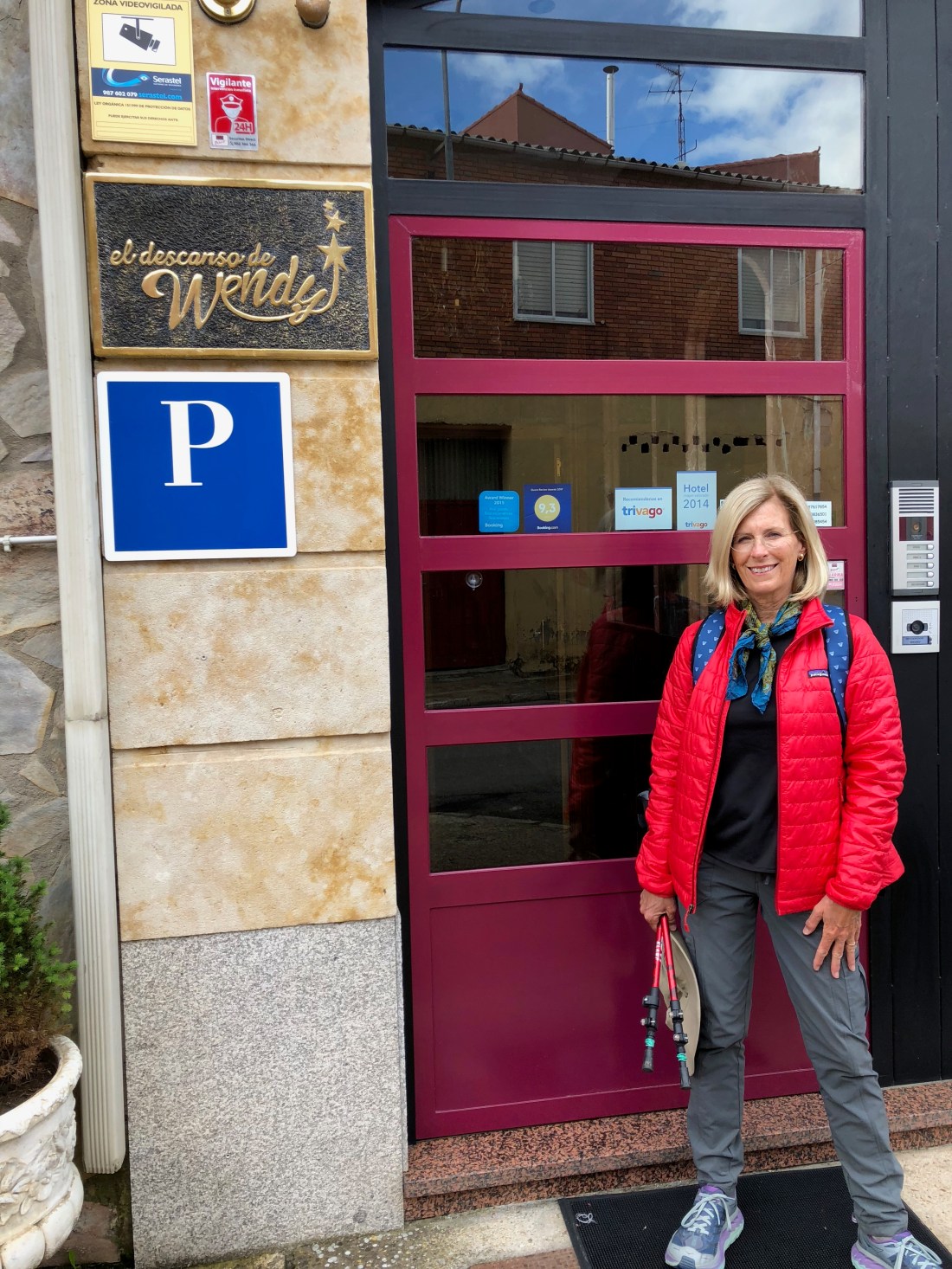
We left our hotel early this morning in Astorga—the best-named hotel we have stayed in in Spain (or anywhere):IMG_2632.jpg

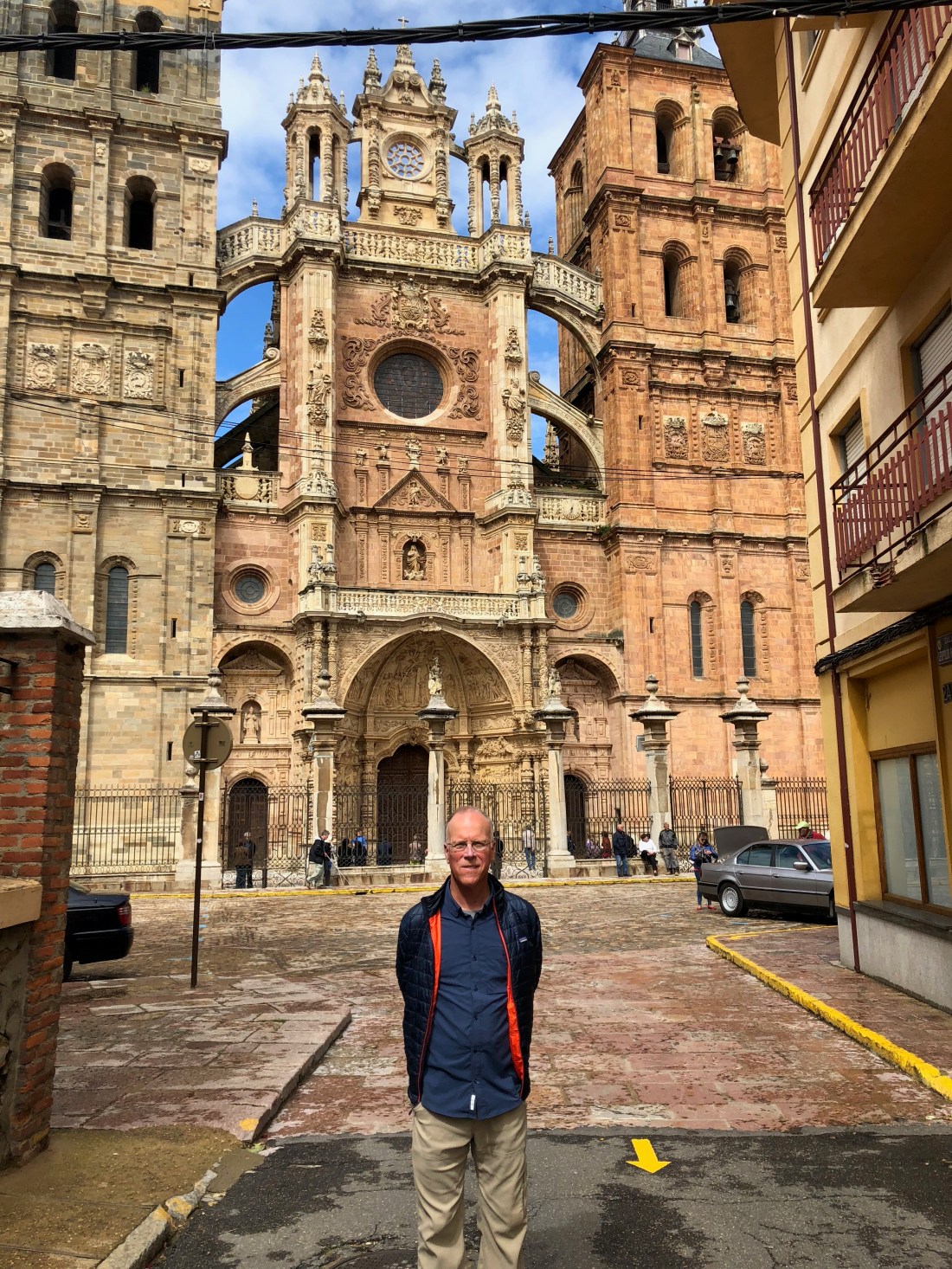
We visited the Cathedral in Astorga late in the afternoon yesterday after the rain had stopped.IMG_2576.jpg

IMG_2580.jpg

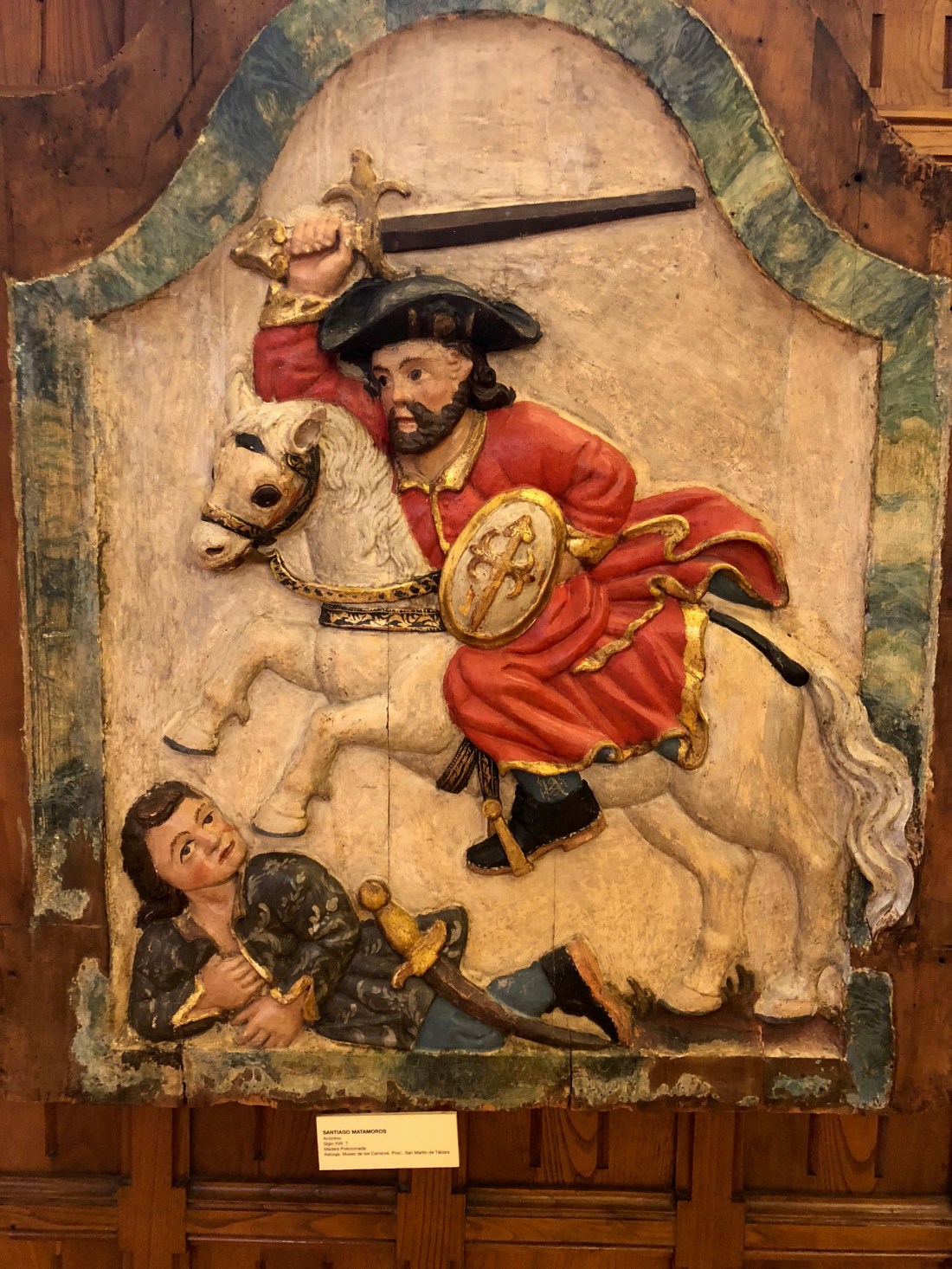
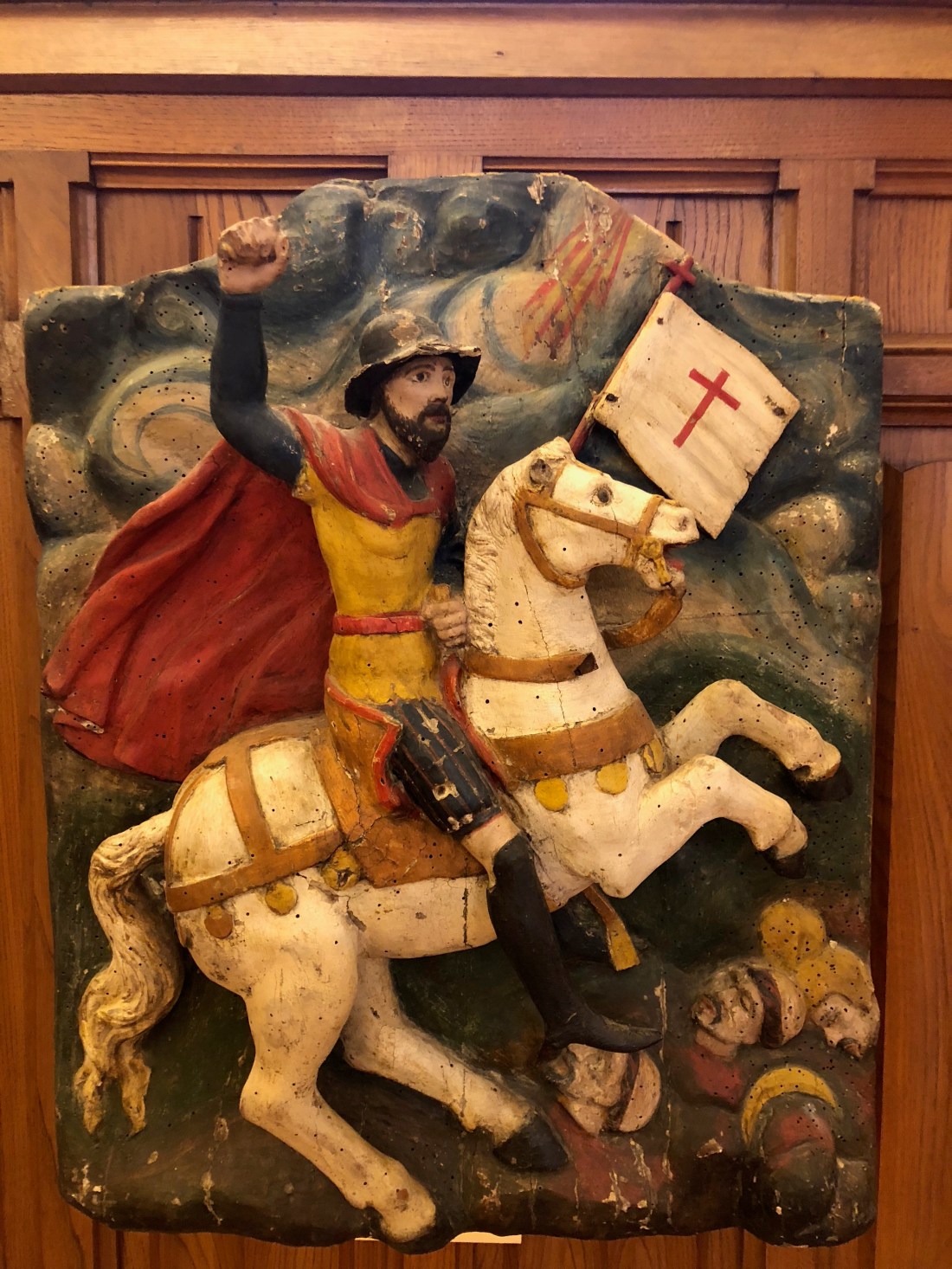
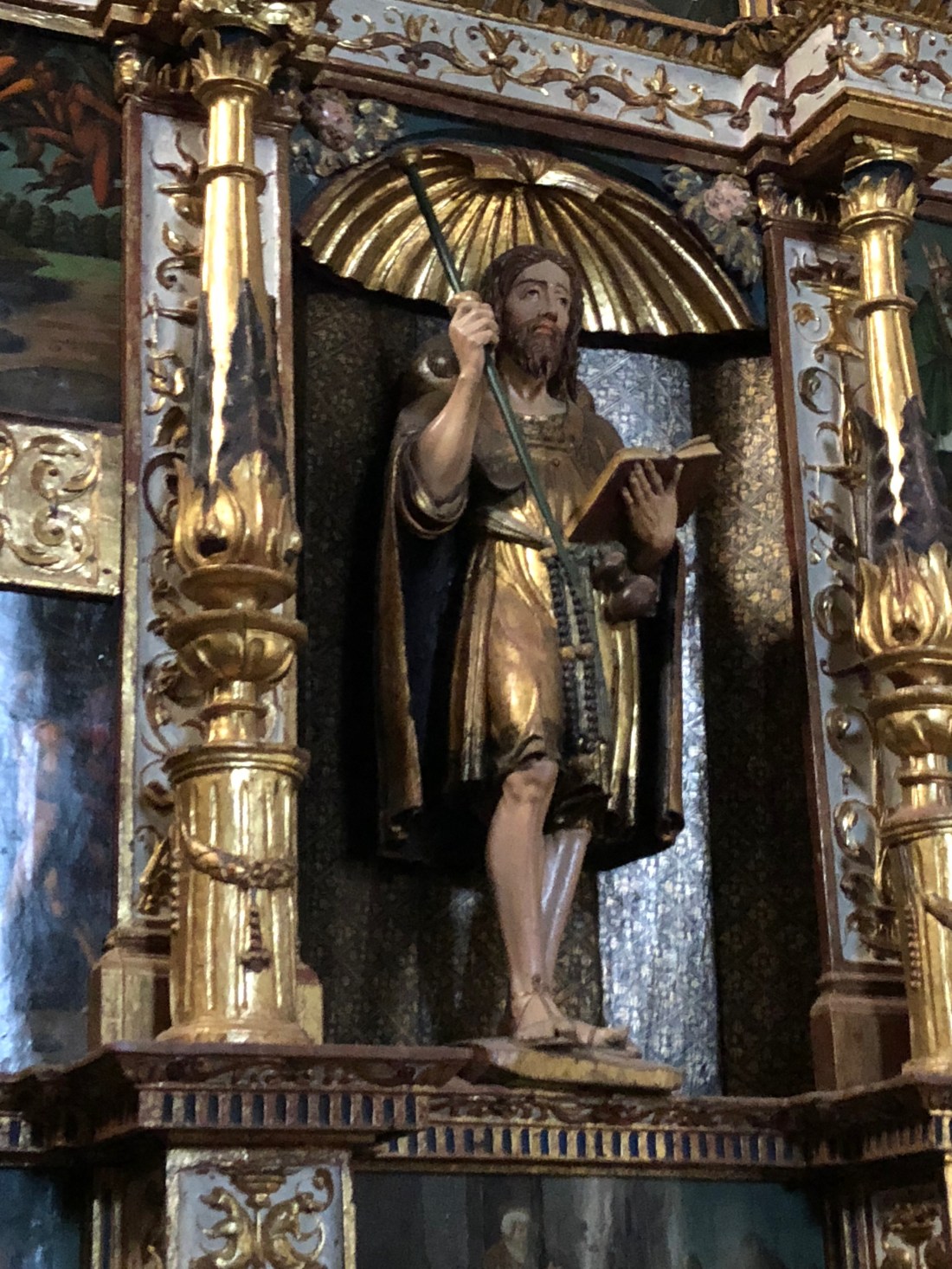
Next to the cathedral is a Gaudi building called the Palacio Episcopal.  I hit the jackpot there yesterday.  I have been photographing representations of Santiago, or Saint James, and the Palacio had an exhibition of Santiago statues and paintings.

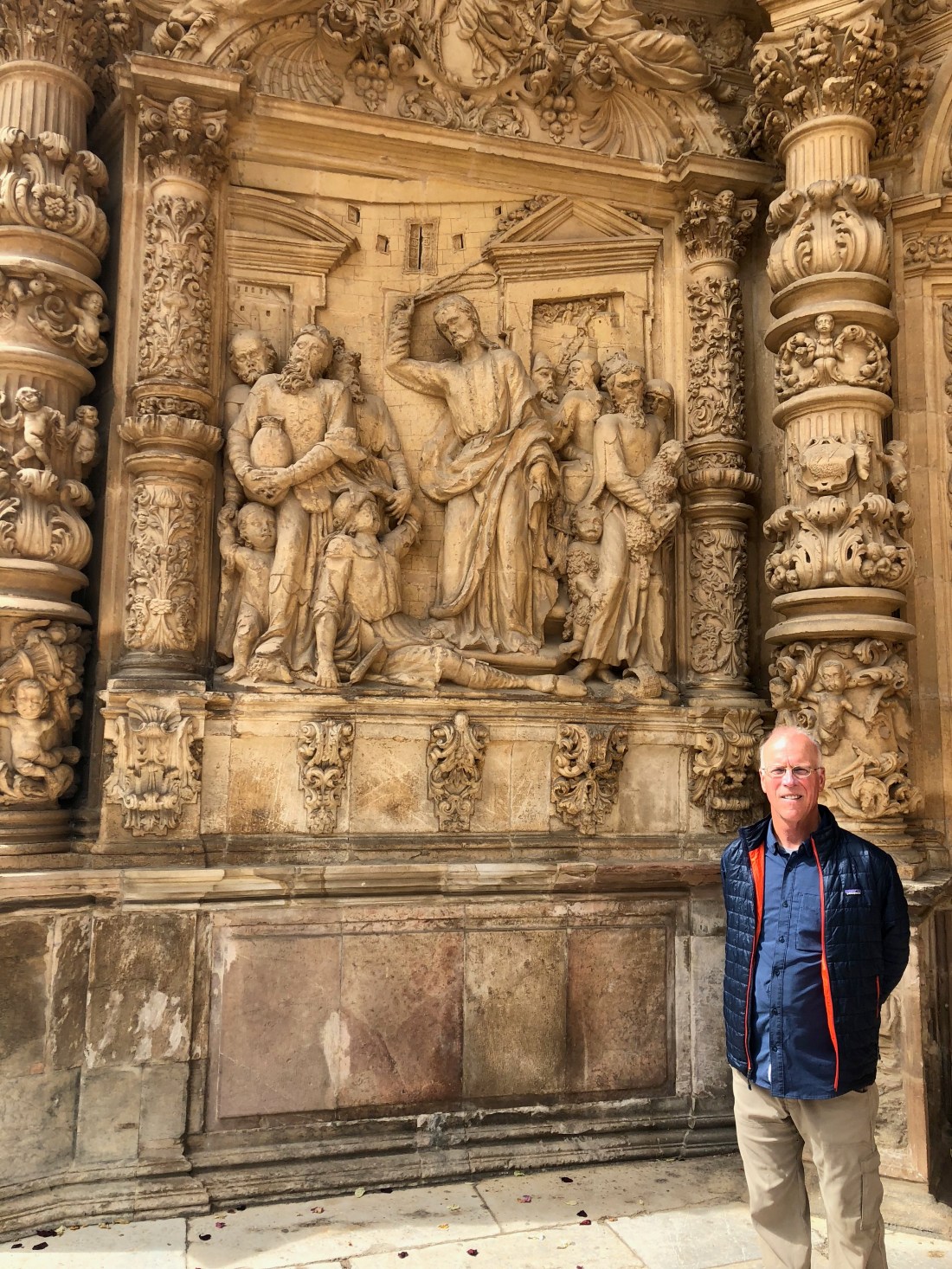
The most striking representations of Santiago are those of Santiago Matamoros or St. James the Moor-slayer, who rose from the grave to kill  Moors.  The representations are violent and gruesome.IMG_2607 2.jpgIMG_2623.jpgThese representations of Matamoros show that it is a matter of fact that religion has been used in the past to justify discrimination.  And some people continue to use it that way today.  And it is truly despicable.
Someone recently complained to me that the Bible had been unduly truncated by excluding books that could have easily been included.  I see it differently.  There is more than enough in the Bible.  In fact, there is enough to provide a so-called religious justification for a slew unsavory practices, from genocide to slavery to every kind of discrimination. But that is despicable.  It is despicable because it is completely contrary to the core message of the Bible, which is to love one another.  There may be some instances where it is hard to apply the commands to love God with all your heart and your neighbor as yourself.  But not many.  And certainly not when confronted with mistreating people because they are different.  That discrimination is based on hate, not love.  And to use religion to justify hate truly is despicable.

On the way out of town this morning, we met a short elderly woman on the sidewalk walking in the opposite direction.  She was walking slowly and carrying a large bag, probably groceries.  She greeted us, stopped, and began talking in Spanish.  We could only make out that there was a place up the road where we could get a stamp for our Pilgrim Passports.  She then pointed down the street in the direction we were headed, put her fingers in the air in a walking motion, and said, “Poco a poco, poco a poco, poco a poco,” moving her fingers higher and higher as she talked.  She wished us Buen Camino and walked on.

How did she know?  With our first big climb in two weeks, today is very easy.  We are walking less than 10 km today to the village of Santa Catalina de Somoza.

Just up the road, we got our credentials stamped in the hermitage Ecce Homo.IMG_2635.jpg

We then we started a long climb.IMG_2640.jpg

After about two more hours of walking, we came to our destination, Santa Catalina de Somoza.IMG_2642

In the distance are mountains with snow that I hope are not those that we will be walking though for the next several days.IMG_2649.jpg

We got to our hotel just before it began raining.IMG_2653.jpgI carried the pack today, and we shipped Anne’s.  She is carrying a new daypack that we picked up in Astorga.  My leg is a lot better, and by the end of the day the rash on Anne’s leg was almost gone.
:

Villavante to Astorga

We got an early start this morning from the hostel in Villavante under sunny skies.IMG_2517

We were soon back on a roadway.IMG_2521

Our first stop was Hospital del Orbigo.  Here is a church on the outskirts of the village.IMG_2525

Here is the bridge that the village is famous for. It goes over the rio Orbigo into Hospital Orbigo:IMG_2528.jpg

We followed a wide dirt track out of Hospital Orbigo that led to two nearby villages, Villares de Orbigo and Santibanez de Valdeinglesia.IMG_2550.jpg

We got to Santibaez around noon.  We were tired and a hungry.  There are no restaurants or cafes in Santibaez, so we went into an aulbergue.  A young woman working there said that she could help us and invited us into a courtyard behind the aulbergue.  She brought us coffee and milk and sweet bread.IMG_2563.jpg

When we left, Anne mentioned that the young woman helping us had been very kind, as had others working at the aulbergue, who clearly were dedicated to serving pilgrims.  There are many people all along the Camino who are dedicated to the pilgrims.  Some people help because it’s their job, and some people help because they are part of the long tradition of serving pilgrims.  It’s always easy to tell the two apart because of the kindness of those dedicated to serving.

After leaving Santibanez, we climbed a hill into a woods.IMG_2570.jpg

Along the way, Anne met some new friends.IMG_2564

At the top of the hill, there was a rest area for pilgrims.  A man had set up a stand and was giving away slices of fruit and drinks.  He had a box on a counter for donations.IMG_2573This type of service to the pilgrims is rare but it does occur on the Camino.
When we left the stand, it started to rain.  We walked in a cold, driving rain for the rest of our two-hour walk to Astorga.

On one of the last stretches into town, we went down a long dirt road scattered with cow manure.  Both Anne and I wondered whether someone had put the manure out intentionally.  Anne had read a book by a nun who had encountered a similar situation and had assumed that it was intentional.  Another kind of “service” altogether to the pilgrims.

Anne and I were cold, wet, and tired when we got to our hotel.  Anne’s rash is much better, and my leg is no longer swollen.  We hope tomorrow is warmer and drier.

Leon to Villavante

This morning we retraced our steps back to the bus station in Leon.  We followed the recommendation of our guidebook to bus from the center of Leon to Virgen del Camino, about a 5 mile trip.  

We got the bus schedule for La Virgen from the bus company’s website.  When we got on the bus, the driver told us that the bus no longer stopped in La Virgen.  He thought for a moment, and then said that he would drop us off there anyway.

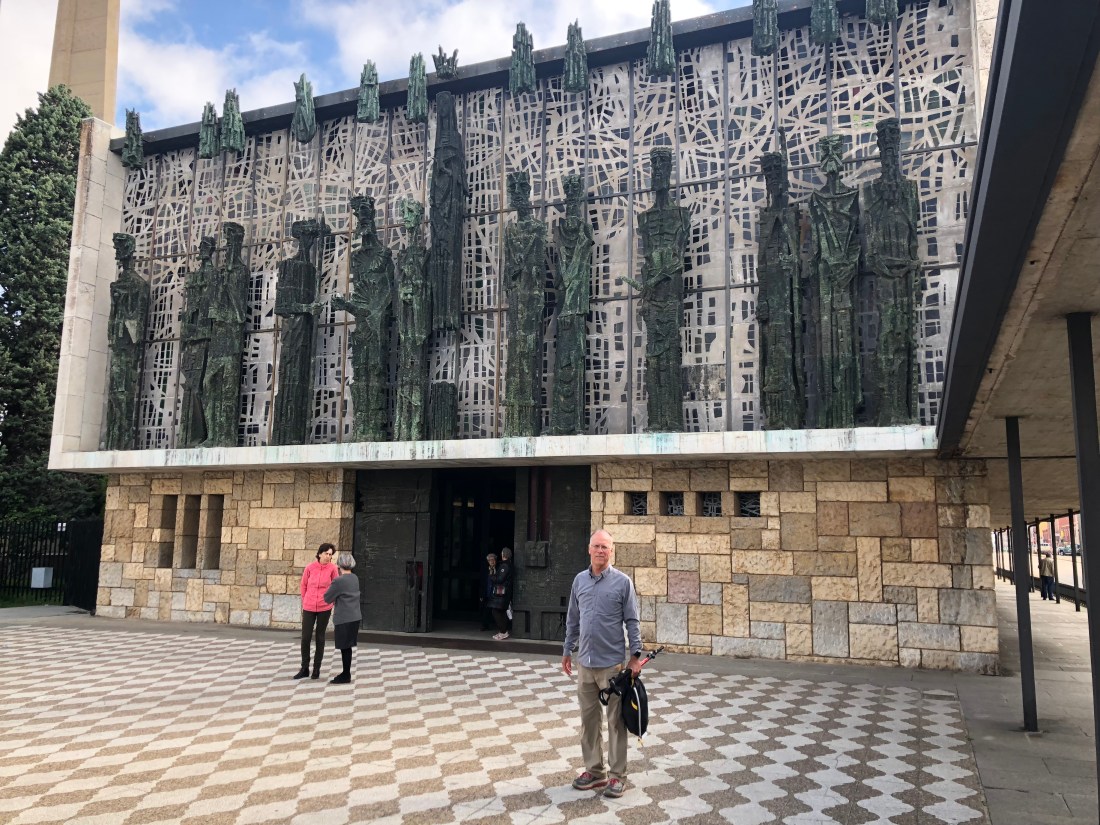
We got off the bus down the street from the church of San Froilan, which has a statute of La Virgen del Camino, Mary, floating about the Twelve Apostles.  We arrived just in time for Mass.IMG_2467

Leaving La Virgen, the Camino splits into two different routes.  The main route follows a highway to Villadangos del Paramo.  The option we followed—which was a little longer but more remote–goes through Fresno del Camino and Oncino.  

First we followed a little-used road to Oncino.IMG_2468

Here’s Anne at the end of the road in Oncino:IMG_2469

From Oncino, we followed a dirt track.IMG_2471

We both have trekking poles that we picked up in Leon.  We will be in the mountains in a few days.  We hope that the poles will reduce wear and tear on our hips, knees, and feet.

A couple of miles outside of Villar de Mazarife we heard what we thought were gunshots. There were woods nearby, and we thought that perhaps there were hunters.IMG_2485As we got closer to Villar, the blasts became louder, and we could hear the bell in the village church ringing.  About a quarter mile outside the village, we saw a puff of smoke in the sky each time there were blasts, which now were very loud.
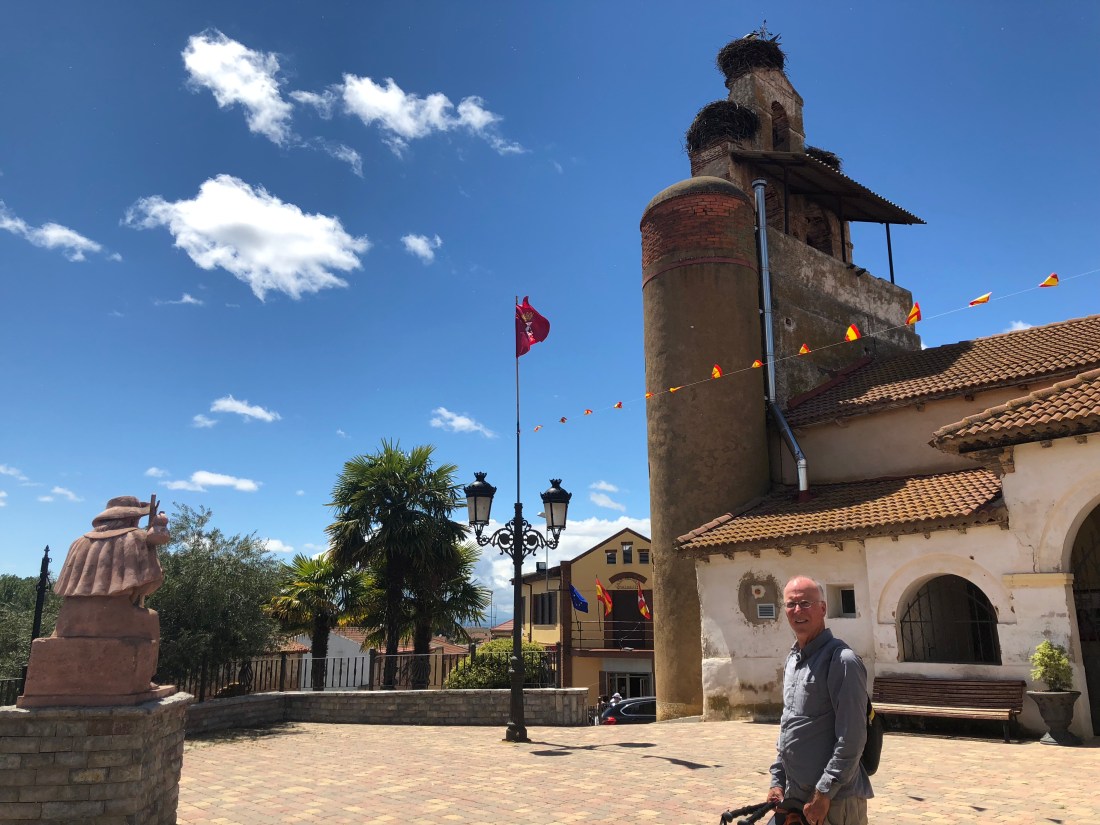
There was a festival in the village.  The blasts were sky rockets, fired off by a pair of villagers who were combining pyrotechnics and heavy drinking.  We made sure that we were on the opposite side of the square from them.

There was a procession that included a statute of the Virgin Mary on a pedestal, a priest under a canopy held up by villagers, and the village band.  We never figured out what the festival was celebrating.

Here is the church in Villar after the procession broke up.IMG_2497

After leaving Villar, we were back on the road.IMG_2503It was a long day, about 15 miles, and it was around 5 p.m. when we finally reached Villavante, which was our destination. Tomorrow is another long day.  Fortunately, we are both feeling pretty good, but a little tired. (And Anne has hiker’s rash and my shin is a little swollen.)
 

Calzadilla de los Hermanillos to Leon

Before we left Calzadilla los Hermanillos, we planned the rest of the trip to Santiago.  My leg is well enough that we should be able to finish the trip, although it will take an extra week.

After leaving Calzadilla, we were back on a country road with very few cars.IMG_2395

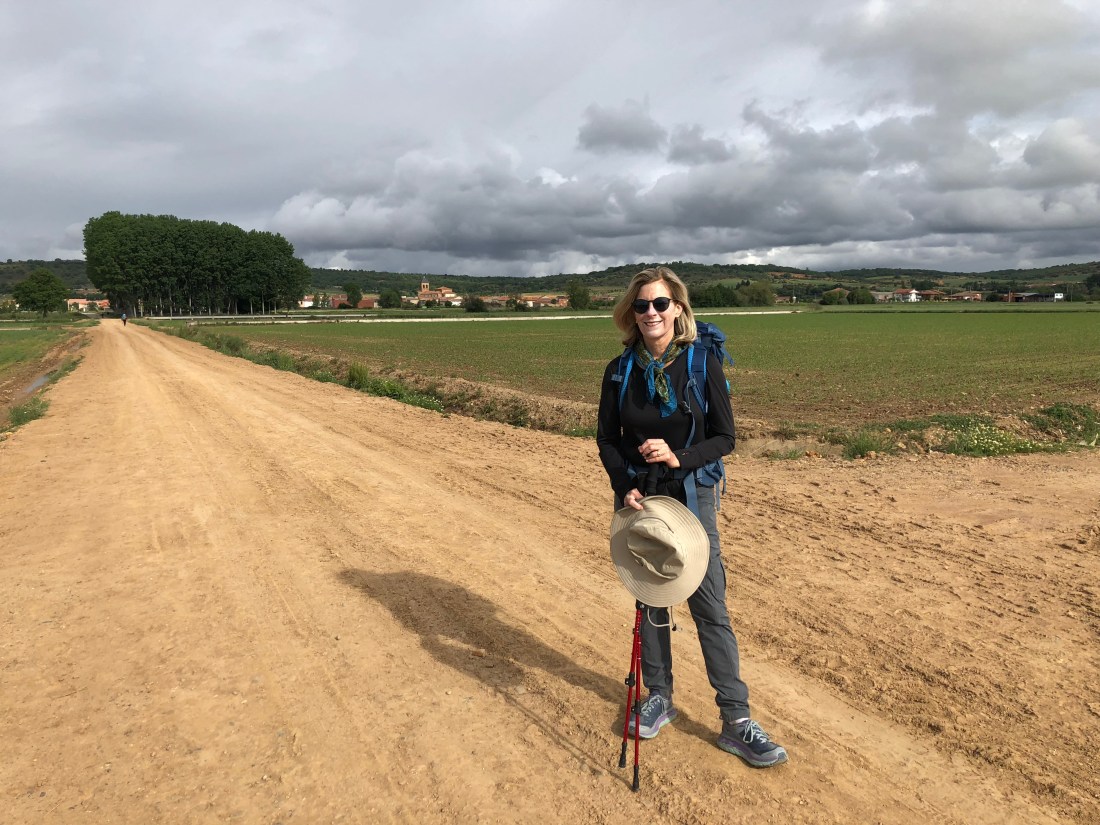
We walked for about an hour before the Camino turned off onto a dirt track much like the one we had been on yesterday.IMG_2400

Today’s walk was flatter than yesterday’s, although there were some highlights for Anne along the way.IMG_2408We are still following the more remote track of the Camino.  Like yesterday, we saw very few people.
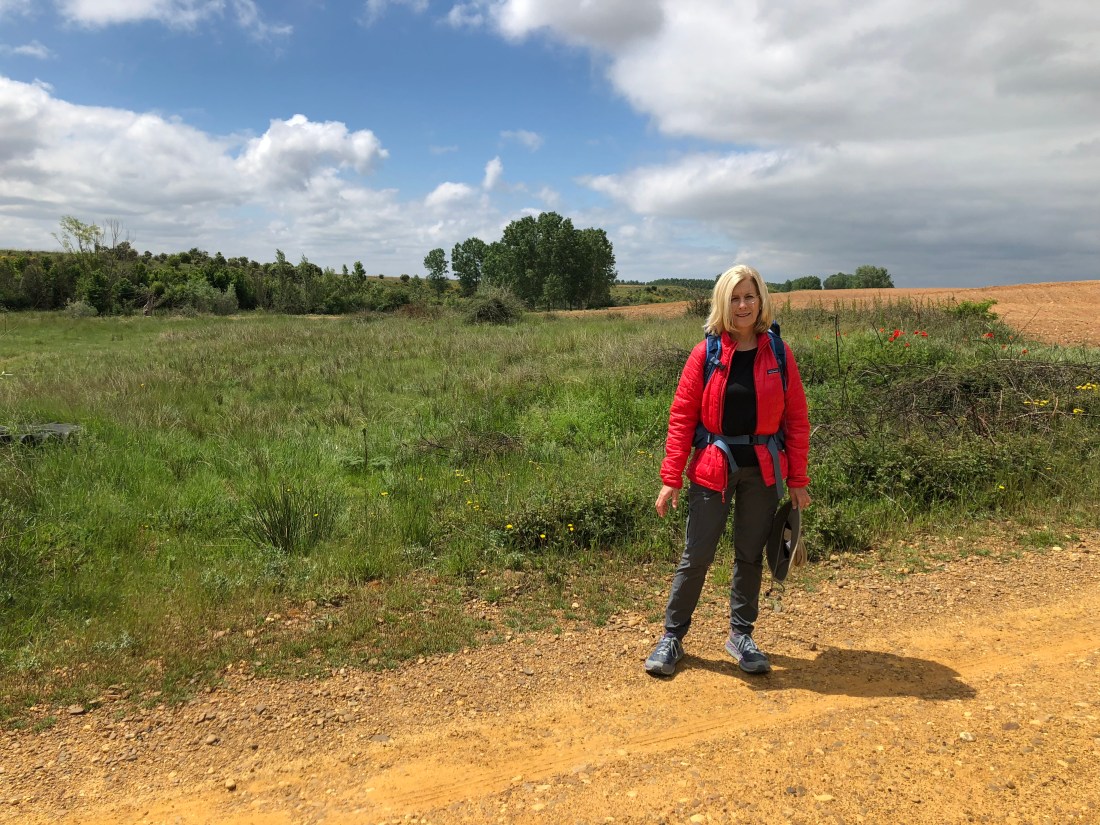
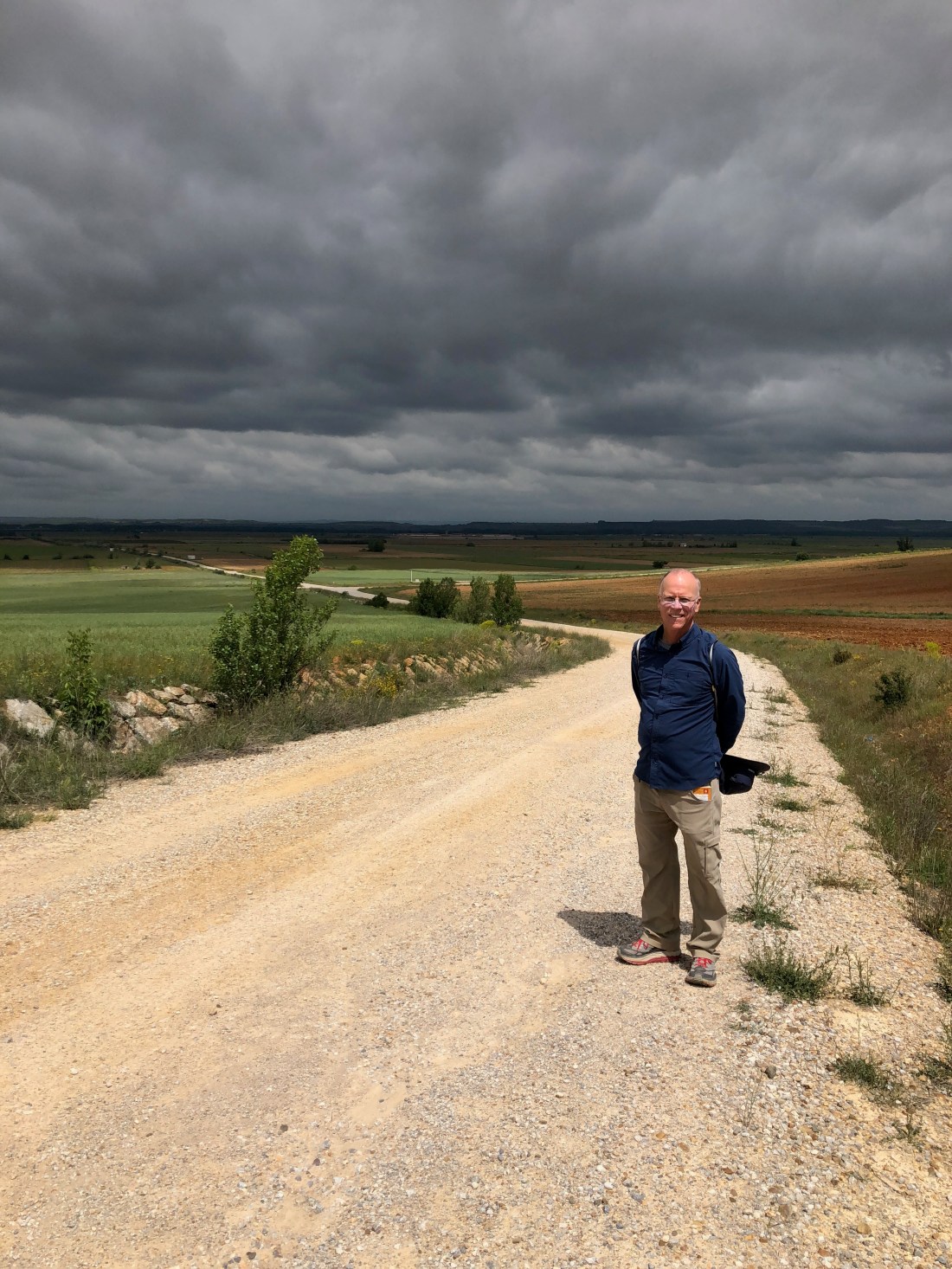
Near the village of Regligios, the track we were on split, with the option to go through the village.  The path through Religios is shorter but once there the Camino goes back beside the highway.  We opted for the longer but more scenic route.  Or so we thought.

At first, it looked like we had made the right choice:IMG_2414

After walking a short distance from the turnoff to Religios, the Camino started a short descent into a valley towards the village of Mansilla de las Mulas:IMG_2416

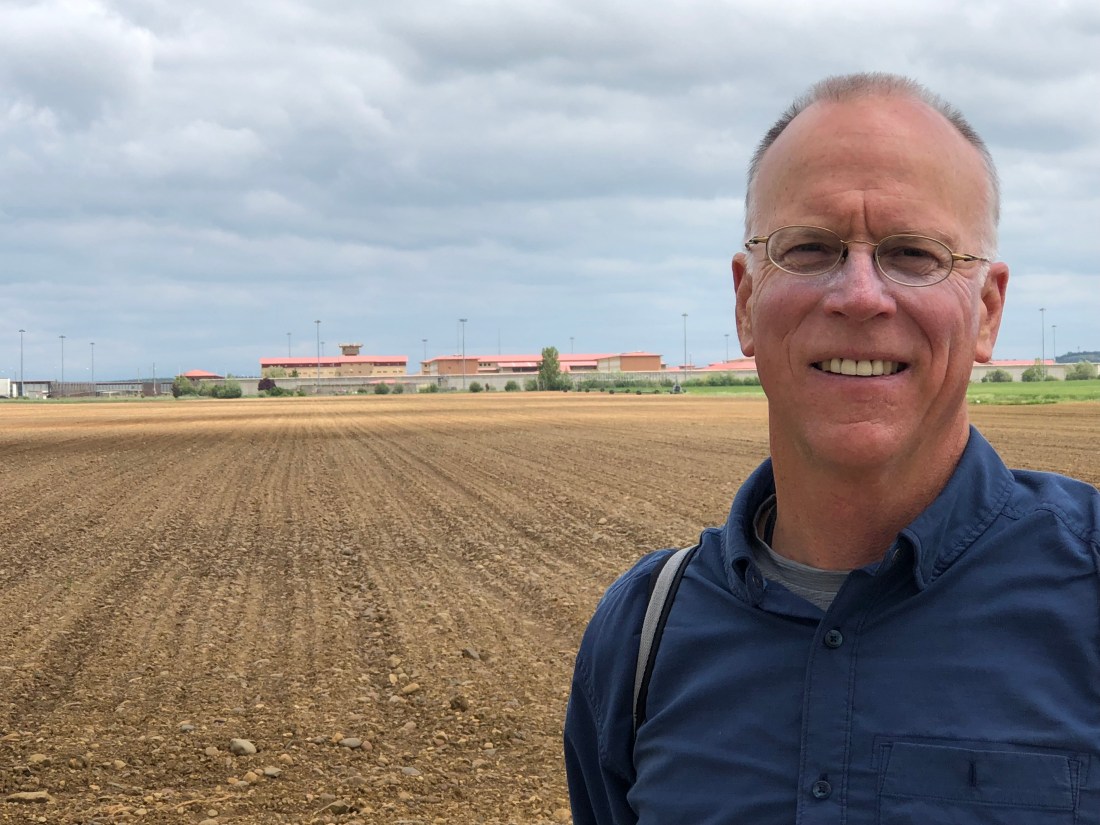
We passed by a prison:IMG_2423After walking for about another two hours, we reached the outskirts of Mansilla de las Mulas.  We had not seen anyone on the Camino since the turnoff to Religios. 
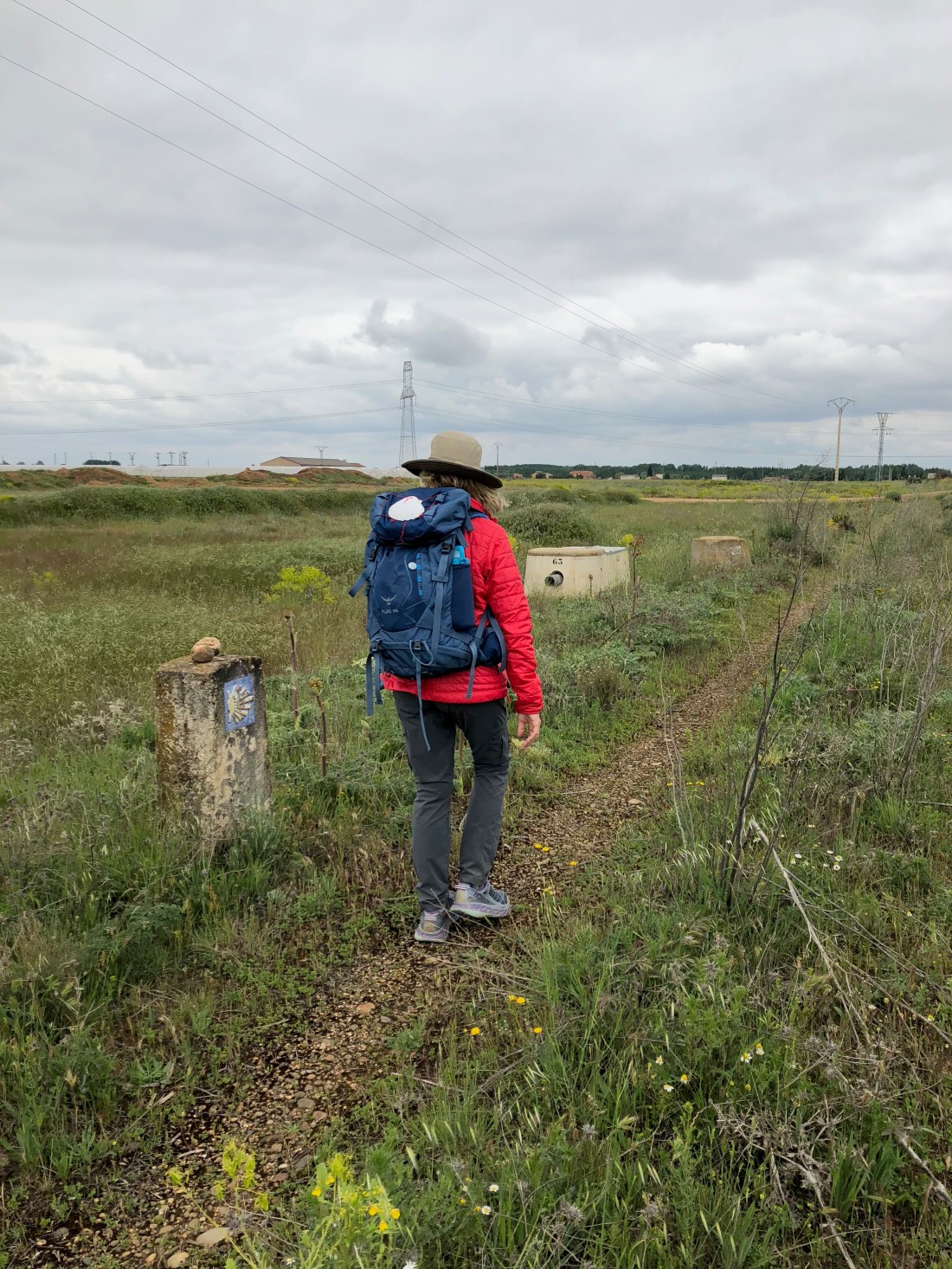
The track became hard to find, and we began walking in a ditch alongside a highway.IMG_2426About this time, I heard Anne muttering about “scenic routes” and “European Vacations.”
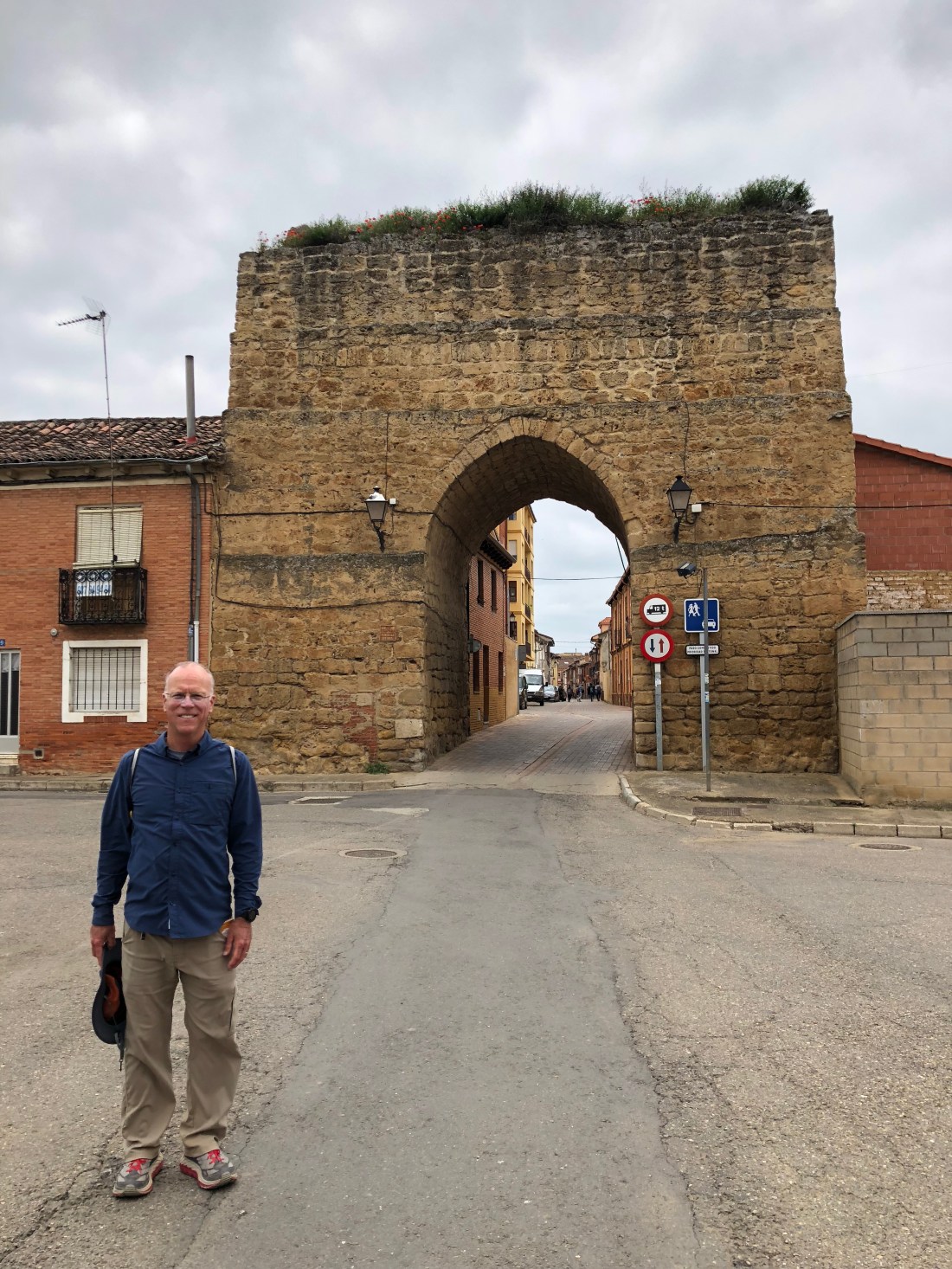
Within an hour, we were in the old quarter of Mansilla:IMG_2428

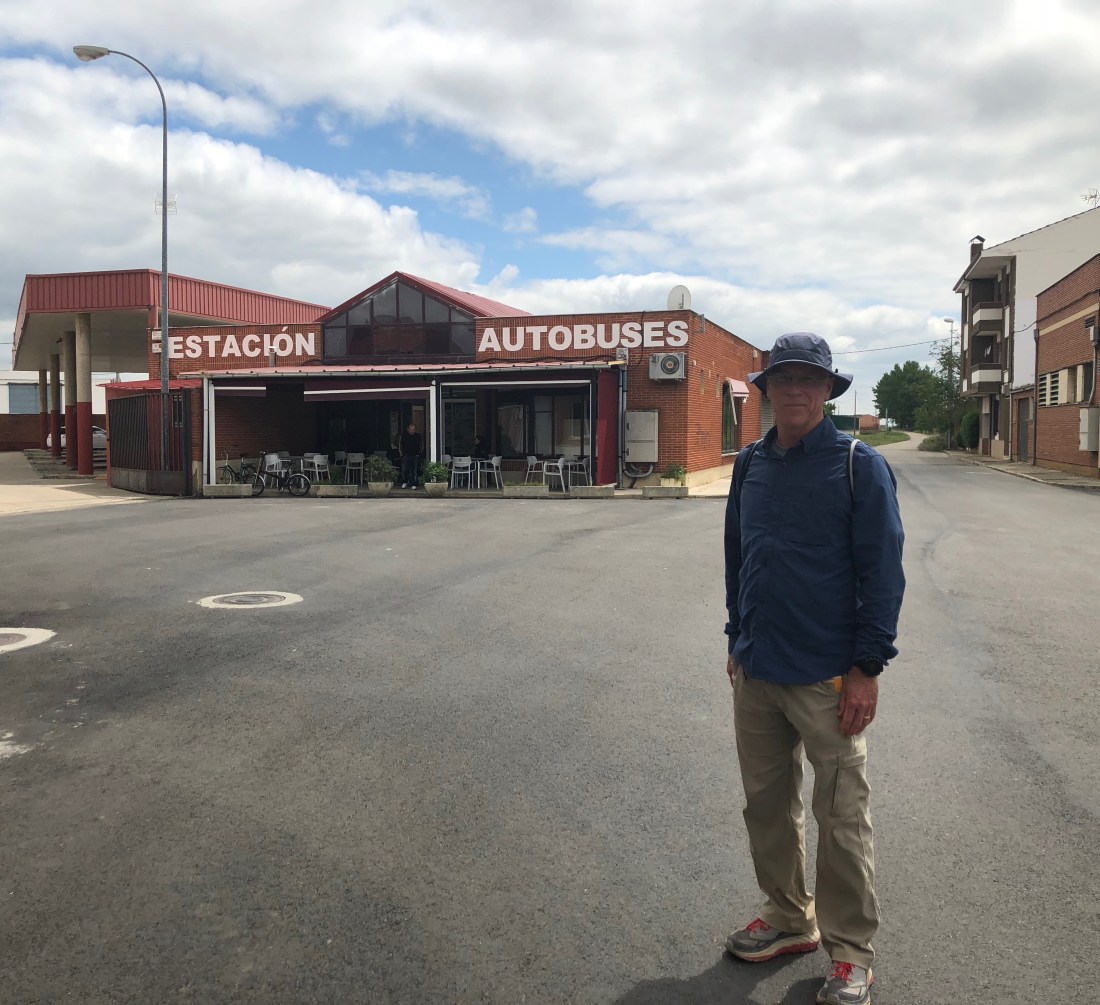
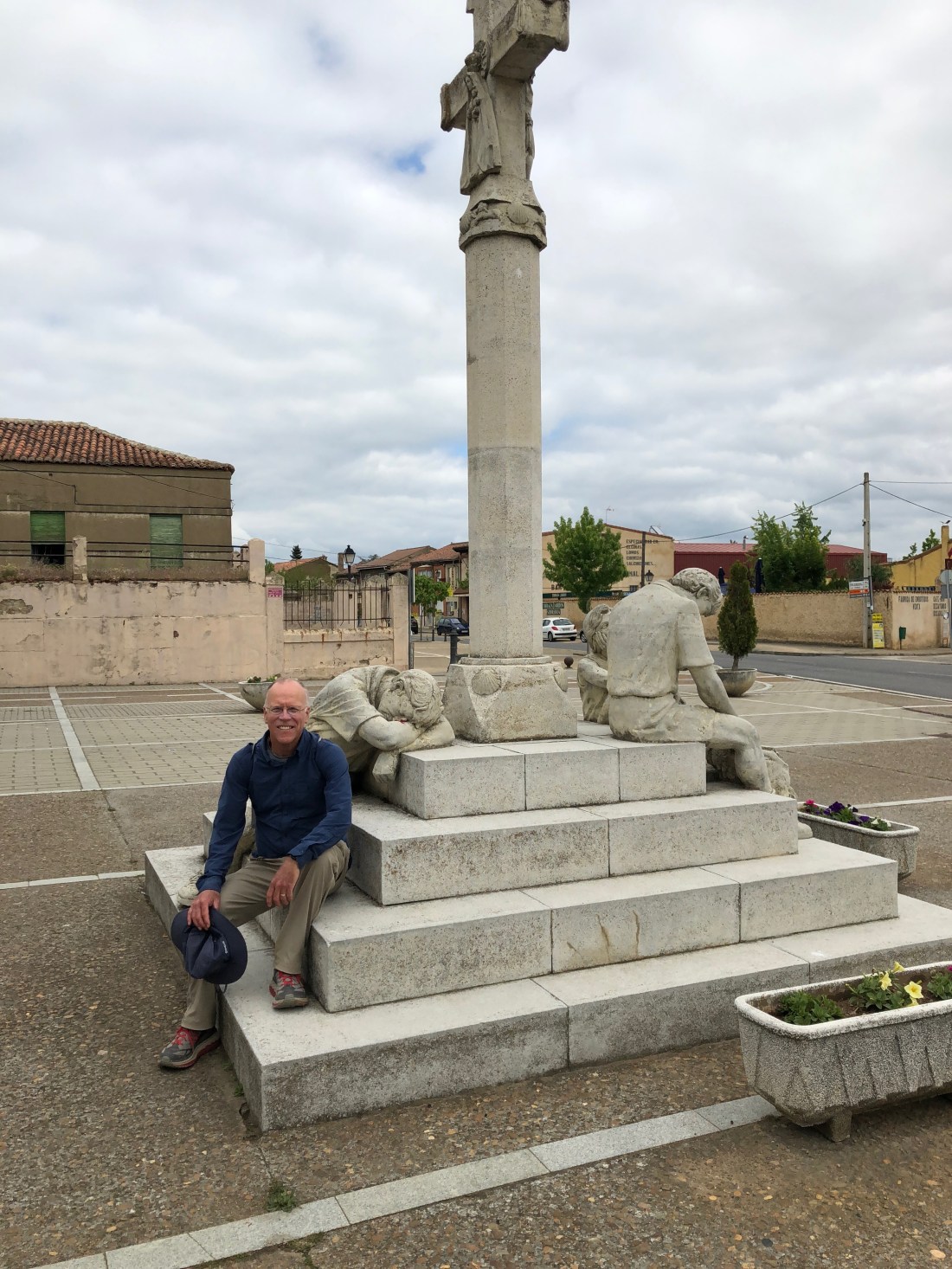
I went into a cafe and got directions to the bus station.  On the way there, we came across a monument to the peregrinos.IMG_2430

Anne made sure that we arrived early at the station for the bus to Leon.IMG_2434It was easy to decide to bus from Mansilla to Leon.  Even our guidebook described the walk from Mansilla as unsafe and unsightly.
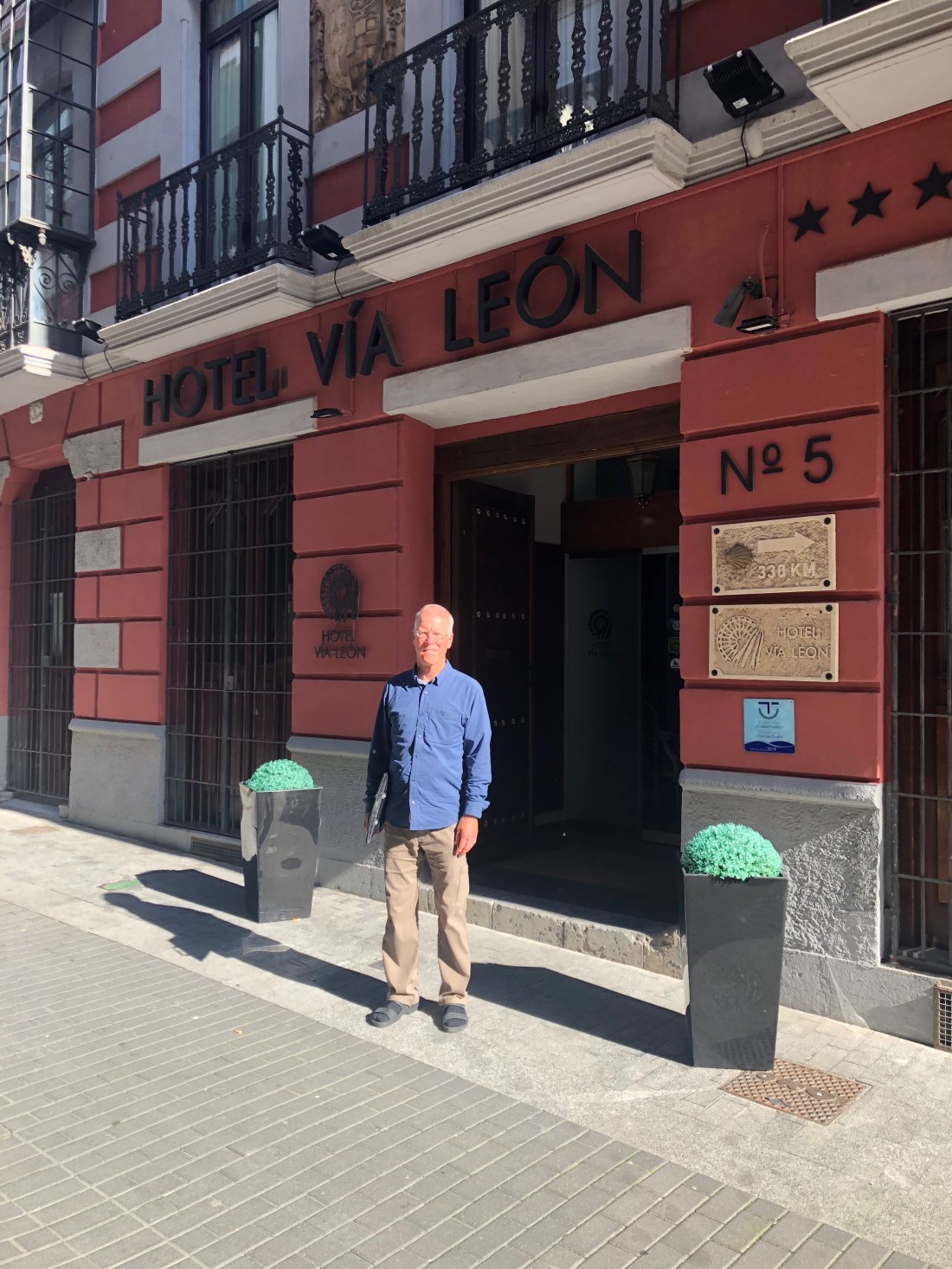
After the bus ride, we checked into our hotel in Leon by the early evening.IMG_2463

We are spending three nights in Leon to see the sights and get some rest.

Sahagun to Calzadilla de los Hermanillos

We had a great walk today.

We got an early start from our hostal in Sahagun.IMG_2369

“Hostal” must be Spanish for cheap hotel.  Most of the hostals we have stayed in are adequate, like this one in Sahagun.  But there is always something wrong.  In Calzadilla de la Cueza there was brown tap water and the lights inexplicably came on at 2 a.m.  In this one, someone forgot to put a mattress on top of the box spring in our room.  We were exhausted and almost asleep by the time we figured out why the bed was hard and lumpy.

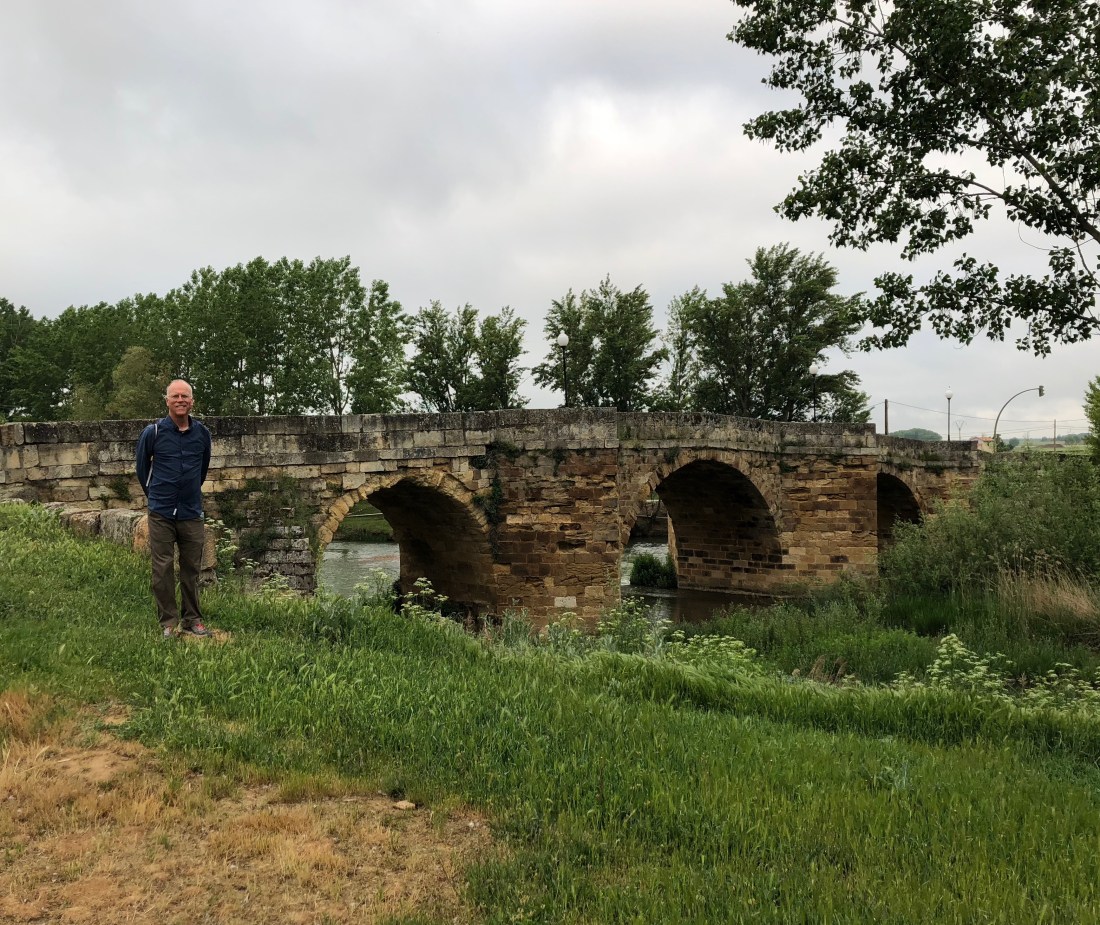
Leaving Sahagun, the Camino crossed the Puente Cano over the rio Cea.IMG_2372

We walked a short distance through a park and then were back on the highway.IMG_2375We walked along the highway for about an hour and then came to a roundabout outside the village of Calzada del Coto, where the Camino split into two different tracks.  One track continued straight along the highway.  The second turned right to Calzada del Coto and then continued on through farm and woodland. 
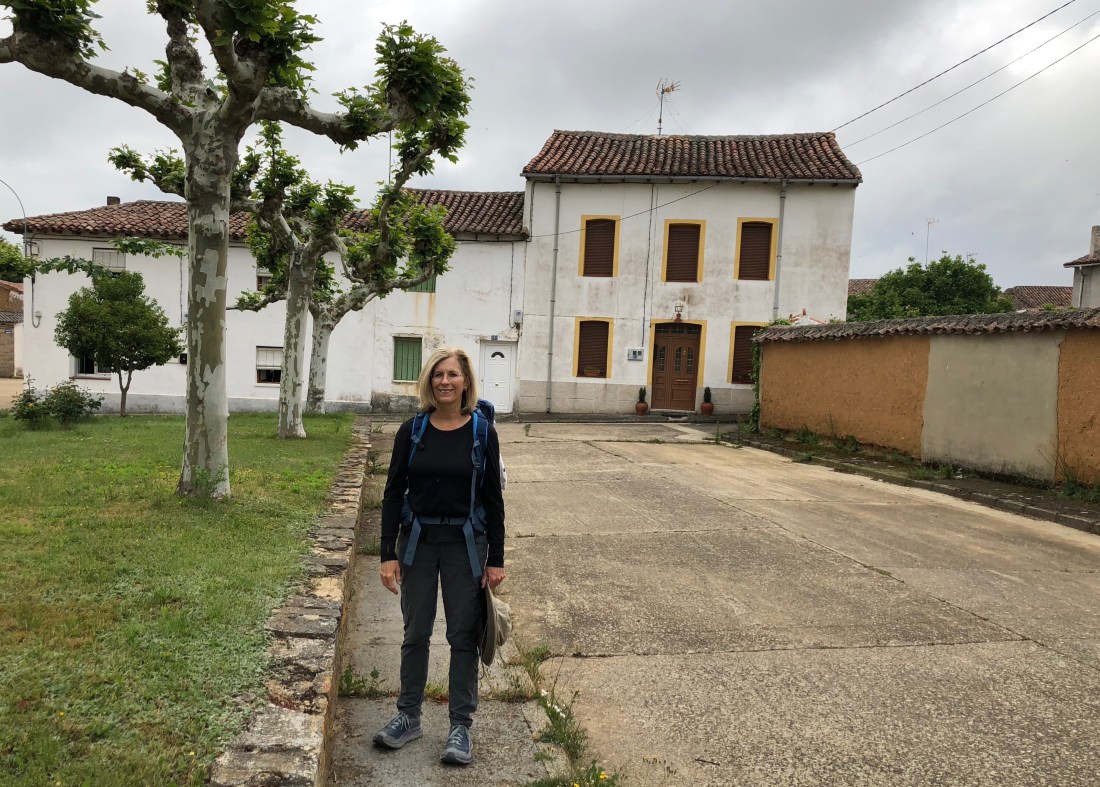
We took the route that went through Calzada del Coco.IMG_2376

Here is the main square in Calzada.IMG_2378 2

Here is our track on the Camino several miles outside of Calzada.IMG_2381In four hours of walking on this road, we saw two people, both of them young women walking alone.  We had walked with a small group of people out of Sahagun, and we were the only ones who took the more remote track, which adds a little extra distance to the walk. 
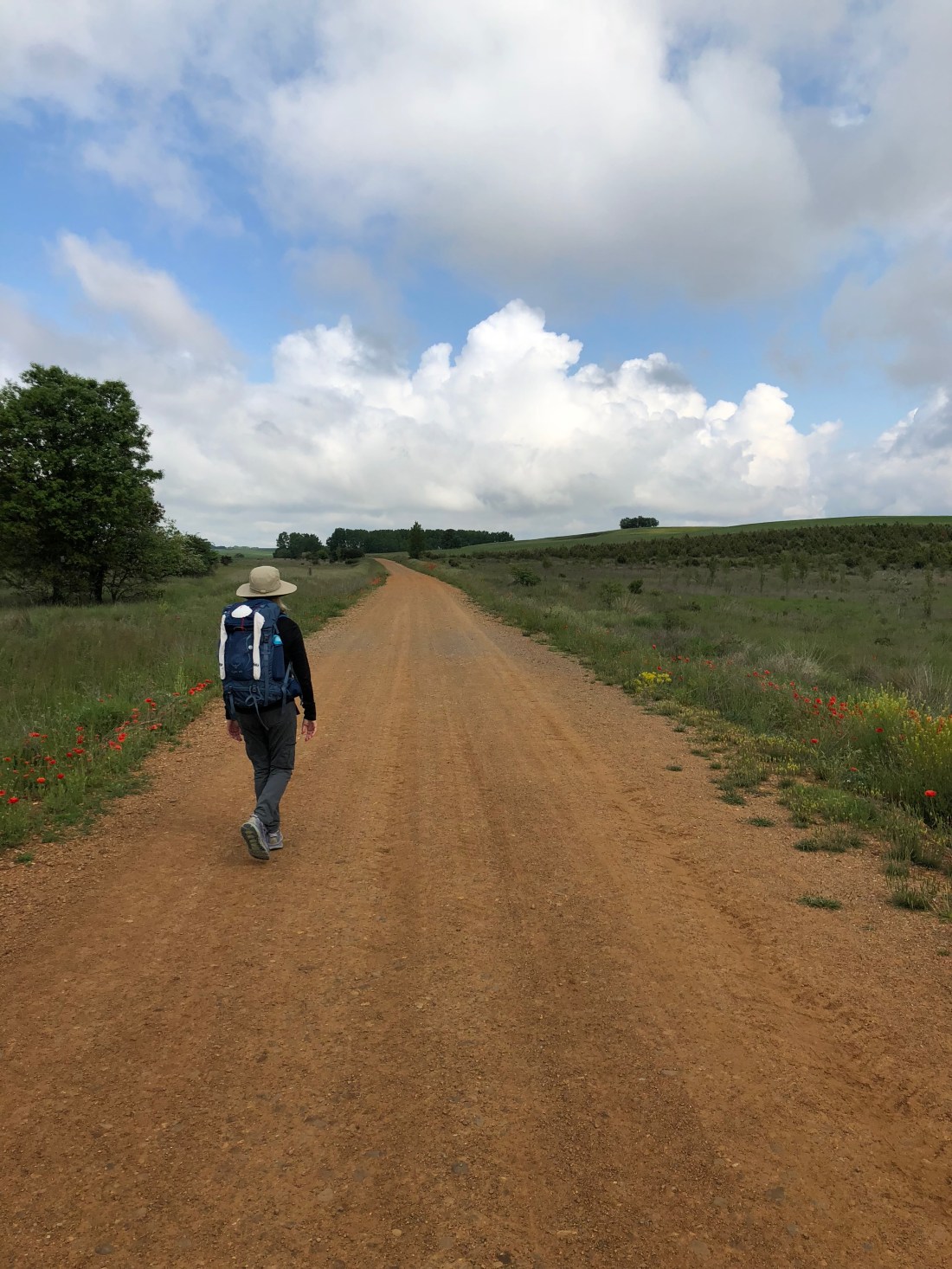
But it was a good trade off.IMG_2383

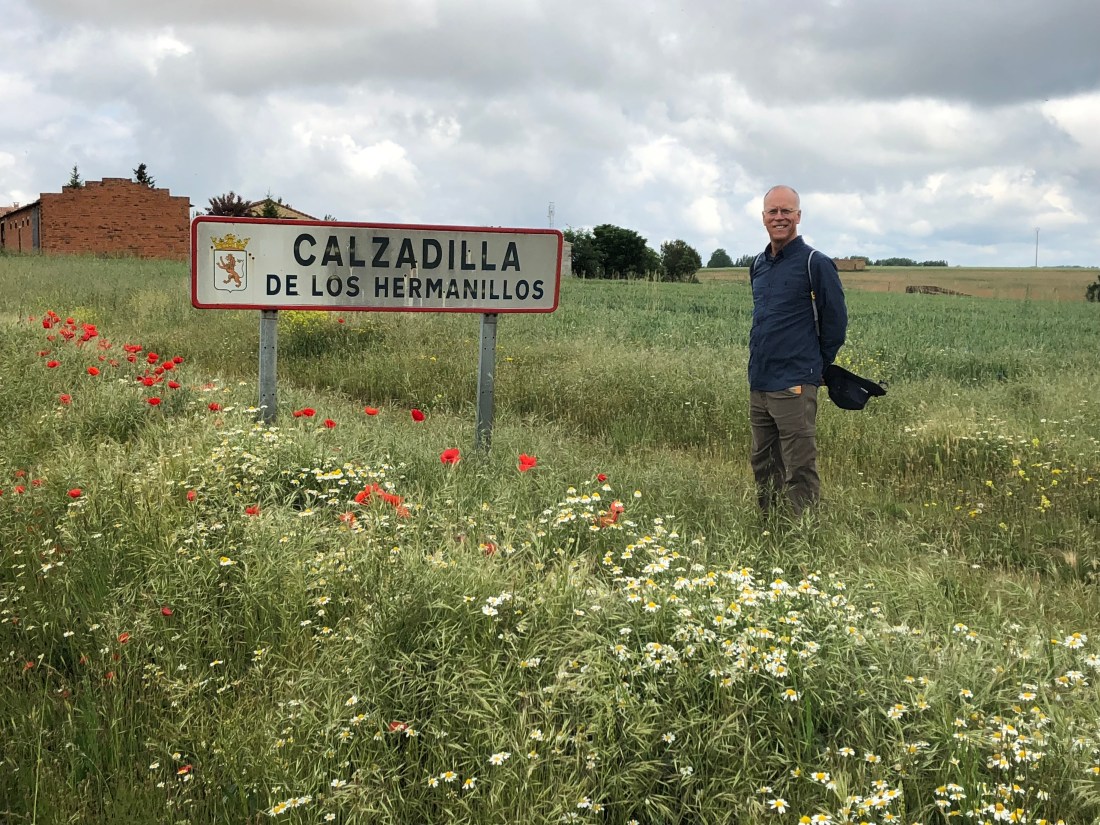
Today’s walk was short.  We reached our destination, Calzadilla de los Hermanos a little before noon.IMG_2389

At noon, we walked up to the Ermita de la Virgen de los Dolores in the village.IMG_2392

The door was open, and a man sitting in a car near by motioned for us to go in.  Anne believes that it was a gesture of kindness—I’m not so sure.  The church was filled with elderly women, praying.  A priest was kneeling at a pew in the rear of the church, praying.  We sat at a pew near the door.  After several minutes, the priest got up, put more incense in a holder just inside the door, and started the Mass.

All the services that Anne and I have attended here have been in Spanish.  Still, it is pretty easy to follow the outline of the Mass, if not the content.  In this one, the priest’s homily started with a history lesson, covering the Reconquista, musselmen, and San Fernando (Fernando III, King of Castile, and a major figure in starting to push the Moors out of Spain.)  The priest used the history lesson as a jumping off point for his sermon, which I couldn’t follow.  Maybe it was for the best that I couldn’t follow what he was saying.  Anne was pretty moved by the Mass, but I kept stifling sneezes from the incense and thinking about the man in the car.  If the Mass was important for us to attend, why didn’t he come in too? 

At the end of Mass, we stood and waited for the women to file out of the church.  Most of them were under 5′ and many  were about 4 1/2 feet.  I have read that short stature among the elderly in Spain is due to starvation during the Spanish Civil War.  Stunted elderly people can be seen throughout Spain, an enduring legacy of an old antagonism.

Here is the Casa Rural where we stayed.IMG_2394The Casa Rural–much like a bed and breakfast–is run by a young married couple who grew up in the village.  On the first floor is a sitting room with old photos of the wife’s family, who have been in the village for many generations.  She explained that her great grandfather had been the village’s mayor.  There was an old photo on the wall of her great grandfather dressed in a military uniform.  While she was explaining that he had been “in the army,” her husband walked over, rolled his eyes, raised his arm with his elbow bent, and did a couple of quick goose-steps.  His wife shushed him, and then showed us a photo of her grandfather with a herd of sheep.
We heard that the old women go to the Ermitage every night to say the Rosary.  I hope that they are praying for us all.

Calzadilla de la Cueza to Sahagun

Today picked up where we left off yesterday—walking beside a highway.IMG_2332

There isn’t much to recommend this part of the Camino.IMG_2342

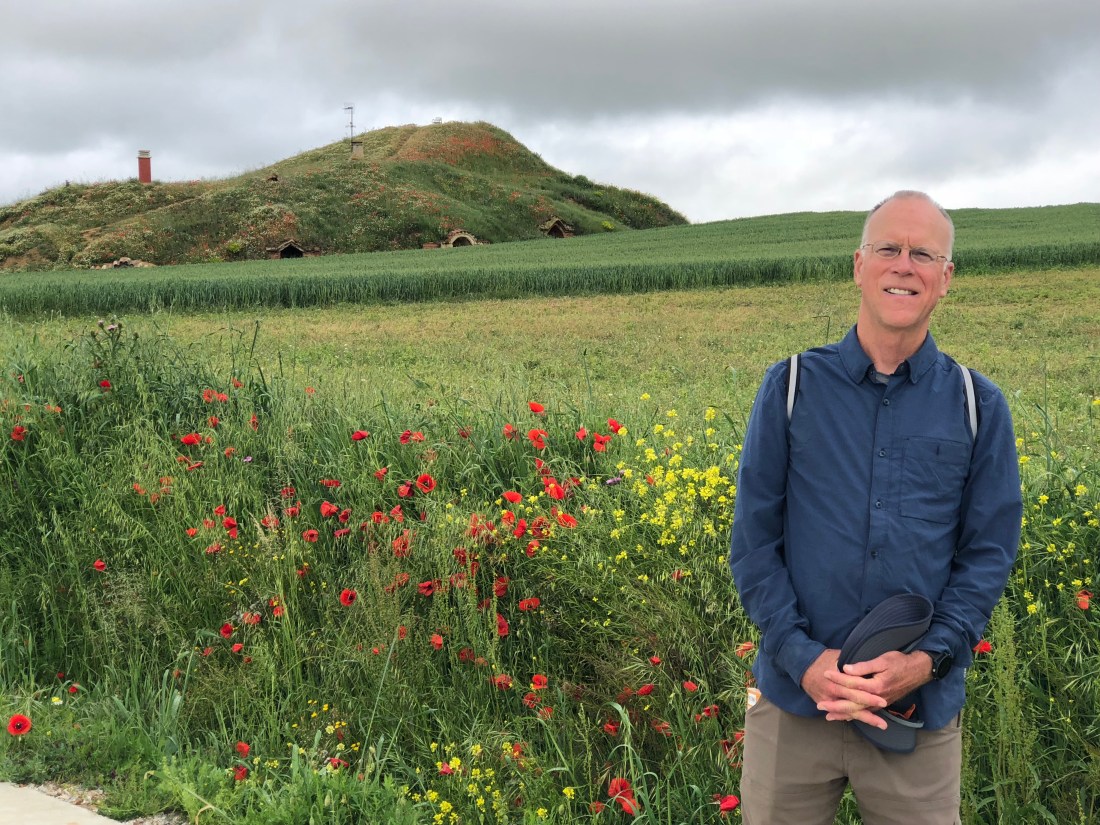
Near the village of Moratinos we passed by bodegas, rooms dug into hillsides for storing wine and food.IMG_2347

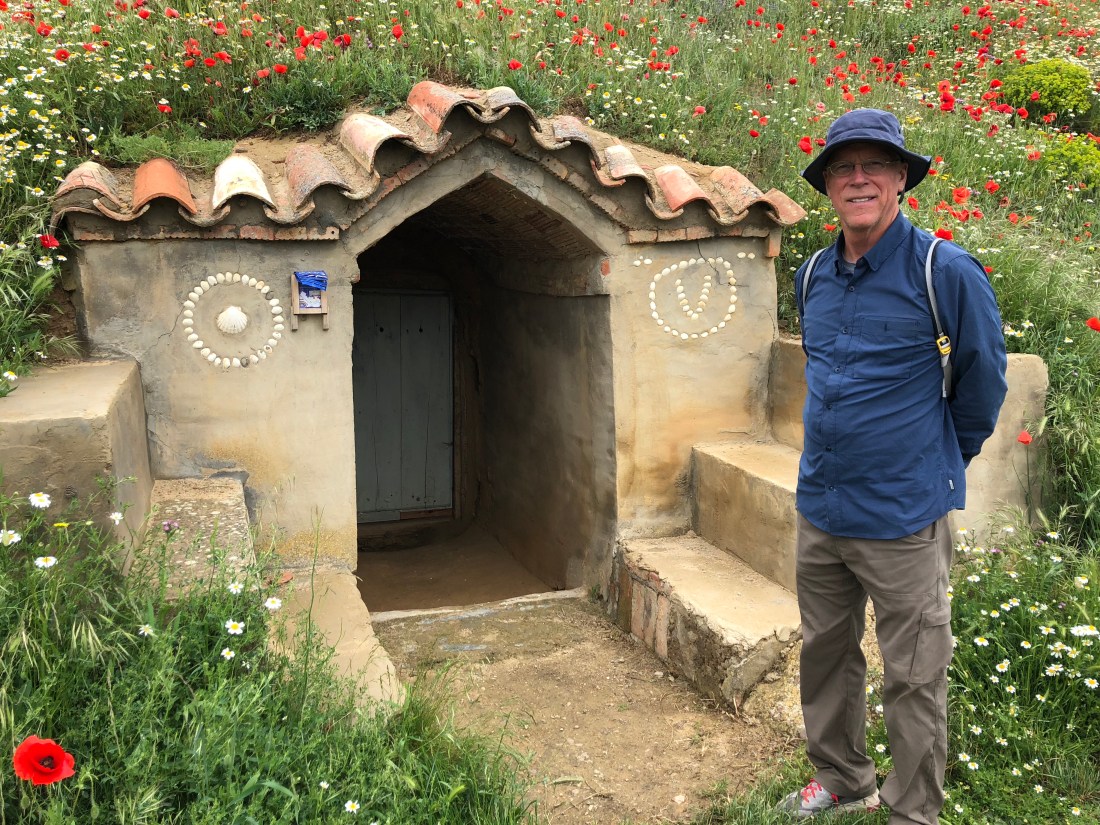
Here is a bodega up close.IMG_2348

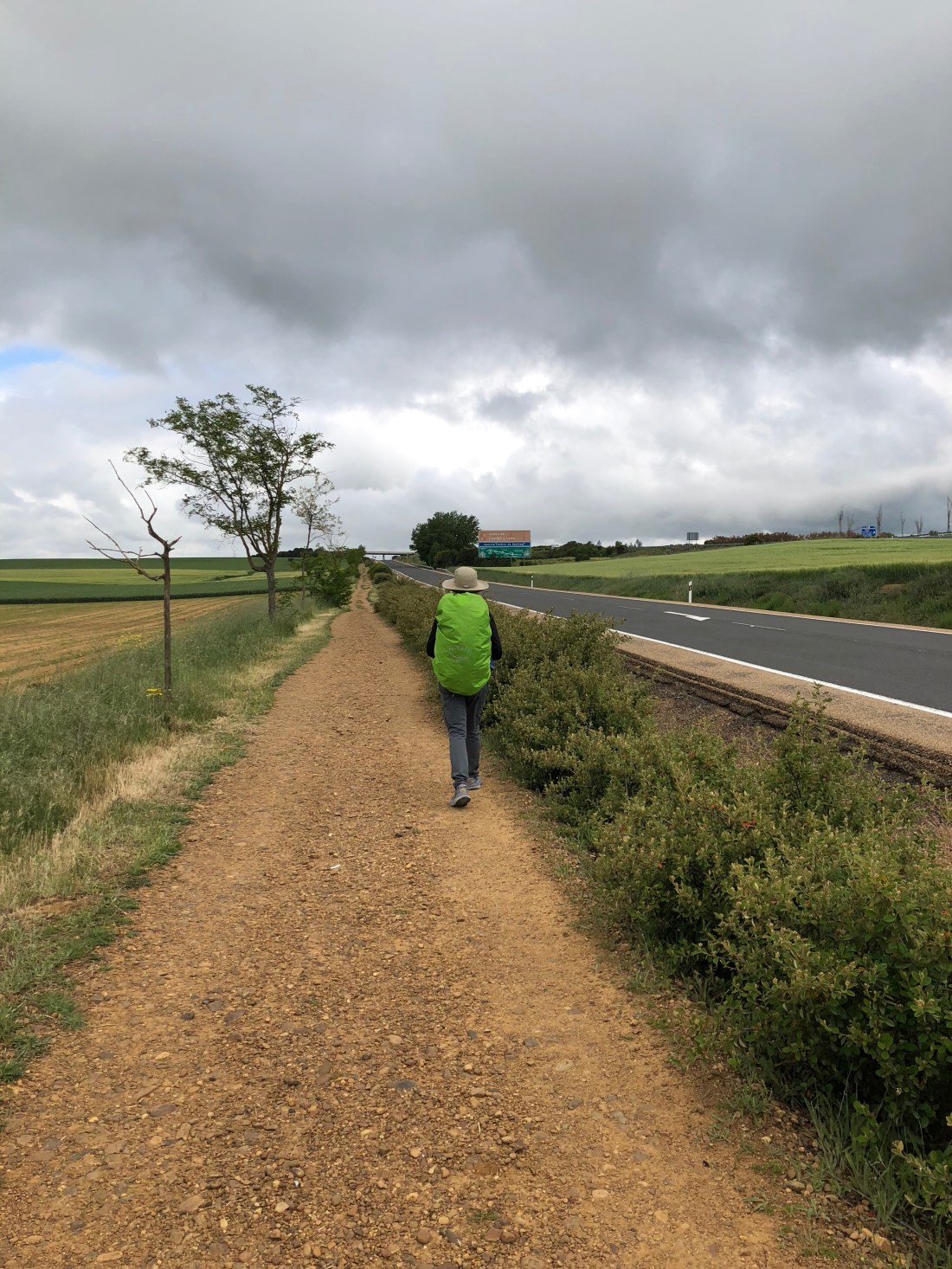
But we were soon back beside the highway.IMG_2349

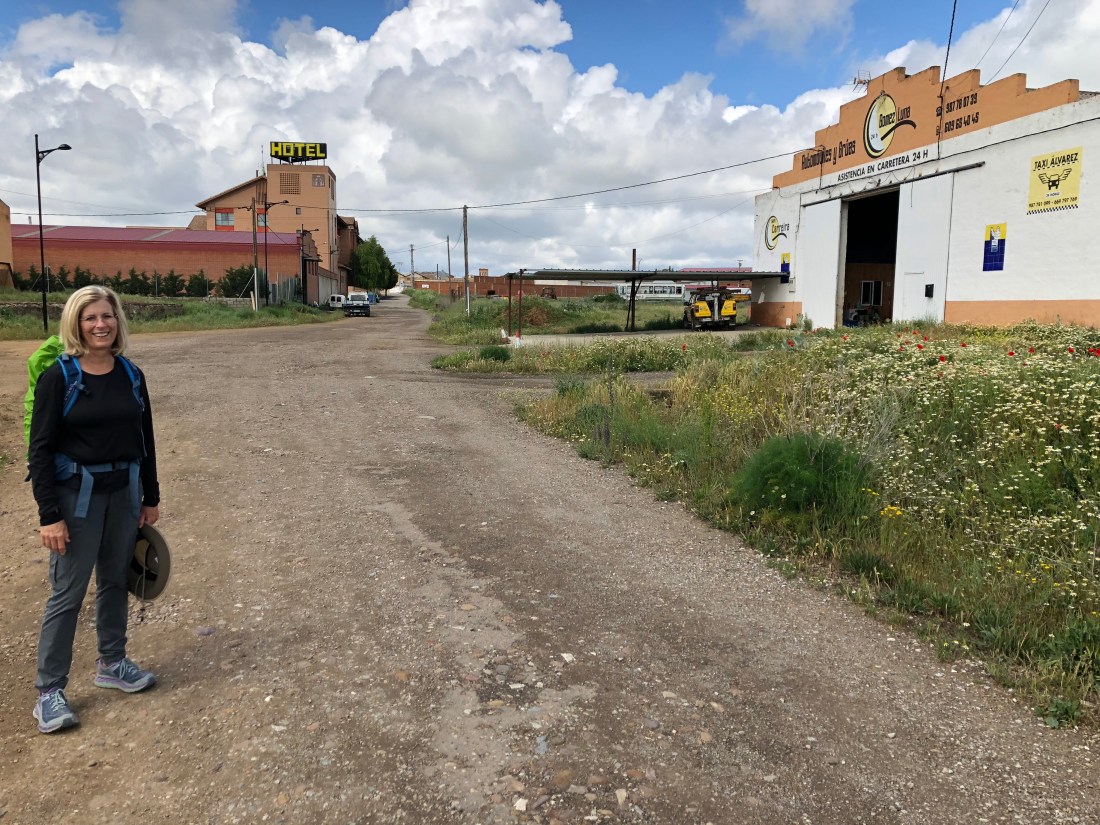
Our destination for the day, Sahagun, didn’t initially appear promising.IMG_2355(Anne is laughing because I told her that she should have foreseen this when I promised her a European Vacation.)
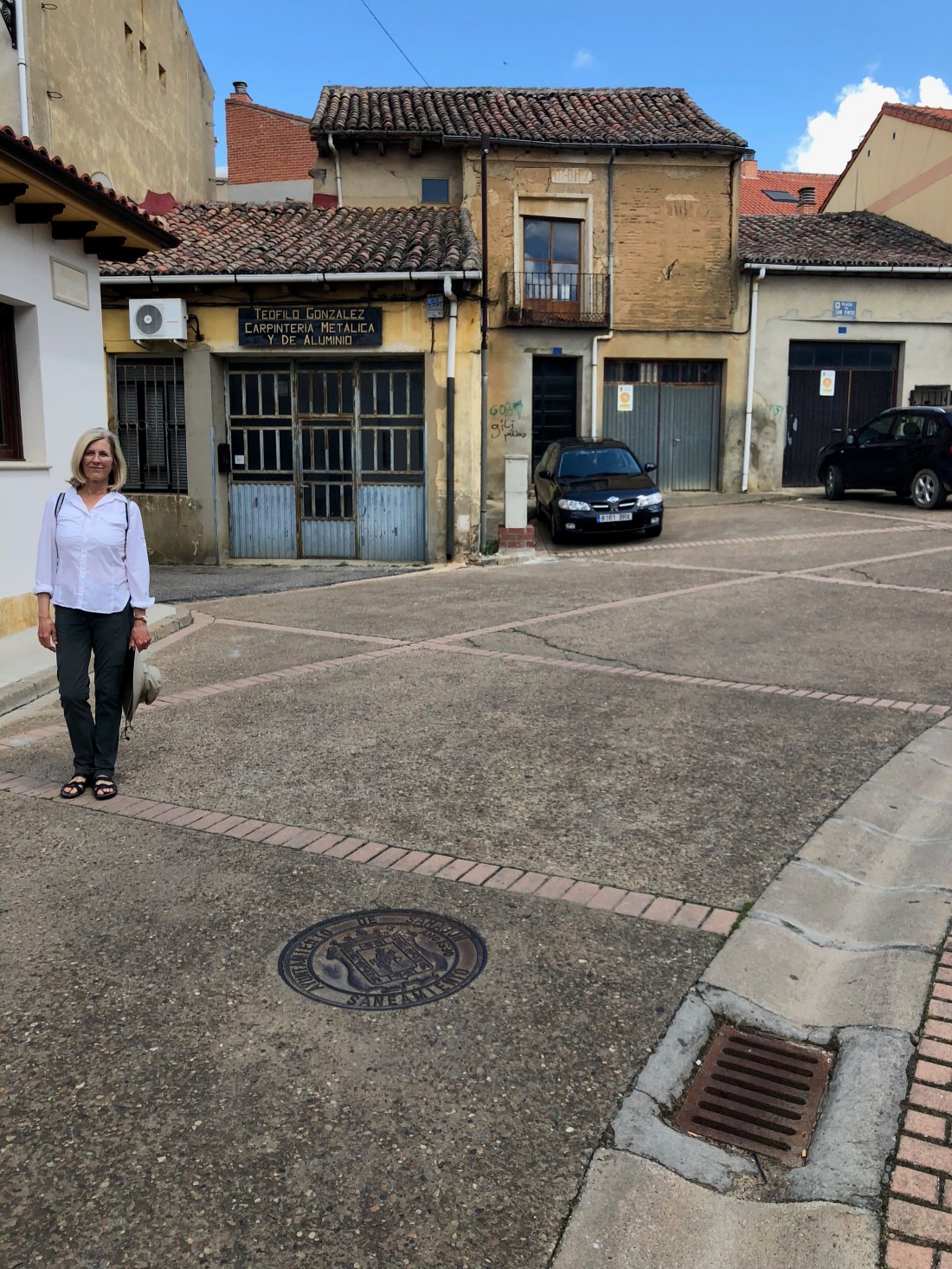
People live in the old quarter of Sahagun and work there.  That is generally not true for the villages and old quarters along the Camino, except in large cities. IMG_2359

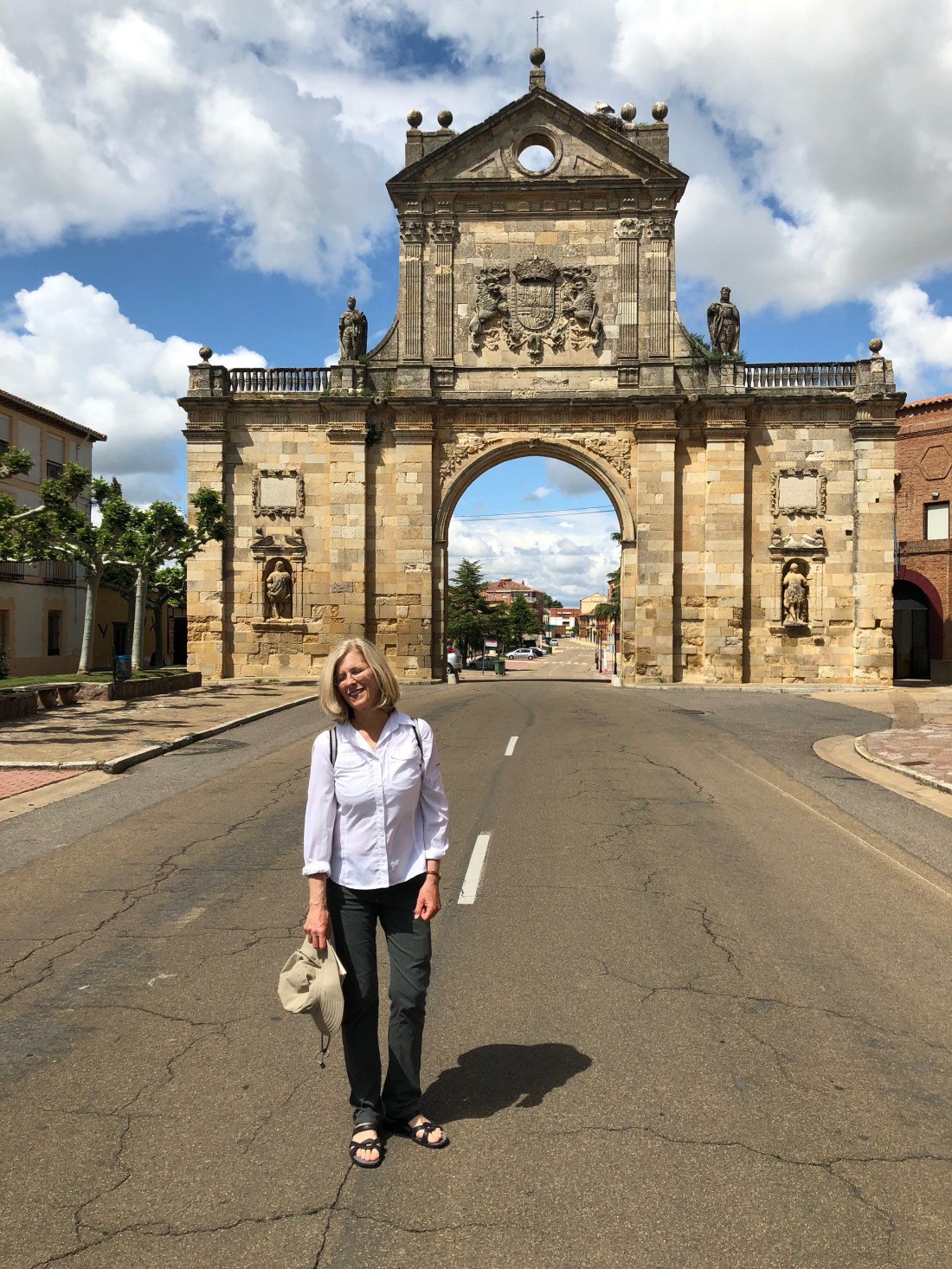
Here is the Arco San Benito in Sahagun.IMG_2362A better approach to this part of the Camino would be to taxi from Villalcazar to Carrion; walk around Carrion; taxi from Carrion to Sahagun; walk around Sahagun; and eliminate almost two days of highway walking.
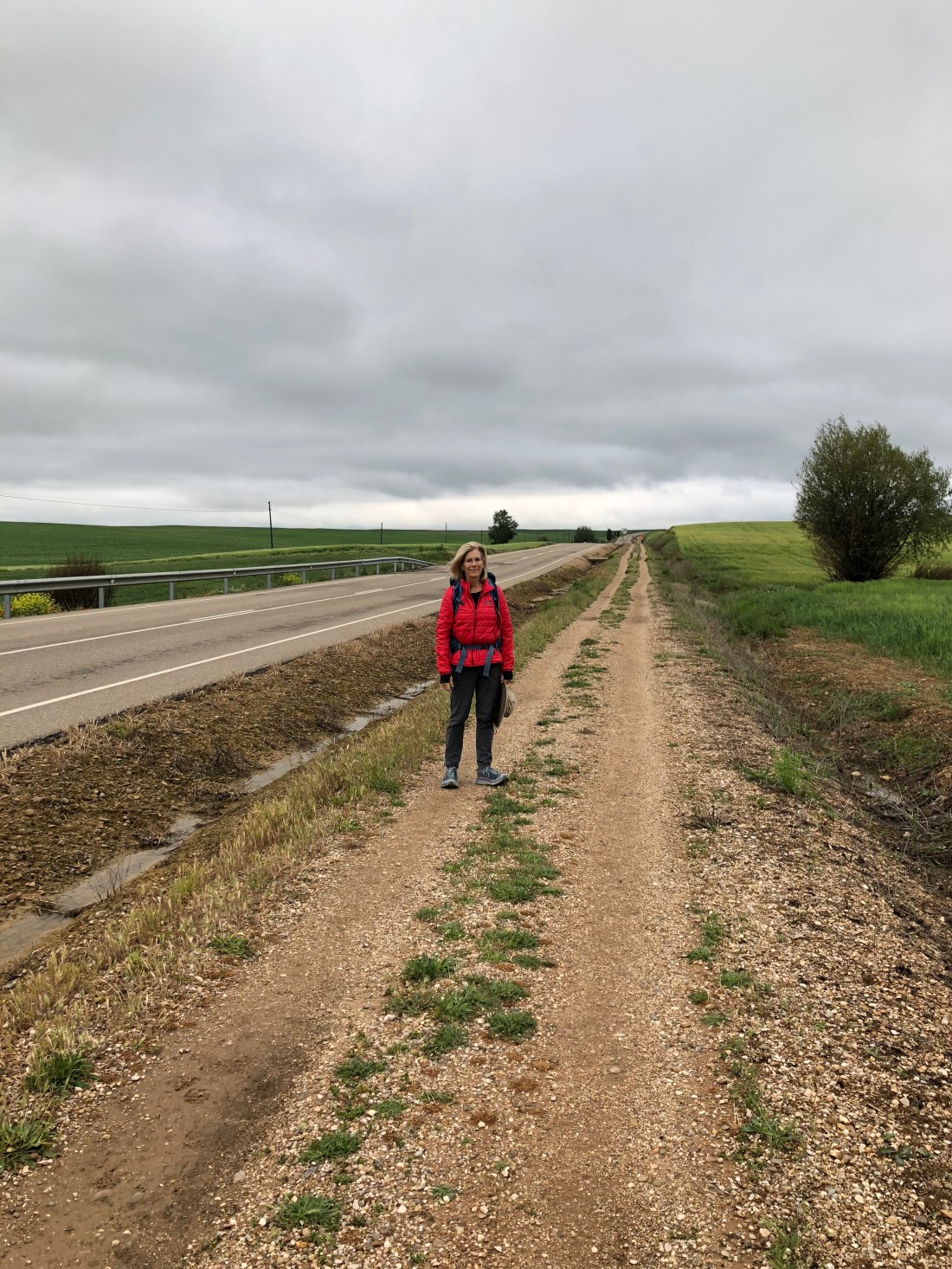
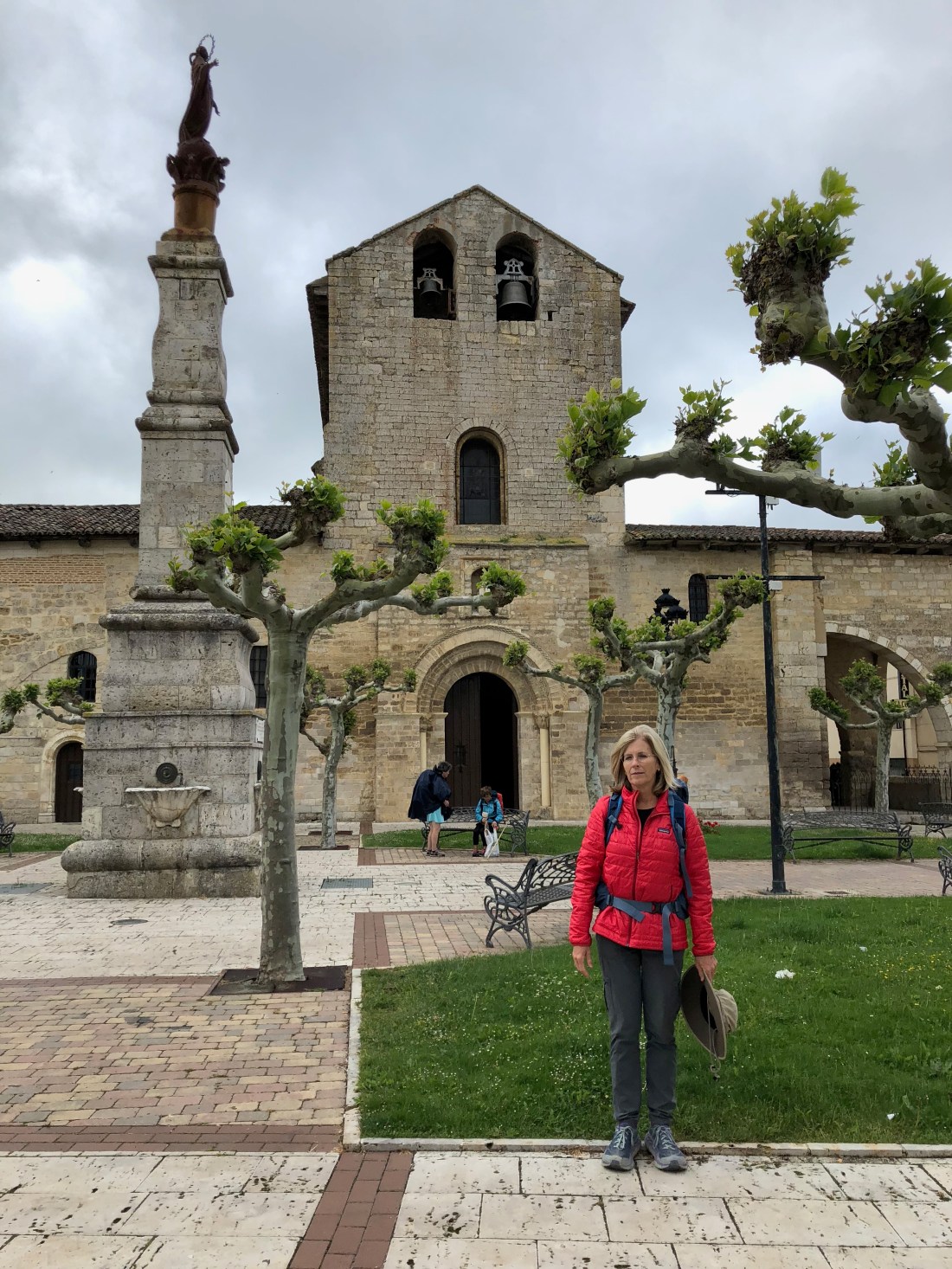
Villalcazar to Calzadilla de la Cueza

We left our hotel in Villalcazar under cloudy skies.IMG_2296

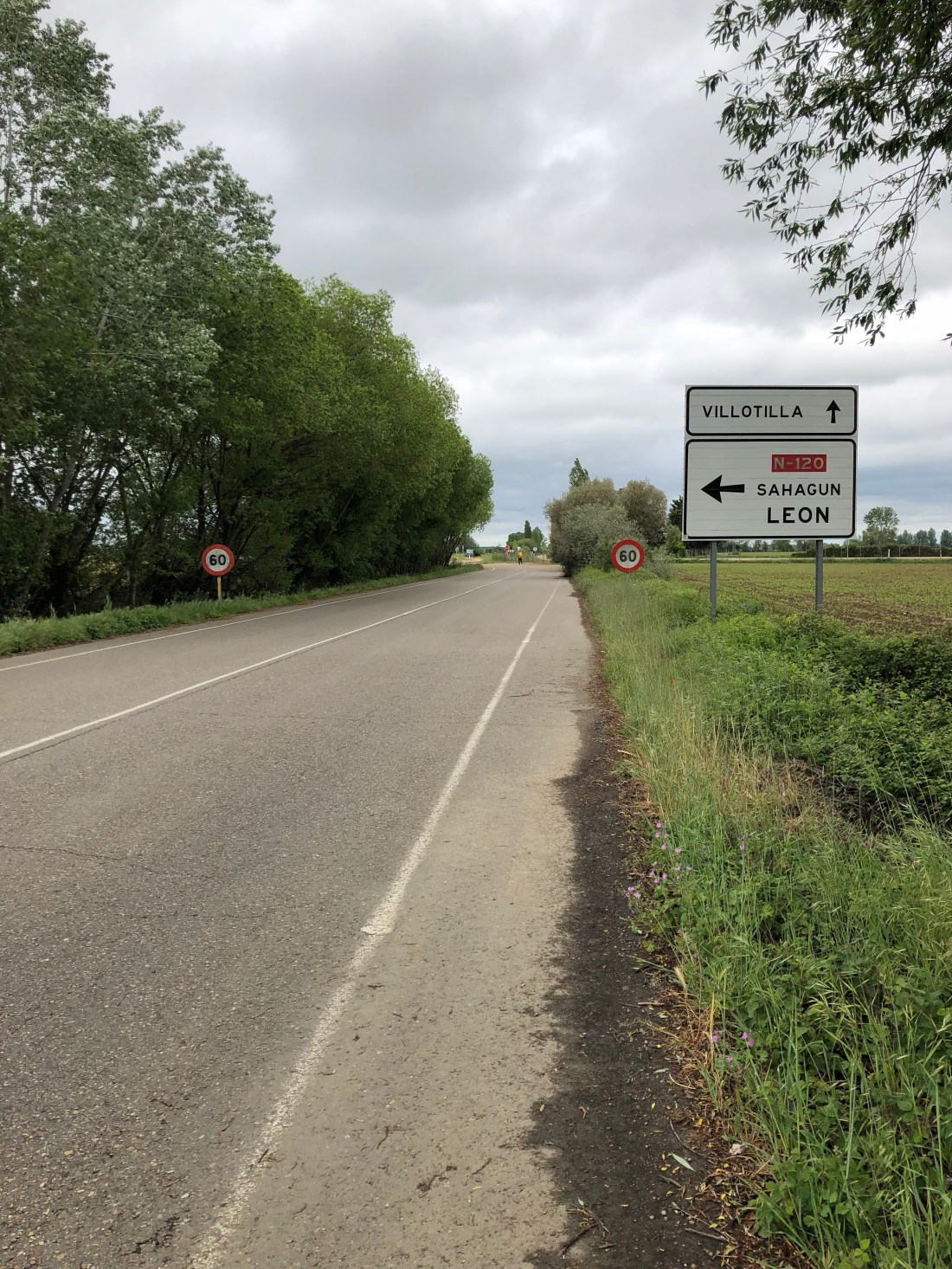
We spent much of the day walking beside highways.  We started out walking beside this one leading from Villalcazar to Carrion de los Condes.IMG_2298

Here is the Iglesia de Santa Maria del Camino in the center of Carrion.IMG_2303

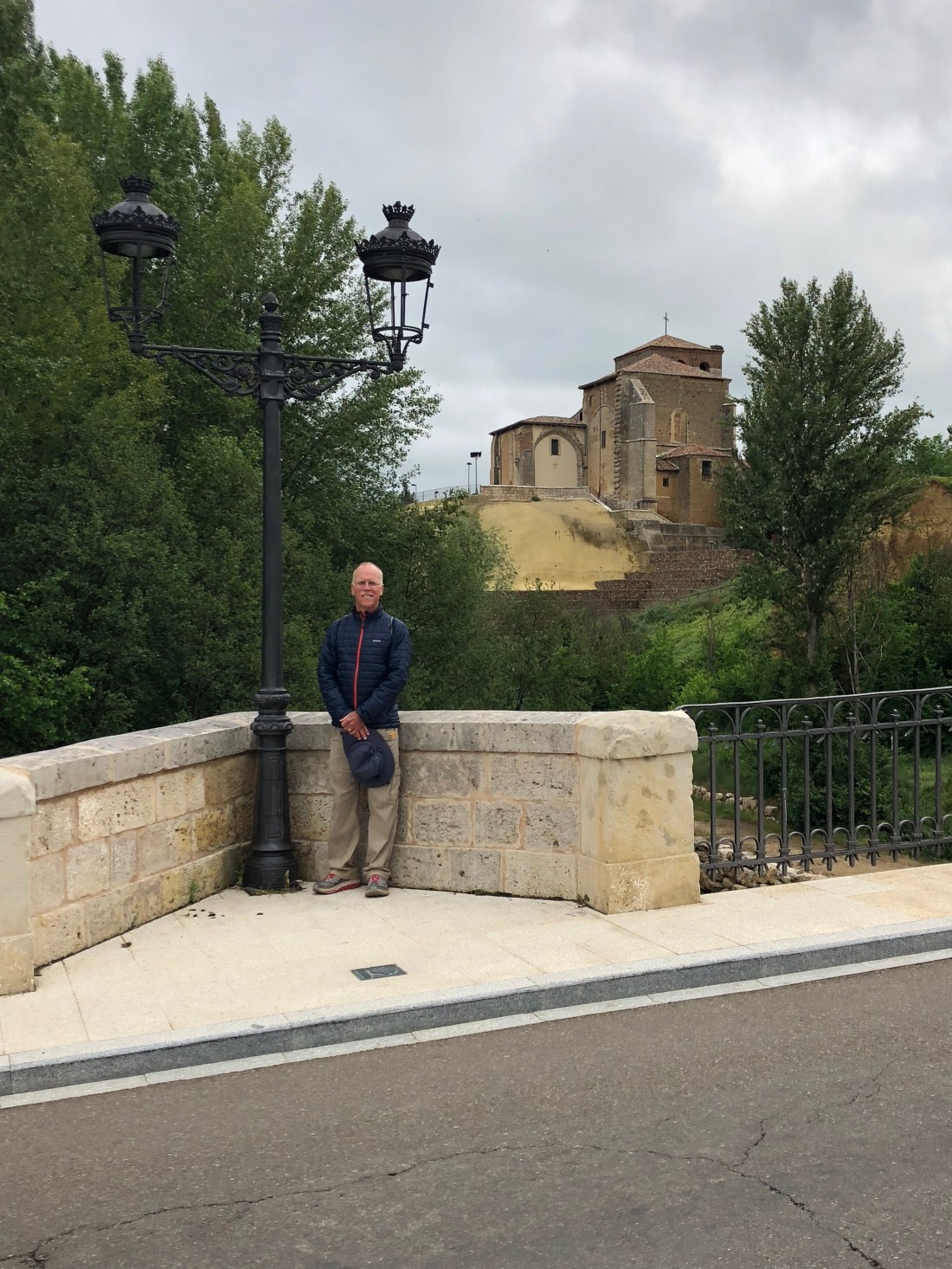
And here is the Iglesia de Santiago seen from the bridge over the rio Carrion.IMG_2306

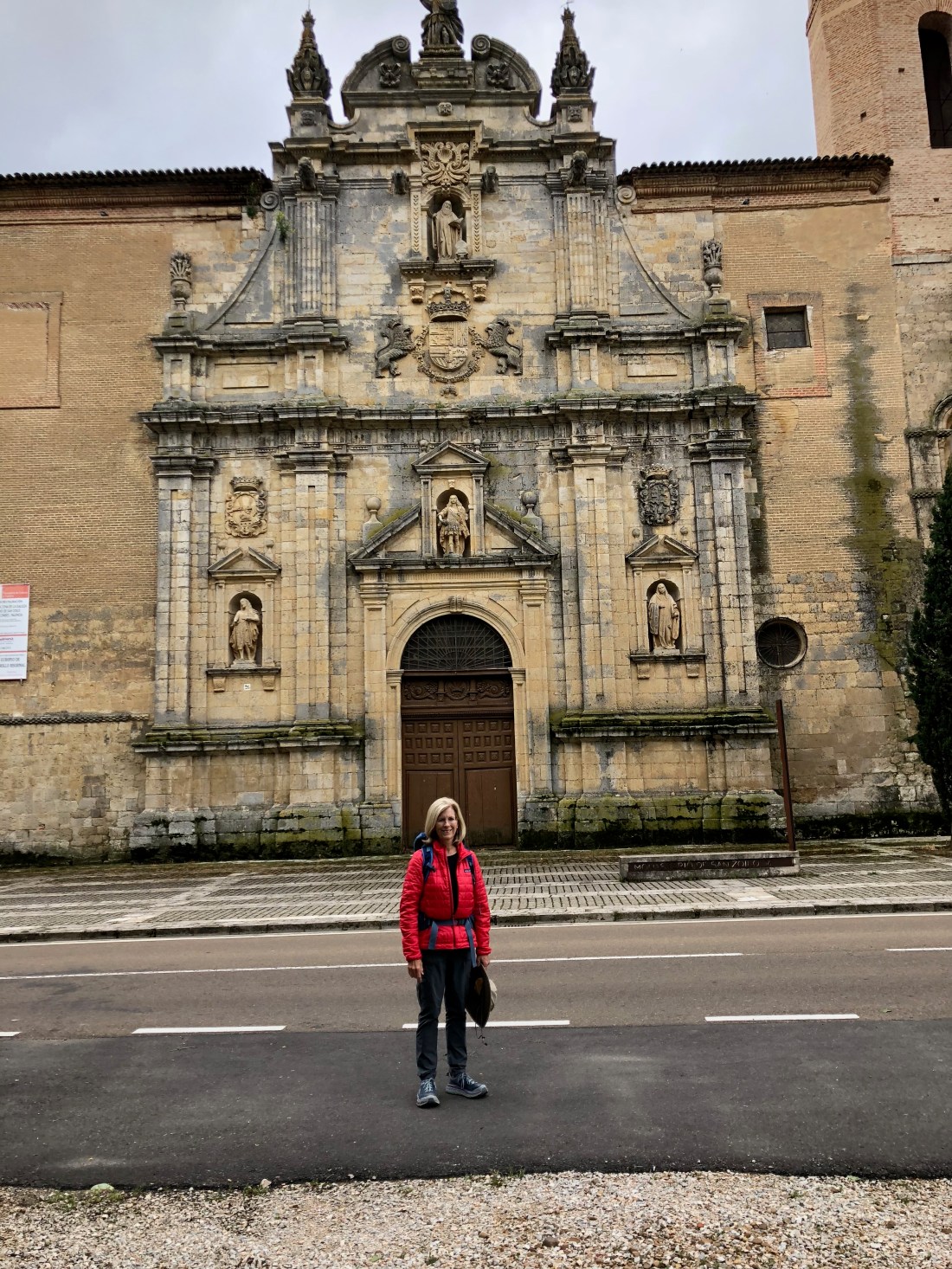
Just a little further was the former monastery San Zoilo, which has been converted into a hotel.IMG_2308

After leaving the convent/hotel, we walked directly on the shoulder of a narrow and busy highway out of Carrion.IMG_2309The highway had fast moving big rigs whizzing by.  I didn’t take pictures of the trucks because I didn’t want to get hit.  We had to step out on the highway several times to get around bushes that were growing out into the shoulder. 
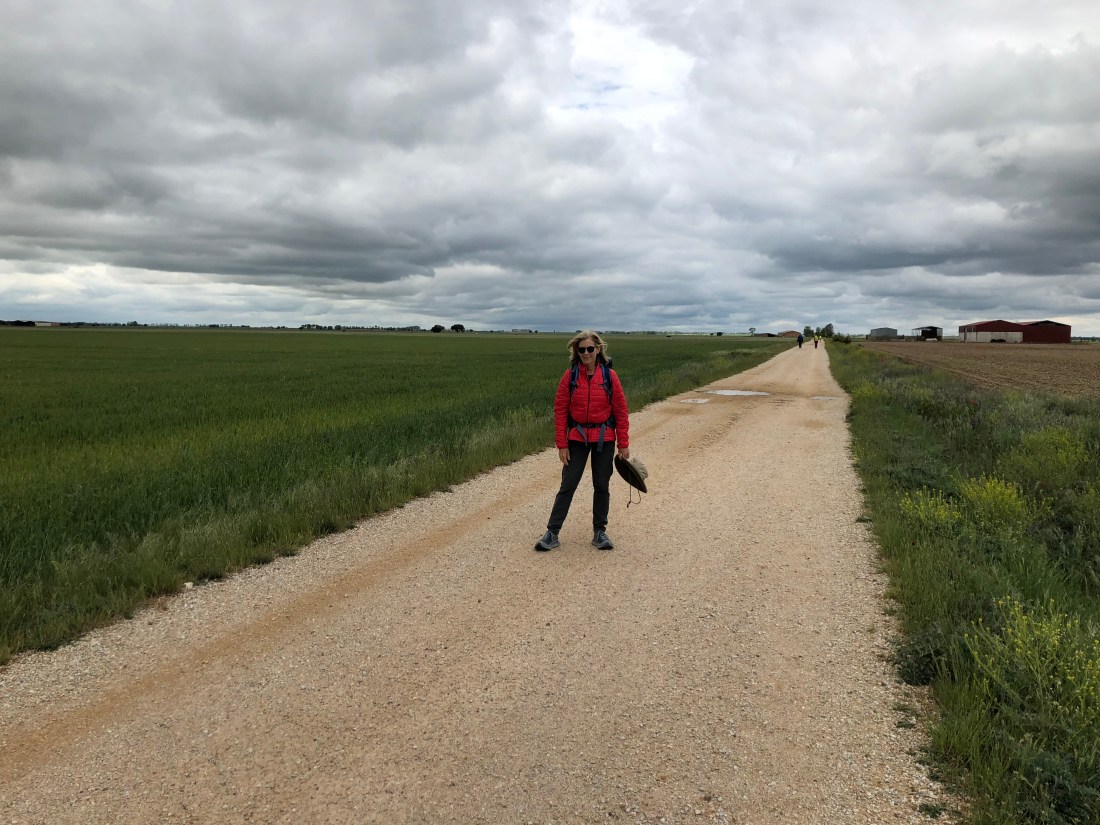
This part of the Camino is unsafe.  No one should be walking it.  And there is no reason to walk on it.  It is totally devoid of any interest or charm.

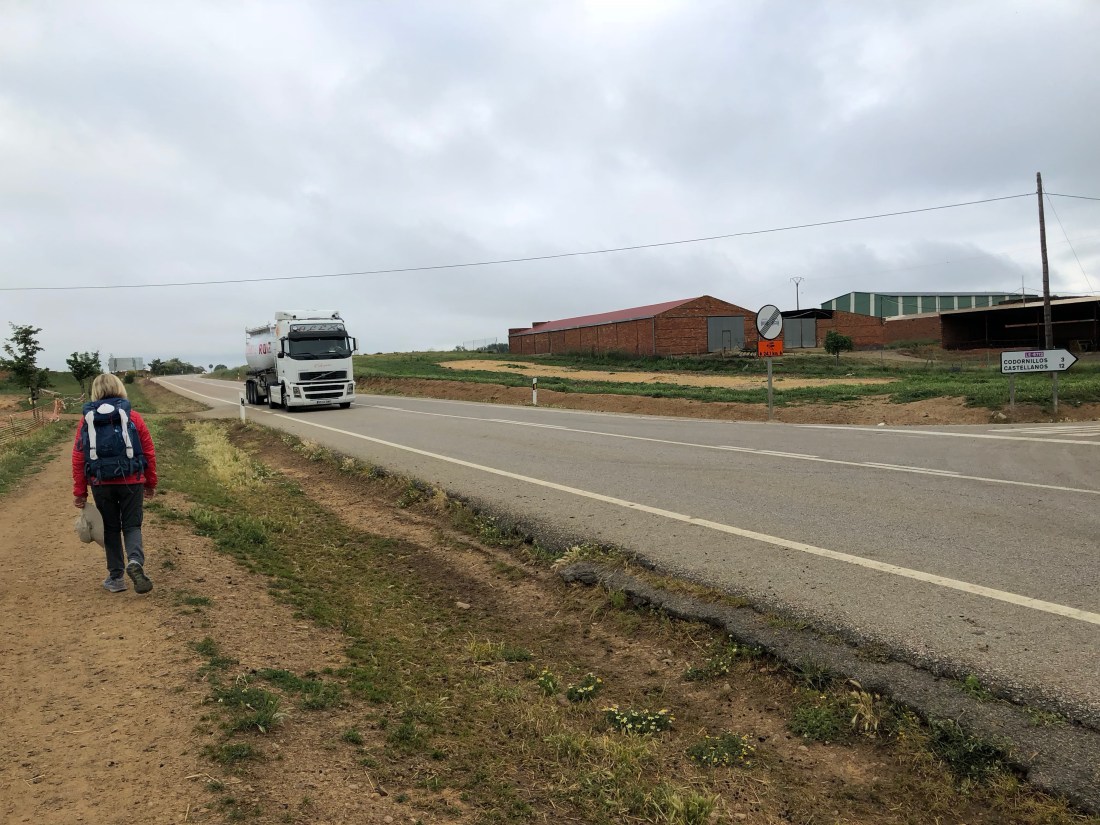
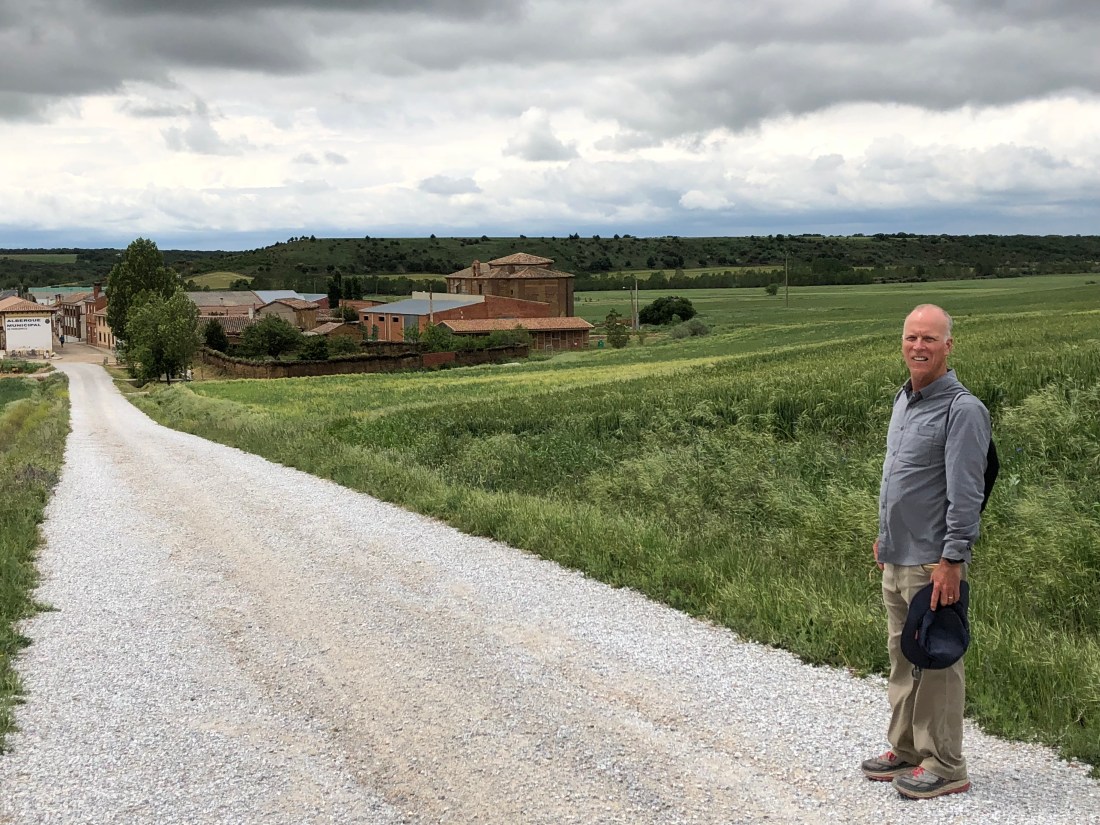
The next part of the Camino wasn’t much better.  After leaving the highway, we turned onto a narrow one-lane blacktop.  We walked on the edge of the blacktop for several miles.  There weren’t a lot of cars, but the ones that passed us were going fast.  This part of the Camino also is unsafe and should not be traveled on foot.

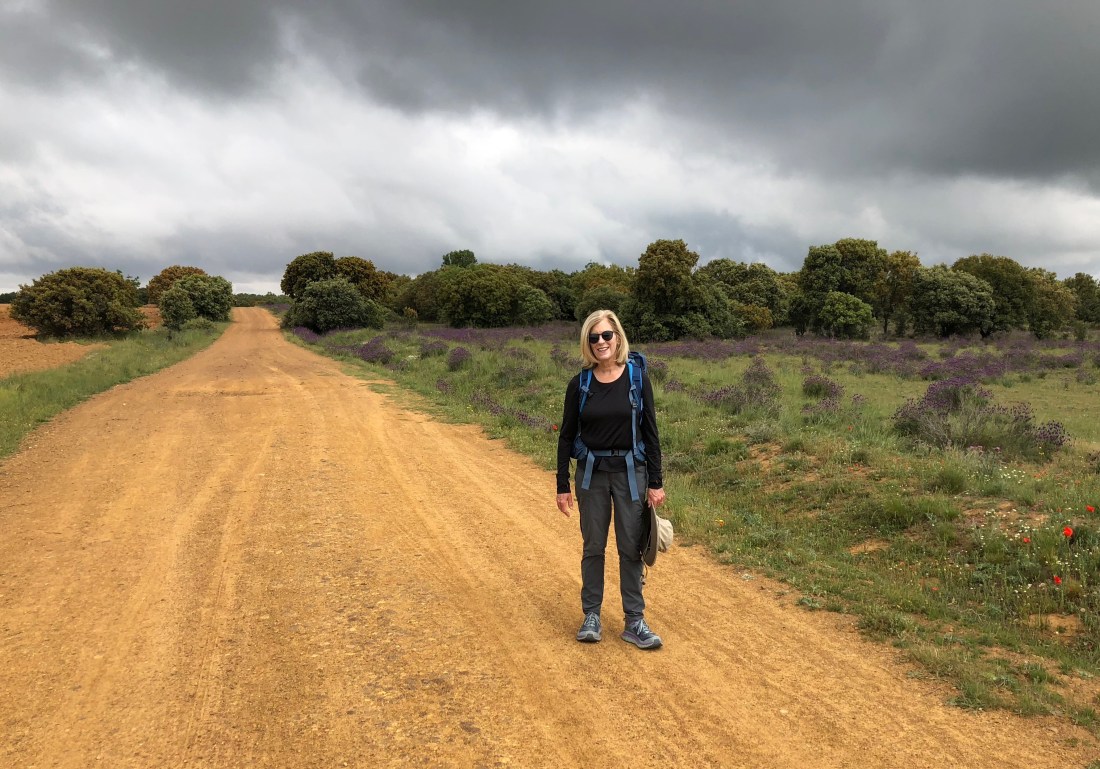
Finally, the Camino turned off onto a dirt track leading through farmland.IMG_2322

We followed the path to our destination for the day, Calzadilla del Cueza, which was a Camino village devoted to servicing pilgrims. Without the Camino, Calzadilla would have disappeared long ago.IMG_2328Excepting  Carrion, none of this was worth walking.  The unsafe roadways should be avoided.  And the dirt track beyond the blacktop was dull and within sight of a busy highway for a long stretch in the beginning.  Finally, Calzadilla was just another row of pilgrim businesses operating out of derelict buildings.  The hostel we stayed in–the best in town–was overpriced and not very good.  Today, we would have been better off in a taxi or a bus.
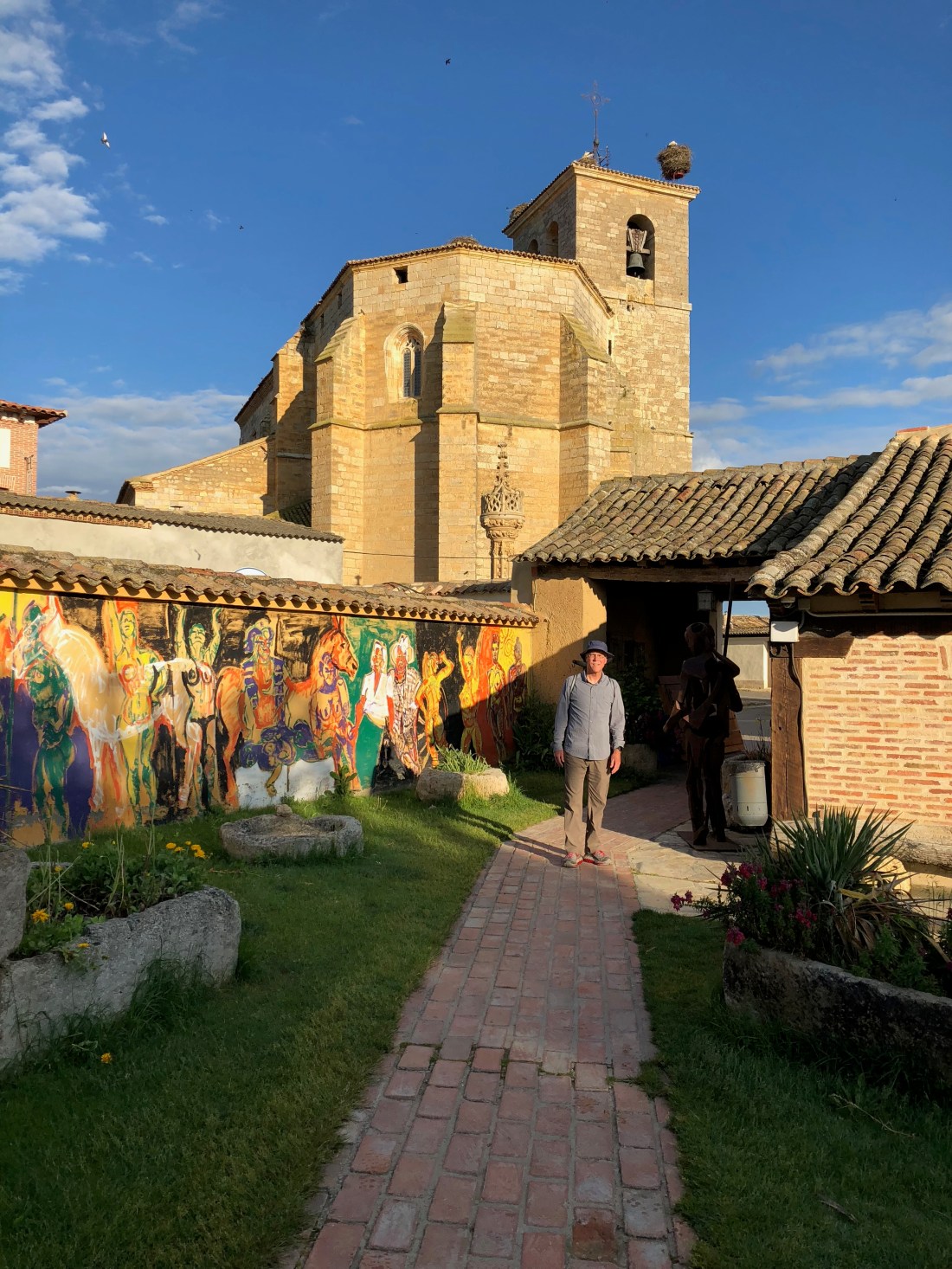
Boadilla del Camino to Villacazar de Sirga

We started the day in Boadilla del Camino under sunny skies.

Here is the albergue in Boadilla where we had breakfast.IMG_2229We also had lunch at the albergue yesterday afternoon.  There were a lot of tired and hungry looking pilgrims at lunch, and there was a big crowd at breakfast early this morning.  Although the man running the restaurant was besieged with pilgrims  that he is unlikely to ever see again, he didn’t rush them but was attentive to each one.  He wasn’t annoyed when he couldn’t understand them but laughed and smiled. 
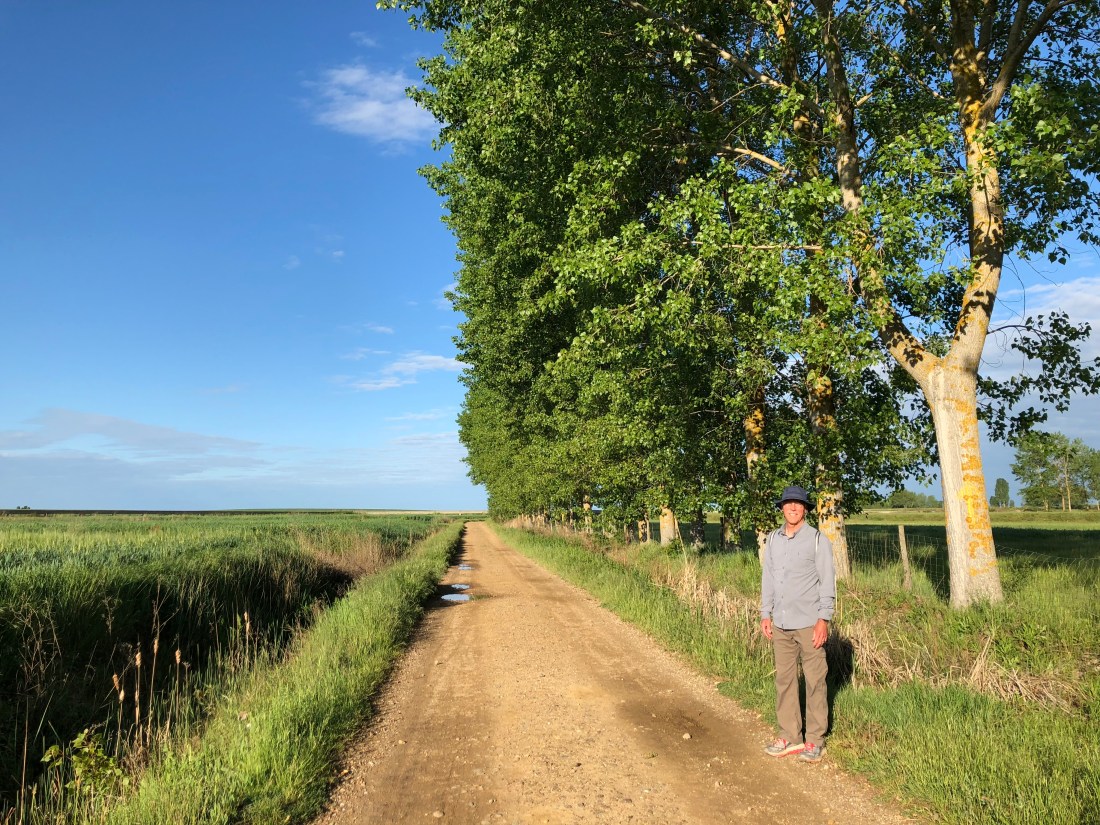
The Meseta is behind us, and the Camino goes through flat farmland.IMG_2232

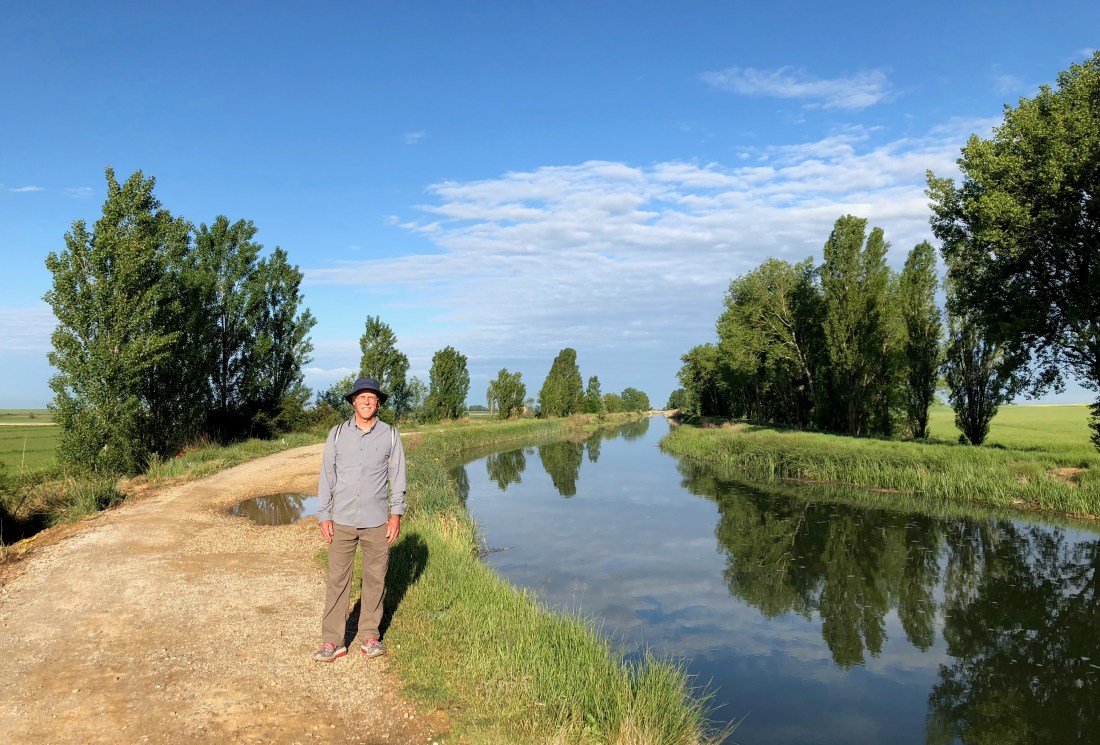
The Camino turned onto a path beside the Canal de Castilla.IMG_2236We walked along the canal for about an hour and then came to the village of Fromista.
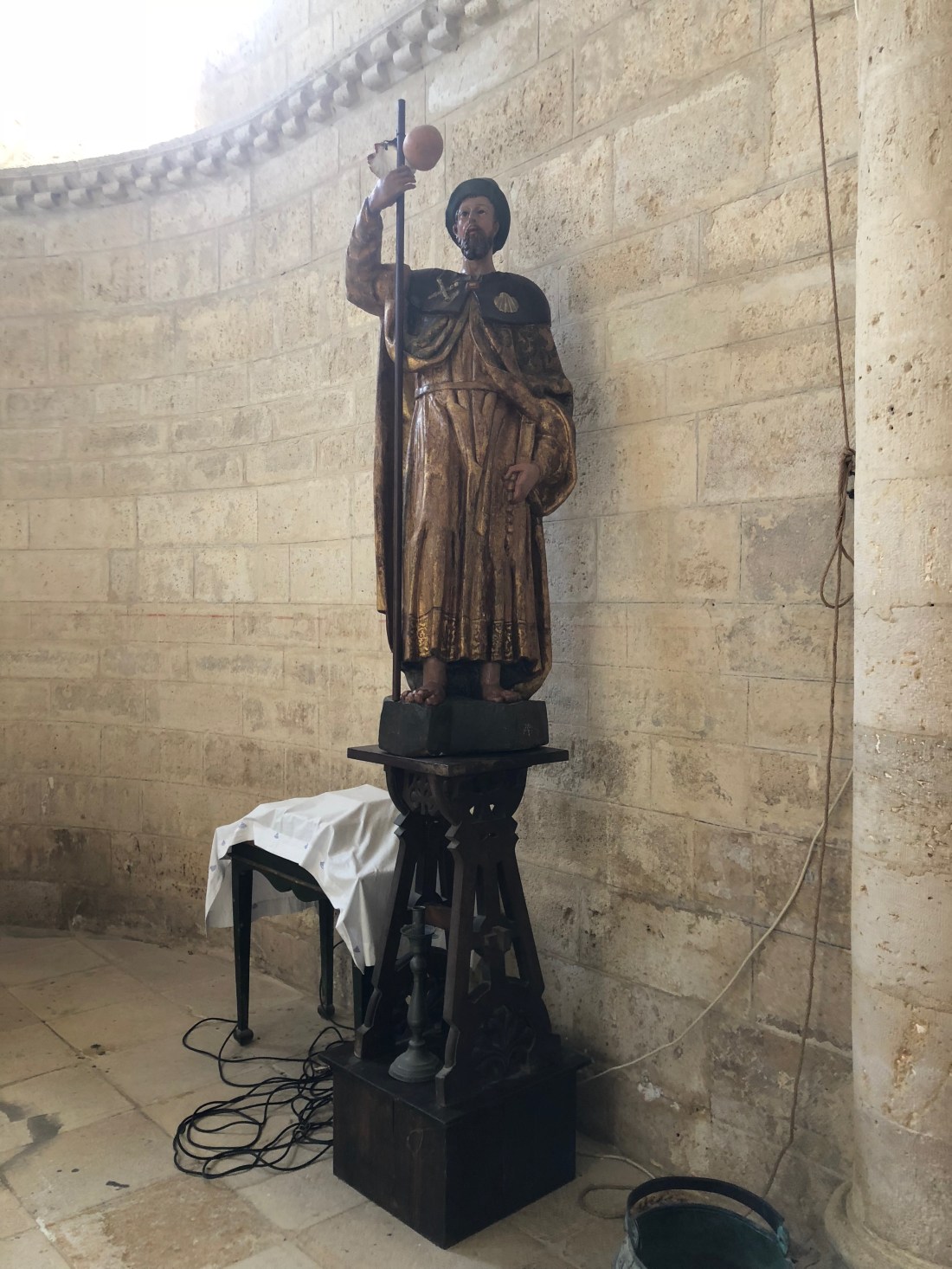
We went into the cathedral and found a statue of Santiago as a pilgrim.IMG_2249

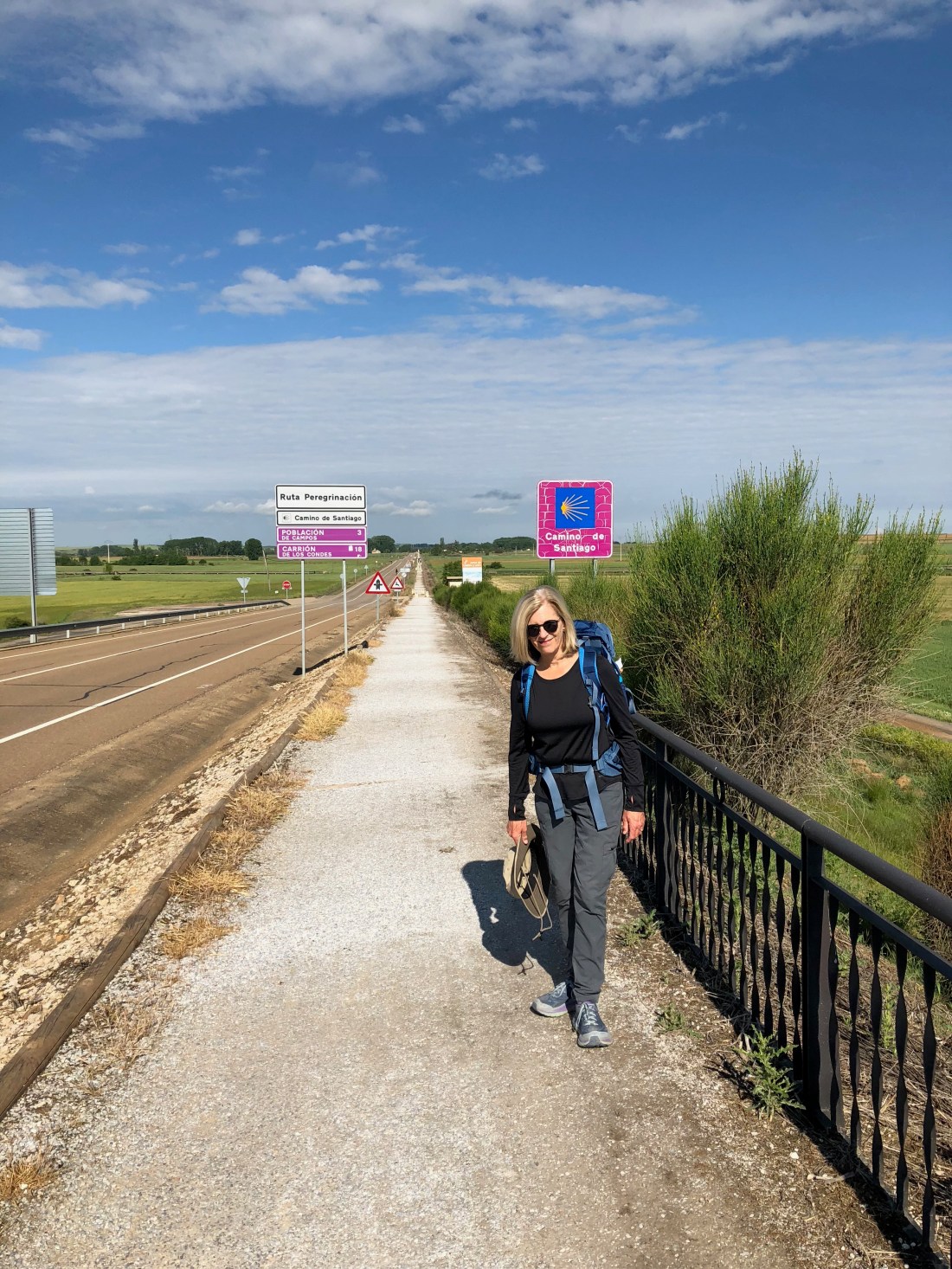
After leaving Fromista, we walked alongside a highway for about a mile.IMG_2256The Camino turned off the highway and went into the village of Poblacion de Campos.  We arrived in the village at around 11 a.m.  We were hungry and stopped at a hotel as some stragglers in the hotel’s dining room were finishing up a late breakfast. We asked an older woman who was clearing dishes if we could get something to eat.  She seemed a little exasperated at first.  She asked if we wanted lunch or breakfast.  We told her whatever she had was fine.  She brought us eggs and toast.  The longer we sat and ate, the more food she brought, and the more she smiled.  As we were leaving, she handed us oranges, “para el Camino.”
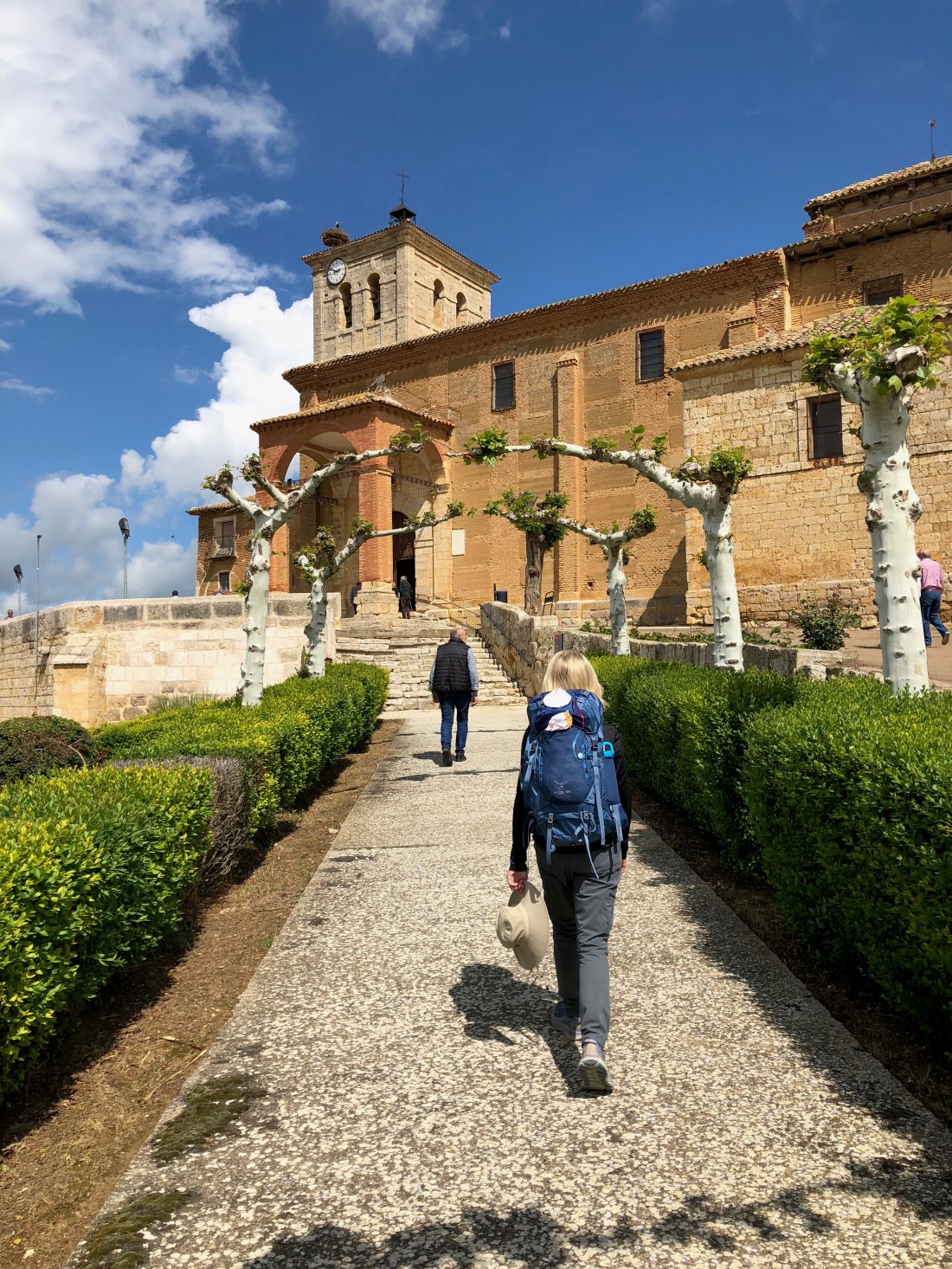
When we left the hotel, bells from a nearby church were ringing.  We followed the bells to the church for Mass.IMG_2265We walked into the church and sat in a pew toward the rear.  Several minutes later, a man and his wife, smiling and nodding, climbed over us to take their regular Sunday morning spot on the pew beside us. People entering the church also turned to us and smiled.
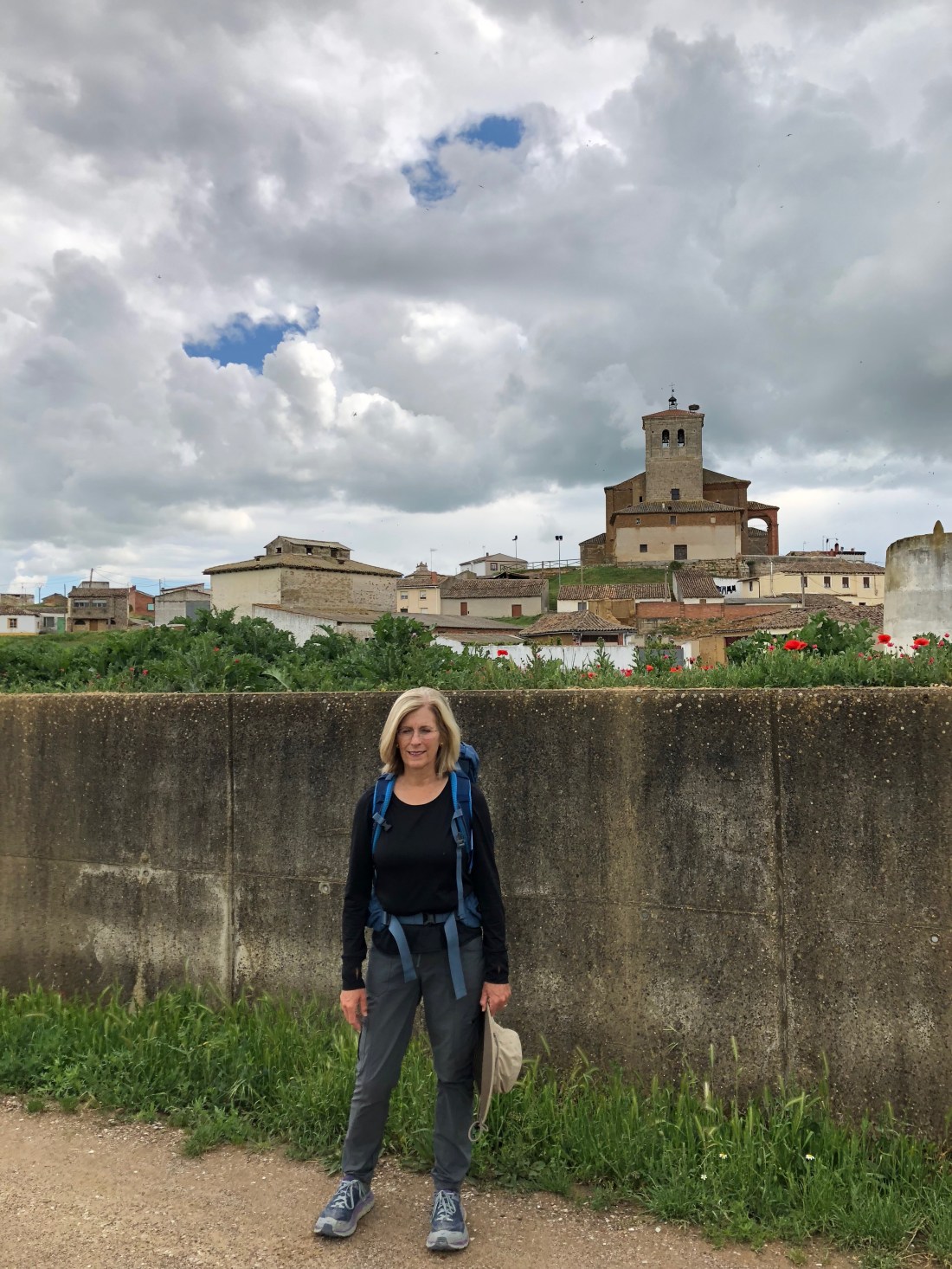
After Mass, we walked down a hill and rejoined the Camino. 

Here is the church seen from the Camino.IMG_2266

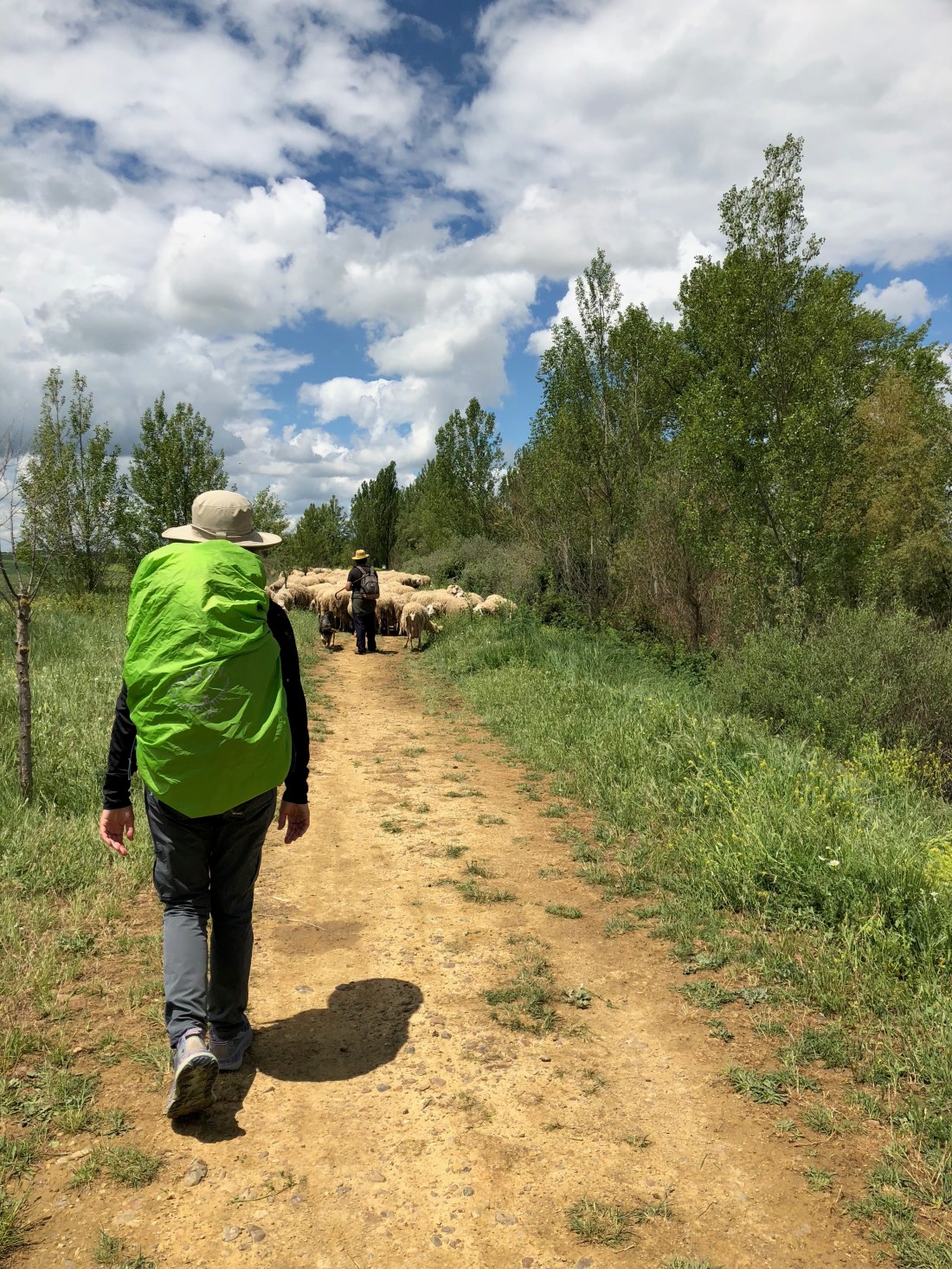
After walking for several miles, Anne told me that she saw an army of warriors ahead on the Camino.IMG_2281I told her that it was a flock of sheep, but she wouldn’t listen.
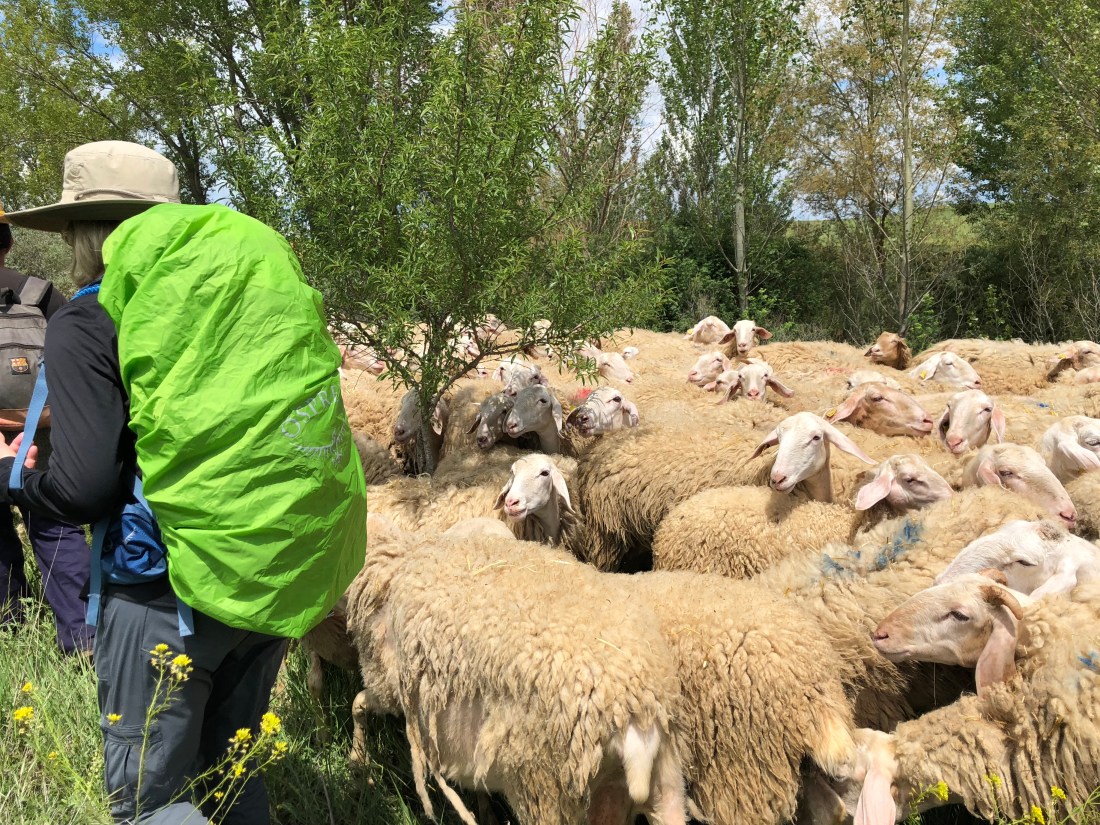
She plunged in to battle—until the shepherd and his dog steered her away from the flock.IMG_2283Fortunately, no one was hurt, and we continued on with our adventures.
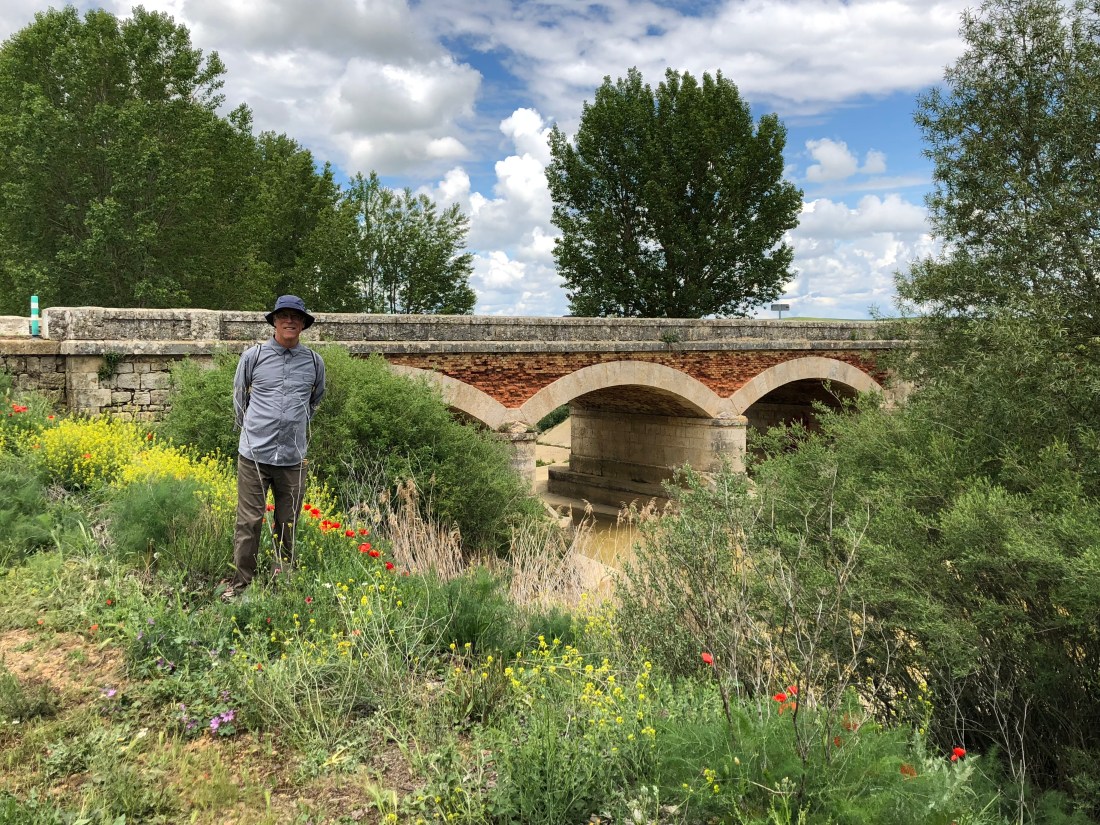
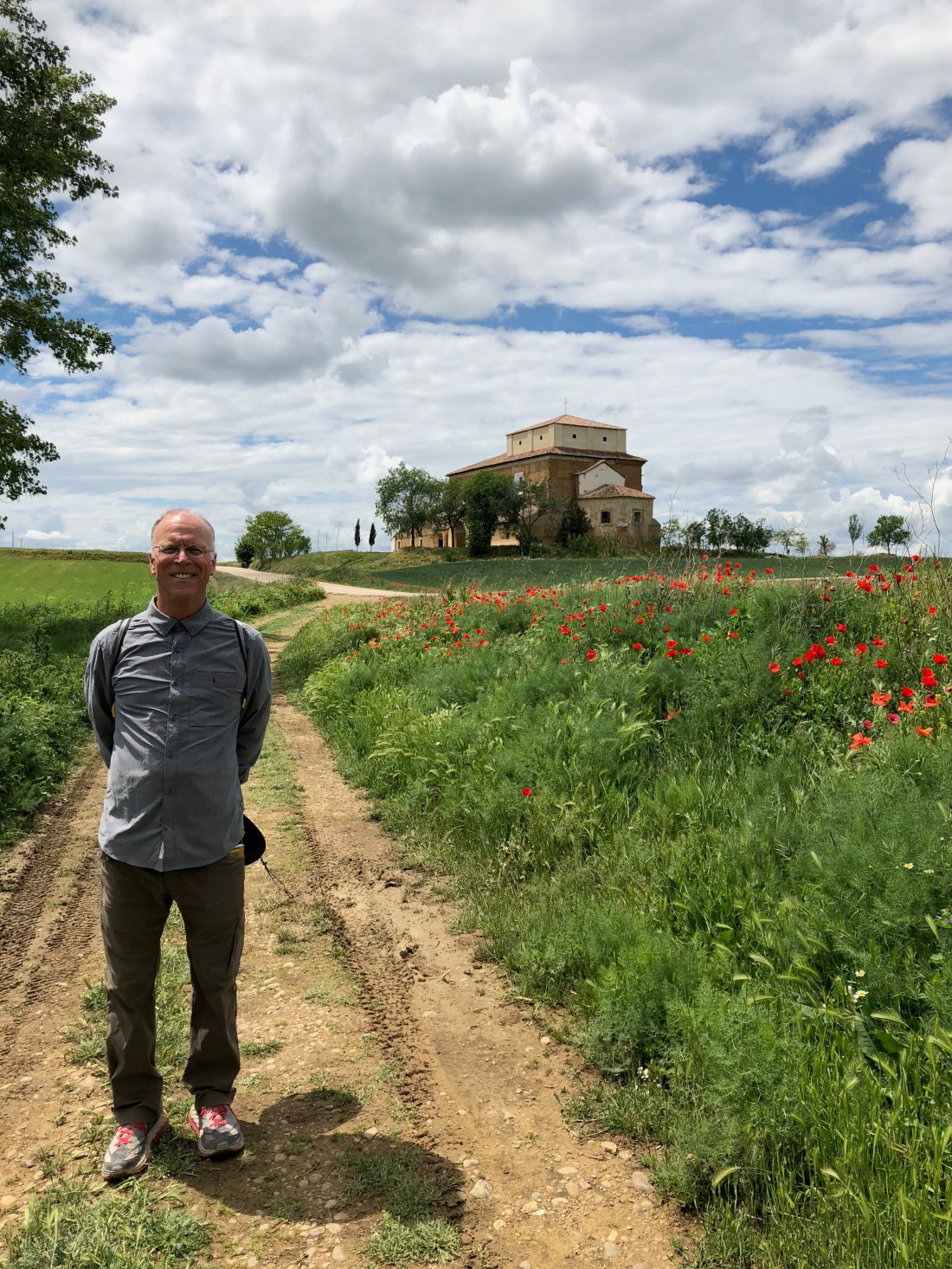
The path we were on ran beside the rio Ucieza.

Near the end of the path was a bridge over the river.IMG_2287

A short distance from the bridge was the Ermita de la Virgen del Rio.IMG_2288

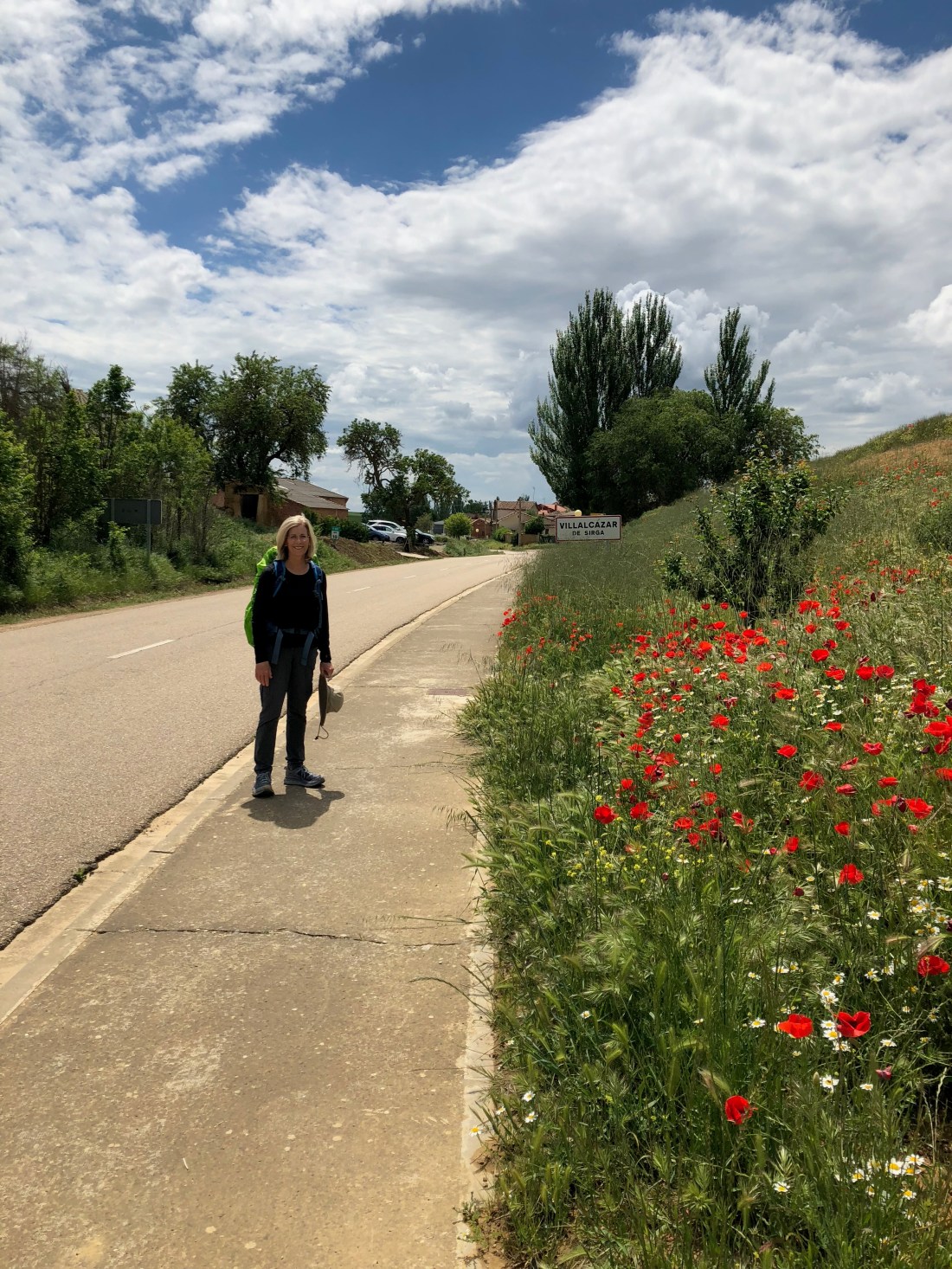
Leaving the footpath, we walked beside a road into the village of Villalcazar de Sirga, our destination for the day.IMG_2289

At the church in Villalcazar, we found another statue of Santiago the pilgrim.IMG_2290He looks unhappy.  Maybe he has shin splints. (Mine feel better, and the swelling has subsided.)

At dinner, Anne and I walked into a restaurant behind a large group who got the last tables.  Three German pilgrims having dinner motioned us over to sit with them.  We sat and talked with them as best we could—they didn’t speak much English, and we don’t speak German, but it didn’t really matter.  Their kindness said enough.