
We had a great walk today.
We got an early start from our hostal in Sahagun.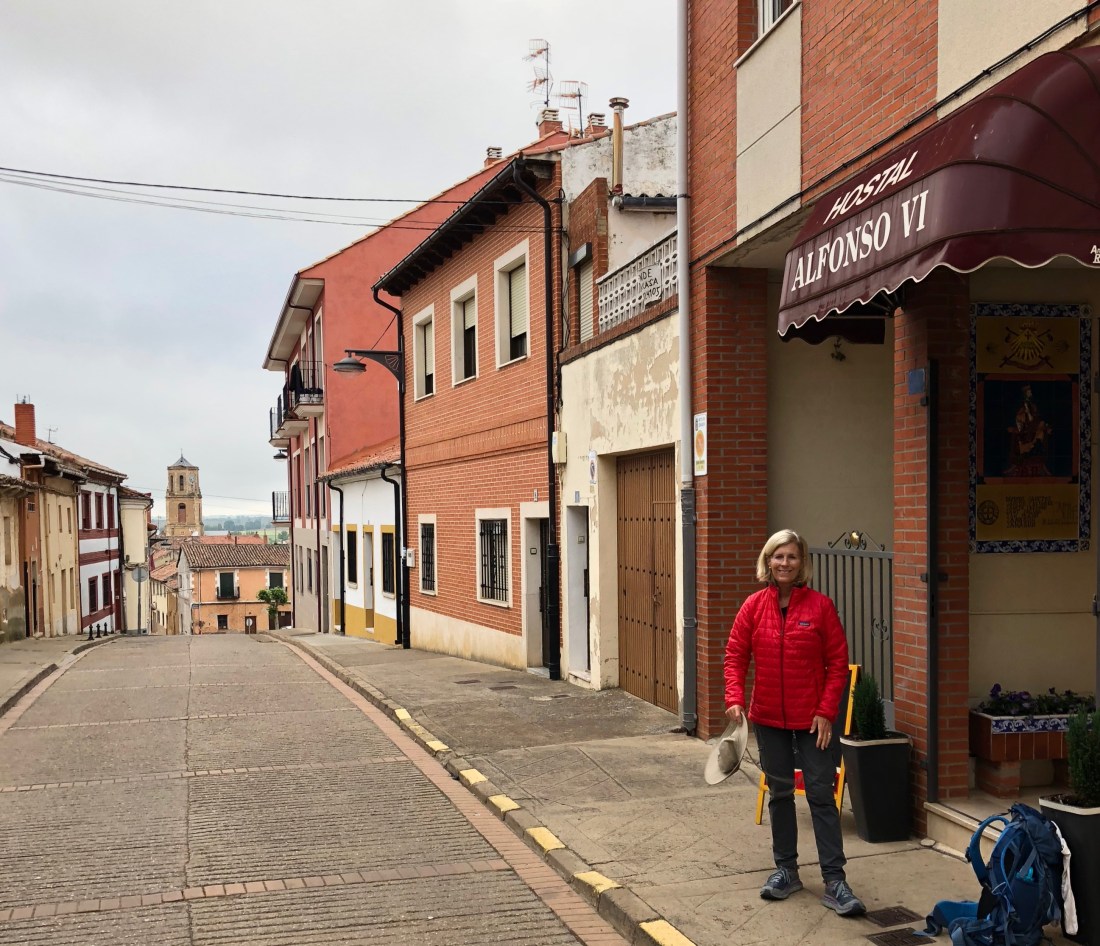
“Hostal” must be Spanish for cheap hotel. Most of the hostals we have stayed in are adequate, like this one in Sahagun. But there is always something wrong. In Calzadilla de la Cueza there was brown tap water and the lights inexplicably came on at 2 a.m. In this one, someone forgot to put a mattress on top of the box spring in our room. We were exhausted and almost asleep by the time we figured out why the bed was hard and lumpy.
Leaving Sahagun, the Camino crossed the Puente Cano over the rio Cea.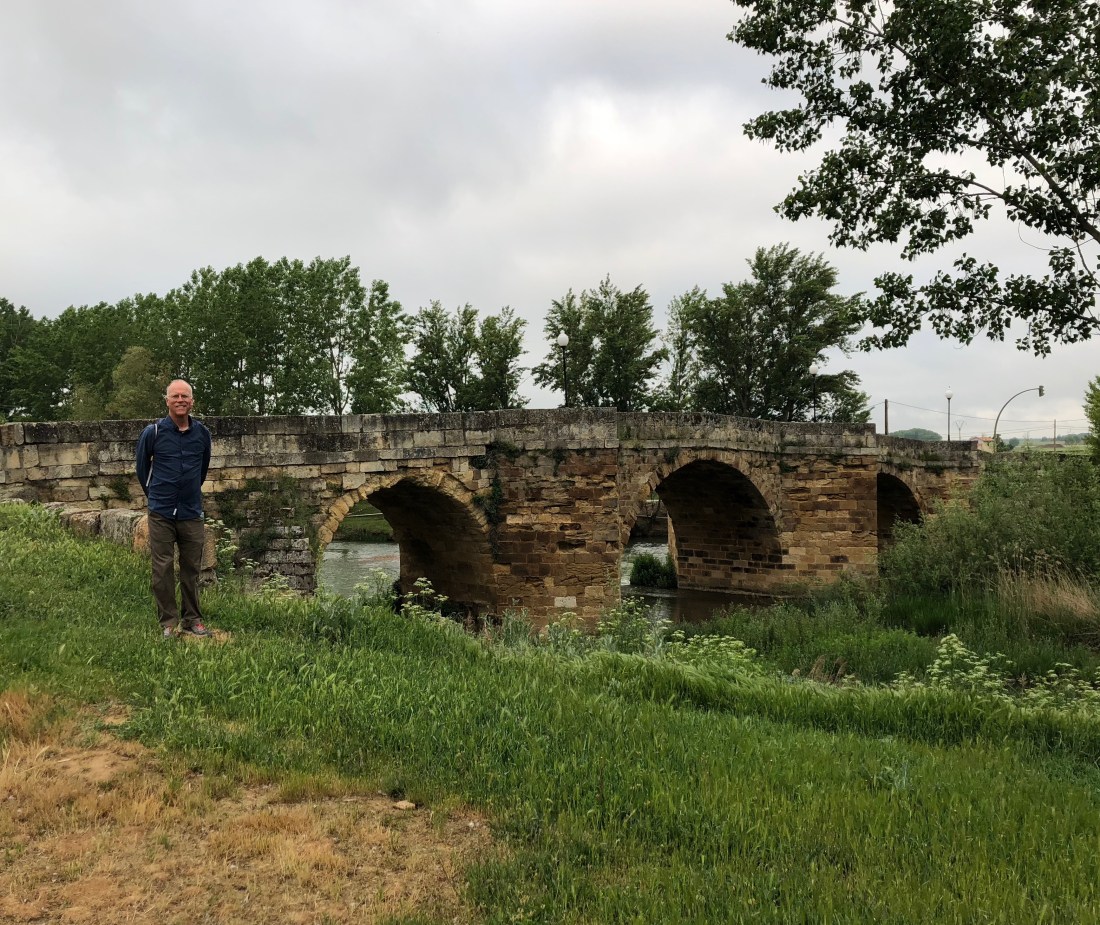
We walked a short distance through a park and then were back on the highway.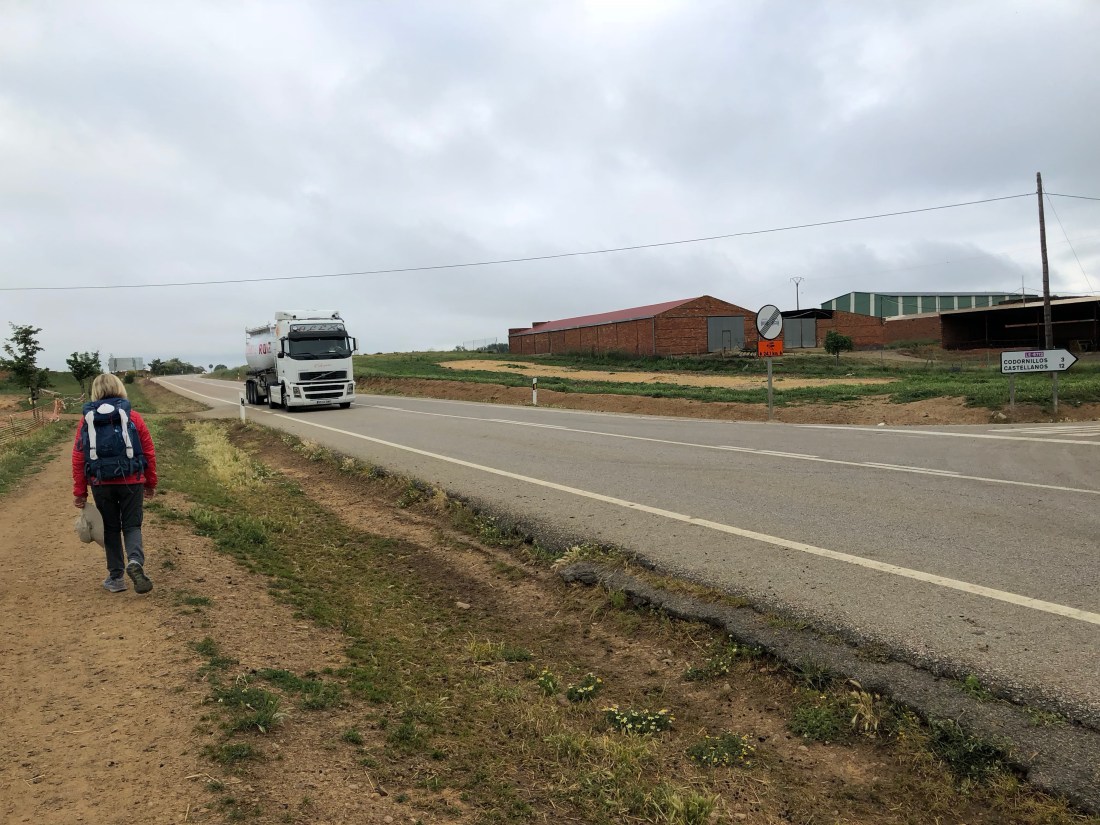 We walked along the highway for about an hour and then came to a roundabout outside the village of Calzada del Coto, where the Camino split into two different tracks. One track continued straight along the highway. The second turned right to Calzada del Coto and then continued on through farm and woodland.
We took the route that went through Calzada del Coco.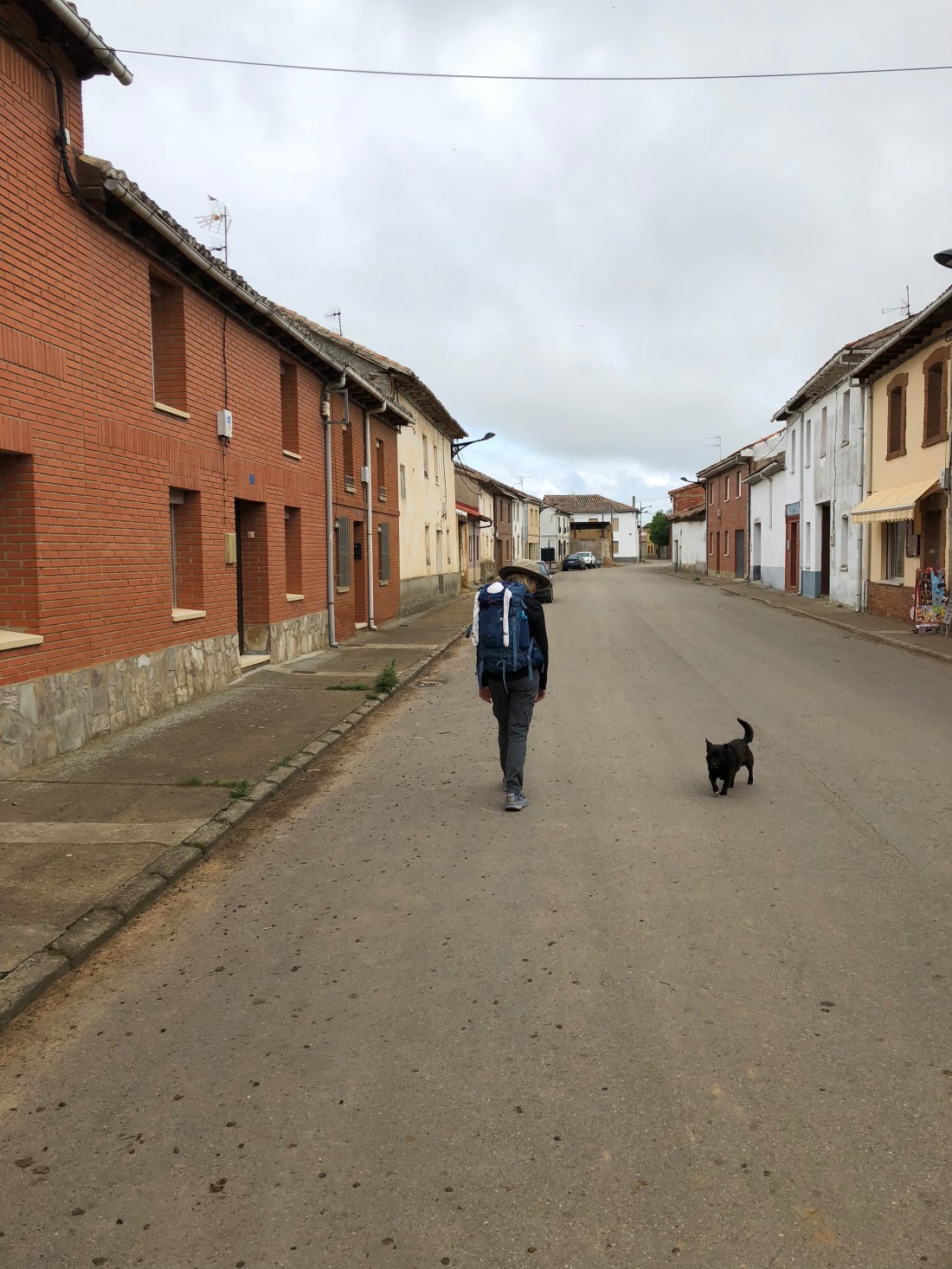
Here is the main square in Calzada.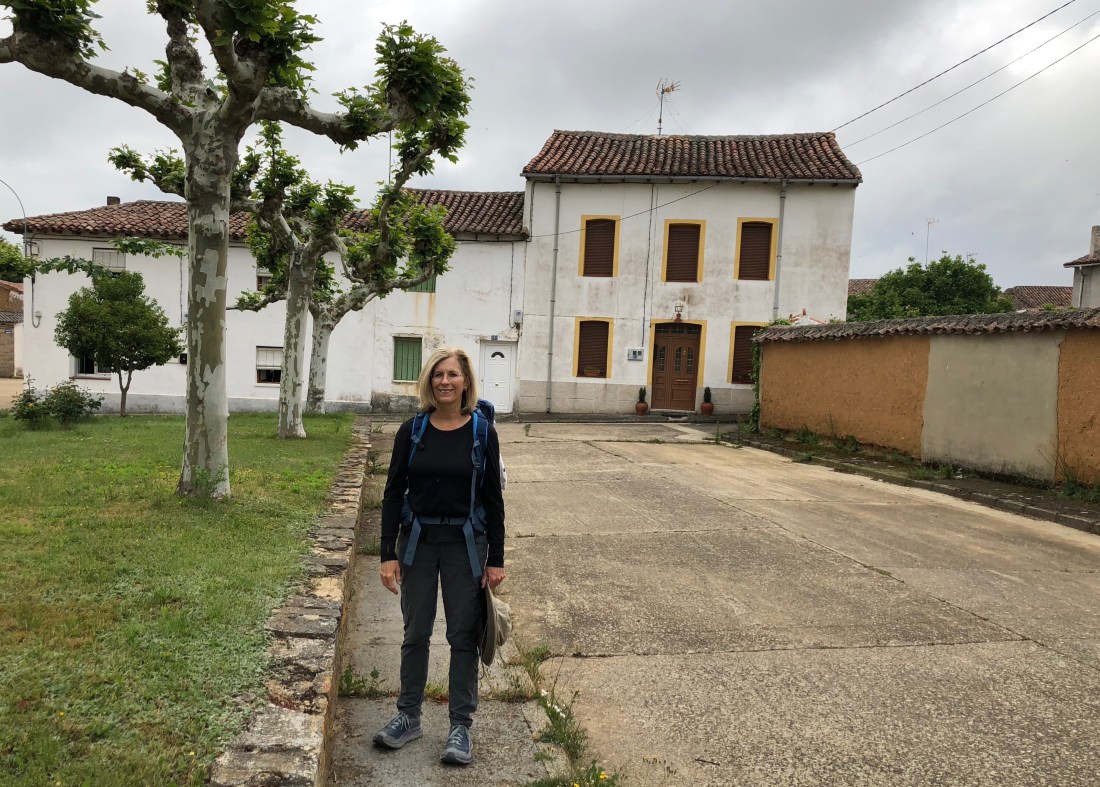
Here is our track on the Camino several miles outside of Calzada.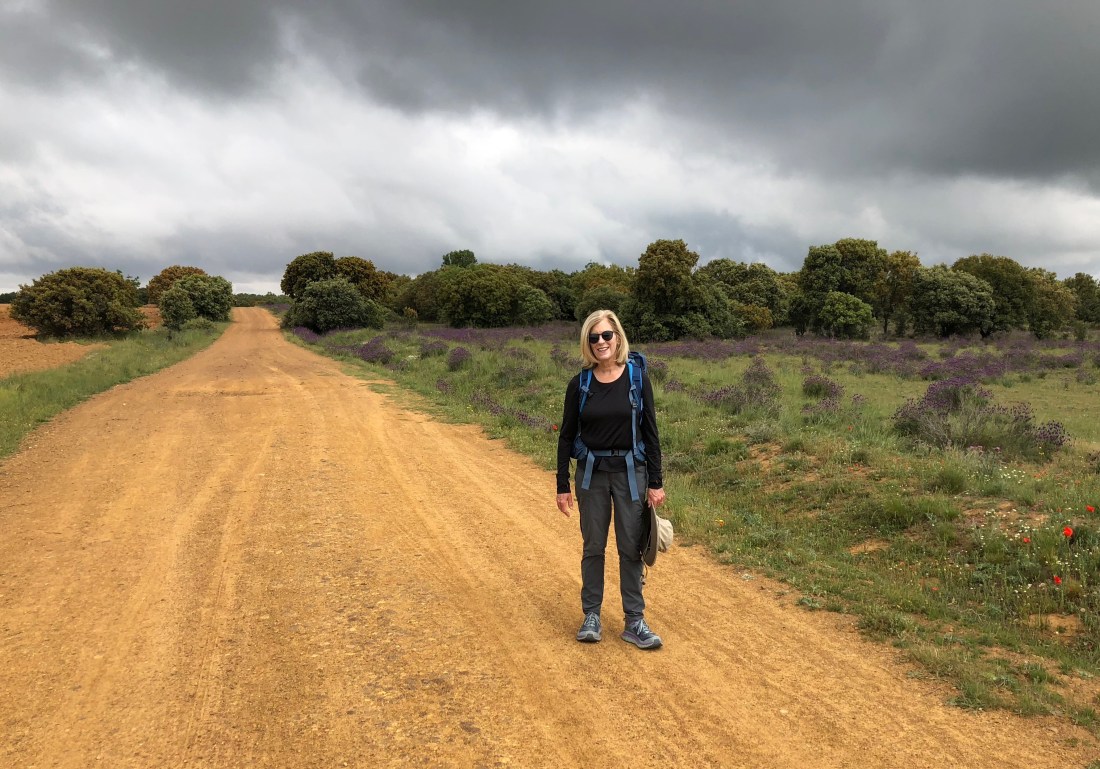 In four hours of walking on this road, we saw two people, both of them young women walking alone. We had walked with a small group of people out of Sahagun, and we were the only ones who took the more remote track, which adds a little extra distance to the walk.
But it was a good trade off.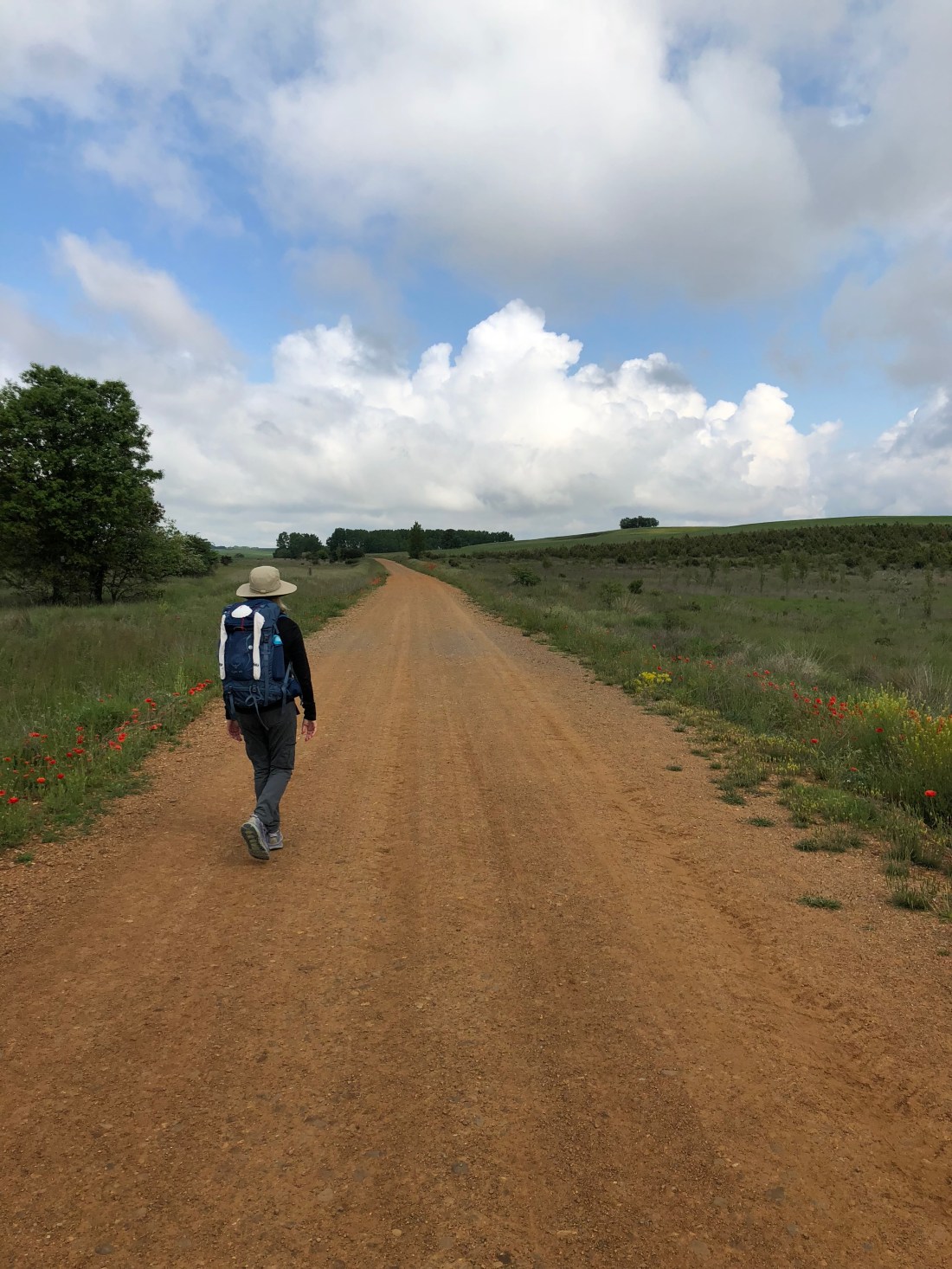
Today’s walk was short. We reached our destination, Calzadilla de los Hermanos a little before noon.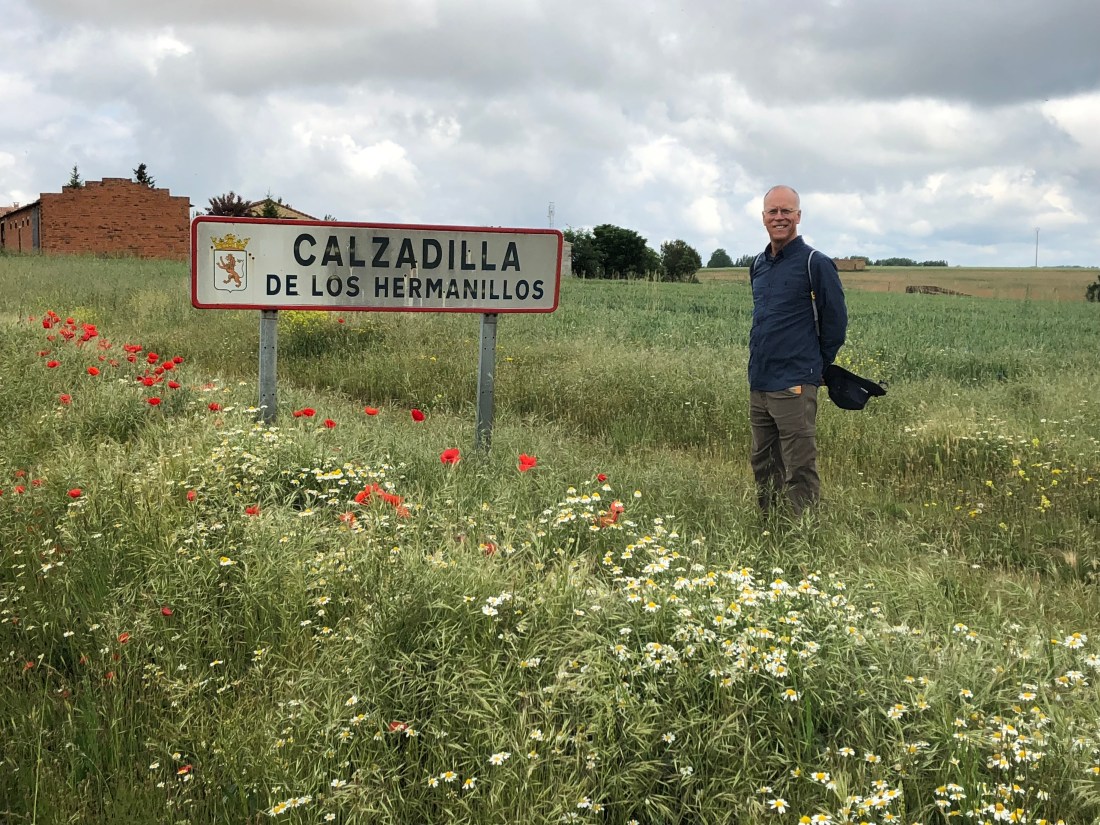
At noon, we walked up to the Ermita de la Virgen de los Dolores in the village.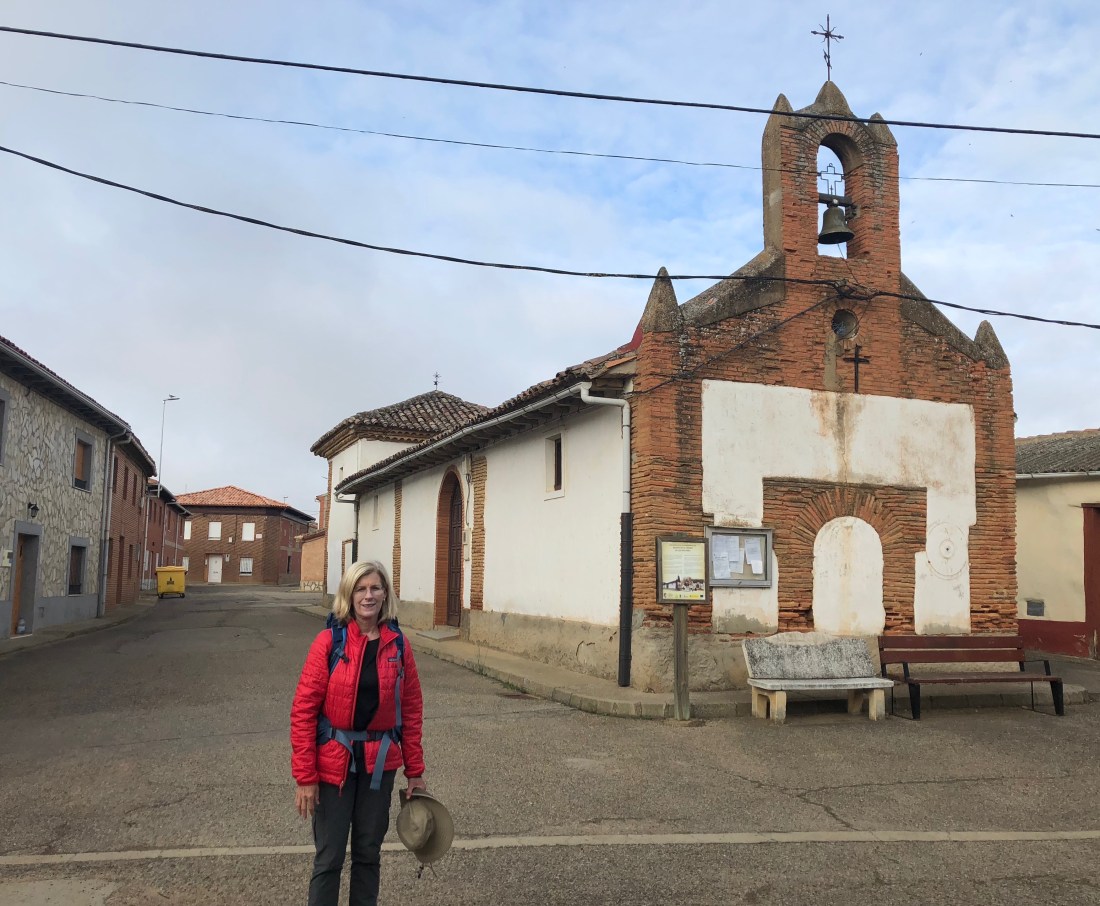
The door was open, and a man sitting in a car near by motioned for us to go in. Anne believes that it was a gesture of kindness—I’m not so sure. The church was filled with elderly women, praying. A priest was kneeling at a pew in the rear of the church, praying. We sat at a pew near the door. After several minutes, the priest got up, put more incense in a holder just inside the door, and started the Mass.
All the services that Anne and I have attended here have been in Spanish. Still, it is pretty easy to follow the outline of the Mass, if not the content. In this one, the priest’s homily started with a history lesson, covering the Reconquista, musselmen, and San Fernando (Fernando III, King of Castile, and a major figure in starting to push the Moors out of Spain.) The priest used the history lesson as a jumping off point for his sermon, which I couldn’t follow. Maybe it was for the best that I couldn’t follow what he was saying. Anne was pretty moved by the Mass, but I kept stifling sneezes from the incense and thinking about the man in the car. If the Mass was important for us to attend, why didn’t he come in too?
At the end of Mass, we stood and waited for the women to file out of the church. Most of them were under 5′ and many were about 4 1/2 feet. I have read that short stature among the elderly in Spain is due to starvation during the Spanish Civil War. Stunted elderly people can be seen throughout Spain, an enduring legacy of an old antagonism.
Here is the Casa Rural where we stayed.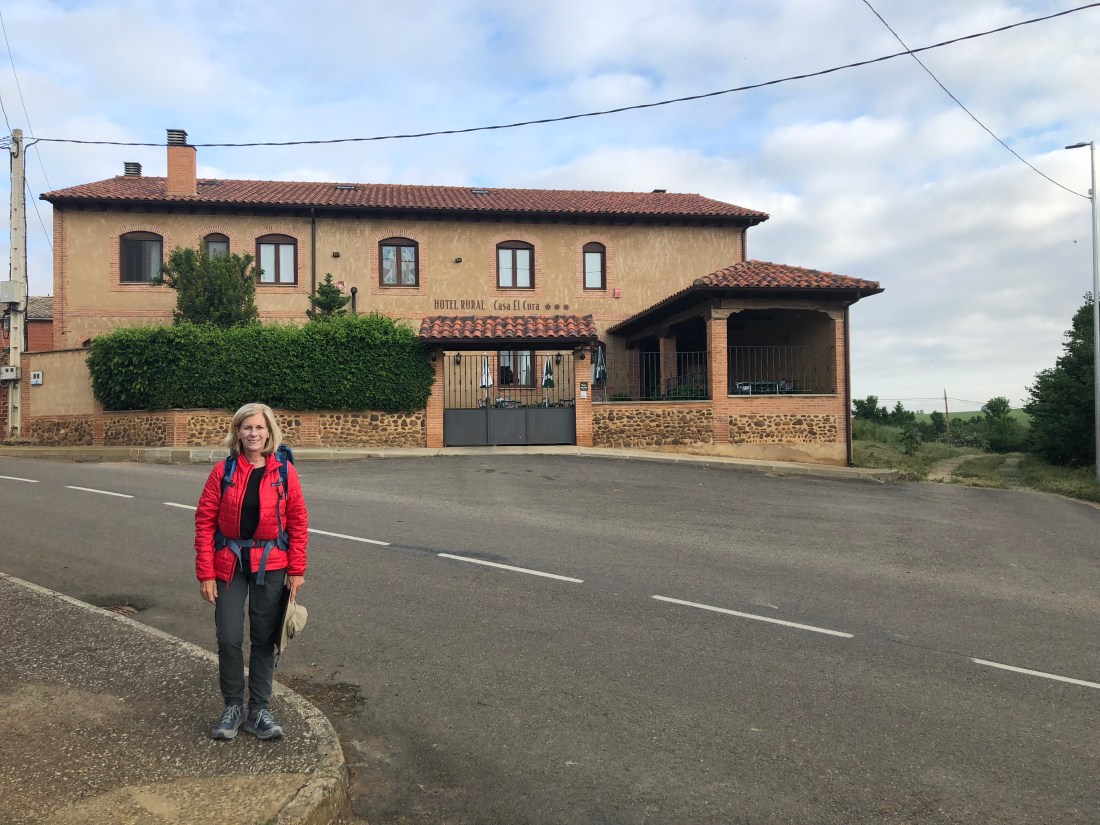 The Casa Rural–much like a bed and breakfast–is run by a young married couple who grew up in the village. On the first floor is a sitting room with old photos of the wife’s family, who have been in the village for many generations. She explained that her great grandfather had been the village’s mayor. There was an old photo on the wall of her great grandfather dressed in a military uniform. While she was explaining that he had been “in the army,” her husband walked over, rolled his eyes, raised his arm with his elbow bent, and did a couple of quick goose-steps. His wife shushed him, and then showed us a photo of her grandfather with a herd of sheep.
We heard that the old women go to the Ermitage every night to say the Rosary. I hope that they are praying for us all.
 Kurt's Blog