
Yesterday, when we arrived in Los Arcos, it was around three o’clock in the afternoon, and we were tired and hungry. There are cafes right on the Camino, or within a block or two, but they are usually unappetizing, and we try to avoid them. We look for places off the beaten track, which can have its pitfalls.
The Cafe Mavi was a few blocks off the Camino and looked good, so I started to open the door.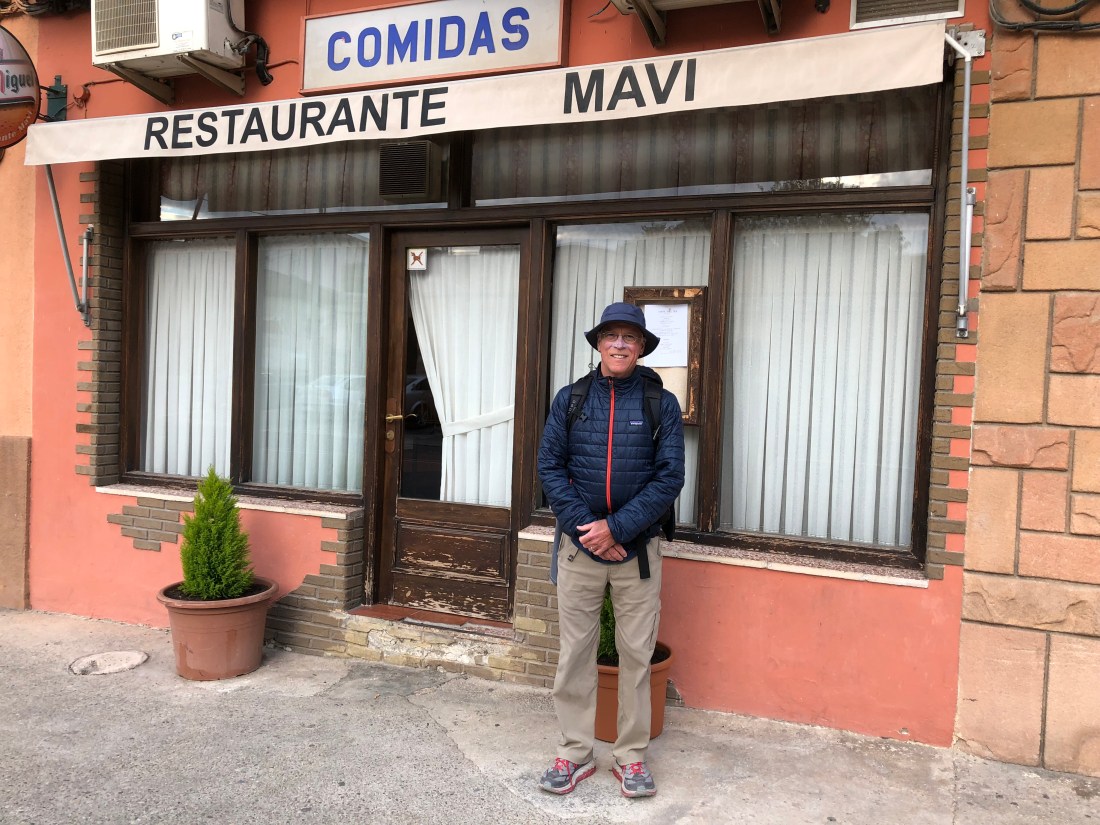 Anne told me that it was the wrong door—how did she know?—but I ignored her and walked into the restaurant’s dining room. It looked like the entire town was there, including a table of nuns. They all stopped eating and and turned and looked at us. A waitress at the far side of the restaurant rushed over making hand motions for us to back out the door, which we did.
We walked around to a side door and sat at a table in a small room off the bar with construction workers and truck drivers. Cafe Mavi is at the intersection of two highways that long-haul trucks continually passed through. We had a good meal with good wine. Anne and I both had the trout.
There are other instances where we have ruffled feathers by exploring off the Camino. We were ushered out of a cathedral and an art exhibit in Pamplona. We had an uncomfortable breakfast at a restaurant about a quarter mile from the Camino in St. Jean that was filled with elderly Basque men eating roasted chicken and drinking red wine for their breakfast. Although many of the locals welcome the pilgrims, many do not, especially off the Camino.
It is understandable. The Camino is certainly an economic boon to the towns and villages that it passes through, but there are costs. In the morning, as the pilgrims leave their albergues and hotels and walk out of town, it looks like the zombie apocalypse, especially now that many of the pilgrims are limping. There are lots of houses right on the Camino, and the people who live in them must occasionally have the same attitude towards the pilgrims that some residents of Mandeville Canyon have towards bicyclists. http://articles.latimes.com/2009/nov/03/local/me-cyclist3.
All considered though, people are very friendly. Many walking by on the street will greet us with “Buen Camino.” Twice now, someone has wished me “vaya con Dios.” Pretty remarkable considering the vast numbers of pilgrims descending on the Camino’s small towns and villages.
After lunch at Cafe Mavi, we went to the church in Los Arcos to check on Mass times.
Here is the cathedral: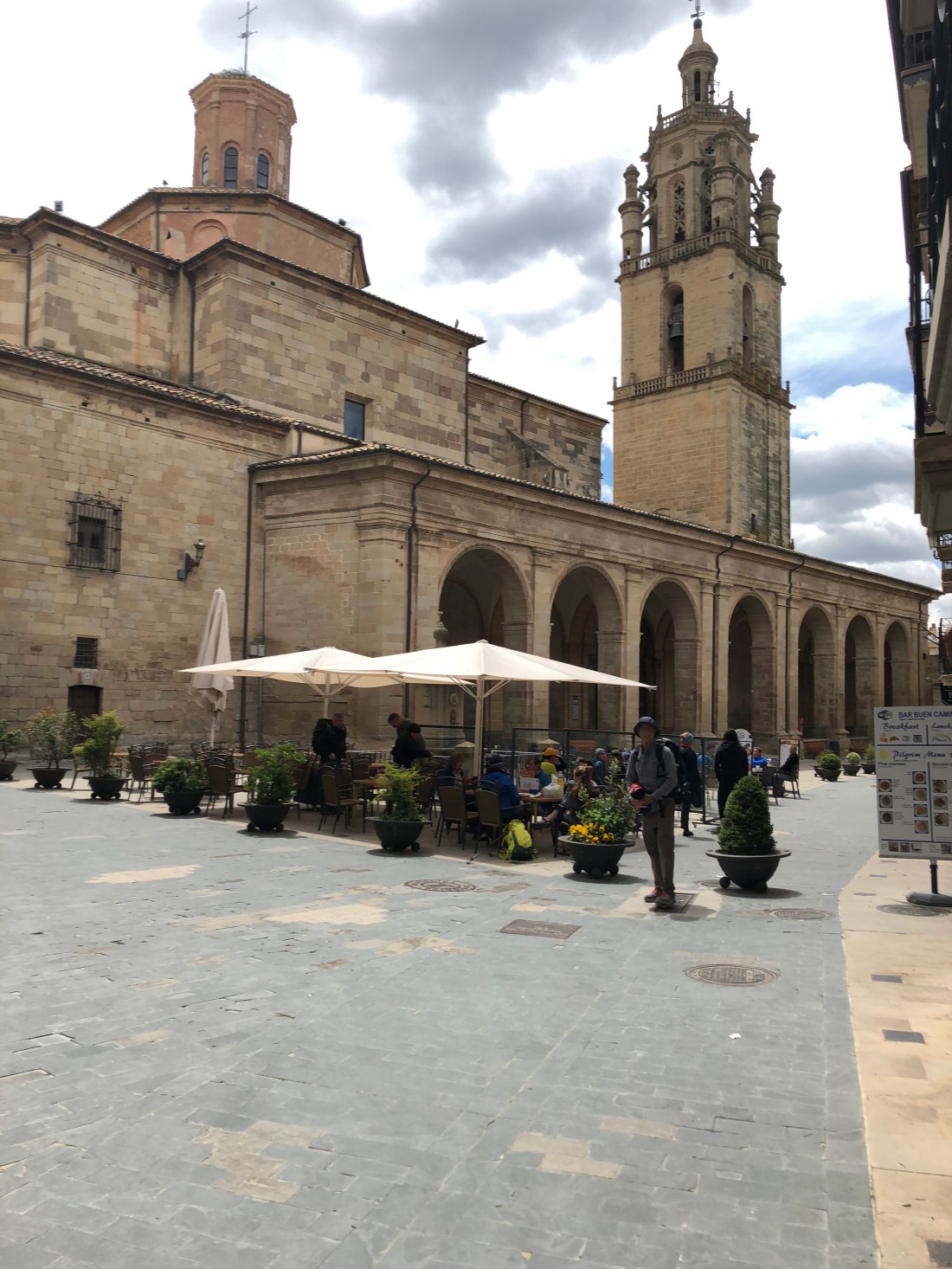 A man was unlocking the door and invited us into the church.
The ornate woodwork in the church was added hundreds of years after the church was built and clashes with the church’s simpler design: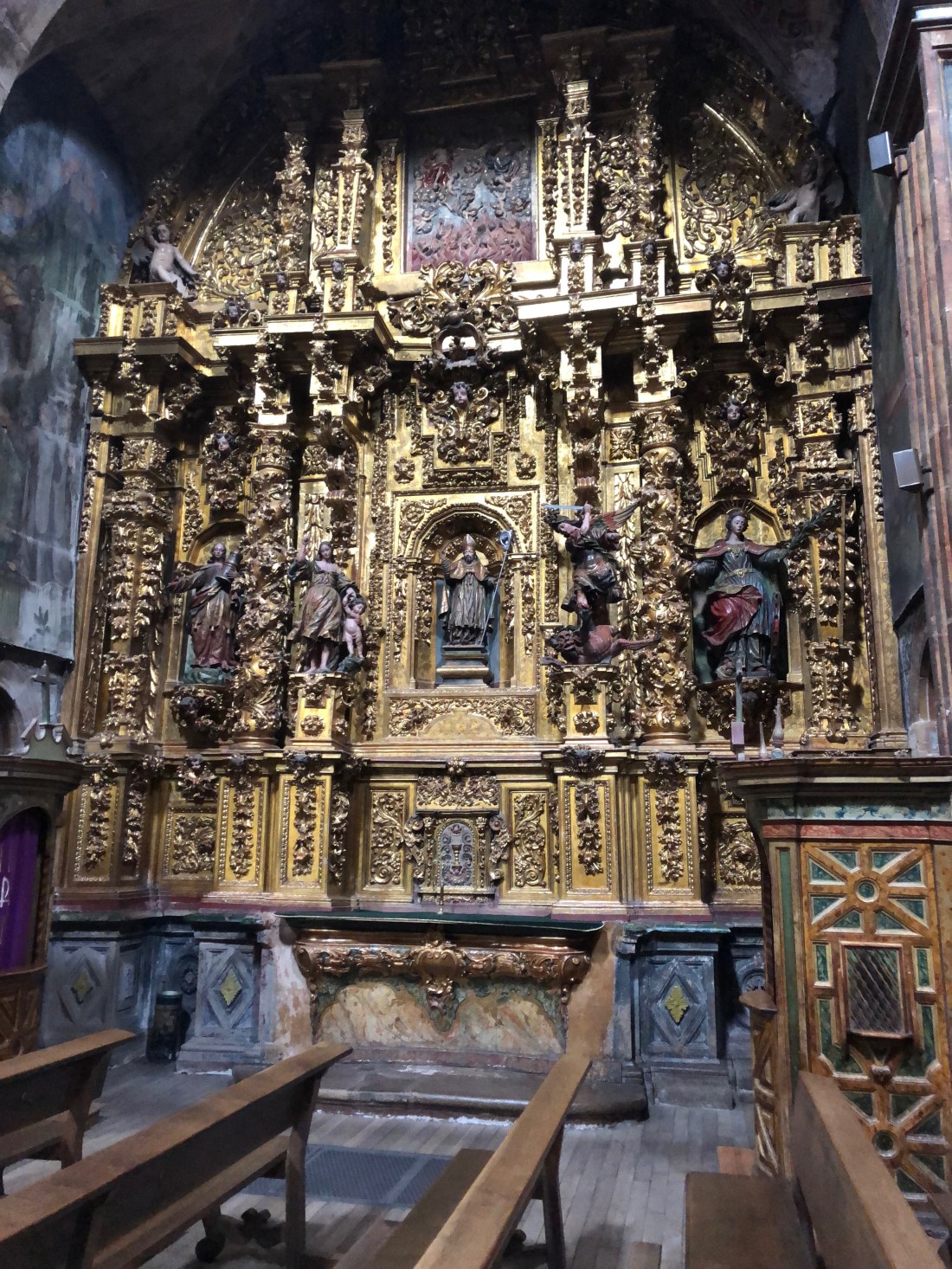
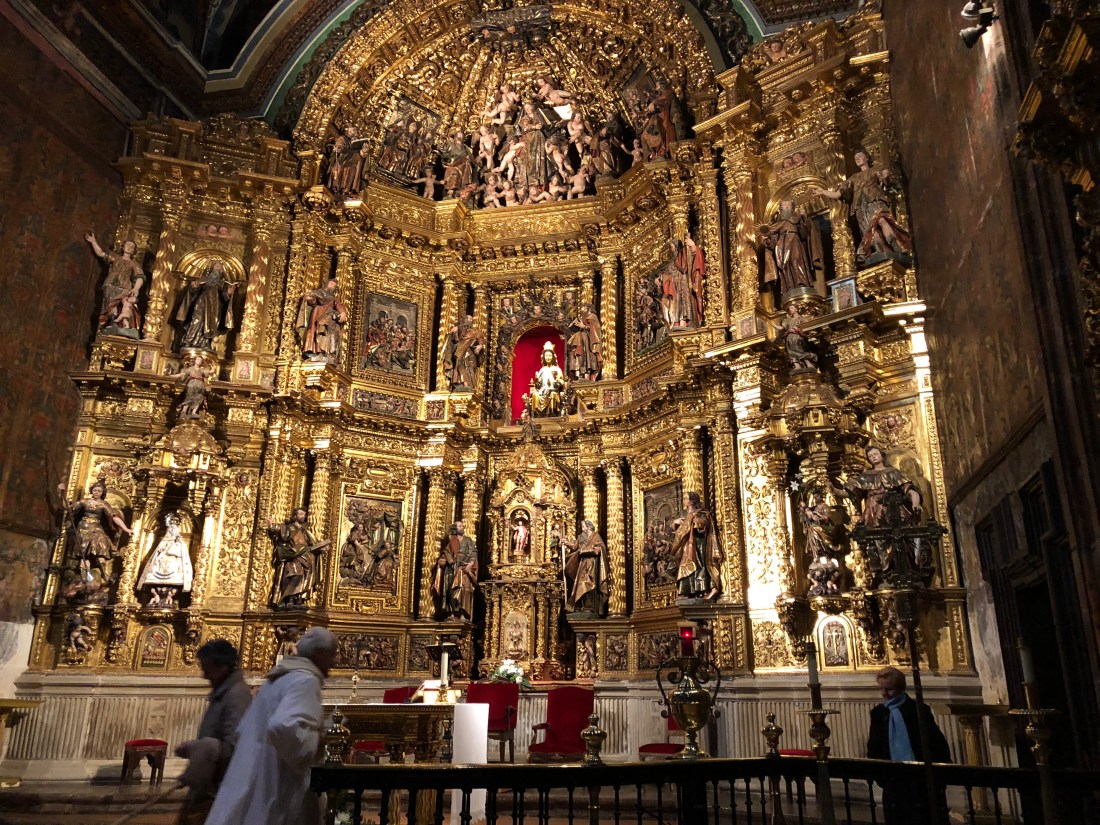
That night, we went to Mass at the church. Following the Mass, there was a blessing of the pilgrims: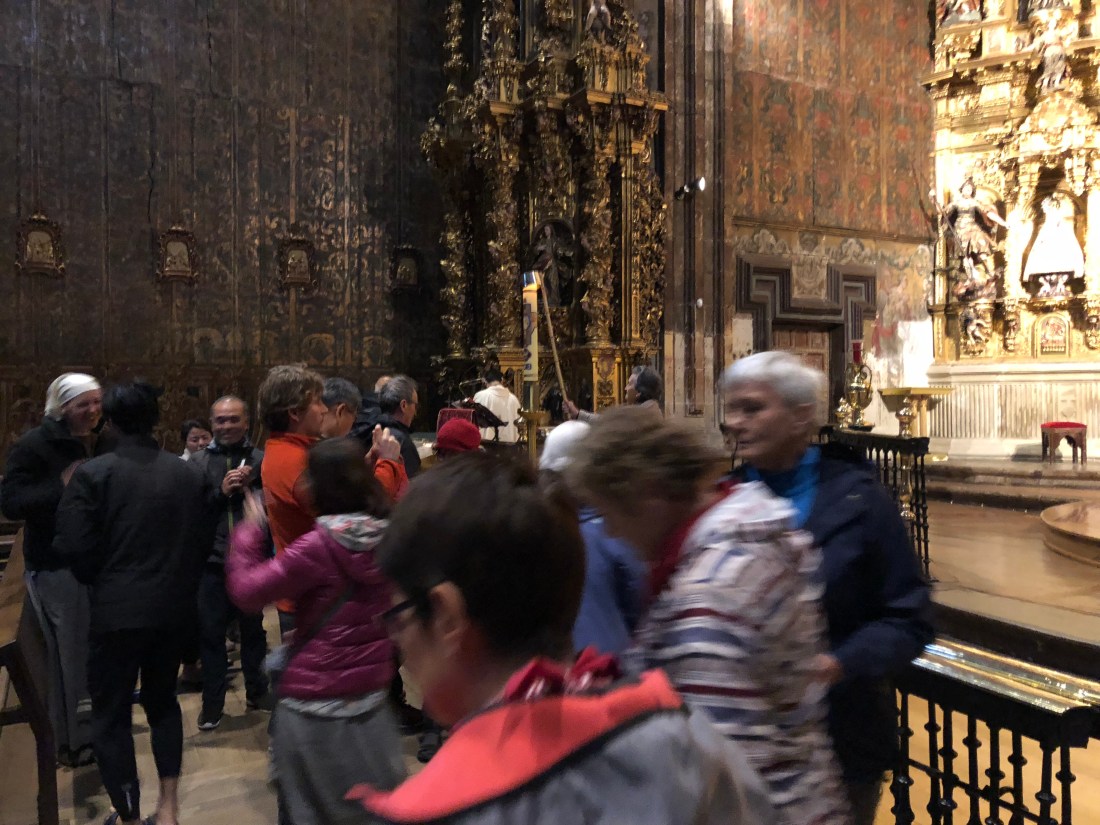
Before the blessing, the priest passed out cards to the pilgrims with prayers in each pilgrim’s language. At the blessing we attended, the priest passed out cards in about a dozen different languages.
The next morning we left Los Arcos and walked to several villages, including the village of Toros del Rio.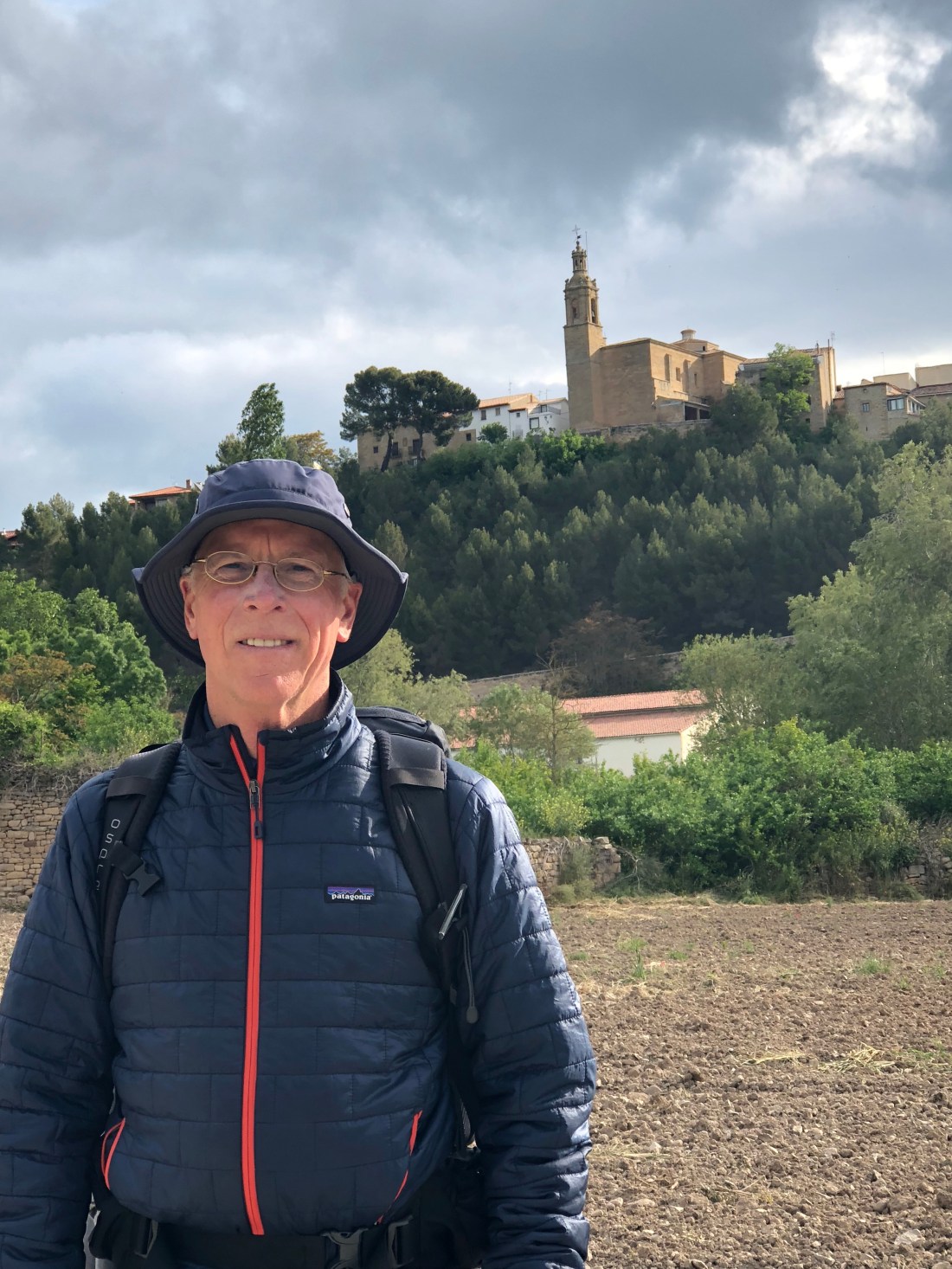
From the village, we could see distant mountains.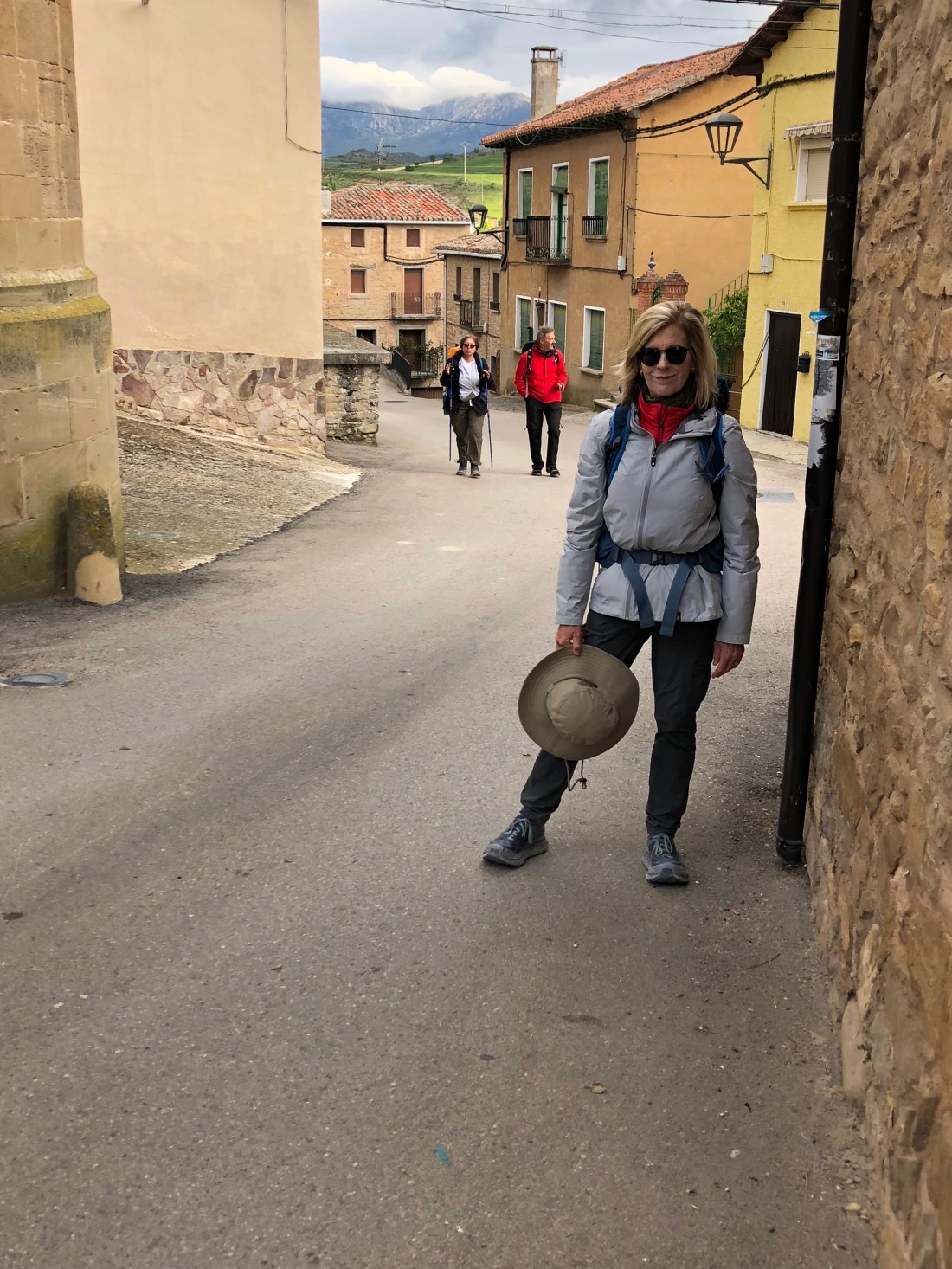
We came across this building sitting on a high ridge dedicated to Nuestra Señora de Poyo.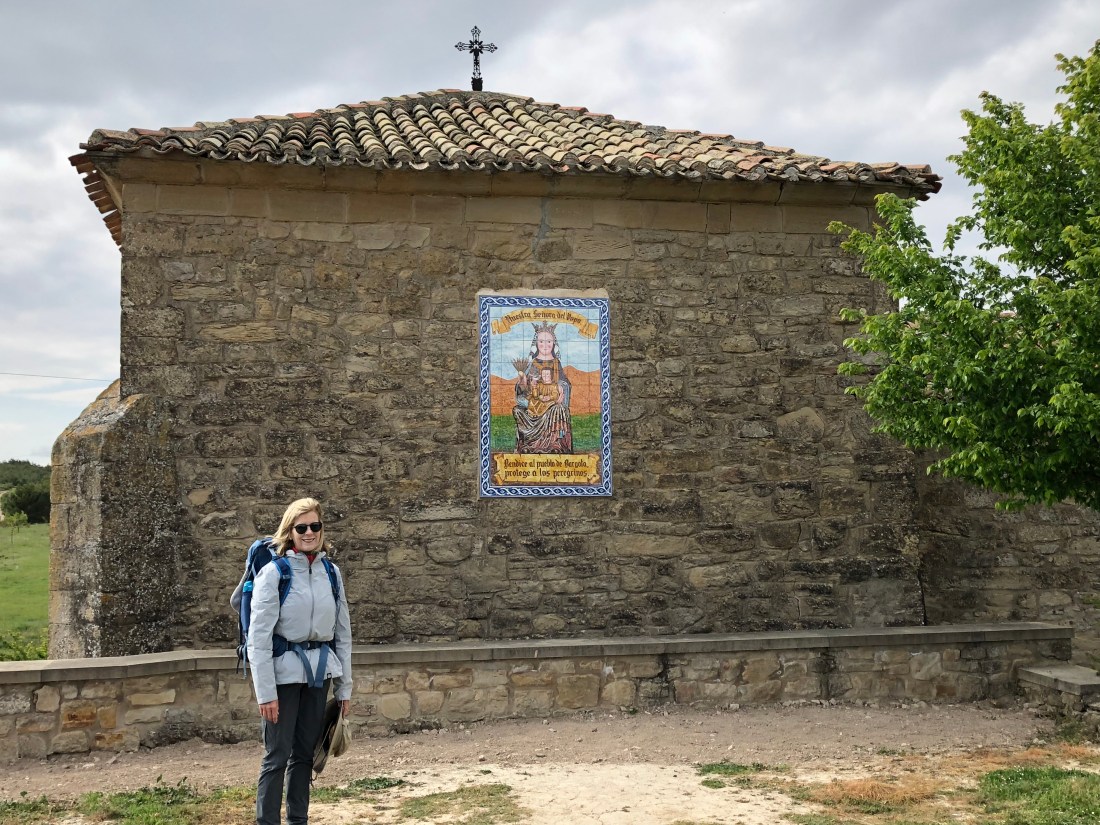
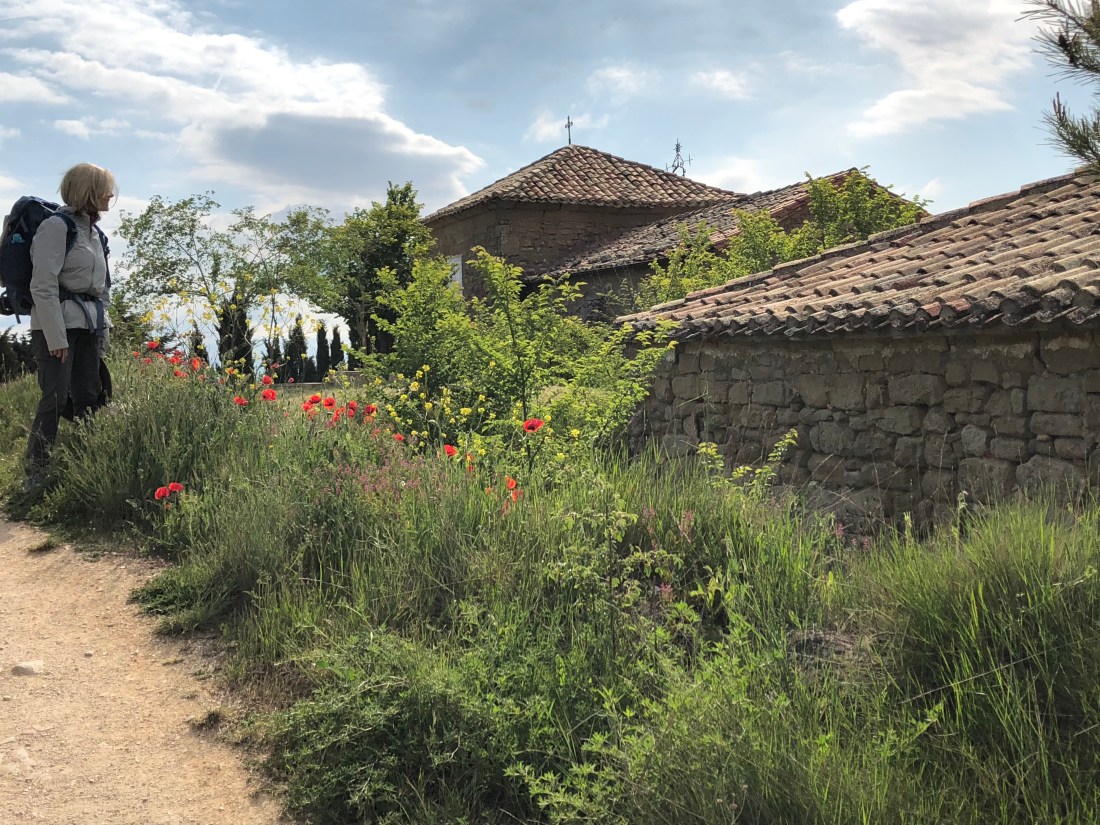
Coming down the ridge, we saw our first switchbacks on the Camino: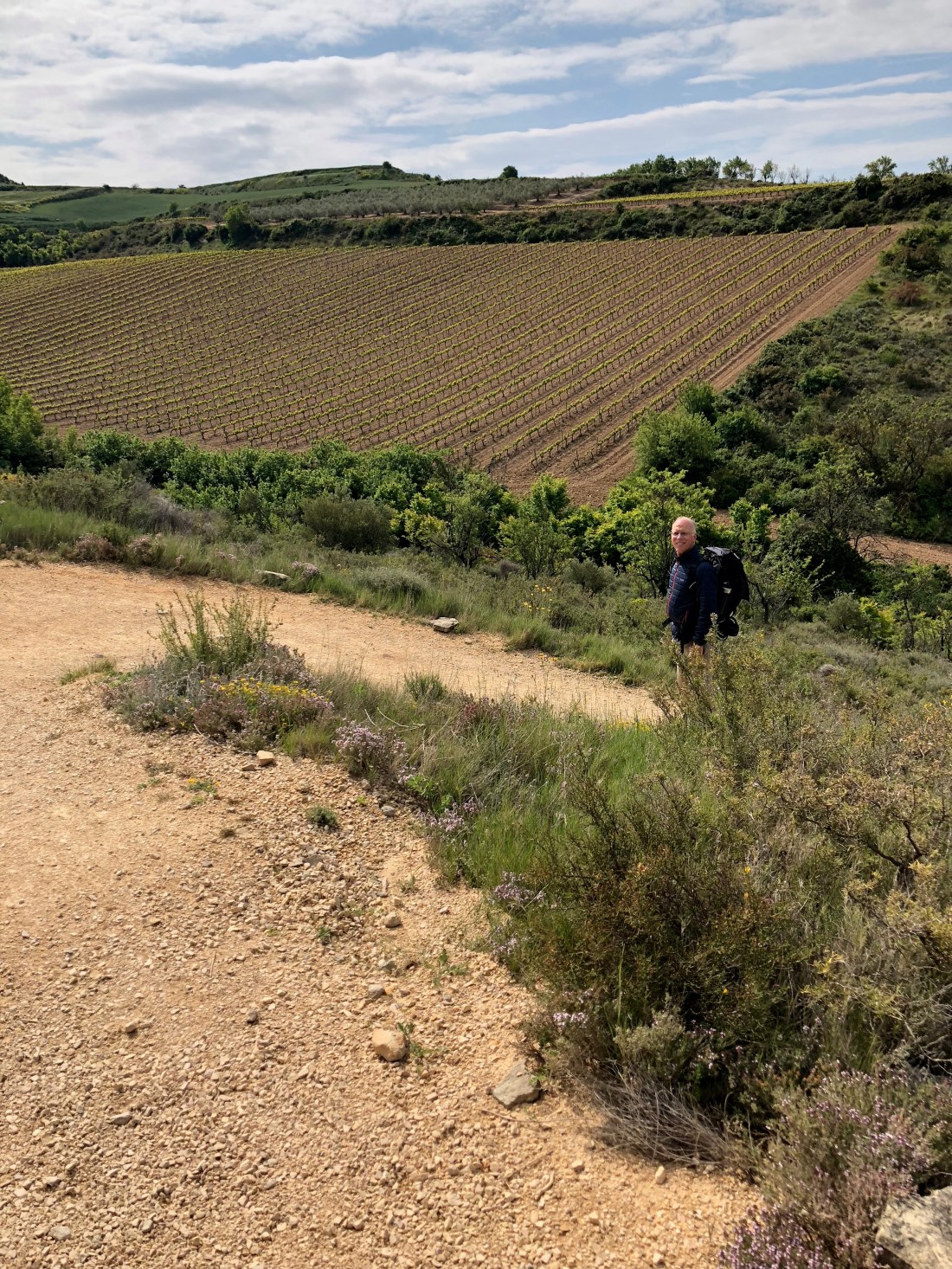
We also may have discovered why there aren’t more switchbacks. Most of the pilgrims cut the switchbacks and walked straight down the hill:
At the bottom of the hill we walked down a long valley with vineyards that had small structures with chimneys and patios, like the one in this picture.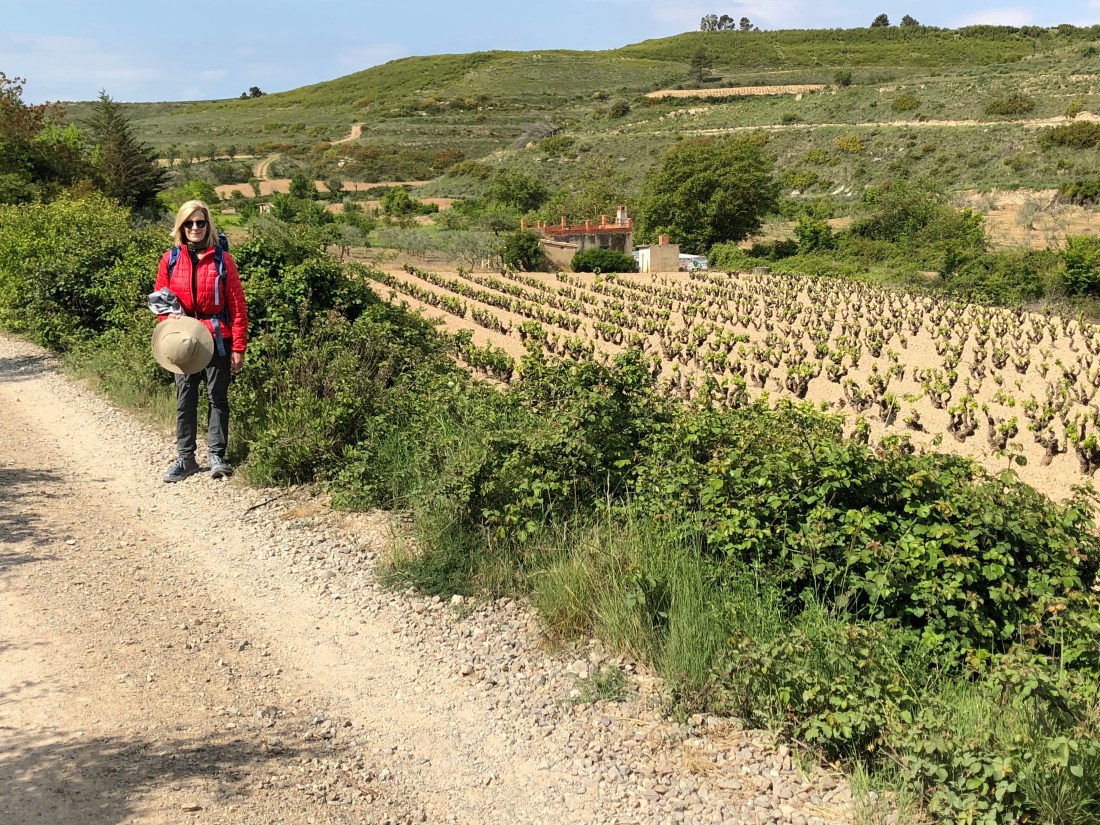
We walked out of the valley and up on a ridge where we could occasionally see mountains in the distance that looked like the Sierra Crest.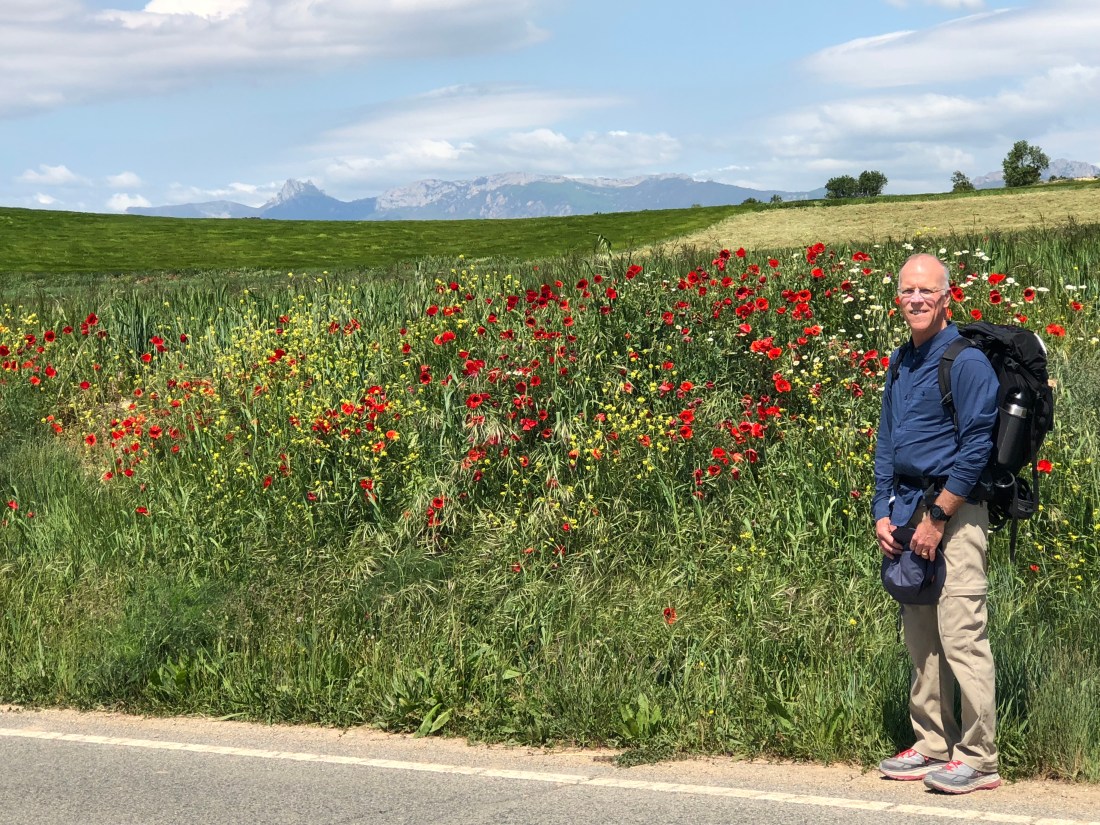
We next came to the village of Viana. Here is the doorway to the church in Viana.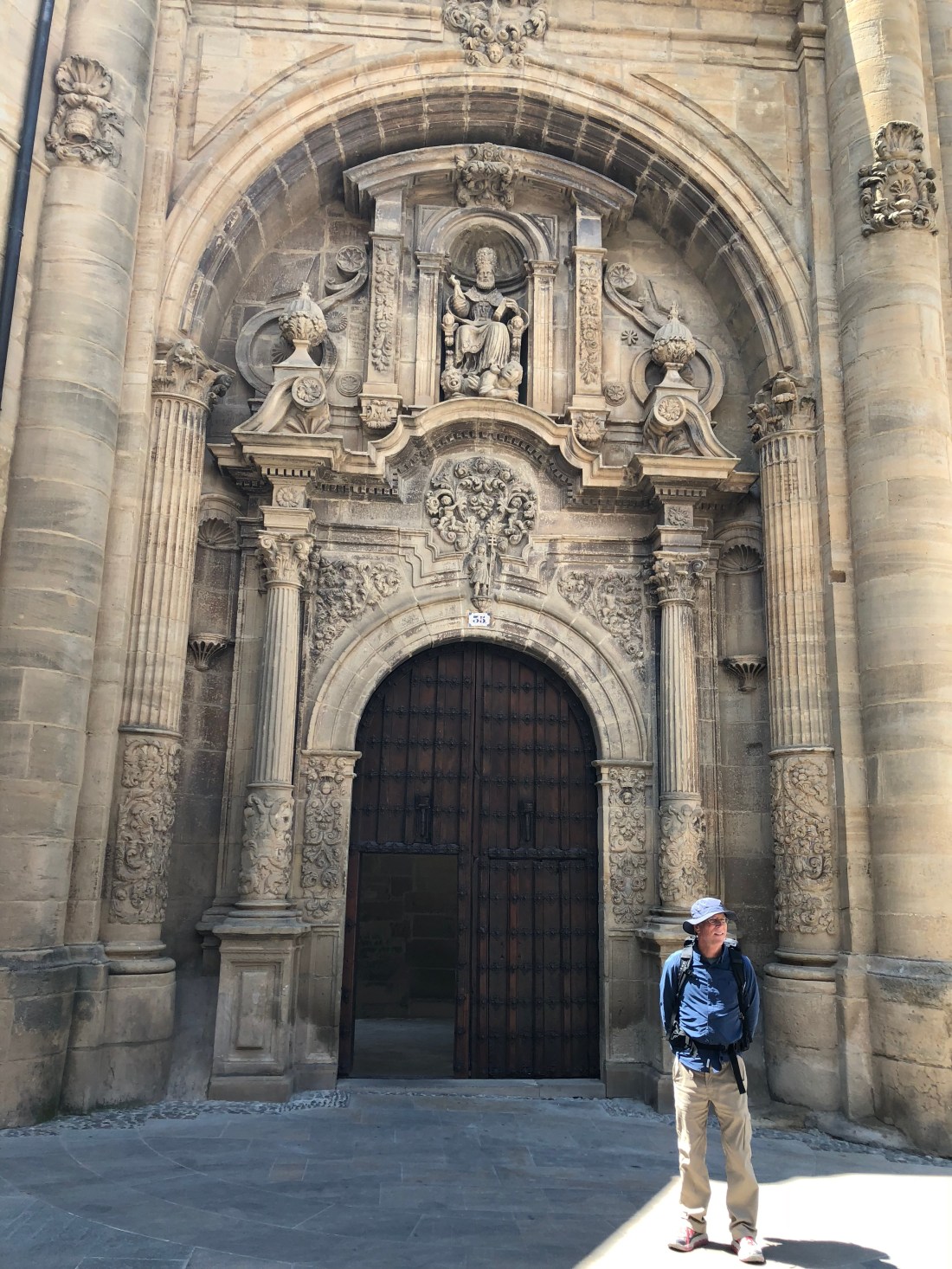
And here is the fountain in Viana’s main square.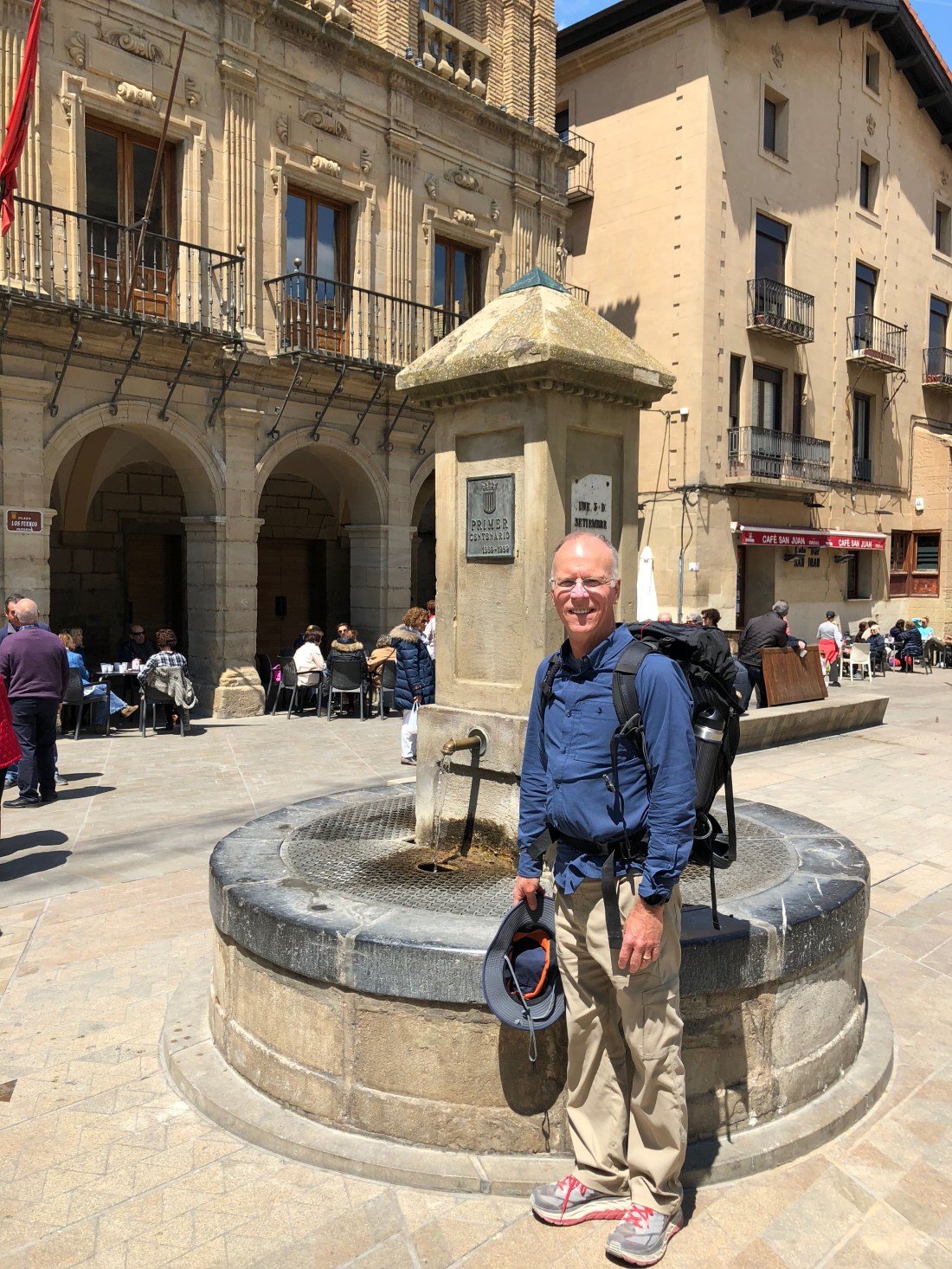 We met up with a group of old friends in Viana sitting at tables in front of a cafe on the Camino. We had met many of them the first day of the trip and had spent the past week walking and talking with them. There are disadvantages to placing so many people on the same path. But it makes possible the connections of different ages, nationalities, and backgrounds that is the best part of the Camino.
Here is Logrono, our destination for the day.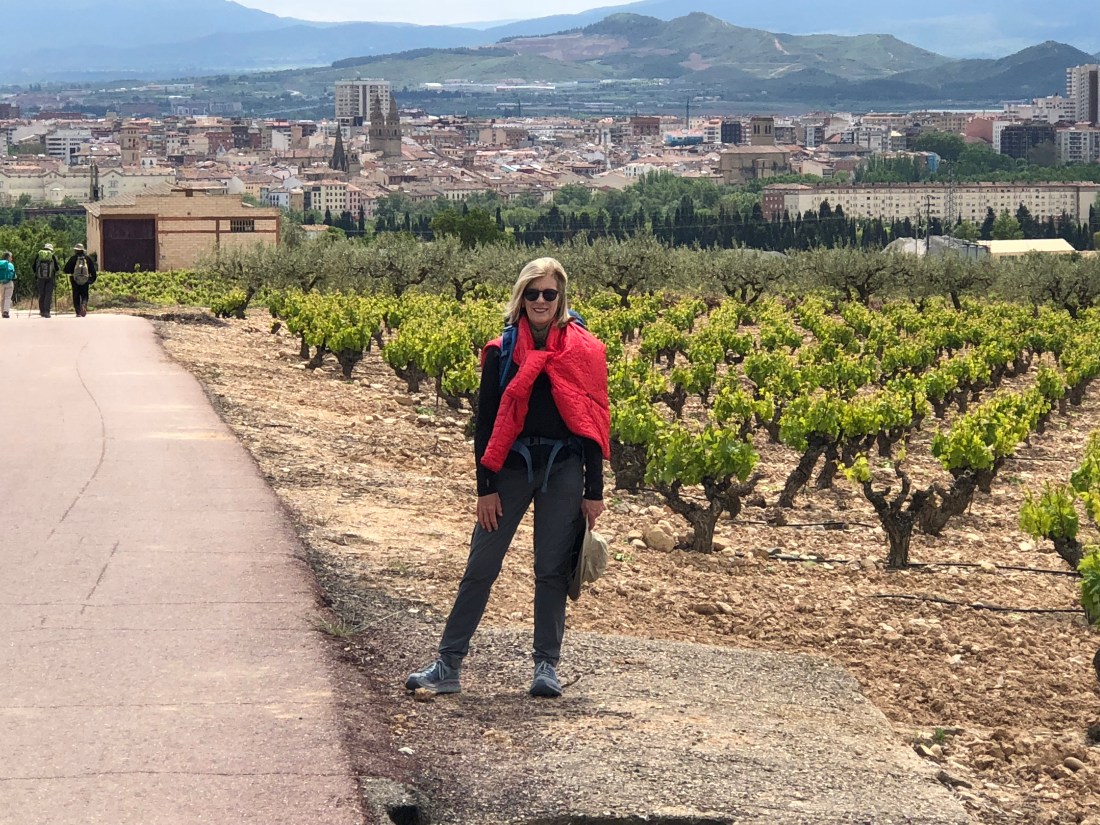
Here is the bridge over the rio Ebro, which separates the province of Navarre from La Rioja, which we are now entering. Logrono is the provincial capitol of La Rioja.
The rio Ebro is also the historic boundary for the Basque region, which we have just now left behind. 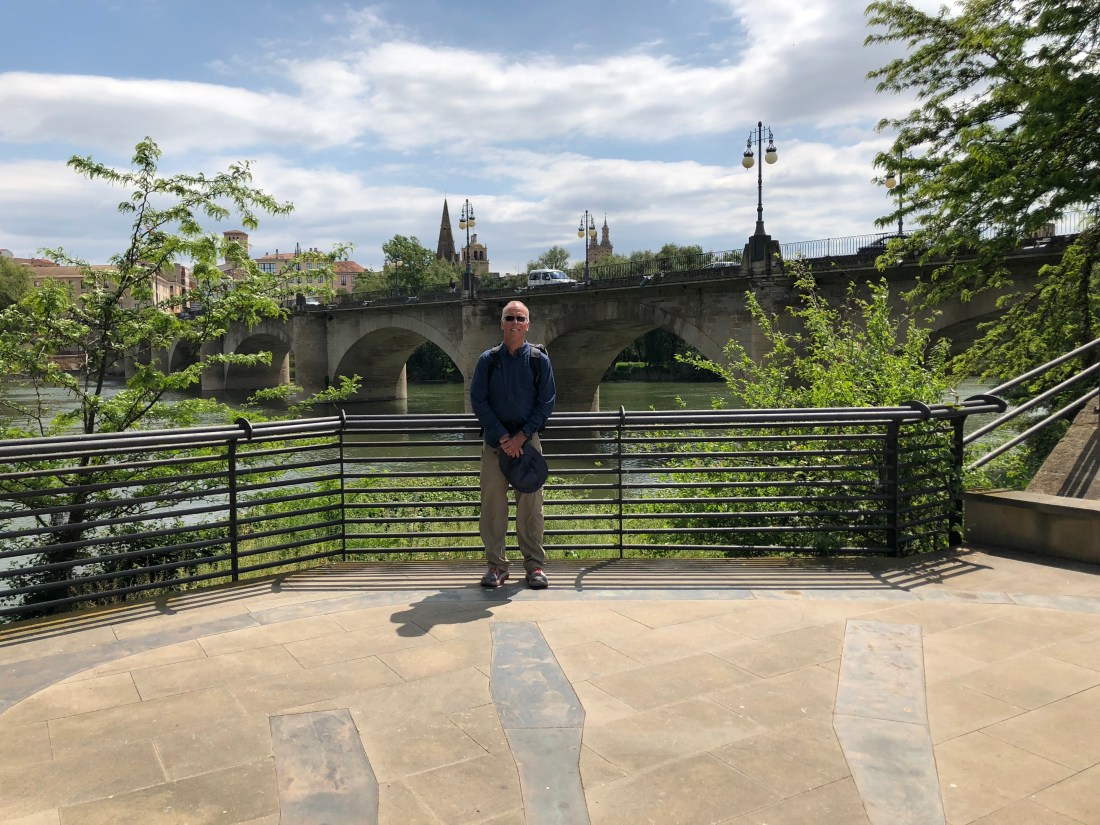
And here is the hotel where we spent the night, with the tower of Logrono’s cathedral in the background.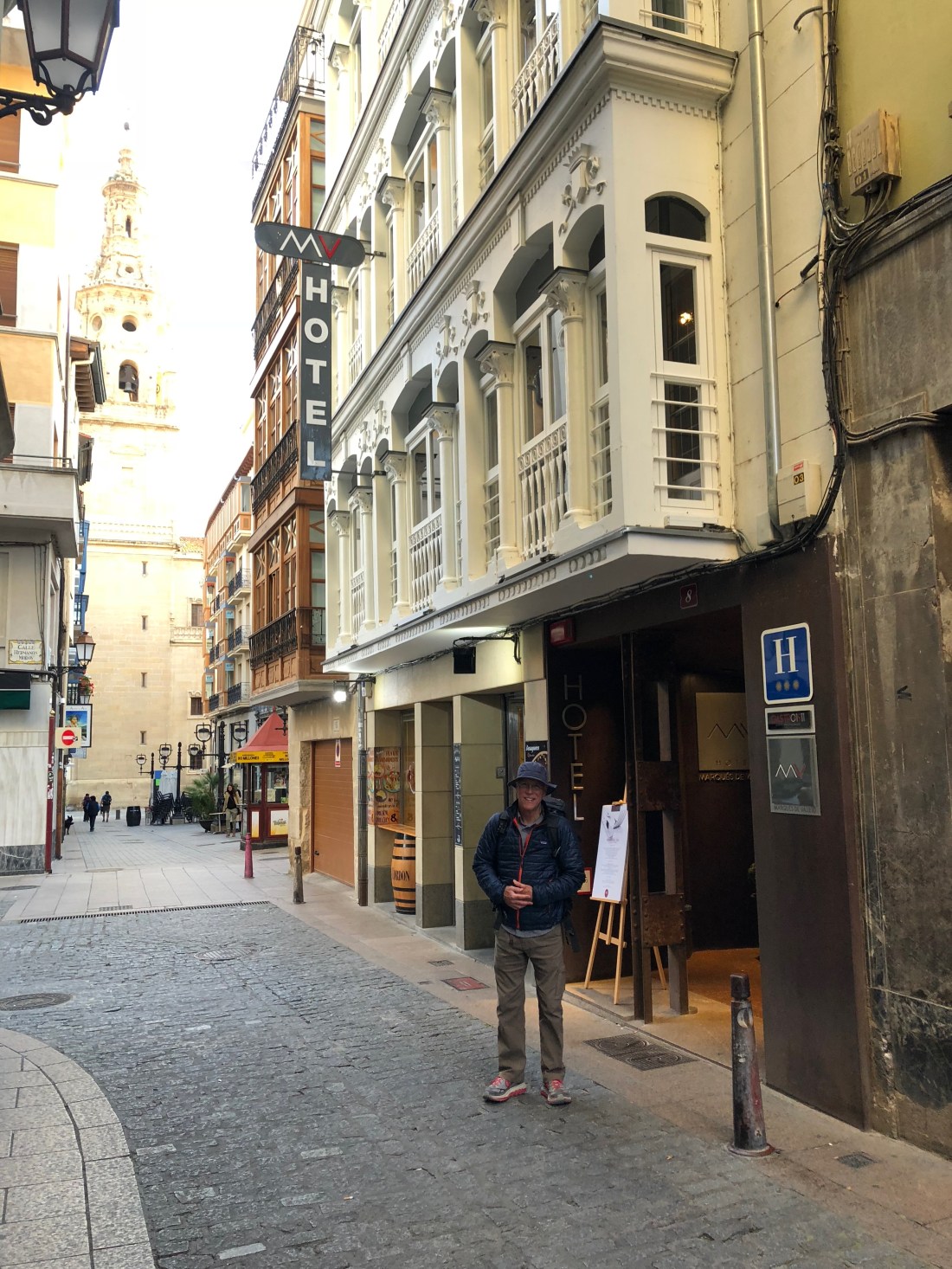
 Kurt's Blog