
It rained most of the night but was clear and chilly when we left Burguete, walking between pastures outside the village: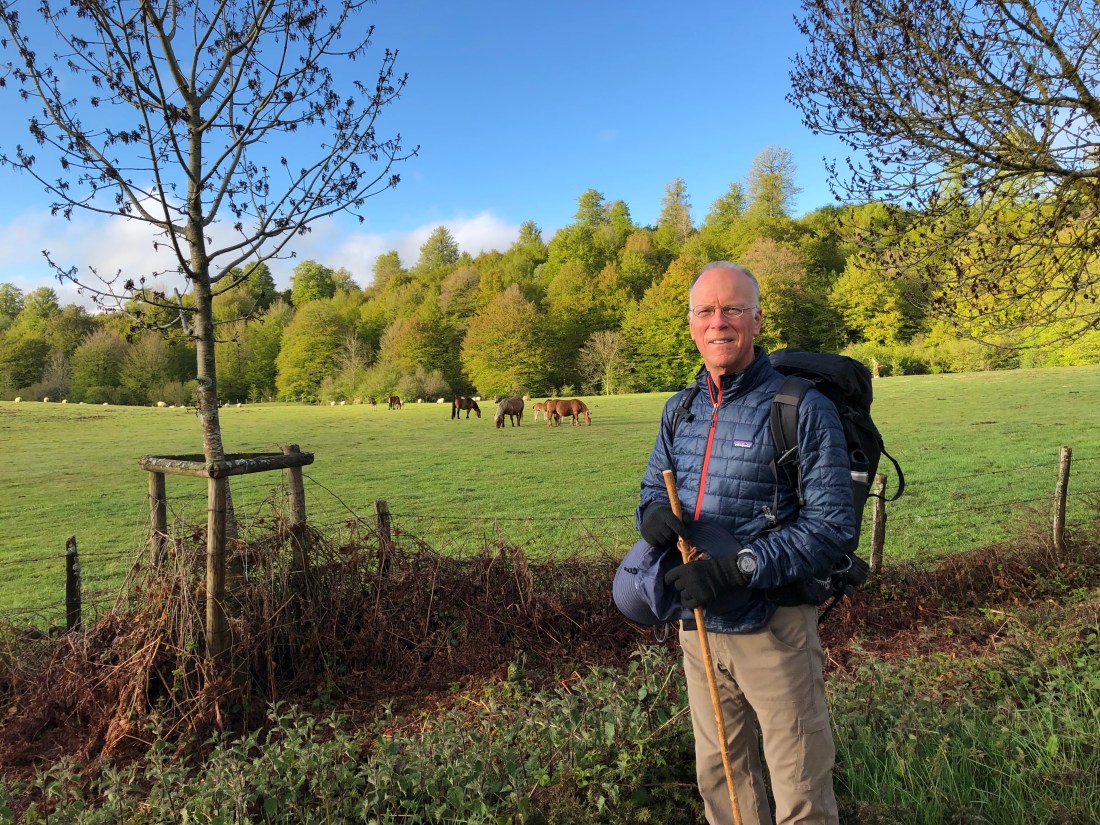
We walked through Basque villages where we saw very few people:
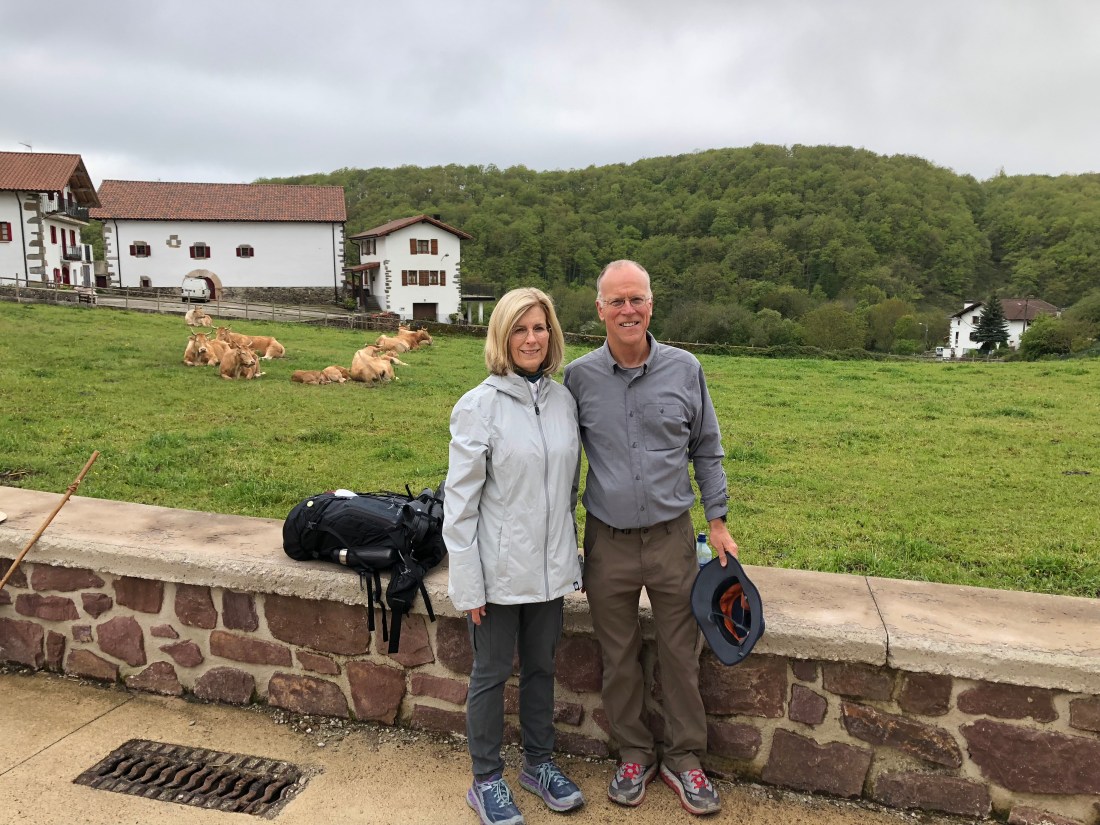
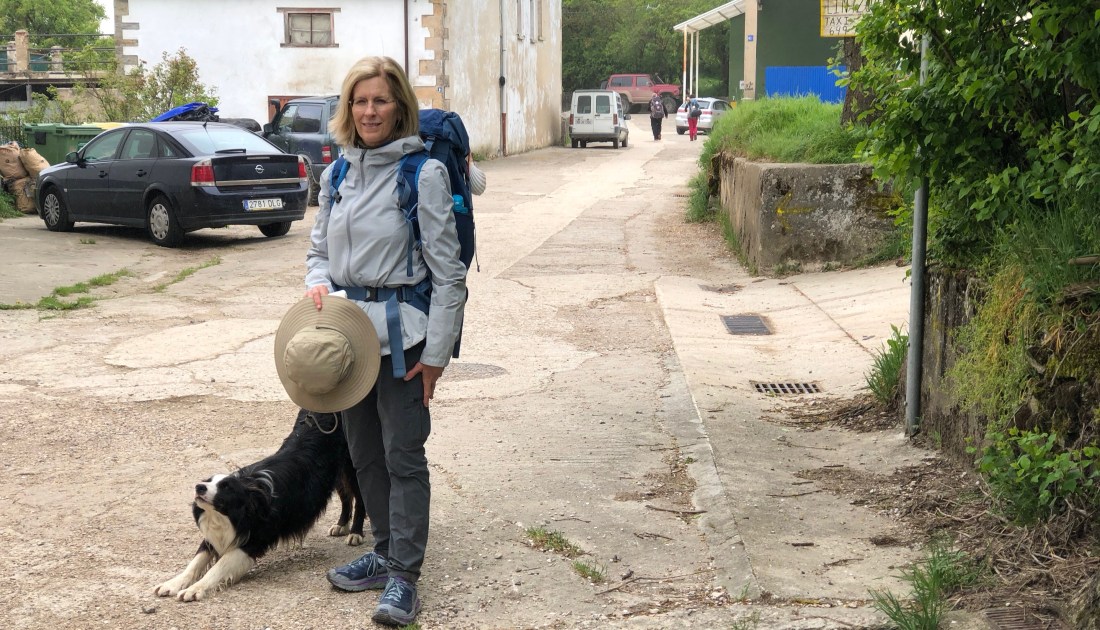
This village was in a deep valley, and there was a steep hike out of the valley:
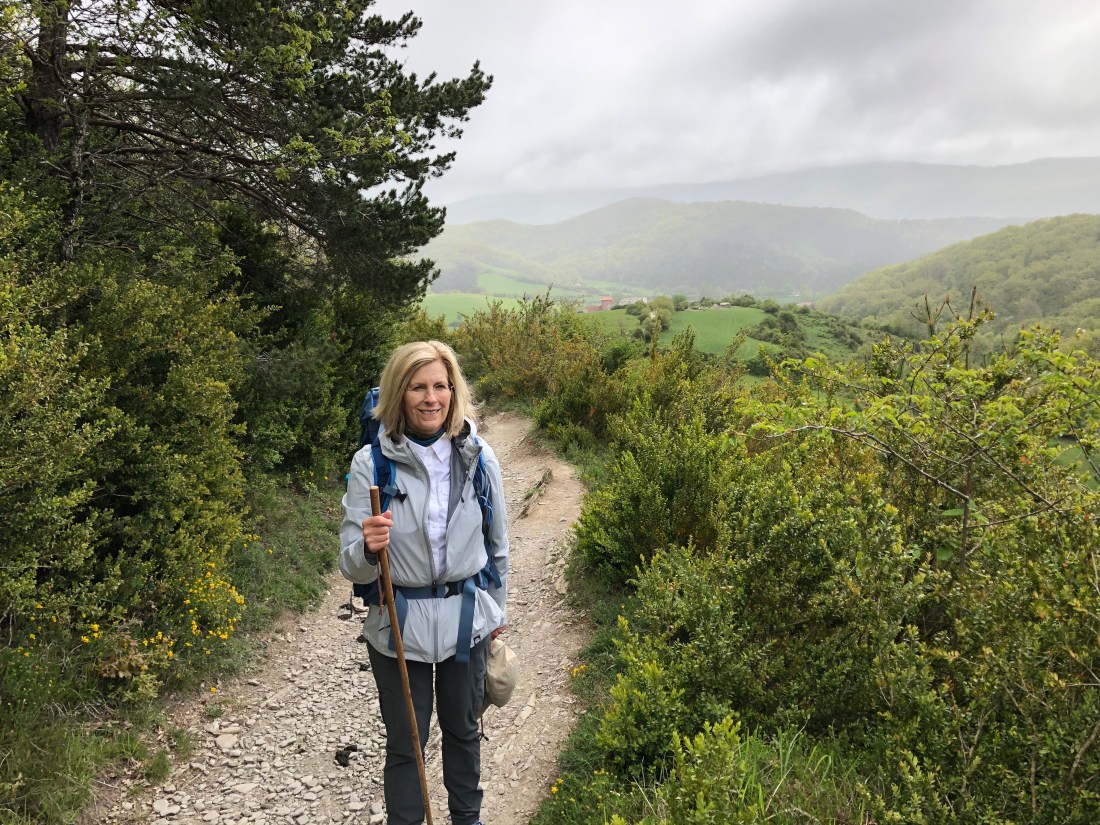
Much of the walking today was in forests. We could have been in a national park in the U.S., except for one thing: the trails. Switchbacks and water bars are innovations that have not made it to this section of the Camino. If the Camino leads up a ridge, the trail goes straight up the ridge:
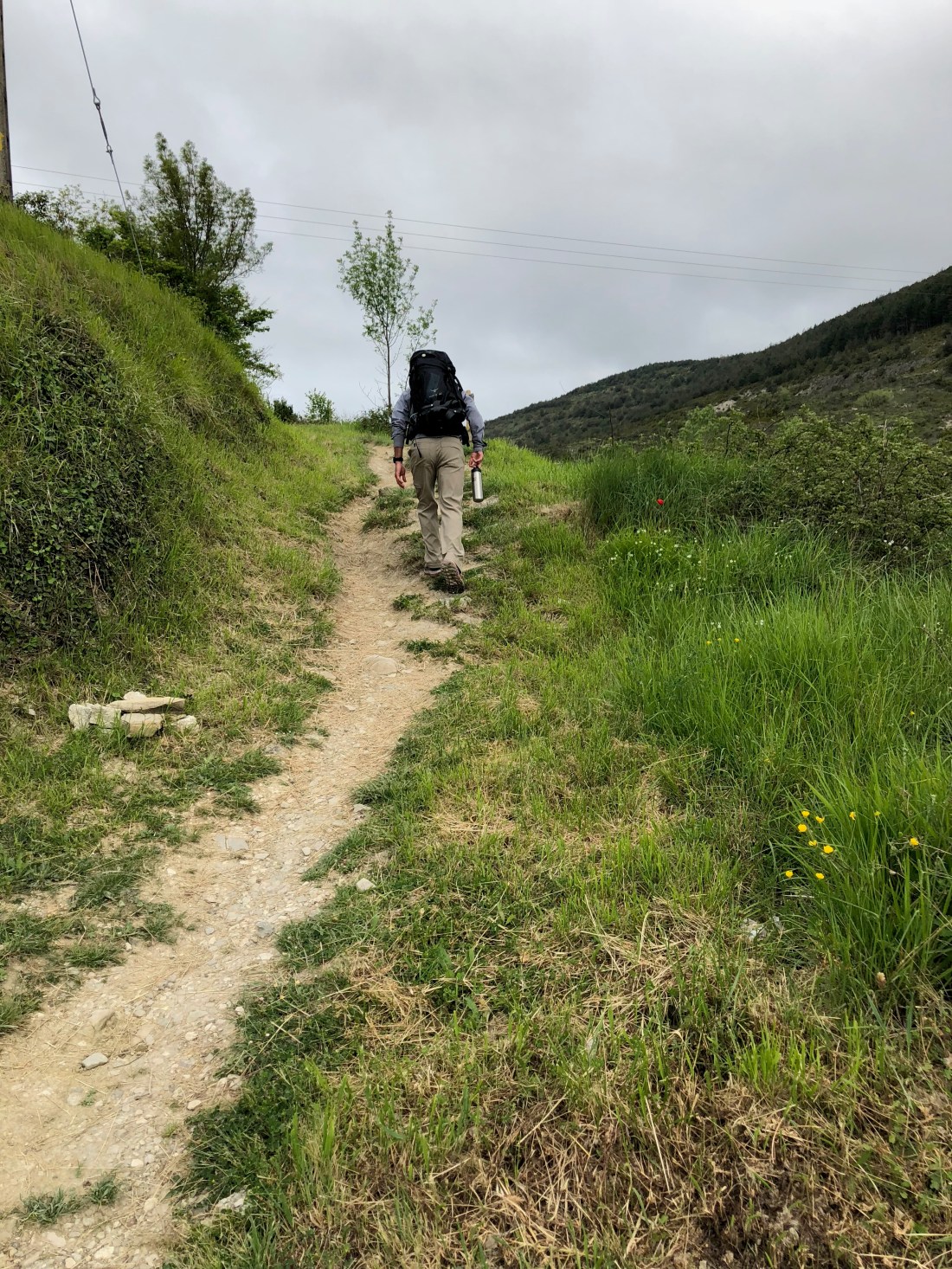
And when the way is down, the trail goes straight down. Because there are no water bars, the steep trails are often deeply rutted and rocky. This kind of hiking puts a lot of pressure on the knees. Also it would be slippery if the ground was wet.
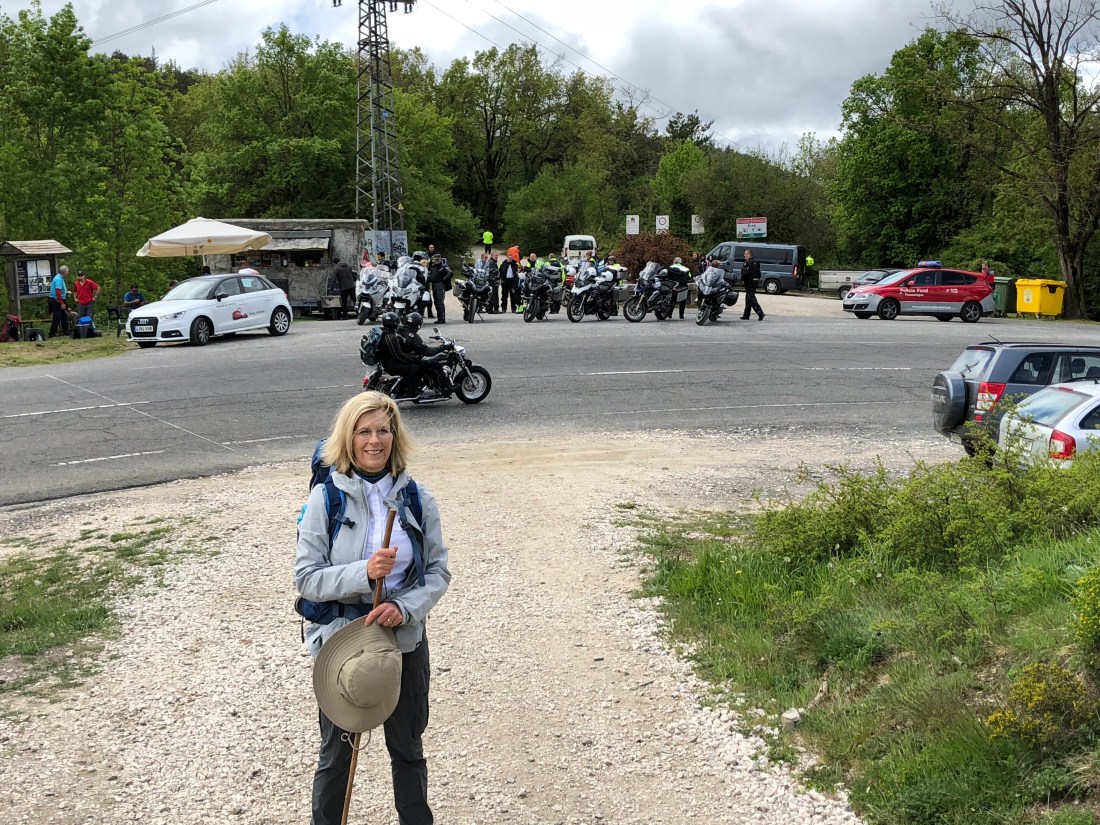
Not all the hiking today was pastoral. We came upon this scene at a highway crossing:
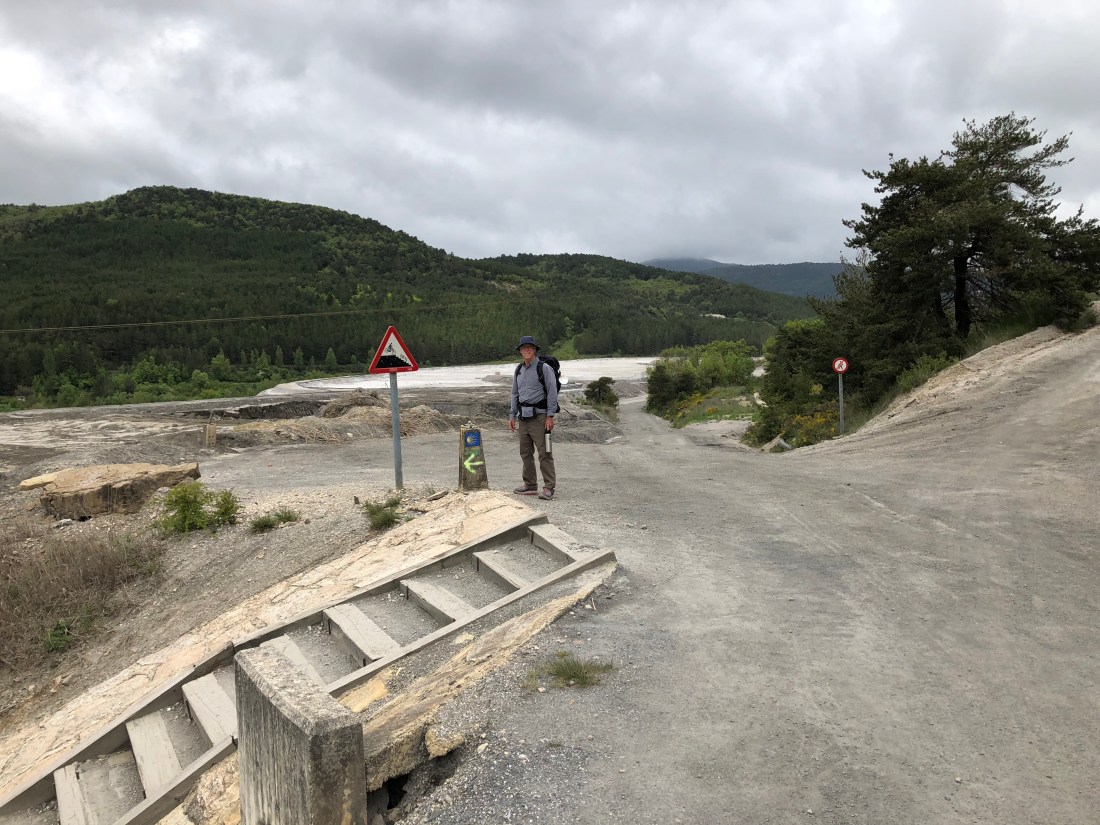
And we passed behind a cement plant that had several settling ponds:
Walking along, we fell in with an Australian and his English friend. The Australian had a collapsed artery in his foot and had to stop every 15 minutes to shake it to get the blood back to his toes. During a stop he asked if I had heard about an American girl that had been murdered on the Camino several years ago. I had not. He told me a young woman traveling alone had disappeared along the Camino. Shortly after she vanished, a local farmer tried to exchange American dollars at his bank. He was questioned, confessed, and lead the police to a shallow grave on his farm where he had buried the girl’s body. The Australian, who had hiked throughout the world, said that the girl had violated one of his cardinal rules for travel, which is to never accept an invitation to someone’s home.
I later told Anne the Australian’s story, and she said that he was wrong. Anne had read about the murder and the real story was even more disturbing. The Camino is marked with signposts and scallop shells. (See the page “The History of the Camino” on this site for an explanation of the scallop shell as a symbol of the Camino.) Here is a marker:
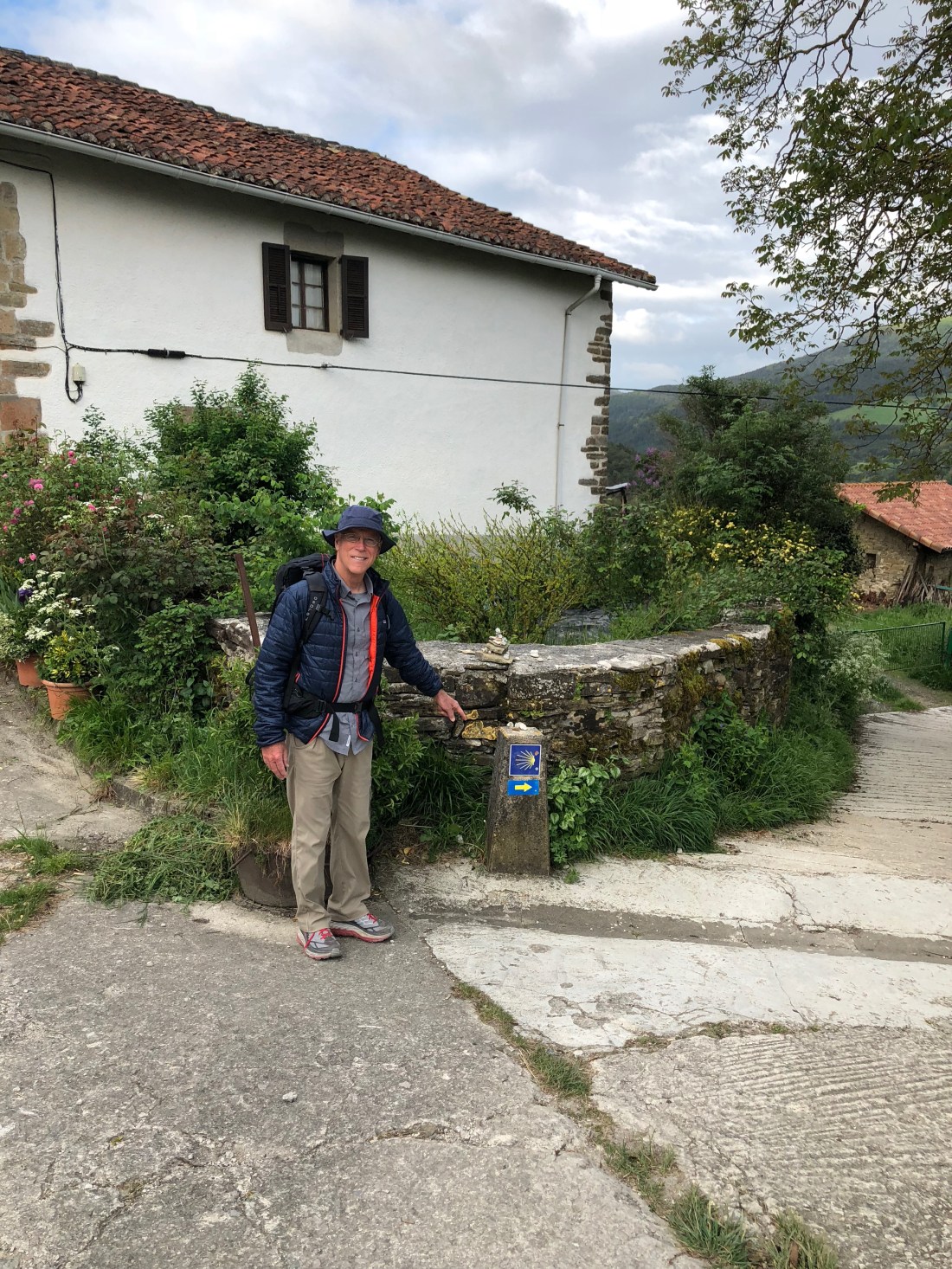
The murderous farmer had lured his victim onto his farm by leading her off the Camino with fake markers. I am sure that there is a cardinal rule here that rivals the Australian’s, but I’m not exactly sure what it is, and I’m pretty sure that it would be harder to apply.
After a long day of hiking, we spent the night at a pensione in Larrasona. Here is the bridge to to Larrasona, the Puente de Los Bandidos: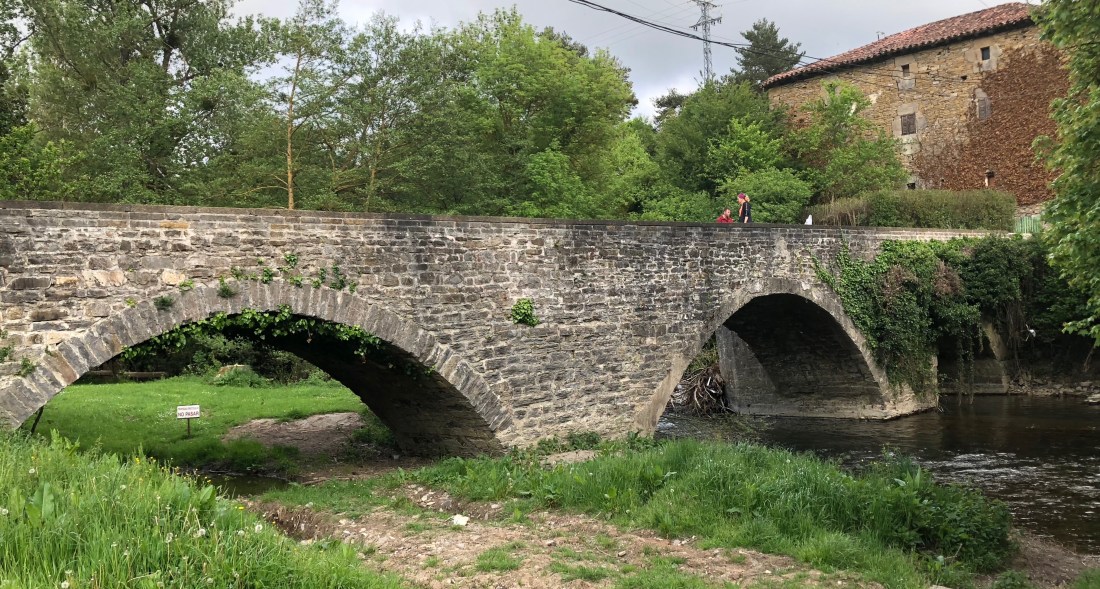
Tomorrow there is a short walk to Pamplona and a return to city life.
 Kurt's Blog